Telehealth Consultation and Virtual Care Process Workflow
Published: 06/18/2026 9:00 PM Updated: 06/19/2026 12:29 PM
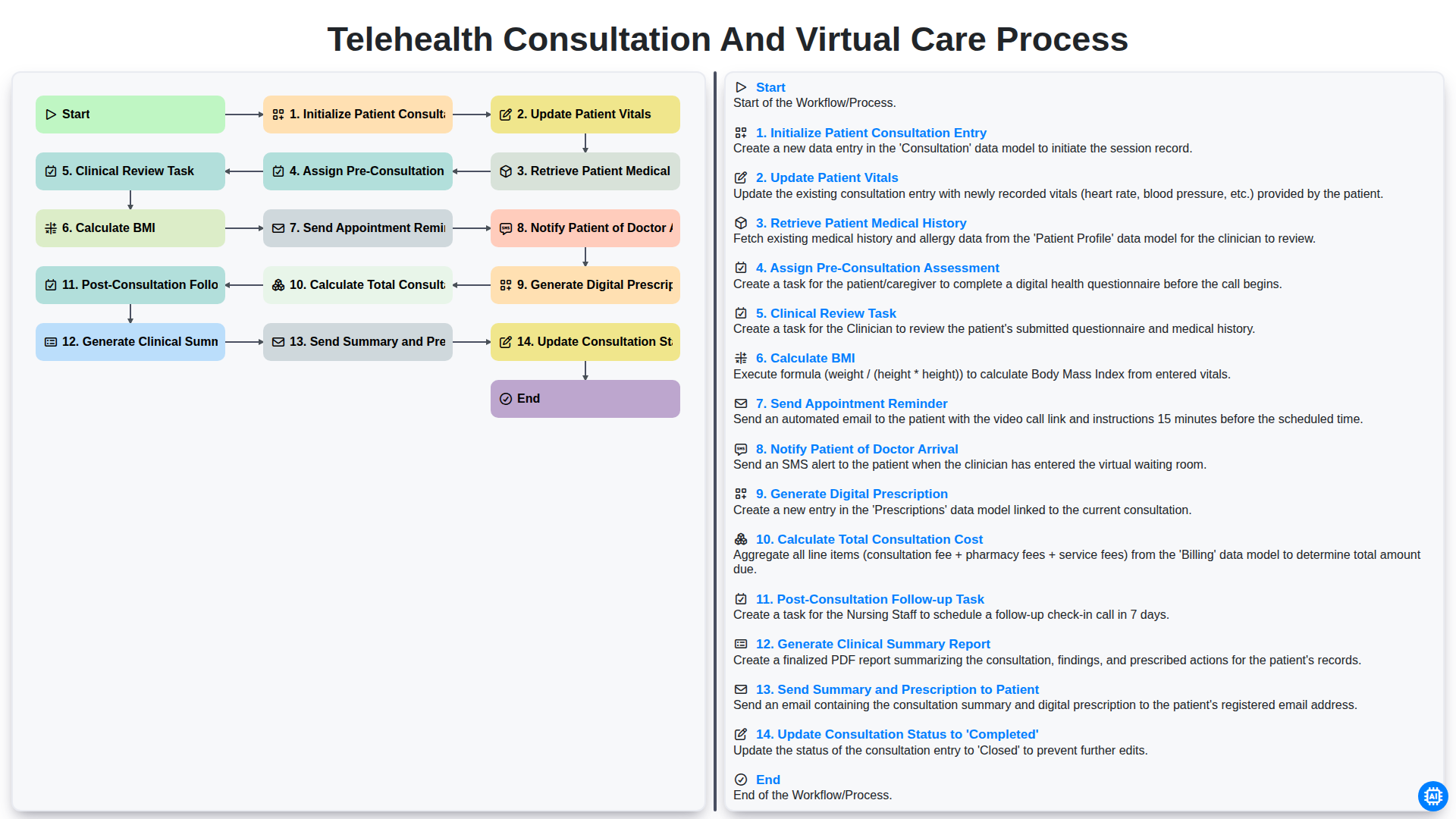
Table of Contents
- Introduction to Telehealth Workflow Efficiency
- Phase 1: Pre-Consultation Setup and Patient Preparation
- Initializing the Patient Consultation Entry
- Automated Appointment Reminders and Patient Notifications
- Phase 2: Clinical Data Collection and Assessment
- Updating Patient Vitals and Medical History Retrieval
- Pre-Consultation Assessment and BMI Calculation
- Phase 3: The Virtual Physician Encounter
- Clinical Review Tasks and Real-Time Monitoring
- Notifying Patients of Doctor Arrival
- Phase 4: Post-Consultation Documentation and Pharmacy Integration
- Generating Digital Prescriptions and Clinical Summary Reports
- Finalizing Billing: Calculating Total Consultation Costs
- Closing the Loop: Follow-up Tasks and Status Completion
- Resources & Links
TLDR: This guide provides an overview of the Telehealth Consultation and Virtual Care Process workflow, detailing how it streamlines the entire remote patient journey-from initial check-in and vitals updates to clinical assessments, real-time physician notifications, and automated post-consultation follow-ups and digital prescriptions.
Introduction to Telehealth Workflow Efficiency
In the rapidly evolving landscape of modern healthcare, the transition from traditional in-person visits to digital environments requires more than just a video call. The true backbone of a successful remote healthcare delivery model lies in its workflow efficiency. An optimized telehealth workflow ensures that the continuity of care remains seamless, reducing the administrative burden on clinicians while enhancing the patient experience.
Efficiency in a virtual setting is achieved when every digital touchpoint-from the initial patient entry to the final post-consultation follow-up-is structured, automated, and interconnected. When a workflow is well-designed, it minimizes delays, reduces the risk of human error in data entry, and allows healthcare providers to focus on what matters most: clinical decision-making and patient engagement. By mastering the sequential steps of the virtual care process, medical practices can bridge the physical gap between doctor and patient, delivering high-quality care that is both accessible and highly organized.
Phase 1: Pre-Consultation Setup and Patient Preparation
The success of a telehealth encounter depends heavily on the seamless orchestration of tasks before the physician even joins the call. The pre-consultation phase is dedicated to establishing a digital foundation for the visit, ensuring that all necessary clinical data is organized and that the patient is prepared for the session.
The process begins with the Initialization of the Patient Consultation Entry, which creates the digital workspace for the specific encounter. Once the entry is active, the workflow moves into data gathering and clinical preparation. This involves Updating Patient Vitals (where applicable via remote monitoring tools) and Retrieving the Patient's Medical History to provide the clinician with essential context regarding chronic conditions, allergies, and past treatments.
To streamline the clinical decision-making process, the system Assigns a Pre-Consultation Assessment, allowing for standardized data collection. During this stage, the system also performs automated clinical calculations, such as Calculating BMI, to ensure accurate baseline metrics are available for review.
Crucially, this phase also manages the logistical communication necessary to reduce no-show rates. By Sending Appointment Reminders and providing a Notification of Doctor Arrival, the workflow ensures that the patient is engaged and ready at the scheduled time. This period of preparation transforms a simple video call into a structured, data-driven clinical event, setting the stage for an efficient and high-quality consultation.
Initializing the Patient Consultation Entry
The foundation of a seamless telehealth experience begins long before the video call connects. The process officially kicks off with Initializing the Patient Consultation Entry, a critical step that sets the stage for the entire virtual encounter. This phase involves creating a dedicated digital session within the Electronic Health Record (EHR) system, specifically linked to the scheduled appointment time.
By establishing this initial entry, healthcare providers ensure that all subsequent data-from vital signs to clinical notes-is captured within a centralized, organized file. This systematic start prevents data fragmentation and ensures that the practitioner has a dedicated workspace to document the consultation in real-time, ensuring accuracy and continuity of care from the very first second of the session.
Automated Appointment Reminders and Patient Notifications
To ensure a seamless telehealth experience, the workflow integrates automated communication touchpoints that bridge the gap between the clinic and the patient's home. The process begins with the system automatically triggering a Send Appointment Reminder task well in advance of the scheduled time. This proactive step reduces no-show rates by ensuring patients are prepared and have the necessary links to join the virtual session.
Once the session is underway and the physician is ready, the system handles the critical task to Notify Patient of Doctor Arrival. This real-time alert eliminates the uncertainty often associated with remote care, providing patients with instant confirmation that their clinician is present in the virtual waiting room. By automating these notifications, healthcare providers can maintain a professional, organized, and patient-centric environment, allowing the focus to remain entirely on clinical care rather than manual coordination.
Phase 2: Clinical Data Collection and Assessment
Once the initial consultation entry is established, the workflow transitions into the critical stage of clinical data collection and assessment. This phase is designed to build a comprehensive real-time profile of the patient's current health status before the physician begins the formal evaluation.
The process begins with the Update Patient Vitals step, where essential physiological metrics are recorded to provide a baseline for the session. To ensure the physician has a holistic view of the patient's health journey, the system will automatically Retrieve Patient Medical History, pulling relevant past diagnoses, allergies, and previous treatments into the active interface.
To standardize the diagnostic preparation, the system will Assign Pre-Consultation Assessment tasks to the patient or nursing staff, ensuring all necessary preliminary information is ready. During this period, automated background processes, such as Calculate BMI, are triggered to provide immediate clinical indicators. This data-driven approach ensures that when the clinician enters the virtual room, they are equipped with an accurate, updated, and comprehensive clinical picture, minimizing delays and allowing for a more focused and efficient consultation.
Updating Patient Vitals and Medical History Retrieval
The foundation of an effective telehealth encounter lies in the accuracy of the data captured before the clinician even joins the call. The workflow begins with Updating Patient Vitals, a critical step where the patient or a remote caregiver inputs essential metrics such as temperature, blood pressure, heart rate, and oxygen saturation levels. In a virtual setting, this data serves as the clinical baseline, allowing the physician to identify immediate red flags and assess the patient's current physiological state in real-time.
Complementing this real-time data is the Retrieval of Patient Medical History. To ensure continuity of care, the system automatically pulls comprehensive longitudinal data, including past diagnoses, chronic conditions, allergies, and previous immunization records. By integrating these two processes, the healthcare provider enters the consultation with a holistic view of the patient's health landscape. This seamless synchronization of current vital signs and historical context minimizes manual entry errors and empowers the clinician to make informed, data-driven decisions from the very first minute of the session.
Pre-Consultation Assessment and BMI Calculation
Before the physician enters the virtual room, the telehealth workflow relies on a structured preparation phase to ensure the consultation is both efficient and data-driven. The process begins with the Pre-Consultation Assessment, where clinical staff or automated intake forms collect essential preliminary information. This step is crucial for setting the stage, as it allows the medical team to review the patient's current symptoms and concerns before the live interaction begins.
As part of this preparatory stage, the system automatically performs a BMI Calculation. By integrating the patient's height and weight data-captured during the vitals update phase-the platform provides an immediate Body Mass Index (BMI) metric. Including this calculation within the pre-consultation workflow ensures that the clinician has an instant, standardized snapshot of the patient's physical health status. This proactive approach minimizes manual data entry during the call, allowing the doctor to focus entirely on the patient's clinical needs rather than administrative calculations.
Phase 3: The Virtual Physician Encounter
Once the administrative groundwork is laid and the patient is securely connected to the digital waiting room, the core of the telehealth experience begins. This phase represents the clinical heart of the workflow, where real-time interaction meets data-driven decision-making.
The process transitions from logistics to active care as the physician enters the virtual session. The encounter begins with the Clinical Review Task, where the doctor reviews the Pre-Consultation Assessment and the Retrieved Patient Medical History to understand the context of the visit. To ensure a precise diagnostic baseline, the clinician will Update Patient Vitals and Calculate BMI based on the data provided by the patient or their caregivers.
As the dialogue progresses, the physician evaluates the symptoms and provides expert guidance. The efficiency of this phase is driven by seamless integration; as the consultation concludes, the workflow moves immediately into the fulfillment stage. The physician will Generate a Digital Prescription and perform a final Calculate Total Consultation Cost to ensure billing accuracy. To wrap up the encounter, the system triggers the Generate Clinical Summary Report function, ensuring that the clinical findings are documented with precision and ready for the next steps in the patient's care journey.
Clinical Review Tasks and Real-Time Monitoring
Once the pre-consultation assessment is assigned, the workflow transitions into the critical phase of clinical oversight. The Clinical Review Task serves as the bridge between data collection and the actual physician-patient interaction. During this stage, the healthcare provider or medical assistant meticulously examines the newly updated patient vitals and the retrieved medical history to identify potential red flags or areas requiring immediate attention.
To ensure a comprehensive diagnostic foundation, the system facilitates real-time data processing, such as the automated Calculate BMI task, which integrates seamlessly with the patient's physical metrics. This phase is not merely about data entry; it is about active monitoring and preparation. By conducting a thorough review of the preliminary findings before the doctor joins the call, the clinical team can streamline the consultation, ensuring that the physician enters the virtual room with a clear, actionable understanding of the patient's current health status.
Notifying Patients of Doctor Arrival
In a virtual care environment, the transition from the waiting room to the actual consultation is a critical touchpoint for patient satisfaction. The Notify Patient of Doctor Arrival step serves as the digital equivalent of a clinician walking into an exam room.
As soon as the physician joins the secure video session, an automated notification is triggered to alert the patient. This real-time update reduces the anxiety of waiting in the void and ensures that the patient is alert and ready to engage the moment the session begins. By automating this notification, the workflow eliminates the need for manual check-ins, minimizes downtime between appointments, and helps maintain a seamless, professional momentum that is essential for a high-quality telehealth experience.
Phase 4: Post-Consultation Documentation and Pharmacy Integration
Once the virtual encounter concludes, the workflow transitions from active care to critical administrative and follow-up actions. This phase is essential for ensuring continuity of care, maintaining accurate medical records, and providing the patient with the necessary tools for recovery.
The process begins with the Generation of a Digital Prescription, which allows for seamless integration with pharmacy networks, reducing errors and increasing convenience for the patient. To ensure the patient is fully informed of the next steps, the system automatically Sends the Summary and Prescription to the Patient, providing them with a digital copy of their care plan.
Simultaneously, the healthcare provider must finalize the clinical record by performing a Clinical Review Task to finalize all findings and then Generating a Clinical Summary Report. This report serves as the definitive record of the session, documenting the interventions and diagnoses discussed.
To close the loop on the encounter, the system executes a Post-Consultation Follow-up Task, ensuring that any necessary subsequent appointments or laboratory tests are scheduled. Finally, once all documentation is verified, the system will Update the Consultation Status to 'Completed', officially archiving the session and triggering the final billing process, which includes the Calculation of the Total Consultation Cost for insurance processing and patient invoicing.
Generating Digital Prescriptions and Clinical Summary Reports
Once the consultation reaches its conclusion, the workflow shifts from real-time interaction to the critical phase of documentation and fulfillment. The transition from a live session to a formal medical record is automated through two vital steps: Generating Digital Prescriptions and Generating Clinical Summary Reports.
The generation of a digital prescription marks a significant leap in telehealth efficiency. Instead of relying on handwritten notes that are prone to error, the system pulls data directly from the physician's clinical notes to create an accurate, electronic prescription. This ensures that dosage instructions, drug interactions, and patient-specific details are precise, allowing for seamless integration with pharmacy networks and reducing the risk of medication errors.
Simultaneously, the system automates the creation of a Clinical Summary Report. This report serves as the definitive record of the encounter, consolidating the patient's vitals, the physician's assessment, and the final diagnosis into a structured format. By automating this summary, healthcare providers eliminate the administrative burden of manual documentation, ensuring that the medical history is updated instantly.
To close the loop on the care cycle, the workflow concludes by Sending the Summary and Prescription to the Patient. This ensures that the patient leaves the virtual encounter with all the necessary information to manage their health, fostering transparency and continuity of care long after the video call has ended.
Finalizing Billing: Calculating Total Consultation Costs
Once the clinical aspects of the virtual visit are concluded, the workflow transitions into the essential administrative phase: Calculating the Total Consultation Cost. This step is a critical component of a seamless telehealth experience, ensuring that the financial aspect of the care is as streamlined as the medical assessment itself.
The system automatically aggregates all components of the session to generate an accurate invoice. This includes the base consultation fee, any additional charges for specialized pre-consultation assessments, and any applicable service fees for digital prescription processing. By automating this calculation, healthcare providers can eliminate manual billing errors and reduce the administrative burden on clinic staff. This real-time computation ensures that both the provider and the patient have immediate clarity on the transaction, paving the way for a transparent, efficient, and professional conclusion to the telehealth encounter.
Closing the Loop: Follow-up Tasks and Status Completion
The telehealth journey does not end when the video call ends. To ensure continuity of care and long-term patient wellness, the workflow transitions into a critical phase of administrative and clinical follow-up. This stage begins with the Post-Consultation Follow-up Task, where clinicians or care coordinators schedule necessary check-ins or monitor the patient's response to the newly issued treatment plan.
Simultaneously, the system automates the documentation process by performing the Generate Clinical Summary Report step. This ensures that every detail discussed during the virtual visit is captured accurately for the patient's permanent record. To bridge the gap between the clinic and the patient's home, the workflow executes the Send Summary and Prescription to Patient step, delivering vital medical instructions and digital prescriptions directly to the patient's preferred digital portal or email.
The final, essential step in the cycle is to Update Consultation Status to 'Completed'. This finalizes the clinical encounter within the Electronic Health Record (EHR), triggers the billing workflow, and ensures that the patient's file is up-to-date, providing a seamless transition from active care back to routine monitoring.
Resources & Links
- World Health Organization (WHO) - Digital Health: Global standards and guidelines for implementing digital health technologies and telemedicine frameworks.
- HealthIT.gov: Resources regarding the use of Electronic Health Records (EHR) and clinical workflow optimization in virtual care.
- American Medical Association (AMA) - Telemedicine: Best practices for physician workflows, clinical documentation, and remote patient monitoring during virtual encounters.
- PubMed Central (PMC): Peer-reviewed research articles regarding the efficiency of automated patient intake and clinical decision support systems.
- U.S. Department of Health & Human Services (HHS): Information on HIPAA compliance, patient data privacy, and secure communication during telehealth consultations.
- American Academy of Pediatrics - Telehealth: Specific workflows regarding pediatric virtual care, including vital tracking and post-consultation follow-up protocols.
Found this Article helpful?
Comments
There are no comments yet. Be the first to add one!
Healthcare Management Solution Demo
Streamlining healthcare operations and improving patient care? ChecklistGuro's Work OS platform simplifies everything from patient scheduling and billing to compliance and staff management. Enhance efficiency, reduce administrative burden, and focus on what matters most: your patients. Learn how ChecklistGuro can transform your healthcare organization!
Related Articles
The Ultimate Healthcare Patient Satisfaction Survey Checklist Template
Mastering Healthcare Inventory: Your Par Level Checklist Template
Mastering Hand Hygiene: Your Compliance Checklist Template
Protecting Patients: Your Fire Safety Checklist for Patient Areas
Your Ultimate Healthcare Construction Checklist Template
Mastering Hand Hygiene: Your Compliance Checklist Template
Your Radiology Equipment Maintenance Checklist Template

Your Ultimate Guide to Healthcare Waste Management: A Checklist Template
We can do it Together
Need help with
Checklists?
Have a question? We're here to help. Please submit your inquiry, and we'll respond promptly.