 ChecklistGuro
 Supply Chain Network Optimization Checklist
Unlock peak efficiency! Our Supply Chain Network Optimization Checklist guides you through evaluating & improving your network for reduced costs, faster delivery, and greater resilience. Identify bottlenecks & ensure seamless flow.
This Template was installed 4 times.
Network Design Assessment
Evaluate current network structure and identify areas for improvement in facility locations, transportation routes, and distribution channels.
Number of Distribution Centers
Average Distance Between Facilities (miles)
Primary Transportation Mode
Current Network Challenges
Average Lead Time (days)
Network Complexity Level
Notes on Geographic Coverage
Facility Location Analysis
Assess the effectiveness of current facility locations based on factors like customer proximity, transportation costs, and labor availability. Consider optimization possibilities.
Current Facility Count
Location of Primary Distribution Center
Average Delivery Distance (Miles)
Proximity to Major Transportation Hubs
Land Costs per Square Foot (USD)
Labor Availability Rating
Current Labor Cost Analysis and Trends
Average Rent/Lease Costs (USD)
Transportation Mode Optimization
Analyze the mix of transportation modes used (e.g., truck, rail, air) and evaluate opportunities to reduce costs and improve transit times. Consider fuel efficiency and sustainability.
Current Truck Transportation Cost (USD/Mile)
Current Rail Transportation Cost (USD/Mile)
Current Air Freight Cost (USD/Package)
Primary Transportation Mode for Region A
Transportation Modes to Evaluate for Cost Reduction
Date of Last Transportation Cost Analysis
Notes on Current Mode Selection Criteria
Inventory Placement Strategy
Review inventory levels and placement across the network to minimize holding costs and ensure product availability. Consider safety stock levels and demand variability.
Safety Stock Level - Product A (Units)
Reorder Point - Product B (Units)
Primary Distribution Center for Product C
Average Lead Time (Days) - Product D
Inventory Allocation Strategy - Product E
Maximum Inventory Holding Cost (%)
Distribution Channel Analysis
Examine distribution channels (e.g., direct-to-consumer, retailers, wholesalers) and identify opportunities for improved efficiency and customer reach.
Percentage of Sales via Direct-to-Consumer Channel
Percentage of Sales via Retail Partnerships
Average Order Value for Online Sales
Primary Distribution Channel Focus (Current)
Current Distribution Channel Challenges
Describe any specific trends observed in channel performance (e.g., shift to online, decline in retail)
Technology Integration
Assess the use of technology (e.g., TMS, WMS, network modeling software) to support network optimization efforts and data visibility.
TMS (Transportation Management System) Utilization
WMS (Warehouse Management System) Integration
Real-time Visibility Data Sources (Number)
Network Modeling Software
Describe Data Integration Challenges
ERP System Integration
Date of Last System Integration Review
Risk Mitigation & Resilience
Evaluate potential disruptions to the network (e.g., natural disasters, supplier issues) and implement strategies to mitigate those risks and improve resilience.
Safety Stock Levels (Days)
Potential Disruption Types
Contingency Plan Details (Supplier A)
Last Review Date of Contingency Plans
Criticality of Affected Product/Service
Supporting Documentation (e.g., alternative supplier contracts)
Cost Analysis & ROI
Track costs associated with the current network and estimate the potential return on investment (ROI) for optimization initiatives.
Current Annual Transportation Costs
Projected Annual Transportation Cost Reduction (Optimized Network)
Current Annual Warehousing Costs
Projected Annual Warehousing Cost Reduction (Optimized Network)
Initial Investment Costs for Network Optimization
Projected Annual Inventory Holding Cost Reduction
Estimated Payback Period (in years)
Method Used for ROI Calculation
Performance Measurement & KPIs
Define key performance indicators (KPIs) to track the effectiveness of the optimized network and identify areas for continuous improvement (e.g., lead times, costs, service levels).
Average Order Lead Time (Days)
Transportation Cost as % of Revenue
Inventory Turnover Rate
On-Time Delivery Rate (%)
Perfect Order Rate (%)
Current KPI Tracking Frequency
Date of Last KPI Review
Sustainability Assessment
Evaluate the environmental impact of the supply chain network and identify opportunities to reduce carbon footprint and improve sustainability.
Carbon Footprint (Current Year)
Percentage of Renewable Energy Used
Sustainable Packaging Materials Used?
Supplier Sustainability Standards?
Description of Sustainable Transportation Initiatives
Waste Reduction Target (% Reduction)
Frequently Asked Questions
Can I customize this template after installing it?
Absolutely. Once installed, you can add, remove, or reorder tasks, add custom fields, and adjust deadlines to fit your specific workflow.
Can I add images or photos to these checklist items?
Yes. Our platform allows you to attach photos, signatures, and notes to any checklist item for better verification and proof of completion.
Can I create a custom checklist from scratch instead of using a template?
Yes. You can use our "Create your own checklist" feature to build a unique workflow tailored exactly to your operational requirements.
Can I add dependencies between tasks?
Yes, you can set up conditional logic and dependencies to ensure your team follows the correct sequence of operations.
Can I assign specific checklist items to different team members?
Yes. You can assign individual tasks to specific employees, ensuring clear accountability across your entire team.
Can I use these checklists on mobile devices in the field?
Yes. Our platform is fully responsive, allowing your team to complete, update, and upload photos to checklists directly from any smartphone or tablet.
How do I notify my manager when a checklist is completed?
You can set up automated notifications (via email, push notification, or in-app alerts) to trigger whenever a checklist is finished or if an item fails inspection.
Can multiple people work on the same checklist simultaneously?
Yes, the platform supports real-time updates, allowing multiple users to contribute to a single live checklist.
Where is the data from completed checklists stored?
All completed checklists are stored securely in your Work OS dashboard, creating a permanent, searchable audit trail of your operations.
Can I generate reports based on my checklist results?
Yes. You can track completion rates, identify recurring issues, and monitor team performance through our integrated reporting and analytics tools.
How can I use these checklists for compliance or auditing purposes?
Because our checklists capture timestamps, photos, and digital signatures, they serve as a robust digital paper trail for regulatory compliance and internal audits.
Can I export my completed checklist data for use in other tools?
Yes. You can export your data in various formats (CSV, Excel, etc.) to integrate your operational insights with your other business software.
Comments
There are no comments yet. Be the first to add one!
SCM - Supply Chain Management Solution Demo
Struggling with supply chain disruptions & lack of visibility? ChecklistGuro delivers a centralized SCM solution, connecting your suppliers, manufacturers, & distributors for improved collaboration and control. Simplify operations & boost efficiency.
Related Checklist Templates
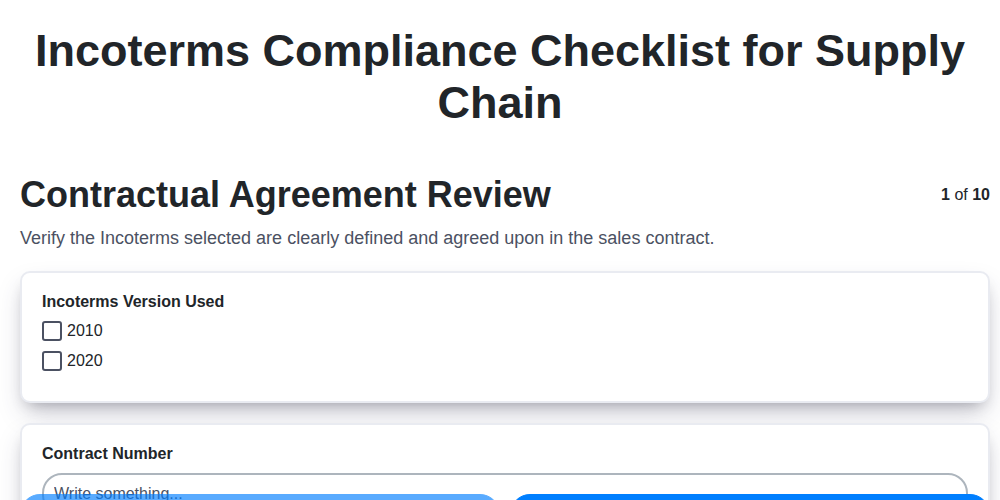
Incoterms Compliance Checklist for Supply Chain
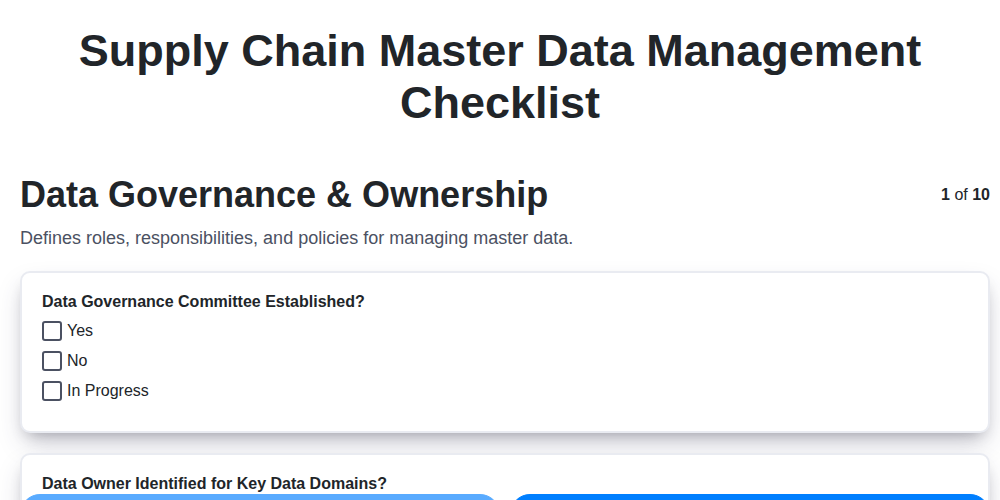
Supply Chain Master Data Management Checklist
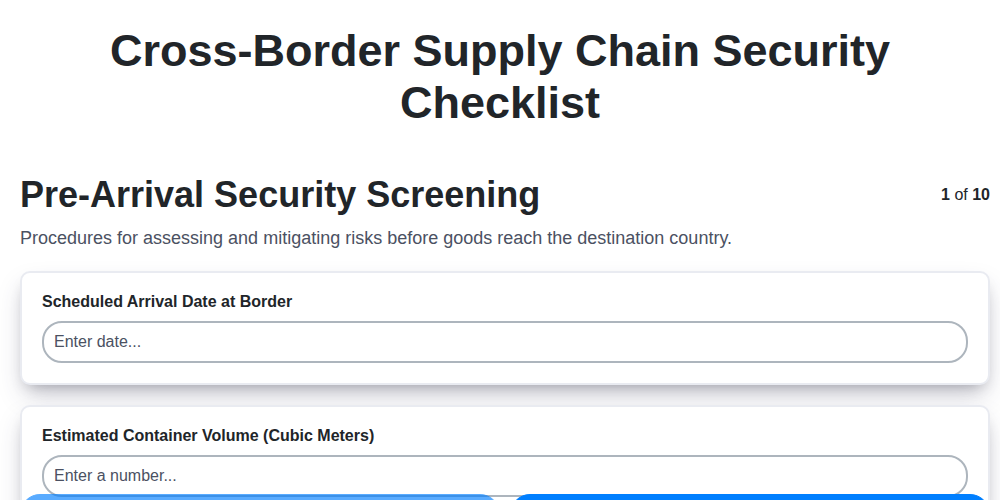
Cross-Border Supply Chain Security Checklist
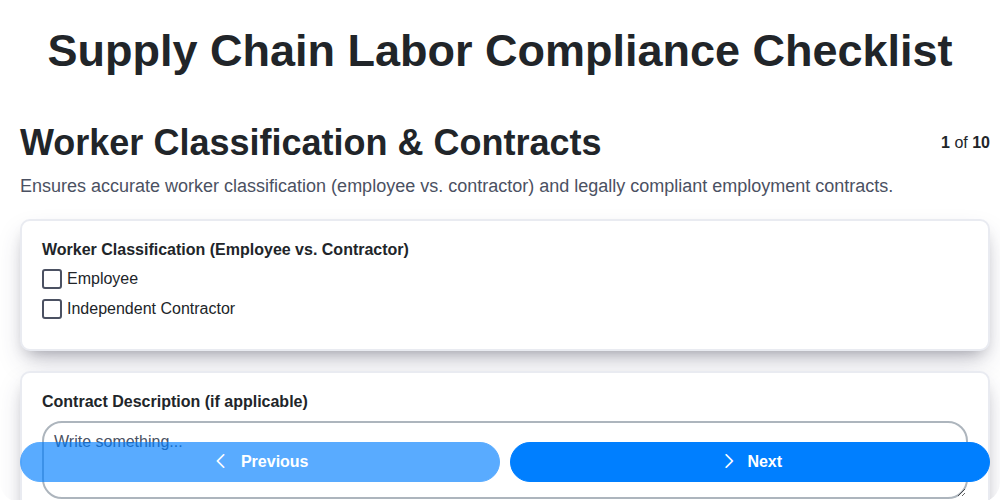
Supply Chain Labor Compliance Checklist
Free Trade Agreement (FTA) Compliance Checklist
Supply Chain Technology Implementation Checklist
Supply Chain Capacity Planning Checklist
Warehouse Receiving Process Compliance Checklist
Need help with
Supply Chain Management (SCM)?
Have a question? We're here to help. Please submit your inquiry, and we'll respond promptly.