 ChecklistGuro
 Supply Chain Resilience Assessment Checklist
Ensure your supply chain can weather any storm! Our Supply Chain Resilience Assessment Checklist helps you identify vulnerabilities, evaluate risks, and build a robust, adaptable network. Download now and future-proof your operations.
This Template was installed 1 times.
Business Impact Analysis
Assess potential impacts to revenue, operations, and reputation due to supply chain disruptions.
Estimated Revenue Loss per Day of Disruption
Potential Customer Churn Rate (%)
Describe Critical Business Functions Affected
Estimated Downtime Cost per Hour
Primary Impacted Business Unit
Date of Last Business Impact Analysis
Describe Potential Reputational Damage
Supplier Risk Assessment
Evaluate supplier financial health, geographic location, and potential vulnerabilities.
Supplier Financial Stability Score (1-10)
Supplier Geographic Location (Risk Level)
Description of Potential Supply Disruption Risks
Criticality of Goods/Services Provided
Last Risk Assessment Date
Supplier's Business Continuity Plan (BCP) Status
Supplier BCP Documentation (Optional)
Geopolitical & Environmental Risks
Identify potential disruptions from political instability, natural disasters, and climate change.
Geopolitical Risk Score (1-10)
Primary Geographic Risk Areas
Detailed Description of Relevant Geopolitical Risks
Date of Last Geopolitical Risk Assessment
Potential Impact of Environmental Events (e.g., Floods, Droughts)
Details of Specific Environmental Vulnerabilities (e.g., Region prone to hurricanes)
Estimated Financial Impact of Worst-Case Environmental Scenario
Logistics & Transportation Risks
Analyze risks related to transportation networks, infrastructure, and carrier dependencies.
Average Transit Time (Days)
Percentage of Shipments Delivered On-Time
Primary Transportation Mode(s)
Potential Transportation Bottlenecks
Description of Contingency Plans for Transportation Disruptions
Carrier Risk Level (High, Medium, Low)
Last Carrier Risk Assessment Date
Cybersecurity & Data Protection
Evaluate vulnerabilities in supply chain IT systems and data security measures.
Supplier Cybersecurity Assessment Completed?
Number of Cybersecurity Incidents in Last Year
Description of Data Encryption Methods Used
Regular Vulnerability Scanning Performed?
Security Protocols Implemented (select all that apply)
Last Cybersecurity Training Date
Inventory Management & Redundancy
Assess inventory levels, safety stock, and alternative sourcing options to buffer against shortages.
Safety Stock Level (Days of Supply)
Minimum Inventory Threshold
Inventory Management System Used
Inventory Redundancy Strategies Employed
Last Inventory Audit Date
Notes on Inventory Obsolescence Risk
Communication & Collaboration
Review communication protocols and collaboration processes with suppliers and stakeholders.
Communication Plan Exists?
Describe Communication Channels Used with Suppliers
Which Stakeholders are included in Communication?
Frequency of Supplier Communication (e.g., weekly, monthly)
Date of Last Supplier Communication Review
Summary of Key Messages Communicated to Suppliers
Recovery & Contingency Planning
Evaluate existing recovery plans, business continuity procedures, and disaster response capabilities.
Detailed Recovery Plan Description
Last Recovery Plan Update Date
Estimated Recovery Time Objective (RTO) - in hours
Estimated Recovery Point Objective (RPO) - in hours
Critical Functions Covered by Recovery Plan
Copy of Recovery Plan Document
Communication Plan for Incident Response
Primary Contact Person for Recovery Efforts
Testing & Training
Assess the frequency and effectiveness of resilience testing and training exercises.
Last Resilience Test Date
Number of Participants in Last Training Session
Training Topics Covered (Select all that apply)
Summary of Key Findings from Last Resilience Test
Type of Resilience Test Conducted
Next Scheduled Resilience Test Date
Frequency of Resilience Training (e.g., annually, bi-annually)
Compliance & Regulatory Considerations
Ensure alignment with relevant industry standards, regulations, and legal requirements.
Relevant Industry Standards?
Specific Regulatory Requirements (e.g., conflict minerals, anti-bribery)
Last Compliance Audit Date
Audit Score (if applicable)
Data Privacy Regulations (e.g., GDPR, CCPA)
Details Regarding Data Privacy Compliance
Frequently Asked Questions
Can I customize this template after installing it?
Absolutely. Once installed, you can add, remove, or reorder tasks, add custom fields, and adjust deadlines to fit your specific workflow.
Can I add images or photos to these checklist items?
Yes. Our platform allows you to attach photos, signatures, and notes to any checklist item for better verification and proof of completion.
Can I create a custom checklist from scratch instead of using a template?
Yes. You can use our "Create your own checklist" feature to build a unique workflow tailored exactly to your operational requirements.
Can I add dependencies between tasks?
Yes, you can set up conditional logic and dependencies to ensure your team follows the correct sequence of operations.
Can I assign specific checklist items to different team members?
Yes. You can assign individual tasks to specific employees, ensuring clear accountability across your entire team.
Can I use these checklists on mobile devices in the field?
Yes. Our platform is fully responsive, allowing your team to complete, update, and upload photos to checklists directly from any smartphone or tablet.
How do I notify my manager when a checklist is completed?
You can set up automated notifications (via email, push notification, or in-app alerts) to trigger whenever a checklist is finished or if an item fails inspection.
Can multiple people work on the same checklist simultaneously?
Yes, the platform supports real-time updates, allowing multiple users to contribute to a single live checklist.
Where is the data from completed checklists stored?
All completed checklists are stored securely in your Work OS dashboard, creating a permanent, searchable audit trail of your operations.
Can I generate reports based on my checklist results?
Yes. You can track completion rates, identify recurring issues, and monitor team performance through our integrated reporting and analytics tools.
How can I use these checklists for compliance or auditing purposes?
Because our checklists capture timestamps, photos, and digital signatures, they serve as a robust digital paper trail for regulatory compliance and internal audits.
Can I export my completed checklist data for use in other tools?
Yes. You can export your data in various formats (CSV, Excel, etc.) to integrate your operational insights with your other business software.
Comments
There are no comments yet. Be the first to add one!
SCM - Supply Chain Management Solution Demo
Struggling with supply chain disruptions & lack of visibility? ChecklistGuro delivers a centralized SCM solution, connecting your suppliers, manufacturers, & distributors for improved collaboration and control. Simplify operations & boost efficiency.
Related Checklist Templates
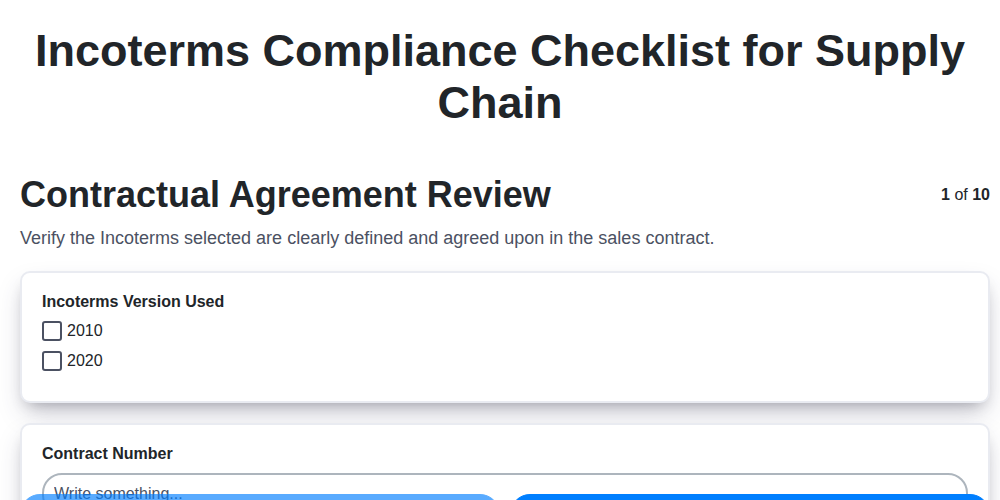
Incoterms Compliance Checklist for Supply Chain
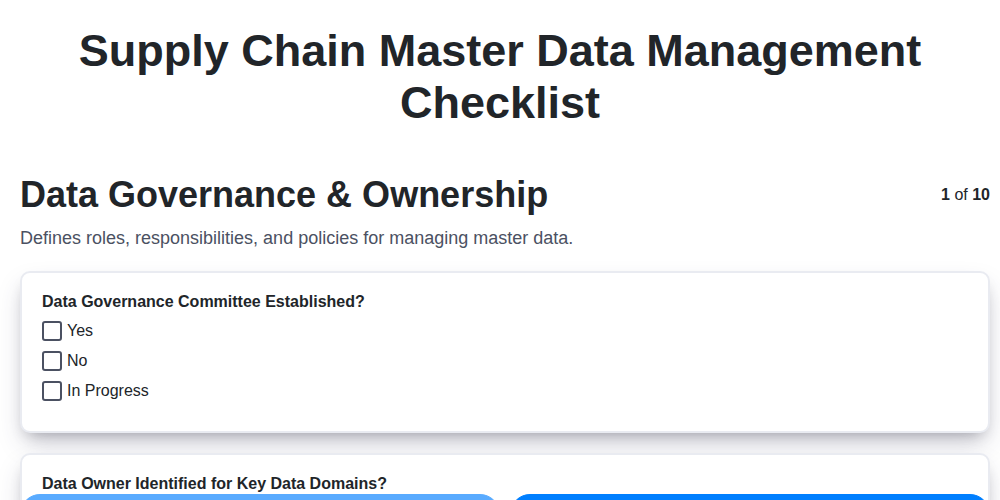
Supply Chain Master Data Management Checklist
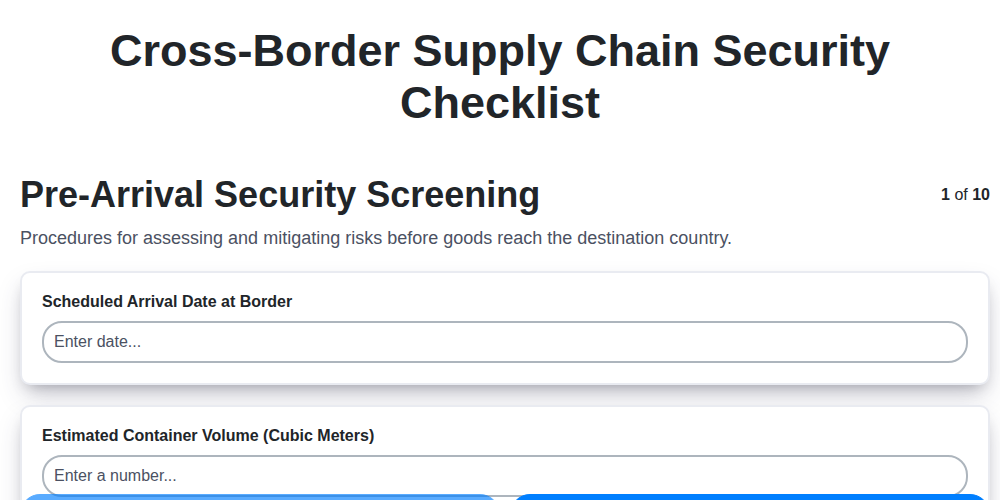
Cross-Border Supply Chain Security Checklist
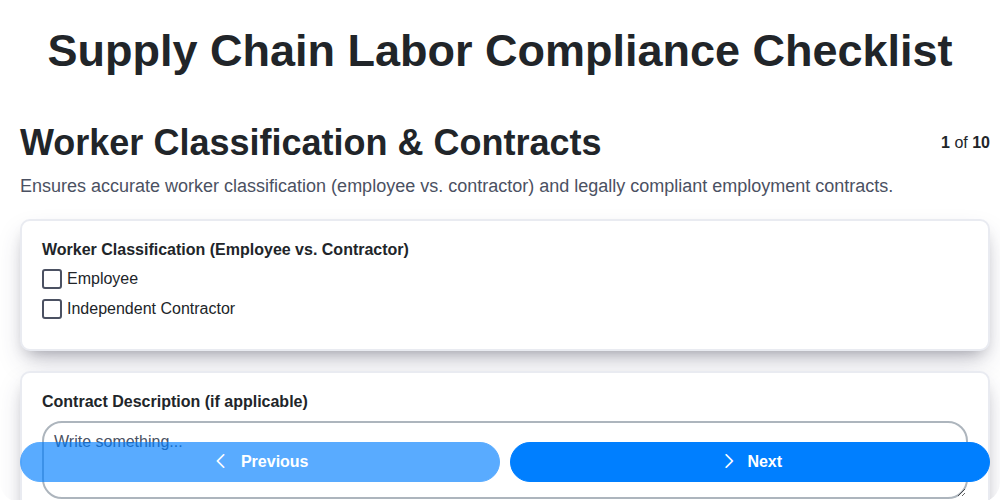
Supply Chain Labor Compliance Checklist
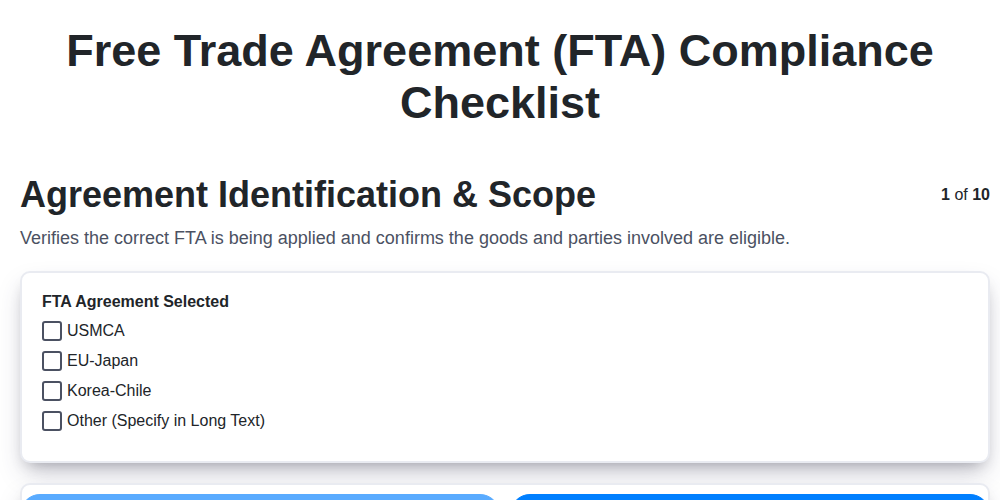
Free Trade Agreement (FTA) Compliance Checklist
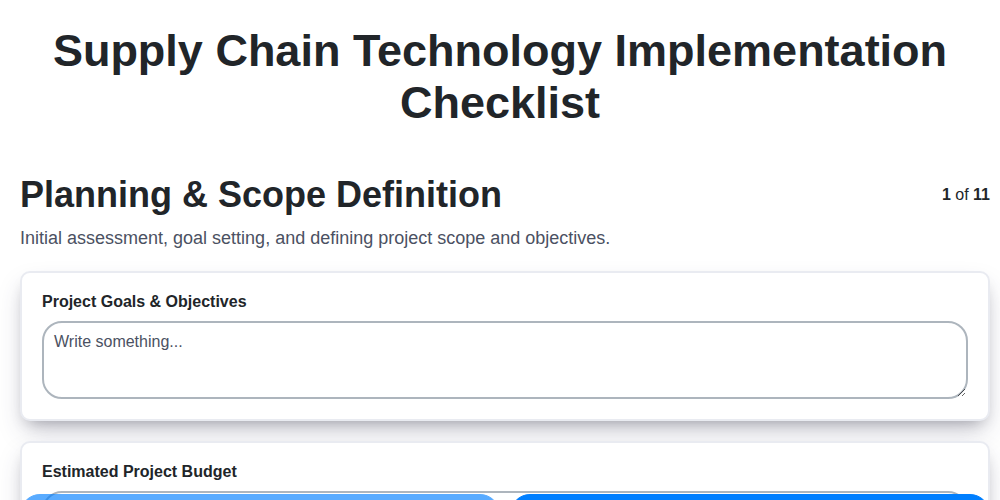
Supply Chain Technology Implementation Checklist
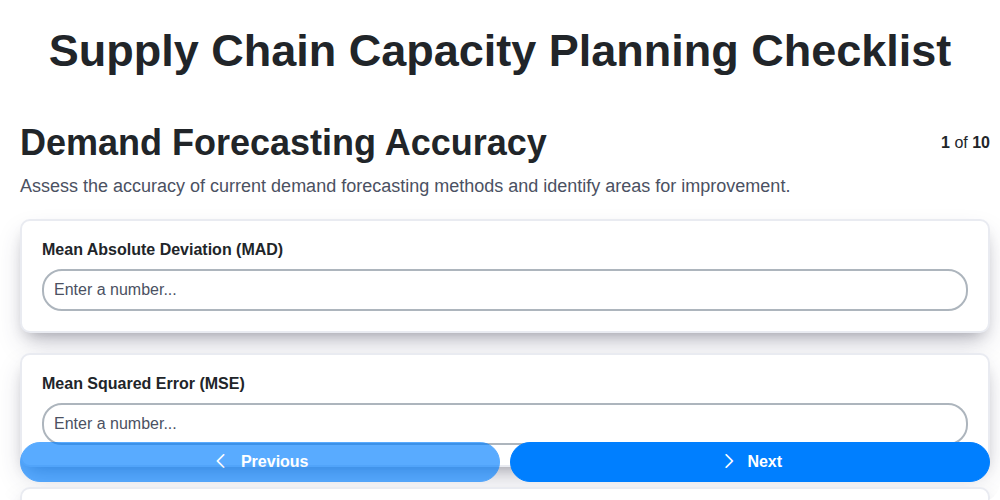
Supply Chain Capacity Planning Checklist
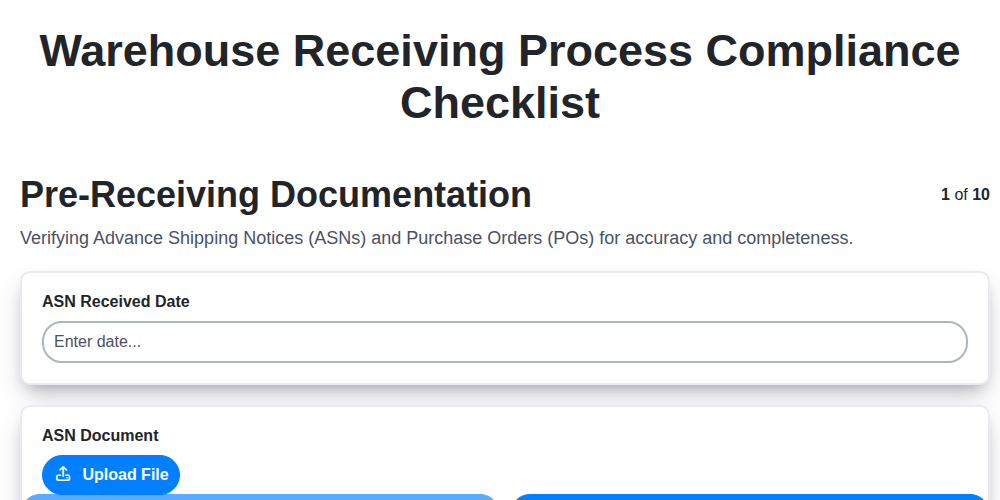
Warehouse Receiving Process Compliance Checklist
Need help with
Supply Chain Management (SCM)?
Have a question? We're here to help. Please submit your inquiry, and we'll respond promptly.