Accessibility Compliance Checklist for Rental Properties: A Landlord's Guide
Published: 11/26/2025 Updated: 07/02/2026
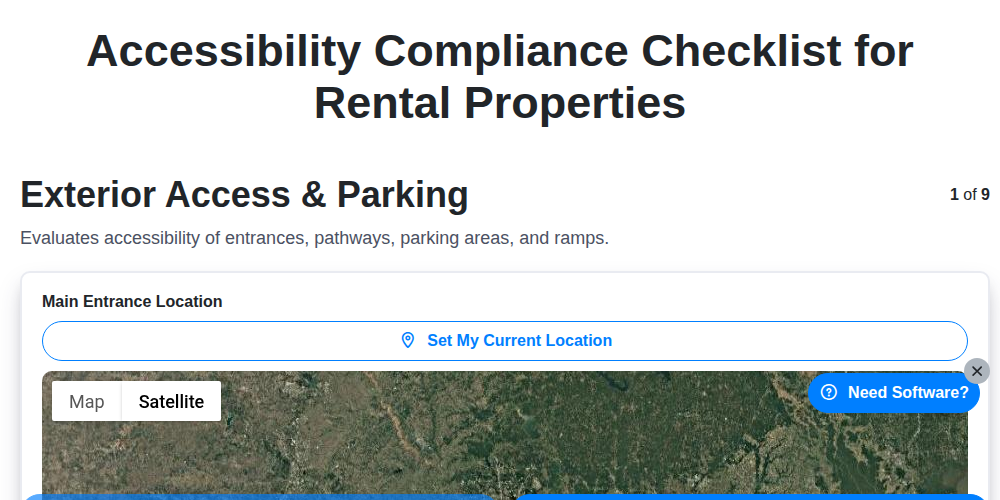
Table of Contents
- Introduction: Why Accessibility Matters
- Exterior Access & Parking: Setting the Foundation
- Common Areas: Navigating Shared Spaces
- Accessible Units: Features & Requirements
- Doors and Hardware: Ensuring Easy Operation
- Bathrooms: Crucial Accessibility Features
- Kitchens: Accessible Design Considerations
- Lighting & Signage: Clarity and Safety
- Emergency Systems: Accessible Alerts and Evacuation
- Documentation & Records: Keeping Proof of Compliance
- Resources & Links
TLDR: Ensuring your rental property is accessible isn't just good practice - it's often legally required! This checklist helps landlords easily assess and document accessibility compliance, covering everything from parking and common areas to accessible units and emergency systems. Download it, work through it, and create a safer, more inclusive space for all tenants.
Introduction: Why Accessibility Matters
Beyond legal requirements, ensuring accessibility in your rental properties isn't just about ticking boxes - it's about creating a welcoming and inclusive environment for everyone. It allows individuals with disabilities, seniors, and families with young children to enjoy comfortable and independent living. Providing accessible housing expands your potential tenant pool, fosters a stronger community, and demonstrates a commitment to social responsibility. Ultimately, accessibility benefits everyone, creating a more user-friendly and equitable experience for all residents and visitors.
Exterior Access & Parking: Setting the Foundation
First impressions matter, and for potential renters with disabilities, accessible exterior access and parking can be the deciding factor. This section focuses on ensuring a smooth and safe arrival experience.
Parking:
- Accessible Parking Spaces: Ensure the required number of accessible parking spaces are provided according to local regulations (typically based on the total number of spaces).
- Striping and Signage: Clearly mark accessible parking spaces with the International Symbol of Accessibility (ISA). Proper signage is crucial.
- Access Aisles: Provide ample access aisles adjacent to accessible parking spaces - these must be wide enough for vehicles with mobility devices to maneuver safely. Check dimensions against ADA guidelines.
- Surface & Slope: The parking surface should be stable, firm, and slip-resistant. Avoid steep slopes; the maximum permissible slope is typically 1:50.
- Distance to Entrance: The distance between accessible parking spaces and the accessible entrance should be as short as possible.
Exterior Pathways & Entrances:
- Ramps: Provide ramps where changes in level are unavoidable. Ramps must meet slope, width, and handrail requirements as outlined in accessibility codes.
- Level Surfaces: Aim for level or gently sloped pathways leading to entrances.
- Surface Stability: Pathways should be stable, firm, and slip-resistant.
- Obstacle-Free: Keep pathways clear of obstructions like landscaping, furniture, and debris.
- Accessible Entrances: Provide at least one accessible entrance with a level or ramped approach, automatic door openers (where feasible), and adequate maneuvering space.
Common Areas: Navigating Shared Spaces
Common areas are frequently used by all residents and guests, making accessibility crucial. This includes hallways, lobbies, laundry rooms, gyms, pools, and any other shared spaces. Here's what to consider:
- Ramps and Elevators: Ensure ramps have appropriate slopes and handrails, and elevators are functioning correctly and have accessible controls (tactile and visual).
- Clear Pathways: Keep hallways and walkways free of obstructions. Consider the turning radius needed for wheelchairs and walkers - a minimum of 36 inches is generally required.
- Accessible Routes to Amenities: Ensure accessible routes exist from accessible units to all common amenities.
- Accessible Seating: Provide at least some accessible seating options in common areas like lobbies or waiting areas. This includes chairs with armrests and backs, at varying heights.
- Accessible Laundry Facilities: Ensure laundry rooms have accessible machines at appropriate heights, accessible folding tables, and maneuvering space.
- Pool Accessibility: If a pool is present, consider options like zero-entry access, lifts, or transfer benches to allow individuals with disabilities to safely enter and exit.
- Playground Accessibility: If a playground is included, ensure accessible surfacing and play equipment is available.
- Regular Maintenance: Regularly inspect and maintain common areas to ensure accessibility features remain functional and safe.
Accessible Units: Features & Requirements
Accessible units, also known as adaptable or visitable units, are crucial for ensuring fair housing opportunities. They go beyond basic accessibility; they aim to accommodate individuals with a wider range of disabilities and those using mobility aids. Here's a breakdown of key features and requirements landlords should consider:
Unit Design & Layout:
- Open Floor Plan: Minimizing obstructions and creating space for maneuverability is paramount. This often means eliminating unnecessary walls or creating wider hallways.
- Accessible Kitchen: Consider roll-under sinks, accessible countertops, and flexible cabinet heights to accommodate wheelchair users.
- Accessible Bathrooms: As detailed further in the Bathrooms section, accessible bathrooms are essential (grab bars, accessible toilets, roll-in showers or accessible tub).
- Clear Space: Ensure adequate turning space (at least 36 inches diameter) within the unit for maneuvering wheelchairs or other mobility devices.
- Accessible Closets: Shelving should be adjustable and reach heights are important.
Specific Requirements & Considerations (Beyond Basic Accessibility):
- Door Width: A minimum of 32 inches clear width is required.
- Turning Space: As mentioned, ample turning space is vital.
- Accessible Outlets & Switches: Placement at accessible heights (36-48 inches) is a must.
- Visual & Audible Alarms: Consider features to aid residents with visual or hearing impairments.
- Accessible Windows: Operable windows within reach from a seated position.
- Flexible Design: While adhering to accessibility standards, consider a design that can be adapted further if a tenant requires specific modifications. Document any possible modification points in the unit's design plan.
Fair Housing Act Considerations: Remember that the Fair Housing Act requires reasonable accommodations for tenants with disabilities. Be prepared to discuss and approve reasonable modifications that would further enhance accessibility beyond the baseline accessible unit design.
Doors and Hardware: Ensuring Easy Operation
Doors and hardware present common barriers for individuals with disabilities. This section focuses on ensuring ease of access and operation.
Door Widths: All entries to accessible units and common areas must have a clear opening of at least 32 inches (81 cm) when the door is open 90 degrees to the clear side. Consider thresholds - they should be flush or be no more than ¼ inch high. If a threshold is greater than ¼ inch, a beveled edge is required.
Door Weight & Effort: Doors shouldn't be unduly heavy or require excessive force to open. Consider the weight and leverage involved. A good rule of thumb is that doors should be easily operable by someone using a wheelchair or with limited strength.
Hardware: Door handles, levers, and knobs must be operable with one hand and without twisting or pinching. Lever handles are strongly preferred over doorknobs. Hardware should have a short lever arm and be positioned within accessible heights (typically 34-48 inches from the floor).
Automatic Door Openers: Consider installing automatic door openers at primary entrances, particularly for individuals with mobility impairments or those using assistive devices.
Door Clearance: Ensure adequate maneuvering clearance is available on both sides of doors, allowing for easy passage with a wheelchair or other mobility devices. This includes considering any furniture or obstructions near doorways.
Regular Inspection: Schedule routine inspections to ensure door hardware remains functional and in good repair. A sticking door or malfunctioning lever can quickly negate accessibility efforts.
Bathrooms: Crucial Accessibility Features
Bathrooms are often a critical area for accessibility compliance in rental properties. Here's a breakdown of key considerations:
- Clear Space: Ensure ample clear floor space (at least 30 x 48) is available for maneuvering within the bathroom. This applies to the area in front of the toilet, sink, and shower/tub.
- Toilet Height: Toilets should be between 17-19 inches high (measured to the top of the seat).
- Sink Accessibility: Sinks should have clear space underneath, allowing for knee clearance. The rim of the sink should be no higher than 34 inches. Consider installing lever-handled faucets.
- Shower/Tub: Provide a roll-in shower if possible, with a threshold no higher than 1/2 inch. If a tub is present, ensure grab bars are installed (see below). Shower controls should be accessible with one hand and reach from outside the shower.
- Grab Bars: Strategically placed grab bars are vital. These should be securely mounted and meet specific length and diameter requirements. Consider horizontal and vertical grab bars near the toilet, in the shower/tub, and near the doorway.
- Non-Slip Flooring: Implement slip-resistant flooring materials to minimize fall risks.
- Mirror Height: Ensure mirrors are positioned at a height accessible to individuals using a wheelchair or seated.
Kitchens: Accessible Design Considerations
Kitchens can present significant accessibility challenges for renters with disabilities. Beyond just functionality, thoughtful design can promote independence and safety. Here's what to consider:
- Clear Floor Space: Ensure ample turning space (at least 30" diameter) around work areas, appliances, and the sink. Avoid clutter and obstructions.
- Countertop Heights: Offer a range of countertop heights or adjustable counters where possible. Ideally, some sections should be no higher than 34 inches to accommodate wheelchair users.
- Sink Access: Provide knee space under the sink, ideally between 28-34 inches high, with insulated pipes to prevent burns. Faucet controls should be lever-operated and easily reachable.
- Appliance Accessibility: Dishwashers, ovens, and microwaves should have controls accessible from a seated position (no higher than 48 inches). Side-opening ovens are preferable. Consider pull-out shelves in lower cabinets for easier access.
- Cabinet Hardware: Install lever-handled cabinet pulls instead of knobs for easier gripping.
- Range/Cooktop Placement: Ensure sufficient space for maneuvering around the cooktop, and consider the placement of controls for easy reach and visibility.
- Storage: Provide a mix of open shelving and accessible storage solutions to minimize reaching and bending.
Lighting & Signage: Clarity and Safety
Adequate lighting and clear signage are crucial for accessibility, not just for those with visual impairments but for everyone. Dimly lit areas pose a hazard, while confusing signage can lead to frustration and potential accidents.
Here's what to consider:
- Exterior Lighting: Ensure pathways, entrances, and parking areas are well-lit. Motion-sensor lights can be helpful but should be supplemented with consistent illumination.
- Interior Corridors & Common Areas: Hallways and shared spaces need sufficient, even lighting, free of glare. Consider adjustable lighting options where possible.
- Accessible Unit Lighting: Accessible units should have well-placed lighting that is easily reachable and controllable by individuals with limited reach or mobility. Recessed lighting is often a good choice.
- Signage: Use clear, legible fonts (sans-serif are generally best) and high contrast color combinations (e.g., dark text on a light background or vice versa). Consider using tactile and Braille signage for crucial locations like accessible entrances, unit numbers, and emergency exits.
- Sign Placement: Signs should be placed at appropriate heights - generally between 48 and 72 inches - and should be easily visible from a seated position.
- Directional Signage: Provide clear directional signage to accessible features, units, and amenities.
- Emergency Signage: Ensure emergency exit signage is illuminated and meets accessibility standards (e.g., tactile, Braille).
Emergency Systems: Accessible Alerts and Evacuation
Ensuring the safety of all residents, including those with disabilities, during emergencies is paramount. This section focuses on accessible emergency systems within your rental properties.
Audible and Visual Alarms: Standard smoke and carbon monoxide detectors are often insufficient for residents with hearing impairments. Consider installing visual alarms (strobing lights) that complement audible alerts. Ensure these are strategically placed for maximum visibility throughout the unit and common areas.
Emergency Evacuation Plans: Your emergency evacuation plans must include accommodations for residents with disabilities. This includes:
- Designated Assistance: Identify and train staff or resident volunteers to assist residents with disabilities during evacuations.
- Accessible Evacuation Routes: Clearly marked and unobstructed evacuation routes are crucial. Avoid stairs where possible; prioritize ramps and elevators (ensuring elevators have backup power).
- Area of Refuge Designation: Consider designating Areas of Refuge - safe zones within the building where residents with disabilities can wait for assistance during an evacuation. These areas should be clearly marked and provide temporary protection.
- Communication During Emergencies: Develop a clear and accessible communication system to provide updates and instructions during emergencies. This could include written notices, public address systems with visual display options, or designated text alerts.
- Practice Drills: Conduct regular emergency drills, including scenarios that simulate the needs of residents with disabilities. Get feedback from residents to improve the effectiveness of the drills.
Backup Power: Ensure critical systems like elevators, emergency lighting, and accessible alarms have backup power sources to function during power outages.
Documentation: Keep detailed records of emergency system maintenance, inspections, and modifications, including dates, descriptions of work performed, and certifications. This demonstrates due diligence and helps maintain compliance.
Documentation & Records: Keeping Proof of Compliance
Meeting accessibility requirements isn't just about the physical changes; it's about demonstrating that you're meeting them. Maintaining thorough documentation and records is crucial for legal protection, potential audits, and demonstrating a commitment to inclusivity. Here's what you need to track:
- Original Design Plans & Specifications: Keep copies of architectural plans and specifications that incorporate accessibility features. These serve as evidence of your initial intent.
- Construction Records: Retain all contractor reports, invoices, permits, and inspection records related to accessibility modifications or new construction. These verify that work was completed according to code.
- Accessibility Feature Inventories: Create a detailed inventory of all accessibility features in each unit and common area (ramps, accessible parking spaces, grab bars, etc.). This helps with ongoing maintenance and future modifications.
- Maintenance Logs: Document all maintenance and repairs performed on accessibility features. This shows you're actively preserving their functionality.
- Policy Statements: Have written policies regarding reasonable accommodations for individuals with disabilities. Ensure these are easily accessible to residents and applicants.
- Complaint Records: Maintain a log of any accessibility-related complaints received, along with details of how they were addressed and resolved.
- Training Records: Keep records of any accessibility training provided to staff, particularly those involved in leasing, maintenance, or emergency response.
- Review Dates: Establish a schedule for reviewing accessibility documentation and updating it as needed to reflect changes in regulations or property modifications.
Consistent and organized record-keeping provides tangible evidence of your commitment to accessibility compliance and safeguards your rental property.
Resources & Links
- Americans with Disabilities Act (ADA): The official website of the ADA, providing comprehensive information on legal requirements, technical assistance, and resources for compliance. Essential for understanding the core legislation.
- U.S. Department of Housing and Urban Development (HUD): HUD provides guidance on Fair Housing Act accessibility requirements, particularly concerning reasonable accommodations and modifications. Important for understanding tenant rights and landlord responsibilities.
- U.S. Department of Justice - Fair Housing Act: Details about the Fair Housing Act, including accessibility requirements for multifamily dwellings. Helps landlords avoid discrimination claims.
- U.S. Access Board: The Access Board develops and maintains accessibility standards for buildings and other facilities, including guidelines for new construction and alterations. Offers detailed technical specifications.
- National Association of Home Builders (NAHB): While primarily for builders, NAHB offers resources and training on accessible housing construction, including checklists and best practices. Useful for understanding practical application of standards.
- Disability.gov: A federal government website providing information and resources on disability-related topics, including housing accessibility. Offers a wide range of information for landlords and tenants.
- ANSI (American National Standards Institute): ANSI accredits standards developers. Many accessibility standards (like those referenced by the ADA) are developed under the ANSI process. Understanding ANSI accreditation helps verify the validity of standards.
- International Code Council (ICC): The ICC develops building codes, which often incorporate accessibility standards. Provides detailed requirements for construction and alterations.
- Accessible Planning Consultants, Inc.: Provides Accessibility Consulting services, includes articles and resources for landlords, designers, and builders to ensure compliance.
- McMullen Accessibility Group: Another accessibility consulting firm with resources, webinars and articles on ensuring accessibility in rental properties.
- Habitat for Humanity: While focused on building affordable housing, Habitat often incorporates accessibility features and offers insights into universal design principles that are applicable to rental properties.
Frequently Asked Questions
What does accessibility compliance mean for rental properties?
Accessibility compliance refers to adhering to laws and guidelines ensuring people with disabilities have equal access to and usability of rental properties. This includes physical accessibility, communication accessibility, and accessible policies. It's primarily driven by the Americans with Disabilities Act (ADA) and Fair Housing Act (FHA).
Which laws govern accessibility for rental properties?
The primary laws are the Americans with Disabilities Act (ADA) and the Fair Housing Act (FHA). The FHA specifically prohibits discrimination in housing based on disability and requires reasonable accommodations and modifications. Some state and local laws may also apply.
Does this checklist apply to all rental properties?
Not necessarily. Compliance requirements often depend on factors like property size, type (single-family vs. multi-family), and whether it's considered a 'covered multifamily dwelling'. This checklist is a general guide; specific requirements will depend on your property's specifics. Always consult with legal counsel for definitive answers.
What is a 'reasonable accommodation' and how does it relate to accessibility?
A reasonable accommodation is a change in rules, policies, practices, or services that allows a person with a disability to have equal opportunity to use and enjoy a dwelling. Examples include allowing an assistance animal or modifying a parking space. Landlords must provide reasonable accommodations unless doing so poses an undue hardship.
What is a 'reasonable modification'?
A reasonable modification is a physical change to a property that allows a person with a disability to access or use the dwelling. These are often the tenant's responsibility, but landlords may be required to make some modifications. It must be reasonable and not pose an undue hardship.
What constitutes an 'undue hardship' for a landlord?
An undue hardship means the accommodation or modification would be too costly, disruptive, or difficult to implement. Factors considered include the landlord's financial resources, the building's design, and the impact on other residents. Detailed documentation is crucial if denying a request.
What are some common accessibility modifications I should consider?
Common modifications include accessible entrances (ramps, automatic door openers), accessible bathrooms (grab bars, roll-in showers), accessible kitchens (adjustable counters, clear floor space), accessible parking spaces, and accessible signage.
How do I ensure my website and online application process is accessible?
Your website and online application should adhere to Web Content Accessibility Guidelines (WCAG). This includes providing alternative text for images, providing captions for videos, ensuring keyboard navigation, and using clear and understandable language.
What signage should I have to comply with accessibility requirements?
Accessible signage includes Braille and raised characters on important signs like entrances, exits, parking spaces, laundry rooms, and emergency routes. Signage should also be appropriately sized and positioned.
Where can I find more information about accessibility compliance?
Several resources are available: the U.S. Department of Housing and Urban Development (HUD), the Americans with Disabilities Act National Network, and your local housing authority. Consulting with an accessibility specialist or attorney is highly recommended.
Comments
There are no comments yet. Be the first to add one!
Real Estate Management Solution Demo
Simplify your real estate operations! ChecklistGuro streamlines property management, lease renewals, and maintenance requests. Enhance tenant satisfaction and maximize ROI. Manage it all with our Work OS.
Related Articles
Stress-Free Inspections: Your Home Inspection Coordination Checklist Template
The Ultimate Website Maintenance Checklist Template
10 Essential Checks: Your Brokerage Policy Review Checklist
The Ultimate Office Opening/Closing Checklist Template
Your Ultimate AML Compliance Checklist Template
Rent Collection Checklist Template: Your Landlord's Guide
Your Complete Flood Zone Disclosure Checklist Template
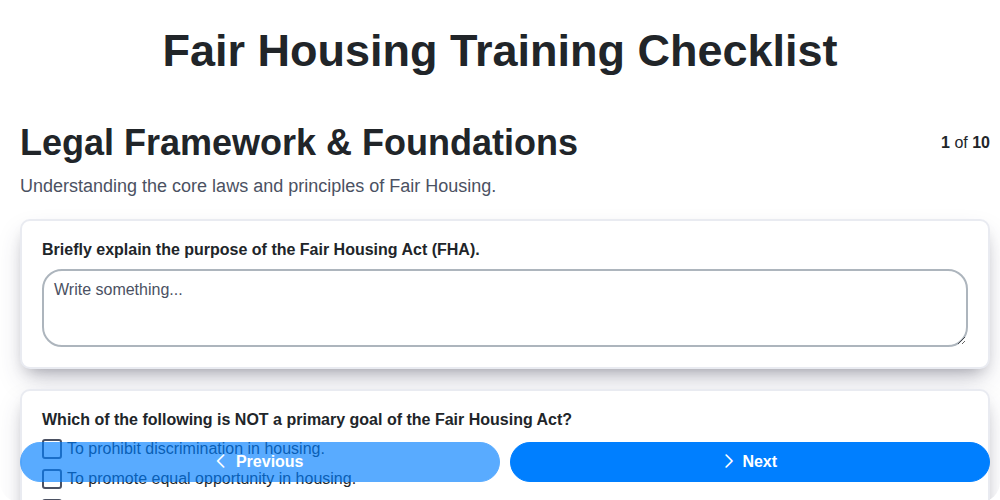
Fair Housing Training Checklist Template: Your Guide to Compliance
Need help with
Real Estate?
Have a question? We're here to help. Please submit your inquiry, and we'll respond promptly.