Automotive Collision Repair Estimate Checklist: A Step-by-Step Guide
Published: 29/12/2025 Updated: 30/12/2025
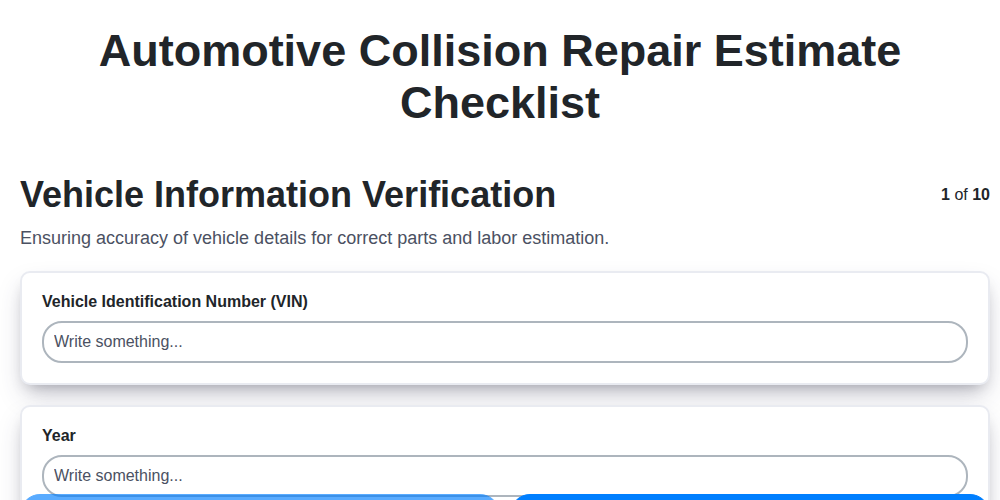
Table of Contents
- Introduction: Why a Detailed Estimate is Crucial
- 1. Vehicle Information Verification: Laying the Foundation
- 2. Comprehensive Damage Assessment & Documentation: Seeing the Full Picture
- 3. Parts Identification & Sourcing: Finding the Right Components
- 4. Labor Time Calculation: Estimating the Work Hours
- 5. Sublet Work Estimation: Outsourcing Specialty Repairs
- 6. Supplements & Hidden Damage Contingency: Preparing for the Unexpected
- 7. Sales Tax and Fees Calculation: Understanding Additional Costs
- 8. Estimate Review and Approval: Ensuring Accuracy and Compliance
- 9. Customer Communication & Explanation: Transparency Builds Trust
- 10. Estimate Documentation & Storage: Maintaining Records for Accountability
- 11. Common Pitfalls to Avoid in Estimating
- 12. Utilizing Technology for Accurate Estimating
- Conclusion: Delivering Accurate Estimates and Customer Satisfaction
- Resources & Links
TLDR: This checklist ensures accurate and complete automotive collision repair estimates. It covers everything from verifying vehicle details and documenting damage to calculating labor, sourcing parts, and accounting for potential hidden issues - ultimately protecting your shop and keeping customers informed with a transparent, professional estimate.
Introduction: Why a Detailed Estimate is Crucial
An automotive collision repair estimate isn't just a number; it's a roadmap for restoring a vehicle to its pre-accident condition. A rushed or inaccurate estimate can lead to costly surprises for both the repair shop and the customer. It sets the foundation for a transparent and successful repair process. A comprehensive estimate builds trust, minimizes disputes, and ensures that the repair is completed correctly and within budget. It protects the shop from underbids and potential legal issues, while providing the customer with a clear understanding of the work to be performed, the associated costs, and the expected timeline. Ultimately, a meticulous estimate is the cornerstone of a positive collision repair experience.
1. Vehicle Information Verification: Laying the Foundation
Before we even begin assessing the damage, ensuring we have accurate vehicle information is paramount. This isn't just about getting the right parts - it's about liability, insurance processing, and ultimately, providing the correct service. Double-check everything!
Here's what we verify:
- Vehicle Identification Number (VIN): This is the key identifier. Verify it against the vehicle registration and insurance documents. A mismatch can lead to significant issues later.
- Year, Make, and Model: Confirming these basics helps ensure we're referencing the correct repair procedures and parts catalogs.
- Trim Level: Different trim levels often have unique components and features, impacting parts and repair complexity.
- Mileage: While not always directly related to the repair, mileage can provide context regarding the vehicle's overall condition.
- Registration Information: Validate ownership and contact details for communication purposes.
- Insurance Information: Obtain all relevant policy details and claim number for seamless insurance processing.
Accuracy at this stage prevents costly errors and frustration down the line. It's the cornerstone of a reliable collision repair estimate.
2. Comprehensive Damage Assessment & Documentation: Seeing the Full Picture
A thorough damage assessment is the cornerstone of an accurate collision repair estimate. It's more than just identifying dents and scratches; it's about understanding the extent of the damage and potential hidden issues. Here's how we approach it:
- Detailed Visual Inspection: Our technicians conduct a meticulous, 360-degree inspection of the vehicle, documenting every imperfection - from minor scratches to frame damage. We look beyond the obvious, checking undercarriage components, wheel wells, and interior surfaces.
- Panel Measurements: Utilizing specialized tools, we precisely measure panel gaps, heights, and alignment. This is crucial for ensuring the vehicle's structural integrity and cosmetic perfection after repair. Deviations from factory specifications are carefully recorded.
- Photographic Evidence: Extensive photos are taken of every damaged area, including close-ups and wide-angle shots. These photos serve as a visual record of the damage's condition before any repairs are undertaken and are invaluable for communication with insurance companies and customers.
- Scanning for Hidden Damage: Depending on the severity of the impact, we may utilize diagnostic scanning tools to check for hidden damage to sensors, electrical components, and structural elements not immediately visible.
- OEM Repair Procedures: We consult Original Equipment Manufacturer (OEM) repair procedures to understand specific repair techniques and requirements for each vehicle make and model.
3. Parts Identification & Sourcing: Finding the Right Components
Accurate parts identification is the backbone of a reliable collision repair estimate. It's far more than just looking up a part number; it's about ensuring the right components are used for optimal safety, performance, and structural integrity.
Here's a breakdown of how we handle parts identification and sourcing:
- OEM vs. Aftermarket vs. Recycled: We meticulously evaluate the client's preferences and insurance requirements to determine the appropriate parts source. Original Equipment Manufacturer (OEM) parts are direct replacements from the vehicle manufacturer, guaranteeing fit and quality. Aftermarket parts offer a cost-effective alternative while adhering to industry standards. Recycled (used) parts are a sustainable option, carefully inspected and tested for functionality.
- VIN Verification: The Vehicle Identification Number (VIN) is our primary tool for accurate parts identification. It unlocks a wealth of information about the vehicle's specifications, including the correct part numbers.
- Catalog Research & Cross-Referencing: Our experienced estimators utilize comprehensive parts catalogs and cross-referencing tools to confirm part compatibility. This includes checking for variations based on trim levels, production dates, and regional differences.
- Supplier Relationships: We've built strong relationships with reputable parts suppliers to ensure timely availability and competitive pricing. We prioritize suppliers who offer warranties and return policies on their parts.
- Advanced Driver Assistance Systems (ADAS) Considerations: Modern vehicles often incorporate ADAS components, such as cameras, radar, and sensors. Replacing these parts requires specialized knowledge and recalibration to maintain functionality - we ensure this is factored into the estimate.
Accurate parts sourcing minimizes delays and ensures a complete, high-quality repair.
4. Labor Time Calculation: Estimating the Work Hours
Accurately calculating labor time is crucial for a fair and profitable collision repair estimate. It's more than just guessing; it's a process that relies on industry standards, technician skill levels, and the complexity of the damage.
We primarily use industry-recognized labor guides, such as Mitchell or Audatex, as a starting point. These guides provide estimated labor times for various repair operations based on vehicle make, model, and the specific tasks required. However, these are just guidelines!
Several factors influence the actual time needed:
- Technician Skill Level: A seasoned technician will often work faster than a junior one. We account for this in our calculations.
- Damage Complexity: A minor dent requires less time than a crumpled panel needing full replacement. We carefully consider the severity and extent of the damage.
- Vehicle Condition: Rust, previous repairs, or aftermarket modifications can significantly increase labor time. We factor these into the assessment.
- OEM Procedures: Many manufacturers have specific repair procedures that technicians must follow, which can impact time.
We meticulously review the damage assessment and identify all necessary repair operations. Then, we consult the labor guide and adjust the estimated times based on the factors mentioned above. We always aim to provide a realistic labor estimate that reflects the true scope of the work involved, ensuring fairness for both our shop and our customer. We're happy to explain our labor calculations in detail if you have any questions.
5. Sublet Work Estimation: Outsourcing Specialty Repairs
Not all collision repair work can, or should, be handled in-house. Certain repairs require specialized skills, equipment, or expertise that your shop may not possess. This is where sublet work comes into play. Properly estimating the cost of these services is crucial for accuracy and profitability.
Here's what to consider when estimating sublet work:
- Identify Necessary Sublet Work: Determine which repairs (e.g., frame straightening, radiator repair, complex alloy wheel repair, headlight restoration) require outsourcing.
- Contact Reputable Subletters: Get quotes from several reputable subletters. Don't just go with the cheapest; consider their reputation, turnaround time, and quality of work.
- Clearly Define Scope: Ensure the subletter understands the exact work required. Detailed descriptions prevent misunderstandings and potential cost overruns. Include photos if necessary.
- Factor in Transportation Costs: Remember to include the cost of transporting the vehicle to and from the subletter. This can be a significant factor, especially for shops located far from specialist providers.
- Allow for Contingency: Sublet work can sometimes present unexpected challenges. Adding a small contingency (typically 5-10%) to the sublet cost can help cover unforeseen issues.
- Document Everything: Keep detailed records of all communication, quotes, and agreements with the subletter. This protects your shop and provides transparency for the customer.
6. Supplements & Hidden Damage Contingency: Preparing for the Unexpected
Collision repair is rarely a straightforward process. While we strive for accuracy in our initial assessments, hidden damage is a frustrating reality - and one we're prepared for. This "supplement" process is a crucial part of ensuring your vehicle is repaired correctly and safely.
What constitutes a supplement? It's essentially an addition to the original estimate when unforeseen damage is discovered during the repair process. This could be anything from rust hidden beneath panels to underlying structural issues revealed once a component is removed.
We build a contingency into our estimates to account for this potential. This isn't a "guesswork" amount; it's a reasonable allowance based on experience and industry best practices. However, if significant hidden damage is found, we'll contact you immediately to explain the situation and request authorization for the additional work and associated costs. We'll provide detailed explanations, including photos and descriptions, so you understand exactly what's been discovered and why it needs to be addressed.
Transparency and your consent are paramount. We won't proceed with any supplemental work without your explicit approval. Our goal is to provide a complete and quality repair, even if it means dealing with unexpected challenges - and keeping you informed every step of the way.
7. Sales Tax and Fees Calculation: Understanding Additional Costs
Beyond the cost of parts and labor, collision repair estimates often include sales tax and various fees. Understanding these additions is crucial for transparency and managing customer expectations.
Sales Tax: Most states have sales tax applicable to parts used in automotive repairs. The rate varies by location, so it's vital to apply the correct rate based on the vehicle's registered address, or the repair facility's location depending on local regulations. It's important to clearly indicate on the estimate which parts are subject to sales tax.
Fees - What Are They? Several common fees might appear on your estimate. These often cover costs associated with the shop's operations and regulatory compliance. Examples include:
- Shop Fees: These are often a flat charge covering things like facility overhead, waste disposal, and administrative costs. While sometimes debated, they are generally considered acceptable if disclosed.
- Environmental Fees: These cover the costs of properly disposing of hazardous materials like paint, solvents, and fluids.
- HVAC Recharging Fee: If the vehicle's air conditioning system needs servicing or refrigerant needs to be added, this fee covers those costs.
- Rental Car Fee (if applicable): If a rental car is needed during the repair process, this reflects the cost of securing and covering the rental.
- Tire Disposal Fee: For tires replaced or removed during the repair process.
Transparency is Key: Always clearly itemize these charges on the estimate, with a brief explanation of what they cover. Avoid vague terms; specific language builds trust and reduces confusion. Customers appreciate knowing why these additional costs are included.
8. Estimate Review and Approval: Ensuring Accuracy and Compliance
Before presenting the estimate to the customer, a thorough review and approval process is absolutely critical. This isn't just about catching typos; it's about safeguarding your business, ensuring accuracy, and setting realistic expectations.
Multiple Eyes on the Details: Ideally, a second qualified estimator or experienced technician should review the estimate. A fresh perspective can often catch errors or omissions the original estimator might have missed. This review should focus on verifying:
- Part Numbers and Descriptions: Confirm that all parts listed are the correct replacements for the vehicle's make, model, and year.
- Labor Hours: Verify that the labor hours calculated are appropriate for the complexity of the repairs and align with industry standards and your shop's labor rates.
- Sublet Work: Ensure the sublet work estimates are accurate and reflect agreements with vendors.
- Hidden Damage Contingency: Validate that the contingency allowance is reasonable based on the nature and extent of the damage.
- Compliance with Regulations: Double-check the estimate for compliance with all applicable state and local regulations regarding pricing, taxes, and environmental fees.
Internal Sign-Off: Implement an internal sign-off process. This not only ensures accuracy but also creates a record of responsibility if issues arise later. The approving individual should be a manager or senior staff member with a solid understanding of collision repair processes and pricing.
Documentation is Key: Keep detailed records of this review process. This includes noting who reviewed the estimate, when, and any changes made. This strengthens your position in case of disputes or audits.
9. Customer Communication & Explanation: Transparency Builds Trust
Once the estimate is complete, it's crucial to thoroughly explain it to the customer. Don't just hand them a document filled with codes and numbers; take the time to walk them through each section.
- Explain the Process: Briefly recap the assessment process, reminding them of the damage you observed and the steps you took to determine the necessary repairs.
- Break Down the Costs: Clearly explain each line item - parts, labor, sublet work - and the rationale behind the pricing. Use layman's terms and avoid industry jargon. A visual aid, like pointing to the damage while explaining the corresponding repair, can be incredibly helpful.
- Address Supplements: Be upfront about the possibility of supplements (additional work) due to hidden damage. Explain what that means and how you're including a contingency for those potential issues. This manages expectations and avoids surprises later.
- Answer Questions: Encourage questions and be prepared to answer them patiently and honestly. This shows you value their understanding and build trust.
- Review Insurance: If they're filing an insurance claim, explain your role and how you'll work with the insurance adjuster.
- Confirm Understanding: Before they sign, ask them to confirm that they understand everything outlined in the estimate. A simple, Do you have any further questions or concerns? goes a long way.
10. Estimate Documentation & Storage: Maintaining Records for Accountability
Accurate and complete documentation isn't just good practice; it's crucial for legal protection, efficient workflow, and customer satisfaction. Every collision repair estimate, from initial assessment to final invoice, needs a secure and organized storage system.
Here's what's involved:
- Digital is Key: Opt for a digital estimate management system. This allows for easy searching, sharing, and backups. Paper estimates are prone to loss and difficult to manage efficiently.
- Comprehensive Records: Store everything - the original estimate, any supplements or change orders, photos/videos of the damage, parts lists, labor breakdowns, sublet quotes, and customer communications.
- Version Control: Clearly label each version of the estimate to track changes and ensure everyone is working off the most current information.
- Retention Policy: Establish a clear retention policy. How long will you store these records? This is often dictated by legal requirements and warranty obligations. A minimum of 3-7 years is generally recommended.
- Security & Access: Secure your digital files with appropriate passwords and access controls. Limit access to authorized personnel only.
- Backup Strategy: Implement a robust backup strategy - cloud storage, external hard drives - to prevent data loss due to hardware failure or other unforeseen circumstances.
- Audit Trails: Utilize a system that provides an audit trail, tracking who accessed and modified estimates, adding another layer of accountability.
Proper estimate documentation and storage protects your business and ensures transparency with your customers.
11. Common Pitfalls to Avoid in Estimating
Creating a collision repair estimate isn't just about adding up numbers; it's a critical process that directly impacts your shop's reputation, profitability, and customer satisfaction. Here's a look at common pitfalls to watch out for:
- Underestimating Hidden Damage: This is the biggest headache. Rushing the initial assessment to get the customer in the door often leads to underestimated estimates and costly supplements later. A thorough inspection, including panel measurements and, where applicable, using diagnostic tools, is essential.
- Ignoring OEM Procedures: Many modern vehicles require specific repair methods outlined by the Original Equipment Manufacturer (OEM). Failing to follow these procedures (e.g., using specific welding techniques, using OEM-approved parts) can lead to rework, warranty claims, and unhappy customers.
- Parts Discrepancies & Availability: Relying on outdated parts catalogs or not verifying parts availability before finalizing the estimate is a recipe for delays. Always double-check parts numbers and lead times.
- Inaccurate Labor Time: Overlooking a step in the repair process or incorrectly calculating labor hours can significantly impact profitability. Refer to reputable labor guides and consider the complexity of the repair.
- Forgetting Supplements: Not accounting for potential supplements, even with a good initial inspection, can leave you exposed to unexpected costs and potential disputes. Factor in a reasonable contingency.
- Ignoring Shop Fees: Failing to clearly outline and justify shop fees (administration, rental car, etc.) can lead to confusion and complaints. Transparency is key.
- Not Documenting Thoroughly: Inadequate documentation (photos, notes, measurements) makes it difficult to defend your estimate if questions or disputes arise.
- Assuming Part Compatibility: Not verifying the compatibility of aftermarket parts with the vehicle's systems (e.g., ADAS features) can lead to installation issues and functionality problems.
- Ignoring Inflation and Market Fluctuations: Parts prices and labor rates can change. Ensure your estimating software and data are up-to-date to reflect current market conditions.
- Failing to Review and Validate: A rushed estimate is a flawed estimate. Always have a senior technician or estimator review the estimate before presenting it to the customer.
- Lack of System Integration: Disconnected systems (parts sourcing, labor guides, estimating software) increase the risk of errors and inefficiencies. Integrate your tools for a smoother workflow.
12. Utilizing Technology for Accurate Estimating
The days of handwritten estimates and relying solely on experience are fading fast. Modern collision repair estimating demands precision, efficiency, and thoroughness - and technology is the key to achieving all three. Investing in and effectively using digital estimating software isn't just a nice-to-have; it's a necessity.
These platforms offer a wealth of benefits. They incorporate constantly updated parts catalogs, allowing for accurate parts identification and pricing. Built-in labor guides and repair procedures streamline time calculations, reducing errors and ensuring fair pricing. Many programs integrate with parts suppliers, allowing for real-time inventory checks and automated ordering. Photo documentation tools allow for comprehensive damage recording, providing a visual record for both the shop and the customer.
Furthermore, cloud-based solutions allow for easy access to estimates from anywhere, facilitating collaboration between estimators, technicians, and even insurance adjusters. This transparency enhances communication and reduces potential misunderstandings. While learning a new system takes time, the long-term gains in accuracy, efficiency, and customer satisfaction are well worth the investment. Don't let your shop fall behind - embrace the power of technology to elevate your estimating process.
Conclusion: Delivering Accurate Estimates and Customer Satisfaction
Ultimately, a thorough and meticulous collision repair estimate isn't just about numbers; it's about building trust and ensuring customer satisfaction. By consistently following this checklist - from verifying vehicle information to proactively addressing potential hidden damage - your shop demonstrates professionalism and transparency. Accurate estimates minimize disputes, reduce rework, and foster long-term customer loyalty. Remember, a well-documented and clearly communicated estimate is your best defense against misunderstandings and a key ingredient in delivering exceptional service in the collision repair industry.
Resources & Links
- Mitchell International: A leading provider of collision repair estimating software and data solutions. Offers resources, blogs, and industry insights.
- CCC Information Services: Another major provider of collision repair software and data. Offers articles, webinars, and industry trends.
- Automotive Service Association (ASA): A trade association offering resources for auto repair shops, including information on estimating and pricing.
- Collision Advice: A website dedicated to providing content and resources for collision repair professionals, including articles on estimating and management.
- AkzoNobel (Axalta): A global paint and coatings provider; often provides industry insights and technical data relevant to collision repair and estimating, especially regarding material costs.
- Automotix: Provides collision repair management software that often includes estimating tools and reporting. Their website offers insights into the processes they support.
- GEICO: While primarily an insurance company, GEICO's website provides general information on car repair costs and the estimating process, which can be helpful for understanding customer expectations.
- I-CAR: Provides training and resources for collision repair professionals. While not solely focused on estimating, their education covers repair processes and associated costs.
- RepairLink: A platform connecting insurance companies, repair shops, and customers. Their website contains information on the repair process and the role of estimating.
- NAPA Auto Parts: Major auto parts supplier; their website offers parts information and catalog data useful for parts identification and sourcing in estimating.
- Hogan Systems: Estimating and shop management software, their website contains helpful articles and webinars for collision repair shops.
Frequently Asked Questions
What is a collision repair estimate and why is it important?
A collision repair estimate is a detailed breakdown of the work needed to repair damage to your vehicle after an accident. It's important because it outlines the cost of repairs, parts needed, labor hours, and any related services, ensuring transparency and helping you understand the overall scope of the work. It's a crucial document for insurance claims and budgeting for repairs.
Who needs to use this checklist?
This checklist is beneficial for anyone involved in the collision repair process, including vehicle owners, insurance adjusters, and collision repair technicians. It helps ensure a thorough and accurate assessment of the damage and a comprehensive estimate.
What are the initial steps in creating a collision repair estimate?
The initial steps involve a thorough visual inspection of the vehicle, both inside and out, documenting all damage. This includes photographing the damage, noting any hidden or latent damage (damage not immediately visible), and checking for safety-related components that may be affected, like airbags and sensors.
What constitutes 'latent damage' and why is it important to identify?
Latent damage is damage that isn't immediately apparent after an accident. It can be hidden underneath panels or within mechanical components. Identifying latent damage is vital for creating an accurate estimate and preventing future issues. It often requires further investigation and disassembly.
What's the difference between a 'drive-in' estimate and a 'drive-out' estimate?
A 'drive-in' estimate involves a physical inspection of the vehicle, allowing for a more detailed assessment. A 'drive-out' estimate is often based on photos or limited information, and may be less accurate. Drive-in estimates are generally preferred for better accuracy.
How does a collision repair facility document the damage accurately?
Accurate documentation involves detailed photographs from various angles, a written description of the damage, and identification of any affected parts or systems. Using a digital estimating system with pre-populated parts lists and repair procedures is also common.
What's the significance of checking for OEM (Original Equipment Manufacturer) vs. aftermarket parts?
OEM parts are manufactured by the vehicle's original manufacturer and generally ensure the best fit and performance. Aftermarket parts are produced by other companies and may be less expensive but could differ in quality or fit. The choice often depends on insurance coverage and customer preference.
How are labor hours determined in a collision repair estimate?
Labor hours are determined by using a published labor rate guide, which provides estimated times for specific repair tasks. The complexity of the repair, technician skill level, and the use of specialized equipment can influence labor hours.
What is a 'supplemental estimate' and when is it needed?
A supplemental estimate is an amendment to the original estimate, usually created when latent damage is discovered, or the scope of the repair changes. It's submitted to the insurance company for approval before proceeding with the additional work.
What should I do if I disagree with the collision repair estimate?
If you disagree with the estimate, discuss your concerns with the repair facility. They should be able to explain the breakdown of costs. You can also obtain a second opinion from another repair shop. For insurance-related concerns, contact your insurance adjuster directly.
Comments
There are no comments yet. Be the first to add one!
Automotive Manufacturing Management Solution Demo
Optimize your automotive production! ChecklistGuro digitizes workflows, from parts inspection to final testing. Reduce errors, boost efficiency & ensure quality compliance. Drive results with our Work OS.
Related Articles
The Ultimate Automotive Sales Prospect Follow-Up Checklist: Close More Deals
Mastering Automotive BOM Configuration: Your Essential Checklist

The Ultimate Vehicle Registration & Insurance Validation Checklist
Automotive Parts Inventory Audit Checklist Template: Your Guide to Accurate Stock

Maximize Your Trade-In: The Automotive Appraisal Checklist You Need
The Ultimate Tire Pressure & Condition Checklist Template
Automotive Parts Inventory Control Checklist Template: Your Ultimate Guide

Drive Sales Success: Your Automotive Sales Team Performance Tracking Checklist
We can do it Together
Need help with
Automotive?
Have a question? We're here to help. Please submit your inquiry, and we'll respond promptly.