Automotive Data Privacy Compliance Checklist: Your Step-by-Step Guide
Published: 12/29/2025 Updated: 12/30/2025
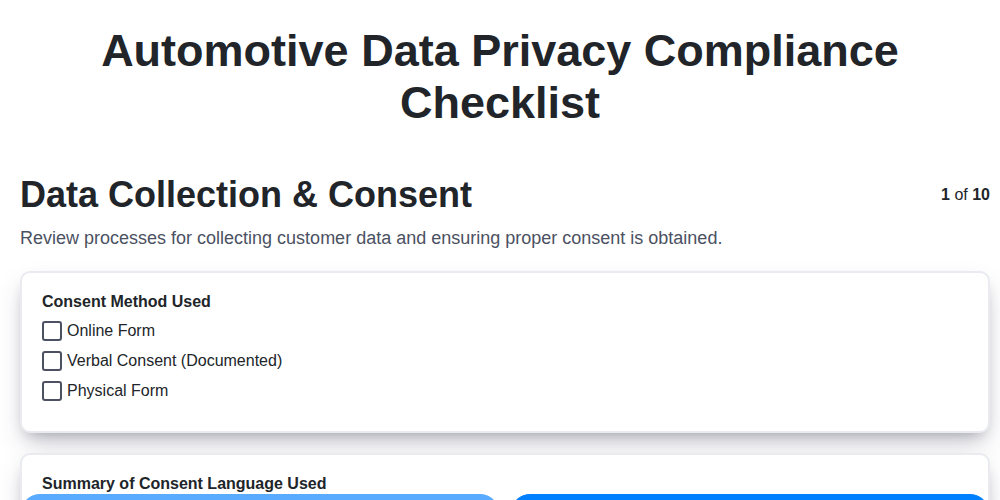
Table of Contents
- Introduction: Why Automotive Data Privacy Matters
- 1. Data Collection & Consent: Transparency is Key
- 2. Data Storage & Security: Protecting Sensitive Information
- 3. Data Access & Usage: Limiting Access and Purpose
- 4. Data Subject Rights (Access, Correction, Deletion): Fulfilling Individual Requests
- 5. Third-Party Vendor Management: Assessing Your Partners
- 6. Data Breach Response Plan: Preparing for the Unexpected
- 7. Training and Awareness: Empowering Your Team
- 8. Legal and Regulatory Compliance: Navigating the Landscape (GDPR, CCPA, etc.)
- 9. Website and Online Privacy Policy: Clear and Accessible Information
- 10. Regular Audits and Updates: Staying Ahead of Changes
- 11. Mapping Your Data Flows
- 12. Data Minimization: Collecting Only What's Necessary
- 13. Privacy by Design & Default
- Conclusion: Building Trust and Maintaining Compliance
- Resources & Links
TLDR: Navigating automotive data privacy can be complex! This checklist provides a clear, step-by-step guide to ensure you're compliant with regulations like GDPR and CCPA. It covers everything from getting proper consent to responding to data breaches, so you can build trust with customers and avoid hefty fines.
Introduction: Why Automotive Data Privacy Matters
The automotive industry is undergoing a dramatic transformation, fueled by connected car technologies, electric vehicles, and the rise of mobility-as-a-service. This shift means vehicles are generating unprecedented amounts of data - from driving habits and location information to infotainment preferences and diagnostic reports. This data is incredibly valuable, enabling improvements in vehicle design, personalized services, and targeted advertising. However, it also presents significant privacy risks for drivers and passengers.
Consumers are increasingly concerned about how their data is being collected, used, and shared. A breach of trust can have serious consequences, impacting brand reputation, consumer loyalty, and ultimately, business success. Moreover, stringent data privacy regulations worldwide, like GDPR, CCPA, and emerging legislation, are holding automotive companies accountable for protecting personal information. Ignoring these concerns isn't just unethical - it's a legal and financial risk. This checklist is designed to provide a roadmap for automotive companies to navigate this complex landscape and build a culture of data privacy.
1. Data Collection & Consent: Transparency is Key
In the automotive industry, the sheer volume of data generated - from connected car services to dealership customer information - is staggering. Ensuring you collect this data ethically and legally starts with clear and unambiguous consent. Here's what you need to consider:
- Define Data Collected: Precisely identify what data you are collecting. Be specific - vehicle performance data, location data, customer contact information, etc. Don't use vague terms.
- Purpose Specification: Explain why you're collecting the data. Are you using it for vehicle maintenance reminders, personalized advertising, or improving vehicle design? Be explicit.
- Layered Notices: Consider using layered notices - a brief, easily understandable summary followed by a link to a more detailed explanation.
- Opt-In vs. Opt-Out: Generally, for sensitive data (like location data or data used for targeted advertising), opt-in consent is required. Clearly demonstrate how users can actively grant permission.
- Plain Language: Avoid legal jargon. Use language easily understood by the average consumer.
- Record Keeping: Document consent - when it was obtained, how, and what the user agreed to. This is crucial for demonstrating compliance.
- Revocation of Consent: Provide a simple and straightforward mechanism for users to withdraw their consent at any time. Make this process equally easy as initially granting it.
Failure to obtain proper consent can lead to significant penalties and reputational damage. Transparency builds trust and demonstrates your commitment to protecting customer privacy.
2. Data Storage & Security: Protecting Sensitive Information
Automotive data, including customer details, vehicle information, and even driving behavior, is a goldmine - and a target. Robust data storage and security measures are paramount to prevent breaches and maintain customer trust. This isn't just about ticking a box; it's about building a culture of security.
Here's what you need to be doing:
- Encryption at Rest & In Transit: Employ strong encryption for all stored data (at rest) and any data transmitted (in transit). This renders data unreadable if intercepted. Consider using industry-standard encryption algorithms and regularly review their strength.
- Secure Infrastructure: Your data storage infrastructure - whether on-premise servers or cloud-based services - must be hardened against attacks. Implement firewalls, intrusion detection systems, and regularly patch vulnerabilities.
- Access Controls: Strictly limit access to data based on the principle of least privilege. Only authorized personnel should have access, and this should be regularly reviewed and adjusted. Implement multi-factor authentication (MFA) wherever possible.
- Data Minimization: Only collect and store the data you absolutely need. Reducing the data footprint minimizes the potential damage from a breach. Review data retention policies to ensure data isn't stored longer than necessary.
- Regular Security Assessments: Conduct periodic vulnerability scans and penetration testing to identify and address weaknesses in your data storage systems.
- Secure Development Practices: If you develop your own applications that handle automotive data, integrate security considerations throughout the development lifecycle (DevSecOps).
- Data Backups & Disaster Recovery: Implement a robust backup and disaster recovery plan to ensure data availability in the event of a system failure or disaster. Regularly test these procedures.
- Cloud Security (If Applicable): If utilizing cloud services, understand the shared responsibility model. You are responsible for securing your data within the cloud environment, even though the provider manages the infrastructure.
3. Data Access & Usage: Limiting Access and Purpose
It's not enough to simply collect data; you need to strictly control who has access to it and why. This section focuses on defining clear purposes for data usage and implementing robust access controls.
Define Purpose Limitations: When obtaining consent, be specific about how the data will be used. A vague statement like to improve our services isn't sufficient. Examples include: "to provide you with personalized offers," "to analyze website traffic and optimize performance," or "to process your warranty claim." Stick to these stated purposes. Re-purposing data without explicit consent is a significant compliance risk.
Role-Based Access Control (RBAC): Implement RBAC to ensure employees only have access to the data necessary for their specific job functions. A sales representative shouldn't need access to engineering data, for instance. Regularly review and update these roles.
Data Minimization: Only collect and retain the minimum amount of data needed to fulfill the stated purpose. If a piece of information isn't essential, don't collect it. Regularly evaluate existing data retention policies and delete data that is no longer needed.
Usage Tracking and Monitoring: Implement systems to track how data is being used and who is accessing it. This allows you to identify potential misuse or unauthorized access.
Data Masking/Pseudonymization: Where possible, use data masking or pseudonymization techniques to reduce the risk of exposure when data is accessed for analysis or other non-essential purposes. This replaces identifiable data with non-identifiable substitutes.
Analytics and Profiling: If you're using data for analytics or profiling, ensure transparency and provide users with clear explanations of how their data is being used for these purposes. Provide opt-out options where applicable.
4. Data Subject Rights (Access, Correction, Deletion): Fulfilling Individual Requests
Data subject rights - the ability for individuals to access, correct, and delete their personal data - are cornerstones of modern data privacy regulations like GDPR, CCPA, and others. Automotive companies collect substantial amounts of data, and proactively addressing these rights isn't just about compliance; it's about building trust with customers.
Understanding the Rights:
- Right to Access: Individuals have the right to know what data you hold about them and how it's being used. This requires a clear and efficient process for providing data extracts.
- Right to Rectification (Correction): Customers can request inaccuracies in their data be corrected. You must have a system for verifying requests and updating records accordingly.
- Right to Erasure (Deletion/"Right to be Forgotten"): While not always absolute (e.g., data required for legal obligations), individuals can request their data be deleted. You need a defined process for identifying and removing data across all systems.
Practical Steps for Automotive Businesses:
- Establish a Clear Request Process: Create a readily accessible and straightforward process for individuals to submit access, correction, or deletion requests. This should be clearly outlined in your privacy policy. Consider online forms, dedicated email addresses, or physical mail options.
- Verification Procedures: Implement robust verification procedures to ensure requests are legitimate and originate from the data subject. This might involve confirming identity through multiple factors.
- Defined Response Times: Regulations often dictate specific response times. Be aware of these and establish internal timelines to meet them.
- Data Mapping is Key: Knowing where your data resides is crucial for fulfilling deletion requests. Comprehensive data mapping is essential.
- Automated Tools (Consideration): For larger datasets, consider implementing tools to help manage and respond to data subject requests more efficiently.
- Documentation: Document all requests received, actions taken, and justifications for any denials. This demonstrates accountability and can be vital for audits.
Responding to data subject requests promptly and accurately isn't just a legal obligation; it's a key differentiator in a data-driven world.
5. Third-Party Vendor Management: Assessing Your Partners
Your automotive data privacy compliance doesn't end with your own internal practices. It extends to every company you share data with - your third-party vendors. These can include marketing platforms, data analytics providers, CRM systems, cloud storage services, and more. A data breach at a vendor can directly impact your organization and expose your customers' information.
Here's what you need to do to manage vendor risk effectively:
- Inventory Your Vendors: Create a comprehensive list of all vendors who access, process, or store customer data. Don't assume you know - actively identify them.
- Due Diligence & Risk Assessment: Before engaging a vendor, conduct thorough due diligence. Evaluate their data privacy and security practices. This should include reviewing their privacy policies, security certifications (e.g., SOC 2, ISO 27001), and data processing agreements. Categorize vendors by risk level based on the sensitivity of data they handle and the potential impact of a breach.
- Data Processing Agreements (DPAs): These are essential. Ensure DPAs are in place that clearly define:
- The types of data shared.
- The vendor's permitted uses of the data.
- Data security obligations.
- Data retention periods.
- Sub-processor management (who they use).
- Notification requirements for data breaches.
- Ongoing Monitoring: Don't just set it and forget it. Regularly review vendor compliance with the DPA and industry best practices. Conduct periodic audits (or request audit reports) and stay informed about any changes to their security posture.
- Right to Audit: Include a right to audit clause in your agreements, allowing you to verify their compliance directly.
- Exit Strategy: Plan for data return and secure disposal when a vendor relationship ends. Ensure a process exists to retrieve data and terminate access.
Failing to properly manage third-party vendors can be a significant compliance gap, leading to fines, reputational damage, and loss of customer trust.
6. Data Breach Response Plan: Preparing for the Unexpected
Even with the most robust security measures, data breaches can happen. A well-defined Data Breach Response Plan isn't a sign of failure; it's a sign of preparedness and a commitment to protecting customer data. This plan should outline clear steps to take immediately following a suspected or confirmed breach, minimizing damage and ensuring swift, compliant resolution.
Here's what your plan should include:
- Identification & Containment: Define procedures for identifying a breach (monitoring logs, anomaly detection) and immediately containing it to prevent further data loss. This might involve isolating affected systems.
- Assessment & Notification: Establish a team to assess the scope and severity of the breach. Determine what data was compromised and who is affected. Outline timelines and protocols for notifying affected individuals, regulatory bodies (like the GDPR authorities or state AGs), and law enforcement, as required by law.
- Communication Strategy: Develop pre-approved communication templates for internal teams, customers, media, and stakeholders. Designate a spokesperson to handle media inquiries.
- Remediation & Recovery: Detail steps to repair vulnerabilities, restore systems, and prevent future breaches. This could involve patching software, strengthening passwords, and updating security protocols.
- Documentation & Post-Incident Analysis: Thoroughly document the entire incident, including timeline, actions taken, and lessons learned. Conduct a post-incident analysis to identify root causes and improve security practices.
Pro Tip: Regularly test your Data Breach Response Plan through simulated exercises (tabletop drills) to identify weaknesses and ensure all team members understand their roles. This proactive approach is crucial for minimizing the impact of a real-world breach.
7. Training and Awareness: Empowering Your Team
Data privacy compliance isn't just about ticking boxes; it's about fostering a culture of privacy within your organization. Your team - from sales and marketing to engineering and customer service - needs to understand their roles in protecting customer data.
Why is training crucial? A single employee mistake, like accidentally sharing sensitive information or falling for a phishing scam, can compromise your entire compliance posture and expose you to significant risk.
What should your training cover?
- Data Privacy Fundamentals: Explain the principles of data privacy, relevant regulations (e.g., GDPR, CCPA), and why compliance is important.
- Specific Responsibilities: Clearly define each team member's role in handling data - what they can do, what they shouldn't do, and who to contact with questions.
- Data Handling Best Practices: Cover secure data storage, password management, email security, and secure disposal methods.
- Phishing and Social Engineering Awareness: Equip employees to identify and report suspicious emails, links, and requests.
- Incident Reporting Procedures: Train employees on how and when to report potential data breaches or privacy incidents.
Beyond the Initial Training: Ongoing refresher training, updates on evolving regulations, and simulated phishing exercises are essential to maintain a strong privacy culture and ensure continued compliance. Don't just train once; make data privacy an ongoing conversation and priority.
8. Legal and Regulatory Compliance: Navigating the Landscape (GDPR, CCPA, etc.)
The automotive industry is facing increasing scrutiny regarding data privacy, and staying compliant isn't just a best practice-it's a legal necessity. A patchwork of regulations, both globally and within the United States, demands a layered and proactive approach. Let's break down some key frameworks you need to be aware of:
Globally: GDPR (General Data Protection Regulation) - This EU regulation sets a high bar for data protection, impacting any organization that processes the personal data of EU residents, regardless of location. Key considerations include lawful basis for processing, data minimization, and transparency. Failure to comply can result in substantial fines.
United States - State Laws: The US landscape is significantly more fragmented, with a growing number of state-level privacy laws emerging. Some prominent examples include:
- CCPA/CPRA (California Consumer Privacy Act/California Privacy Rights Act): Grants California consumers the right to know, delete, and opt-out of the sale of their personal information. CPRA significantly expanded on the original CCPA, introducing new rights and obligations.
- CDPA (Colorado Privacy Act): Similar to CCPA/CPRA, it grants Colorado residents rights over their personal data and mandates specific data processing requirements.
- Virginia CDPA (Virginia Consumer Data Protection Act): Provides Virginia consumers with data rights and requires businesses to implement reasonable data security measures.
- Utah Consumer Privacy Act: Similar rights and obligations as other state laws.
- Other Emerging State Laws: Numerous other states are actively considering or have passed similar legislation. Staying abreast of these developments is crucial.
Automotive Specific Considerations: Beyond these general privacy laws, be mindful of industry-specific regulations that might impact your data handling practices. These could include regulations related to vehicle telematics data, connected car services, and the use of location data.
Proactive Steps:
- Map Your Data Flows: Understand where data originates, how it's processed, and where it resides.
- Legal Counsel: Engage with legal professionals specializing in data privacy to interpret regulations and ensure compliance.
- Stay Updated: Continuously monitor legislative changes and regulatory guidance.
- Documentation: Maintain thorough records of your compliance efforts.
9. Website and Online Privacy Policy: Clear and Accessible Information
Your website and online privacy policy are often the first point of contact for customers and regulators alike. It's not enough to simply have a privacy policy; it needs to be readily accessible, clearly written, and genuinely informative.
Here's what you need to ensure your automotive data privacy policy covers:
- Transparent Data Practices: Clearly explain what data you collect, how you collect it (e.g., through website forms, connected car features, dealer interactions), and why you collect it. Avoid overly technical jargon and use plain language.
- Data Usage Details: Detail how you use the collected data. Be specific about things like targeted advertising, personalized services, data analytics, and sharing with third parties (with appropriate disclosures - see Vendor Management section).
- Links to Other Policies: Provide clear links to other relevant privacy notices or supplements that provide more detail about specific data collection practices (e.g., a connected car privacy notice).
- Cookie Policy: A separate (or integrated) cookie policy is crucial. Explain what cookies you use, their purpose, and how users can manage their cookie preferences.
- Accessibility: Ensure the policy is easily found on your website (usually in the footer) and is mobile-friendly. Consider offering it in multiple languages if you operate internationally.
- Regular Review & Updates: Your privacy policy must be a living document, reviewed and updated regularly to reflect changes in data practices, regulations, or technology. Clearly indicate the Last Updated date.
- Contact Information: Provide easy-to-find contact information (email address, phone number) for users to reach out with privacy-related inquiries or concerns.
10. Regular Audits and Updates: Staying Ahead of Changes
Automotive data privacy isn't a "set it and forget it" endeavor. Regulations evolve, technologies shift, and your own data processing practices will likely change over time. That's why regular audits and updates are absolutely critical for maintaining compliance.
What Should Your Audits Cover?
- Review Data Flows: Trace the journey of data from collection to deletion. Identify any gaps or weaknesses in your data handling processes.
- Verify Consent Management: Ensure consent mechanisms remain valid and accurately reflect current data processing activities. Are you still obtaining explicit consent when required?
- Assess Security Controls: Evaluate the effectiveness of your security measures. Have there been any recent vulnerabilities discovered that require immediate attention?
- Test Compliance with Regulations: Ensure your practices align with the latest interpretations of regulations like GDPR, CCPA, and others relevant to your operations.
- Evaluate Third-Party Compliance: Regularly audit your vendors to confirm they continue to meet your data privacy requirements.
Frequency and Scope:
- Annual Audits: A comprehensive review of all data privacy practices is recommended at least annually.
- Trigger-Based Audits: Conduct audits whenever significant changes occur, such as new data processing activities, regulatory updates, or security incidents.
- Internal vs. External Audits: Consider a combination of internal reviews by your privacy team and periodic external audits for an objective assessment.
Keeping Your Privacy Policy Up-to-Date:
Your website privacy policy should mirror your data processing activities. Updates to your practices must be reflected in the policy. Make sure it's easily accessible, written in plain language, and regularly reviewed (at least annually, or more frequently as needed).
Remember: proactive auditing and continuous updates are your best defense against data privacy breaches and regulatory scrutiny.
11. Mapping Your Data Flows
Understanding where your data lives and how it moves is absolutely crucial for automotive data privacy compliance. It's not enough to simply know you collect data; you need a comprehensive visual representation of its journey - from initial collection to ultimate storage and potential use.
This mapping process involves documenting:
- Data Sources: Identify every point where data is collected. This includes vehicle sensors (telematics data), connected app usage, dealership interactions, online portals, and even marketing campaigns.
- Data Types: Classify the types of data collected at each source (e.g., location data, driving behavior, personal identification information (PII), financial information).
- Data Flow Paths: Trace the data's movement. Where does it go after collection? Is it transmitted to a cloud server, processed by a third-party analytics provider, or stored locally? Use diagrams or flowcharts to make this visually clear.
- Data Retention Periods: Specify how long each data type is stored and the justification for those retention periods.
- Data Processing Activities: Outline the actions performed on the data - anonymization, aggregation, analysis, etc. Who performs these activities?
- System Involvement: List all systems and platforms involved in the data flow, including internal databases, third-party services, and cloud storage solutions.
Automotive companies often deal with complex, interconnected systems. A well-defined data flow map will illuminate potential privacy risks, highlight areas of non-compliance, and provide a clear roadmap for implementing necessary controls. It's a living document that should be regularly reviewed and updated to reflect changes in data processing activities. Without it, compliance efforts remain fragmented and reactive, rather than proactive.
12. Data Minimization: Collecting Only What's Necessary
In the automotive industry, data collection is increasingly prevalent, from connected car features to dealership customer relationship management (CRM) systems. However, collecting and storing data "just in case" creates unnecessary risk and legal exposure. Data minimization is a core principle of many privacy regulations, including GDPR and CCPA, and it dictates that you should only collect and process data that is absolutely necessary for a specific, legitimate purpose.
Think critically about every piece of data your organization collects. Do you really need vehicle VINs for a marketing campaign? Is it essential to retain detailed browsing history of your website visitors? Often, the answer is no.
Implementing data minimization involves a few key steps:
- Purpose Limitation: Clearly define the specific purpose for each data collection activity.
- Needs Assessment: Conduct a thorough assessment of what data is truly needed to achieve that purpose.
- Data Retention Policies: Establish clear and concise data retention policies, specifying how long data is stored and when it's securely deleted. Regularly review and enforce these policies.
- Anonymization and Pseudonymization: Where possible, anonymize or pseudonymize data to reduce the risk associated with identifying individuals.
By adopting a data minimization approach, you reduce your privacy risk, improve data security, and demonstrate a genuine commitment to respecting individual privacy rights. It's not just good practice - it's becoming a legal necessity.
13. Privacy by Design & Default
Privacy by Design and Default isn't just a nice-to-have; it's a proactive approach that should be interwoven into every facet of your automotive data practices, from the initial concept to ongoing operations. It means embedding privacy considerations before any system or process is implemented, and ensuring that the default settings prioritize data minimization and user privacy.
For automotive companies, this translates to several key actions:
- Data Minimization at Design: When developing new vehicle features or services (connected car functionalities, personalized driver profiles, infotainment systems), critically assess what data is absolutely necessary for operation and avoid collecting data just in case it might be useful later.
- Default Privacy Settings: Implement the most privacy-protective settings by default. Don't require users to actively opt-in to privacy protections - they should be enabled automatically.
- Pseudonymization & Anonymization: Utilize pseudonymization and anonymization techniques wherever feasible to reduce the identifiability of data.
- Privacy Impact Assessments (PIAs): Conduct PIAs for new projects and services before launch to identify and mitigate potential privacy risks.
- Regular Review: Privacy by Design isn't a one-time activity. Regularly review your systems and processes to ensure they continue to align with privacy principles and evolving regulations.
Adopting Privacy by Design and Default builds trust with customers, reduces legal risk, and reinforces your commitment to responsible data handling.
Conclusion: Building Trust and Maintaining Compliance
Navigating the complex landscape of automotive data privacy isn't a one-time task; it's an ongoing commitment. This checklist provides a strong foundation for building a robust data privacy program, but remember that the automotive industry is constantly evolving, and so are regulations and customer expectations.
By diligently following these steps, you're not just ticking boxes for compliance. You're actively demonstrating a commitment to protecting your customers' data, fostering trust, and building a positive reputation. Prioritizing transparency, empowering data subjects with control, and proactively managing risks will not only minimize legal exposure but also strengthen your brand and build lasting relationships with your customers in an increasingly data-driven world. Embrace this continuous journey - your customers, and your business, will thank you for it.
Resources & Links
- GDPR Official Website: The official website for the General Data Protection Regulation (GDPR), providing information, guidance, and updates.
- Federal Trade Commission (FTC): The FTC provides resources and enforces laws related to consumer protection and data privacy in the United States.
- California Attorney General's Privacy Section: Provides information and resources related to the California Consumer Privacy Act (CCPA) and California Privacy Rights Act (CPRA).
- International Association of Privacy Professionals (IAPP): A global information privacy community and resource for training, certifications, and best practices.
- National Institute of Standards and Technology (NIST): Provides frameworks and guidelines for cybersecurity and privacy, including the Privacy Framework.
- Internet Corporation for Assigned Names and Numbers (ICANN): Relevant for vehicle-to-vehicle communication and data transmission security considerations.
- European Parliament - Data Protection: Provides information on the EU's approach to data protection and related legislation.
- Irish Data Protection Commission (DPC): Another leading regulatory authority that provides guidance and information on data privacy laws.
- Wired - Privacy: A news source covering data privacy and security issues, including automotive privacy concerns.
- Automotive Business Review - Data Privacy: Provides insights on the automotive industry's approach to data privacy.
Frequently Asked Questions
What is automotive data privacy compliance and why is it important?
Automotive data privacy compliance refers to adhering to laws and regulations regarding the collection, use, sharing, and storage of data generated by connected vehicles and their users. It's crucial because increasingly sophisticated vehicle technology gathers vast amounts of personal data, and failing to comply can lead to significant fines, legal action, and reputational damage. Regulations like GDPR, CCPA, and emerging state-level laws mandate specific data handling practices.
Who needs to be concerned about automotive data privacy compliance?
Anyone involved in the automotive ecosystem needs to be concerned, including: vehicle manufacturers (OEMs), Tier 1 suppliers, connected car service providers, telematics companies, dealerships, and even aftermarket accessory providers that collect or process user data.
What are some key regulations that govern automotive data privacy?
Key regulations include the General Data Protection Regulation (GDPR) in Europe, the California Consumer Privacy Act (CCPA) and California Privacy Rights Act (CPRA) in California, and various state-level privacy laws emerging across the US. Emerging legislation specifically targeting connected vehicles is also appearing globally.
What types of data are typically covered by automotive data privacy regulations?
This includes a wide range of data, such as location data, driving behavior, vehicle diagnostics, infotainment usage, user profiles, contact information, biometric data (if collected), and purchase history. Any data that can be linked back to an identifiable individual falls under this scope.
What are the steps outlined in the checklist to ensure compliance?
The checklist guides you through steps like: conducting a data inventory, mapping data flows, implementing consent management, establishing data security measures, providing transparency through privacy notices, designating a Data Protection Officer (DPO) if required, conducting data protection impact assessments (DPIAs), and regularly auditing your practices.
What is a Data Protection Impact Assessment (DPIA) and why is it important?
A DPIA is a process to identify and minimize privacy risks associated with new data processing activities or systems. It's crucial for understanding potential harms and implementing safeguards before data collection or processing begins. Many regulations mandate DPIAs for high-risk processing activities.
What is consent management and how do I implement it in my vehicle or service?
Consent management involves obtaining explicit and informed consent from users before collecting or using their data. This requires clear and concise privacy notices, granular consent options, and mechanisms for users to easily withdraw their consent.
How can I ensure data security in a connected vehicle environment?
Implementing robust security measures is essential, including: encryption of data at rest and in transit, secure coding practices, regular security audits, vulnerability assessments, and incident response plans.
What is the role of a Data Protection Officer (DPO) and do I need one?
A DPO is responsible for overseeing data protection compliance within an organization. GDPR mandates a DPO for certain organizations. Even if not legally required, appointing a DPO or designating a privacy lead is a best practice to demonstrate commitment to data privacy.
How often should I review and update my automotive data privacy compliance program?
Data privacy regulations and technologies are constantly evolving. A regular review schedule, ideally annually or more frequently, is recommended to ensure your program remains current and effective. Also, review whenever new data processing activities are introduced.
Comments
There are no comments yet. Be the first to add one!
Automotive Manufacturing Management Solution Demo
Optimize your automotive production! ChecklistGuro digitizes workflows, from parts inspection to final testing. Reduce errors, boost efficiency & ensure quality compliance. Drive results with our Work OS.
Related Articles
The Ultimate Automotive Sales Prospect Follow-Up Checklist: Close More Deals
Mastering Automotive BOM Configuration: Your Essential Checklist

The Ultimate Vehicle Registration & Insurance Validation Checklist
Automotive Parts Inventory Audit Checklist Template: Your Guide to Accurate Stock

Maximize Your Trade-In: The Automotive Appraisal Checklist You Need
The Ultimate Tire Pressure & Condition Checklist Template
Automotive Parts Inventory Control Checklist Template: Your Ultimate Guide

Drive Sales Success: Your Automotive Sales Team Performance Tracking Checklist
We can do it Together
Need help with
Automotive?
Have a question? We're here to help. Please submit your inquiry, and we'll respond promptly.