The Ultimate Automotive Digital Marketing Audit Checklist: 10 Steps to Success
Published: 12/29/2025 Updated: 12/30/2025
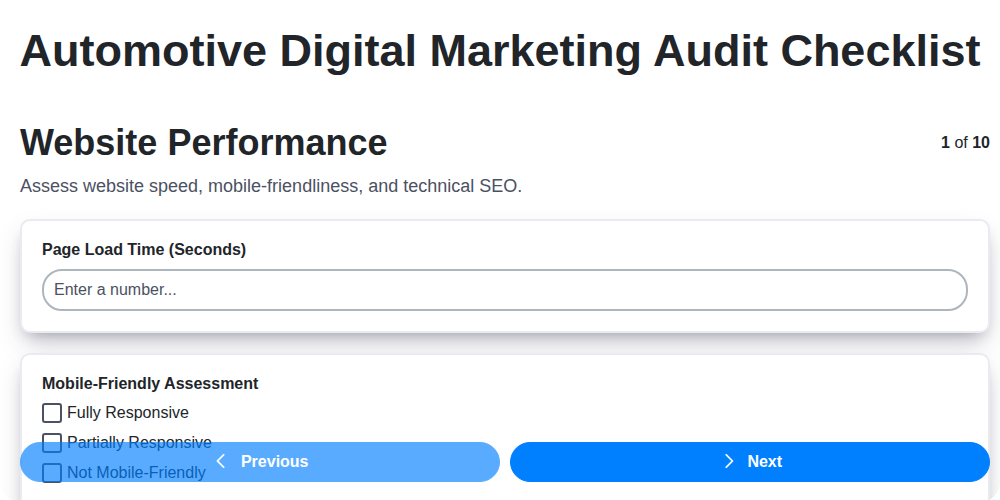
Table of Contents
- Introduction: Why a Digital Marketing Audit is Crucial for Automotive Businesses
- 1. Website Performance: Speed, Mobile-Friendliness, and User Experience
- 2. SEO Keyword Analysis: Identifying Opportunities and Addressing Gaps
- 3. Content Marketing Review: Attracting and Engaging Your Audience
- 4. Social Media Presence: Building Community and Driving Leads
- 5. Paid Advertising Campaigns (PPC): Maximizing ROI and Optimizing Spend
- 6. Local SEO Optimization: Dominating Local Search Results
- 7. Email Marketing Effectiveness: Nurturing Leads and Driving Sales
- 8. Website Analytics & Tracking: Measuring What Matters
- 9. Reputation Management & Online Reviews: Protecting Your Brand
- 10. Competitive Analysis: Staying Ahead of the Competition
- Putting It All Together: Actionable Steps for Improvement
- Conclusion: Continuous Optimization for Automotive Digital Marketing Success
- Resources & Links
TLDR: Feeling lost with your auto shop's online marketing? This checklist walks you through 10 crucial areas - website speed, SEO, content, social media, ads, local listings, email, analytics, reputation, and competition - to pinpoint weaknesses and boost your digital marketing performance. Download the checklist and get a clear picture of where you stand and what to improve!
Introduction: Why a Digital Marketing Audit is Crucial for Automotive Businesses
The automotive industry is fiercely competitive. To thrive, dealerships and repair shops can't rely on traditional marketing alone. A robust digital marketing strategy is no longer optional; it's essential for attracting customers, building trust, and ultimately, driving sales. But even a well-intentioned strategy can falter without regular assessment. That's where a digital marketing audit comes in.
Think of it as a health check-up for your online presence. It's a comprehensive evaluation of your current digital marketing efforts, identifying what's working, what's not, and where there's room for improvement. Ignoring this critical step can lead to wasted budget, missed opportunities, and a stagnant online presence - all costing you potential customers and revenue. This checklist will guide you through the key areas, empowering you to take control and optimize your automotive digital marketing for maximum impact.
1. Website Performance: Speed, Mobile-Friendliness, and User Experience
Your website is often the first impression potential customers have of your automotive business. A slow, clunky, or poorly designed website will immediately send them packing. Let's dive into key areas to assess:
Page Speed: Use tools like Google PageSpeed Insights, GTmetrix, or Pingdom to analyze your website's loading speed on both desktop and mobile. Aim for a score of 80+ for optimal performance. Common culprits for slow speed include large image files (optimize them!), excessive plugins, and inefficient code.
Mobile-Friendliness: Google prioritizes mobile-first indexing, meaning your site's mobile version is used as the primary version for ranking. Use Google's Mobile-Friendly Test to ensure your site displays correctly on all devices. Responsive design is crucial!
User Experience (UX): Assess the ease of navigation. Can visitors quickly find what they're looking for - service menus, appointment scheduling, contact information? Consider:
- Intuitive Navigation: Is your menu clear and easy to understand?
- Clear Call-to-Actions (CTAs): Are buttons and links prominent and directing users towards desired actions (e.g., Schedule Service, Get a Quote, View Inventory)?
- Easy-to-Find Contact Information: Make sure your phone number, address, and contact form are readily accessible.
- Form Usability: Are your online forms easy to complete? Too many fields can lead to abandonment.
- Visual Appeal: Does your website look modern, professional, and trustworthy?
2. SEO Keyword Analysis: Identifying Opportunities and Addressing Gaps
Your website might be technically sound and beautifully designed, but if no one's searching for what you offer, it won't drive results. A thorough keyword analysis is the bedrock of any successful automotive digital marketing strategy. Here's what you need to assess:
1. Current Keyword Rankings: What keywords are you already ranking for? Use tools like SEMrush, Ahrefs, or Google Search Console to compile a list. Don't just focus on high-volume keywords; consider long-tail keywords - more specific phrases with lower competition - that accurately reflect customer search intent.
2. Search Volume & Trends: Analyze the search volume for your target keywords. Is the volume declining? Are there seasonal trends affecting search interest (e.g., increased searches for winter tires in fall)? Google Keyword Planner and similar tools provide valuable data.
3. Keyword Relevance & Intent: Are the keywords you're ranking for actually relevant to your automotive services? Are they aligned with what customers are looking for? Best car wash is different from car detailing near me - understand the intent.
4. Competitor Keyword Analysis: What keywords are your competitors ranking for? Identify keywords where they outperform you and develop a plan to compete. Look for gaps - keywords they aren't targeting that you could.
5. Keyword Difficulty: Assess the difficulty of ranking for each keyword. Tools assign a score based on factors like domain authority of competing websites. Prioritize keywords with a balance of high volume and reasonable difficulty.
6. Identifying New Opportunities: Brainstorm potential keywords based on your services (e.g., brake repair [city], used car dealership [make & model]). Use People Also Ask and related searches in Google to uncover new keyword ideas.
7. Addressing Keyword Gaps: If you're not ranking for key automotive terms your customers are using, you need to address the gap. This could involve optimizing existing content, creating new content, or building backlinks.
Actionable Steps:
- Compile a Master Keyword List: Organize keywords into categories based on service offerings.
- Prioritize Keywords: Focus on keywords with high relevance, reasonable volume, and achievable difficulty.
- Integrate Keywords: Naturally incorporate keywords into website copy, meta descriptions, image alt text, and blog posts.
- Regularly Update: Keyword trends change. Revisit your keyword analysis every 6-12 months.
3. Content Marketing Review: Attracting and Engaging Your Audience
Your content is the fuel for your automotive digital marketing engine. Without compelling, informative, and engaging content, you're relying solely on paid ads - a strategy that can quickly drain your budget. This section dives into evaluating the effectiveness of your current content marketing efforts.
Let's assess:
- Content Inventory: Do you have a clear inventory of all your content? This includes blog posts, videos, infographics, downloadable guides, case studies, etc. Knowing what you have is the first step to knowing what needs updating or creating.
- Content Quality & Relevance: Is your content actually good? Is it well-written, accurate, and up-to-date? Does it address your target audience's pain points, answer their questions, and provide genuine value? Consider both technical content (maintenance tips, model comparisons) and lifestyle/entertaining content (road trip ideas, automotive history).
- Content Promotion: Are you simply creating content or are you promoting it effectively? Are you sharing it across your social media channels? Are you leveraging email marketing to distribute it? Are you actively seeking backlinks to boost its reach?
- Content Performance Metrics: Which content performs best? Track metrics like pageviews, time on page, bounce rate, shares, and leads generated. Use this data to identify trends and create more of what works. Google Analytics and your content management system (CMS) are key tools here.
- Content Calendar: Do you have a content calendar to guide your publishing schedule and ensure consistency? A consistent publishing schedule keeps your audience engaged and tells search engines you're an active and valuable resource.
- Keyword Integration: Are your content pieces optimized for relevant keywords (see SEO Keyword Analysis section)? Content should be informative and findable.
Action Items:
- Conduct a content audit.
- Identify underperforming content for updates or removal.
- Brainstorm new content ideas based on keyword research and audience needs.
- Develop a content calendar.
4. Social Media Presence: Building Community and Driving Leads
Your automotive dealership's social media presence is no longer optional; it's a vital channel for connecting with customers, building brand loyalty, and driving leads. But simply being on social media isn't enough. This section digs into how effectively you're using these platforms.
Here's what we'll assess:
- Platform Selection: Are you present on the platforms where your target audience spends their time? (Facebook, Instagram, TikTok, LinkedIn, YouTube - which are relevant to your brand and customer base?)
- Content Strategy & Quality: Is your content engaging, informative, and aligned with your brand voice? Are you utilizing a mix of content types - photos, videos, stories, live streams, user-generated content? Is it optimized for each platform?
- Community Engagement: Are you actively responding to comments, messages, and mentions? Are you fostering a community around your dealership? Are you running contests and engaging in conversations?
- Branding Consistency: Do your social media profiles accurately reflect your dealership's branding (logos, colors, messaging)?
- Hashtag Usage: Are you leveraging relevant hashtags to increase visibility and reach?
- Social Listening: Are you monitoring social media for mentions of your dealership and competitors? What are people saying?
- Advertising on Social Media: Are you utilizing paid social media advertising to reach a wider audience and target specific demographics? What's your ROI?
- Link Tracking: Are you using UTM parameters to track traffic and conversions from your social media posts?
We'll analyze your social media metrics (reach, engagement, follower growth, website clicks) to identify areas for improvement and ensure your social media efforts are translating into tangible results.
5. Paid Advertising Campaigns (PPC): Maximizing ROI and Optimizing Spend
Paid advertising, particularly Pay-Per-Click (PPC) campaigns like Google Ads and Microsoft Advertising, can deliver immediate results, but they also represent a significant investment. A thorough audit is crucial to ensure you're getting the best possible return on your ad spend. Here's what to check:
1. Campaign Structure & Targeting:
- Campaign Organization: Are campaigns logically organized by product/service, geographic location, or customer segment? A disorganized structure makes optimization difficult.
- Keyword Relevance: Are your keywords directly relevant to your services and aligned with user intent? Review search terms reports to identify irrelevant traffic.
- Audience Targeting: Are you leveraging audience targeting options (demographics, interests, remarketing) to reach the most qualified prospects?
- Geographic Targeting: Is your geographic targeting accurate and reflecting your service area? Are you excluding unnecessary areas?
2. Ad Copy & Creative:
- Ad Relevance: Do your ads clearly communicate your value proposition and match the keywords they trigger?
- Call to Action (CTA): Are your CTAs clear, compelling, and encouraging of immediate action (e.g., Get a Quote, Schedule Service, Learn More)?
- Ad Extensions: Are you utilizing all relevant ad extensions (sitelinks, callouts, structured snippets, location extensions, call extensions)? These enhance visibility and provide more information.
- A/B Testing: Are you regularly testing different ad copy variations to improve click-through rates (CTR) and conversion rates?
3. Landing Page Experience:
- Relevance: Does your landing page directly address the promise made in the ad?
- User Experience (UX): Is the landing page user-friendly, mobile-optimized, and easy to navigate?
- Conversion Optimization: Is the landing page designed to encourage conversions (form submissions, calls, appointments)?
- Page Speed: Is the landing page loading quickly? Slow loading times can significantly impact conversion rates.
4. Performance Metrics & Reporting:
- Cost Per Acquisition (CPA): Are you tracking and analyzing your CPA for each campaign and keyword?
- Quality Score: Are you monitoring your Quality Scores and identifying areas for improvement?
- Return on Ad Spend (ROAS): Are you calculating and tracking your ROAS to assess campaign profitability?
- Conversion Tracking: Is conversion tracking accurately configured to measure leads and sales generated by your PPC campaigns?
By critically evaluating these aspects of your PPC campaigns, you can identify areas for optimization, reduce wasted spend, and drive a greater return on your investment.
6. Local SEO Optimization: Dominating Local Search Results
For automotive dealerships and repair shops, local search is everything. Customers aren't just searching for car dealership, they're searching for Honda dealer near me or best auto repair in [City]. Failing to optimize for local search means missing out on a significant portion of your potential customer base.
Here's what you need to check:
- Google Business Profile (GBP) Perfection: Is your GBP claimed, verified, and completely filled out? That includes accurate business name, address, phone number (NAP), hours, service areas, attributes (e.g., "wheel alignment," "financing available"), and high-quality photos and videos. Regularly update it with posts and respond to reviews promptly.
- NAP Consistency: Ensure your NAP is consistent across every online directory - Yelp, Facebook, Bing Places, Yellow Pages, etc. Inconsistencies confuse search engines and hurt your ranking. Use a citation management tool to streamline this.
- Local Keyword Integration: Naturally weave location-based keywords into your website content, meta descriptions, and image alt text. Think Used Cars [City], Auto Service [Neighborhood].
- Local Link Building: Acquire backlinks from other local businesses, community organizations, and local news outlets.
- Mobile Optimization: Local searches are overwhelmingly mobile. Ensure your website is responsive and provides a seamless mobile experience.
- Review Monitoring & Response: Actively monitor online reviews on Google, Yelp, and other platforms. Respond to both positive and negative reviews professionally. Encourage satisfied customers to leave reviews.
7. Email Marketing Effectiveness: Nurturing Leads and Driving Sales
Email marketing isn't dead; it's evolved. In the automotive industry, it's a crucial tool for nurturing leads, keeping customers engaged, and driving sales - from service reminders to new vehicle promotions. But are your email efforts actually working?
Let's dig into a few key areas for review:
- List Health & Segmentation: Are you sending to a clean, engaged list? Regularly purge inactive subscribers. Segment your list based on vehicle ownership, interests (e.g., electric vehicles, trucks), service history, and demographics to deliver hyper-relevant content. Generic blasts are a fast track to the spam folder.
- Open Rates & Click-Through Rates: Track these metrics religiously. Low open rates suggest issues with subject lines, sender reputation, or list targeting. Low click-through rates mean your content isn't compelling. Benchmarking against industry averages can provide valuable context.
- Deliverability: Are your emails reaching inboxes, or are they landing in the dreaded spam folder? Check your sender score and follow email marketing best practices to maintain a positive reputation.
- Automated Sequences: Do you have automated welcome sequences for new leads, service reminders, and post-purchase follow-ups? Automation is key for efficiency and personalized communication. Are they effective? Are they converting?
- Mobile Optimization: A significant portion of your audience is likely viewing emails on mobile devices. Ensure your emails are responsive and look great on all screen sizes.
- A/B Testing: Continuously test different subject lines, email content, calls to action, and send times to optimize performance.
Do your email marketing efforts align with your overall automotive marketing strategy and are they consistently driving valuable results?
8. Website Analytics & Tracking: Measuring What Matters
You're putting a lot of effort into your automotive digital marketing - but are you really seeing results? Without robust website analytics and tracking, you're essentially driving blind. It's not enough to just have Google Analytics installed; you need to be actively monitoring it and interpreting the data.
Here's what to check:
- Google Analytics Configuration: Verify your Google Analytics account is properly connected to your website and that tracking code is firing correctly on all pages. Use Google Tag Assistant to confirm.
- Key Performance Indicators (KPIs): Are you tracking the metrics that matter for your automotive business? These should include:
- Website Traffic: Overall traffic, traffic sources (organic, referral, social, paid), and trends over time.
- Bounce Rate: A high bounce rate suggests your landing pages aren't engaging visitors.
- Time on Site: Shows how engaged visitors are with your content.
- Conversion Rates: Focus on key automotive actions - form submissions (service requests, quote requests), phone calls (track with call tracking software!), online appointment bookings, and virtual tours.
- Goal Completions: Define and track specific goals within Google Analytics to measure success.
- Mobile Performance: A significant portion of automotive searches happen on mobile. Ensure your site is optimized for mobile viewing and fast loading.
- Custom Dashboards and Reports: Create custom dashboards to quickly see the metrics most relevant to your business. Segment data by device, location, and traffic source.
- UTM Parameters: Are you using UTM parameters on all your marketing campaigns (email, social, paid ads) to accurately track campaign performance?
- Heatmaps and Session Recordings: Tools like Hotjar can reveal how users interact with your website - where they click, how far they scroll, and where they drop off. This is invaluable for website optimization.
Ultimately, website analytics isn's about collecting data; it's about extracting actionable insights to continuously improve your automotive digital marketing strategy.
9. Reputation Management & Online Reviews: Protecting Your Brand
In the automotive industry, a single negative review can have a disproportionately large impact. Potential customers heavily rely on online reviews and testimonials to inform their purchasing decisions. Ignoring your online reputation is essentially leaving your brand vulnerable to damage.
This section of your digital marketing audit should focus on proactively managing and responding to what's being said about your dealership or service center online. Here's what to examine:
- Review Site Presence: List all review sites your business is currently listed on (Google My Business, Yelp, Facebook, DealerRater, Cars.com, etc.). Are you claiming and optimizing your profiles on all relevant platforms?
- Review Volume & Sentiment: Analyze the number of reviews you have across each platform and the overall sentiment (positive, negative, neutral). A low volume of reviews can be a red flag, suggesting you're not actively encouraging feedback.
- Response Rate & Tone: Are you responding to reviews, both positive and negative? Your responses should be timely, empathetic (even in the face of criticism), and demonstrate a commitment to customer satisfaction. A generic or absent response can worsen the situation.
- Monitoring Tools: Are you using any tools to monitor online mentions of your brand? Google Alerts, social listening tools, or reputation management platforms can provide valuable insights.
- Negative Review Handling Process: Do you have a documented process for handling negative reviews? This should include steps for acknowledging the issue, investigating the problem, and offering a resolution.
- Encouraging Reviews: Are you actively encouraging satisfied customers to leave reviews? This can be done through email follow-ups, in-person requests, or website prompts.
Actionable Steps:
- Claim & Optimize: If you haven't already, claim and fully optimize your profiles on all major review platforms.
- Respond Promptly: Set up notifications to be alerted to new reviews and respond as quickly as possible.
- Implement a Review Request Strategy: Develop a system for consistently requesting reviews from happy customers.
- Train Staff: Educate your team on the importance of reputation management and how to handle customer feedback.
10. Competitive Analysis: Staying Ahead of the Competition
Ignoring your competitors is like driving with your eyes closed - you're bound to crash. A thorough competitive analysis is crucial for any automotive digital marketing strategy. It's not about copying what they do, but understanding their strengths and weaknesses to find opportunities for your dealership to excel.
Here's what you should be looking for:
- Identify Key Competitors: Who are the dealerships actively vying for the same customers in your market? Go beyond just nearby locations - consider online presence and customer reach.
- Website Analysis: Examine their website design, user experience, call-to-actions, and the quality of their content. What works well? What seems outdated or confusing?
- SEO Performance: Use tools like SEMrush or Ahrefs to see which keywords they're ranking for. Are there keywords you're missing opportunities for?
- Social Media Activity: What platforms are they active on? What type of content are they posting? What's the engagement like? Are they running contests or promotions?
- Paid Advertising: What are their online ad campaigns like? (Facebook, Google Ads). What messaging are they using? What offers are they promoting?
- Online Reputation: What are customers saying about them in online reviews? How do they respond to negative feedback?
- Unique Selling Propositions (USPs): What makes them stand out? Do they offer a specific service, brand, or financing option that's drawing customers?
By regularly monitoring your competitors, you can identify gaps in your own strategy, refine your messaging, and ultimately, gain a competitive edge. Don't just react - proactively analyze and adapt to stay ahead of the curve.
Putting It All Together: Actionable Steps for Improvement
So, you've completed your automotive digital marketing audit. You've unearthed areas of strength and, more importantly, pinpointed opportunities for growth. Now, it's time to move beyond just knowing what needs fixing and start doing. Here's how to translate those audit findings into actionable steps:
Prioritize Based on Impact & Effort: Don't try to tackle everything at once. Categorize your findings using a simple matrix: High Impact/Low Effort, High Impact/High Effort, Low Impact/Low Effort, and Low Impact/High Effort. Start with the High Impact/Low Effort items - these are your quick wins!
Develop a Detailed Action Plan: For each area identified in your audit, create specific, measurable, achievable, relevant, and time-bound (SMART) goals. For example, instead of Improve SEO, try Increase organic traffic by 15% in the next quarter by targeting [specific keywords] and optimizing [specific pages].
Website Performance Boosters: Implement suggested fixes for page speed, mobile responsiveness, and site architecture. Consider a content delivery network (CDN) for faster loading times.
SEO Keyword Overhaul: Refine your keyword targeting based on the analysis. Update meta descriptions and title tags. Build high-quality backlinks from reputable sources.
Content Marketing Revamp: Develop a content calendar focused on topics your target audience is searching for. Repurpose existing content into different formats (video, infographics, podcasts).
Social Media Engagement: Experiment with different content types and posting schedules to find what resonates most with your audience. Engage actively with comments and messages.
PPC Campaign Optimization: Refine your ad copy, targeting, and bidding strategies based on performance data. A/B test different ad variations.
Local SEO Domination: Claim and optimize your Google Business Profile. Encourage customer reviews and actively respond to them. Build local citations.
Email Marketing Nurturing: Segment your email list and personalize your messaging. Implement automation sequences to nurture leads.
Analytics & Tracking Refinement: Ensure all tracking codes are correctly implemented. Set up custom dashboards to monitor key performance indicators (KPIs). Regularly analyze data and make adjustments.
Reputation Management Proactive Steps: Actively monitor online reviews across platforms. Respond promptly and professionally to all feedback. Encourage satisfied customers to leave reviews.
Competitive Analysis - Stay Ahead: Continuously monitor your competitors' activities. Identify their strengths and weaknesses and look for opportunities to differentiate your dealership.
Regular Review is Key: Your digital marketing landscape is constantly evolving. Schedule regular audits (at least quarterly) to ensure your strategies remain effective and to adapt to new trends and technologies. Don't let what you've learned become stale!
Conclusion: Continuous Optimization for Automotive Digital Marketing Success
The automotive industry is dynamic, and so too must your digital marketing strategy be. This audit checklist provides a vital snapshot of your current standing, but it's not a one-and-done exercise. Think of it as a baseline. Regularly revisiting these areas - ideally quarterly or even monthly for key metrics - will reveal emerging opportunities, highlight areas needing course correction, and ensure you're consistently adapting to changing consumer behavior and algorithm updates.
Don't be afraid to experiment. Test new keywords, refine ad copy, adjust email subject lines, and explore fresh social media platforms. The automotive customer journey is complex, and ongoing optimization, driven by data and a deep understanding of your target audience, is the key to sustained growth, increased leads, and ultimately, more cars sold. Staying proactive and embracing change will keep your dealership ahead of the competition and drive long-term success.
Resources & Links
- Google PageSpeed Insights: Analyzes the speed and performance of your website on both desktop and mobile. Crucial for the Website Performance section.
- Google Search Console: Essential tool for monitoring your website's SEO performance and identifying technical issues. Important for Website Performance and SEO Keyword Analysis.
- Ahrefs: A comprehensive SEO toolset for keyword research, competitor analysis, and backlink tracking. Highly valuable for SEO Keyword Analysis and Competitive Analysis.
- SEMrush: Another all-in-one digital marketing toolkit, including features for SEO, content marketing, and competitive analysis. Similar to Ahrefs and useful across multiple sections.
- Moz: Provides tools and resources for SEO, including keyword research and rank tracking. Good for foundational SEO knowledge and Keyword Analysis.
- Sprout Social: Social media management platform for scheduling, analytics, and engagement. Supports the Social Media Presence and Content Marketing sections.
- Buffer: Another popular social media scheduling and analytics tool. Useful for Social Media Presence and Content Marketing.
- Google Ads: The platform for managing Google PPC campaigns. Directly relevant to the Paid Advertising Campaigns (PPC) section.
- Facebook Business: Resources and tools for managing Facebook and Instagram advertising campaigns, a key aspect of Paid Advertising.
- BrightLocal: A dedicated Local SEO platform with features for citation management, review monitoring, and rank tracking. Essential for Local SEO Optimization.
- Mailchimp: A popular email marketing platform for creating and sending newsletters and automated email sequences. Supports Email Marketing Effectiveness.
- Klaviyo: Email marketing and automation platform, especially suited for e-commerce and personalized email campaigns. Another option for Email Marketing Effectiveness.
- Google Analytics: A free web analytics service that tracks and reports website traffic. Critical for Website Analytics & Tracking.
- Reputify: Reputation management platform for monitoring online reviews and responding to customer feedback. Addresses Reputation Management & Online Reviews.
- ReviewTrackers: Similar to Reputify, offering review monitoring and analysis tools for online reputation management. Supports Reputation Management.
Frequently Asked Questions
What is a digital marketing audit and why is it important for automotive businesses?
A digital marketing audit is a comprehensive review of your online presence and marketing efforts. For automotive businesses, it's crucial to ensure you're attracting the right customers, optimizing your website for leads, and maximizing your return on investment in digital marketing activities like SEO, paid advertising, and social media.
Who should perform this automotive digital marketing audit?
Ideally, a specialist with experience in automotive digital marketing is best. However, you can perform a basic audit yourself using this checklist, and then consider bringing in an expert to address any significant findings or execute more complex strategies.
How long will it take to complete this audit?
The time it takes depends on the complexity of your digital marketing efforts. A basic walkthrough using this checklist could take 4-8 hours, while a more detailed analysis and action planning could take a week or more.
What level of technical expertise is required to understand and implement the recommendations from this checklist?
The checklist is designed to be accessible, but some steps require basic understanding of SEO tools (like Google Search Console), analytics platforms (like Google Analytics), and potentially your dealership's CRM and website content management system. You may need to involve technical staff or an agency for certain tasks.
What's the difference between this audit checklist and a general digital marketing audit checklist?
This checklist is tailored specifically for automotive businesses. It includes considerations unique to the industry, such as inventory management integration with marketing, location-based SEO, and service appointment scheduling, which are not typically covered in generic digital marketing audits.
What is location-based SEO, and why is it important for automotive dealerships?
Location-based SEO focuses on optimizing your online presence to attract customers searching for automotive services in your specific geographic area. It's vital for dealerships as most customers search for nearby dealerships or service centers.
What are some common SEO issues I might find during this audit?
Common issues include poor website loading speed, lack of mobile optimization, missing or incomplete meta descriptions, keyword cannibalization, broken links, and a lack of local citations.
What should I do if I find issues I can't resolve myself?
Prioritize the most impactful issues and consider engaging a specialist automotive digital marketing agency or consultant to help. Don't attempt fixes that could potentially damage your online presence further without proper knowledge.
How often should I perform this automotive digital marketing audit?
It's recommended to perform a full audit at least annually. However, key areas like website analytics and paid advertising performance should be monitored and reviewed monthly to ensure ongoing success and address any immediate problems.
Where can I find tools to help me complete this audit?
Many free and paid tools can assist you, including Google Search Console, Google Analytics, Google Keyword Planner, SEMrush, Ahrefs, Moz Local, and various website speed testing tools. This article often links to specific resources.
Comments
There are no comments yet. Be the first to add one!
Automotive Manufacturing Management Solution Demo
Optimize your automotive production! ChecklistGuro digitizes workflows, from parts inspection to final testing. Reduce errors, boost efficiency & ensure quality compliance. Drive results with our Work OS.
Related Articles
The Ultimate Automotive Sales Prospect Follow-Up Checklist: Close More Deals
Mastering Automotive BOM Configuration: Your Essential Checklist

The Ultimate Vehicle Registration & Insurance Validation Checklist
Automotive Parts Inventory Audit Checklist Template: Your Guide to Accurate Stock

Maximize Your Trade-In: The Automotive Appraisal Checklist You Need
The Ultimate Tire Pressure & Condition Checklist Template
Automotive Parts Inventory Control Checklist Template: Your Ultimate Guide

Drive Sales Success: Your Automotive Sales Team Performance Tracking Checklist
We can do it Together
Need help with
Automotive?
Have a question? We're here to help. Please submit your inquiry, and we'll respond promptly.