The Ultimate Automotive Employee Onboarding Checklist: A Step-by-Step Guide
Published: 12/29/2025 Updated: 04/23/2026
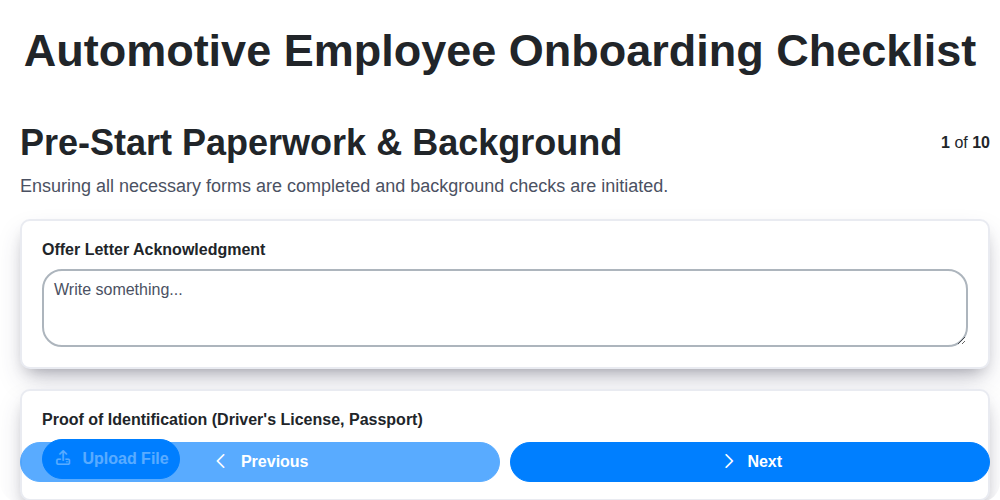
Table of Contents
- Welcome to the Team: Setting the Stage
- 1. Pre-Start Paperwork & Background Checks: Getting the Essentials Sorted
- 2. IT & System Access Setup: Powering Up Their Workflow
- 3. Department Introduction & Team Integration: Building Connections
- 4. Role-Specific Training - Part 1: Laying the Foundation
- 5. Company Policies & Procedures Review: Ensuring Compliance
- 6. Role-Specific Training - Part 2: Deepening Expertise
- 7. Performance Expectations & Goal Setting: Charting the Path to Success
- 8. Facility Tour & Safety Briefing: Navigating the Workspace
- 9. Equipment Training & Certification: Mastering the Tools
- 10. 30-Day Check-in & Feedback: Initial Assessment
- 11. 60-Day Review: Progress and Adjustments
- 12. 90-Day Performance Evaluation: Solidifying the Foundation
- 13. Beyond 90 Days: Continued Growth and Development
- Resources & Links
TLDR: New automotive employee? This checklist ensures a smooth onboarding experience! It covers everything from paperwork and IT setup to safety training and performance goals, broken down into phases to keep everyone on track and set for success. Download the template and get your new hires up to speed faster!
Welcome to the Team: Setting the Stage
Starting a new job is exciting, but it can also be overwhelming. We want to ensure every new automotive employee feels prepared, supported, and ready to contribute from day one. This initial phase - the first few days and weeks - is critical for setting the foundation for a successful and long-lasting career with us.
Our onboarding process is designed to be more than just paperwork and introductions. It's about immersing you in our culture, clarifying expectations, and providing the tools and knowledge you need to thrive. We believe in fostering a welcoming and collaborative environment, and this starts with a comprehensive and supportive onboarding experience. During this initial period, you'll get acquainted with your colleagues, learn the ropes of our systems, and begin to understand the specific responsibilities of your role. We're committed to making you feel like you belong and are equipped to excel. Let's get started!
1. Pre-Start Paperwork & Background Checks: Getting the Essentials Sorted
Before a new automotive employee even turns a wrench or greets a customer, ensuring all necessary paperwork is completed and background checks are finalized is paramount. This isn't just about compliance; it's about setting a solid foundation for a productive and trustworthy working relationship.
Here's what should be included in this crucial first step:
- Employment Contract/Offer Letter: Signed and returned, clearly outlining terms of employment.
- Tax Forms (W-4, etc.): Accurate and complete to ensure proper tax withholding.
- I-9 Verification: Verification of identity and work authorization - a legally required step.
- Direct Deposit Information: For timely and accurate payroll.
- Benefits Enrollment Forms: Explaining available benefits and enrollment deadlines.
- Background Checks: Depending on the role and company policy, this can include criminal history checks, motor vehicle record checks (especially vital in an automotive setting), and potentially drug screenings. Ensure compliance with all applicable laws and regulations regarding background checks.
- Confidentiality Agreements: Protecting sensitive company information.
- Non-Compete Agreements (if applicable): Clearly explained and signed.
This initial phase can seem administrative, but rushing it can lead to legal issues, delays in getting the employee working, and potentially costly errors down the line. Allocate sufficient time and resources to ensure it's handled efficiently and accurately.
2. IT & System Access Setup: Powering Up Their Workflow
Getting a new automotive employee up and running quickly means minimizing downtime and maximizing productivity. A well-executed IT & System Access Setup is critical to achieving this. Don't leave them staring at a blank screen - ensure they have everything they need from day one.
This isn't just about handing over a laptop. It's a structured process that includes:
- Account Creation: Promptly create user accounts with appropriate access levels. Avoid delays by having a standardized account creation process.
- Email & Communication Tools: Ensure they have email access, instant messaging platforms (like Slack or Microsoft Teams), and any other critical communication tools.
- Software Licenses & Installation: Install and configure necessary software like diagnostic tools, repair management systems, parts ordering platforms, and any specialized automotive software. Verify licenses are assigned correctly.
- Network Access: Grant access to relevant network drives and shared resources.
- Security Protocols: Walk them through essential security protocols - password management, data protection, phishing awareness - from the very beginning.
- Troubleshooting Support: Introduce them to the IT support team and clearly outline how to report technical issues. Provide a readily available FAQ document for common problems.
- Device Configuration: For company-provided devices, ensure proper configuration - printer setup, mobile device management (MDM) enrollment, etc.
A checklist here, proactively addresses potential issues and creates a smoother transition for your new hires, letting them focus on what they do best: serving your customers.
3. Department Introduction & Team Integration: Building Connections
Onboarding isn't just about paperwork and training; it's about creating a welcoming and supportive environment where new employees feel valued and connected. A successful introduction to the department and team is paramount for long-term retention and productivity.
Here's what a strong department introduction should encompass:
- Formal Introductions: Facilitate introductions to all team members, clearly outlining their roles and responsibilities. A brief bio or getting to know you session can help break the ice.
- Team Lunch/Coffee: A casual meal or coffee break is a fantastic way for the new hire to interact with colleagues in a relaxed setting.
- Shadowing Opportunities: Allow the new employee to shadow different team members to understand workflows, different perspectives, and the interconnectedness of roles.
- Team Collaboration Projects (Early Involvement): Where appropriate and feasible, involve the new hire in small team projects early on. This fosters collaboration and demonstrates trust.
- Buddy System: Assigning a seasoned employee as a buddy provides a go-to person for questions, concerns, and general support. This informal mentorship can ease the transition.
- Departmental Goals & Objectives Discussion: Explain how the department contributes to the company's overall success and how their role fits into the bigger picture.
- Open Communication Encouragement: Emphasize the importance of open communication and create a safe space for questions and feedback.
The goal is to ensure the new hire feels like a valued member of the team from day one, fostering a sense of belonging and encouraging active participation.
4. Role-Specific Training - Part 1: Laying the Foundation
This isn't just about handing new hires a manual and pointing them in a direction. Part 1 of role-specific training is about building a solid foundation of understanding. It's where we introduce the core responsibilities, essential tools, and typical workflows they'll be encountering daily.
For a service technician, this might include an overview of diagnostic equipment, common repair procedures, and safety protocols specific to automotive repair. For a sales representative, it could focus on product knowledge, sales techniques, and customer relationship management (CRM) software. A parts specialist might delve into inventory management systems and catalog navigation.
The focus here is broad, aiming to provide context and familiarize the new employee with the landscape of their role. We're establishing the 'what' and 'why' before diving into the 'how' in Part 2. Interactive elements, such as demonstrations and Q&A sessions, are vital for ensuring comprehension and addressing any initial confusion. Remember to provide clear documentation and resources they can refer back to later. This first step is critical for setting them up for success in the more detailed training to follow.
5. Company Policies & Procedures Review: Ensuring Compliance
Onboarding isn't just about learning the job; it's about understanding how we do things here. A thorough review of company policies and procedures is crucial for legal compliance, a positive work environment, and consistent operational efficiency.
This isn't a quick skim! We're talking about a dedicated session covering topics like:
- Code of Conduct: Ethical behavior, anti-harassment, and professional conduct.
- Data Security & Privacy: Protecting sensitive information and adhering to relevant regulations.
- Attendance & Timekeeping: Accurate record-keeping and understanding of work schedules.
- Dress Code & Appearance Standards: Maintaining a professional image.
- Communication Guidelines: Internal and external communication protocols.
- Safety Regulations: Specific policies related to workplace safety.
We'll provide the relevant handbooks and documents, explain the reasoning behind the policies, and answer any questions the new employee may have. It's vital they understand these guidelines and their responsibility to uphold them. Encourage open dialogue - a proactive employee asking questions is a compliant employee! This step minimizes risk and establishes a foundation of trust and accountability.
6. Role-Specific Training - Part 2: Deepening Expertise
Now that your new hire has a foundational understanding of their role and the company, it's time to dive deeper into the specifics. Part 2 of role-specific training should build directly on what they learned in Part 1. This isn't just about repeating information; it's about providing practical application and addressing more nuanced scenarios.
Consider incorporating these elements:
- Advanced Skill Development: Focus on complex tasks, troubleshooting common issues, and mastering specialized software or tools.
- Shadowing Experienced Team Members: Pair the new hire with a top performer who can demonstrate best practices and offer real-time feedback.
- Case Studies & Simulations: Present realistic scenarios that require problem-solving and critical thinking.
- Mentorship Opportunities: Assign a mentor who can provide ongoing support and guidance beyond the formal training program.
- Q&A Sessions & Knowledge Checks: Regularly assess understanding and address any lingering questions. Encourage open dialogue and a safe space for asking stupid questions.
- Practical Exercises: Provide opportunities to apply learned skills under supervision, progressively increasing the level of responsibility.
The goal of this phase is to build confidence and equip the employee with the expertise they need to excel in their role and contribute meaningfully to the team.
7. Performance Expectations & Goal Setting: Charting the Path to Success
Onboarding isn't just about tasks and training; it's about setting your new employee up for success. This is where Performance Expectations & Goal Setting takes center stage. Don't leave this crucial step to chance!
This isn't a lecture; it's a collaborative discussion. Sit down with the new employee and clearly outline what's expected of them within their role. Be specific and avoid vague statements. Instead of saying, Be a good customer service representative, say, Resolve customer inquiries within an average of 5 minutes while maintaining a positive and helpful tone, adhering to the company's customer service protocol.
Key elements to cover:
- Key Responsibilities: Reiterate the core duties of the position, ensuring alignment with the job description.
- Quantifiable Goals: Establish SMART (Specific, Measurable, Achievable, Relevant, Time-bound) goals. For example, Increase appointment bookings by 10% within the first quarter.
- Performance Metrics: Define how success will be measured. What Key Performance Indicators (KPIs) are critical?
- Development Opportunities: Discuss potential areas for growth and how the company supports it.
- Feedback Mechanisms: Explain how and when feedback will be provided - regular check-ins, performance reviews, etc.
Document these expectations and goals in writing and ensure both you and the employee sign off on them. This serves as a clear roadmap for success and provides a solid foundation for ongoing performance management. Remember, setting the stage for long-term contribution starts here.
8. Facility Tour & Safety Briefing: Navigating the Workspace
Beyond the paperwork and training, a thorough facility tour and safety briefing are crucial for any new automotive employee. This isn't just about knowing where the restrooms are; it's about understanding the environment they're working in and how to do so safely.
During the tour, highlight key areas like the service bays, parts room, detailing area, and break room. Explain the flow of work - how vehicles move through the shop, the location of critical equipment, and the designated walkways.
The safety briefing should cover essential topics:
- Emergency Procedures: Fire evacuation routes, first aid locations, and emergency contact information.
- Hazard Identification: Point out potential hazards like moving vehicles, heavy equipment, chemicals, and noise levels. Explain how to report unsafe conditions.
- Personal Protective Equipment (PPE): Demonstrate the proper use of safety glasses, gloves, hearing protection, and any other required gear.
- Chemical Handling: If applicable, review chemical storage and handling protocols, including SDS (Safety Data Sheet) access.
- Ergonomics: Briefly touch on ergonomic best practices to prevent strain and injury.
Emphasize that safety is everyone's responsibility and encourage the new employee to ask questions and voice any concerns they may have. Providing a clear understanding of the workspace and its associated risks significantly contributes to a productive and safe working environment.
9. Equipment Training & Certification: Mastering the Tools
In the automotive industry, proficiency with specialized equipment isn't just beneficial - it's essential for safety, efficiency, and quality. This section of your onboarding process focuses on equipping your new employees with the skills and certifications they need to excel in their roles.
What This Entails:
- Identification of Required Equipment: Clearly define which employees need training on specific tools and machinery (e.g., diagnostic scanners, lifts, paint booths, welding equipment). This list should be tied directly to job descriptions.
- Hands-on Training: Theory is important, but practical experience is key. Provide supervised, hands-on training sessions with qualified instructors. Break down complex tasks into manageable steps.
- Certification Processes: For regulated equipment (e.g., lifts, welding equipment), ensure your team completes the necessary certification programs and maintains accurate records of their credentials. Include refresher training schedules as required.
- Safety Protocols: Reinforce safety procedures specific to each piece of equipment. This includes proper usage, maintenance, and emergency shutdown protocols.
- Documentation & Record Keeping: Maintain detailed records of equipment training and certifications for each employee. This is vital for compliance and liability purposes.
- Ongoing Support: Ensure ongoing support and mentorship are available for employees as they gain experience and encounter new challenges.
By prioritizing equipment training and certification, you're not only boosting employee confidence and performance, but also ensuring a safer and more productive work environment.
10. 30-Day Check-in & Feedback: Initial Assessment
The first 30 days are crucial for a new automotive employee to feel supported and begin contributing effectively. This isn's just a formality; it's a vital opportunity to gauge their initial progress, address any roadblocks, and reinforce your commitment to their success.
During this check-in, focus on open communication. Encourage the new hire to share their experiences - what's going well, what's challenging, and what support they might need. As a manager, be prepared to actively listen and provide constructive feedback.
Here's what to cover:
- Understanding of Role: Confirm they grasp their core responsibilities and how their work contributes to the bigger picture.
- Initial Performance: Observe their performance against the expectations set during goal setting. Is there anything hindering their ability to meet those expectations?
- Team Integration: Assess how they're connecting with the team. Are they feeling included and supported?
- Training Effectiveness: Determine if the initial training was adequate or if additional support is needed in specific areas.
- Feedback Opportunity: Provide specific, actionable feedback and solicit their perspective on how you can better support them.
Document these discussions and any agreed-upon action items. This 30-day check-in isn't just about evaluating performance; it's about fostering a culture of continuous improvement and ensuring your new team member has everything they need to thrive.
11. 60-Day Review: Progress and Adjustments
The whirlwind of the first few months is settling, and now's the crucial time for a 60-day review. This isn't a formal performance evaluation, but rather a check-in to gauge how the employee is truly adjusting. Have they grasped the fundamentals? Are they feeling confident in their role? What challenges are they facing that might not have surfaced earlier?
This review should be a two-way conversation. Encourage the employee to openly discuss their experiences - both successes and areas where they feel they could use more support. Ask specific questions like:
- What's been the most surprising aspect of your role so far?
- Are there any processes or tools that you find particularly challenging?
- Do you feel you have the resources and information needed to succeed?
- What would make your day-to-day work more efficient or enjoyable?
Based on the feedback, be prepared to make adjustments to their training, workload, or even their team interactions. This demonstrates a commitment to their growth and reinforces the fact that their voice matters. Remember, this is an opportunity to fine-tune their integration and set them up for long-term success within the automotive team.
12. 90-Day Performance Evaluation: Solidifying the Foundation
The 90-day mark isn't just another day; it's a crucial checkpoint in your new employee's journey. This formal evaluation isn't about catching mistakes, but about reinforcing successes, identifying areas for continued growth, and ensuring alignment with company goals.
This review should be a two-way conversation. Come prepared with specific examples of the employee's contributions - both positive and areas needing attention. Have they grasped the fundamentals of their role? Are they demonstrating the behaviors and skills outlined in their initial training?
Most importantly, the 90-day evaluation should focus on future development. Set clear, actionable goals for the next phase, building on their strengths and addressing any gaps. This is an opportunity to recalibrate expectations, provide targeted coaching, and reaffirm their commitment to the team. Document the discussion and agreed-upon action items for future reference, solidifying the foundation for a successful and long-term career within your automotive organization.
13. Beyond 90 Days: Continued Growth and Development
The 90-day mark isn't the finish line; it's a significant milestone. True employee onboarding extends far beyond this period, focusing on continuous growth and development. Regularly scheduled check-ins (beyond the initial 30-60-90 day reviews) are essential to ensure ongoing success. Consider implementing mentorship programs pairing new hires with experienced colleagues to foster knowledge transfer and provide ongoing support. Encourage participation in industry-relevant webinars, workshops, and conferences. Invest in advanced training opportunities that build on the foundational knowledge gained during the initial onboarding. Most importantly, create a culture of feedback - both giving and receiving - so your automotive employees feel empowered to learn, adapt, and contribute their best work long after they've completed their initial onboarding journey. This ongoing investment demonstrates a commitment to their growth and strengthens their loyalty to your organization.
Resources & Links
- Society for Human Resource Management (SHRM): SHRM offers a wealth of resources on onboarding, HR best practices, legal compliance, and employee development. Excellent for legal information and model policies.
- Indeed - HR Resources: Indeed's HR resources offer articles and advice on onboarding, including checklists and best practices related to employee engagement and retention.
- Built In: Built In provides articles and insights into tech company culture and HR, which can be adapted for automotive, covering topics like onboarding and employee experience.
- HR Dive: HR Dive offers news and analysis of HR trends, including onboarding strategies and compliance requirements for various industries.
- AIHR (Academy to Innovate HR): AIHR provides courses and resources focused on HR and talent management, including onboarding best practices and modern approaches.
- Quantum Workplace: Quantum Workplace specializes in employee engagement and offers insights into onboarding experiences and creating a positive work environment, valuable for retention.
- Bravo Automation: Bravo Automation specializes in onboarding automation. They offer resources and insights on streamlining the onboarding process with technology, particularly useful if considering automation.
- Workday: Workday is a leading HR and finance software provider. Their website offers resources and insights on HR processes, including onboarding, and showcases how technology can improve efficiency.
- Zenefits: Zenefits provides HR software and offers guides and best practices for onboarding, focused on streamlining HR tasks and ensuring compliance. Great for small to medium-sized businesses.
- Bizzard: Bizzard offers a suite of HR tools and resources, including onboarding templates and guides. Good for practical templates and checklists.
Frequently Asked Questions
What is the purpose of an automotive employee onboarding checklist?
An onboarding checklist ensures a structured and consistent process for new hires in the automotive industry. It helps integrate them into the company culture, provides necessary training, clarifies expectations, and ultimately, accelerates their productivity and retention.
Why is onboarding different in the automotive industry?
The automotive industry often involves specialized technical skills, safety protocols, regulatory compliance (like EPA or OSHA), and often requires working with complex machinery. Onboarding must address these specific needs, going beyond standard HR procedures.
Who should be involved in creating and implementing the onboarding checklist?
Ideally, a cross-functional team should be involved, including HR, department managers (e.g., service, sales, parts), trainers, and potentially even experienced employees who can act as mentors.
What are the key categories covered in the checklist?
The checklist typically covers categories like pre-boarding (before the first day), paperwork and compliance, company culture & introductions, role-specific training, tools & equipment, performance expectations, and ongoing support.
What should be included in the 'Pre-Boarding' section?
This section includes tasks like sending a welcome email, sharing important documents electronically, outlining first-day expectations (what to wear, where to go), and potentially assigning a 'buddy' or mentor.
Can this checklist be used for all roles within an automotive dealership or repair shop?
While this checklist provides a comprehensive framework, it needs to be customized for each role. A technician's onboarding will be very different from a salesperson's, for example. Tailor the specific tasks and training to the job description.
How can I measure the effectiveness of my onboarding program?
Track metrics like time-to-productivity, employee satisfaction scores (through surveys), retention rates, and feedback from managers and new hires. Use this data to continually refine your checklist.
What are some common pitfalls to avoid during automotive employee onboarding?
Common pitfalls include rushing the process, neglecting technical training, failing to provide ongoing support, not explaining company culture, and assuming new hires understand everything without verification.
What if a new hire is struggling during their onboarding? What steps should be taken?
Identify the specific areas of difficulty, provide additional training or mentorship, adjust expectations if necessary, and provide a safe space for them to ask questions without feeling judged. Proactive communication is key.
Where can I find resources or templates to help me create an automotive employee onboarding checklist?
Many HR software providers, industry associations (like the National Automobile Dealers Association - NADA), and online resources offer templates and guidance. This article provides a detailed guide to create your own from scratch.
Comments
There are no comments yet. Be the first to add one!
Automotive Manufacturing Management Solution Demo
Optimize your automotive production! ChecklistGuro digitizes workflows, from parts inspection to final testing. Reduce errors, boost efficiency & ensure quality compliance. Drive results with our Work OS.
Related Articles
The Ultimate Automotive Sales Prospect Follow-Up Checklist: Close More Deals
Mastering Automotive BOM Configuration: Your Essential Checklist

The Ultimate Vehicle Registration & Insurance Validation Checklist
Automotive Parts Inventory Audit Checklist Template: Your Guide to Accurate Stock

Maximize Your Trade-In: The Automotive Appraisal Checklist You Need
The Ultimate Tire Pressure & Condition Checklist Template
Automotive Parts Inventory Control Checklist Template: Your Ultimate Guide

Drive Sales Success: Your Automotive Sales Team Performance Tracking Checklist
We can do it Together
Need help with
Automotive?
Have a question? We're here to help. Please submit your inquiry, and we'll respond promptly.