Maximize Your Results: The Automotive Fixed Operations Performance Review Checklist
Published: 12/29/2025 Updated: 12/30/2025
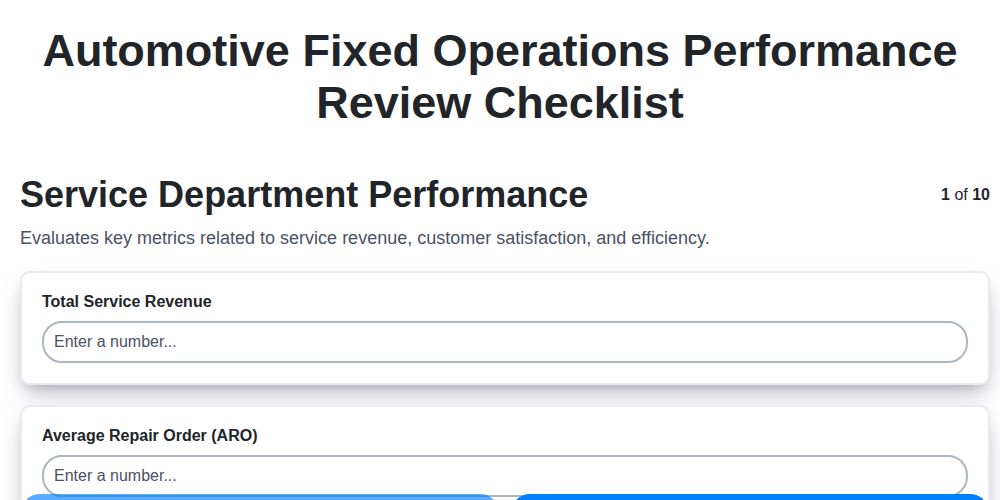
Table of Contents
- Introduction: Why a Fixed Operations Performance Review Matters
- 1. Service Department Performance: Assessing Technician Skill & Throughput
- 2. Parts Department Performance: Inventory Management & Order Accuracy
- 2. Collision Center Performance: Repair Quality & Cycle Time
- 3. Labor Efficiency & Productivity: Benchmarking & Optimization
- 4. Customer Satisfaction & Retention: Measuring the Experience
- 5. Financial Performance & Profitability: Key Metrics & Analysis
- 6. Operational Efficiency & Process Improvement: Streamlining Workflows
- 7. Employee Performance & Training: Developing a Skilled Team
- 8. Equipment Maintenance & Calibration: Ensuring Peak Performance
- 9. Compliance & Safety: Adherence to Regulations
- 10. Data-Driven Insights: Leveraging Analytics
- Putting the Checklist into Action
- Conclusion: Continuous Improvement for Fixed Operations Success
- Resources & Links
TLDR: Running a successful automotive dealership's fixed ops? This checklist is your shortcut! It covers everything from service and parts performance to employee training and financial health. Use it to systematically review your operations, identify areas for improvement, and boost your overall profitability and customer satisfaction - all in one easy-to-use template.
Introduction: Why a Fixed Operations Performance Review Matters
The fixed operations department - encompassing service, parts, and collision - is often the profit engine for a dealership. But simply being profitable isn't enough. Regularly assessing performance, identifying areas for improvement, and holding your team accountable is crucial for sustainable growth and a competitive edge. A well-structured Fixed Operations Performance Review checklist isn't just a formality; it's a powerful tool for driving operational excellence.
Ignoring these vital metrics can lead to missed opportunities, declining customer loyalty, and ultimately, reduced profitability. This review process isn's about finding fault; it's about establishing a baseline, setting achievable goals, and fostering a culture of continuous improvement across all facets of your fixed operations. By proactively monitoring key performance indicators (KPIs) and addressing any shortcomings, you'll unlock hidden potential and ensure your fixed operations are contributing to the overall success of the dealership. Let's dive into a comprehensive checklist to guide you through a thorough and effective performance review.
1. Service Department Performance: Assessing Technician Skill & Throughput
The Service Department is often the heart of a dealership's revenue. A thorough performance review here goes beyond simply looking at volume; it's about understanding how work is being done and identifying opportunities for improvement.
Here's what to evaluate:
- Average Repair Order (ARO): Is it trending up or down? Analyze contributing factors like service type mix and upselling effectiveness.
- Labor Hours vs. Book Time: A critical indicator of technician efficiency. Significant deviations require investigation - are technicians properly diagnosing issues? Is training adequate? Are they utilizing diagnostic tools effectively? Track this metric for each technician individually.
- First-Time Fix Rate: A key measure of quality and customer satisfaction. Low rates indicate potential diagnostic errors or incorrect parts usage.
- Service Advisor Performance: Assess their ability to accurately estimate job scope, manage customer expectations, and effectively upsell services. Are they following proper sales processes?
- Warranty Labor Hours: Analyze warranty claim trends - are there recurring issues suggesting design flaws or service quality concerns?
- Technician Skill Assessment: Conduct regular assessments (both formal and informal) to gauge proficiency in various repairs. Identify training needs and areas for specialization.
- Parts Usage and Accuracy: Are technicians ordering the correct parts? Are they utilizing reusable parts appropriately? Waste and incorrect orders directly impact profitability.
- Shop Utilization: Measure the percentage of time bays are actively in use. Low utilization points to inefficiencies in scheduling or workflow.
Ultimately, a strong Service Department relies on a blend of skilled technicians, efficient processes, and a customer-centric approach.
2. Parts Department Performance: Inventory Management & Order Accuracy
The Parts Department is the backbone of your Fixed Operations, impacting service times, customer satisfaction, and ultimately, profitability. A poorly managed Parts Department can lead to frustrating delays for technicians and angry customers. Let's break down key performance indicators to ensure your Parts Department is firing on all cylinders.
Inventory Management:
- Inventory Turnover Rate: Are you moving parts quickly enough? A low turnover rate suggests overstocking and tied-up capital. Track this metric regularly and adjust ordering practices accordingly.
- Stockout Rate: How often are technicians waiting for parts? High stockout rates directly impact service bay productivity and frustrate both technicians and customers. Implement a robust parts ordering and forecasting system.
- Inventory Accuracy: Regularly audit your parts inventory to ensure it matches your system records. Discrepancies lead to ordering errors and lost time searching for misplaced items.
- Obsolete Inventory: Identify and manage obsolete parts. Holding onto parts that won't be used ties up valuable space and money. Consider clearance sales or returns to suppliers.
- Vendor Performance: Evaluate vendor lead times, pricing, and quality. Explore alternative vendors if necessary to optimize efficiency and reduce costs.
Order Accuracy:
- Order Fill Rate: What percentage of orders are filled completely and correctly the first time? A high fill rate minimizes delays and returns.
- Return Rate: A high return rate often signals inaccurate ordering or incorrect parts identification. Investigate the root causes of returns and implement corrective actions.
- Order Processing Time: How long does it take to process a parts order from start to finish? Streamline the ordering process to reduce delays and improve efficiency.
- Parts Identification Accuracy: Ensure your team is accurately identifying parts using the correct catalogs and resources. Misidentified parts lead to wasted time and customer dissatisfaction.
By focusing on these areas, you can significantly improve your Parts Department's performance, reduce costs, and enhance the overall customer experience.
2. Collision Center Performance: Repair Quality & Cycle Time
The Collision Center is a critical revenue generator and a significant contributor to overall customer perception. A thorough review here should focus on both the quality of repairs and the efficiency with which they's completed.
Repair Quality:
- First-Time Fix Rate: Track the percentage of repairs completed correctly on the first attempt. A high rate demonstrates technician skill and attention to detail. Investigate root causes of reworks - are they training gaps, parts issues, or insufficient diagnostic procedures?
- Warranty Claims: Analyze warranty claims related to collision repairs. High claim frequency points to underlying quality control problems. Categorize claims (parts failure, incorrect installation, etc.) for targeted improvement efforts.
- Customer Surveys (Collision Specific): Dedicate survey questions to specifically address collision repair quality. Focus on areas like paint match, structural integrity, and overall appearance.
- Independent Inspections: Consider periodic independent inspections of completed repairs by a qualified third party. This provides an unbiased assessment of quality.
- Material Usage: Monitor material usage for discrepancies. Excessive material usage can indicate wasted resources or potentially compromised repairs.
Cycle Time:
- Average Repair Cycle Time: Measure the average time it takes to complete a collision repair from estimate to delivery. Identify bottlenecks in the process.
- Estimate Accuracy: Evaluate the accuracy of initial repair estimates. Significant discrepancies between estimate and actual repair time impact profitability and customer satisfaction.
- Parts Procurement Time: Assess the time taken to source and receive necessary parts. Streamlining parts ordering and delivery processes is crucial.
- Throughput: Track the number of vehicles processed per week or month. Optimize workflow to maximize throughput without sacrificing quality.
- Downtime Analysis: Identify and analyze downtime due to equipment failure, technician absence, or other disruptions. Proactive maintenance and contingency planning are essential.
3. Labor Efficiency & Productivity: Benchmarking & Optimization
Labor costs are a significant driver of profitability in fixed operations. A thorough review here goes beyond simply tracking hours worked; it's about understanding how those hours are being utilized and identifying opportunities for improvement.
Key Metrics to Analyze:
- Labor Hours per RO (Repair Order): A core indicator. Track this metric across service types and technician experience levels. Significant variations warrant investigation.
- Technician Utilization Rate: What percentage of their scheduled time are technicians actively working on billable tasks? Idle time impacts profitability.
- Average Labor Sales per Technician: This combines efficiency and the type of work being performed.
- Labor Cost as a Percentage of Revenue: A broad profitability indicator. Compare to industry benchmarks.
- Parts Usage Rate: Directly impacts labor efficiency - a higher parts usage rate often correlates with more efficient repairs.
- Write-Up Efficiency: How quickly and accurately are service advisors generating ROs? Delays affect technician availability.
Benchmarking:
- Internal Benchmarking: Compare performance across different shifts, technician specialties, and even different locations within your dealership group.
- Industry Benchmarking: Utilize industry data providers (e.g., Alliance Automotive Group, CBT Automotive Network) to compare your metrics against similar dealerships. Be mindful of factors like geographic location, brand, and service volume.
Optimization Strategies:
- Standardized Workflows: Implement clear, documented procedures for common repairs.
- Technician Skill Specialization: Focus technicians' training and experience on specific areas to improve speed and accuracy.
- Service Advisor Training: Enhance service advisor skills in estimating repair needs, explaining options clearly, and managing customer expectations.
- Parts Availability: Ensure timely parts availability to avoid delays and wasted technician time.
- Digital Work Orders & Mobile Technology: Reduce paperwork and streamline communication.
- Performance-Based Incentives: Align technician and service advisor incentives with efficiency and profitability goals.
- Time Studies: Conduct periodic time studies to identify bottlenecks and inefficiencies in workflows.
4. Customer Satisfaction & Retention: Measuring the Experience
Fixed operations success isn't solely about throughput or profits; it's intrinsically linked to how your customers feel about their experience. High-quality repairs and parts are meaningless if customers are unhappy with the process. This section focuses on how to accurately gauge and improve customer satisfaction and, crucially, retention.
Key Metrics to Track:
- Net Promoter Score (NPS): The gold standard. Ask the simple question: On a scale of 0-10, how likely are you to recommend our service department/collision center to a friend or colleague? Segment responses (Promoters, Passives, Detractors) to understand the drivers behind scores.
- Customer Satisfaction (CSAT) Scores: Utilize targeted surveys (post-service, post-collision repair) asking specific questions about aspects like communication, wait times, technician professionalism, and clarity of explanations.
- Online Reviews & Ratings: Actively monitor and respond to reviews on platforms like Google, Yelp, and Facebook. Negative reviews offer valuable, actionable feedback.
- Customer Retention Rate: Track the percentage of customers returning for repeat service or repairs. A declining retention rate is a red flag.
- Service Advisor Ratings: Implement a system for customers to rate their service advisor's performance - communication, empathy, and problem-solving are key.
Actionable Steps for Improvement:
- Implement a Proactive Communication Strategy: Keep customers informed throughout the service/repair process with updates, realistic timelines, and clear explanations.
- Empower Service Advisors: Give advisors the authority to resolve minor issues and offer solutions to improve customer experience.
- Personalize the Experience: Remember customer preferences, vehicle history, and past concerns.
- Address Complaints Promptly & Effectively: Acknowledge concerns, offer sincere apologies, and provide solutions.
- Loyalty Programs & Incentives: Reward repeat customers and incentivize referrals.
- Regular Customer Feedback Forums: Consider informal focus groups to gather qualitative feedback and identify areas for improvement.
Measuring and actively improving customer satisfaction isn't just about boosting reviews; it's about building loyalty, fostering referrals, and ultimately, driving sustainable business growth in your fixed operations.
5. Financial Performance & Profitability: Key Metrics & Analysis
Financial performance is the heartbeat of any successful Fixed Operations department. It's not enough to be busy; you need to be profitable. This section moves beyond simple revenue figures and delves into the key metrics that reveal the true financial health of your service, parts, and collision centers.
Essential Metrics to Track:
- Gross Profit Margin: This is your bread and butter. Monitor it closely across each department (Service, Parts, Collision). A decline in gross profit margin signals potential issues with pricing, cost control, or labor efficiency.
- Net Profit Margin: A broader picture reflecting overall profitability after all expenses. Compare against industry benchmarks and past performance.
- Revenue per Labor Hour: This metric combines productivity and pricing. An increase generally indicates better efficiency or higher labor rates.
- Parts Profit Percentage: This is a significant revenue stream. Track it carefully and look for opportunities to optimize inventory management and pricing.
- Collision Repair Cycle Time vs. Profitability: Faster turnaround can be good, but not at the expense of quality and proper repairs. Find the sweet spot where speed and profitability align.
- Warranty Labor Recovery Rate: Ensures you're adequately recouping costs for warranty work.
- Service Advisor Productivity (Appointments Set/Sales Generated): Reveals the efficiency of your service advisors and their contribution to revenue.
Analyzing the Data:
- Trend Analysis: Don't just look at a single month's data. Analyze trends over time (quarterly, annually) to identify patterns and potential issues.
- Benchmarking: Compare your performance against industry averages and competitor data. Where are you falling short, and where are you excelling?
- Root Cause Analysis: When metrics deviate from expectations, dig deeper to uncover the underlying causes. Is it pricing, labor costs, parts availability, or something else?
- Scenario Planning: Model the impact of various changes (e.g., adjusting labor rates, implementing new technologies) on your financial performance.
By focusing on these key metrics and diligently analyzing the data, you can proactively identify opportunities to improve financial performance and drive profitability within your Fixed Operations department.
6. Operational Efficiency & Process Improvement: Streamlining Workflows
Fixed Ops performance isn't just about numbers; it's about how you achieve them. This section focuses on identifying bottlenecks and inefficiencies within your department processes. A rigid, outdated workflow can significantly impact productivity and ultimately, profitability.
Key Areas to Evaluate:
- Appointment Scheduling: Are customers experiencing long wait times or difficulty securing appointments? Analyze your online scheduling system, phone etiquette, and appointment allocation strategies. Implement strategies like staggered appointment times or online self-service options.
- Vehicle Flow: Track the movement of vehicles through each department, from arrival to departure. Identify any delays or congestion points. Consider implementing a vehicle tracking system or optimizing bay layout.
- Parts Ordering & Inventory Management: Assess the speed and accuracy of parts ordering and inventory management. Excessive stock or frequent backorders negatively impact both efficiency and customer satisfaction. Explore vendor optimization and potentially a more robust inventory system.
- Service Advisor Workflow: Map out the entire Service Advisor process - from greeting to invoicing. Look for areas where tasks can be streamlined or automated, reducing advisor workload and speeding up service delivery.
- Process Mapping & Standardization: Document key processes within each department and actively seek opportunities to standardize tasks. Standardized processes minimize errors and facilitate training.
- Technology Adoption: Are you leveraging available technologies to automate tasks and improve workflow? Consider diagnostic tools, CRM integration, and digital inspection tools.
- Continuous Improvement: Implement a system for regularly reviewing processes and identifying areas for improvement. Encourage employee feedback and actively test new approaches. Consider a Kaizen or similar continuous improvement methodology.
Regularly reviewing and optimizing these areas will not only boost efficiency but also create a more satisfying work environment for your team and a better experience for your customers.
7. Employee Performance & Training: Developing a Skilled Team
Your Fixed Operations team is only as strong as its individual members. Investing in their skills and consistently evaluating their performance isn't just good practice - it's critical for overall Fixed Ops success. This checklist item digs deeper than just annual reviews; it's about cultivating a culture of continuous learning and accountability.
Here's what to assess:
- Individual Performance Reviews: Are reviews conducted regularly (at least annually, ideally bi-annually or quarterly)? Are they goal-oriented, focusing on both past performance and future development? Are SMART goals (Specific, Measurable, Achievable, Relevant, Time-bound) being set?
- Skill Gap Analysis: Do you understand the specific skills your team lacks to meet current and future demands? This could involve assessing technical expertise, customer service abilities, sales techniques, or diagnostic capabilities.
- Training Programs: Are you providing sufficient and relevant training? This should include product knowledge (new vehicle features, service procedures), technical training (diagnostic tools, repair techniques), and soft skills (communication, sales, conflict resolution). Consider online courses, vendor training, mentorship programs, and shadowing opportunities.
- Certification Tracking: Are technicians and service advisors maintaining necessary certifications? Are you actively supporting and incentivizing them to do so?
- Mentorship & Coaching: Are experienced team members mentoring newer ones? Is management actively coaching and providing feedback?
- Performance-Based Incentives: Do your compensation plans reward exceptional performance and encourage continuous improvement?
- Employee Turnover & Satisfaction: High turnover is a red flag. Regularly assess employee morale and identify underlying causes. Conduct exit interviews to gather valuable feedback.
- Feedback Mechanisms: Encourage open communication and provide multiple avenues for employees to provide feedback and suggestions.
Action Items: Review training records, conduct employee surveys, analyze turnover rates, and solicit input from managers about team member strengths and weaknesses. A proactive approach to employee performance and training yields a more skilled, motivated, and profitable Fixed Operations department.
8. Equipment Maintenance & Calibration: Ensuring Peak Performance
Your fixed ops department relies heavily on specialized equipment - from diagnostic scanners and lifts to paint booths and alignment racks. Neglecting their upkeep is a recipe for downtime, inaccurate repairs, and ultimately, dissatisfied customers. This section of the performance review zeroes in on ensuring your equipment is consistently performing at its peak.
Key Areas to Evaluate:
- Maintenance Schedules: Are preventative maintenance schedules in place and being followed diligently? Review records to confirm. Are schedules appropriate for each piece of equipment's usage and manufacturer recommendations?
- Calibration Records: Diagnostic tools, alignment machines, and other precision instruments must be calibrated regularly. Verify calibration dates and documentation. Out-of-calibration tools produce inaccurate results, leading to unnecessary repairs and potential liability.
- Repair History: Analyze repair logs for equipment. Frequent breakdowns indicate potential underlying issues that need immediate attention. Are recurring problems being addressed proactively or simply bandaged?
- Technician Training: Do technicians receive adequate training on equipment operation and basic maintenance procedures? Improper use can accelerate wear and tear.
- Budget Allocation: Is sufficient budget allocated for preventative maintenance, calibration, and equipment repairs? Underspending now can result in much larger costs later.
- Equipment Age & Replacement Planning: While regular maintenance extends lifespan, all equipment eventually needs replacement. Evaluate the age of your key assets and develop a phased replacement plan to avoid major disruptions.
- Software Updates: For modern diagnostic and management systems, ensure software is consistently updated to maintain functionality and accuracy.
A robust equipment maintenance and calibration program isn's just about keeping things running; it's about safeguarding your reputation and protecting your bottom line.
9. Compliance & Safety: Adherence to Regulations
Fixed operations aren't just about turning a profit; they're about operating ethically and legally. A robust compliance and safety program is paramount to protecting your employees, customers, and the dealership's reputation. This area demands meticulous attention and consistent verification.
Here's what to review:
- Environmental Regulations: Ensure proper disposal of hazardous waste (oil, coolant, solvents, batteries, etc.) according to local, state, and federal guidelines. Maintain detailed records of disposal processes.
- OSHA Compliance: Regularly inspect the service and collision center for adherence to Occupational Safety and Health Administration (OSHA) standards. This includes fire safety, machine guarding, personal protective equipment (PPE), and hazard communication. Document training and equipment inspections.
- Automotive Service Excellence (ASE) Certification: Verify the current status of all technicians' ASE certifications. Encourage ongoing training and recertification.
- State Inspection & Emission Standards: Confirm adherence to all state-mandated vehicle inspections and emissions testing procedures. Ensure equipment used for these tests is properly calibrated.
- Data Privacy & Security: Review procedures for handling customer data, ensuring compliance with privacy laws (like GDPR or CCPA, if applicable).
- Shop Safety Audits: Conduct regular, documented safety audits of the service and collision centers, involving employee input.
- Emergency Procedures: Validate the effectiveness of emergency response plans (fire, flood, accident). Ensure employees are trained and familiar with these procedures.
- Permitting & Licensing: Verify that all necessary permits and licenses are current and displayed appropriately.
- Record Keeping: Maintain comprehensive records of inspections, training, certifications, and corrective actions taken. This documentation is crucial for demonstrating compliance in the event of an audit.
Failure to prioritize compliance and safety can lead to hefty fines, legal action, and damage to your dealership's brand image. This section of the performance review isn't just about ticking boxes; it's about cultivating a culture of safety and responsibility within your fixed operations.
10. Data-Driven Insights: Leveraging Analytics
Fixed Operations performance reviews aren't just about gut feelings or anecdotal evidence. Modern dealerships have access to a wealth of data that, when properly analyzed, can illuminate areas for significant improvement. Moving beyond simple KPIs, consider incorporating deeper analytical dives.
Here's how to leverage analytics effectively:
- Trend Analysis: Don't just look at today's numbers. Analyze performance over time (monthly, quarterly, annually) to identify trends and patterns. Are service times increasing? Is parts inventory turnover slowing down? Understanding trends allows for proactive adjustments.
- Root Cause Analysis: When a metric falls short, drill down to understand why. Use data visualization tools to correlate different factors. For example, a drop in customer satisfaction might be linked to a specific technician, a change in service procedures, or a parts availability issue.
- Benchmarking: Compare your dealership's performance against industry benchmarks and competitors. Where are you lagging? Where are you excelling? This provides valuable context and highlights areas for focused improvement.
- Customer Segmentation: Analyze customer data to identify high-value customer segments and tailor your service offerings and communication strategies accordingly.
- Predictive Analytics: Explore predictive modeling to anticipate future demand, optimize staffing levels, and proactively address potential issues.
- Reporting Dashboards: Implement user-friendly dashboards that provide real-time visibility into key performance indicators (KPIs) for managers and team members.
Investing in data analytics and ensuring your team is trained to interpret the results will transform your fixed operations performance review from a retrospective assessment to a proactive engine for growth and efficiency.
Putting the Checklist into Action
Okay, you've got your Automotive Fixed Operations Performance Review Checklist. Now what? Simply having it isn't enough; consistent and thoughtful application is what unlocks real improvements. Here's how to move beyond the list and into meaningful action:
1. Schedule Regular Reviews: Don't let this checklist gather dust. Integrate it into your monthly or quarterly review cycle. Consistency is key to identifying trends and addressing issues before they escalate.
2. Assign Ownership: For each section of the checklist (Service, Parts, Collision, etc.), assign a specific manager or leader who is responsible for gathering data, analyzing performance, and proposing solutions. This ensures accountability.
3. Data is Your Friend: Many checklist items require hard data. Don't rely solely on anecdotal evidence. Utilize your dealership's DMS (Dealer Management System), CRM, and other reporting tools to collect accurate and measurable data. Be sure the data being captured aligns with the checklist items.
4. Facilitate Collaborative Discussions: Don't review the checklist in isolation. Gather the relevant team members (service advisors, technicians, parts managers, etc.) to discuss the findings. Encourage open communication and brainstorming to identify root causes of any shortcomings and potential solutions.
5. Prioritize Action Items: Not every issue requires immediate attention. Rank the areas needing improvement based on their impact on overall performance and profitability. Focus on the low-hanging fruit - the changes that can deliver quick wins.
6. Document & Track Progress: Record action items arising from the review, assign owners, and set deadlines. Regularly track progress and hold individuals accountable. This documentation serves as a record of your efforts and helps demonstrate continuous improvement.
7. Iterate & Refine: The checklist isn't set in stone. Periodically review the checklist itself. Are there areas that need to be updated? Are there new metrics you should be tracking? Continuous improvement applies to your performance review process too.
Conclusion: Continuous Improvement for Fixed Operations Success
Ultimately, consistently evaluating your fixed operations using a comprehensive checklist like the one outlined above isn't just about identifying problems; it's about fostering a culture of continuous improvement. Regularly revisiting these areas - Service, Parts, Collision, Labor, Customer Satisfaction, Finances, Operations, Employees, Equipment, Compliance, and Safety - allows you to proactively address challenges, capitalize on opportunities, and optimize performance across the entire department. Don't view this checklist as a one-time assessment; it's a living document, evolving alongside your business and the ever-changing automotive landscape. By committing to this ongoing review process, you're investing in the long-term success, profitability, and customer loyalty that are hallmarks of a thriving fixed operations department.
Resources & Links
- MITRE Auto: Offers fixed operations software and resources, including articles and webinars on service, parts, and collision center management. A good source for industry best practices and technology solutions.
- RepairPal: Provides diagnostic reports, repair estimates, and tools for shops, offering insights into repair costs and industry standards. Useful for benchmarking service department performance.
- Partslink24: A global parts marketplace. Useful for understanding parts pricing trends, inventory strategies and potentially benchmarking against others.
- CCC Intelligent Solutions: Provides software solutions for collision repair, offering data and insights on repair processes, cycle times, and estimating. Excellent for collision center performance review benchmarks.
- Automotive Service & Repair Magazine (ASR): A leading trade publication with articles, news, and resources for automotive service professionals. Covers a wide range of topics relevant to fixed operations performance.
- NAPA Automotive Parts: A major parts supplier offering support and training for service professionals. May have resources and data related to parts performance and inventory management.
- The Toro Dealer Association (TDA): While focused on landscaping equipment, TDA has excellent articles on operational efficiency and process improvement that can be broadly applied to fixed ops - particularly relating to workflow optimization and employee training.
- SRI (Shop-Ware): Shop-Ware is a leading shop management software. Their site and related content offers insights into modern workflows, customer retention strategies, and using data for improved decision-making in fixed ops.
- Automotive Business Review: Website providing insights and best practices for automotive repair shop owners and managers. Articles often cover financial performance, customer retention, and operational efficiency.
- Porsche Training & Certification: While brand-specific, Porsche's training programs provide excellent examples of high-quality technician training and calibration standards - great for illustrating best practices for Employee Performance & Training. Many aspects are applicable regardless of brand.
Frequently Asked Questions
What is a Fixed Operations Performance Review?
A Fixed Operations Performance Review is a structured evaluation of the performance of your service, parts, and accessories departments within your automotive dealership. It assesses key metrics, identifies areas for improvement, and sets goals for future success, typically conducted annually or semi-annually.
Why is a checklist important for Fixed Operations Performance Reviews?
A checklist ensures a consistent and thorough review process, prevents overlooking crucial areas, and provides a clear benchmark for tracking progress. It also facilitates objective evaluation and provides a standardized format for documentation.
Who should be involved in a Fixed Operations Performance Review?
Typically, the Fixed Operations Manager, Service Manager, Parts Manager, Accessories Manager, General Manager, and potentially Finance Manager are involved. The checklist should also be used in discussions with department staff.
What are some key metrics typically included in a Fixed Operations Performance Review?
Common metrics include Gross Profit, Labor Efficiency, Customer Pay Sales, Parts Sales, Accessory Sales, Customer Satisfaction (CSAT), Warranty Labor Hours, Open RO Count, and Customer Retention Rate.
How often should I conduct a Fixed Operations Performance Review?
Ideally, conduct a full review annually or semi-annually. Shorter, more focused reviews (monthly or quarterly) can be implemented to track progress toward goals and address specific challenges.
What should I do if the review identifies areas of weakness?
Document the areas needing improvement, identify the root causes, and develop a detailed action plan with specific goals, timelines, and assigned responsibilities. Regularly monitor progress and make adjustments as needed.
How can I use this checklist to motivate my team?
The checklist should be a collaborative tool. Discuss the results with your team, acknowledge their successes, and work together to create solutions for any identified weaknesses. Use it as a tool for professional development.
What's the difference between Labor Efficiency and Labor Utilization?
Labor Efficiency measures how quickly technicians complete work orders (labor hours billed / labor hours used). Labor Utilization measures the percentage of available work time that technicians are actively working. Both are important indicators of productivity.
Where can I find reliable data to populate this checklist?
Utilize your dealership's DMS (Dealer Management System) for sales and service data. Customer surveys and satisfaction scores can be obtained through dealership software or third-party providers. Market data can be obtained from industry reports.
Can this checklist be customized to fit my dealership's specific needs?
Absolutely. The checklist is intended as a framework. Add or remove metrics and categories to align with your dealership's unique goals, services offered, and performance priorities.
Comments
There are no comments yet. Be the first to add one!
Automotive Manufacturing Management Solution Demo
Optimize your automotive production! ChecklistGuro digitizes workflows, from parts inspection to final testing. Reduce errors, boost efficiency & ensure quality compliance. Drive results with our Work OS.
Related Articles
The Ultimate Automotive Sales Prospect Follow-Up Checklist: Close More Deals
Mastering Automotive BOM Configuration: Your Essential Checklist

The Ultimate Vehicle Registration & Insurance Validation Checklist
Automotive Parts Inventory Audit Checklist Template: Your Guide to Accurate Stock

Maximize Your Trade-In: The Automotive Appraisal Checklist You Need
The Ultimate Tire Pressure & Condition Checklist Template
Automotive Parts Inventory Control Checklist Template: Your Ultimate Guide

Drive Sales Success: Your Automotive Sales Team Performance Tracking Checklist
We can do it Together
Need help with
Automotive?
Have a question? We're here to help. Please submit your inquiry, and we'll respond promptly.