The Ultimate Automotive Inventory Management Checklist: A Step-by-Step Guide
Published: 12/29/2025 Updated: 12/30/2025

Table of Contents
- Introduction: Why Automotive Inventory Management Matters
- 1. Vehicle Receiving & Inspection: Setting the Foundation
- 2. Detailed Condition Reporting & Documentation: Your First Line of Defense
- 3. Inventory Reconciliation: Aligning Physical Count with Records
- 4. Stock Rotation: Mastering FIFO & FEFO for Optimal Value
- 5. Damage & Loss Prevention: Proactive Measures for Vehicle Safety
- 6. Inventory Accuracy Verification: Regular Audits for Trustworthy Data
- 7. Reporting & Analysis: Turning Data into Actionable Insights
- 8. Understanding Vehicle Identification Numbers (VINs) & Their Importance
- 9. Utilizing Inventory Management Software: Streamlining Processes
- 10. Training Your Team: Ensuring Consistent Procedures
- 11. Security Protocols: Protecting Your Inventory
- 12. Handling Discrepancies: A Step-by-Step Guide
- Conclusion: Maintaining a Lean and Efficient Automotive Inventory
- Resources & Links
TLDR: Running an automotive dealership or repair shop? This checklist helps you stay on top of your inventory! It covers everything from receiving vehicles and spotting damage to tracking stock rotation and ensuring accuracy. Use it to minimize losses, optimize stock levels, and boost your bottom line - it's your one-stop guide to automotive inventory success!
Introduction: Why Automotive Inventory Management Matters
In the fast-paced world of automotive dealerships and service centers, effective inventory management isn't just about tracking parts - it's about profitability, customer satisfaction, and operational efficiency. Poor inventory control can lead to costly stockouts, delayed repairs, frustrated customers, and ultimately, a hit to your bottom line.
Think about it: a customer waits for a crucial part, a technician is idle, and you risk losing a sale. Conversely, overstocking ties up valuable capital that could be invested elsewhere. Accurate and proactive automotive inventory management allows you to optimize stock levels, minimize waste, and ensure the right parts are available when and where they''re needed. This blog post will walk you through a comprehensive checklist - a roadmap to achieving precisely that - helping you streamline your inventory processes and drive success.
1. Vehicle Receiving & Inspection: Setting the Foundation
The entire accuracy of your automotive inventory hinges on a meticulous receiving and inspection process. Don't rush this stage - it's your first line of defense against discrepancies and costly errors. Here's what to include:
- Verify Shipment Details: Compare the purchase order (PO) with the packing list and Bill of Lading. Confirm the number of vehicles, makes, models, and any specific options. Discrepancies should be documented immediately and resolved with the supplier before acceptance.
- VIN Verification: Crucially, verify the Vehicle Identification Number (VIN) against the paperwork. This is non-negotiable to prevent fraud and misidentification.
- Physical Inspection - Exterior: Check for any pre-existing damage (scratches, dents, paint issues) before the vehicle enters your inventory. Take detailed photos and document everything on the receiving report.
- Physical Inspection - Interior: Similarly, thoroughly inspect the interior for damage or missing components. Document everything.
- Key and Title Confirmation: Ensure you receive the correct number of keys and the title for each vehicle. Missing titles will halt the sales process.
- Mileage Verification: Note the mileage displayed on the odometer.
- Receiving Report Documentation: A comprehensive receiving report is essential. It should include all the above details, photos, and signatures from receiving personnel. Store these reports digitally for easy access and auditing.
2. Detailed Condition Reporting & Documentation: Your First Line of Defense
Accurate and comprehensive condition reporting and documentation is more than just ticking a box - it's your first line of defense against disputes, unexpected losses, and compliance issues. This process lays the foundation for transparency and accountability throughout the inventory lifecycle.
Here's what a robust condition reporting and documentation process should include:
- Initial Receiving Documentation: When a vehicle arrives, meticulously record its condition. This includes photographic evidence (multiple angles, close-ups of any existing damage), mileage, VIN verification, and a detailed description of any dents, scratches, or pre-existing issues. Utilize standardized forms with clear fields.
- Ongoing Inspections: Schedule regular inspections (weekly or bi-weekly is common) and document any changes in condition. This is crucial for identifying deterioration, vandalism, or unexpected issues. Use checklists during these inspections to ensure consistency.
- Repair History: If any repairs are performed, maintain meticulous records of the work completed, parts used, and associated costs. This information is vital for accurate valuation and disclosure.
- Digital Records are Key: Embrace digital documentation. Photos and videos are irrefutable evidence compared to handwritten notes. Cloud-based storage allows for easy access and secure backups.
- Clear Ownership of Documentation: Assign responsibility for updating and verifying condition reports. Ensure multiple team members have access to and understand the process.
- Transfer of Information: When vehicles move within your inventory (e.g., from receiving to storage, or to a sales lot), update the condition report and document the transfer with signatures or digital acknowledgements.
By prioritizing detailed condition reporting and consistent documentation, you create a clear and verifiable history for each vehicle, protecting your dealership and building trust with customers.
3. Inventory Reconciliation: Aligning Physical Count with Records
Inventory reconciliation is the critical process of comparing your physical inventory - the cars actually sitting on your lot - with the records in your inventory management system. It's more than just a check; it's a vital health check for your dealership's operations. Discrepancies between the two can indicate errors in receiving, sales, trade-ins, or even theft.
The reconciliation process should be performed regularly - ideally monthly, but at minimum quarterly - and should involve a systematic approach. Start by selecting a representative sample of vehicles. Don't just pull vehicles randomly; vary by make, model, age, and price point to ensure a broad assessment.
During the physical count, verify VINs, colors, trims, and mileage against your system records. Document any discrepancies immediately. These could range from simple data entry errors to more serious issues like vehicles mislabeled or missing entirely.
Once the physical count is complete, meticulously compare it with your system records. For each discrepancy, investigate the root cause. Was it an error in the initial receiving process? A clerical mistake during a sale? Correct the system records to reflect the accurate physical inventory.
Finally, and crucially, analyze why the discrepancies occurred. Recurring issues indicate a need for process improvements in receiving, sales, or data entry. Implement corrective actions and retrain staff as necessary to prevent future reconciliation headaches. A consistently accurate inventory record protects your profit margins and ensures operational efficiency.
4. Stock Rotation: Mastering FIFO & FEFO for Optimal Value
Vehicle inventory isn't static; it depreciates over time. Effective stock rotation is crucial to minimize losses and maximize the value of your inventory. This is where FIFO (First In, First Out) and FEFO (First Expired, First Out) come into play.
Understanding the Methods:
- FIFO (First In, First Out): This is the most common approach. It dictates that the vehicles received first are the vehicles sold first. This is generally a good principle as it assumes vehicles age equally and the oldest units are prioritized for sale.
- FEFO (First Expired, First Out): While less frequently applied to vehicles directly, FEFO is incredibly valuable when considering incentives, warranty periods, or special offers tied to specific vehicles. It prioritizes vehicles nearing the end of a promotion or with upcoming warranty expirations, preventing potential obsolescence and maximizing sales opportunities.
Implementing Stock Rotation Effectively:
- Date Tracking: Meticulously record the date of vehicle arrival for every unit. This is the foundation of both FIFO and FEFO.
- Physical Location: Organize your lot to facilitate FIFO. Newer arrivals should be placed in a way that makes them less accessible for immediate sale, while older vehicles are readily visible.
- System Integration: Leverage your inventory management system to automate stock rotation and track vehicle age. Most modern systems can be configured to prioritize older units.
- Regular Review: Periodically review your stock rotation process to ensure it's working as intended. Look for any units that are consistently overlooked and adjust your strategy accordingly.
- Combine Approaches: Don't be afraid to combine FIFO and FEFO. Use FIFO for general stock movement, and FEFO to proactively move vehicles with expiring incentives.
5. Damage & Loss Prevention: Proactive Measures for Vehicle Safety
Vehicle loss and damage are significant drains on dealership profitability. It's not just about the cost of repair or replacement; it's also the lost opportunity cost of a vehicle out of stock. A robust damage and loss prevention strategy isn't just reactive; it's proactive.
Here's how to safeguard your inventory:
- Secure Lot Layout: Implement a strategic lot layout. Prioritize high-value or easily damaged vehicles in well-lit, easily monitored areas. Consider creating designated zones for different vehicle types (SUVs, trucks, sports cars) to minimize accidental damage during movement.
- Security System Integration: Invest in a comprehensive security system - beyond basic alarms. This includes perimeter fencing, surveillance cameras (with night vision), motion sensors, and potentially GPS tracking for high-risk vehicles. Regularly review camera footage for suspicious activity.
- Key Management Protocol: Establish a strict key control system. Assigned keys, logbooks detailing who has access, and regular audits are essential to prevent unauthorized vehicle movement. Digital key management systems offer enhanced security and tracking.
- Employee Training: Educate employees on proper handling procedures, including safe driving techniques for test drives and awareness of potential theft risks. Emphasize the importance of reporting any suspicious activity immediately.
- Regular Inspections: Conduct routine walk-arounds of the lot, both day and night, to identify potential vulnerabilities - overgrown vegetation obstructing camera views, damaged fencing, unsecured vehicles.
- Test Drive Protocol: Implement a strict test drive policy requiring employee authorization, valid driver's license verification, and clearly defined routes. Consider GPS tracking on vehicles during test drives.
- Vehicle Covers: Utilizing vehicle covers, particularly for vehicles stored outdoors, protects against weather-related damage (hail, UV fading) and deter casual theft.
6. Inventory Accuracy Verification: Regular Audits for Trustworthy Data
Relying on inaccurate inventory data is a recipe for disaster in automotive inventory management. It leads to missed sales opportunities, frustrated customers, and ultimately, lost profits. That's why a robust Inventory Accuracy Verification process is absolutely critical.
This isn't a one-and-done task; it's an ongoing commitment. Here's how to ensure your data reflects reality:
- Cycle Counts: Implement frequent cycle counts, focusing on smaller subsets of your inventory regularly. This is far more manageable than a full physical inventory and allows for quicker identification and correction of discrepancies.
- Physical Inventory: While cycle counts are crucial, a full physical inventory (counting every vehicle in your lot) should still be conducted at least annually. This provides a baseline and helps validate the effectiveness of your cycle counting procedures.
- Compare & Reconcile: After both cycle counts and physical inventories, rigorously compare the physical counts against your inventory management system's records. Investigate every difference.
- Root Cause Analysis: Don't just fix the numbers - understand why the discrepancies occurred. Common culprits include data entry errors, misidentification of vehicles, incorrect receiving procedures, or theft.
- System Validation: Regularly review your inventory management system's configuration to ensure accurate vehicle identification, pricing, and other vital information is consistently recorded.
- Employee Training: Reinforce proper procedures with your team. Data accuracy starts with well-trained staff who understand the importance of following protocols.
By consistently prioritizing inventory accuracy verification, you build a foundation of trust in your data, enabling better decision-making and improved overall business performance.
7. Reporting & Analysis: Turning Data into Actionable Insights
Inventory management isn't just about tracking what you have; it's about understanding why you have it and how to optimize it. This is where robust reporting and analysis become crucial. Regularly generated reports should move beyond simple counts and delve into the story behind your automotive inventory.
Key Reports to Consider:
- Inventory Turnover Rate: This measures how quickly your vehicles are selling. A low turnover rate could signal overstocking, pricing issues, or a need to adjust your marketing efforts.
- Days Sales of Inventory (DSI): Similar to turnover, DSI helps you understand how long vehicles remain in your inventory before sale.
- Vehicle Age Analysis: Identify vehicles that have been sitting in your lot for extended periods. This allows you to implement targeted promotions or price adjustments to move them.
- Profitability by Vehicle Type/Make/Model: Which vehicles are consistently driving profit, and which are lagging? This informs future purchasing decisions.
- Damage/Loss Reports: Track the frequency and cost of damage or loss. This can highlight weaknesses in your security protocols or handling procedures.
- Inventory Accuracy Variance: How much does your recorded inventory differ from the actual physical count? This pinpoints areas where your processes need improvement.
Turning Data into Action:
Don't just collect data - analyze it. Look for trends, patterns, and anomalies. Use these insights to:
- Optimize Purchasing: Adjust your ordering quantities based on sales data and seasonal demand.
- Refine Pricing Strategies: Identify underperforming vehicles and adjust pricing to stimulate sales.
- Improve Inventory Handling: Reduce damage and loss by identifying problem areas and implementing corrective measures.
- Enhance Forecasting: Improve the accuracy of your inventory forecasts to minimize stockouts and overstocking.
Regular, insightful reporting is the cornerstone of a truly effective automotive inventory management system.
8. Understanding Vehicle Identification Numbers (VINs) & Their Importance
Every vehicle has a unique identifier: the Vehicle Identification Number, or VIN. Think of it as the vehicle's fingerprint. This 17-character alphanumeric code holds a wealth of information, from the manufacturer and model year to the plant where it was assembled and even specific features.
Why is understanding VINs crucial for automotive inventory management? Here's a breakdown:
- Accurate Identification: VINs prevent misidentification of vehicles, avoiding costly errors in ordering parts, scheduling maintenance, or selling the wrong vehicle.
- Record Keeping: VINs are the key to accurately tracking each vehicle's history within your inventory system - from receipt to sale. This creates a clear audit trail.
- Compliance: VIN verification is often required for legal and regulatory compliance, particularly when dealing with titles and registrations.
- Vehicle History Reports: VINs are essential for accessing vehicle history reports (like Carfax or AutoCheck), which provide valuable insights into a vehicle's past.
- Recall Management: If a vehicle recall is issued, accurate VIN data allows you to quickly identify and manage affected vehicles in your inventory.
Where to Find the VIN: The VIN is typically located on the driver's side dashboard, visible through the windshield. You can also find it on the driver's side doorjamb sticker and on the vehicle's title and registration documents. Ensure all your inventory records always include the accurate VIN.
9. Utilizing Inventory Management Software: Streamlining Processes
Let's face it: manually tracking automotive inventory is a recipe for headaches, errors, and lost profit. While spreadsheets might work for a small dealership, they quickly become unsustainable as your inventory grows. That's where inventory management software comes in.
Investing in the right software isn't just about automating tasks; it's about transforming your entire inventory management process. Here's how it streamlines operations and boosts efficiency:
- Real-time Visibility: Gain immediate insight into your current stock levels, vehicle locations, and key data points. No more guessing or outdated information.
- Automated Processes: Automate routine tasks like receiving, inspections, and reconciliation, freeing up your team to focus on higher-value activities like sales and customer service.
- Improved Accuracy: Reduce human error inherent in manual processes with barcode scanning, automated data entry, and integrated workflows.
- Enhanced Reporting: Generate comprehensive reports on inventory turnover, aging, and profitability, providing valuable data for informed decision-making.
- Integration Capabilities: Most modern automotive inventory software integrates with your dealership's DMS (Dealer Management System), accounting software, and online marketplaces, creating a centralized hub for all your automotive data.
- Mobile Accessibility: Access inventory data and manage tasks from anywhere with mobile apps, improving responsiveness and enabling more efficient operations.
Choosing the right software is critical. Consider features like VIN decoding, condition reporting capabilities, integration options, and user-friendliness when making your selection. While the initial investment might seem significant, the long-term benefits of streamlined processes, improved accuracy, and increased profitability far outweigh the cost.
10. Training Your Team: Ensuring Consistent Procedures
Your inventory management system is only as strong as the people executing it. Robust procedures are useless if not consistently followed. That's why comprehensive training is paramount. This isn't a one-and-done deal; it's an ongoing process.
What should your training cover?
- The Entire Inventory Management Process: From vehicle receiving to reporting, each team member should understand how their role contributes to the bigger picture.
- Specific Checklist Procedures: Provide detailed instruction on each step within your inventory checklist. Don't assume everyone knows "how" to properly inspect a vehicle or reconcile inventory.
- Software Proficiency: If you're using inventory management software, training must cover its proper usage and functionality.
- Documentation Best Practices: Emphasize the importance of accurate and thorough record-keeping.
- Regular Refresher Courses: Periodic training sessions reinforce best practices, address common errors, and introduce updates to procedures or software.
- New Employee Onboarding: Ensure every new hire receives thorough training before being given independent inventory management responsibilities.
- Cross-Training: Having team members capable of performing multiple roles provides backup and increases overall system resilience.
Investing in team training isn't just about compliance; it's about optimizing efficiency, minimizing errors, and protecting your valuable inventory.
11. Security Protocols: Protecting Your Inventory
Beyond basic access control, robust security protocols are vital for automotive inventory. This goes beyond simply locking the gates at night. Consider these layered approaches:
- Key Control: Implement a strict key management system. Track who has access to keys, issue temporary keys for specific tasks, and regularly audit key usage. Consider electronic key management systems for increased accountability.
- Surveillance Systems: Invest in a comprehensive CCTV system with strategically placed cameras covering all receiving areas, storage lots, and critical access points. Ensure cameras have adequate resolution and night vision capabilities, and that recordings are securely stored and regularly reviewed.
- Perimeter Security: Evaluate your perimeter fencing, lighting, and access controls. Consider adding security patrols, especially during off-peak hours.
- Employee Background Checks: Thoroughly screen all employees with access to inventory.
- Regular Security Audits: Periodically review your security measures and protocols to identify vulnerabilities and areas for improvement. Consider bringing in an independent security consultant.
- Alarm Systems: Install and maintain a reliable alarm system with immediate notification to security personnel or law enforcement in case of intrusion.
- Vehicle Tracking (GPS): For high-value or frequently moved vehicles, consider utilizing GPS tracking devices.
12. Handling Discrepancies: A Step-by-Step Guide
Discrepancies are inevitable in automotive inventory management. A vehicle might be missing from the system, a condition report might not match the actual state, or a receiving error could lead to an incorrect count. Ignoring these discrepancies only compounds the problem, leading to costly delays, inaccurate reporting, and ultimately, lost revenue. Here's a systematic approach to tackling them:
- Immediate Investigation: When a discrepancy is flagged (whether it's a missing vehicle, a mismatched condition, or a quantity difference), immediately stop the current process. Don't try to force the data to fit.
- Document Everything: Record the nature of the discrepancy, date, time, and who identified it. This creates an audit trail and helps identify patterns.
- Review Receiving Records: If the discrepancy involves a newly received vehicle, meticulously review the original purchase order, bill of lading, receiving documents, and any initial inspection notes. Look for errors in VIN, mileage, or vehicle specifications.
- Cross-Reference Data Sources: Compare information from all relevant systems - your inventory management software, accounting system, sales records, and physical inspection reports. This helps pinpoint where the data breakdown occurred.
- Physical Verification: For missing vehicles or significant quantity differences, perform a thorough physical search of the lot. Double-check storage locations and look for misplaced vehicles.
- Trace the Transaction: Attempt to trace the transaction history of the vehicle in question. Was it correctly entered into the system? Was it transferred to a different location?
- Identify Root Cause: Don't just correct the immediate discrepancy. Why did it happen? Was it a training issue, a system error, or a procedural lapse? Identifying the root cause is crucial to preventing future errors.
- Correct the Data: Once the cause is known and verified, correct the data in your inventory management system. Document the correction and the reason for it.
- Communicate Findings: Share the findings of your investigation with relevant personnel (receiving team, inventory managers, supervisors).
- Implement Corrective Actions: Based on the root cause analysis, implement corrective actions to prevent recurrence. This might involve retraining staff, updating procedures, or improving system controls.
- Update Procedures (If Necessary): If the discrepancy highlights a flaw in your existing procedures, revise them to address the issue.
- Regular Audits: Schedule periodic internal audits to proactively identify and resolve potential discrepancies before they escalate.
Conclusion: Maintaining a Lean and Efficient Automotive Inventory
Managing automotive inventory effectively isn't just about tracking vehicles; it's about safeguarding your investment, maximizing profitability, and streamlining operations. This checklist, encompassing everything from vehicle receiving to detailed reporting, provides a robust framework for achieving precisely that. Implementing these steps consistently-and regularly revisiting and refining them-will minimize losses, optimize stock levels, and ultimately contribute to a leaner, more efficient automotive business. Remember, proactive inventory management isn't a one-time fix; it's an ongoing commitment to best practices. By embracing these principles, you're setting your dealership or repair shop up for long-term success.
Resources & Links
- Auto Repair Management: Offers a broad overview of automotive repair and management topics, which often intersect with inventory management considerations. Good for understanding the larger context of automotive businesses.
- NAPA Auto Parts: While primarily a parts supplier, NAPA's website offers articles and resources related to automotive parts inventory and management best practices, particularly relevant for dealerships.
- DealerRefresh: A resource for automotive dealers. Their site often covers technology and operational improvements, including aspects of inventory management, though often vendor-focused.
- BlackHawk Automotive: Provides information and resources related to automotive inventory management systems and strategies. A vendor, but useful for understanding common software features.
- U.S. Small Business Administration (SBA): Provides general business management resources, including those relevant to inventory control, record keeping, and loss prevention - applicable to automotive businesses of all sizes.
- National Institute of Standards and Technology (NIST): Provides standards and guidelines related to data accuracy, quality control, and measurement science - relevant to inventory accuracy verification and data integrity.
- VIN Analytics: Specializes in VIN-based data and analytics, crucial for tracking vehicle history and authenticity, as detailed in the VIN section of the post.
- Internal Revenue Service (IRS): While tax-focused, understanding IRS regulations on depreciation, record keeping, and asset management is important for inventory valuation and reporting.
- Cobalt Automotive Group: Focuses on automotive software and digital solutions. Their site provides insights into how technology can streamline automotive inventory management.
- Automotix: Offers inventory management software specifically designed for automotive dealerships and repair shops. Helpful for exploring the functionalities of such systems.
Frequently Asked Questions
What should I do if I consistently find discrepancies during cycle counts?
Consistent discrepancies suggest a systemic issue. Investigate thoroughly - it could be related to inaccurate receiving processes, incorrect data entry, theft, or outdated records. Consider retraining staff and reviewing procedures.
Comments
There are no comments yet. Be the first to add one!
Automotive Manufacturing Management Solution Demo
Optimize your automotive production! ChecklistGuro digitizes workflows, from parts inspection to final testing. Reduce errors, boost efficiency & ensure quality compliance. Drive results with our Work OS.
Related Articles
The Ultimate Automotive Sales Prospect Follow-Up Checklist: Close More Deals
Mastering Automotive BOM Configuration: Your Essential Checklist

The Ultimate Vehicle Registration & Insurance Validation Checklist
Automotive Parts Inventory Audit Checklist Template: Your Guide to Accurate Stock

Maximize Your Trade-In: The Automotive Appraisal Checklist You Need
The Ultimate Tire Pressure & Condition Checklist Template
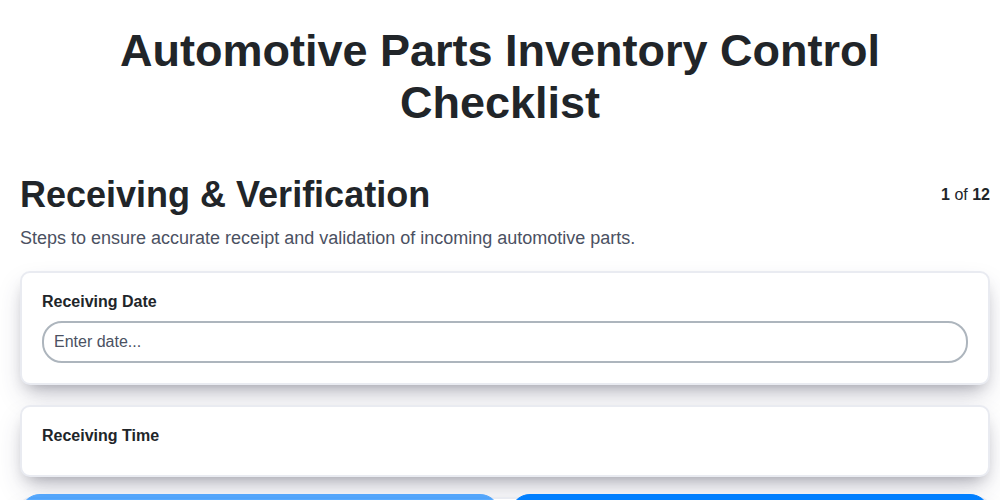
Automotive Parts Inventory Control Checklist Template: Your Ultimate Guide

Drive Sales Success: Your Automotive Sales Team Performance Tracking Checklist
We can do it Together
Need help with
Automotive?
Have a question? We're here to help. Please submit your inquiry, and we'll respond promptly.