Automotive Inventory Management Workflow: A Step-by-Step Guide to Streamlining Your Dealership Operations
Published: 06/04/2026 Updated: 10/05/2026
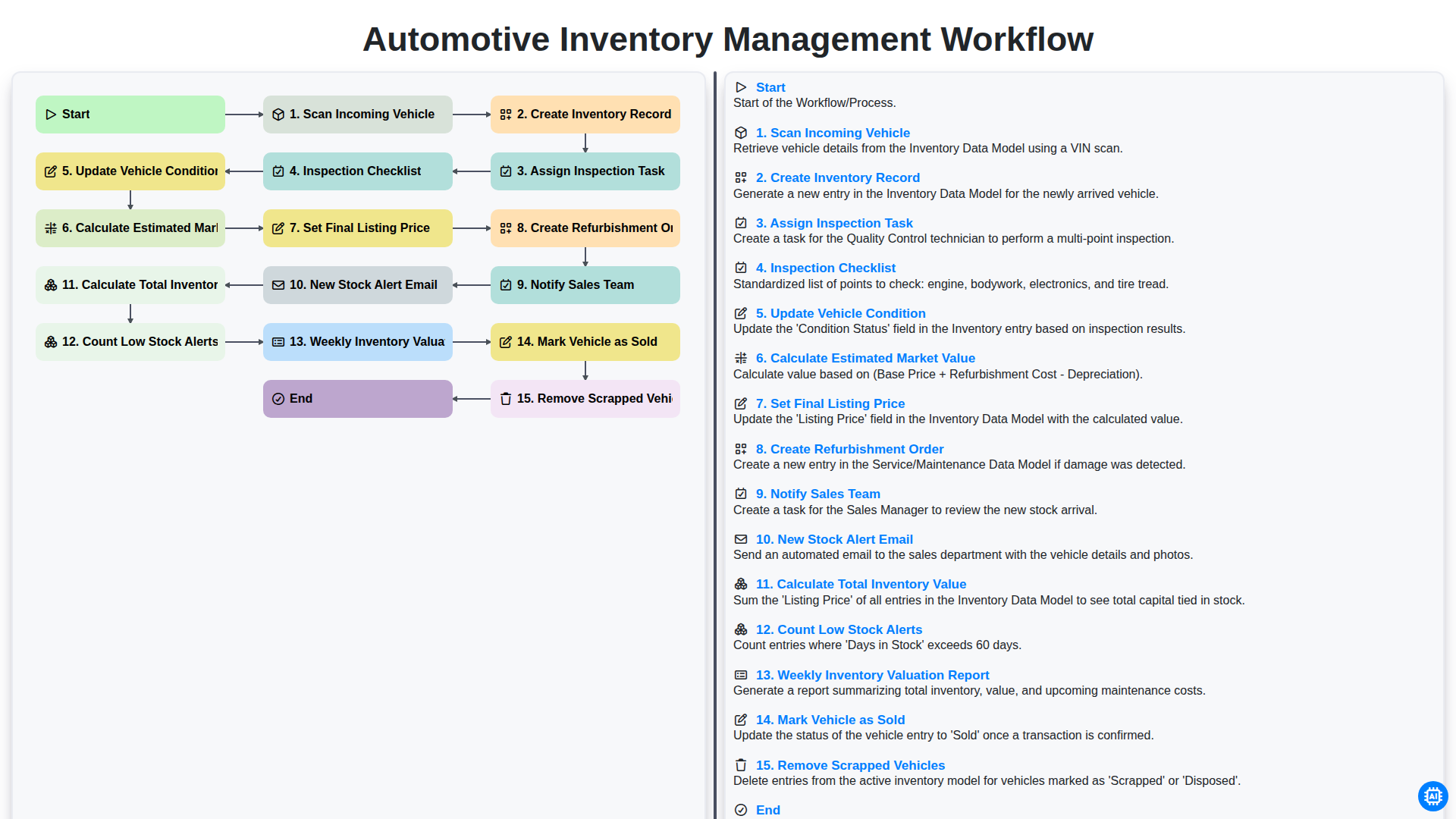
Table of Contents
- Introduction: The Importance of a Structured Inventory Workflow
- Phase 1: Intake and Initial Documentation
- Scanning Incoming Vehicles and Creating Records
- Phase 2: Quality Control and Vehicle Assessment
- Managing Inspections and Condition Updates
- Phase 3: Valuation and Strategic Pricing
- Determining Market Value and Setting Final Listing Prices
- Phase 4: Reconditioning and Preparation
- Streamlining Refurbishment Orders
- Phase 5: Sales Integration and Team Communication
- Automating Notifications and New Stock Alerts
- Phase 6: Inventory Monitoring and Financial Oversight
- Tracking Inventory Value and Stock Levels
- Phase 7: Lifecycle Management: Sales, Scrappage, and Removal
- Resources & Links
TLDR: Master your dealership's efficiency with our comprehensive guide to the Automotive Inventory Management Workflow. Learn how to automate your entire vehicle lifecycle-from initial scanning and inspection to refurbishment, pricing, and final sale-while utilizing automated reporting and low-stock alerts to maximize profitability and streamline operations.
Introduction: The Importance of a Structured Inventory Workflow
In the fast-paced world of automotive retail, efficiency isn't just a luxury-it is a necessity for survival. Managing a fleet of vehicles involves a complex web of moving parts, from the moment a car hits the lot to the second the keys are handed to a new owner. Without a structured inventory management workflow, dealerships often fall into a cycle of manual errors, missed inspections, and lost profit margins.
A streamlined workflow acts as the backbone of your operations, ensuring that every vehicle is accounted for, properly appraised, and presented to customers at the optimal price point. When your processes are fragmented, you risk dead stock sitting on your lot, overlooked mechanical issues, and a sales team that is always the last to know about new arrivals. By implementing a standardized sequence of steps-from initial scanning to final sale-you transform your dealership from a reactive environment into a proactive, data-driven powerhouse. This systematic approach not only minimizes human error but also maximizes turnover speed and ensures that every asset in your inventory is working toward your bottom line.
Phase 1: Intake and Initial Documentation
The lifecycle of a vehicle's journey through your dealership begins the moment it arrives on your lot. The Intake and Initial Documentation phase is the most critical stage for ensuring data integrity; any error made here will ripple through your entire management system.
The process starts with the Scan Incoming Vehicle step, where VINs and identifiers are captured to ensure the digital twin of the asset matches the physical unit. Immediately following the scan, the system must Create Inventory Record, establishing a unique digital footprint for the vehicle within your database.
Once the record exists, the workflow transitions from administrative setup to operational oversight. To maintain high quality standards, the system will automatically Assign Inspection Task to your service department. This triggers the deployment of a standardized Inspection Checklist, ensuring that every technician evaluates the same critical components-from engine health to cosmetic imperfections. As the inspection concludes, the team must Update Vehicle Condition based on the findings, providing an accurate, real-time snapshot of the vehicle's current state before it ever reaches your digital showroom.
Scanning Incoming Vehicles and Creating Records
The lifecycle of an efficient automotive dealership begins the moment a new vehicle arrives on the lot. The Scan Incoming Vehicle step is the critical first point of entry, where every unit must be digitally captured to ensure full traceability. Utilizing high-speed VIN scanning technology allows your team to instantly pull historical data, manufacturer specifications, and previous ownership records, minimizing manual entry errors.
Once the vehicle is scanned, the workflow immediately transitions to Create Inventory Record. This step transforms a physical arrival into a digital asset within your management system. By establishing a centralized digital profile for every car, you ensure that your inventory data is consistent, searchable, and accessible to all departments in real-time. This foundational stage sets the stage for all subsequent inspections, pricing strategies, and sales efforts, ensuring that no vehicle ever falls through the cracks of your operational process.
Phase 2: Quality Control and Vehicle Assessment
Once a vehicle has been logged into the system, the focus shifts from data entry to rigorous quality assurance. This phase is critical to ensuring that every unit in your fleet meets your dealership's standards and that all potential repairs are identified before a single customer sees the vehicle.
The process begins by automatically assigning an inspection task to your service department. This triggers a standardized inspection checklist, ensuring that technicians evaluate everything from engine performance and fluid levels to tire tread and interior upholstery. As the technician completes the assessment, they must update the vehicle condition in real-time within the management system. This digital trail is vital for transparency and helps prevent costly surprises during the sale.
Furthermore, this phase serves as the bridge between acquisition and marketing. Once the physical condition is verified, the system uses the updated data to calculate the estimated market value and allows management to set the final listing price based on the current market trends and the vehicle's specific state. If the inspection reveals necessary repairs, the workflow automatically triggers the creation of a refurbishment order, ensuring that the vehicle is brought up to retail standards before it ever hits your digital showroom.
Managing Inspections and Condition Updates
Once a vehicle is scanned into the system and a formal inventory record is created, the workflow shifts from data entry to quality assurance. The next critical phase is the Assignment of Inspection Tasks. To ensure accountability and consistency, the system automatically routes a specific task to your certified technicians, providing them with a digital Inspection Checklist.
This structured checklist is vital for maintaining high standards; it guides the technician through a comprehensive evaluation of the engine, transmission, interior, exterior, and safety features. As the inspection progresses, every finding is logged in real-time to Update the Vehicle Condition. This step ensures that the digital record accurately reflects the physical state of the car, capturing everything from minor cosmetic blemishes to significant mechanical requirements. By digitizing this process, you eliminate manual paperwork errors and ensure that the sales team has a transparent, up-to-date view of every vehicle's true condition before it ever hits the lot.
Phase 3: Valuation and Strategic Pricing
Once a vehicle has undergone a thorough inspection and its condition has been accurately updated in your system, the focus shifts from physical assessment to financial strategy. This phase is critical, as it bridges the gap between logistics and profitability. The primary objective is to transition from raw data to actionable pricing intelligence.
The process begins with the calculation of the estimated market value. By leveraging real-time market data and the specific details captured during the inspection, you can determine a competitive baseline price. However, a price tag isn't finalized until you set the final listing price, a decision that must balance the need for a quick turnover with the goal of maximizing margins.
To ensure this pricing remains profitable, the workflow integrates a refurbishment order creation step. This ensures that any necessary repairs identified during the inspection are costed into the vehicle's total investment. By accounting for these additional expenses before the vehicle hits the lot, you protect your bottom line and avoid the common pitfall of margin erosion caused by unexpected post-acquisition costs.
Determining Market Value and Setting Final Listing Prices
Once a vehicle has undergone its initial inspection and its condition has been updated in the system, the focus shifts to the critical financial phase of the workflow: Calculating Estimated Market Value and Setting the Final Listing Price.
Accurate pricing is the backbone of a profitable dealership. The process begins by analyzing the vehicle's specific attributes-such as mileage, trim level, and documented condition-against real-time market trends and local competitor data. By leveraging integrated data, the workflow allows you to determine an Estimated Market Value that reflects what a buyer is currently willing to pay for similar models in your region.
However, a market estimate is only the starting point. The workflow then moves to the strategic step of setting the Final Listing Price. This step involves balancing competitiveness with profit margins, ensuring that the price accounts for any necessary refurbishment costs identified during the inspection phase. By automating the transition from valuation to final pricing, you eliminate manual calculation errors and ensure that every vehicle hits the lot with a price point designed to drive rapid turnover and maximize ROI.
Phase 4: Reconditioning and Preparation
Once a vehicle has been inspected and its condition documented, the focus shifts from assessment to restoration. This stage is critical for ensuring that every unit meets your dealership's quality standards before it ever reaches the showroom floor.
The core of this phase begins with the Creation of a Refurbishment Order. Based on the findings from the inspection checklist, specific repair tasks-ranging from minor cosmetic touch-ups to mechanical repairs-are assigned to your service team. By formalizing these requirements into a structured order, you ensure that no detail from the initial inspection is overlooked.
As technicians complete their work, the workflow integrates seamlessly with your sales operations. Once the reconditioning is finalized, the system automatically triggers a Notification to the Sales Team. This ensures that your sales consultants are immediately aware that a vehicle is ready for prime time, allowing them to begin proactive outreach to potential buyers. This streamlined transition from the service bay to the sales floor minimizes dead time on the lot and maximizes your inventory turnover rate.
Streamlining Refurbishment Orders
Once a vehicle has been inspected and its condition has been documented, the next critical step in the workflow is to Create Refurbishment Order. This stage acts as the bridge between initial inspection and the vehicle's official market readiness. By automating the transition from inspection to repair, you eliminate the manual bottlenecks that often delay stock from hitting the lot.
A streamlined refurbishment process ensures that every identified defect-from minor dent repairs to mechanical servicing-is logged into a formal work order immediately. This integration ensures that mechanics and detailers receive clear, actionable instructions based directly on the inspection checklist. By linking these orders directly to the existing inventory record, you maintain a single source of truth, allowing management to track repair costs in real-time and accurately predict when a vehicle will be ready for the showroom floor. This level of precision is essential for reducing days-to-line and maximizing inventory turnover.
Phase 5: Sales Integration and Team Communication
Once a vehicle has been processed, inspected, and priced, the focus shifts from logistics to active commerce. The final stage of an efficient workflow ensures that your entire dealership operates in sync, preventing communication gaps between the service department and the sales floor.
The workflow transitions seamlessly from inventory management to active sales promotion through two critical automation steps: Notify Sales Team and New Stock Alert Email. As soon as a vehicle is cleared for sale, the system automatically triggers a notification to your sales representatives, providing them with the latest vehicle details, condition reports, and pricing. Simultaneously, an automated email alert can be dispatched to your lead database, ensuring that potential buyers are the first to know about fresh arrivals. This instant visibility minimizes days to sale and ensures your sales team is always working with the most current data.
Automating Notifications and New Stock Alerts
In a fast-paced automotive dealership, information latency is the enemy of profit. When a high-demand vehicle hits your lot, every minute spent waiting for manual updates is a minute of lost opportunity. By automating your notification workflows, you ensure that your entire team moves in sync with your inventory changes in real-time.
The power of automation lies in eliminating the information gap between the service bay and the showroom floor. Instead of relying on manual memos or verbal updates, your system can automatically Notify the Sales Team the moment a vehicle passes its final inspection. This ensures that sales consultants are ready to engage leads even before the car is physically moved to the front line.
Furthermore, automated New Stock Alert Emails act as a proactive sales driver. As soon as a vehicle is processed and assigned a listing price, an automated alert can be triggered to your entire staff-or even your customer database-highlighting the latest arrivals. This creates a sense of urgency and allows your team to jump on fresh inventory immediately. By automating these touchpoints, you transition from a reactive management style to a proactive, high-velocity sales engine.
Phase 6: Inventory Monitoring and Financial Oversight
Once a vehicle is listed and ready for sale, the workflow transitions from individual unit management to high-level operational oversight. This phase is critical for maintaining liquidity, managing cash flow, and ensuring the dealership's profitability through proactive data analysis.
Efficient management at this stage involves three key pillars:
- Automated Inventory Intelligence: To prevent dead stock and optimize turnover, the system utilizes Low Stock Alerts and New Stock Alerts. The latter triggers an automated New Stock Alert Email to the entire team, ensuring the sales department can begin marketing the vehicle the moment it hits the lot.
- Financial Valuation and Reporting: Managing a dealership requires constant awareness of capital tied up in assets. The workflow automates the process to Calculate Total Inventory Value, providing a real-time snapshot of your assets. To support long-term strategic planning, the system generates a Weekly Inventory Valuation Report, allowing managers to track trends in asset depreciation and overall portfolio health.
- Fleet Lifecycle Maintenance: Effective inventory control also means knowing what is not available. The workflow includes streamlined processes to Mark Vehicle as Sold once a deal is finalized and to Remove Scrapped Vehicles from the active database. This ensures your digital inventory perfectly mirrors your physical lot, preventing sales errors and inaccurate financial reporting.
Tracking Inventory Value and Stock Levels
Effective inventory management extends far beyond simply knowing which cars are on the lot; it requires a deep understanding of your capital investment and stock health. To maintain a profitable dealership, your workflow must include automated processes to calculate total inventory value, providing a real-time snapshot of your company's assets. This allows for better cash flow management and more informed purchasing decisions.
However, visibility into value must be paired with proactive monitoring of stock density. By implementing count low stock alerts, you can identify when specific high-demand models are running low, ensuring your showroom remains diverse and competitive. To ensure long-term accuracy, the workflow should culminate in a weekly inventory valuation report. This regular audit reconciles your physical stock with your financial data, allowing you to track depreciation, assess turnover rates, and refine your pricing strategies based on the actual market strength of your current fleet.
Phase 7: Lifecycle Management: Sales, Scrappage, and Removal
The final stage of an efficient automotive inventory workflow is managing the end of a vehicle's journey within your dealership. A seamless transition from active stock to sold or removed is critical for maintaining data integrity and ensuring your financial reports reflect reality.
The process begins when a vehicle is officially marked as sold. At this point, the system must automatically trigger a status update to prevent the vehicle from appearing in active sales listings, while simultaneously moving its historical data into your sales archives for future performance analytics.
However, not every vehicle in your inventory stays on the lot until a buyer is found. Part of a robust workflow involves the regular identification and removal of scrapped or decommissioned vehicles. By promptly removing vehicles that are no longer roadworthy or commercially viable, you prevent phantom inventory from inflating your stock counts and distorting your true inventory valuation. This cleanup ensures that your digital records, physical audits, and financial statements remain perfectly synchronized with your actual lot contents.
Resources & Links
- Forbes Business Council: Insights on modern business management practices and operational efficiency for automotive entrepreneurs.
- National Automobile Checkers Institute: Resources and best practices for vehicle inspection standards and quality control protocols.
- J.D. Power: Industry-leading data and benchmarks for vehicle valuation and market trends analysis.
- Automotive News: Stay updated with the latest trends in automotive retail, supply chain, and inventory technology.
- Workflow Automation Guides: Templates and methodologies for implementing automated notification systems and task assignments.
- Accounting Today: Expert advice on inventory valuation, financial reporting, and managing asset depreciation.
Frequently Asked Questions
What is automotive inventory management?
Automotive inventory management is the process of tracking, organizing, and controlling a dealership's vehicle stock, parts, and accessories throughout their entire lifecycle-from procurement and intake to sales and servicing.
Why is a streamlined inventory workflow important for dealerships?
A streamlined workflow reduces operational costs, prevents stockouts or overstocking, improves vehicle turnover rates, and enhances the overall customer experience by ensuring accurate vehicle availability and data.
What are the key stages of a standard automotive inventory workflow?
The essential stages include vehicle acquisition/procurement, intake and inspection, detailing and reconditioning, digital merchandising (photography and descriptions), pricing/listing, and final sales/disposition.
How can technology improve inventory management efficiency?
Implementing Dealer Management Systems (DMS) and automated inventory tracking tools can automate data entry, provide real-time updates across platforms, reduce human error, and offer predictive analytics for better purchasing decisions.
What is 'reconditioning' in the context of inventory management?
Reconditioning is the process of inspecting, repairing, and detailing a vehicle after it is acquired to ensure it meets the dealership's quality standards and is ready for the showroom floor.
How does effective inventory management impact dealership profitability?
Effective management maximizes profitability by optimizing turnover ratios, reducing the amount of capital tied up in aging stock, and ensuring that high-demand vehicles are prioritized and priced competitively.
Comments
There are no comments yet. Be the first to add one!
Automotive Manufacturing Management Solution Demo
Optimize your automotive production! ChecklistGuro digitizes workflows, from parts inspection to final testing. Reduce errors, boost efficiency & ensure quality compliance. Drive results with our Work OS.
Related Articles
The Ultimate Automotive Sales Prospect Follow-Up Checklist: Close More Deals
Mastering Automotive BOM Configuration: Your Essential Checklist

The Ultimate Vehicle Registration & Insurance Validation Checklist
Automotive Parts Inventory Audit Checklist Template: Your Guide to Accurate Stock

Maximize Your Trade-In: The Automotive Appraisal Checklist You Need
The Ultimate Tire Pressure & Condition Checklist Template
Automotive Parts Inventory Control Checklist Template: Your Ultimate Guide

Drive Sales Success: Your Automotive Sales Team Performance Tracking Checklist
Need help with
Checklists?
Have a question? We're here to help. Please submit your inquiry, and we'll respond promptly.