Your New Car Delivery: A Comprehensive Checklist to Ensure a Smooth Experience
Published: 12/29/2025 Updated: 09/25/2026
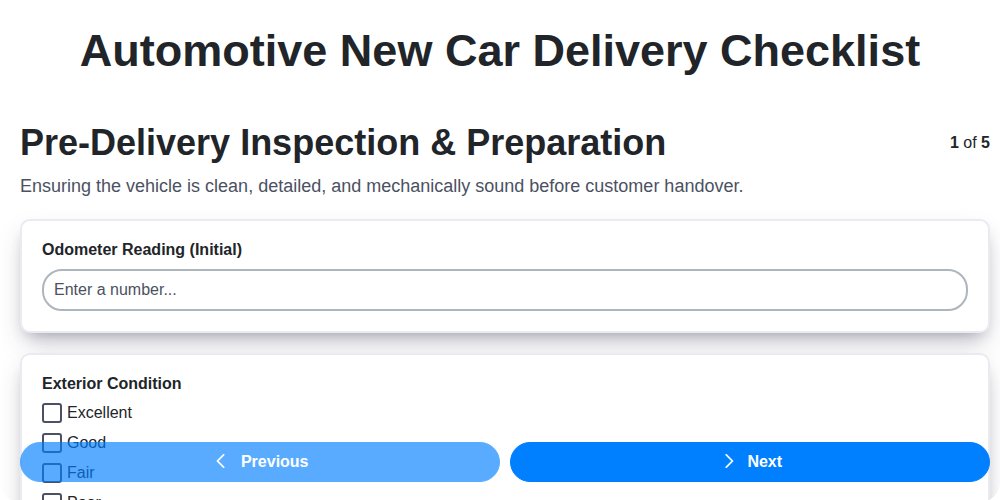
Table of Contents
- Welcome to Your New Ride!
- Pre-Delivery Inspection & Preparation: Spotting Potential Issues
- Exterior Inspection: A Detailed Walkaround
- Interior Inspection: Comfort and Functionality
- Under the Hood: A Quick Glance
- Customer Paperwork & Finance: The Legal Stuff
- Understanding Your Loan or Lease Agreement
- Vehicle Orientation & Feature Demonstration: Mastering Your New Tech
- Infotainment System: Navigation, Bluetooth, and More
- Safety Features: A Crucial Overview
- Warranty & Service Explanations: Peace of Mind
- Understanding Your Warranty Coverage
- Delivery Confirmation & Customer Acknowledgement: Signing Off
- Final Questions and Concerns: Addressing Your Remaining Inquiries
- Resources & Links
TLDR: Just bought a new car? Don't drive off without it! This checklist makes sure you're 100% happy with your purchase. It covers everything from checking for damage and understanding your features to paperwork, warranty details, and confirming everything's perfect before you hit the road. Download it and use it to avoid surprises and enjoy your new ride!
Welcome to Your New Ride!
This is a huge moment - you've chosen the perfect car, navigated the buying process, and now it's finally here! To ensure a smooth and enjoyable delivery experience, we've created this checklist. It's designed to cover all the essential steps, from inspecting your new vehicle to understanding your warranty and everything in between. Consider this your guide to confidently driving away in your brand new car, knowing you've covered all the bases. Let's make sure you absolutely love your new vehicle from the very first mile!
Pre-Delivery Inspection & Preparation: Spotting Potential Issues
Before you drive off the lot in your brand-new car, a thorough pre-delivery inspection and preparation is absolutely crucial. This isn't just a formality; it's your first line of defense against potential issues down the road. Don't feel pressured to skip this step - it's designed to protect you.
Here's what to look for, and what you should be paying attention to:
- Exterior: Walk around the entire vehicle, checking for any scratches, dents, or paint imperfections. Look closely - even small blemishes can be time-consuming and expensive to repair later. Check panel gaps - they should be consistent and even.
- Interior: Inspect the upholstery for any tears, stains, or loose stitching. Ensure all trim pieces are properly attached and aligned. Test all interior lights, vents, and the infotainment system.
- Under the Hood: While you may not be an expert, look for anything that seems out of place. Check fluid levels (coolant, oil, brake fluid) - they should be at the appropriate marks.
- Tires: Verify the tires are the correct size and type, and that they are properly inflated. Look for any signs of damage.
- Functionality: Have the dealer verify that all features - windows, locks, mirrors, wipers, lights, horn - are working correctly.
- Ask Questions: Don't hesitate to ask the dealer to explain any discrepancies you find. If something isn't right, get it documented and addressed before you take possession. A written acknowledgement of any issues is vital.
Exterior Inspection: A Detailed Walkaround
Let's start with the outside! Don't be shy - this is your brand new car. A thorough exterior inspection is crucial to catch any potential blemishes before you drive off the lot. Start with a complete walkaround in good lighting.
- Panel Alignment: Check the gaps between body panels (hood, doors, trunk/hatch). They should be consistent and even. Large or uneven gaps can indicate poor assembly.
- Paint Quality: Look for any scratches, dents, swirl marks, or inconsistencies in the paint finish. Don't just look from a distance; get up close to really assess the quality. Check for overspray - paint on rubber seals or trim.
- Glass & Mirrors: Inspect the windshield, windows, and mirrors for cracks, chips, or scratches.
- Lights: Verify that all headlights, taillights, brake lights, turn signals, and fog lights (if equipped) are functioning correctly.
- Tires: Check the tire brand and size to confirm they match what's specified for your vehicle. Note the tire date code (DOT code) - ideally, they should be relatively new.
- Undercarriage (If Possible): If you can safely do so, take a quick look underneath the car for any signs of damage or leaks. (This might require assistance from the dealer).
- Accessories: Confirm any accessories you ordered (roof racks, running boards, etc.) are properly installed.
Interior Inspection: Comfort and Functionality
Let's move inside and ensure your new car's interior meets your expectations. This isn't just about aesthetics; it's about comfort and functionality for years to come.
- Seat Condition: Check for any tears, stains, or damage to the upholstery. Adjust the driver's and passenger's seats to your preferred positions and confirm all adjustments are working smoothly.
- Dashboard and Controls: Verify all buttons, knobs, and controls are responsive and feel solid. Test the infotainment screen, including navigation, audio, and connectivity features (Bluetooth pairing, smartphone integration).
- Climate Control: Turn on the air conditioning and heater to ensure they're working effectively. Check the airflow from all vents.
- Interior Lighting: Test all interior lights - overhead lights, reading lights, map lights, and the glove compartment light.
- Cargo Area: Inspect the trunk or cargo area for any damage or debris. Confirm the spare tire, jack, and tools are present (and you understand how to use them - more on that later!).
- Power Features: If your vehicle has power windows, locks, mirrors, and a power liftgate/tailgate, confirm they are functioning correctly.
- Smell: Take a moment to notice the interior smell. A new car smell is expected, but any unusual or concerning odors should be noted.
Under the Hood: A Quick Glance
Before we dive into the full delivery process, let's take a super quick peek under the hood - figuratively speaking! Your dealership's team will have already performed a thorough pre-delivery inspection, ensuring all mechanical systems are operating smoothly. This includes checking fluid levels (oil, coolant, brake fluid, windshield washer fluid), tire pressure, lights, and ensuring everything is running as it should. They'll also detail any accessories installed and verify that all factory options are present and functioning correctly. Don't hesitate to ask your salesperson any questions about the engine, components, or anything else you're curious about - this is your chance to learn a bit more about the mechanics powering your new ride!
Customer Paperwork & Finance: The Legal Stuff
Buying a new car is a big decision, and with that comes a fair bit of paperwork. Don't feel overwhelmed! This section is designed to ensure you understand everything you're signing. Here's what to expect:
- Sales Agreement: This outlines the agreed-upon price, any trade-in value, and any applicable fees. Review this carefully to confirm everything matches your initial negotiations. Don't be afraid to ask questions about any line items you don't understand.
- Financing Documents (if applicable): If you're financing your vehicle, you'll receive loan documents detailing the interest rate, loan term, monthly payments, and total cost of borrowing. Take time to understand these terms; it's a significant financial commitment.
- Registration and Title Application: The dealership will usually handle the initial registration and title application on your behalf. Make sure all the information is accurate, including your name, address, and vehicle identification number (VIN).
- Sales Tax Forms: You'll likely need to complete forms related to sales tax.
- Privacy Policy: You'll be asked to acknowledge the dealership's privacy policy regarding your personal information.
- Disclosure Statements: Depending on your state and the vehicle, you may receive various disclosure statements. Read these to understand any potential fees, charges, or legal disclaimers.
Pro Tip: It's okay to ask for a copy of everything you sign. Keep these documents organized for your records. Don't feel pressured to sign anything you haven't fully reviewed and understand. If something seems off, politely ask for clarification or request to review it again later.
Understanding Your Loan or Lease Agreement
Before you drive off in your new car, take the time to really understand your loan or lease agreement. It's more than just a stack of papers - it's a legally binding contract. Don't feel pressured to sign anything you don't fully grasp. Here's what to look for:
- APR (Annual Percentage Rate): This is the true cost of borrowing, including interest and fees. Compare it to other offers you're considering.
- Loan Term: Understand the length of your loan and how it impacts your monthly payments and total interest paid. Shorter terms mean higher monthly payments but less interest overall.
- Lease Terms (if applicable): For leases, pay close attention to mileage allowances, wear and tear clauses, and potential early termination fees. Knowing these upfront prevents unwelcome surprises at lease-end.
- Payment Schedule: Confirm your payment amount, due date, and accepted payment methods.
- Total Cost of Ownership: While the monthly payment is important, consider the total amount you'll pay over the life of the loan or lease.
- Ask Questions: Don't be afraid to ask your finance manager to explain anything you don't understand. It's their job to clarify!
Vehicle Orientation & Feature Demonstration: Mastering Your New Tech
Your new car isn't just a set of wheels; it's a rolling tech hub! This is where your dealer really helps you unlock its full potential. Don't be shy - this is your time to ask questions and get comfortable.
Here's what to expect (and what to ask about):
- Infotainment System: This is often the most complex part. Ask for a walkthrough of navigation, Bluetooth pairing (phone and audio), Apple CarPlay/Android Auto integration (if applicable), radio functionality, and any connected services your vehicle offers. Don't just be shown how to do it, understand why it works the way it does.
- Driver-Assistance Features: Learn about and understand the operation of features like adaptive cruise control, lane departure warning, automatic emergency braking, blind-spot monitoring, and parking sensors. Ask about their limitations - these systems are aids, not replacements for attentive driving. Have them demonstrate each feature (if safe to do so) and explain the visual/auditory cues you'll receive.
- Comfort & Convenience: From heated seats and steering wheels to automatic climate control and adjustable headlamps, your new car probably has a host of comfort features. Have the dealer walk you through their operation and any customization options.
- Digital Instrument Cluster: If your car has a digital instrument cluster, understand how to navigate the different screens and customize what information is displayed.
- Key Fob Features: Beyond just unlocking and starting the car, modern key fobs often have features like panic buttons, remote start (if equipped), and vehicle locator functions.
- Voice Commands: Many new cars offer voice control for various functions. Ask for a quick overview and some basic commands to get you started.
Pro Tip: Take notes! It's a lot to remember. Don't be afraid to ask the dealer to repeat demonstrations or explain things in different ways. It's far better to ask now than to struggle later. Consider having a second person with you to help absorb the information.
Infotainment System: Navigation, Bluetooth, and More
Your new car's infotainment system is the central hub for entertainment, navigation, and connectivity. Don't be overwhelmed by the features - take this opportunity to understand them! Here's what to focus on:
- Navigation System: Ask your dealer to demonstrate how to input destinations, understand map updates, and utilize voice commands. Confirm if your system includes real-time traffic updates and points of interest.
- Bluetooth Connectivity: Ensure your phone successfully pairs with the car's Bluetooth system. Have the dealer show you how to access your contacts, make calls, and stream music. Test both audio quality and microphone functionality.
- Smartphone Integration (Apple CarPlay/Android Auto): If your vehicle supports it, have the dealer walk you through connecting your smartphone and using these features. Understand how to access apps, use voice commands, and manage notifications.
- Radio & Audio Settings: Familiarize yourself with radio presets, sound settings (bass, treble, fader), and how to connect external audio devices.
- USB Ports & Charging: Confirm the location and functionality of USB ports, including whether they support fast charging.
- Voice Command System: Have the dealer demonstrate basic voice commands for navigation, music, and phone calls.
Don't hesitate to ask questions! Mastering your infotainment system will significantly enhance your driving experience.
Safety Features: A Crucial Overview
Modern vehicles are packed with safety features designed to protect you and your passengers. Let's go beyond the basics and ensure you understand how these systems work. Advanced Driver-Assistance Systems (ADAS) are increasingly common, including features like:
- Automatic Emergency Braking (AEB): This system uses sensors to detect potential collisions and automatically applies the brakes if you don't react in time. Understand its limitations - it's not a substitute for attentive driving.
- Lane Departure Warning (LDW) & Lane Keeping Assist (LKA): LDW alerts you if you're drifting out of your lane. LKA actively steers you back on track. Familiarize yourself with how these systems respond, as they can sometimes react unexpectedly.
- Blind Spot Monitoring (BSM): This system alerts you to vehicles in your blind spots. Learn to recognize the indicators and how to interpret their signals.
- Adaptive Cruise Control (ACC): Maintains a set distance from the vehicle in front of you. Be aware of its operational range and how it performs in varying traffic conditions.
- Rear Cross-Traffic Alert (RCTA): Alerts you to approaching vehicles when backing up. Understand its detection range and potential limitations.
Don't be afraid to ask your dealer to demonstrate each of these features during the vehicle orientation. Knowing how these systems operate and their limitations is key to using them effectively and safely. Read your owner's manual for detailed explanations and safety guidelines.
Warranty & Service Explanations: Peace of Mind
Understanding your new car's warranty and service schedule is crucial for maintaining its performance and value. During delivery, your dealer will walk you through the specifics of your manufacturer's warranty, including its duration, what's covered, and any limitations. Don't hesitate to ask clarifying questions - it's better to be informed upfront.
We'll cover details like:
- Basic Warranty: The standard coverage period and mileage.
- Powertrain Warranty: Coverage for the engine, transmission, and drivetrain.
- Rust Warranty: Protection against corrosion.
- What's Not Covered: Common exclusions, like wear-and-tear items or damage from accidents.
- Warranty Transferability: Can the warranty be transferred if you sell the car?
- Service Intervals: We'll outline the recommended maintenance schedule, including oil changes, tire rotations, and inspections. Knowing these intervals will help you proactively care for your vehicle and keep it running smoothly.
- Service Plans: We'll discuss whether a service plan is right for you and explain the benefits of potentially extending your vehicle's maintenance coverage.
Take notes during this explanation; it's a valuable resource for future reference. We want you to feel confident and prepared for the years to come with your new car.
Understanding Your Warranty Coverage
Your new car warranty is a critical safety net, and understanding what it covers (and what it doesn't) is essential for peace of mind. Typically, a new car warranty includes a bumper-to-bumper warranty covering defects in materials and workmanship for a specific period (often 3 years or 36,000 miles) and a powertrain warranty covering major components like the engine, transmission, and drivetrain, which often extends longer (e.g., 5 years or 60,000 miles).
However, it's vital to read the fine print. Your warranty document will outline specifics regarding what's covered, limitations, exclusions (like wear-and-tear items, damage from accidents, or modifications), and any required maintenance to keep the warranty valid. Don't hesitate to ask your dealer to clarify any confusing language. Understanding the terms now can save you potential headaches and unexpected expenses down the road. Keep your warranty booklet in a safe place and review it periodically.
Delivery Confirmation & Customer Acknowledgement: Signing Off
This is the final, crucial step - making sure you're completely satisfied and comfortable with your new vehicle and understand all the details covered. You'll be presented with several documents to review and sign, including the purchase agreement, registration paperwork, and potentially other finance-related forms.
Don't rush this process! Read everything carefully. It's okay to ask questions - in fact, it's encouraged. Here's what to pay attention to:
- Verify all details: Double-check the Vehicle Identification Number (VIN), price, any agreed-upon accessories or add-ons, and any trade-in values.
- Understand the fine print: Review any clauses or conditions outlined in the purchase agreement. If something isn't clear, ask for clarification.
- Confirm all promises: Make sure any verbal promises made during the sales process are documented in writing. This could include things like service appointments, accessory installations, or future discounts.
- Receipts: Ensure you receive copies of all signed documents, including a detailed invoice.
- Final Walk-Around: Do a final walk-around of the vehicle with the dealer representative. Point out any remaining concerns, no matter how small.
By thoroughly reviewing and signing these documents, you're officially confirming your acceptance of the vehicle and acknowledging you understand the terms of the sale. This is your chance to leave with confidence, knowing you've done everything possible to protect your investment.
Final Questions and Concerns: Addressing Your Remaining Inquiries
Okay, you've gone through the inspection, paperwork, and feature demonstrations. But before you drive off in your brand-new car, it's crucial to address any lingering questions or concerns. Now's the time! Don't feel pressured to rush - this is your opportunity to ensure you're completely comfortable and confident with your new vehicle.
Here are some questions you might want to ask (but don't feel limited to just these!):
- Connectivity: Can you show me again how to connect my phone via Bluetooth/Apple CarPlay/Android Auto?
- Maintenance: What's the recommended maintenance schedule, and can you explain the different service intervals?
- Accessories: Regarding the accessories I ordered, when can I expect them to be installed?
- Navigation: "How do I update the navigation maps, and are there any associated costs?"
- Roadside Assistance: Could you review the details of my roadside assistance coverage and how to contact them?
- Specific Features: I'm still a bit unsure about [specific feature]. Could you demonstrate it one more time?
- Any Other Doubts: Honestly, anything that's on your mind! No question is too small.
Your dealer wants to ensure you're happy. Take advantage of this final opportunity to clarify anything and drive away feeling completely satisfied.
Resources & Links
- National Highway Traffic Safety Administration (NHTSA): Official US government agency for vehicle safety information, recalls, and consumer complaints. Essential for understanding vehicle safety standards and potential issues.
- Carfax: Provides vehicle history reports. While primarily used for used cars, understanding how these reports work can help you appreciate the importance of documentation and vehicle history.
- AutoCheck: Similar to Carfax, provides vehicle history reports. Offers another perspective on vehicle history and documentation.
- J.D. Power: Provides ratings and reviews of vehicles, including new car quality and dependability. Helpful for understanding common issues and expected performance.
- Edmunds: A comprehensive automotive resource offering reviews, pricing, and how-to guides. Their car buying guides are particularly useful.
- Kelley Blue Book (KBB): Provides vehicle pricing and valuation information. Useful for understanding the value of your new car.
- Federal Trade Commission (FTC): Provides information and protection against deceptive business practices, including those related to car buying. Good resource for understanding your rights as a consumer.
- California Department of Motor Vehicles (DMV) (Example - Adapt for your state): Official DMV website for your state. Provides information on registration, title transfer, and other essential paperwork - replace with your state's DMV website.
- AAA: Offers roadside assistance, insurance, and automotive information. A good resource for vehicle care and safety.
- Experian: While primarily known for credit reports, Experian has automotive resources and can help you understand financing terms and your credit score's impact on your loan.
Frequently Asked Questions
What is the purpose of this checklist?
This checklist provides a comprehensive guide to ensure a smooth and satisfactory experience when receiving your new car delivery. It covers pre-delivery communication, inspection procedures, paperwork, and post-delivery actions to avoid potential issues and ensure you're fully happy with your purchase.
When should I start using this checklist?
Ideally, start reviewing this checklist a few days before your scheduled delivery date. This allows you to prepare questions and ensure you're familiar with the process. You should actively use the checklist during the delivery itself and keep it for your records afterward.
What should I do before the delivery appointment?
Confirm the delivery date and time with the dealership. Clarify any outstanding questions about financing, warranty, or options. Review the order confirmation and any previous communication to ensure accuracy.
What paperwork should I expect during delivery?
Expect documents such as the purchase agreement, financing agreement (if applicable), warranty information, registration paperwork, and manufacturer's recall information. Carefully review each document before signing.
What should I inspect on the car's exterior?
Check the paint for scratches, dents, or imperfections. Inspect the tires for proper inflation and damage. Verify the wheels and trim are as ordered. Check all lights (headlights, taillights, turn signals, brake lights) and windshield wipers are functioning correctly.
What should I check on the car's interior?
Inspect the seats for any damage or stains. Check the dashboard and infotainment system for proper functionality. Test all features like the air conditioning, radio, navigation, and power windows. Ensure the floor mats are present and correct.
How do I handle discrepancies found during the inspection?
Immediately point out any discrepancies or issues to the dealership representative. Document everything in writing with photos or video if possible. Discuss options for resolution, such as repair, adjustment, or price reduction.
What does 'gap insurance' cover and do I need it?
Gap insurance covers the difference between your car's value and the amount you still owe on your loan if the car is totaled or stolen. Whether you need it depends on your down payment and loan terms; discuss it with your lender or dealership.
What should I do if I'm pressured to add extra products or services?
You have the right to decline any additional products or services offered during the delivery process. Don't feel obligated to accept anything you didn't explicitly request. Take your time to consider any offers and seek advice if needed.
Where can I find information about the car's warranty?
Your warranty information will be provided in a separate document during delivery. You can also usually find this information on the manufacturer's website. Read the warranty terms carefully to understand coverage and limitations.
What should I do after the delivery is complete?
Review all documents one last time. Register the vehicle with your state's DMV. Familiarize yourself with the car's owner's manual. Keep records of the delivery process and any subsequent service or repairs.
Comments
There are no comments yet. Be the first to add one!
Automotive Manufacturing Management Solution Demo
Optimize your automotive production! ChecklistGuro digitizes workflows, from parts inspection to final testing. Reduce errors, boost efficiency & ensure quality compliance. Drive results with our Work OS.
Related Articles
The Ultimate Automotive Sales Prospect Follow-Up Checklist: Close More Deals
Mastering Automotive BOM Configuration: Your Essential Checklist

The Ultimate Vehicle Registration & Insurance Validation Checklist
Automotive Parts Inventory Audit Checklist Template: Your Guide to Accurate Stock

Maximize Your Trade-In: The Automotive Appraisal Checklist You Need
The Ultimate Tire Pressure & Condition Checklist Template
Automotive Parts Inventory Control Checklist Template: Your Ultimate Guide

Drive Sales Success: Your Automotive Sales Team Performance Tracking Checklist
We can do it Together
Need help with
Automotive?
Have a question? We're here to help. Please submit your inquiry, and we'll respond promptly.