Automotive Recall Campaign Management: Your Essential Checklist Template
Published: 12/29/2025 Updated: 12/30/2025
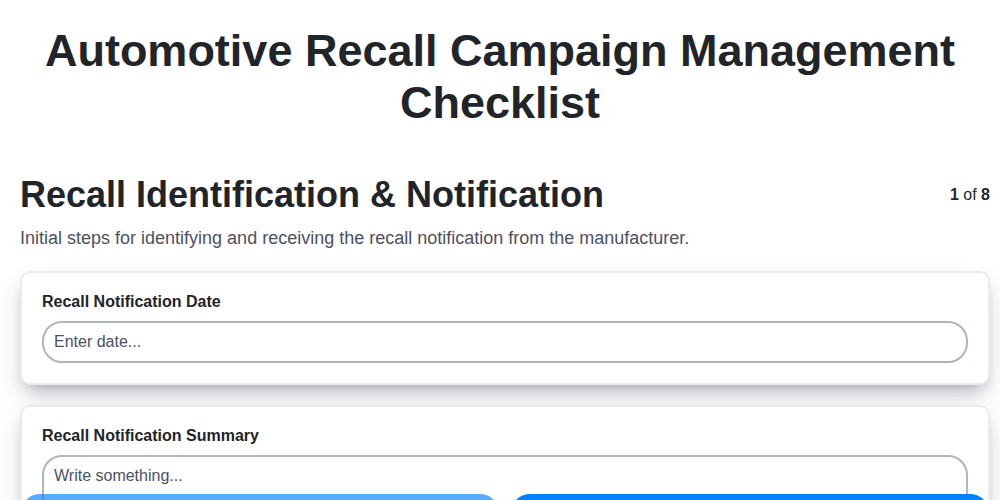
Table of Contents
- Introduction: Navigating Automotive Recall Campaigns
- 1. Recall Identification & Notification: Staying Informed
- 2. Vehicle Identification & Inventory: Pinpointing Affected Vehicles
- 3. Customer Notification & Communication: Transparency and Outreach
- 4. Service Scheduling & Workflow: Streamlining Appointments
- 4.1 Prioritizing Customer Appointments
- 5. Repair Execution & Documentation: Accurate and Complete Repairs
- 6. Parts Management & Procurement: Ensuring Availability
- 7. Compliance & Reporting: Meeting Regulatory Requirements
- 8. Record Keeping & Archiving: Maintaining a Paper Trail
- 9. Training Your Team: Ensuring Recall Expertise
- 10. Utilizing Technology for Recall Management
- 11. Post-Campaign Review: Lessons Learned
- Conclusion: Minimizing Recall Impact and Maintaining Customer Trust
- Resources & Links
TLDR: Automotive recalls are stressful! This checklist template breaks down the entire process - from identifying the recall and finding affected vehicles, to notifying customers, performing repairs, managing parts, and keeping records - into manageable steps. Use it to ensure compliance, minimize disruption, and keep your customers informed.
Introduction: Navigating Automotive Recall Campaigns
Automotive recalls are a complex reality for manufacturers and dealers alike. They're not just about fixing a problem; they's about protecting customers, maintaining brand reputation, and ensuring regulatory compliance. A recall campaign demands meticulous planning and execution. This isn't a situation where ad-hoc approaches will suffice. A structured, systematic process - a robust checklist - is essential for navigating the complexities and minimizing potential disruption. This blog post dives into a comprehensive checklist specifically designed for automotive recall campaign management, outlining the key steps to ensure a smooth, efficient, and compliant process from identification to resolution. Ignoring even a single step can have significant consequences, so let's explore how to manage these critical events effectively.
1. Recall Identification & Notification: Staying Informed
Staying ahead of automotive recall campaigns starts with proactive monitoring and swift notification. Don't wait for a customer to discover a recall - be the first to inform them. Here's how to stay informed:
- Subscribe to Official Alerts: Register with the National Highway Traffic Safety Administration (NHTSA) and your manufacturer's recall notification services. These are your primary sources for official announcements.
- Monitor Industry Publications: Stay current with automotive news and trade publications, which often report on emerging recall campaigns.
- Establish Internal Monitoring: Designate a team or individual responsible for tracking recall announcements and disseminating information within your dealership or service center.
- Leverage Recall Management Software: Consider implementing specialized software that automatically tracks recalls based on VIN and vehicle makes/models, providing timely alerts.
- Regularly Check Manufacturer Portals: Most manufacturers have online portals for dealers providing the latest recall information, technical service bulletins (TSBs), and related documentation.
By establishing a robust system for recall identification and notification, you demonstrate your commitment to safety and build trust with your customers.
2. Vehicle Identification & Inventory: Pinpointing Affected Vehicles
Successfully managing a recall campaign hinges on accurately identifying and locating every affected vehicle. This isn't just about knowing the Vehicle Identification Number (VIN) is impacted; it's about knowing where that vehicle is. A meticulous vehicle identification and inventory process is paramount to minimizing disruption and ensuring customer safety.
Here's what's involved:
- VIN Decoding & Matching: Leverage the recall notification to understand the specific VIN ranges affected. Employ robust VIN decoding software to automatically identify vehicles within those ranges registered in your dealership's database.
- Inventory System Integration: Connect your VIN database with your existing inventory management system. This allows for real-time identification of vehicles currently in stock, including those awaiting sale or service.
- Registered Owner Identification: Access registration data (where legally permissible and compliant with privacy regulations) to determine current ownership of affected vehicles. This is crucial for locating vehicles that may no longer be at your dealership.
- Historical Vehicle Tracking: If the vehicle has been sold or traded in, investigate historical records to determine its current location. This might involve contacting previous owners or utilizing vehicle tracking services (if available and permitted).
- Accurate Record Keeping: Meticulously document the identification process, including any challenges encountered, and the ultimate location of each vehicle. This provides an audit trail and assists with tracking progress.
- Regular Audits: Conduct periodic audits of identified vehicles to confirm their status and location, ensuring no vehicles are missed.
A comprehensive and organized vehicle identification and inventory process lays the foundation for a smooth and efficient recall campaign, minimizing potential safety risks and maintaining customer trust.
3. Customer Notification & Communication: Transparency and Outreach
Effective recall management hinges on clear, proactive, and empathetic communication with affected customers. This isn't just about legal compliance; it's about maintaining trust and brand reputation. Here's a breakdown of critical steps:
1. Develop a Comprehensive Communication Plan: Before any notification goes out, establish a detailed plan outlining:
- Communication Channels: Utilize multiple channels - mail, email, phone, website notices, and potentially even SMS - to reach all customers. Consider demographic data to prioritize channels.
- Message Tailoring: Craft messaging that's easy to understand, avoids technical jargon, and clearly explains the issue, potential risks, and the remedy offered.
- FAQ Development: Anticipate customer questions and prepare a comprehensive FAQ document to address common concerns and reduce call volume.
2. Timely and Accurate Notification: Send notifications as quickly as legally required and as soon as you have confirmed affected vehicle information. Delaying notification erodes trust.
3. Personalized Communication: Avoid generic, impersonal notifications. Where possible, personalize the message with the customer's name and vehicle details.
4. Empathy and Reassurance: Acknowledge the inconvenience and potential concern the recall may cause. Assure customers that the issue is being addressed promptly and safely.
5. Multi-Language Support: If your customer base is diverse, provide notifications in multiple languages to ensure everyone understands the details.
6. Dedicated Support Resources: Establish a dedicated recall hotline or email address to handle customer inquiries and provide personalized support. Train staff to handle potentially frustrated or anxious customers with patience and understanding.
7. Track Communication Efforts: Implement a system to track which customers have been notified and whether they have scheduled service appointments. This helps ensure complete coverage and follow-up where necessary.
Transparency is key. Be upfront about the recall, the problem, and the solution. Proactive communication can turn a potentially negative situation into an opportunity to strengthen customer loyalty.
4. Service Scheduling & Workflow: Streamlining Appointments
Effective service scheduling is the backbone of a smooth recall campaign. A chaotic scheduling process leads to frustrated customers, delayed repairs, and ultimately, a less successful recall. Here's how to optimize this crucial stage:
- Dedicated Recall Scheduling Team/Line: Consider designating a specific team or phone line solely for recall appointments. This ensures focused attention and expertise.
- Flexible Scheduling Options: Offer a range of appointment times, including evenings and weekends, to maximize customer convenience. Online scheduling portals are invaluable for self-service.
- Automated Appointment Reminders: Implement automated reminders (text, email, phone calls) to reduce no-shows and keep customers informed. Customize these reminders with recall-specific information.
- Prioritized Scheduling: Establish a system for prioritizing appointments based on recall severity and vehicle age. Higher-risk vehicles should be scheduled promptly.
- Workflow Integration: Seamlessly integrate the scheduling system with your service workflow. This ensures technicians are prepared and parts are available when the vehicle arrives.
- Capacity Planning: Analyze historical data and anticipated recall volume to accurately forecast workload and allocate technician resources.
- Customer Communication Throughout the Process: Keep customers updated on appointment status, any potential delays, and the overall progress of their recall repair. Transparency builds trust.
4.1 Prioritizing Customer Appointments
Managing a recall campaign involves a surge in customer appointments, and prioritizing these effectively is crucial for a smooth and positive experience. Don't let appointment scheduling become a bottleneck! Here's how to optimize:
- Recall Severity: Categorize appointments based on the severity of the recall. Safety-critical recalls should always take precedence. Implement a clear system (e.g., High, Medium, Low priority) and assign technicians accordingly.
- Vehicle Age & Mileage: While severity is paramount, consider vehicle age and mileage. Older vehicles or those with higher mileage might have underlying issues exacerbated by the recall, requiring more focused attention.
- Customer Convenience: Offer flexible appointment times, including early mornings, evenings, and weekends, to accommodate customer schedules. A frustrated customer is more likely to postpone or cancel, hindering the recall's progress.
- Appointment Slot Length: Allocate appropriate time slots based on the complexity of the repair. Avoid rushing technicians - this can lead to errors and re-work.
- Proactive Rescheduling: If a high-priority appointment is delayed, proactively contact the customer to reschedule quickly and offer alternative solutions (loaner vehicles, transportation assistance).
- Real-time Visibility: Implement a scheduling system that provides real-time visibility into appointment status, technician availability, and parts readiness. This allows for dynamic adjustments to maximize efficiency.
5. Repair Execution & Documentation: Accurate and Complete Repairs
The repair phase is where the recall work truly happens, and it's absolutely critical to get it right. Rushing this step can lead to further safety concerns and increased liability. Here's a breakdown of key considerations:
Technician Training & Verification: Ensure all technicians involved in the recall repair are thoroughly trained on the specific procedure. Provide clear, concise work instructions aligned with the manufacturer's guidance. Consider competency assessments to verify understanding and skill.
Following the Procedure Meticulously: Deviations from the documented repair procedure are a significant risk. Technicians must follow the steps precisely, using the correct tools and techniques. Provide easy access to the official repair instructions - ideally electronically accessible within the repair workflow.
Quality Checks & Inspections: Implement a multi-layered inspection process. Post-repair inspections by a second technician are highly recommended. This catches errors and ensures the repair meets the manufacturer's standards. A final visual inspection to confirm all parts are present and properly installed is vital.
Comprehensive Documentation: Detailed and accurate documentation is paramount. This should include:
- Technician's Name and Signature: Who performed the work.
- Date and Time of Repair: Clear record of when the repair occurred.
- Parts Used (with VIN/Part Numbers): Essential for traceability and compliance.
- Specific Steps Performed: Documentation of each step taken during the repair.
- Any Deviations & Resolutions: If deviations from the procedure are unavoidable, meticulously document the reason and the corrective action taken.
- Inspection Results: Record of the post-repair inspection outcomes.
Digital Workflows: Implementing a digital repair workflow system can significantly improve accuracy, consistency, and auditability. These systems often include built-in checklists, electronic signatures, and real-time data capture.
Proper repair execution and comprehensive documentation are not just about fixing the immediate issue; they're about safeguarding customers and demonstrating a commitment to quality and compliance.
6. Parts Management & Procurement: Ensuring Availability
A successful recall hinges on having the right parts, at the right place, and at the right time. Inadequate parts management can lead to significant delays, frustrated customers, and potentially, increased liability. This section outlines a structured approach to parts management and procurement during a recall campaign.
1. Demand Forecasting & Inventory Assessment: Immediately upon recall notification, work with your parts suppliers to forecast demand based on the recall's scope and affected vehicle numbers. Simultaneously, conduct a thorough assessment of your existing parts inventory. Identify any parts already on hand that are required for the recall repair.
2. Expedited Ordering & Supplier Communication: Establish clear and consistent communication channels with your parts suppliers. Place orders immediately, specifying expedited delivery and prioritizing recall-related parts. Regularly monitor order status and proactively address potential supply chain disruptions. Consider leveraging supplier portals or dedicated recall support programs they may offer.
3. Strategic Parts Allocation: As parts arrive, develop a strategic allocation plan. Prioritize dealerships servicing the highest volume of affected vehicles or those experiencing the most immediate need. Consider regional distribution centers to streamline delivery and minimize transit times.
4. Contingency Planning for Shortages: Anticipate potential parts shortages. Have backup suppliers identified and pre-approved. Explore options like loaner parts or temporary repair solutions to keep vehicles off the road while permanent parts are secured. Maintain open communication with customers regarding potential delays.
5. Tracking and Visibility: Implement a robust system for tracking parts from order placement to installation. Real-time visibility into parts availability allows for proactive problem-solving and informed decision-making regarding service scheduling.
6. Post-Campaign Review: After the recall campaign concludes, analyze parts management performance. Identify areas for improvement in forecasting, ordering, and supplier communication to better prepare for future recalls.
7. Compliance & Reporting: Meeting Regulatory Requirements
Navigating automotive recall campaigns isn't just about fixing vehicles; it's about demonstrating unwavering adherence to regulatory mandates. The consequences of non-compliance - hefty fines, legal action, and severe reputational damage - are simply too significant to ignore. This section outlines key compliance and reporting considerations.
Understanding Your Obligations: Familiarize yourself thoroughly with the specific regulations dictated by your governing body (e.g., NHTSA in the US, Transport Canada in Canada, etc.). These regulations define timelines, required notifications, data reporting formats, and acceptable documentation. Stay updated on any changes to these regulations - they evolve.
Data Integrity is Paramount: Accurate and complete data collection throughout the entire recall process is the foundation of compliance. Every step, from vehicle identification to repair execution, must be meticulously documented and readily available for audit. Implement robust data validation processes to minimize errors.
Regular Reporting: Prepare and submit required reports within the stipulated deadlines. These reports typically cover vehicle identification, repair progress, parts usage, and overall campaign status. Utilize standardized reporting templates where available to ensure consistency and accuracy.
Audit Preparedness: Maintain meticulous records and be prepared for audits from regulatory agencies. Regular internal audits can identify potential vulnerabilities and ensure that your recall management processes are robust and compliant.
Transparency and Communication with Regulators: Establish a clear line of communication with your regulatory body. Promptly address any questions or concerns they may have, fostering a collaborative and transparent relationship.
Key Compliance Areas to Focus On:
- Notification Deadlines: Strictly adhere to all notification timelines.
- Recall Notices: Ensure recall notices contain the required information in the mandated language(s).
- Record Retention: Maintain records for the legally required retention period.
- Reporting Accuracy: Verify the accuracy of all data submitted in reports.
- Corrective Action Plans: Develop and implement corrective action plans to address any identified compliance gaps.
8. Record Keeping & Archiving: Maintaining a Paper Trail
Recall campaigns generate a significant amount of documentation, and meticulous record keeping is absolutely critical for demonstrating compliance, facilitating audits, and resolving potential legal issues. This isn't just about filing paperwork; it's about establishing a secure, accessible, and easily searchable system for all recall-related information.
Here's what you need to consider:
- What to Archive: Everything! This includes recall notices, vehicle identification numbers (VINs), customer contact information, repair orders, parts used, technician notes, warranty claims, communication logs (emails, letters, phone call summaries), and any internal memos related to the recall.
- Retention Periods: Adhere to all legal and regulatory requirements regarding record retention. These periods can vary based on jurisdiction and the specific recall. Consult with legal counsel to ensure compliance.
- Digital vs. Physical: While physical records may still be required in some cases, transitioning to a digital archive offers significant advantages: improved searchability, reduced storage space, enhanced security, and easier access for authorized personnel.
- Data Security: Implement robust security measures to protect sensitive customer data and recall information from unauthorized access. Consider encryption and access controls.
- Disaster Recovery: Develop a plan for data backup and recovery in the event of a disaster, ensuring the preservation of critical recall records.
- Regular Audits: Periodically audit your record-keeping practices to ensure accuracy, completeness, and adherence to established procedures.
- Designated Responsibility: Assign specific personnel with clear responsibility for managing and maintaining the recall record archive.
Proper record keeping isn't just a best practice - it's a legal obligation and a vital component of a successful recall campaign management program.
9. Training Your Team: Ensuring Recall Expertise
A successful recall campaign hinges on a well-trained and knowledgeable team. Don't underestimate the importance of equipping your technicians, service advisors, and even parts staff with the specific skills and understanding needed to navigate the recall process effectively. This isn't just about following procedures; it's about fostering a culture of recall awareness and responsibility.
Here's what your training program should cover:
- Recall Campaign Overview: Explain the purpose of recalls, legal obligations, and the potential consequences of non-compliance.
- Specific Recall Procedures: Detail the steps outlined in your recall management checklist - from identification and notification to repair execution and documentation. Role-specific training is crucial here.
- Vehicle Identification & Verification: Technicians need to be able to accurately identify affected vehicles using VIN decoding and verification tools.
- Customer Communication Best Practices: Service advisors should be trained on how to communicate recall information to customers with empathy, clarity, and professionalism. This includes handling questions and concerns.
- Repair Techniques & Safety: Provide specialized training on the specific repair procedures required for the recall, emphasizing safety protocols.
- Documentation & Reporting: Ensure everyone understands the importance of accurate and complete record-keeping.
- Regular Refresher Courses: Recalls evolve. Implement regular training updates to ensure ongoing competency.
Consider utilizing a blended learning approach - combining online modules, hands-on training, and mentorship programs - to maximize knowledge retention and practical application. Investing in team training is an investment in your dealership's reputation and compliance.
10. Utilizing Technology for Recall Management
Modern recall campaigns demand more than spreadsheets and phone calls. Leveraging technology is no longer a luxury - it's a necessity for efficient, compliant, and customer-centric recall management. Several software solutions are specifically designed to streamline the entire recall process, offering benefits like automated VIN identification, targeted customer communication, real-time inventory tracking, and detailed reporting.
Consider implementing a Recall Management System (RMS) that integrates with your dealership's existing systems (DMS, CRM). These systems automate many manual tasks, reducing errors and freeing up your team's time. Features to look for include:
- Automated VIN Scanning: Quickly identify affected vehicles within your inventory and those potentially in customer hands.
- Customer Relationship Management (CRM) Integration: Personalize communication and track customer interactions throughout the recall process.
- Parts Ordering and Inventory Management: Optimize parts procurement based on recall needs and track inventory levels.
- Workflow Automation: Automate service scheduling, repair assignments, and progress tracking.
- Real-time Reporting & Analytics: Generate compliance reports and gain insights into campaign performance.
- Mobile Accessibility: Allow technicians and service advisors to access information and update statuses remotely.
Investing in technology not only improves operational efficiency but also enhances the customer experience by keeping them informed and minimizing disruption. Explore different RMS solutions to find the best fit for your dealership's size and complexity.
11. Post-Campaign Review: Lessons Learned
Once the recall campaign officially closes, don't simply file everything away. A thorough post-campaign review is crucial for continuous improvement. Gather data from each stage - notification response rates, repair completion times, customer satisfaction scores, parts availability - and analyze what went well and, more importantly, what could have been done better. Were there bottlenecks in the service scheduling process? Did customer communication feel clear and helpful? Were parts readily available when needed?
This review should involve representatives from all departments involved: recall management, service, parts, and customer relations. Document these findings, identify actionable steps to optimize future recall management, and update your processes accordingly. Consider implementing changes like refining customer communication templates, streamlining repair workflows, or adjusting parts ordering procedures. Remember, each recall is a learning opportunity to build a more robust and efficient system for keeping your customers safe and building trust in your brand.
Conclusion: Minimizing Recall Impact and Maintaining Customer Trust
Navigating automotive recall campaigns is a complex and demanding process, but one that's critical for protecting your customers and upholding your brand's reputation. By diligently following a comprehensive checklist - encompassing everything from initial notification to long-term record keeping - you can significantly minimize the disruption caused by recalls. Remember, proactive management isn't just about ticking boxes; it's about demonstrating a genuine commitment to safety and a dedication to your customers. Consistent, transparent communication and a well-executed repair process are paramount to maintaining trust and reinforcing your position as a responsible and reliable automotive provider. The steps outlined aren't merely procedural; they are the foundation for building and preserving customer loyalty during a challenging situation.
Resources & Links
- National Highway Traffic Safety Administration (NHTSA): The primary source for recall information, announcements, and regulations in the United States. Essential for identifying recall notices and understanding compliance requirements.
- SaferCar.gov - Recall Search: NHTSA's recall search tool allows users to easily find recall information based on vehicle make, model, and VIN.
- Canada Border Services Agency - Automotive Recalls (Canadian Dealers): For Canadian dealerships, this resource provides information and guidance on managing automotive recall campaigns under Canadian regulations. (Adapt resources based on your region)
- Automotive Nation - Recall Management Software: Provides information and software solutions for managing vehicle recalls. Many automotive software vendors offer recall-specific modules.
- DealerRefresh - Automotive Recall Management: Dealer Refresh offers articles and resources related to Automotive Recall Management for Dealerships.
- RepairDriver - Automotive Recall Articles: RepairDriver provides articles and insights for service managers and technicians, which often include recall-related content.
- MITRE Corporation - Vehicle Recall Data Sharing: MITRE often researches and provides insights on data sharing and best practices related to automotive recalls, impacting traceability and efficiency.
- Society of Government Automotive Fleet Managers (SGA): While geared towards government fleets, SGA provides valuable information about recall management and compliance that can be adapted for dealerships and automotive businesses.
- American Society of Automotive Estimators (ASEA): ASEA often provides educational resources about Automotive Repair and Recalls.
- AutoScout24 - Data & Analytics (Optional - for Market Insights): While not directly recall-related, accessing market data can help understand customer behavior during recall events and tailor communication strategies. (Adapt based on geographic focus).
Frequently Asked Questions
What is an automotive recall campaign?
An automotive recall campaign is a process initiated by a vehicle manufacturer to correct a defect or deficiency that affects the safety or performance of a vehicle. It involves notifying affected vehicle owners and providing a remedy, typically a repair or replacement, free of charge.
Why is a recall campaign management checklist important?
A recall campaign management checklist ensures a systematic and compliant process. It helps minimize risks, reduces costs associated with non-compliance (fines, legal action), improves communication with stakeholders (owners, dealers, regulators), and protects your brand reputation.
Who needs to use this checklist?
This checklist is crucial for automotive manufacturers, recall administrators, dealer networks, legal teams, quality control departments, and anyone involved in managing automotive recall campaigns.
What are the main sections covered in the checklist template?
The template covers key areas including recall initiation, owner notification, dealer communication, remedy implementation, field data collection, reporting, and campaign closure. It also includes steps for documentation and compliance.
Can I customize the checklist template?
Yes, absolutely! The template is designed to be flexible. You can add, remove, or modify items to align with your specific recall campaign's requirements, internal processes, and regulatory landscape.
What is the importance of accurate owner notification?
Accurate owner notification is paramount. It ensures affected owners are aware of the recall and can promptly schedule a remedy. Inaccurate or incomplete notifications can lead to delayed repairs, increased safety risks, and regulatory penalties.
How does the checklist help with dealer communication?
The checklist includes sections dedicated to communicating with dealerships, ensuring they receive timely updates on recall procedures, parts availability, and training. This facilitates smooth and efficient remedy implementation.
What kind of documentation is crucial during a recall campaign?
Critical documentation includes recall initiation reports, owner notification records, dealer communication logs, remedy completion records, field data reports, and regulatory submissions. Maintaining thorough documentation is vital for audit trails and compliance.
What are some common regulatory bodies involved in automotive recalls?
Common regulatory bodies include the National Highway Traffic Safety Administration (NHTSA) in the United States, Transport Canada in Canada, and equivalent agencies in Europe and Asia. The checklist helps ensure compliance with these agencies' requirements.
How can I ensure the checklist is consistently used across my organization?
Implement training programs for all involved personnel, integrate the checklist into your recall management software (if applicable), regularly review and update the checklist, and assign accountability for checklist completion.
Comments
There are no comments yet. Be the first to add one!
Automotive Manufacturing Management Solution Demo
Optimize your automotive production! ChecklistGuro digitizes workflows, from parts inspection to final testing. Reduce errors, boost efficiency & ensure quality compliance. Drive results with our Work OS.
Related Articles
The Ultimate Automotive Sales Prospect Follow-Up Checklist: Close More Deals
Mastering Automotive BOM Configuration: Your Essential Checklist

The Ultimate Vehicle Registration & Insurance Validation Checklist
Automotive Parts Inventory Audit Checklist Template: Your Guide to Accurate Stock

Maximize Your Trade-In: The Automotive Appraisal Checklist You Need
The Ultimate Tire Pressure & Condition Checklist Template
Automotive Parts Inventory Control Checklist Template: Your Ultimate Guide

Drive Sales Success: Your Automotive Sales Team Performance Tracking Checklist
We can do it Together
Need help with
Automotive?
Have a question? We're here to help. Please submit your inquiry, and we'll respond promptly.