The Ultimate Automotive Refurbishment Checklist: From Intake to Release
Published: 12/29/2025 Updated: 12/30/2025

Table of Contents
- Introduction: Reviving Classics and Renewing Rides
- 1. Vehicle Intake & Assessment: Setting the Foundation
- 2. Mechanical Inspection & Repair: Ensuring Reliable Performance
- 3. Bodywork & Panel Repair: Restoring Structural Integrity
- 4. Paint & Finishing: Achieving a Show-Stopping Finish
- 5. Interior Refurbishment: Comfort and Style Renewed
- 6. Detailing & Final Inspection: The Devil's in the Details
- 7. Documentation & Release: Protecting Your Investment
- 8. Detailed Mechanical Inspection: Beyond the Basics
- 9. Panel Preparation: Key to a Flawless Paint Job
- 10. Interior Cleaning & Repair Techniques
- 11. Paint Matching & Color Correction
- 12. The Importance of Rust Prevention
- 13. Quality Control: Maintaining Consistency Throughout
- Resources & Links
TLDR: This checklist is your roadmap to a flawless automotive refurbishment! It breaks down the entire process - from initial assessment and mechanical repairs, to bodywork, paint, interior restoration, detailing, and finally, documentation - ensuring every step is completed correctly and consistently. Use it to streamline your workflow, reduce errors, and deliver a high-quality, fully refurbished vehicle.
Introduction: Reviving Classics and Renewing Rides
Bringing a vehicle back to its former glory - whether it's a cherished classic or a daily driver showing its age - is a complex undertaking. It's far more than just a quick wash and wax; it's a meticulous process demanding expertise, patience, and a systematic approach. A poorly executed refurbishment can lead to disappointing results, wasted money, and even damage to the vehicle's value.
That's why a detailed checklist is absolutely crucial. It's your roadmap to success, ensuring every step is completed correctly and to a consistent standard. This post dives into the key stages of an automotive refurbishment process, outlining a comprehensive checklist designed to guide professionals and serious enthusiasts alike. We'll break down each phase, highlighting critical tasks and considerations - helping you restore confidence and bring that vehicle back to life.
1. Vehicle Intake & Assessment: Setting the Foundation
The refurbishment process begins long before any tools touch the vehicle. This initial intake and assessment phase is absolutely critical for accurate project scoping, budgeting, and ultimately, a successful outcome. It's more than just looking at the car; it's a thorough diagnostic exercise.
Here's what's involved:
- Initial Documentation: We start with a comprehensive intake form. This captures the vehicle's VIN, mileage, owner details, and a detailed description of the client's desired outcome. What are their expectations for the finished product? Are they looking for a concours-level restoration, a daily driver refresh, or something in between?
- Visual Inspection (Exterior): A meticulous walk-around, noting every scratch, dent, rust spot, and paint imperfection. We document everything with photos and video.
- Visual Inspection (Interior): Assessment of the interior condition, from upholstery tears and fading to damage to trim and carpets.
- Mechanical Preliminary Check: A quick assessment of the engine, transmission, and general mechanical functionality. This isn't a full mechanical inspection (that comes later), but flags any immediately obvious issues.
- Rust Assessment: Crucial for older vehicles, we carefully examine the chassis, wheel wells, and other vulnerable areas for rust. This often involves probing with inspection tools to determine the extent of the corrosion.
- Report Generation: Based on the initial assessment, we create a detailed report outlining all identified issues, potential repair strategies, and an estimated timeframe. This report is shared with the client for approval before any work commences. This ensures transparency and alignment of expectations.
2. Mechanical Inspection & Repair: Ensuring Reliable Performance
Before we even think about aesthetics, a thorough mechanical inspection is absolutely crucial. A beautiful paint job on a vehicle with engine trouble is a recipe for disappointment - and a quickly depreciating asset. This stage goes beyond a quick visual check; it's about diagnosing and rectifying any underlying mechanical issues.
Our process begins with a comprehensive diagnostic scan, utilizing advanced tools to identify error codes and potential problems across the vehicle's systems. This includes, but isn't limited to:
- Engine Health: Compression testing, leak detection, spark plug inspection, and assessment of belts and hoses.
- Transmission & Drivetrain: Fluid level and condition checks, inspection for leaks, and performance testing.
- Braking System: Brake pad and rotor inspection, brake line checks, and bleeding the brake system.
- Suspension & Steering: Examination of shocks, struts, ball joints, tie rod ends, and power steering components.
- Electrical System: Battery health assessment, alternator and starter testing, and wiring harness inspection.
- Cooling System: Radiator and coolant line inspection, thermostat check, and cooling fan functionality.
Any identified issues are documented with detailed descriptions and repair estimates. We prioritize using genuine parts or high-quality aftermarket components to ensure longevity and reliability. This stage might involve engine rebuilds, transmission repairs, or replacement of various components - all carried out by our experienced and certified technicians. We believe in addressing mechanical concerns upfront; it's the foundation for a truly restored vehicle.
3. Bodywork & Panel Repair: Restoring Structural Integrity
This phase is where the real artistry begins. After the initial assessment, we move into rectifying any dents, rust, or damage to the vehicle's bodywork and panels. This isn't just about aesthetics; it's about restoring the vehicle's structural integrity.
The process often starts with meticulous cleaning to expose the full extent of the damage. We then utilize a variety of techniques, including:
- Dent Removal: Employing paintless dent repair (PDR) where possible to avoid the need for fillers and maintain original paint. For more significant dents, traditional hammering and metal shaping may be necessary.
- Rust Repair: This is a critical step. Rust eats away at metal, compromising safety and longevity. We remove rust using abrasive methods (sandblasting, wire brushing) and apply rust converters to prevent further spread. Replacement panels are welded in when necessary.
- Panel Replacement: Damaged or severely corroded panels are removed and replaced with new or donor panels. Proper welding techniques are essential to ensure a strong and seamless bond.
- Filler Application: Where minor imperfections remain after metalwork, body filler (bondo) is carefully applied, feathered, and shaped to create a smooth, uniform surface for painting. This is done sparingly and always followed by thorough sanding.
- Alignment & Gap Setting: Ensuring all panels are aligned correctly and gaps are consistent is vital for a professional finish and proper aerodynamics.
Throughout this process, we prioritize quality and accuracy, ensuring that the bodywork is not only visually appealing but also structurally sound and ready for the next stage. Each repair is carefully documented with photographs for transparency and traceability.
4. Paint & Finishing: Achieving a Show-Stopping Finish
The paint and finishing stage is arguably the most visually impactful part of any automotive refurbishment. It's where rust, scratches, and faded colors disappear, revealing the vehicle's true potential. This isn't just about applying a coat of paint; it's a meticulously layered process requiring precision, patience, and the right techniques.
Our process begins with a thorough preparation of the bodywork. Any imperfections corrected in the bodywork phase - dents, ripples, and filler - are meticulously sanded smooth, ensuring a perfectly level surface. Multiple coats of primer are applied, each carefully sanded to create a flawless base for the color coat.
Selecting the right paint system is critical. We utilize high-quality automotive paints, considering factors like durability, color matching to the original specification (or desired customization), and UV resistance. Multiple coats of color are then applied, building depth and vibrancy.
Following the color coats, a clear coat is applied. This provides gloss, protection against the elements, and contributes to the overall aesthetic appeal. Several coats are applied, each sanded and polished to achieve a mirror-like finish.
Finally, we employ cutting-edge polishing techniques using specialized compounds and machines. This removes any imperfections in the clear coat, brings out the depth and brilliance of the color, and leaves the vehicle with a stunning, show-stopping shine. The final buffing ensures a perfectly smooth, flawless finish that will turn heads.
5. Interior Refurbishment: Comfort and Style Renewed
The interior of a vehicle often bears the brunt of wear and tear. From faded upholstery to cracked dashboards and worn carpets, a neglected interior can significantly detract from the overall appeal and value of a refurbished vehicle. This is where comprehensive interior refurbishment comes in.
Our interior refurbishment process is meticulous, addressing everything from minor repairs to complete overhauls. Here's what we typically cover:
- Upholstery Repair & Replacement: This includes patching, stitching, or entirely replacing seat covers, headliner, and door panels. We strive to match original materials and patterns wherever possible to maintain authenticity.
- Dashboard and Trim Restoration: Cracks, fading, and damage to plastic components are carefully repaired and restored. This can involve filling, sanding, and applying color-matching treatments.
- Carpet and Floor Mat Replacement: Old, stained, or worn carpets and floor mats are replaced with high-quality alternatives. We ensure a perfect fit and color match to complement the vehicle's interior.
- Headliner Repair/Replacement: Sagging or stained headliners are a common issue. We repair small tears or replace the entire headliner for a fresh, clean look.
- Cleaning and Conditioning: Every surface, from the dashboard to the door panels, receives a deep cleaning and conditioning to revitalize the materials and eliminate odors.
- Trim and Hardware Restoration: Replacing or refinishing interior trim pieces, knobs, and handles to restore their original luster.
We understand that the interior is a vital part of the driving experience. Our goal is to create a comfortable, stylish, and inviting environment that enhances the overall enjoyment of the vehicle.
6. Detailing & Final Inspection: The Devil's in the Details
This is arguably the most crucial stage, and where a truly exceptional refurbishment stands apart. It's not just about making the car look clean; it's about a meticulous, inch-by-inch scrutiny to ensure absolute perfection.
Our detailing process begins with a thorough multi-stage wash, including pre-soak, snow foam, hand wash, and wheel cleaning. This removes any remaining contaminants from the previous stages. Next comes paint correction - removing swirl marks, scratches, and oxidation to reveal the true depth and shine of the paintwork. We utilize industry-leading polishing techniques and high-quality compounds to achieve a flawless finish.
Interior detailing is equally rigorous. This includes deep cleaning carpets and upholstery, leather conditioning, stain removal, and meticulous cleaning of all trim pieces. We address every nook and cranny, from the air vents to the trunk lining.
The final inspection isn't just a visual check. We're looking for any inconsistencies, imperfections, or lingering issues. This includes checking all lights, electronics, and controls. We'll verify proper operation of every feature - windows, locks, climate control, infotainment system, and more. We're essentially conducting a final quality control assessment to guarantee the vehicle meets our exacting standards and the client's expectations. It's this dedication to detail that truly elevates our refurbishment process and delivers a showroom-worthy result.
7. Documentation & Release: Protecting Your Investment
This final stage is arguably just as crucial as the refurbishment itself. Thorough documentation protects both you and your client, providing a clear record of the entire process and ensuring transparency.
Here's what needs to be included:
- Detailed Record Keeping: Maintain a comprehensive log of all work performed, including parts replaced, labor hours, and any deviations from the initial assessment. Photos documenting each stage of the refurbishment are invaluable.
- Original Assessment Report: Keep a copy of the initial assessment report handy for comparison and to highlight the improvements made.
- Warranty Information: Clearly outline any warranties offered on parts and labor. This builds trust and demonstrates confidence in the quality of your work.
- Client Sign-Off: Obtain a signed document from the client acknowledging receipt of the vehicle and confirming their satisfaction with the refurbishment. This protects you from potential disputes.
- Release Form: A formal release form absolves you of liability for any issues arising after the vehicle leaves your possession, provided the refurbishment was performed to the agreed-upon standards.
- Service History Update: Update the vehicle's service history with a record of the refurbishment, adding valuable information for future owners.
- Key Handover: Ensure all keys (including spare keys) are accounted for and returned to the client.
Proper documentation isn't just paperwork; it's a testament to your professionalism and a safeguard for your business. It demonstrates you're serious about quality and protecting your client's investment.
8. Detailed Mechanical Inspection: Beyond the Basics
While the initial mechanical inspection identifies immediate needs, a detailed mechanical inspection dives far deeper. This isn't just about replacing worn belts or topping off fluids; it's about uncovering potential future issues and ensuring the vehicle performs reliably. We're talking about a thorough examination of the engine, transmission, suspension, brakes, steering, and all related systems.
This includes compression testing to assess engine health, leak-down tests to pinpoint internal engine problems, and rigorous checks of the drivetrain for slippage or damage. We scrutinize the cooling system for leaks and efficiency, the electrical system for shorts and corrosion, and the exhaust system for leaks and catalytic converter functionality.
Beyond the standard checks, we look for subtle signs of neglect or hidden problems - unusual noises, vibrations, or performance anomalies. This proactive approach can prevent costly breakdowns later on and ensures the refurbished vehicle offers a safe and enjoyable driving experience. We also check for any recalls or open service campaigns and address those as necessary. This level of detail is what separates a quick fix from a truly comprehensive refurbishment.
9. Panel Preparation: Key to a Flawless Paint Job
Panel preparation is arguably the most critical - and often overlooked - stage in a successful automotive refurbishment. A stunning paint job applied to a poorly prepared surface will inevitably fail, resulting in imperfections like peeling, cracking, and unevenness. This isn't just about sanding; it's a meticulous process demanding precision and patience.
First, we thoroughly clean the panel, removing any contaminants like grease, wax, or silicone. This is vital as these substances can compromise the adhesion of the primer. Then comes the sanding - a multi-stage process using progressively finer grits. We start with coarser grits to remove rust, deep scratches, and existing paint imperfections. We then move to medium grits to feather the edges of any repairs and create a smooth, even surface. Finally, we use very fine grits to de-nib the surface, removing any micro-scratches left by the previous sanding stages and creating an ideal key for the primer to grip.
Feathering is crucial. Any previous repairs need to be meticulously blended into the surrounding panel to ensure a seamless transition. We use specialized techniques to ensure a consistent contour and avoid visible edges. After sanding, the panel is wiped clean with a tack cloth to remove any lingering dust particles. Masking is then carefully applied to protect adjacent areas from overspray. A final visual inspection under bright, even lighting confirms the panel is truly ready for priming. Skipping any of these steps significantly impacts the longevity and appearance of the finished paint job.
10. Interior Cleaning & Repair Techniques
The interior is often the first impression, and a neglected interior can severely detract from the overall value and appeal of a refurbished vehicle. A thorough cleaning and repair process is essential.
Cleaning: This begins with a comprehensive vacuuming, paying close attention to crevices and under seats. We use a variety of specialized cleaning solutions to tackle different materials - leather, vinyl, fabric, and carpet. Steam cleaning is often employed for stubborn stains and odors. Attention to detail is key: vents, dashboards, door panels, and even the headliner receive individual treatment.
Repair: Interior damage can range from minor scuffs and tears to more significant issues like cracked dashboards or worn upholstery.
- Upholstery Repair: Small tears and scuffs in fabric or leather upholstery can be skillfully patched and repaired using color-matched dyes and adhesives. Larger tears may require panel replacement, expertly fitted to maintain a seamless look.
- Dashboard Repair: Cracks in plastic dashboards are addressed with specialized repair compounds that fill and bond the plastic, followed by sanding and color matching. We prioritize techniques that restore structural integrity and visual appeal.
- Trim Replacement: Cracked or faded plastic trim pieces are often replaced with new or refurbished parts, ensuring a consistent and high-quality finish.
- Headliner Repair/Replacement: Sagging or stained headliners are meticulously repaired or, if necessary, replaced to eliminate unsightly blemishes and restore the interior's aesthetic.
- Odor Elimination: Persistent odors from smoke, pets, or mold are treated with ozone generators or specialized odor eliminators. This crucial step ensures a fresh and inviting interior.
Our goal is to revive the interior, making it feel as close to new as possible, contributing significantly to the overall feel and resale value of the vehicle.
11. Paint Matching & Color Correction
Achieving a flawless finish requires more than just applying paint; it's about achieving a perfect color match and correcting any imperfections. This is where meticulous paint matching and color correction come into play. Our process begins with a precise color scan of the vehicle's original paint, utilizing spectrophotometers to capture its spectral signature. This data is then cross-referenced with our extensive paint library to identify the closest possible match.
However, even a close match rarely looks perfect straight from the can. Factors like sun exposure, environmental pollutants, and previous repairs can significantly alter a vehicle's original paint. To compensate, our technicians employ advanced color blending techniques, meticulously adjusting the paint mixture to replicate the exact hue, tone, and opacity.
We also address any color variations caused by existing repairs or mismatched panels. This might involve spot repairs, blending, or even the application of a base coat to ensure a seamless transition. Finally, we use color correction techniques, like shadowing and highlighting, to perfectly integrate the new paint with the surrounding areas, creating a uniform and flawless finish that's virtually indistinguishable from the original.
12. The Importance of Rust Prevention
Rust is the nemesis of any refurbished vehicle. It's insidious, spreads quickly, and can significantly impact a car's structural integrity and aesthetic appeal. Simply addressing surface rust isn't enough; a comprehensive rust prevention strategy is crucial for a truly high-quality refurbishment.
Our process includes a thorough rust assessment during the Vehicle Intake & Assessment stage. We don't just look for visible rust; we employ techniques like moisture meters and panel thickness gauges to identify hidden corrosion. Any affected areas discovered are addressed before any bodywork or painting commences. This might involve media blasting, welding in new metal, or applying rust converters.
Beyond the initial rust removal, we integrate preventative measures throughout the refurbishment. This includes applying cavity waxes to protect inner panels and seams, utilizing anti-corrosion primers, and ensuring meticulous preparation before painting. A quality undercoating is applied to the chassis and undercarriage, providing a long-lasting barrier against road salts and moisture. We also advise clients on best practices for long-term rust prevention, including regular washing and waxing. Failing to address rust properly now will result in costly repairs down the line, so we take it seriously from the very beginning.
13. Quality Control: Maintaining Consistency Throughout
Maintaining a consistent level of quality across a complex refurbishment process like automotive restoration is paramount. It's not enough to simply complete each step; it's about ensuring repeatability and minimizing deviations. This is where robust quality control measures become indispensable.
We implement several key strategies throughout the entire refurbishment journey. Firstly, each technician is trained to a defined standard, with competency assessments conducted regularly. Secondly, we utilize a tiered inspection system. After Vehicle Intake & Assessment, a senior technician reviews the initial report and proposed work. Following Mechanical Inspection & Repair, Bodywork & Panel Repair, and Paint & Finishing, a different inspector verifies the completed work against the original plan and quality benchmarks. Interior Refurbishment also undergoes a dedicated inspection.
Detailed photographic records are taken at critical stages - for example, documenting panel damage before repair, showcasing the paint application process, and highlighting the finished interior work. These photos serve as a visual audit trail, allowing us to identify any discrepancies and ensure accountability. We also maintain a standardized scoring system for Detailing & Final Inspection, covering aspects like paint correction, trim alignment, and overall cleanliness. This objective assessment helps us consistently identify and rectify any lingering imperfections before the vehicle is released. Finally, regular audits of the entire process, both internal and, periodically, external, provide a holistic view of quality performance and highlight areas for ongoing improvement.
Resources & Links
- Autogeek: A comprehensive resource for detailing products, how-to guides, and forums related to automotive care, including paint correction and detailing techniques.
- Hagerty: Specializes in classic car insurance and valuation, offering valuable articles on classic car restoration, maintenance, and identification. Great for understanding vintage vehicle specifics.
- Corvette Forum (Example - adaptable to other makes/models): A large enthusiast forum for a specific vehicle. Replace with a relevant forum for the type of vehicle frequently refurbished. Forums offer real-world advice and troubleshooting.
- Eastwood: Supplier of automotive restoration parts, tools, and supplies. Their website has many guides and videos related to bodywork, painting, and mechanical restoration.
- RattleCans: Dedicated website to paint and refinishing, featuring articles and resources related to paint types, application techniques, and color matching. Good for the 'Paint & Finishing' section.
- AA1Car: Technical automotive information site. Provides detailed explanations of mechanical systems and diagnostic procedures, supporting the 'Mechanical Inspection & Repair' and 'Detailed Mechanical Inspection' sections.
- The Detailing Supplies: Supplier of professional detailing products and offer a blog with detailing tips and advice. Useful for sections about Interior Refurbishment and Detailing & Final Inspection.
- Rustproofing.com: Information and resources specifically addressing rust prevention and removal, reinforcing the 'The Importance of Rust Prevention' section.
- Smart Repair: Provides information on smart car repair techniques and services. Demonstrates quick and cost-effective methods applicable to certain bodywork repairs - adaptable to showing modern techniques.
- Restoration World: Online community and resource for automotive restoration enthusiasts. Provides a broad range of information and forum discussions related to all aspects of restoration.
- PaintPerfect: Offers information and resources on automotive paint and refinishing processes, including color matching, preparation, and application. Relevant for 'Paint Matching & Color Correction' section.
Frequently Asked Questions
What should I do if I encounter unexpected damage or issues during the refurbishment process?
Stop the process, carefully document the new issue with photos/notes, and reassess the plan. You might need to adjust your budget, timeline, or even seek professional advice.
Comments
There are no comments yet. Be the first to add one!
Automotive Manufacturing Management Solution Demo
Optimize your automotive production! ChecklistGuro digitizes workflows, from parts inspection to final testing. Reduce errors, boost efficiency & ensure quality compliance. Drive results with our Work OS.
Related Articles
The Ultimate Automotive Sales Prospect Follow-Up Checklist: Close More Deals
Mastering Automotive BOM Configuration: Your Essential Checklist

The Ultimate Vehicle Registration & Insurance Validation Checklist
Automotive Parts Inventory Audit Checklist Template: Your Guide to Accurate Stock

Maximize Your Trade-In: The Automotive Appraisal Checklist You Need
The Ultimate Tire Pressure & Condition Checklist Template
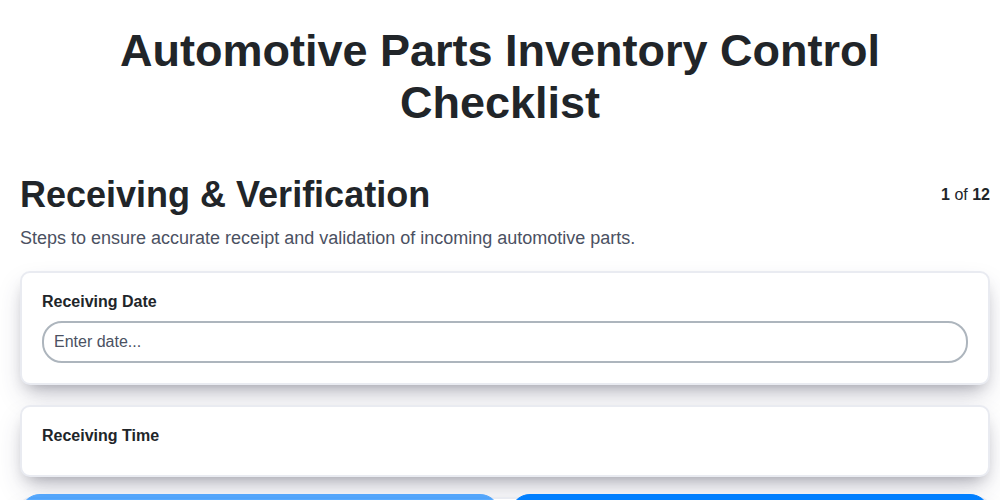
Automotive Parts Inventory Control Checklist Template: Your Ultimate Guide

Drive Sales Success: Your Automotive Sales Team Performance Tracking Checklist
We can do it Together
Need help with
Automotive?
Have a question? We're here to help. Please submit your inquiry, and we'll respond promptly.