Automotive Vehicle Trade-In Evaluation Process: A Step-by-Step Guide
Published: 06/18/2026 9:00 PM Updated: 06/19/2026 12:31 PM
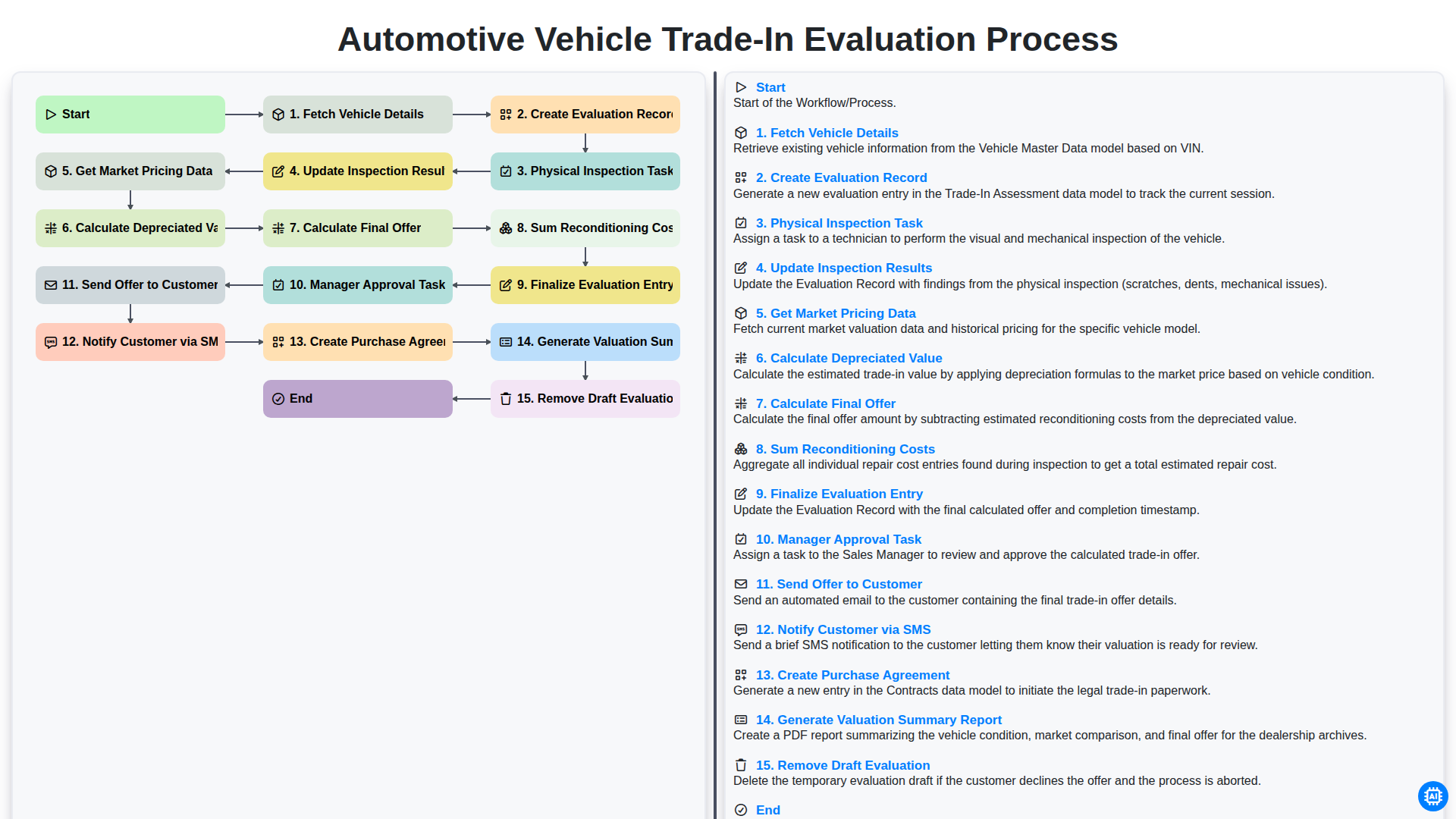
Table of Contents
- Introduction to the Trade-In Evaluation Workflow
- Phase 1: Initial Data Collection and Record Creation
- Step 1: Fetching Comprehensive Vehicle Details
- Step 2: Initializing the Evaluation Record
- Phase 2: Physical Inspection and Condition Assessment
- Step 3: Performing the Physical Inspection Task
- Step 4: Updating Inspection Results and Findings
- Phase 3: Valuation and Market Analysis
- Step 5: Gathering Real-Time Market Pricing Data
- Step 6: Calculating Depreciated Value and Reconditioning Costs
- Step 7: Determining the Final Trade-In Offer
- Phase 4: Review, Approval, and Documentation
- Step 8: Manager Approval and Finalizing the Entry
- Step 9: Communicating the Offer and Closing the Deal
- Resources & Links
TLDR: Streamline your dealership's appraisal workflow with this comprehensive guide to the Automotive Vehicle Trade-In Evaluation Process. Learn how this automated template manages everything from initial vehicle data retrieval and physical inspections to market pricing analysis, final offer generation, and manager approvals, ensuring a seamless, transparent, and efficient transition from appraisal to purchase agreement.
Introduction to the Trade-In Evaluation Workflow
In the fast-paced automotive industry, the ability to provide a fair, rapid, and transparent vehicle valuation is a key differentiator for dealerships. The trade-in evaluation process is a critical touchpoint in the sales funnel; it is the moment where a customer's current vehicle transitions from a personal asset to a dealership opportunity. However, managing this process manually is often prone to human error, inconsistent pricing, and lengthy delays that can lead to lost sales.
To maintain a competitive edge, dealerships must move away from fragmented spreadsheets and ad-hoc notes toward a structured, automated workflow. A standardized evaluation workflow ensures that every vehicle undergoes the same rigorous inspection, utilizes real-time market data, and follows a clear path from initial inspection to a finalized offer. By implementing a systematic approach-integrating everything from physical inspections to automated manager approvals-dealerships can increase appraisal accuracy, reduce operational friction, and ultimately build greater trust with customers through a seamless, professional experience.
Phase 1: Initial Data Collection and Record Creation
The foundation of a precise vehicle valuation lies in the accuracy of the initial data gathered. The process begins with the Fetch Vehicle Details step, where the system retrieves essential information such as the VIN, make, model, year, and mileage. This ensures that the evaluation is built upon a standardized dataset, eliminating manual entry errors that could compromise the integrity of the appraisal.
Once the vehicle's core information is secured, the workflow moves into Create Evaluation Record. This step establishes a dedicated digital file within the management system, acting as a single source of truth for the entire lifecycle of the trade-in. By initializing this record early, the dealership ensures that every subsequent inspection, market update, and cost adjustment is documented in a centralized location, providing full transparency and traceability for both the appraiser and the management team.
Step 1: Fetching Comprehensive Vehicle Details
The foundation of a precise trade-in valuation begins with the systematic collection of accurate data. The first step in the workflow is Fetching Vehicle Details, a process designed to eliminate guesswork and ensure the evaluation is based on the vehicle's true identity.
During this stage, the system retrieves critical information such as the Vehicle Identification Number (VIN), make, model, year, trim level, and engine specifications. By automating the retrieval of these details through integrated databases, we reduce manual entry errors and ensure that the evaluation is anchored to the specific manufacturing standards of the vehicle. This stage is vital because any discrepancy in the initial data-such as an incorrect trim level or engine type-can lead to significant inaccuracies in the final offer. By establishing a high-integrity data baseline right from the start, the entire downstream workflow remains precise, consistent, and reliable.
Step 2: Initializing the Evaluation Record
Once the initial vehicle details have been successfully fetched from the database or DMS, the next critical step in the workflow is to Create an Evaluation Record. This step serves as the foundation for the entire appraisal process, acting as the digital folder where all subsequent data, inspections, and calculations will be stored.
During this phase, the system generates a unique identifier for the specific trade-in event, linking the vehicle's VIN and mileage to a new, dedicated evaluation file. By establishing this record immediately, the system ensures that no data is lost between the initial data retrieval and the physical inspection. This step also sets the stage for real-time tracking, allowing dealership staff to monitor the progress of the appraisal as it moves through the various inspection and approval stages.
Phase 2: Physical Inspection and Condition Assessment
Once the initial vehicle details are fetched and the evaluation record is officially created, the process moves from digital data entry to the hands-on stage: the Physical Inspection Task. This is the most critical stage of the workflow, as it bridges the gap between theoretical data and the actual state of the asset.
During this phase, a trained technician conducts a comprehensive walkthrough of the vehicle, examining everything from engine performance and fluid levels to bodywork integrity and interior wear. This isn't just a visual check; it is a detailed diagnostic process where every scratch, dent, or mechanical irregularity is documented.
Immediately following the walk-around, the Update Inspection Results step occurs. All findings from the physical assessment are logged into the system, providing a granular view of the vehicle's current condition. This real-time data entry ensures that the subsequent valuation is based on empirical evidence rather than assumptions, creating a transparent and truth-based foundation for the entire trade-in offer.
Step 3: Performing the Physical Inspection Task
Once the evaluation record has been officially created, the workflow moves from the digital workspace to the service bay. The Physical Inspection Task is the most critical phase of the process, as it serves as the hands-on verification of the vehicle's true condition. During this step, a certified technician or appraiser performs a comprehensive multi-point inspection, examining everything from the structural integrity of the chassis and engine performance to the cosmetic state of the interior and exterior.
This stage is not merely about identifying obvious damage; it is about uncovering hidden issues that could impact the vehicle's future resale value. The inspector meticulously checks for signs of previous accidents, fluid leaks, tire tread depth, brake wear, and electronic malfunctions. By documenting every scratch, dent, or mechanical irregularity during this task, the dealership ensures that the subsequent valuation is based on empirical evidence rather than assumptions. This granular level of detail is what prevents costly surprises during the reconditioning phase and maintains the integrity of the entire trade-in offer.
Step 4: Updating Inspection Results and Findings
Once the physical inspection is complete, the workflow moves into a critical phase of data integration: Updating Inspection Results and Findings. At this stage, the raw observations made during the physical walkthrough are converted into actionable digital data.
The technician or inspector inputs specific details regarding the vehicle's condition, including engine performance, transmission smoothness, tire tread depth, and any notable cosmetic imperfections like dents or scratches. This step is not merely about checking boxes; it is about documenting the granular details that will directly influence the vehicle's valuation. By systematically updating the inspection results, the system ensures that every scratch, dent, or mechanical nuance is accounted for, creating a transparent and auditable trail that justifies the final offer. This data serves as the foundation for the subsequent pricing algorithms, ensuring that the valuation is rooted in the actual, real-world state of the asset.
Phase 3: Valuation and Market Analysis
Once the physical inspection is complete and the inspection results are updated, the workflow transitions from assessing the vehicle's condition to determining its actual market worth. This phase is critical, as it moves beyond the mechanical state of the car and focuses on real-time economic data to ensure the dealership remains competitive while protecting its margins.
The process begins with the Get Market Pricing Data step, where the system pulls real-time data from industry benchmarks to see what similar models are currently selling for in the region. This data is then used to Calculate Depreciated Value, accounting for mileage, age, and market trends. To arrive at a precise figure, the system must then Calculate Final Offer by integrating the market value with internal business logic.
Crucially, this stage also includes the Sum Reconditioning Costs step. By totaling the estimated expenses required to bring the vehicle up to retail standards-such as detailing, tire replacements, or mechanical repairs-the system ensures that the final offer is both attractive to the customer and profitable for the dealership. This data-driven approach eliminates guesswork, replacing intuition with a precise, mathematically backed valuation.
Step 5: Gathering Real-Time Market Pricing Data
Once the physical inspection is complete and the vehicle's current condition is documented, the workflow moves into a critical analytical phase: getting market pricing data. An evaluation is only as accurate as the market intelligence supporting it.
In this step, the system automatically interfaces with real-time automotive databases and market aggregators to pull live data on similar vehicles currently listed for sale within a specific geographic radius. This involves analyzing variables such as trim levels, mileage benchmarks, and regional demand trends. By integrating live market feeds, the process moves away from outdated blue book estimates and toward a dynamic valuation that reflects what a buyer is actually willing to pay in today's specific economy. This ensures that the subsequent depreciation and offer calculations are grounded in current competitive reality, protecting the dealership from overpaying while ensuring the offer remains attractive to the customer.
Step 6: Calculating Depreciated Value and Reconditioning Costs
Once the inspection results are documented and the current market pricing data is retrieved, the workflow moves into the critical analytical phase. This stage is where raw data is transformed into a concrete financial figure. First, the system uses the market data as a baseline to calculate the depreciated value, accounting for the vehicle's age, mileage, and current market trends.
However, a market price alone does not reflect the true cost of acquisition. To ensure profitability and accuracy, the workflow automatically integrates the sum of reconditioning costs-the estimated expenses required to repair any mechanical issues or cosmetic damage identified during the physical inspection. By merging the adjusted market value with these necessary repair estimates, the system arrives at a mathematically sound foundation for the final offer, ensuring that the dealership's margin is protected while remaining competitive.
Step 7: Determining the Final Trade-In Offer
Once the physical inspection is complete and the market data has been analyzed, the workflow moves into the critical stage of financial calculation. This step is where the raw data transforms into a concrete figure that can be presented to the customer.
The process begins by calculating the depreciated value of the vehicle, adjusting the current market price based on the specific wear, tear, and mileage identified during the inspection. However, a fair offer isn't just about market trends; it must also account for the internal costs required to make the vehicle retail-ready. To ensure profitability, the system automatically performs a sum of reconditioning costs, factoring in necessary repairs, detailing, and parts needed to bring the car up to dealership standards.
Finally, the system integrates these variables-the adjusted market value minus the estimated reconditioning expenses-to calculate the final offer. This precision ensures that the offer is high enough to remain competitive and win the customer's business, yet conservative enough to protect the dealership's margins. This calculated figure serves as the foundation for the formal evaluation entry, moving the process one step closer to a successful acquisition.
Phase 4: Review, Approval, and Documentation
Once the technical assessment and valuation calculations are complete, the process moves into the critical stage of oversight and formalization. This phase ensures that the proposed offer is both competitive for the customer and sustainable for the dealership's margins.
The workflow transitions from data processing to human oversight through the Manager Approval Task. Here, a senior decision-maker reviews the entire evaluation profile-comparing the calculated depreciated value and reconditioning costs against the current market pricing-to verify the accuracy of the final offer. This layer of scrutiny is essential to mitigate risk and ensure consistency in appraisal standards.
Once approval is granted, the process shifts toward customer engagement and legal documentation:
- Customer Communication: The approved offer is officially transmitted to the customer. To ensure a seamless experience, the system triggers a Send Offer to Customer action, supplemented by a Notify Customer via SMS alert, allowing for immediate visibility and rapid response times.
- Contract Finalization: Upon the customer's acceptance, the workflow moves into the legal execution stage by initiating the Create Purchase Agreement step, converting the appraisal data into a binding document.
- Reporting and Cleanup: To maintain an organized database, a Generate Valuation Summary Report is produced for dealership records and inventory forecasting. Finally, the system performs a Remove Draft Evaluation action, purging any unapproved or duplicate entries to ensure that the CRM remains populated only with verified, actionable trade-in data.
Step 8: Manager Approval and Finalizing the Entry
Once the valuation has been calculated and the reconditioning costs have been summed, the evaluation enters its most critical phase: the Manager Approval Task. Even with sophisticated pricing algorithms and market data, a manual oversight step is essential to ensure the integrity of the dealership's margins and to prevent human error in the final offer calculation.
During this stage, a designated manager reviews the complete evaluation profile to verify that the physical inspection findings align with the proposed depreciation and repair estimates. This checkpoint serves as a quality control measure to ensure that the dealership's risk is mitigated before any binding commitment is made.
Once the manager provides the final sign-off, the workflow moves to the Finalize Evaluation Entry step. At this point, the record transitions from a working draft to a permanent part of the dealership's inventory and procurement database. This step is also where the system performs the Remove Draft Evaluation command, cleaning up the workspace by archiving or deleting any incomplete or unapproved entries, ensuring that the sales team is only working with verified, actionable data.
Step 9: Communicating the Offer and Closing the Deal
Once the final valuation is calculated and the internal approval process is complete, the workflow shifts from data analysis to direct customer engagement. This stage is critical, as the speed and clarity of communication can be the deciding factor in whether a customer accepts your offer or takes their vehicle to a competitor.
The process begins with the automated distribution of the offer. Once the Calculate Final Offer and Sum Reconditioning Costs steps are finalized, the system triggers the Send Offer to Customer action. To ensure maximum visibility and immediate engagement, the workflow includes a Notify Customer via SMS step. In today's mobile-first world, an SMS alert ensures the customer is notified the moment a decision is made, reducing the wait anxiety that often leads to lost leads.
If the customer accepts the valuation, the workflow moves into the legal and administrative phase. The system automatically initiates the Create Purchase Agreement step, pulling all the verified data from the evaluation record to ensure accuracy and professional presentation. To provide full transparency, the system also performs the Generate Valuation Summary Report step, giving the customer a detailed breakdown of how their vehicle's value was determined.
Finally, to maintain a clean and efficient database, the system executes the Remove Draft Evaluation task. This ensures that only finalized, actionable transactions remain in your active queue, preventing administrative clutter and allowing your team to focus on closing the next deal.
Resources & Links
- Kelley Blue Book: A primary resource for researching real-time market pricing data and vehicle valuation benchmarks used during the market analysis phase.
- Edmunds: Essential for accessing comprehensive vehicle specifications and historical pricing trends to assist in fetching detailed vehicle information.
- CARFAX: A critical tool for the inspection phase to verify vehicle history, accident reports, and mileage accuracy during the evaluation process.
- AutoTrader: A valuable resource for comparing local inventory and assessing the competitive landscape for determining final trade-in offers.
- Forbes Auto: Provides industry insights on automotive depreciation trends and economic factors impacting vehicle reconditioning costs.
Found this Article helpful?
Comments
There are no comments yet. Be the first to add one!
Automotive Manufacturing Management Solution Demo
Optimize your automotive production! ChecklistGuro digitizes workflows, from parts inspection to final testing. Reduce errors, boost efficiency & ensure quality compliance. Drive results with our Work OS.
Related Articles
The Ultimate Automotive Sales Prospect Follow-Up Checklist: Close More Deals
Mastering Automotive BOM Configuration: Your Essential Checklist

The Ultimate Vehicle Registration & Insurance Validation Checklist
Automotive Parts Inventory Audit Checklist Template: Your Guide to Accurate Stock

Maximize Your Trade-In: The Automotive Appraisal Checklist You Need
The Ultimate Tire Pressure & Condition Checklist Template
Automotive Parts Inventory Control Checklist Template: Your Ultimate Guide

Drive Sales Success: Your Automotive Sales Team Performance Tracking Checklist
We can do it Together
Need help with
Checklists?
Have a question? We're here to help. Please submit your inquiry, and we'll respond promptly.