Automotive Warranty Claim Processing Checklist: A Step-by-Step Guide
Published: 12/29/2025 Updated: 05/18/2026
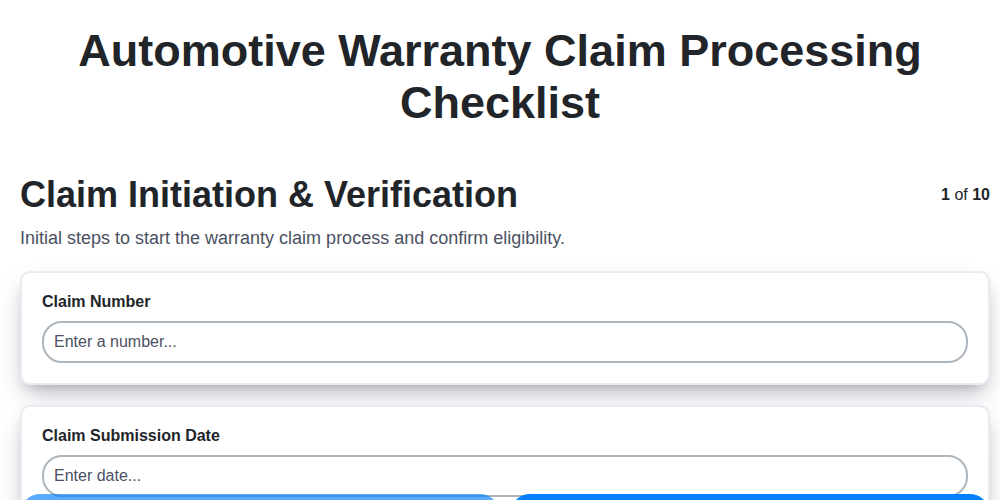
Table of Contents
- Introduction: Navigating Automotive Warranty Claims
- 1. Claim Initiation & Verification: Getting Started
- 2. Customer Information & Vehicle Details: Accurate Identification
- 3. Failure Description & Diagnosis: Pinpointing the Problem
- 4. Parts Identification & Ordering: Securing the Necessary Components
- 5. Repair Authorization & Scheduling: Gaining Approval and Setting a Timeline
- 6. Repair Execution & Documentation: The Core of the Repair
- 7. Claim Submission & Validation: Preparing for Review
- 8. Claim Payment & Reconciliation: Processing the Financial Aspect
- 9. Customer Communication & Follow-up: Keeping the Customer Informed
- 10. Record Keeping & Compliance: Ensuring Accuracy and Legal Protection
- Best Practices for a Smooth Warranty Claim Process
- Common Pitfalls to Avoid
- Conclusion: Streamlining Your Warranty Workflow
- Resources & Links
TLDR: Navigating automotive warranty claims can be a headache! This checklist breaks down the entire process - from initial verification to final payment and record keeping - ensuring you don't miss a critical step and maximize claim success. Think of it as your roadmap for smooth warranty claim processing.
Introduction: Navigating Automotive Warranty Claims
Automotive warranty claims can feel like a complex maze, filled with paperwork, technical jargon, and potential delays. Whether you're a vehicle owner seeking coverage for a repair or a service center managing claims on behalf of customers, understanding the process is crucial for a smooth and efficient experience. This isn't just about getting your vehicle fixed; it's about protecting your investment and ensuring fair treatment under the terms of your warranty. This article will break down the automotive warranty claim process into manageable steps, providing a comprehensive checklist to guide you through each stage. We'll cover everything from the initial claim initiation to the final reconciliation and follow-up, ensuring you're well-equipped to navigate the intricacies of warranty claim processing. Let's demystify the process and turn potential headaches into a streamlined, successful outcome.
1. Claim Initiation & Verification: Getting Started
The warranty claim process begins long before a wrench touches a vehicle. This initial phase is crucial for setting the stage for a smooth and efficient resolution. It all starts with proper claim initiation and verification.
Initial Contact & Claim Request: The first step involves receiving the claim request. This can come directly from the customer, a dealership, or a repair shop. Accurate and complete initial information is paramount.
Eligibility Verification: Before proceeding, confirm the vehicle's warranty status. This includes verifying:
- Vehicle Identification Number (VIN): Ensure the VIN is accurate and matches the vehicle's registration.
- Warranty Coverage: Confirm the specific warranty coverage associated with the VIN and the reported issue. Is it still active? Are there any exclusions?
- Mileage/Age Restrictions: Check if the vehicle is within the mileage or age limits of the warranty.
- Maintenance Records: Verify that the customer has adhered to the manufacturer's recommended maintenance schedule. Missing or inadequate maintenance can void warranty coverage.
Claim Number Assignment: Once eligibility is confirmed, assign a unique claim number for tracking purposes. This number will be vital for all subsequent communication and documentation related to the claim.
Acknowledgement & Communication: Provide immediate acknowledgement to the claimant (customer, dealership, or shop) that their claim request has been received and is being processed. Setting clear expectations upfront minimizes frustration and builds trust.
2. Customer Information & Vehicle Details: Accurate Identification
This stage is foundational - a single typo or incorrect detail can derail the entire claim process. Double and triple-check everything! Here's what needs meticulous attention:
- Customer Contact Information: Full name, current address, phone number, email address. Verify against their original purchase documents.
- Vehicle Identification Number (VIN): This is critical! The VIN is the vehicle's unique identifier. Transcribe it accurately and confirm it matches the warranty documents and vehicle itself (typically found on the dashboard and driver's side doorjamb).
- Vehicle Year, Make, and Model: Ensure consistency between the warranty document, the vehicle's registration, and the customer's statement.
- Mileage: Accurate mileage reading is essential for warranty eligibility. Document the mileage at the time of the claim.
- Warranty Coverage Details: Confirm the warranty type (e.g., powertrain, bumper-to-bumper) and coverage start and expiration dates. Note any specific exclusions.
- Purchase Date & Location: This helps verify the vehicle's purchase history and warranty validity.
- Prior Ownership/Accidents: While not always directly impacting the claim, documenting any history is good practice for record-keeping and potential future reference.
Missing or incorrect information at this stage requires immediate correction, leading to delays and potential rejections. Prioritize accuracy here - it sets the stage for a smooth claim process.
3. Failure Description & Diagnosis: Pinpointing the Problem
Accurate failure description and diagnosis are absolutely critical for a successful warranty claim. Vague or incomplete information here can lead to delays, denials, or even unnecessary repairs. This stage moves beyond just what the customer is experiencing; it's about why it's happening.
Here's what's needed:
- Detailed Customer Account: Go beyond engine noise. Probe for specifics: When does the noise occur? Under what conditions (acceleration, braking, idling)? Is it a knocking, ticking, or grinding sound? The more detail, the better.
- Technician's Diagnostic Assessment: The technician's findings are the cornerstone. This needs to include:
- Symptoms Observed: Document exactly what the technician saw and heard during inspection.
- Diagnostic Procedures Performed: List all tests and scans conducted (e.g., OBDII scans, compression tests, visual inspection of components).
- Root Cause Determination: Clearly state the technician's assessment of the root cause of the failure. This should be supported by the diagnostic procedures. Avoid assumptions; base findings on evidence.
- Supporting Data: Include scan data printouts, recorded sounds (if applicable), and any other relevant documentation.
- Alignment with Warranty Conditions: Ensure the reported failure aligns with the warranty coverage. If it's a symptom of a covered component failure, document the connection clearly.
- Photos & Videos: Visual evidence can be incredibly helpful, especially for unusual or difficult-to-describe failures.
A thorough failure description and diagnosis provides a solid foundation for the entire claim process, minimizing potential roadblocks later on.
4. Parts Identification & Ordering: Securing the Necessary Components
Accurate parts identification is absolutely critical for a smooth warranty claim. A mismatched part can delay the repair, potentially void the warranty, and frustrate the customer. This section of the process focuses on getting the right parts, the first time.
Here's what needs to happen:
- Accurate Diagnosis Drives Parts Selection: The failure description and diagnosis (from step 3) should be extremely detailed. This information is the foundation for identifying the correct parts.
- Utilize Parts Catalogs & Databases: Leverage the manufacturer's parts catalogs, online databases, and VIN-specific parts lookups. These tools significantly reduce the risk of errors.
- Verify Part Numbers & Supersessions: Don't just grab the first part number that appears. Confirm that the part is still current, hasn't been superseded, and is compatible with the specific vehicle configuration.
- Check for OEM vs. Aftermarket Considerations: Warranty policies often dictate whether OEM (Original Equipment Manufacturer) parts must be used. Adherence to these requirements is essential. Document the reasoning if an aftermarket part is approved (if permitted).
- Order Parts with Appropriate Lead Times: Factor in potential shipping delays and warehouse availability. Proactively communicating potential wait times to the customer (and documenting this communication) can manage expectations.
- Secure Parts with Proper Authorization: Depending on the warranty policy, parts ordering might require pre-approval from the warranty administrator. Obtain this authorization before placing the order.
- Document Everything: Record the part numbers ordered, supplier information, order dates, and any authorization obtained. This documentation is invaluable should questions arise later.
5. Repair Authorization & Scheduling: Gaining Approval and Setting a Timeline
Once the failure description and diagnosis are finalized and parts are identified, the next crucial step is securing repair authorization and establishing a clear timeline for the repair process. This stage is vital for managing expectations and preventing costly delays.
The Authorization Process: The warranty claim often requires approval from the manufacturer or warranty provider before repair work commences. This process involves submitting the diagnostic information, parts list, and estimated labor hours for review. Clear and concise documentation at this stage is critical for a swift approval. Ambiguity or missing information will inevitably lead to back-and-forth communication, pushing the repair timeline further out. Automated systems and integration with the warranty provider's portal can significantly streamline this approval process.
Scheduling the Repair: Once authorization is granted, the real work begins. Accurate scheduling is paramount. Consider these factors:
- Parts Availability: Confirm parts are in stock or have a realistic delivery date.
- Technician Availability: Ensure a qualified technician is available to perform the repair.
- Customer Convenience: Coordinate a convenient drop-off and pick-up time for the customer.
- Repair Complexity: Factor in the complexity of the repair when allocating time. Overestimating is better than underestimating.
- Communication: Clearly communicate the estimated repair duration and any potential changes to the customer.
A well-managed authorization and scheduling process minimizes disruptions, keeps customers informed, and prevents unexpected costs that could jeopardize the warranty claim.
6. Repair Execution & Documentation: The Core of the Repair
This is where the rubber meets the road - literally! The repair execution phase is critical for a successful warranty claim. It's not just about fixing the problem; it's about doing it correctly and documenting everything.
Execution Best Practices:
- Adherence to Repair Procedures: Technicians must strictly follow the manufacturer's repair procedures outlined in technical service bulletins (TSBs), repair manuals, and diagnostic flowcharts. Deviations require documented justification and approval.
- Quality Control: Implement a robust quality control process, ideally a second-level inspection, to verify the repair was performed correctly and meets factory standards.
- Use of Genuine Parts: Warranty claims often require the use of Original Equipment Manufacturer (OEM) parts. Ensure proper identification and usage, and meticulously document any exceptions.
- Safety First: Prioritize technician and customer safety throughout the repair process. Proper safety protocols and equipment must be used.
Documentation is Paramount:
Detailed and accurate documentation is the backbone of a successful warranty claim. Incomplete or inaccurate records are a common reason for claim denials. Key documentation requirements include:
- Detailed Labor Descriptions: Don't just write Repair. Specify exactly what was done (e.g., Replaced left front wheel bearing assembly - including torque verification).
- Parts List: A comprehensive list of all parts used, including part numbers and quantities.
- Diagnostic Codes & Data: Record all diagnostic trouble codes (DTCs) cleared and any relevant data retrieved from the vehicle's computer system.
- Measurements & Test Results: Document any measurements taken (e.g., torque readings, alignment specifications) and the results of diagnostic tests performed.
- Photographic Evidence: In many cases, photographic or video documentation of the failure, the repair process, and the corrected condition is invaluable. This can be especially helpful for complex or unusual failures.
- Technician Sign-off: Have the technician who performed the repair sign off on the work performed, acknowledging their responsibility for the quality of the service.
Consistent and thorough documentation not only supports the warranty claim but also provides a valuable record for future reference and analysis.
7. Claim Submission & Validation: Preparing for Review
This stage is a crucial gatekeeper, ensuring your claim is complete and accurate before it reaches the reviewer. A poorly prepared submission can lead to delays, rejections, and frustration. Here's what's involved:
Gathering Required Documentation: Before hitting 'submit,' double-check that everything requested is included. This typically involves:
- Completed Claim Form: Ensure all fields are filled accurately and legibly.
- Repair Order (RO): A detailed RO is vital, outlining the work performed, labor hours, and parts used.
- Diagnostic Reports: These reports are your evidence of the failure. Clear and concise explanations are key.
- Parts Documentation: Invoices, part numbers, and any relevant manufacturer bulletins demonstrating the need for replacement.
- Supporting Images/Videos: (If applicable and allowed) Visual evidence can often strengthen a claim, particularly for complex issues. Ensure images are clear and properly labeled.
- Customer Authorization: Confirm that the customer signed off on the repair and acknowledges the work performed.
Electronic vs. Paper Submission: Familiarize yourself with the warranty provider's preferred method. Electronic submissions generally offer faster processing times, but require accurate data entry and proper file formats. Paper submissions must be clear, complete, and legible.
Validation Checks: Many warranty providers utilize automated validation processes. Be prepared for potential errors flagged during this stage - for example, incorrect VIN formatting, missing data, or mismatched part numbers. Address these issues promptly to avoid delays.
Pro Tip: Many warranty platforms offer pre-submission checks. Utilize these tools to identify and correct errors before formally submitting your claim. This proactive approach demonstrates attention to detail and can significantly expedite the process.
8. Claim Payment & Reconciliation: Processing the Financial Aspect
This stage marks the culmination of the claims process and requires meticulous attention to detail to ensure accuracy and avoid disputes. Once the repair is complete and documented, the focus shifts to verifying costs and issuing payment.
Here's a breakdown of the key steps in claim payment and reconciliation:
- Cost Verification: Rigorously compare the actual repair costs against the approved repair authorization and the warranty policy's coverage guidelines. Look for any discrepancies or unauthorized services.
- Invoice Review: Scrutinize the repair shop's invoice, ensuring all listed parts and labor are covered by the warranty and accurately reflect the documented repair.
- Payment Authorization: Based on the verified costs, formally authorize the payment to the repair facility. This often involves internal approvals and adherence to payment terms outlined in the warranty agreement.
- Payment Processing: Execute the payment electronically or via check, according to established procedures. Record the payment details meticulously, including date, amount, and reference number.
- Reconciliation: Regularly reconcile payments with invoices and repair authorizations. This helps identify any errors or missing payments.
- Fraud Detection: Implement fraud detection measures during this stage to identify potentially fraudulent claims. Unusual repair patterns, inflated invoices, or parts discrepancies should trigger further investigation.
- Audit Trail: Maintain a clear audit trail for all payments and reconciliations, providing transparency and accountability.
- Reporting: Generate reports on claim payment trends, average repair costs, and payment processing efficiency. This data is valuable for identifying areas for improvement.
9. Customer Communication & Follow-up: Keeping the Customer Informed
Navigating a warranty claim can be stressful for vehicle owners. Clear, consistent, and proactive communication is absolutely vital to maintaining customer satisfaction throughout the process. Don't let them feel lost or forgotten!
Here's what a robust customer communication & follow-up strategy should include:
- Initial Acknowledgement: As soon as a claim is initiated, send an automated (but personalized) email or call confirming receipt and outlining the next steps.
- Regular Updates: Provide periodic updates - even if there's no significant news. A simple We're still reviewing your claim goes a long way. Specify the frequency of these updates upfront (e.g., We'll provide updates every Tuesday and Friday).
- Explanation of Delays: If unforeseen delays occur (parts backorders, diagnostic challenges), be transparent and explain the reason. Offer alternative solutions if possible.
- Repair Status Updates: Keep the customer informed about the repair progress, including estimated completion dates.
- Finalization & Explanation of Charges (or Lack Thereof): Once the repair is complete, clearly explain the work performed, the reason for warranty coverage (or denial), and any applicable charges (if any).
- Post-Repair Follow-up: A few days after the vehicle is returned, reach out to ensure the customer is satisfied with the repair and has no further concerns. This shows you genuinely care about their experience.
- Preferred Communication Methods: Offer a choice of communication channels - phone, email, text - to cater to individual preferences.
By prioritizing customer communication and follow-up, you transform a potentially negative experience into a positive one, fostering loyalty and strengthening your brand reputation.
10. Record Keeping & Compliance: Ensuring Accuracy and Legal Protection
Accurate and comprehensive record keeping is the bedrock of a successful warranty claim process, and crucial for protecting your business from potential legal challenges. This isn't just about ticking boxes; it's about establishing a clear audit trail that demonstrates adherence to warranty terms and relevant regulations.
Here's what needs to be included:
- Digital Archiving: Transition to a digital record-keeping system. Paper files are easily lost, damaged, or difficult to search. Digital platforms allow for easy retrieval and sharing.
- Comprehensive Documentation: Each step of the warranty claim process - from initial contact to final payment - must be documented. This includes, but isn't limited to, customer interactions, diagnostic reports, repair orders, invoices, parts lists, photographs (especially for damage), and internal notes.
- Retention Policy: Establish and strictly adhere to a clear data retention policy. Understand legal requirements regarding how long you must retain specific records (often varying by state and warranty type).
- Compliance Audits: Regularly conduct internal audits to ensure adherence to your record-keeping policy and warranty guidelines.
- Security Measures: Implement robust security measures to protect sensitive customer data and prevent unauthorized access to records, aligning with data privacy regulations.
- Version Control: If documents are revised, maintain version control to track changes and ensure access to the most up-to-date information.
- Training: Ensure all staff involved in the warranty claim process are properly trained on record-keeping procedures and their importance.
Proper record-keeping isn't just good practice; it's a critical component of risk mitigation and a cornerstone of a trustworthy warranty program.
Best Practices for a Smooth Warranty Claim Process
Navigating automotive warranty claims can be complex, both for dealerships and customers. A disorganized process leads to frustration, delays, and potential disputes. Here's how to ensure a smoother, more efficient experience.
1. Proactive Communication is Key: Don't wait for issues to arise. Clearly explain the warranty coverage and limitations to customers upfront. A well-informed customer is a more satisfied customer.
2. Thorough Initial Verification: Before any repair begins, meticulously verify the warranty's validity. Check dates, mileage, and coverage terms. Promptly identify any exclusions that might impact the claim. Automated verification systems can significantly reduce errors and processing time.
3. Detailed Documentation is Non-Negotiable: Every step, from the initial complaint to the final repair, must be thoroughly documented. Clear, concise descriptions of the failure, diagnostic steps, and parts replaced are essential for claim approval. Pictures and videos are powerful tools to support the diagnosis and demonstrate the need for repair.
4. Leverage Technology: Embrace digital solutions! Utilizing a dedicated warranty management system streamlines the entire process - from claim initiation to payment reconciliation. Automated workflows, electronic signatures, and digital document storage minimize paperwork and accelerate processing.
5. Training and Standardization: Ensure all service advisors and technicians are properly trained on warranty procedures and claim submission requirements. Standardized processes minimize variations and reduce errors.
6. Build Strong Relationships with the Manufacturer: Maintain open communication with the manufacturer's warranty department. Proactively address any questions or concerns they may have. A collaborative approach fosters understanding and expedites claim approvals.
7. Regular Audits & Process Improvement: Periodically review your warranty claim process to identify areas for improvement. Analyze claim denial rates and pinpoint recurring issues. Continuous improvement leads to greater efficiency and customer satisfaction.
Common Pitfalls to Avoid
Navigating the automotive warranty claim process can be tricky, and even experienced shops sometimes stumble. Here are some frequent pitfalls that can delay approvals, reduce payouts, or even lead to claim denials.
Insufficient Documentation: This is the biggest culprit. Vague descriptions, missing photos, or incomplete repair orders are red flags. Remember, the warranty administrator isn't physically inspecting the vehicle - they're relying entirely on your detailed records.
Misinterpreting Warranty Coverage: Thoroughly review the warranty guidelines before commencing any work. Don't assume something is covered; confirm it. Incorrectly diagnosing the failure and proceeding with repairs outside of the warranty's scope is a costly mistake.
Improper Parts Ordering: Using non-approved or aftermarket parts without prior authorization is a no-no. Stick to the manufacturer's recommended parts list whenever possible. If you need to deviate, document the reason and obtain approval.
Lack of Customer Authorization: Always obtain written authorization from the customer detailing the proposed warranty repairs and associated costs (even if the customer believes it's fully covered). This protects both you and the customer.
Incorrect Labor Time: Accurately record labor times according to the manufacturer's labor rate guidelines. Padding labor hours will almost certainly lead to claim denial and can damage your reputation.
Ignoring Diagnostic Codes: Don't just replace parts based on a single diagnostic code. Perform a comprehensive diagnostic assessment and document all relevant codes and tests.
Failure to Communicate: Keep the warranty administrator informed throughout the repair process. Proactive communication builds trust and can prevent misunderstandings.
Conclusion: Streamlining Your Warranty Workflow
Ultimately, successfully navigating automotive warranty claims is about more than just processing paperwork; it's about building trust and maintaining customer satisfaction. Implementing a structured checklist, as outlined above, transforms a potentially frustrating experience into a smooth, efficient process for both your service team and your customers. By meticulously following each step - from initial claim verification to final reconciliation - you're not just minimizing errors and maximizing claim approval rates; you're demonstrating a commitment to quality and service. This proactive approach reduces operational headaches, improves team efficiency, and fosters long-term customer loyalty. Embrace this checklist as a foundation for continuous improvement and watch your warranty claim processing transform into a competitive advantage.
Resources & Links
- Auto Care Association (ACA): The ACA provides resources, training, and advocacy for automotive service professionals, which can be helpful for understanding warranty regulations and best practices. Their website offers industry insights and standards relevant to warranty claims.
- NAPA Auto Parts: While primarily a parts supplier, NAPA's website often features technical guides and resources that can be beneficial for accurate parts identification, a crucial aspect of warranty claims. They also provide information on parts standards.
- American Automobile Association (AAA): AAA provides consumer information about auto warranties and repair procedures. Understanding consumer expectations and rights is important for warranty claim processing. Their website provides consumer guides.
- RepairPal: RepairPal's website provides valuable data on vehicle repair costs and common failure points. This can assist in accurately estimating repair costs and validating diagnostic information during the claims process.
- Automotix: Automotix specializes in automotive RCM (Repair & Calibration Management) software. While a paid solution, their website provides a lot of information about warranty workflow best practices and how technology can streamline the process, useful for understanding the ideal workflow.
- Mitchell International: Mitchell offers a suite of automotive solutions, including claim management software. Their website contains information about industry trends and best practices in automotive claims, often detailing regulatory changes and technological advancements.
- U.S. Small Business Administration (SBA): For independent repair shops, the SBA offers resources and guidance on business operations, legal compliance, and documentation-all vital for properly handling warranty claims and minimizing risk.
- California Department of Motor Vehicles (DMV): While state-specific, the California DMV's website (and similar sites for other states) offer information on vehicle registration, titles, and related documentation frequently required for warranty verification. Demonstrates the importance of documentation.
Frequently Asked Questions
What is an automotive warranty claim?
An automotive warranty claim is a request to the manufacturer or dealership to repair or replace a vehicle component that has failed due to a manufacturing defect or malfunction covered by the warranty terms. It's essentially leveraging the promise of protection outlined in your warranty.
Why is a checklist important for automotive warranty claim processing?
A checklist ensures you don't miss any crucial steps, preventing delays, potential denials, and frustration. It helps organize documentation, ensures compliance with warranty requirements, and streamlines the process for a smoother experience.
Who should use this checklist?
This checklist is useful for vehicle owners, dealership service departments, and warranty administrators involved in initiating, processing, or reviewing automotive warranty claims.
What types of warranties are typically covered in this checklist?
The checklist primarily addresses manufacturer's warranties (bumper-to-bumper, powertrain, etc.). It may also be applicable to extended warranties, but specifics may vary depending on the extended warranty provider's terms.
What documents are usually required for a warranty claim?
Commonly required documents include the vehicle's registration, warranty documentation, repair order, diagnostic reports, and any supporting evidence like photos or videos of the issue. The checklist will outline specifics.
What's the difference between a recall and a warranty claim?
A recall is issued by the manufacturer due to a safety defect affecting a specific production batch of vehicles. Warranty claims address failures due to manufacturing defects, regardless of a recall. Recalls are mandatory and typically free; warranty claims depend on coverage.
What should I do if my claim is denied?
First, review the denial reason provided by the manufacturer or dealership. Then, carefully examine your warranty documentation to confirm coverage. You can then appeal the denial with supporting evidence, and consider escalating to consumer protection agencies if necessary. The checklist outlines steps for appeal.
How long does an automotive warranty claim typically take to process?
Processing time varies greatly depending on the complexity of the issue, manufacturer workload, and parts availability. It can range from a few days to several weeks. The checklist includes estimated timelines for different stages.
Can I perform my own diagnostics before submitting a warranty claim?
While not strictly prohibited, it's generally recommended to have a certified technician perform the diagnostics. The manufacturer often requires diagnostic reports from a dealership or authorized service center to validate the claim. The checklist advises on documentation.
Where can I find my warranty documentation?
Warranty documents are typically included in the vehicle's owner's manual or provided separately at the time of purchase. They can also often be accessed online through the manufacturer's website, using your VIN.
Comments
There are no comments yet. Be the first to add one!
Automotive Manufacturing Management Solution Demo
Optimize your automotive production! ChecklistGuro digitizes workflows, from parts inspection to final testing. Reduce errors, boost efficiency & ensure quality compliance. Drive results with our Work OS.
Related Articles
The Ultimate Automotive Sales Prospect Follow-Up Checklist: Close More Deals
Mastering Automotive BOM Configuration: Your Essential Checklist

The Ultimate Vehicle Registration & Insurance Validation Checklist
Automotive Parts Inventory Audit Checklist Template: Your Guide to Accurate Stock

Maximize Your Trade-In: The Automotive Appraisal Checklist You Need
The Ultimate Tire Pressure & Condition Checklist Template
Automotive Parts Inventory Control Checklist Template: Your Ultimate Guide

Drive Sales Success: Your Automotive Sales Team Performance Tracking Checklist
We can do it Together
Need help with
Automotive?
Have a question? We're here to help. Please submit your inquiry, and we'll respond promptly.