From Inquiry to Opportunity: A Guide to the Lead Qualification Workflow
Published: 06/18/2026 9:00 PM Updated: 06/19/2026 12:30 PM
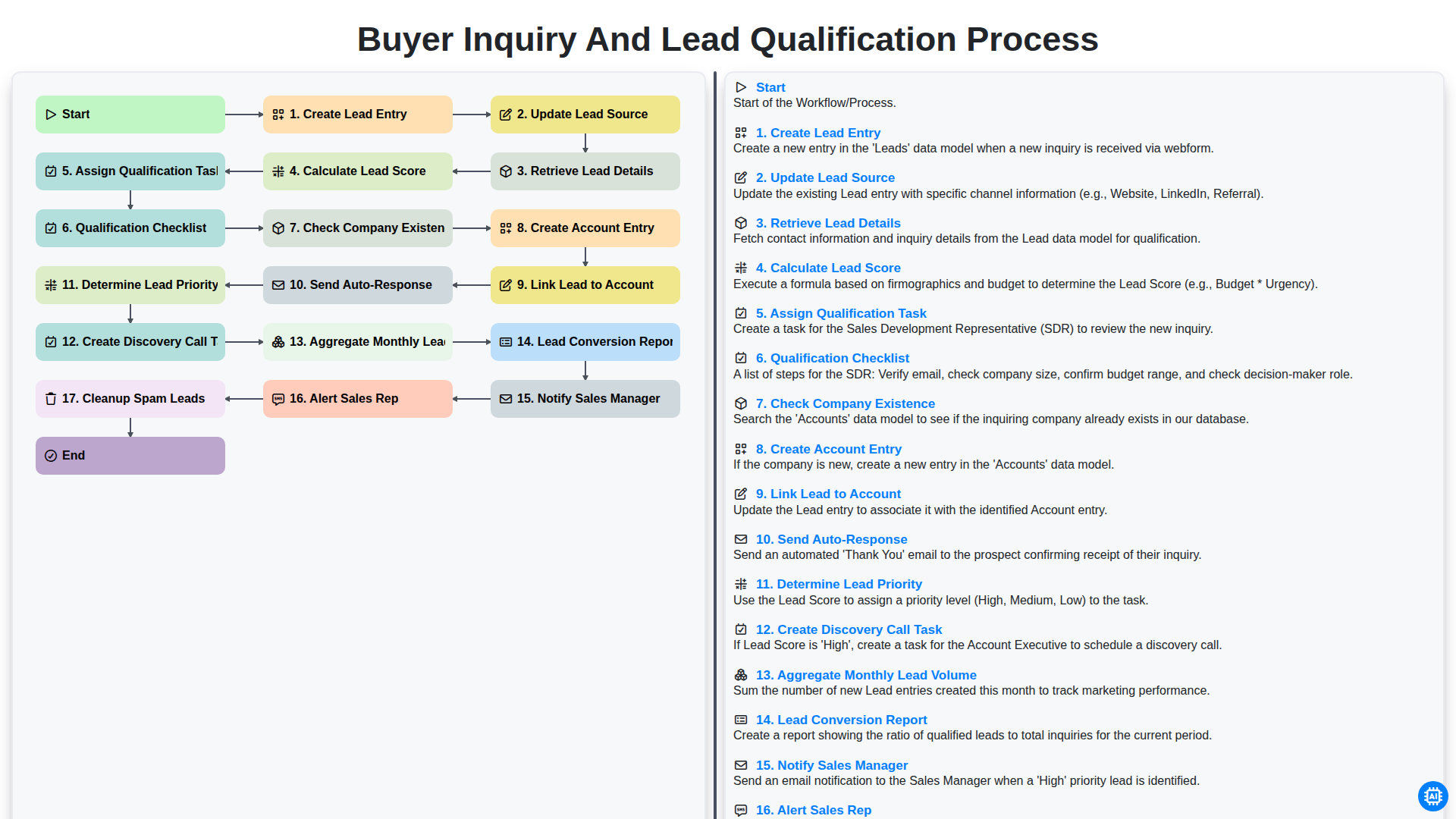
Table of Contents
- Introduction: The Importance of a Structured Lead Qualification Process
- Phase 1: Initial Capture and Data Entry
- Capturing the Spark: Creating Lead Entry and Updating Lead Source
- Phase 2: Deep Diving into Lead Intelligence
- Retrieving Lead Details and Calculating Lead Scores
- Phase 3: The Qualification Framework
- Executing the Qualification Checklist and Assigning Tasks
- Phase 4: Data Integrity and CRM Synchronization
- Verifying Company Existence and Managing Account Entries
- Linking Leads to Accounts for a 360-Degree View
- Phase 5: Automation and Communication
- Instant Engagement: Auto-Responses and Priority Determination
- Driving Action: Creating Discovery Call Tasks and Alerting Sales Reps
- Phase 6: Reporting, Management Oversight, and Maintenance
- Analyzing Performance: Monthly Lead Volume and Conversion Reports
- Maintaining Pipeline Health: Notifying Managers and Cleaning Spam
- Resources & Links
TLDR: Streamline your sales pipeline with a comprehensive guide to automating the lead qualification lifecycle. Learn how this workflow automates everything from initial lead entry and scoring to account creation and task assignment, ensuring your sales team focuses only on high-priority, verified opportunities while eliminating manual data entry and spam.
Introduction: The Importance of a Structured Lead Qualification Process
In the fast-paced world of modern sales, speed and precision are the two most critical factors in converting a stranger into a customer. Every incoming inquiry represents a potential opportunity, but not every inquiry is a high-value prospect. Without a standardized workflow, sales teams often find themselves trapped in a cycle of chasing low-quality leads, manually chasing dead ends, and losing track of high-priority opportunities in the shuffle of daily operations.
A structured lead qualification process acts as the backbone of a scalable sales engine. It transforms a chaotic influx of data into a streamlined pipeline of actionable intelligence. By implementing a systematic approach-moving from the initial creation of a lead entry to the final conversion-organizations can ensure that sales representatives are not just working harder, but working smarter.
A well-defined workflow does more than just organize data; it eliminates human error, ensures consistent follow-up through automation, and empowers your team to focus their energy on the prospects most likely to drive revenue. In the following sections, we will break down the essential steps of a robust workflow designed to identify, score, and nurture leads from the moment they enter your ecosystem until they are ready for a discovery call.
Phase 1: Initial Capture and Data Entry
The journey of a potential customer begins the moment they interact with your brand. The first phase of our workflow focuses on transforming raw interest into structured, actionable data. This stage is critical because the quality of your downstream sales decisions depends entirely on the integrity of your initial data entry.
The process kicks off with the Create Lead Entry step, where every incoming inquiry-whether from a contact form, email, or live chat-is captured in our system. To ensure we understand the effectiveness of our marketing efforts, we immediately Update Lead Source, allowing us to track exactly which channels (such as LinkedIn, SEO, or paid ads) are driving the most engagement.
Once the entry is logged, the system moves to Retrieve Lead Details, pulling in any existing metadata to ensure we have a comprehensive view of the prospect. To prevent the sales team from being overwhelmed by low-intent inquiries, we automatically Calculate Lead Score based on predefined engagement metrics. This scoring mechanism provides an immediate layer of intelligence, helping us differentiate between a casual browser and a high-intent buyer right from the start.
Capturing the Spark: Creating Lead Entry and Updating Lead Source
Every successful sales journey begins with a single point of contact. The Create Lead Entry stage is the critical moment when a potential interest transforms into a tangible data point within your CRM. Whether it's a form submission, an email inquiry, or a manual entry from a networking event, this step serves as the foundation for your entire sales pipeline. Without a standardized process for capturing this initial spark, your pipeline is prone to data gaps and missed opportunities.
However, simply capturing a name and email address isn't enough to drive strategic decision-making. To truly understand your marketing ROI, the workflow must immediately transition into Update Lead Source. By automatically tagging where each lead originated-be it LinkedIn ads, organic search, a webinar, or a cold outreach campaign-you gain much more than just a contact list; you gain a roadmap of your most profitable channels. This step ensures that every lead is contextually enriched from the moment of inception, allowing your team to understand the how and why behind every new interaction.
Phase 2: Deep Diving into Lead Intelligence
Once the initial entry is captured, the workflow transitions from simple data collection to a sophisticated stage of intelligence gathering. This phase is where raw data is transformed into actionable insights through a series of automated, high-precision steps designed to evaluate the true potential of every incoming prospect.
The process begins by refining the data landscape: we Update Lead Source to ensure marketing attribution is accurate and Retrieve Lead Details to pull in all relevant metadata. To prevent manual guesswork, the system automatically performs a Calculate Lead Score operation, weighing engagement metrics against predefined criteria to determine how much attention a prospect deserves.
To ensure high-quality data integrity, the workflow executes a rigorous validation sequence. The system will Check Company Existence within our existing database; if a new organization is identified, it will automatically Create Account Entry and seamlessly Link Lead to Account, ensuring a unified view of the customer journey from day one.
During this deep-dive phase, the workflow also manages the operational workload. We Assign Qualification Task to the appropriate team members, providing them with a standardized Qualification Checklist to ensure consistency across the board. Based on the intelligence gathered, the system will Determine Lead Priority, allowing the sales team to focus their energy on high-value opportunities while simultaneously executing a Cleanup Spam Leads protocol to maintain a pristine CRM.
Finally, communication and accountability are reinforced. The system will Send Auto-Response to maintain momentum with the prospect, while internal triggers will Create Discovery Call Task to ensure no opportunity cools down. To keep the broader organization informed, the workflow will Notify Sales Manager and Alert Sales Rep of high-priority movements, ensuring that the transition from inquiry to active opportunity is seamless and lightning-fast.
Retrieving Lead Details and Calculating Lead Scores
Once a new lead is successfully entered into the system and the source is updated, the workflow moves into the critical intelligence-gathering phase. The process begins by Retrieving Lead Details, which involves pulling all available data points from the initial inquiry-such as contact information, industry, company size, and specific pain points mentioned in the inquiry. This ensures that the sales team isn't working with fragmented information, but rather a complete profile of the potential buyer.
With this data centralized, the system immediately initiates the Calculate Lead Score step. Rather than treating every inquiry with the same level of urgency, the workflow applies a predefined scoring algorithm to the retrieved details. By analyzing variables like job title, company revenue, and engagement level, the system assigns a numerical value to each lead. This automated scoring is the backbone of an efficient sales funnel; it allows the organization to distinguish between a casual browser and a high-intent prospect, ensuring that your energy is always focused on the opportunities most likely to convert.
Phase 3: The Qualification Framework
Once a lead is successfully entered into the system, the transition from a raw inquiry to a qualified opportunity depends on a rigorous and standardized framework. This phase is where the noise is filtered out, ensuring that your sales team focuses their energy only on high-potential prospects.
The process begins with the Update Lead Source and Retrieve Lead Details steps, ensuring that every piece of incoming data is contextualized. To prevent manual fatigue, the system automatically performs a Calculate Lead Score function, weighing various engagement metrics to determine the prospect's immediate value. This score then triggers the Assign Qualification Task step, where the workflow moves from automated data collection to human-led investigation.
To maintain high data integrity, the framework utilizes a dual-layer verification system:
- Qualification Checklist: A standardized set of criteria that sales representatives must validate (e.g., budget, authority, need, and timeline).
- Check Company Existence: An automated cross-reference against your existing database to prevent duplication.
If the prospect is a new entity, the system proceeds to Create Account Entry and Link Lead to Account, effectively building your CRM architecture in real-time. Once the lead is verified, the Send Auto-Response automation ensures immediate engagement, while the Determine Lead Priority logic categorizes the lead for the sales queue.
The final stage of this phase is the transition to active sales motion. By automatically triggering a Create Discovery Call Task, the framework eliminates the lag time between inquiry and first contact. This structured approach ensures that every lead is not just a line in a database, but a verified opportunity moving steadily through your pipeline.
Executing the Qualification Checklist and Assigning Tasks
Once a lead has been successfully identified and the initial data has been verified, the workflow transitions from data entry to active evaluation. The Qualification Checklist serves as the critical gatekeeper in this stage, ensuring that every prospect meets your predefined criteria before they consume valuable sales resources. This stage involves a systematic review of the lead's profile to ensure they possess the necessary firmographics, budget, and intent to become a viable customer.
During this phase, the system automatically triggers the Assign Qualification Task step, moving the responsibility from a generic queue to a specific owner. This ensures that no lead falls through the cracks. Simultaneously, the process performs a Check Company Existence routine to prevent duplicate records and ensure data integrity. If the company is new to your ecosystem, the workflow proceeds to Create Account Entry and seamlessly Link Lead to Account, establishing a unified view of the prospect.
The final movement in this stage is the strategic distribution of responsibility. Based on the results of the checklist, the system will Determine Lead Priority, allowing your team to focus on high-value opportunities first. This culminates in the automated Create Discovery Call Task, which places a concrete next step directly onto the salesperson's calendar, effectively bridging the gap between a raw inquiry and an active sales opportunity.
Phase 4: Data Integrity and CRM Synchronization
Once the initial lead engagement is established, the focus shifts from simple data capture to maintaining a high-standard, organized database. This phase is critical to ensuring that your CRM remains a single source of truth rather than a cluttered repository of duplicates and noise.
The process begins with rigorous data hygiene through the Cleanup Spam Leads step, ensuring that your sales pipeline isn't clogged by bot entries or invalid contact information. Once the data is verified, the workflow moves into structural organization. The system performs a Check Company Existence routine; if the company is new to your database, it will automatically Create Account Entry and then Link Lead to Account, establishing a clear hierarchical relationship between the individual contact and the organization.
To maintain visibility for the entire sales organization, the workflow triggers a series of automated communications and updates. This includes the Notify Sales Manager and Alert Sales Rep steps, ensuring that high-priority opportunities are never overlooked. Finally, to support long-term strategic planning, the system performs back-end administrative tasks such as Aggregate Monthly Lead Volume and generating a Lead Conversion Report. This ensures that every new entry contributes to a clear, measurable picture of your marketing ROI and sales velocity.
Verifying Company Existence and Managing Account Entries
A critical checkpoint in the lead qualification workflow occurs immediately after the initial assessment: Check Company Existence. To prevent data fragmentation and maintain a single source of truth, the system must automatically cross-reference the incoming lead's domain or company name against your existing database. This prevents the common pitfall of creating duplicate records for companies your sales team is already engaging with.
If the system identifies that the company does not yet exist in your CRM, the workflow triggers the Create Account Entry step. This ensures that the organizational foundation is laid before any individual contact data is processed. Once the new company record is established, the system performs the Link Lead to Account action. This creates a seamless relational bond between the new lead and their respective organization, ensuring that all future interactions, communication history, and engagement metrics are unified under a single corporate umbrella. This automated mapping is essential for maintaining clean data hygiene and providing sales representatives with a comprehensive view of the account landscape from the very first touchpoint.
Linking Leads to Accounts for a 360-Degree View
A fragmented CRM is a liability. When a lead exists in a vacuum, you lose the historical context necessary to build long-term relationships. The step Link Lead to Account is the critical bridge in our workflow that transforms a single interaction into a strategic asset.
By systematically connecting an individual lead to an existing or newly created account entry, you ensure that your sales team isn't just looking at a name and an email, but at a comprehensive profile. This integration allows your team to see the broader organizational landscape-revealing previous touchpoints, existing company relationships, and related stakeholders. When a lead is properly linked to an account, you move away from transactional outreach and toward a 360-degree view that empowers personalized communication, prevents redundant outreach, and uncovers hidden opportunities within your existing customer base.
Phase 5: Automation and Communication
Once the initial qualification logic is established, the workflow transitions from data processing to active engagement. This phase is where the system moves beyond simple data entry and begins driving momentum through automated intelligence and proactive communication.
At this stage, the workflow triggers a series of automated actions designed to bridge the gap between a raw inquiry and a meaningful sales conversation. Once a lead is processed and scored, the system automatically executes the Send Auto-Response action, ensuring the prospect receives instant gratification and immediate brand reinforcement. Simultaneously, the system performs a critical logic check to Determine Lead Priority; high-value leads are fast-tracked, while others follow a standard nurturing path.
To ensure no opportunity falls through the cracks, the automation engine handles the administrative heavy lifting by executing the Create Discovery Call Task and the Notify Sales Manager and Alert Sales Rep protocols. This ensures that your sales team isn't just aware of new leads, but is actively prompted to act on the most promising ones in real-time. By automating these hand-offs, you eliminate manual delays, reduce human error, and ensure that your sales team focuses their energy on high-intent prospects rather than manual follow-up logistics.
Instant Engagement: Auto-Responses and Priority Determination
Speed is the ultimate competitive advantage in modern sales. The moment a potential client reaches out, the clock begins ticking; studies consistently show that responding to a lead within the first five minutes significantly increases the likelihood of conversion. To capitalize on this window of opportunity, our workflow integrates an automated Send Auto-Response trigger. This ensures that the prospect receives an immediate acknowledgment, validating their inquiry and keeping your brand top-of-mind while your sales team prepares for human follow-up.
However, not all inquiries carry the same weight. Once the initial contact is made, the system moves to Determine Lead Priority. By analyzing the incoming data against predefined criteria-such as company size, industry, or specific pain points identified during the initial entry-the workflow automatically flags high-value prospects. This intelligent prioritization ensures that your sales representatives aren't just working fast, but are working smart, focusing their energy on the most promising opportunities that are most likely to drive revenue.
Driving Action: Creating Discovery Call Tasks and Alerting Sales Reps
Once a lead has been successfully qualified and prioritized, the workflow transitions from evaluation to direct action. The final, most critical stages of this process are the automated creation of Discovery Call Tasks and the immediate notification of the Sales Rep.
The goal of a high-performing sales engine is to minimize speed-to-lead latency. As soon as the lead score meets the required threshold and the qualification checklist is completed, the system automatically generates a task within the CRM for the assigned representative. This task includes all the context gathered during the retrieval and qualification stages, ensuring the rep enters the call fully informed.
To ensure no opportunity slips through the cracks, the workflow triggers an instant Alert to the Sales Rep. Whether through email, Slack, or push notification, this real-time alert ensures that the momentum generated during the qualification phase is immediately capitalized upon. By automating these hand-offs, you eliminate the manual overhead of monitoring new leads and empower your sales team to focus on what they do best: engaging prospects and closing deals.
Phase 6: Reporting, Management Oversight, and Maintenance
Once the active engagement with a lead has been established, the final phase of the workflow shifts focus from individual interactions to high-level data intelligence and system hygiene. This phase is critical for transforming raw operational actions into actionable business insights and ensuring your CRM remains a single source of truth.
This stage of the process is comprised of three core pillars:
1. Data-Driven Insights & Reporting
To move beyond simple lead management and into true sales intelligence, the workflow automates the generation of high-level analytics. By using the Aggregate Monthly Lead Volume function, leadership can track growth trends and seasonal fluctuations. This data feeds directly into the Lead Conversion Report, providing a transparent view of how many raw inquiries are successfully transitioning into qualified opportunities. These reports are essential for identifying bottlenecks in the qualification process and measuring the ROI of various marketing channels.
2. Management Oversight & Real-Time Alerting
Effective leadership requires visibility into the sales pipeline without constant manual auditing. To facilitate this, the workflow includes automated communication loops. The system will Notify Sales Manager when significant milestones are reached or when volume shifts, ensuring management is never out of the loop. Simultaneously, the Alert Sales Rep function ensures that the frontline team receives instant notifications regarding new high-priority assignments, reducing response latency and maintaining momentum.
3. System Hygiene and Maintenance
A CRM is only as valuable as the quality of the data within it. To prevent data decay and ensure the sales team focuses only on legitimate prospects, the workflow incorporates an automated Cleanup Spam Leads routine. By proactively filtering out junk entries and fraudulent submissions, the system maintains a high level of database integrity. This automated maintenance ensures that your reporting remains accurate and that your sales representatives are never wasting valuable time on non-viable entries.
Analyzing Performance: Monthly Lead Volume and Conversion Reports
To truly master your sales pipeline, you must move beyond day-to-day task management and embrace data-driven decision-making. This is achieved through the continuous monitoring of two critical metrics: Aggregate Monthly Lead Volume and the Lead Conversion Report.
The Aggregate Monthly Lead Volume provides a macro-view of your top-of-funnel health. By tracking the total number of incoming inquiries each month, you can identify seasonal trends, evaluate the effectiveness of specific marketing campaigns, and predict future revenue opportunities. A sudden dip in volume serves as an early warning system, signaling a need to revisit your lead generation strategies before the pipeline dries up.
However, volume alone does not tell the whole story; quality is the true driver of growth. This is where the Lead Conversion Report becomes indispensable. This report analyzes the efficiency of your qualification process, measuring how many leads successfully transition from a New Entry to a Qualified Account. By analyzing conversion rates at each stage-from initial lead creation to the final discovery call-you can pinpoint exactly where potential customers are dropping out of the workflow.
By integrating these two analytical steps, you gain a holistic view of your sales engine. You aren't just seeing how many leads are entering the system, but rather how effectively your team is turning those inquiries into tangible business opportunities. This dual approach allows for precise adjustments to your lead scoring models and ensures your sales resources are always focused on the highest-value targets.
Maintaining Pipeline Health: Notifying Managers and Cleaning Spam
A high-performing sales pipeline is defined not just by the volume of incoming leads, but by the quality of the data within it. To ensure your sales team remains focused on high-value opportunities rather than administrative noise, two critical automated processes must be in place: proactive oversight and rigorous maintenance.
First, transparency is key to preventing bottlenecks. As the workflow progresses, the system should automatically Notify the Sales Manager when significant milestones are reached or when lead volumes shift. This high-level visibility allows management to identify trends, redistribute workloads, and ensure that the Lead Conversion Report aligns with quarterly targets. Simultaneously, the system must Alert the Sales Rep the moment a lead reaches a high-priority threshold, ensuring that the momentum of a fresh inquiry is never lost to manual monitoring.
However, visibility is only effective if the data is accurate. A bloated CRM can quickly become a liability if it is cluttered with low-quality data. To maintain a single source of truth, the workflow must include an automated step to Cleanup Spam Leads. By filtering out junk entries and bot-generated inquiries at the entry point, you protect your team's time and ensure that your Monthly Lead Volume metrics reflect genuine market interest. This dual approach-alerting leadership to success while aggressively purging noise-guarantees that your sales engine operates with both precision and speed.
Resources & Links
- Salesforce CRM Guide: An essential resource for understanding how to implement automated lead scoring and lifecycle management within a CRM ecosystem.
- HubSpot Academy: Comprehensive training on inbound methodologies, specifically focusing on lead qualification frameworks and automated follow-up strategies.
- Forbes Business Strategy: Insights into the importance of data integrity and maintaining a clean sales pipeline to drive long-term business growth.
- Zendesk Customer Service Blog: Deep dives into managing initial buyer inquiries and optimizing the first touchpoint through automated auto-responses.
- Gartner Sales Research: Expert analysis on sales productivity, lead prioritization, and the impact of structured workflows on conversion rates.
Found this Article helpful?
Comments
There are no comments yet. Be the first to add one!
Real Estate Management Solution Demo
Simplify your real estate operations! ChecklistGuro streamlines property management, lease renewals, and maintenance requests. Enhance tenant satisfaction and maximize ROI. Manage it all with our Work OS.
Related Articles
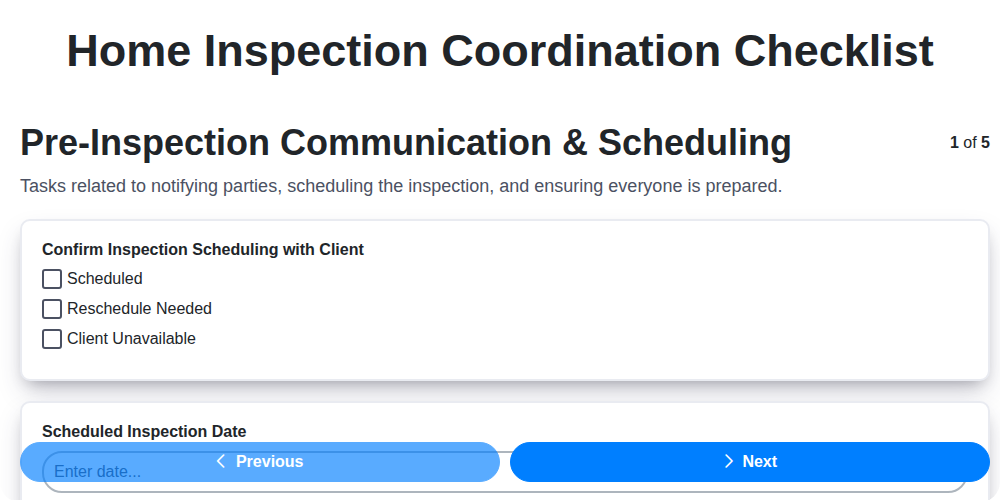
Stress-Free Inspections: Your Home Inspection Coordination Checklist Template
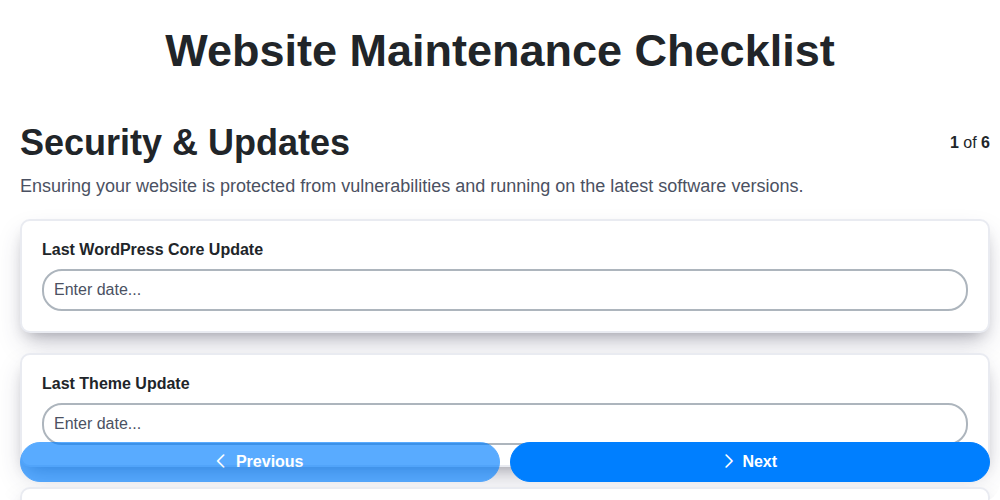
The Ultimate Website Maintenance Checklist Template
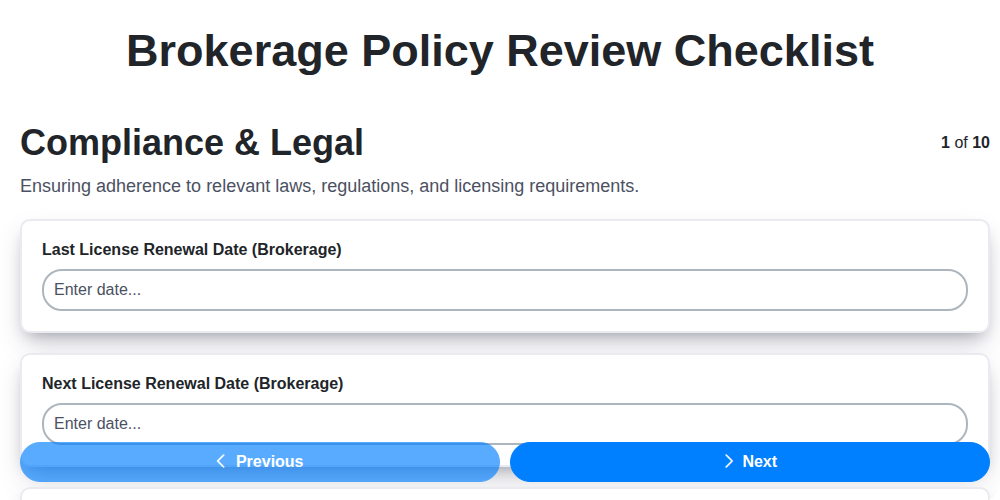
10 Essential Checks: Your Brokerage Policy Review Checklist
The Ultimate Office Opening/Closing Checklist Template
Your Ultimate AML Compliance Checklist Template
Rent Collection Checklist Template: Your Landlord's Guide
Your Complete Flood Zone Disclosure Checklist Template
Fair Housing Training Checklist Template: Your Guide to Compliance
We can do it Together
Need help with
Checklists?
Have a question? We're here to help. Please submit your inquiry, and we'll respond promptly.