Streamlining Precision: A Comprehensive Workflow for Equipment Calibration and Maintenance Management
Published: 06/04/2026 Updated: 10/05/2026
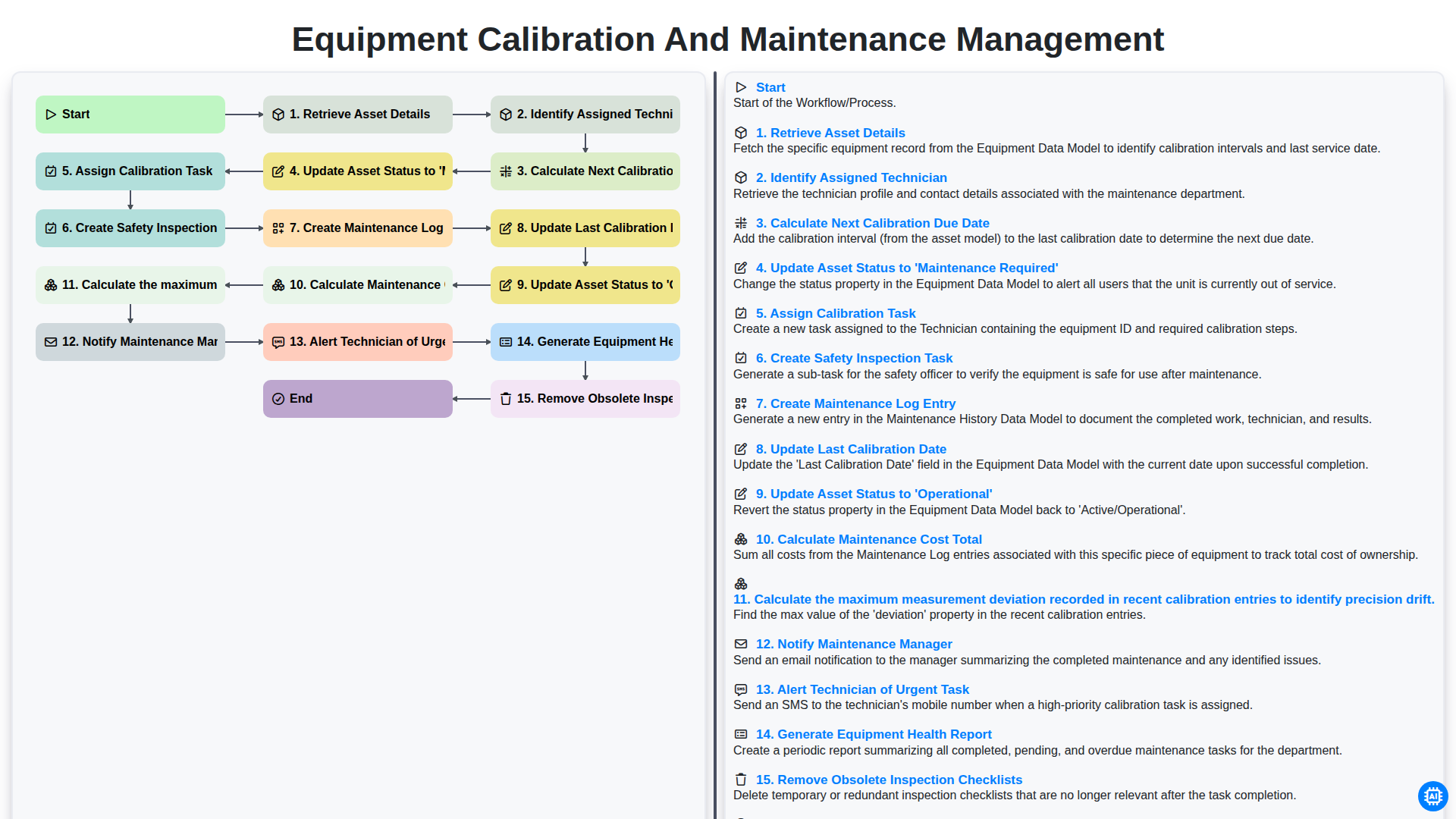
Table of Contents
- Introduction: The Importance of Precision in Asset Management
- Phase 1: Initializing the Maintenance Cycle
- Retrieving Asset Details and Identifying Specialized Technicians
- Phase 2: Predictive Scheduling and Status Updates
- Calculating Calibration Deadlines and Identifying Maintenance Needs
- Phase 3: Task Execution and Safety Protocols
- Assigning Calibration Tasks and Mandatory Safety Inspections
- Phase 4: Documentation and Data Integrity
- Logging Maintenance Entries and Updating Calibration Timelines
- Phase 5: Operational Restoration and Cost Analysis
- Returning Assets to Operational Status and Calculating Total Maintenance Costs
- Phase 6: Advanced Analytics and Precision Drift Detection
- Analyzing Measurement Deviations to Prevent Precision Drift
- Phase 7: Reporting, Alerts, and Continuous Improvement
- Automating Manager Notifications and Optimizing Inspection Checklists
- Resources & Links
TLDR: Learn how to automate your equipment lifecycle management with a structured workflow designed to ensure precision and compliance. This guide covers everything from automating calibration schedules and task assignments to tracking precision drift and generating health reports, helping you minimize downtime and maintain operational excellence.
Introduction: The Importance of Precision in Asset Management
In any industrial or highly regulated environment, the margin for error is often non-existent. Whether you are managing medical devices, manufacturing machinery, or laboratory instruments, the reliability of your equipment directly dictates the quality of your output and the safety of your operations. At the heart of this reliability lies a disciplined approach to Equipment Calibration and Maintenance Management.
Precision is not a one-time achievement; it is a continuous process of monitoring, adjusting, and verifying. When equipment falls out of calibration, the consequences can range from minor production delays to catastrophic equipment failure, significant financial losses, and compromised compliance with industry standards.
Effective asset management goes beyond simply fixing broken machines. It requires a proactive, systematic workflow designed to detect precision drift before it impacts your bottom line. By integrating automated tracking, precise scheduling, and rigorous inspection protocols, organizations can transition from a reactive break-fix mentality to a predictive model of operational excellence. This ensures that every asset remains within its optimal performance window, maximizing both lifespan and accuracy.
Phase 1: Initializing the Maintenance Cycle
The maintenance lifecycle begins with a systematic approach to data retrieval and assessment. The process is triggered by the first critical step: Retrieve Asset Details, ensuring that all technical specifications and historical data for the specific piece of equipment are readily available. Once the asset is identified, the system must Identify Assigned Technician, ensuring that the individual with the appropriate expertise and certification is designated to handle the upcoming procedure.
To maintain compliance and operational safety, the workflow then moves into the predictive phase by performing the step to Calculate Next Calibration Due Date. This calculation acts as the primary safeguard against equipment inaccuracy. Once the upcoming deadline is determined, the system automatically triggers a status change to Update Asset Status to 'Maintenance Required', effectively flagging the equipment as non-operational for standard tasks until the necessary checks are completed.
Retrieving Asset Details and Identifying Specialized Technicians
The foundation of any robust maintenance strategy lies in the precision of your initial data retrieval. The workflow begins with the critical step of Retrieving Asset Details, where the system pulls comprehensive information regarding the equipment's specifications,- usage history, and manufacturer-recommended calibration intervals. This ensures that the maintenance plan is tailored to the specific technical requirements of each individual unit, rather than relying on a one-size-fits-all approach.
Once the technical parameters are established, the process moves to Identifying the Assigned Technician. Effective maintenance management is not just about knowing what needs to be serviced, but who is best equipped to perform the task. By matching the specific complexity of the asset with the specialized skill sets and certifications of your technical team, you ensure that every calibration is performed by an expert capable of maintaining the required precision standards. This alignment minimizes the risk of human error and ensures that high-precision instruments are handled by personnel with the appropriate competency.
Phase 2: Predictive Scheduling and Status Updates
Once the initial assessment is complete, the workflow transitions into a proactive phase focused on predictive scheduling and real-time status management. The core of this phase lies in the automated intelligence of the system: after retrieving asset details and identifying the assigned technician, the system performs a critical calculation to determine the Next Calibration Due Date. This foresight allows the facility to move away from reactive repairs and toward a preventative strategy.
As the system detects approaching deadlines or identified irregularities, it automatically triggers a status shift, updating the Asset Status to 'Maintenance Required'. To ensure seamless execution, the workflow simultaneously initiates a multi-layered task distribution. This includes Assigning a Calibration Task and Creating a Safety Inspection Task to ensure that no single point of failure is overlooked.
To maintain a transparent and auditable trail, the process automatically generates a Maintenance Log Entry and updates the Last Calibration Date, ensuring that the equipment's digital twin always reflects its physical reality. The ultimate goal of this phase is to transition the Asset Status back to 'Operational' only after all parameters are met. During this transition, the system also performs deep-dive analytics, such as calculating the maximum measurement deviation recorded in recent calibration entries to identify precision drift. By integrating these automated updates with cost tracking-specifically calculating the Maintenance Cost Total-management gains a comprehensive view of both the operational health and the financial impact of equipment upkeep.
Calculating Calibration Deadlines and Identifying Maintenance Needs
The core of an effective maintenance strategy lies in the transition from reactive repairs to proactive precision management. This process begins by retrieving asset details and identifying the assigned technician most qualified for the specific equipment. Once the technician is identified, the system must automatically calculate the next calibration due date based on predefined intervals or usage metrics.
When a deadline approaches or an anomaly is detected, the workflow immediately triggers a shift in operational status by updating the asset status to 'Maintenance Required'. To ensure no critical step is missed, the system must simultaneously assign a calibration task and create a safety inspection task, ensuring that both precision and safety are verified before the equipment returns to service.
Beyond simple scheduling, advanced management requires a deep dive into data trends. By calculating the maximum measurement deviation recorded in recent calibration entries, managers can proactively identify precision drift before it results in out-of-tolerance failures. This data-driven approach allows the workflow to create a maintenance log entry, update the last calibration date, and ultimately update the asset status to 'Operational' only when all safety and precision benchmarks are met. This closed-loop system ensures that every piece of equipment operates within its optimal performance window.
Phase 3: Task Execution and Safety Protocols
Once the calibration schedule is determined, the workflow transitions from planning to active execution. This phase is critical as it bridges the gap between identification and the physical maintenance of the equipment. The process begins by assigning the calibration task to the appropriate personnel and simultaneously creating a safety inspection task to ensure all environmental and operational hazards are addressed before work commences.
During this stage, the technician performs the necessary adjustments and measurements. To maintain rigorous quality standards, the system must calculate the maximum measurement deviation recorded in recent calibration entries; this step is vital to identify potential precision drift that might not be visible during a single routine check. As the work progresses, a maintenance log entry is automatically created to document all actions taken, ensuring a transparent audit trail.
As the physical work concludes, the workflow triggers essential administrative updates: the system will update the last calibration date and, once the equipment meets all performance criteria, update the asset status to 'Operational'. To ensure continuous improvement and data integrity, the workflow also includes a cleanup step to remove obsolete inspection checklists, ensuring that technicians are always working with the most current and relevant protocols.
Assigning Calibration Tasks and Mandatory Safety Inspections
Once the system identifies that an asset requires attention, the workflow shifts from identification to action. The next critical phase involves Assigning Calibration Tasks to the appropriate personnel. To ensure accountability and timely execution, the system automatically identifies the technician best suited for the specific equipment based on their expertise and current workload. Once a technician is identified, a formal calibration task is generated and dispatched, ensuring the professional is notified of their specific responsibilities and the required technical parameters.
However, maintenance is about more than just precision; it is about safety. Parallel to the calibration assignment, the workflow automatically triggers the Creation of a Safety Inspection Task. This step ensures that no piece of equipment is returned to service without a comprehensive evaluation of its physical integrity and operational safety. By linking safety inspections directly to the calibration workflow, the process creates a dual-layered defense against equipment failure, ensuring that every task performed adheres to both accuracy standards and rigorous safety protocols.
Phase 4: Documentation and Data Integrity
Once the physical maintenance tasks are completed, the workflow transitions into its most critical stage: ensuring that every action is documented with precision to maintain regulatory compliance and operational transparency. This phase is where real-time data is transformed into actionable intelligence.
The process begins by systematically updating the digital audit trail. First, a Maintenance Log Entry is created to document the specific actions taken during the service. This is immediately followed by updating the Last Calibration Date, ensuring the asset's history reflects its current state. To maintain a single source of truth, the system then automatically Updates the Asset Status to 'Operational', signaling to the entire organization that the equipment is safe for production.
Beyond simple record-keeping, this phase focuses on high-level data integrity and proactive oversight. The system performs a granular analysis by Calculating the maximum measurement deviation recorded in recent calibration entries; this allows the team to identify subtle precision drift before it leads to equipment failure. Simultaneously, the workflow handles administrative cleanup by Removing Obsolete Inspection Checklists, ensuring that technicians are never working with outdated protocols.
To close the loop, the workflow triggers essential communication layers. It will Notify the Maintenance Manager of the completed cycle and Generate an Equipment Health Report, providing a macro-view of fleet reliability. By automating these final steps, the system ensures that documentation is never an afterthought, but a robust foundation for continuous improvement and audit readiness.
Logging Maintenance Entries and Updating Calibration Timelines
Once the physical inspection and calibration are complete, the workflow transitions into the critical phase of documentation and data synchronization. To ensure a continuous audit trail, the system automatically triggers the Create Maintenance Log Entry step, capturing every detail of the service performed. This log serves as the definitive historical record for compliance and regulatory audits.
Simultaneously, the system performs vital data updates to maintain the accuracy of your asset registry. This involves the automated Update Last Calibration Date process, which ensures that your digital twins reflect the actual physical state of your machinery. Following this, the workflow concludes the maintenance cycle by executing the Update Asset Status to 'Operational' command, seamlessly reintegrating the equipment into your production line without manual intervention. This automated loop ensures that your maintenance records are never out of sync with the actual status of your workshop floor.
Phase 5: Operational Restoration and Cost Analysis
Once the technical intervention is complete, the workflow shifts from active repair to operational restoration and comprehensive data auditing. The final stage of the process begins with updating the Last Calibration Date in the system, followed immediately by updating the Asset Status to 'Operational', signaling to the entire organization that the equipment is once again fit for production.
To ensure financial transparency and long-term planning, the system automatically performs a Calculate Maintenance Cost Total operation, aggregating labor, parts, and consumables used during the cycle. This data is vital for calculating the total cost of ownership and informing future budget allocations. Simultaneously, the system triggers a Generate Equipment Health Report, providing a high-level overview of the asset's performance trends.
To maintain a lean and efficient database, the workflow includes an automated cleanup step to Remove Obsolete Inspection Checklists, ensuring technicians only interact with current, relevant protocols. Finally, the loop is closed by notifying the broader team: a Notify Maintenance Manager alert is sent to confirm the task's completion, while a specific Alert Technician of Urgent Task notification is triggered if any discrepancies found during the repair necessitate immediate follow-up actions.
Returning Assets to Operational Status and Calculating Total Maintenance Costs
Once the physical maintenance and calibration tasks are completed, the workflow transitions into the critical phase of restoration and financial auditing. The process begins by updating the Last Calibration Date to reflect the most recent service, which serves as the new baseline for all future scheduling. With the technical work verified, the system automatically updates the Asset Status to 'Operational', ensuring that the equipment is visible and available for production use without the Maintenance Required flag.
However, the workflow extends beyond simple status updates; it involves a rigorous reconciliation of the work performed. The system automatically triggers a calculation of the Maintenance Cost Total, aggregating labor, parts, and external service fees to provide an accurate picture of the asset's total cost of ownership. This financial data is vital for long-term budgeting and evaluating whether an asset is becoming too costly to maintain. By integrating cost tracking directly into the status update phase, organizations can make data-driven decisions regarding equipment replacement versus repair, ensuring that the maintenance lifecycle remains both efficient and economically viable.
Phase 6: Advanced Analytics and Precision Drift Detection
To ensure long-term equipment reliability, the workflow extends beyond simple scheduling into the realm of predictive oversight. During this advanced phase, the system performs a critical calculation: it calculates the maximum measurement deviation recorded in recent calibration entries to identify precision drift. By analyzing the variance between actual readings and standard benchmarks over time, the system can detect subtle degradation in instrument accuracy before it results in a failure or a non-conformance report.
This proactive data analysis is integrated into a broader reporting ecosystem. The workflow automatically generates an Equipment Health Report, providing stakeholders with a high-level view of fleet stability. To maintain the integrity of these insights, the system also periodically audits its own processes to remove obsolete inspection checklists, ensuring that technicians are always following the most current, standardized protocols. This layer of intelligence transforms maintenance from a reactive necessity into a strategic asset management advantage.
Analyzing Measurement Deviations to Prevent Precision Drift
One of the most critical functions within an advanced maintenance workflow is the ability to calculate the maximum measurement deviation recorded in recent calibration entries. While standard maintenance schedules focus on time-based intervals, true precision management requires a data-driven approach to identify precision drift before it results in equipment failure or product non-compliance.
By systematically reviewing the variance between the as-found readings and the established tolerance limits, the system identifies subtle shifts in instrument accuracy. This proactive analysis allows maintenance teams to distinguish between routine wear and significant sensor degradation. Detecting these patterns early ensures that a single calibration event doesn't just reset a timer, but actually serves as a diagnostic tool to trigger corrective actions, thereby maintaining the integrity of your entire production line.
Phase 7: Reporting, Alerts, and Continuous Improvement
The final phase of the workflow focuses on closing the loop through data-driven insights and proactive communication. Once the physical maintenance is complete, the system automatically performs a comprehensive audit of the results. To ensure full visibility, the system will calculate the maximum measurement deviation recorded in recent calibration entries to identify precision drift, allowing teams to spot subtle equipment degradation before it leads to failure.
To maintain administrative accuracy, the system will generate an Equipment Health Report, providing stakeholders with a high-level overview of fleet reliability. Simultaneously, to prevent administrative bloat and ensure compliance accuracy, the system will remove obsolete inspection checklists that no longer align with current regulatory standards or machine specifications.
Communication remains central to preventing downtime. The workflow triggers an automated notify Maintenance Manager action to confirm task completion and- much more importantly-will alert the technician of urgent tasks if any new deviations or critical failures are detected in the updated logs. This ensures that the transition from maintenance to operation is not just recorded, but actively managed to drive continuous improvement across the entire facility.
Automating Manager Notifications and Optimizing Inspection Checklists
Streamlining a maintenance workflow isn't just about tracking dates; it's about ensuring the right people receive the right information at the critical moment. A truly automated system eliminates the manual burden of monitoring logs by instantly triggering a Notify Maintenance Manager action whenever a high-priority issue is detected. This ensures that leadership has real-time visibility into equipment downtime and resource allocation without needing to manually audit every entry.
Furthermore, automation extends to the technicians on the ground through an Alert Technician of Urgent Task feature. By pushing immediate notifications for critical calibration needs or sudden precision drifts, you reduce response times and prevent potential equipment failure before it occurs.
However, efficiency also requires constant refinement of your operational standards. As technology evolves and equipment specifications change, manual processes often lead to process bloat. To maintain a lean and effective workflow, your system should include a mechanism to Remove Obsolete Inspection Checklists. By purging outdated protocols, you ensure that technicians are only focused on relevant, up-to-date safety and quality standards, preventing confusion and reducing the risk of human error during the inspection process.
Resources & Links
- ISO/IEC 17025: General Requirements for the Competence of Testing and Calibration Laboratories: The gold standard for ensuring technical competence and producing valid results in calibration laboratories.
- NIST (National Institute of Standards and Technology): Essential resources for traceability, measurement uncertainty, and maintaining high-precision standards in equipment calibration.
- ASQ (American Society for Quality): Comprehensive guides on quality management, preventive maintenance strategies, and continuous improvement methodologies.
- OSHA Safety and Compliance Standards: Critical guidelines for implementing safety inspection protocols and managing technician safety during maintenance tasks.
- Enterprise Asset Management (EAM) Software Solutions: Advanced digital tools for automating workflow steps like task assignment, automated notifications, and real-time asset tracking.
- Lean Manufacturing & Total Productive Maintenance (TPM): Frameworks for optimizing maintenance workflows to reduce downtime and eliminate waste in the equipment lifecycle.
Frequently Asked Questions
What is the primary goal of implementing a streamlined calibration and maintenance workflow?
The primary goal is to ensure measurement accuracy, extend the operational lifespan of critical equipment, and maintain regulatory compliance by reducing downtime and human error through standardized processes.
What are the key components of an effective equipment maintenance management system?
A comprehensive system includes scheduled preventive maintenance, real-time tracking of calibration intervals, standardized operating procedures (SOPs), centralized documentation, and automated alert systems for upcoming service dates.
How does regular calibration impact operational precision?
Regular calibration identifies and corrects deviations in instrument performance, ensuring that measurements remain within defined tolerances, which prevents costly errors in production and maintains quality standards.
What is the difference between preventive maintenance and reactive maintenance?
Preventive maintenance is a proactive approach involving scheduled inspections and servicing to prevent failures, whereas reactive maintenance occurs only after an equipment breakdown has already happened, often leading to higher costs and unplanned downtime.
How can digital tools help in managing calibration workflows?
Digital tools, such as CMMS (Computerized Maintenance Management Systems), automate scheduling, provide centralized access to calibration certificates, simplify audit trails, and enable real-time data analytics for better decision-making.
What role does documentation play in maintenance management?
Documentation serves as the essential audit trail for regulatory compliance (such as ISO or FDA standards), proving that equipment has been properly maintained and calibrated according to required protocols.
Comments
There are no comments yet. Be the first to add one!
Pharmaceutical Management Solution Demo
Navigating complex regulations and ensuring quality in pharmaceutical manufacturing? ChecklistGuro's Work OS platform streamlines processes from R&D to production, packaging, and distribution. Maintain compliance, improve efficiency, and reduce risk. Discover how ChecklistGuro can transform your pharmaceutical operations!
Related Articles
Ensuring Quality: A Pharmaceutical Compound Record Review Checklist Guide
Pharmaceutical Labeling Compliance Checklist: Your Step-by-Step Guide
Mastering Medication Management: Your Pharmaceutical Inventory Compliance Checklist Template
Navigating Adverse Event Reporting: Your Pharmaceutical Checklist Guide
Pharmaceutical Inventory Management Checklist: Your Guide to Compliance & Accuracy
Your Essential GLP Checklist Template: A Practical Guide
Your Pharmaceutical Development Checklist: A Template for Success
Pharmaceutical Validation Checklist Template: Your Guide to Compliance
Need help with
Checklists?
Have a question? We're here to help. Please submit your inquiry, and we'll respond promptly.