Pharmaceutical Labeling Compliance Checklist: Your Step-by-Step Guide
Published: 11/25/2025 Updated: 07/02/2026
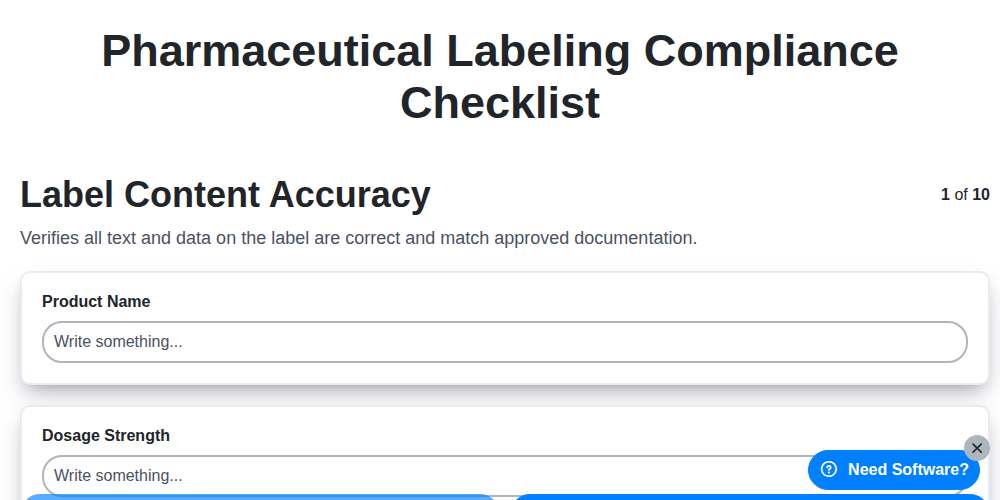
Table of Contents
- Introduction: Why Pharmaceutical Labeling Compliance Matters
- 1. Label Content Accuracy: Ensuring Data Integrity
- 2. Regulatory Compliance: Navigating the Complexities
- 3. Mandatory Statements: Covering All the Legal Bases
- 4. Units of Measure & Barcodes: Precision and Traceability
- 5. Design & Readability: Layout, Font, Color & Graphics
- 6. Language Requirements: Reaching Global Markets
- 7. Review, Approval & Documentation: Establishing Accountability
- 8. Material & Adhesion: Ensuring Label Durability
- Resources & Links
TLDR: Pharmaceutical labeling is complex! This checklist template breaks down all the critical steps - from content accuracy and regulatory compliance to barcodes, language, and material checks - to help you avoid costly errors and ensure your product labels are 100% compliant. It's your shortcut to staying out of regulatory trouble!
Introduction: Why Pharmaceutical Labeling Compliance Matters
Pharmaceutical labeling isn't just about aesthetics; it's a critical element of patient safety, regulatory adherence, and brand integrity. Incorrect or incomplete labeling can lead to medication errors, jeopardizing patient health and potentially resulting in serious consequences. Beyond patient safety, non-compliance can trigger costly recalls, legal action, and damage a company's reputation. Meeting stringent regulatory requirements - from the FDA in the US to EMA in Europe and beyond - is not optional; it's a legal obligation. A robust labeling compliance process ensures accuracy, clarity, and adherence to all applicable guidelines, safeguarding both patients and the pharmaceutical company. This checklist provides a roadmap to navigate the complexities of pharmaceutical labeling, minimizing risk and ensuring a consistent standard of quality.
1. Label Content Accuracy: Ensuring Data Integrity
Accurate label content is the bedrock of pharmaceutical labeling compliance. A single error - a misplaced decimal, an incorrect dosage, or a misspelled ingredient - can have serious consequences, ranging from patient harm to costly recalls and regulatory penalties. This step isn't just about catching typos; it's about rigorous data integrity checks.
Your checklist for label content accuracy should include the following:
- Ingredient Verification: Cross-reference ingredients listed on the label against the approved formulation and Certificate of Analysis (CoA).
- Dosage and Strength Confirmation: Verify dosage, strength, and concentration data against the product specifications. Double-check calculations.
- Product Name & NDC Number: Ensure the product name and National Drug Code (NDC) number are accurate and consistent across all materials.
- Expiration Date & Lot Number: These are critical for traceability and patient safety. Implement robust processes to ensure accuracy and avoid manual entry errors.
- Warnings & Precautions: Verify the wording and placement of all warnings and precautions are consistent with approved safety information and regulatory guidelines.
- Storage Conditions: Accurately reflect the required storage conditions (e.g., Store at room temperature).
Regular audits and checks throughout the labeling process are vital to maintain content accuracy. Implementing a system for tracking changes and approvals is also highly recommended.
2. Regulatory Compliance: Navigating the Complexities
Pharmaceutical labeling isn't just about aesthetics; it's a legal minefield. Compliance with regulatory bodies like the FDA (in the US), EMA (in Europe), and others globally is paramount and failure can result in recalls, fines, and damage to your company's reputation. This section isn't just a formality; it's the bedrock of your product's journey to market.
Here's what you need to consider:
- Stay Updated: Regulations are constantly evolving. Subscribe to regulatory updates, attend industry webinars, and consult with regulatory experts to remain current. A label compliant today might be non-compliant tomorrow.
- Regional Variations: What's acceptable in one country may be strictly prohibited in another. Be acutely aware of region-specific requirements. This impacts everything from allowable drug claims to required warnings.
- Guidance Documents: Familiarize yourself with official guidance documents issued by regulatory bodies. These documents often provide crucial details and interpretations of the rules.
- Serialization Requirements: Increasingly, serialization is mandatory for many pharmaceuticals. Ensure your labeling process includes accurate serialization data and meets specific data format and placement requirements. This ties directly into your Barcodes & Serialisation checklist items.
- Changes & Supplements: Regularly review any supplementary documents or changes to regulations that may affect your labeling processes.
- Documentation is Key: Meticulously document every step of your labeling process, including regulatory consultations, approval workflows, and any deviations from standard procedures. This documentation is essential for audits and demonstrating due diligence.
3. Mandatory Statements: Covering All the Legal Bases
Pharmaceutical labeling isn't just about pretty designs and clear instructions; it's about adhering to a strict set of legal requirements. Certain statements are mandatory and must appear on your labels, regardless of product type or market. Failing to include these can result in significant penalties and recalls.
Here's a breakdown of the most common mandatory statements you're likely to encounter, though it's crucial to consult the specific regulations for your target markets (e.g., FDA in the US, EMA in Europe, etc.):
- Name and Address of Manufacturer/Distributor: Clearly identify who is responsible for the product. This allows for traceability and accountability.
- Product Name and Strength: Explicitly state the product's name and its strength (e.g., Amoxicillin 250mg). Generic names are often required alongside brand names.
- Dosage Instructions: Provide clear and concise directions for use, including dosage, frequency, and route of administration. These must be easily understood by the intended user.
- Lot Number & Expiration Date: These are critical for tracking and recall purposes. They allow for rapid identification of affected batches if issues arise. Formatting must be consistent.
- Storage Conditions: Detail how the product should be stored to maintain its efficacy and safety (e.g., Store at room temperature, avoid direct sunlight).
- Warnings & Precautions: Any potential risks, side effects, or contraindications must be prominently displayed. This includes highlighting potential interactions with other medications.
- Keep Out of Reach of Children & Similar Safety Statements: These are standard warnings to prevent accidental misuse.
- Net Quantity of Contents: The precise amount of the product contained within the packaging must be accurately stated.
- Country of Origin: Required in many markets, this indicates where the product was manufactured.
Beyond the Basics: Remember that these are general requirements. Certain product categories (e.g., narcotics, controlled substances, prescription drugs) will have additional, highly specific mandatory statements. Regularly review and update your labeling practices to reflect the latest regulatory changes. Don't just rely on this overview; conduct thorough regulatory research!
4. Units of Measure & Barcodes: Precision and Traceability
Accuracy in units of measure and robust barcode/serialization data are absolutely critical for pharmaceutical labeling. Errors here can lead to dosing mistakes, recalls, and serious patient harm. This section delves into ensuring these elements are flawless.
Units of Measure:
- Consistency is Key: Ensure all units (e.g., mg, g, mL, IU) are consistent throughout the label and match the approved drug product specifications. A single discrepancy can trigger regulatory scrutiny.
- Standardized Abbreviations: Use universally accepted abbreviations. Avoid ambiguous or non-standard terminology that could be misinterpreted.
- Verification with Formulation: Double-check that the units of measure listed directly correspond to the formulation and manufacturing process.
- Formatting: Pay meticulous attention to formatting - decimal points, abbreviations, and placement are all vital.
Barcodes & Serialization:
- Barcode Symbology: Select the appropriate barcode symbology (e.g., Code 128, Data Matrix) as specified by regulatory requirements and the distribution chain.
- Data Integrity: The barcode data must be accurate and complete, containing all required information, including batch number, expiry date, and unique serial number (where applicable).
- Serialization Compliance: For serialized products, ensure compliance with regulations like the Drug Supply Chain Security Act (DSCSA). Verify serialization data is linked to the appropriate product records within your system.
- Print Quality & Readability: Barcodes must be printed with sufficient resolution and contrast to ensure they are scannable by automated systems and manual readers. Conduct regular barcode quality checks.
- Verification Scans: Implement a robust verification scanning process after label printing to confirm accuracy and readability of barcodes. Document all verification results.
5. Design & Readability: Layout, Font, Color & Graphics
Pharmaceutical labeling isn't just about conveying information; it's about ensuring patients and healthcare professionals can understand it quickly and accurately. A visually cluttered or poorly designed label can lead to medication errors and non-compliance. Here's what to consider:
- Layout: Prioritize critical information (dosage, warnings) through clear hierarchical structuring. Use a logical flow that guides the eye. Avoid overcrowding - white space is your friend! Consider the viewing angle and potential for accidental obstruction by packaging.
- Font: Select a legible font (avoiding overly stylized or decorative typefaces). Ensure sufficient font size for readability, especially for patients with visual impairments. Maintain consistent font usage throughout the label. Consider line spacing (leading) to prevent text from appearing cramped.
- Color: Use colors strategically. High-contrast combinations (e.g., black on white or dark blue on light yellow) improve visibility. Be mindful of colorblindness considerations; avoid relying solely on color to convey critical information. Align color choices with your brand identity where appropriate, but always prioritize clarity.
- Graphics & Symbols: Utilize graphics and symbols where possible to supplement text and enhance comprehension. Ensure graphics are clear, relevant, and accurately represent the medication or its use. Be cautious with symbolic representations; they should be universally understood or accompanied by explanatory text. Always adhere to any regulatory guidelines regarding the use of specific graphics or symbols.
6. Language Requirements: Reaching Global Markets
Pharmaceutical labeling transcends geographical boundaries; it's a critical element in ensuring patient safety and gaining market access internationally. Failing to address language requirements can lead to recalls, regulatory sanctions, and ultimately, harm to patients. This section outlines key considerations for multilingual pharmaceutical labeling.
Translation Accuracy is Paramount: Don't rely solely on machine translation. Employ certified and experienced translators with pharmaceutical expertise. They understand the nuances of medical terminology and regulatory language, minimizing the risk of misinterpretations. Proofreading by a second, independent translator is highly recommended.
Localisation, Not Just Translation: Localization goes beyond simply translating words. It adapts the message to resonate with the cultural context of the target market. Consider factors like reading direction (left-to-right vs. right-to-left), measurement preferences (metric vs. imperial), and culturally appropriate phrasing.
Regulatory Guidelines Vary: Each country or region has specific regulations regarding language requirements on pharmaceutical labels. The EU, for example, mandates specific languages for certain markets. Thoroughly research and adhere to the requirements of each country where your product will be distributed. Consult regulatory experts to ensure compliance.
Keep it Concise and Clear: Just as with English labels, use clear and concise language in all translations. Avoid jargon and complex sentences. A visual approach (e.g., pictograms) can often supplement textual information, particularly where language barriers are significant.
Maintaining Consistency: Ensure consistency across all translated versions of the label, including package inserts and other promotional materials. A unified message builds trust and reduces confusion.
Document Everything: Maintain a detailed record of all translations, revisions, and approvals. This documentation serves as evidence of due diligence in the event of an audit or regulatory inquiry.
7. Review, Approval & Documentation: Establishing Accountability
Labeling errors, even seemingly minor ones, can trigger recalls, regulatory action, and damage your company's reputation. A robust review and approval process is your final line of defense. This isn't just about a quick glance - it's a structured, documented procedure ensuring accuracy and compliance at every stage.
Key Elements of a Strong Review & Approval Process:
- Defined Roles & Responsibilities: Clearly assign responsibilities for label review. This typically involves representatives from regulatory affairs, quality assurance, manufacturing, and potentially legal. Define who's responsible for initial review, technical review, and final approval.
- Stage-Gated Reviews: Implement a tiered review system. Initial review focuses on content accuracy. A technical review should focus on regulatory compliance and potential risks. A final approval step confirms everything meets all requirements.
- Documented Approvals: All reviews and approvals must be documented. This includes the date, reviewer's name and signature (or electronic equivalent), and any comments or corrections made. Audit trails are crucial.
- Change Control Management: Any changes to the label, regardless of size, must be managed through a formal change control process. Document the reason for the change, the impact assessment, and the approval of the revised label.
- Version Control: Maintain meticulous version control of all label files and associated documentation. Clearly identify the current version and archive older versions appropriately.
- Training Records: Document training records for all personnel involved in the label review and approval process to ensure they possess the necessary expertise.
A well-documented review and approval process isn's just a compliance requirement; it's a critical investment in product safety, regulatory adherence, and overall business integrity.
8. Material & Adhesion: Ensuring Label Durability
Pharmaceutical labels aren't just about aesthetics or conveying information; they're a crucial component of product safety and efficacy. They must withstand the rigors of handling, storage, and transportation without degradation. This is where material selection and adhesion become paramount.
Material Selection is Key: Consider the environmental conditions your product will encounter. Will it be exposed to light, moisture, temperature fluctuations, or chemicals? Labels intended for refrigerated medications require materials resistant to cold cracking. Those for products stored in humid environments need moisture-resistant options. Common materials include polypropylene (PP), polyethylene (PE), vinyl, and coated papers, each offering different levels of durability and chemical resistance.
Adhesion - More Than Just Sticking: Poor adhesion can lead to label detachment, obscuring vital information and potentially compromising patient safety. The adhesive must bond securely to the container material (glass, plastic, metal) and maintain that bond throughout the product's lifecycle. Consider these factors:
- Container Surface: Cleanliness and surface energy of the container significantly impact adhesion. Pre-treatment may be necessary for certain surfaces.
- Adhesive Type: Choosing the correct adhesive is vital. Pressure-sensitive adhesives (PSAs) are commonly used, but their formulation needs to be matched to the container material and intended environment.
- Testing is Essential: Perform adhesion testing under simulated conditions to ensure the label remains firmly attached under stress. This includes testing for resistance to solvents, moisture, and temperature extremes.
Compliance Considerations: Material selection and adhesion can directly impact regulatory compliance. Failure to maintain label integrity could be interpreted as a labeling defect, leading to recalls and regulatory action. Thorough documentation of material specifications and adhesion testing results is crucial for audit trails.
Resources & Links
- U.S. Food and Drug Administration (FDA): The primary regulatory body for pharmaceuticals in the U.S. Their website provides extensive guidance documents, regulations (21 CFR Parts 201 & 211 are particularly relevant), and compliance information related to labeling.
- United States Pharmacopeia (USP): USP sets standards for drug quality, purity, potency, and consistency. Their standards often influence labeling requirements and best practices. Look for USP Chapter <19> - The Printed Labeling - Principal, Secondary, and Tertiary.
- GS1: GS1 is the organization that develops and maintains global standards for barcodes and other product identification codes. Essential for understanding barcode requirements and implementation for traceability.
- International Organization for Standardization (ISO): ISO develops international standards, including those related to quality management systems and labeling. Useful for understanding globally accepted practices.
- Pharmaceutical Research and Manufacturers of America (PhRMA): PhRMA represents the biopharmaceutical research and development sector. Their site often features resources and insights into industry best practices and regulatory landscapes.
- Labeling Experts: A commercial site, but frequently publishes useful guides, news, and resources relating to pharmaceutical labeling compliance.
- The Pharmaceutical Manufacturers Association of Canada (PMA): Useful if you are dealing with regulations for the Canadian market, but provides a useful frame of reference for similar regulated industries in other regions.
- Nice Label: Commercial labeling software provider offering a range of resources, compliance guides, and webinars focused on pharmaceutical label compliance.
- ECC North America: Commercial labeling solutions provider. Frequently publishes articles and information about pharmaceutical labeling regulations.
- Compliance Report: A regulatory compliance news website that often covers pharmaceutical labeling and related topics.
Frequently Asked Questions
What is pharmaceutical labeling compliance and why is it important?
Pharmaceutical labeling compliance refers to adhering to all regulations and guidelines set forth by regulatory bodies (like the FDA in the US, EMA in Europe, etc.) regarding the information displayed on drug labels and packaging. It's vital for patient safety, accurate information, legal protection from liability, and to maintain regulatory approval for your product.
Who needs to follow this checklist?
This checklist is designed for anyone involved in pharmaceutical labeling - including manufacturers, packagers, labelers, quality assurance teams, regulatory affairs professionals, and anyone responsible for ensuring the accuracy and legality of drug labeling.
What are the key regulatory bodies that dictate pharmaceutical labeling requirements?
The main regulatory bodies include the U.S. Food and Drug Administration (FDA), the European Medicines Agency (EMA), Health Canada, and similar organizations in other countries. This checklist generally reflects common requirements found across these agencies, but specific country requirements should always be verified.
What are the common elements included on a pharmaceutical label?
Common elements include: the proprietary name, the common name, dosage strength, dosage form, lot number, expiration date, storage conditions, indications, dosage and administration instructions, warnings and precautions, contraindications, and package quantity. This checklist details each of these.
What does 'plain language' mean in the context of pharmaceutical labeling?
'Plain language' means presenting information in a way that is easy for the average consumer to understand, avoiding technical jargon and complex sentence structures. Regulatory bodies emphasize this to ensure patients can safely use medications.
What's the difference between 'Rx only' and 'OTC' labels?
'Rx only' indicates a prescription drug requiring a doctor's order, while 'OTC' means over-the-counter, meaning it can be purchased without a prescription. The labeling requirements differ significantly between the two categories - OTC labels require more consumer-friendly instructions and warnings.
How do I handle updates or changes to my pharmaceutical label?
Any change to a pharmaceutical label requires careful evaluation and approval. This involves assessing the impact of the change, updating the label artwork, submitting the change to regulatory agencies (if required), and documenting the entire process.
What role does the package insert (prescribing information) play in labeling compliance?
The package insert (or prescribing information) provides detailed information for healthcare professionals. While not directly part of the label, it must be consistent and accurate with the information on the drug label and any required regulatory submissions. Misalignment can lead to compliance issues.
What are some potential consequences of non-compliance?
Non-compliance can result in warning letters, product recalls, import restrictions, fines, legal action, and even product seizures. Maintaining compliance is critical for the continued marketability of your pharmaceutical product.
Where can I find the specific regulations for my country?
Specific regulations can be found on the websites of the relevant regulatory agencies (e.g., FDA.gov, EMA.europa.eu, Canada.ca/en/health-canada.html). Consulting with a regulatory affairs expert is highly recommended for clarification and guidance.
Comments
There are no comments yet. Be the first to add one!
Pharmaceutical Management Solution Demo
Navigating complex regulations and ensuring quality in pharmaceutical manufacturing? ChecklistGuro's Work OS platform streamlines processes from R&D to production, packaging, and distribution. Maintain compliance, improve efficiency, and reduce risk. Discover how ChecklistGuro can transform your pharmaceutical operations!
Related Articles
Navigating Pharmaceutical Overage Evaluations: A Comprehensive Checklist
Pharmaceutical Inventory Management Checklist: Your Guide to Compliance & Accuracy
Mastering Medication Management: Your Pharmaceutical Inventory Compliance Checklist Template
Navigating Adverse Event Reporting: Your Pharmaceutical Checklist Guide
Pharmaceutical Validation Checklist Template: Your Guide to Compliance
Your Essential GLP Checklist Template: A Practical Guide
Your Pharmaceutical Development Checklist: A Template for Success
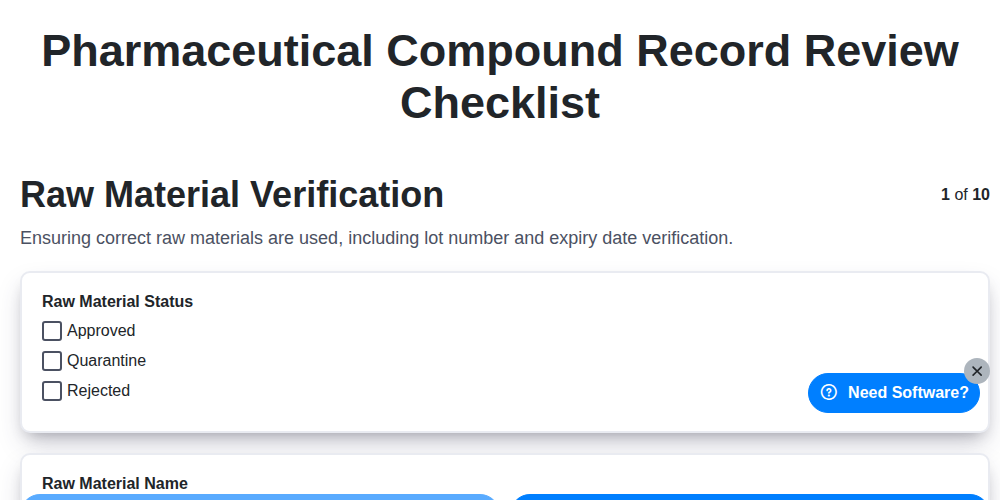
Ensuring Quality: A Pharmaceutical Compound Record Review Checklist Guide
Need help with
Pharmaceutical?
Have a question? We're here to help. Please submit your inquiry, and we'll respond promptly.