Ensuring Quality: A Pharmaceutical Compound Record Review Checklist Guide
Published: 11/25/2025 Updated: 07/02/2026
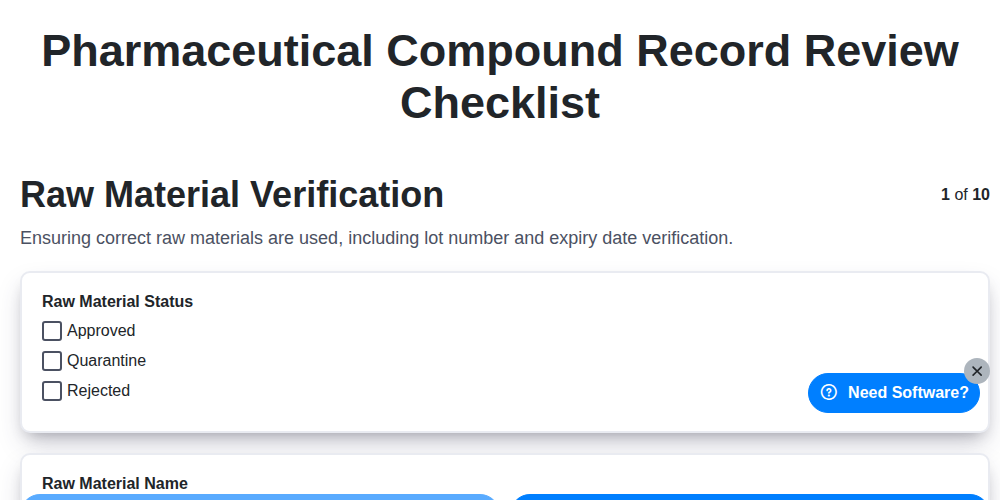
Table of Contents
- Introduction: Why Compound Record Reviews are Critical
- Understanding the Scope of a Pharmaceutical Compound Record Review
- Step 1: Raw Material Verification - Ensuring Starting Point Integrity
- Step 2: Equipment Setup and Calibration - A Foundation for Accuracy
- Step 3: Weighing and Measurement Accuracy - Precision in Every Step
- Step 4: Mixing and Processing Parameters - Consistency and Control
- Step 5: In-Process Controls (IPC) - Real-Time Monitoring & Adjustments
- Step 6: Deviation Handling & Resolution - Investigating and Correcting Anomalies
- Step 7: Final Product Appearance & Testing - Validating the Finished Compound
- Step 8: Documentation Completeness - Traceability and Compliance
- Step 9: Batch Number and Record Integrity - Maintaining the Chain of Custody
- Step 10: Record Review & Approval - The Final Sign-Off
- Common Pitfalls in Compound Record Reviews
- Conclusion: Continuous Improvement through Diligent Review
- Resources & Links
TLDR: Pharmaceutical compound record reviews are crucial for quality! This checklist template (covering raw materials, equipment, processing, testing, and documentation) ensures every step is verified and compliant, minimizing errors and safeguarding patient safety. Use it to systematically review batch records and maintain a robust quality system.
Introduction: Why Compound Record Reviews are Critical
In the pharmaceutical industry, precision and unwavering adherence to protocols are paramount. The compounding process, where active pharmaceutical ingredients (APIs) are combined to create medications, is no exception. A robust Pharmaceutical Compound Record Review is a cornerstone of ensuring patient safety, product efficacy, and regulatory compliance. These reviews aren't merely a formality; they are a vital layer of quality control, meticulously scrutinizing every step from raw material sourcing to final product release. A thorough review identifies potential errors or deviations early on, preventing costly rework, minimizing the risk of compromised product quality, and demonstrating a commitment to best practices. Ultimately, a well-executed compound record review reinforces trust - trust from patients, healthcare providers, and regulatory bodies alike.
Understanding the Scope of a Pharmaceutical Compound Record Review
A thorough record review for a pharmaceutical compound is far more than just a cursory glance at paperwork. It's a critical quality control step, acting as a final safeguard to ensure product integrity, patient safety, and regulatory compliance. This review extends across the entire manufacturing lifecycle, encompassing everything from the initial sourcing of raw materials to the final release of the finished product.
The scope isn't limited to simply checking for signatures and dates. It demands a deep understanding of the compound's specifications, the manufacturing process, and potential points of failure. Each step, as detailed in the associated checklist, must be meticulously examined to confirm adherence to established procedures, identify any anomalies or deviations, and ultimately, validate that the compound was manufactured according to its intended design. Failure to adequately address any discrepancies can have serious consequences, impacting product quality, potentially triggering recalls, and harming a company's reputation. Ultimately, this review demonstrates a commitment to upholding the highest standards of pharmaceutical manufacturing.
Step 1: Raw Material Verification - Ensuring Starting Point Integrity
The foundation of any successful pharmaceutical compound is the quality of its raw materials. This initial step, Raw Material Verification, isn't just about confirming what's listed on the delivery note - it's a critical assessment of identity, purity, and suitability for the intended purpose.
Here's what's typically involved:
- Certificate of Analysis (CoA) Review: Carefully scrutinize the CoA provided by the supplier. Compare the reported specifications (assay, impurities, water content, etc.) against established acceptance criteria outlined in your internal specifications and regulatory requirements. Don't just look for passing or failing - understand the data and investigate any unusual readings.
- Visual Inspection: Conduct a visual inspection of the raw material upon receipt. Note the appearance, color, and any signs of damage, contamination, or unusual characteristics. Any discrepancies should be documented immediately.
- Identity Testing: Perform identity testing, often utilizing techniques like infrared (IR) spectroscopy or other suitable analytical methods, to definitively confirm the material is what it's claimed to be.
- Supplier Qualification Status: Verify that the supplier is qualified and approved. This includes reviewing their audit history and current status within your approved vendor list.
- Storage Conditions: Ensure proper storage conditions are maintained according to the material's requirements to prevent degradation.
Failure to thoroughly verify raw materials can introduce contaminants, lead to inaccurate formulations, and ultimately compromise the safety and efficacy of the final product.
Step 2: Equipment Setup and Calibration - A Foundation for Accuracy
Pharmaceutical compound record review demands meticulous attention to detail, and ensuring equipment is properly set up and calibrated is paramount. This isn't just about ticking a box; it's about establishing a robust foundation for accurate and reliable results. Our checklist verifies that all equipment used in the compounding process - from balances and mixers to temperature probes and volumetric measuring devices - has undergone the necessary setup and calibration procedures prior to the start of the batch.
Specifically, we check for:
- Calibration Certificates: Are current and valid calibration certificates available for all relevant equipment? These certificates should detail the equipment's performance against established standards.
- Setup Verification: Is the equipment set up according to Standard Operating Procedures (SOPs)? This includes verifying initial settings, securing the equipment properly, and ensuring environmental factors (temperature, humidity) are within acceptable ranges.
- Functional Checks: We perform basic functional checks immediately before use, such as zeroing balances and checking mixer speeds. This confirms that the equipment is operating as expected at the start of the compounding process.
- Traceability: Calibration records must be traceable, demonstrating the lineage of the calibration standards used.
- User Qualification: Was the personnel performing the setup and initial checks adequately trained and qualified to do so?
A faulty or improperly calibrated piece of equipment can introduce significant errors, impacting the quality and safety of the compounded medication. This step aims to proactively mitigate those risks and build confidence in the data collected.
Step 3: Weighing and Measurement Accuracy - Precision in Every Step
In pharmaceutical compounding, accuracy isn't just a desirable trait; it's a non-negotiable requirement. Even minor deviations in weighing and measurement can significantly impact the final product's potency, stability, and patient safety. This step focuses specifically on validating that all weighing and measurement activities adhere to established standards.
Our checklist rigorously evaluates several key aspects:
- Balance Calibration Verification: Is the balance properly calibrated and certified? We verify the calibration date and ensure it aligns with the defined frequency (typically annually, or more often depending on regulations and usage).
- Accuracy Checks: Were accuracy checks performed using certified reference standards? Records must show the weights used and the results obtained, demonstrating the balance consistently delivers precise readings.
- Significant Figures: Were the correct number of significant figures used throughout the weighing process, reflecting the precision of the equipment and the acceptable range of variation?
- Tare Verification: Was the tare weight recorded and verified correctly before weighing each component? Improper tare readings introduce errors that accumulate and compromise accuracy.
- Leveling and Stability: Was the balance placed on a stable, level surface? Vibrations and instability can affect measurements and lead to inconsistencies.
- Environmental Conditions: Were environmental factors like temperature and humidity considered and documented? These variables can influence the balance's performance.
Thoroughly checking these points ensures that the foundation of the compounding process-the accurate measurement of ingredients-is solid and reliable. Any issues identified during this stage require immediate correction and re-verification before proceeding.
Step 4: Mixing and Processing Parameters - Consistency and Control
The integrity of a pharmaceutical compound heavily relies on meticulously controlled mixing and processing parameters. Deviations here can drastically alter the final product's quality, stability, and efficacy. This section of the review checklist focuses on ensuring these parameters adhered to established protocols throughout the manufacturing process.
Reviewers must verify that documented values for parameters like mixing speed, temperature, duration, pressure, and agitation rates are precisely as specified in the batch record. Are these parameters consistently applied across the entire batch? Are there justifiable reasons for any adjustments - and are those justifications clearly documented and approved?
Beyond the numbers, consider the how. Was the mixing methodology consistent? Were transfer steps performed correctly to avoid contamination or inconsistencies? Did the process equipment operate within its validated range?
Look for evidence of real-time monitoring of these parameters. Did the operators record any observed trends or fluctuations? Were these appropriately investigated and addressed? The goal is to establish that the mixing and processing phases were not just executed, but controlled - leading to a homogeneous and reproducible compound.
Step 5: In-Process Controls (IPC) - Real-Time Monitoring & Adjustments
In-Process Controls (IPCs) are the unsung heroes of pharmaceutical compound record review. They represent the dynamic, ongoing assessment of the manufacturing process during production, rather than just at the beginning or end. These checks aren't just about spotting problems; they're about proactively preventing them.
A robust IPC program goes beyond simple observations. It involves systematically monitoring critical parameters like temperature, pressure, pH, viscosity, particle size, and reaction kinetics at defined intervals. These measurements should be compared against pre-defined acceptance criteria outlined in the manufacturing process instructions.
What to look for during record review:
- Frequency of Monitoring: Were IPCs performed at the required intervals? Inconsistent or missing monitoring points raise red flags.
- Data Accuracy: Are the recorded values believable and consistent with expected trends? Look for unusual spikes or dips that require investigation.
- Corrective Actions: If a parameter falls outside acceptable limits, was a documented corrective action taken? This isn't just about recognizing the out-of-specification (OOS) event; it's about demonstrating that the problem was understood and addressed.
- Trending Analysis: Were IPC data trended to identify potential process drift or degradation over time? Trending provides valuable insights for process optimization and proactive adjustments.
- Operator Justification: Do the records clearly explain why adjustments were made, and how those adjustments impacted the process? Adjusted for stability isn't sufficient - the reasoning needs to be supported by data and a clear understanding of the process.
Effective IPCs and thorough record review of those controls are essential for ensuring product quality, consistency, and patient safety.
Step 6: Deviation Handling & Resolution - Investigating and Correcting Anomalies
No pharmaceutical process is perfect. Deviations - unplanned events or results outside of established parameters - are inevitable. However, how these deviations are handled is critical to maintaining product quality and regulatory compliance. This step of the Pharmaceutical Compound Record Review Checklist focuses on ensuring deviations are properly investigated, resolved, and prevented from reoccurring.
During record review, scrutinize the deviation handling process. Key areas to assess include:
- Prompt Identification & Reporting: Were deviations identified quickly and reported through the appropriate channels? Delayed reporting can obscure crucial information.
- Root Cause Analysis: Was a thorough root cause analysis performed? A superficial explanation isn't sufficient. Utilize tools like the 5 Whys or fishbone diagrams to dig deep and identify the underlying cause, not just the surface symptom.
- Corrective Actions (CAPA): Were effective corrective actions implemented to address the root cause? These actions should be documented with assigned responsibilities and deadlines.
- Preventative Actions: Were preventative actions implemented to prevent similar deviations from happening again? This demonstrates a proactive approach to quality.
- Effectiveness Checks: Were the implemented corrective and preventative actions evaluated for effectiveness? This ensures the actions were actually successful in resolving the problem.
- Documentation: Is the entire deviation handling process, including investigation, root cause analysis, corrective actions, preventative actions, and effectiveness checks, clearly and completely documented? This provides a traceable record for auditors and demonstrates accountability.
A robust deviation handling system isn's just about fixing problems; it's about learning from them and continuously improving the process. Weaknesses in deviation handling expose significant quality risks.
Step 7: Final Product Appearance & Testing - Validating the Finished Compound
This crucial step bridges the meticulous process of compound creation with its ultimate utility. It's not merely about visual inspection, but a comprehensive evaluation confirming the final product meets pre-defined quality attributes.
Visual Inspection: Begin with a thorough visual examination of the final product. Look for inconsistencies in color, particle size (if applicable), homogeneity, and any signs of contamination or degradation. Deviations from the expected appearance must be meticulously documented.
Analytical Testing: Beyond appearance, rigorous analytical testing is paramount. This typically includes:
- Assay: To confirm the compound's potency aligns with specifications.
- Impurities Testing: To ensure impurity levels remain within acceptable limits, a critical safety factor.
- Identification Tests: Verifying the compound's identity, often using techniques like IR spectroscopy or mass spectrometry.
- Physical Properties Testing: Evaluating parameters like melting point, particle size distribution, or solubility, as required by the compound's specifications.
- Microbial Testing (if applicable): Crucial for sterile compounds or those intended for sensitive applications.
Results Correlation: All testing results must be carefully compared to established specifications. Any out-of-specification (OOS) results trigger immediate investigation and adherence to the established deviation handling protocol (detailed in Step 9). Detailed records of testing methods, results, and acceptance/rejection justifications are vital for traceability and future reference. This final assessment is the last line of defense in ensuring a safe and effective pharmaceutical compound.
Step 8: Documentation Completeness - Traceability and Compliance
Pharmaceutical compound record review hinges on meticulous documentation. Incomplete or missing records are a major red flag, potentially compromising product quality and regulatory compliance. This step specifically assesses the thoroughness of all documentation related to the batch.
We're not just looking for existence of records, but also completeness. Key areas to examine include:
- Raw Material Certificates of Analysis (CoAs): Verify that all materials used have corresponding CoAs readily available and reviewed. Do they meet pre-defined specifications?
- Equipment Logs: Are all equipment usage logs filled out correctly, including operator initials, dates, and any maintenance performed?
- Batch Records: Ensure all steps outlined in the batch record were documented, including quantities, operator names, and any observations. Are signatures present for all critical steps?
- IPC Results: Are all in-process control results recorded and within acceptable limits?
- Deviation Records: Any deviations recorded have supporting documentation outlining cause, corrective actions, and preventative measures.
- Training Records: Confirm that personnel involved in the process were appropriately trained and have documented training records.
Ultimately, complete documentation provides a clear audit trail, allowing for robust traceability and demonstrating adherence to GMP guidelines. A missing signature, an unrecorded observation, or a missing CoA can all raise serious concerns. This step seeks to confirm that the documentation package tells a complete and accurate story of the batch's manufacturing process.
Step 9: Batch Number and Record Integrity - Maintaining the Chain of Custody
The batch number is more than just an identifier; it's a critical link in the pharmaceutical compound record, establishing a complete and traceable history of the entire production process. This step of the record review focuses specifically on verifying the consistent and accurate use of the assigned batch number throughout every document and record associated with that particular compound production run.
We must rigorously confirm that:
- Consistency: The batch number is identical across all records - raw material certificates, equipment logs, in-process control data, deviation reports, final product testing results, and the master batch record. Even a single digit error can create significant traceability issues.
- Uniqueness: The batch number is confirmed to be unique, preventing confusion or mixing of records between different production runs. This requires checking against the overall batch number register.
- Record Integrity: This encompasses more than just the batch number itself. We are also scrutinizing the records associated with that batch number for any signs of alteration, deletion, or unauthorized access. Digital signatures and audit trails are vital here, ensuring accountability for any modifications.
- Traceability: A clear and unbroken chain of custody must be evident. Reviewers need to be able to follow the flow of materials and processes, linked by the batch number, from start to finish.
Ultimately, this step aims to definitively prove that the records represent a legitimate and unaltered production history for that specific batch of compound. Any discrepancies or anomalies require immediate investigation and resolution before the record can be approved.
Step 10: Record Review & Approval - The Final Sign-Off
The culmination of any pharmaceutical compound record review isn't simply reaching the end of the checklist; it's the meticulous and definitive act of review and approval. This step is the final gatekeeper, ensuring that all prior actions were executed correctly and in compliance with established procedures.
This review isn't a cursory glance. It involves a second, independent assessment of all documentation, including:
- Verification of Compliance: Confirming adherence to Standard Operating Procedures (SOPs), batch records, and regulatory guidelines throughout the entire process.
- Consistency Check: Ensuring all data points and observations are consistent with each other and with expected outcomes. Discrepancies, even seemingly minor ones, warrant further investigation.
- Deviation Analysis Review: A thorough check of all deviations documented, including their root cause analysis and corrective/preventive actions (CAPA). Did the resolution adequately address the problem and prevent recurrence?
- Personnel Qualification: Verifying that all personnel involved in the compound manufacturing and record keeping were appropriately trained and qualified.
- Signature Validation: Confirming the signatures of all personnel involved, signifying their responsibility and accountability for their respective actions.
This final approval signifies that the compound record accurately reflects the manufacturing process, all deviations were appropriately handled, and the product meets predetermined quality standards. This signed-off record becomes a critical part of the compound's audit trail and a testament to the commitment to quality and compliance. Without this critical step, the integrity of the entire process is undermined.
Common Pitfalls in Compound Record Reviews
Despite the critical importance of compound record reviews, several pitfalls consistently undermine their effectiveness. These aren't necessarily malicious oversights; often, they stem from rushed timelines, inadequate training, or a lack of clear understanding of the review's purpose. Let's explore some of the most common:
1. Rushing the Review: Time pressure is a huge factor. Skimming through records to meet deadlines can lead to missed details and overlooked anomalies. A thorough review requires dedicated time and a mindful approach.
2. Focusing Solely on Pass/Fail: Many reviewers simply check if a test passed or failed, without investigating why. A failing result requires a deeper dive into the process - was there a systematic error, an equipment malfunction, or a procedural misunderstanding?
3. Neglecting Trend Analysis: Individual data points are important, but reviewing them in isolation misses the bigger picture. Trend analysis - observing patterns over multiple batches - can reveal subtle issues that wouldn't be apparent from a single data point.
4. Incomplete Understanding of Process Parameters: Reviewers may not always have a complete understanding of the rationale behind the process parameters used. This can make it difficult to identify deviations that, while within specified ranges, may indicate a problem or require further investigation.
5. Lack of Questioning: A passive review simply confirms what's written. Active review involves questioning the data - Why was this parameter set this way? Is this result consistent with previous batches? Could this be an indication of a larger issue?
6. Failure to Correlate Data: Data from different sections of the record (e.g., raw material verification, mixing parameters, in-process controls) should be considered together. Discrepancies between related data points can be crucial clues to underlying problems.
7. Focusing on the What and Ignoring the Why: Understanding why an action was taken or a result was achieved is just as important as the action or result itself. Handwritten notes or annotations within the record often hold critical context.
8. Insufficient Training & Knowledge: Reviewers need comprehensive training on the compound record review process, GMP regulations, and the specific manufacturing process being reviewed. A lack of understanding will lead to incomplete and ineffective reviews.
By recognizing and addressing these common pitfalls, pharmaceutical manufacturers can significantly improve the quality and reliability of their compound record reviews, ultimately contributing to the safety and efficacy of their products.
Conclusion: Continuous Improvement through Diligent Review
The Pharmaceutical Compound Record Review Checklist isn't just a formality; it's a cornerstone of quality assurance and patient safety. Implementing and consistently adhering to this checklist - encompassing everything from raw material verification to final product testing and record approval - fosters a culture of meticulousness and accountability. Recognizing that pharmaceutical manufacturing is a dynamic field, the review process shouldn't be static either. Regularly evaluate the checklist itself, seeking opportunities to streamline processes, incorporate new technologies, and reflect evolving regulatory requirements. This proactive approach, coupled with thorough investigation of any deviations, transforms the review from a compliance exercise into a powerful tool for continuous improvement. Ultimately, diligent compound record review isn't just about identifying errors; it's about proactively preventing them and ensuring the highest standards of pharmaceutical quality.
Resources & Links
- U.S. Food and Drug Administration (FDA): The FDA website provides regulations, guidance documents, and compliance information crucial for pharmaceutical manufacturing and quality control. Specifically look for current Good Manufacturing Practices (cGMP) regulations and guidance on data integrity.
- United States Pharmacopeia (USP): USP provides standards for pharmaceutical quality, including compendial articles on raw materials, analytical procedures, and manufacturing processes. Refer to relevant USP chapters for detailed requirements.
- European Medicines Agency (EMA): Similar to the FDA, the EMA provides regulatory guidance and information for pharmaceutical companies operating within Europe. Provides valuable insights into quality standards and expectations.
- International Organization for Standardization (ISO): Explore ISO 9001 (Quality Management Systems) and ISO 13485 (Quality Management Systems - Medical Devices) for broader quality management principles applicable to pharmaceutical compound record reviews. Relevant for establishing a robust quality system.
- American Society of Health-System Pharmacists (ASHP): Although focused on pharmacy, ASHP resources often address compounding practices and quality assurance. Relevant guidance on best practices for compounding record review and documentation.
- USP Chapter <795> Pharmaceutical Compounding - Nonsterile Preparations: This USP chapter outlines requirements for compounding nonsterile preparations, including detailed guidance on record-keeping and documentation. An essential reference for compounders.
- Pharmaceutical Online: This website publishes articles, news, and insights on pharmaceutical manufacturing and quality, potentially including articles on record review best practices and emerging technologies.
- Quality Assurance Magazine: Provides articles, webinars, and resources related to quality assurance and regulatory compliance across various industries, including pharmaceuticals. Explore articles on documentation review and data integrity.
- LinkedIn (Search for Pharmaceutical Quality Groups): Search for relevant LinkedIn groups focused on Pharmaceutical Quality Assurance, Compounding, or Manufacturing. Participate in discussions and connect with professionals for insights and best practices.
- GMP Compliance: Offers training courses and resources on Good Manufacturing Practices (GMP), including topics relevant to pharmaceutical record review and compliance. Can be a source for continued education and validation of practices.
- Pharmaceutical Technology: Provides insights and resources for pharmaceutical professionals, often covering topics like formulation, manufacturing, and quality control. Look for articles related to data integrity and record-keeping.
Frequently Asked Questions
What is a Pharmaceutical Compound Record Review?
A Pharmaceutical Compound Record Review is a systematic process of examining documented procedures and data related to the compounding of a pharmaceutical preparation. It ensures that the compound was prepared according to established protocols, regulations, and best practices to guarantee safety, efficacy, and quality.
Why is a checklist important for Compound Record Reviews?
A checklist provides a standardized and comprehensive approach, reducing the risk of overlooking critical steps or information. It improves consistency, identifies potential errors, and provides evidence of due diligence in quality assurance.
Who should use this checklist?
This checklist is intended for use by qualified pharmacy personnel involved in compounding activities, including compounding pharmacists, pharmacy technicians under direct supervision, and quality assurance professionals.
What types of compounds does this checklist apply to?
This checklist is designed to be adaptable for a wide range of compounded preparations, including sterile and non-sterile, oral and topical formulations. However, specific customization may be necessary based on the complexity and risk level of the compound.
What are some key areas covered by this checklist?
The checklist typically covers areas such as ingredient verification, calculations, documentation of procedures, equipment calibration, aseptic technique (if applicable), quality control testing, and labeling/storage.
How often should Compound Record Reviews be performed?
The frequency of reviews should be determined by your pharmacy's policies and procedures, taking into consideration regulatory requirements and risk assessments. Periodic reviews (e.g., monthly, quarterly) and reviews following deviations or incidents are generally recommended.
What constitutes a 'deviation' during a Compound Record Review?
A deviation is any variation from the established compounding procedure documented in the record. Examples include discrepancies in calculations, incorrect ingredient usage, or deviations from aseptic technique.
What should I do if I identify a deviation during a review?
All deviations must be documented thoroughly, including a description of the deviation, a corrective action plan, and a root cause analysis. Follow your pharmacy's established procedures for addressing deviations and reporting them to the appropriate personnel.
Is this checklist a substitute for proper training and competency assessment?
No. The checklist is a tool to assist in the review process, but it does not replace the need for proper training, competency assessment, and ongoing professional development for all compounding personnel.
Where can I find additional resources on compounding and quality assurance?
Resources include the United States Pharmacopeia (USP) <795> and <797> standards, state pharmacy boards, professional pharmacy organizations (e.g., ASHP, APhA), and regulatory agencies (e.g., FDA).
Comments
There are no comments yet. Be the first to add one!
Pharmaceutical Management Solution Demo
Navigating complex regulations and ensuring quality in pharmaceutical manufacturing? ChecklistGuro's Work OS platform streamlines processes from R&D to production, packaging, and distribution. Maintain compliance, improve efficiency, and reduce risk. Discover how ChecklistGuro can transform your pharmaceutical operations!
Related Articles
Navigating Pharmaceutical Overage Evaluations: A Comprehensive Checklist
Pharmaceutical Labeling Compliance Checklist: Your Step-by-Step Guide
Mastering Medication Management: Your Pharmaceutical Inventory Compliance Checklist Template
Navigating Adverse Event Reporting: Your Pharmaceutical Checklist Guide
Pharmaceutical Inventory Management Checklist: Your Guide to Compliance & Accuracy
Your Essential GLP Checklist Template: A Practical Guide
Your Pharmaceutical Development Checklist: A Template for Success
Pharmaceutical Validation Checklist Template: Your Guide to Compliance
Need help with
Pharmaceutical?
Have a question? We're here to help. Please submit your inquiry, and we'll respond promptly.