ERP Change Management Checklist: Your Guide to Seamless Updates
Published: 12/20/2025 Updated: 12/21/2025
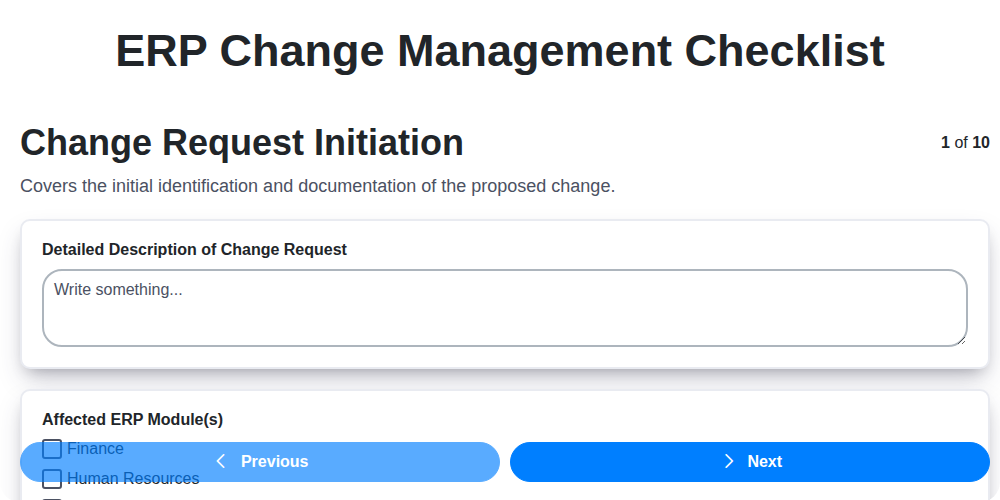
Table of Contents
- Introduction: Why ERP Change Management Matters
- 1. Change Request Initiation: The Foundation of Success
- 2. Impact Assessment: Understanding the Ripple Effect
- 3. Change Approval & Prioritization: Setting the Course
- 4. Development & Testing: Building with Precision
- 5. User Acceptance Testing (UAT): Validating with the Users
- 6. Deployment Planning: Mapping the Route
- 7. Deployment Execution: The Moment of Truth
- 8. Post-Implementation Review: Learning and Improving
- 9. Documentation & Communication: Keeping Everyone Informed
- 10. Security & Compliance Review: Protecting Your Data
- 11. Risk Mitigation Strategies for ERP Changes
- 12. Best Practices for ERP Change Management
- Conclusion: Ensuring a Stable and Efficient ERP System
- Resources & Links
TLDR: Implementing ERP changes can be chaotic! This checklist provides a step-by-step guide - from initial request to post-implementation review - to ensure your ERP updates are planned, tested, and deployed smoothly, minimizing disruption and maximizing success. Think of it as your roadmap for ERP change management!
Introduction: Why ERP Change Management Matters
Enterprise Resource Planning (ERP) systems are the backbone of many modern businesses, integrating vital functions like finance, HR, and supply chain into a single platform. But these systems aren't static; they require ongoing adjustments and improvements to remain effective and aligned with evolving business needs. That's where ERP Change Management comes in.
Implementing changes-whether it's a minor configuration tweak or a major system upgrade-without a structured process is a recipe for disaster. Uncontrolled changes can lead to costly errors, disruptions to operations, frustrated users, and even project failure. A robust change management process ensures that modifications are implemented safely, efficiently, and with minimal disruption, maximizing the value of your ERP investment and ensuring your business stays agile and competitive. This checklist outlines critical steps to guide you through successful ERP change management.
1. Change Request Initiation: The Foundation of Success
Every successful ERP change starts with a well-defined and documented request. This isn't just about jotting down an idea; it's the critical first step that sets the tone and direction for the entire change management process. A thorough change request initiation lays the groundwork for clarity, alignment, and ultimately, a smoother implementation.
What should be included in a robust Change Request?
- Clear Description of the Change: What exactly needs to be changed? Be specific and avoid ambiguity.
- Business Need/Problem Statement: Why is this change needed? What problem will it solve or what opportunity will it enable? Quantify the benefits whenever possible (e.g., increased efficiency by X%, reduced errors by Y%).
- Requested Solution (Initial Proposal): While not a definitive plan, an initial suggestion for how the change could be implemented provides context.
- Requestor Information: Name, department, and contact details of the person initiating the change.
- Affected Areas/Modules: Clearly identify which areas of the ERP system will be impacted.
- Priority (Initial Assessment): A preliminary assessment of urgency, often categorized as High, Medium, or Low. This can be refined later.
Why is a Detailed Initiation Important?
A well-crafted change request:
- Reduces Misunderstandings: Provides a common understanding of the change among stakeholders.
- Facilitates Accurate Impact Assessment: Gives the assessment team the information needed to properly evaluate the scope and resources required.
- Streamlines Approval: Makes it easier for decision-makers to understand the value and risks associated with the change.
- Provides Audit Trail: Creates a record of why the change was requested, who requested it, and when.
2. Impact Assessment: Understanding the Ripple Effect
Before any development or deployment begins, a thorough impact assessment is critical. This isn't just about identifying what directly changes - it's about understanding the ripple effect across your ERP system.
Begin by identifying all affected modules and processes. Consider the implications for:
- Data: How will this change affect data integrity, accuracy, and reporting? Will new data fields be required? What are the implications for data migration?
- Integrations: Does this change impact any integrations with other systems, either internal or external? Will those systems require updates or adjustments?
- Reporting: How will the change affect existing reports and dashboards? Will new reports need to be created, or will existing ones need modification?
- Users: Who will be affected by this change? What training or support will they require? Consider both direct users and those indirectly affected by process changes.
- Business Processes: Map out all impacted business processes. Document the "as-is" and "to-be" states. Identify potential bottlenecks or inefficiencies introduced by the change.
- Resources: Evaluate the required resources - personnel, budget, and time - to implement and support the change.
Document your findings. A clear and concise impact assessment provides a shared understanding of the change's scope and potential risks, informing the approval process and subsequent planning. Failure to accurately assess impact can lead to unforeseen issues, delays, and costly rework later on.
3. Change Approval & Prioritization: Setting the Course
Once a change request is formally submitted and its impact assessed, the critical step of approval and prioritization begins. This isn't just about ticking a box; it's about ensuring that changes align with business objectives, are strategically valuable, and won't destabilize your ERP system.
Establishing a Clear Approval Workflow: Your organization needs a defined process for who reviews and approves change requests. This should involve representatives from key departments - IT, business users, security, and potentially finance - to provide diverse perspectives. Clearly outline approval levels based on the change's complexity and potential risk.
Prioritization Matrix: Implement a prioritization matrix that considers factors such as:
- Business Value: How significantly does the change contribute to key business goals (e.g., increased efficiency, revenue generation, risk mitigation)?
- Urgency: Is this a time-sensitive change due to regulatory requirements, system vulnerabilities, or critical business needs?
- Risk: What is the potential for disruption, errors, or negative consequences if the change is implemented (or not implemented)?
- Effort/Cost: What are the estimated resources (time, personnel, budget) required for development, testing, and deployment?
This matrix allows for objective ranking, ensuring that high-value, low-risk changes are tackled first, while less critical or riskier changes are deferred or potentially rejected. Transparent prioritization fosters buy-in from stakeholders and minimizes conflicts.
Documentation is Key: Record the rationale behind the approval or rejection of each change request. This provides a valuable audit trail and helps inform future decision-making. Clearly communicate the prioritization outcome to the requestor and all relevant stakeholders.
4. Development & Testing: Building with Precision
This phase is where the theoretical change transforms into a tangible, working solution. It's far more than just coding; it's a meticulous process involving careful development, rigorous testing, and constant collaboration.
Development Focus: Developers translate the approved change design into functional code or configuration changes within the ERP system. This requires a deep understanding of the system architecture, business processes, and the change's intended behavior. Adherence to coding standards, version control best practices (like Git), and unit testing are critical. Code reviews by peers are highly recommended to catch errors early and ensure code quality.
Testing Phases: We don't just "hope it works." A phased testing approach is essential:
- Unit Testing: Developers test individual components to ensure they function correctly in isolation.
- Integration Testing: Focuses on how different modules or components interact with each other. This is crucial for ERP changes, as systems are inherently interconnected.
- System Testing: Validates the entire system against requirements and design specifications.
- Regression Testing: This is vital! It ensures that the change hasn't inadvertently broken existing functionality. A comprehensive regression test suite should be maintained and executed after each change.
Environment Management: Development and testing must occur in non-production environments (e.g., Development, QA/Test). These environments should mimic the production environment as closely as possible, including data and configurations. Careful management of environment data (data masking for sensitive information) is paramount.
Defect Management: A robust defect tracking system is vital. All identified bugs and issues must be documented, prioritized, assigned, and tracked to resolution. Testing teams and developers must collaborate closely to resolve issues effectively.
5. User Acceptance Testing (UAT): Validating with the Users
User Acceptance Testing (UAT) is arguably one of the most critical phases in ERP change management. It's where the rubber meets the road - where the changes developed and tested internally are put in the hands of the people who will actually use them. This isn't just about confirming the changes technically work; it's about confirming they solve the intended business problem and integrate seamlessly into daily workflows.
Why is UAT so important?
- Real-World Scenarios: Internal testing often focuses on core functionality. UAT exposes changes to a wider range of real-world, often unpredictable, scenarios and user behaviors.
- Business Validation: UAT ensures the changes meet the original business requirements and deliver the expected benefits.
- Identify Usability Issues: Users can quickly identify usability issues or areas of confusion that developers might have overlooked.
- Build User Confidence: Successful UAT fosters buy-in and reduces resistance to change from the end-users.
Key Elements of Effective UAT:
- Representative Users: Involve a diverse group of users who represent different roles, departments, and skill levels.
- Realistic Scenarios: Provide users with clearly defined, realistic scenarios that mimic their daily tasks. Document these scenarios beforehand!
- Clear Acceptance Criteria: Define what constitutes success for each scenario. What results are expected?
- Dedicated Support: Provide dedicated support during UAT to answer questions and resolve issues promptly.
- Feedback Loop: Establish a clear process for users to provide feedback and for that feedback to be addressed. Don't just collect it - react to it.
- Documentation: Thoroughly document all UAT results, including both successes and failures.
Don't rush this stage! A comprehensive UAT process can prevent costly rework and ensure a smoother, more successful ERP change implementation.
6. Deployment Planning: Mapping the Route
Successful ERP change management hinges on meticulous planning, and deployment planning is a critical phase. This isn't just about clicking "go" - it's about charting a clear, actionable roadmap to minimize disruption and maximize adoption.
Define Scope and Downtime: Precisely define what will be deployed, including modules, functionalities, and any data migrations. Realistic downtime estimates are crucial - communicate these upfront to stakeholders. Underestimating downtime can lead to frustration and setbacks.
Develop a Rollback Plan: Hope for the best, plan for the worst. A robust rollback plan is non-negotiable. This outlines the steps to revert to the previous system state in case of critical issues during or after deployment. Clearly define triggers for rollback and assign responsibilities.
Create a Detailed Schedule: Break down the deployment into manageable tasks with clear timelines and dependencies. Consider the time required for data verification, system configuration, and user training.
Identify Resources and Assign Responsibilities: Define roles and responsibilities for each task. Ensure adequate resources are allocated, including IT staff, subject matter experts, and user representatives.
Communication Plan: A continuous communication stream is vital. Outline what information will be communicated, to whom, and at what intervals. Address potential concerns and proactively manage expectations.
Environment Validation: Thoroughly test the deployment process in a staging or test environment that mirrors the production environment as closely as possible. This helps identify and resolve potential issues before they impact live operations.
Contingency Planning: Anticipate potential roadblocks. What happens if data migration takes longer than expected? What if a critical integration fails? Prepare backup plans for these scenarios.
7. Deployment Execution: The Moment of Truth
This is it. All the planning, testing, and preparation culminate in the actual deployment. This phase demands precision, communication, and a dedicated team ready to react to unforeseen circumstances. Here's a breakdown of what needs to happen:
- Controlled Rollout: Avoid a big bang approach whenever possible. Phased deployments, by region, department, or functionality, allow for controlled observation and quicker issue resolution.
- Dedicated Deployment Team: Assemble a team with representatives from IT, business users, and subject matter experts. Clear roles and responsibilities are crucial.
- Go/No-Go Decision: A final go/no-go meeting should be held shortly before deployment. Review any last-minute concerns, confirm readiness, and formally authorize the execution.
- Step-by-Step Execution: Follow the detailed deployment plan meticulously. Document every action taken.
- Real-time Monitoring: Implement robust monitoring tools to track system performance and identify potential issues immediately.
- Rollback Plan Ready: Have a clearly defined and tested rollback plan in place. Knowing how to quickly revert to the previous state is vital for minimizing disruption.
- Communication is Key: Keep stakeholders informed throughout the deployment. Provide regular updates on progress and any issues encountered.
8. Post-Implementation Review: Learning and Improving
The dust has settled. The ERP change is live. But the work isn't truly done. A thorough Post-Implementation Review (PIR) is absolutely critical for ensuring long-term success and identifying areas for improvement in your change management process.
This isn't just about confirming everything seems to be working. It's a structured analysis of what went well, what didn't, and what lessons were learned. Here's what a solid PIR should cover:
- Stakeholder Feedback: Gather feedback from users, business owners, IT, and any other involved parties. Formal surveys, one-on-one interviews, and focus groups are all valuable tools.
- Performance Metrics: Compare actual results against the initial goals and KPIs set during the Change Request Initiation phase. Did you achieve the anticipated efficiency gains, cost savings, or other benefits?
- Process Evaluation: Analyze each step of the change management process - from initial request to deployment and beyond. Were there bottlenecks? Did any stages take longer than expected?
- Identify Root Causes: Don't just note problems - dig deeper to understand why they occurred. Was it a training issue? A miscommunication? A flaw in the change request process itself?
- Document Findings & Recommendations: Clearly document the PIR findings, along with actionable recommendations for improving future ERP change management processes.
- Assign Ownership: Assign responsibility for implementing the recommendations to specific individuals or teams.
- Track Progress: Regularly monitor the progress of the implemented recommendations and adjust as necessary.
The PIR isn't a finger-pointing exercise. It's a chance to celebrate successes, learn from mistakes, and continuously refine your ERP change management program for even better outcomes in the future. This proactive approach will build confidence, minimize risk, and maximize the value of your ERP system.
9. Documentation & Communication: Keeping Everyone Informed
Change management isn't just about the technical execution; it's about people. Failing to effectively communicate throughout the process is a surefire way to derail even the most meticulously planned ERP change. This isn't just about sending out an email - it's a multifaceted approach ensuring everyone affected understands the change, its impact, and how to adapt.
What Documentation Should You Capture?
- Change Request Details: A comprehensive record of the initial request, justification, and expected benefits.
- Impact Assessments: Clearly outlining affected systems, processes, and roles.
- Decision Logs: Documenting the rationale behind approvals and prioritization decisions.
- Testing Results: Detailed reports from both development and UAT, including defects found and resolutions.
- Deployment Plans: Step-by-step guides, rollback procedures, and contact lists.
- Training Materials: User guides, FAQs, and training videos tailored to specific user groups.
Communication Strategies for Success:
- Proactive Announcements: Keep stakeholders informed before changes occur, explaining the "why" and anticipated impact.
- Regular Updates: Provide ongoing progress reports throughout the development, testing, and deployment phases.
- Targeted Communication: Tailor messages to specific audiences - executives, end-users, IT staff - using appropriate channels (email, intranet, team meetings).
- Feedback Mechanisms: Establish channels for users to ask questions, provide feedback, and raise concerns.
- Post-Implementation Communication: Announce successful deployment and provide ongoing support resources.
Remember, clear and consistent communication fosters transparency, minimizes resistance, and maximizes user adoption. It's a crucial investment in the overall success of your ERP change management program.
10. Security & Compliance Review: Protecting Your Data
Implementing a new ERP system or making significant changes to an existing one isn't just about functionality - it's about safeguarding your data and ensuring adherence to relevant regulations. This critical phase of change management often gets overlooked, but a thorough Security & Compliance Review is paramount for minimizing risk and avoiding costly penalties.
This review should be an ongoing process, not just a one-off event. Consider these points:
- Data Encryption: Verify that all sensitive data, both at rest and in transit, is properly encrypted.
- Access Controls: Re-evaluate user roles and permissions. Ensure the principle of least privilege is applied - granting users only the access they need to perform their duties.
- Audit Trails: Confirm robust audit trails are in place to track user activity and system changes. This aids in identifying and investigating potential security breaches.
- Compliance Standards: Determine which industry regulations (e.g., GDPR, HIPAA, PCI DSS) apply to your organization and ensure the changes align with these requirements. Consult with your compliance team for guidance.
- Vulnerability Assessments: Conduct vulnerability scans and penetration testing to identify potential weaknesses in the system.
- Change Management Integration: Ensure security and compliance considerations are integrated into your change management processes, not treated as an afterthought.
- Vendor Security: If using third-party integrations, assess the security practices of those vendors and ensure they meet your organization's standards.
- Disaster Recovery/Business Continuity: Validate that security and compliance considerations are incorporated into your disaster recovery and business continuity plans.
Prioritizing this review proactively significantly reduces the likelihood of data breaches and maintains trust with stakeholders.
11. Risk Mitigation Strategies for ERP Changes
ERP changes, while necessary for growth and efficiency, inherently carry risks. A proactive approach to risk mitigation is just as crucial as meticulous planning and execution. Here's a breakdown of strategies to minimize potential pitfalls:
- Early Risk Identification Workshops: Conduct workshops with key stakeholders (business users, IT, security, compliance) before any change is initiated. Brainstorm potential risks and their impact.
- Contingency Planning: Develop detailed contingency plans for each identified risk. What's the rollback strategy? Who is responsible for executing it? Document these plans explicitly.
- Staged Rollouts: Instead of a big bang implementation, consider a phased approach. Roll out changes to a pilot group or a limited scope first to identify and resolve issues before wider adoption.
- Data Backup and Recovery: Implement robust data backup procedures before any change. Ensure recovery plans are tested and readily available. This is non-negotiable.
- Communication is Key: Transparent and consistent communication with all stakeholders reduces anxiety and allows for early feedback that can flag potential problems.
- Configuration Management: Maintain strict configuration control. Track all changes to the ERP system, allowing for easy rollback to a previous stable state if needed.
- Security Testing: Integrate security testing (vulnerability scans, penetration testing) into the development and testing phases. Address identified vulnerabilities before deployment.
- Impact Analysis Refinement: Continuously refine the impact assessment based on feedback from testing and early deployments.
- Training Refreshers: Provide refresher training for users, particularly during phased rollouts, to ensure they've adapted to the changes.
- Monitor Key Performance Indicators (KPIs): Establish baseline KPIs before the change and diligently monitor them after implementation to identify any unexpected negative impacts.
- Independent Review: Consider an independent review of the change plan and testing results to provide an unbiased perspective and identify potential blind spots.
12. Best Practices for ERP Change Management
Successfully navigating ERP changes isn't just about ticking boxes on a checklist; it's about fostering a culture of collaboration, transparency, and continuous improvement. Here's a breakdown of best practices to elevate your ERP change management efforts:
- Executive Sponsorship is Key: Secure buy-in and active participation from leadership. Their support provides resources, authority, and promotes adoption across the organization.
- Communicate Early and Often: Keep stakeholders informed throughout the entire process. Proactive communication minimizes anxiety and increases understanding. Use multiple channels - email, team meetings, intranet updates - to reach everyone.
- Embrace a Phased Approach: Large, sweeping changes are risky. Break down complex implementations into manageable phases with clear milestones. This allows for adjustments and reduces disruption.
- Prioritize Training & Support: Don't underestimate the importance of comprehensive training. Provide role-specific training and ongoing support to ensure users feel confident and comfortable with the changes. Consider super users within departments to act as local experts.
- Automate Where Possible: Utilize workflow automation tools within your ERP or integrated platforms to streamline change request processes, approvals, and notifications. This reduces manual effort and minimizes errors.
- Feedback Loops are Vital: Actively solicit feedback from users at each stage of the change. This provides valuable insights for optimization and correction. Implement a formal feedback mechanism (surveys, forums, one-on-one sessions).
- Continuous Monitoring & Improvement: Don't view change management as a one-time event. Regularly review your processes, identify areas for improvement, and adapt your approach based on lessons learned.
- Maintain a Change Repository: Centralize all change requests, documentation, approvals, and testing results in a readily accessible repository. This facilitates audits, knowledge sharing, and future reference.
- Focus on User Experience: Changes shouldn't disrupt workflows or make things harder for users. Consider the user perspective during design and testing.
- Risk Mitigation Planning: Identify potential risks associated with each change (data loss, system downtime, user resistance) and develop mitigation strategies proactively.
- Standardize Processes: While flexibility is important, establishing standard processes for change requests and approvals reduces confusion and ensures consistency.
- Celebrate Successes: Acknowledge and celebrate achievements throughout the change management journey. This boosts morale and reinforces the value of the process.
Conclusion: Ensuring a Stable and Efficient ERP System
Successfully navigating ERP change management isn't a one-time event; it's an ongoing commitment to stability and efficiency. By consistently following a robust checklist, like the one outlined in this article, you significantly reduce the risk of disruptions, minimize downtime, and maximize the value of your ERP investment. Remember, proactive planning, thorough testing, and clear communication are your greatest assets. A well-executed change management process fosters user adoption, strengthens data integrity, and ultimately empowers your business to thrive. Don't view change management as a burden, but as a vital component of a resilient and adaptable ERP system - one that continues to drive your organization forward.
Resources & Links
- Gartner: Gartner provides research and advisory services related to IT and business, often covering change management and ERP implementation best practices. Search their site for relevant reports and insights.
- Project Management Institute (PMI): PMI offers resources, certifications, and templates related to project management, which is inherently linked to ERP change management. Look for articles and guides on change control and risk management.
- IT Skeptic: IT Skeptic offers critical perspectives on ERP and technology implementations, often highlighting change management pitfalls and offering practical advice. They frequently discuss the human side of change.
- Axium Group: Axium Group specializes in ERP implementation and change management services. Their website contains blog posts, case studies, and white papers on various aspects of ERP change control.
- Prosci: Prosci is a leading provider of change management methodologies and certifications. Their website offers articles, tools, and resources specifically related to managing organizational change, crucial for ERP implementations.
- Microsoft: If your ERP is Microsoft Dynamics, Microsoft's website is a critical resource for documentation, best practices, and community forums related to change management within the Microsoft ecosystem.
- SAP: For SAP ERP users, SAP's website provides documentation, community forums, and partner solutions related to change management processes and tools within the SAP environment.
- Oracle: If your ERP system is Oracle, their website holds valuable information, documentation, and community resources covering change management within the Oracle ecosystem.
- Smartsheet: Smartsheet is a work management platform that can be used to manage ERP change requests, track progress, and facilitate collaboration. Their website provides templates and resources for effective change management.
- Atlassian: Atlassian, with products like Jira and Confluence, provides tools for collaboration, issue tracking, and documentation, which are useful for managing ERP change requests and related workflows. Their website offers case studies and best practices.
Frequently Asked Questions
What are some common pitfalls to avoid in ERP Change Management?
Common pitfalls include: Lack of stakeholder buy-in, inadequate planning, insufficient testing, poor communication, and neglecting post-implementation review.
Comments
There are no comments yet. Be the first to add one!
ERP - Enterprise Resource Planning Solution Demo
Overwhelmed by disconnected systems? ChecklistGuro provides a centralized ERP solution, connecting your business processes - finance, operations, & more - for improved visibility and control. Simplify operations & boost efficiency.
Related Articles
MRP System Go-Live Checklist: Your Path to a Successful Implementation

Top 10 CMiC Alternatives for 2025
The Ultimate Foundation Waterproofing Installation Checklist Template
Top 10 Odoo Alternatives for 2025
How to Save Money on Bill of Materials (BOM) Management Software
The Ultimate Waterproofing Checklist: Ensuring a Leak-Proof Installation
The 10 Best Manufacturing Management Software of 2025
MRP Vendor Master Data Checklist: Ensuring Accuracy and Efficiency
We can do it Together
Need help with
Enterprise Resource Planning (ERP)?
Have a question? We're here to help. Please submit your inquiry, and we'll respond promptly.