MRP System Go-Live Checklist: Your Path to a Successful Implementation
Published: 12/14/2025 10:00 PM Updated: 12/15/2025 1:37 PM
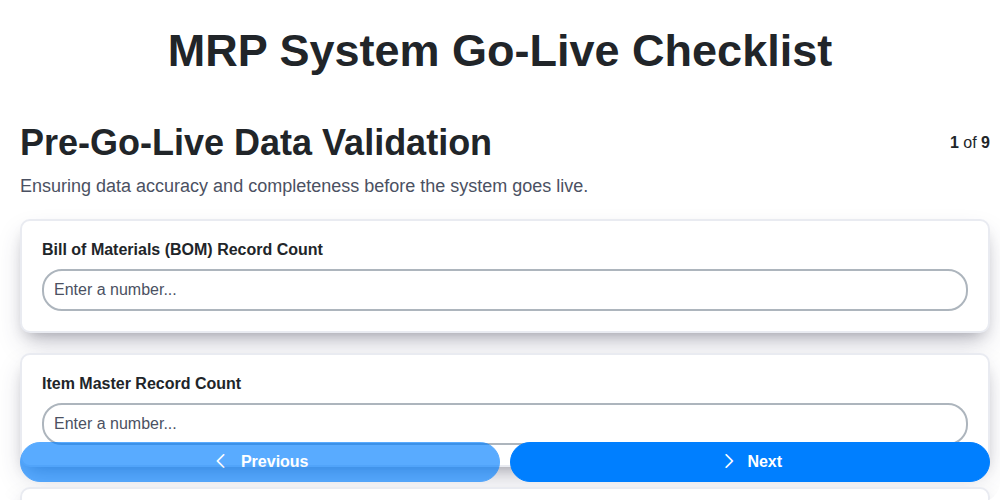
Table of Contents
- Introduction: Why a Go-Live Checklist is Crucial
- 1. Pre-Go-Live Data Validation: Ensuring Data Integrity
- 2. System Configuration Verification: Double-Checking Your Setup
- 3. User Training & Access: Empowering Your Team
- 4. Infrastructure Readiness: Foundation for Performance
- 5. Integration Testing: Seamless Data Flow
- 6. Cutover Planning & Execution: The Transition Phase
- 7. Go-Live Support & Monitoring: Immediate Response
- 8. Post-Go-Live Stabilization: Addressing Initial Hiccups
- 9. Documentation & Handover: Knowledge Transfer
- 10. Key Roles and Responsibilities During Go-Live
- 11. Risk Mitigation and Contingency Planning
- 12. Communication Plan: Keeping Everyone Informed
- 13. Go/No-Go Decision: Assessing Readiness
- Resources & Links
TLDR: Launching a new MRP system? Don't risk chaos! This checklist covers everything from data validation and user training to cutover and post-go-live support, ensuring a smooth, successful implementation and minimizing disruption to your business. Think of it as your detailed roadmap to MRP success.
Introduction: Why a Go-Live Checklist is Crucial
Launching a new MRP (Manufacturing Resource Planning) system is a monumental undertaking. It's more than just installing software; it's a transformation of processes, data, and workflows that impacts every department. A failed go-live can be incredibly costly, leading to production delays, inaccurate inventory, and frustrated employees. That's where a comprehensive go-live checklist becomes your lifeline.
Think of it as your roadmap to success, detailing every critical step to ensure a smooth, controlled transition. Skipping even seemingly minor tasks can trigger unexpected issues down the line. This checklist isn't just about ticking boxes; it's about mitigating risk, ensuring data integrity, and setting your team up for long-term success with your new MRP system. It provides a framework for accountability and gives you the confidence that you haven't overlooked any critical elements, ultimately increasing the likelihood of a successful and productive launch.
1. Pre-Go-Live Data Validation: Ensuring Data Integrity
A successful MRP system go-live hinges on the accuracy and completeness of your data. This isn't just about having lots of data; it's about having correct data. Pre-go-live data validation is arguably the most critical step in the entire process. It's your last chance to identify and rectify errors before they ripple through your operations.
What's Involved?
This phase goes far beyond a simple data import. It's a comprehensive review encompassing:
- Master Data Verification: Scrutinize your bill of materials (BOMs), routings, item masters, vendor records, and customer records. Look for inaccuracies in descriptions, quantities, lead times, and pricing. Are all components listed correctly in the BOMs? Are routings accurate and up-to-date?
- Transaction Data Validation: Examine open purchase orders, sales orders, work orders, and inventory records. Ensure quantities, dates, and statuses are all accurate. Are any open orders or planned deliveries missing critical information?
- Data Completeness Checks: Are all necessary records present? Missing data can lead to system errors and production delays. Identify and address any gaps.
- Data Cleansing: Correct inconsistencies and standardize data formats. This includes things like addressing variations in unit of measure, currency codes, and address formats.
- Reconciliation with Legacy Systems: Compare data in the new MRP system with your existing systems to ensure consistency. Resolve any discrepancies.
Why is it Crucial?
Incorrect data in the MRP system can lead to a cascade of problems, including:
- Incorrect Production Schedules: Leading to shortages or overproduction.
- Order Fulfillment Issues: Resulting in missed deadlines and customer dissatisfaction.
- Inventory Inaccuracies: Leading to stockouts or excess inventory.
- Financial Reporting Errors: Impacting profitability and decision-making.
Tips for Success:
- Involve Subject Matter Experts (SMEs): They possess the crucial business knowledge to validate data accuracy.
- Prioritize Critical Data: Focus on the data that has the greatest impact on your business.
- Document Validation Findings: Track all errors and corrections made.
- Perform Multiple Validation Passes: Don't rely on a single review.
- Automate Where Possible: Leverage data validation tools to streamline the process.
2. System Configuration Verification: Double-Checking Your Setup
Before the excitement of go-live takes over, meticulous system configuration verification is absolutely critical. This isn't just about ensuring settings look right; it's about validating they function correctly and align with your business requirements.
This phase goes beyond initial setup. It involves a rigorous review of every configurable element within the MRP system. Think of it as a final quality assurance check before unleashing the system on your organization.
Here's what that verification should include:
- Parameter Review: Scrutinize all parameters related to planning, scheduling, inventory management, costing, and accounting. Are lead times accurate? Are safety stock levels appropriate? Are costing methods correctly defined?
- Master Data Validation (Again!): While pre-go-live data validation focused on accuracy, this step focuses on how that data interacts with the system configuration. Verify BOMs, routing, work centers, and material masters are correctly linked and behave as expected.
- Security Role Testing: Thoroughly test user access controls and security roles to ensure users have the appropriate permissions and access levels. This isn't just about preventing errors; it's about protecting sensitive data.
- Workflow Validation: If your MRP system includes workflows or automated processes, meticulously test each one to ensure they trigger correctly and execute as intended.
- Reporting Configuration: Verify that all required reports are configured correctly and produce accurate data. Test report filtering, sorting, and exporting capabilities.
- Customization Review: If customizations were implemented, ensure they are functioning correctly and haven't introduced any unforeseen issues.
Document all verification steps and results. Any discrepancies should be immediately addressed and re-verified before proceeding. This phase can be tedious, but it's an investment that pays off significantly by minimizing disruptions and ensuring a smoother go-live experience.
3. User Training & Access: Empowering Your Team
A technically flawless MRP system is only as effective as the people using it. Insufficient training and inadequate access rights can cripple your go-live and lead to frustration, errors, and ultimately, a failed implementation. This stage isn't just about teaching users how to click buttons; it's about equipping them with the understanding of why they're performing specific tasks within the new system.
Here's what you need to cover:
- Role-Based Training: Develop training modules tailored to specific user roles (e.g., purchasing, planning, shop floor). Generic training won't cut it.
- Hands-on Practice: Provide ample opportunity for users to practice in a test environment mirroring the live system. Real-world scenarios are essential.
- Train-the-Trainer: Empower key individuals within each department to become local experts, able to provide ongoing support.
- Access Control: Carefully define and implement user access levels, ensuring each user has the permissions they need while restricting access to sensitive data and critical functions. Regularly review and adjust these permissions.
- Documentation & Quick Reference Guides: Create user-friendly documentation and quick reference guides to serve as ongoing support resources.
- Ongoing Support: Plan for post-go-live support and establish a clear escalation path for users encountering difficulties.
Proper user training and access management lays the foundation for user adoption and maximizes the ROI of your MRP investment.
4. Infrastructure Readiness: Foundation for Performance
A powerful MRP system is only as good as the infrastructure supporting it. Don't let go-live day be derailed by slow response times, server crashes, or network bottlenecks. Thorough infrastructure readiness is absolutely critical for a successful MRP implementation.
This isn't just about ensuring the servers are turned on. It's a comprehensive evaluation of everything. Consider these key areas:
- Server Capacity: Verify that your servers (application, database, web) have sufficient CPU, memory, and storage to handle the expected user load and data volume. Stress testing the system with simulated user activity is highly recommended.
- Network Bandwidth: Assess network bandwidth between the servers, users, and any integrated systems. Slow network speeds will directly impact performance and user experience.
- Database Performance: Optimize database configurations, indexes, and queries. Poor database performance can cripple the entire MRP system.
- Security: Ensure firewalls, intrusion detection systems, and other security measures are properly configured and tested.
- Disaster Recovery: Validate your disaster recovery plan and backup procedures. You need a strategy for recovering quickly in case of an unforeseen event.
- Hardware and Software Compatibility: Confirm that all hardware and software components (operating systems, databases, browsers) are compatible with the MRP system and are running supported versions.
- Load Balancing: Implement load balancing if you anticipate significant user concurrency.
A dedicated infrastructure readiness review, involving your IT team and potentially a third-party specialist, is a worthwhile investment to minimize risks and ensure a smooth and performant MRP experience from day one. Don't underestimate this critical stage - it's the foundation upon which your entire MRP success is built.
5. Integration Testing: Seamless Data Flow
The MRP system rarely operates in isolation. It's likely connected to your CRM, accounting software, warehouse management system, and potentially numerous other applications. Integration testing is absolutely critical to ensuring these systems communicate effectively and data flows smoothly. This isn't just about confirming data moves; it's about verifying that the data is accurate, complete, and transformed correctly as it traverses between systems.
This phase requires meticulous planning and execution. Develop comprehensive test scenarios that cover all key integration points. Don't just test happy paths - deliberately introduce errors and edge cases to see how the systems react. For example, what happens when a customer order contains an invalid part number? How does a shipment notification impact inventory levels in the MRP?
Involve representatives from each integrated system's team in the testing process. This fosters collaboration and ensures everyone understands the dependencies and potential risks. Automated testing where possible significantly increases efficiency and reduces the risk of human error. Document all test results thoroughly, including any discrepancies and their resolutions. A successful integration testing phase eliminates data silos and ensures a unified view of your business operations, minimizing disruptions and maximizing efficiency post-go-live.
6. Cutover Planning & Execution: The Transition Phase
The cutover phase is arguably the most critical and often stressful period of an MRP system implementation. It's the actual transition from your legacy system (or manual processes) to the new MRP system. A meticulously planned and executed cutover minimizes disruption and maximizes the chances of a smooth, successful go-live.
Here's what needs to be addressed:
- Detailed Cutover Plan: This isn't just a schedule; it's a minute-by-minute breakdown of tasks, responsibilities, and dependencies. Include rollback procedures in case of critical failures.
- Data Migration Strategy: How will your historical data be moved? Determine the scope (full or partial migration), the tools to be used, and validation checks after migration. Staging data migration in a test environment is crucial.
- Freeze Dates: Establish clear freeze dates for master data, inventory, orders, and financials. These dates limit changes to the legacy system, ensuring data consistency during migration. Communicate these dates clearly and enforce their adherence.
- Go/No-Go Decision: Define clear criteria for a go/no-go decision. This involves a final review of all preparatory tasks (data validation, system configuration, user readiness). A clearly defined escalation path for addressing concerns is vital.
- Communication Plan: Keep stakeholders informed throughout the cutover process. This includes regular updates on progress, potential delays, and any issues encountered.
- Resource Allocation: Ensure sufficient personnel are available and trained to execute the cutover plan effectively. This includes IT support, business users, and consultants.
- Dry Runs/Mock Cutovers: Conduct multiple dry runs in a test environment to identify and resolve potential issues before the actual cutover. These simulations should mirror the real-world process as closely as possible.
A well-executed cutover plan is the bridge between preparation and success. Don't underestimate the importance of rigorous planning, constant communication, and a willingness to adapt to unforeseen circumstances.
7. Go-Live Support & Monitoring: Immediate Response
The immediate aftermath of go-live is critical. It's not enough to simply flip the switch; you need a dedicated support team actively monitoring the system and responding swiftly to any issues. This isn't just about fixing bugs - it's about building user confidence and preventing widespread disruption.
Here's what your Go-Live Support & Monitoring phase should encompass:
- Dedicated Support Team: Assemble a team comprised of technical experts, super users, and key stakeholders. Clearly define roles and responsibilities. This team should be readily available, often working extended hours during the initial period.
- Real-Time Monitoring: Implement robust monitoring tools to track system performance, error rates, and key business processes. Establish thresholds for acceptable performance and trigger alerts when these are breached.
- Issue Tracking & Resolution: Utilize a clear and accessible issue tracking system. This allows for documented problem reporting, assignment, and tracking to resolution. Prioritize issues based on severity and impact.
- Communication Channels: Establish multiple communication channels (e.g., instant messaging, dedicated email address, phone hotline) to facilitate user reporting and support team coordination.
- Escalation Procedures: Define clear escalation paths for urgent or complex issues that require immediate attention from senior personnel or the implementation partner.
- Regular Status Updates: Provide frequent updates (daily, or even more often initially) to stakeholders about system performance and any ongoing issues. Transparency builds trust and allows for proactive adjustments.
8. Post-Go-Live Stabilization: Addressing Initial Hiccups
The initial days and weeks after an MRP system go-live are a critical period. While rigorous planning and testing should minimize issues, it's highly likely you'll encounter some hiccups. This isn't a sign of failure; it's a normal part of the adoption process. Post-Go-Live Stabilization focuses on proactively identifying, resolving, and documenting these initial challenges to ensure a smooth transition to steady-state operation.
Here's what this phase entails:
- Dedicated Stabilization Team: Designate a small, agile team - ideally including key users, IT support, and potentially consultants - specifically for post-go-live stabilization. They should be readily available to respond to user issues and quickly implement fixes.
- Hotline & Issue Tracking: Establish a clear communication channel (a dedicated hotline or ticketing system) for users to report problems. Centralize issue tracking to prevent duplication of effort and prioritize resolution based on impact.
- Data Reconciliation: Continuously monitor data accuracy. Reconcile data between the new MRP system and any legacy systems, and validate key reports to ensure consistency. Expect some minor adjustments and corrections during this period.
- Process Refinement: Be prepared to refine processes based on real-world usage. User feedback and initial data inconsistencies will often highlight areas where the system or processes need tweaking. Don't be afraid to make these adjustments - they're essential for optimizing performance.
- Performance Monitoring: Track system performance metrics (response times, batch processing times, etc.) to identify and address bottlenecks.
- Regular Review Meetings: Hold brief, regular (daily or every other day initially) meetings with the stabilization team and key users to review progress, discuss emerging issues, and prioritize fixes.
- Knowledge Transfer: Document solutions to common problems and share them with the wider user base to prevent repeated inquiries and speed up resolution times.
Successfully navigating this stabilization phase builds confidence in the new system, strengthens user adoption, and lays the groundwork for long-term MRP success.
9. Documentation & Handover: Knowledge Transfer
Successfully launching a new MRP system isn't just about hitting the go live button; it's about ensuring your team can effectively use and maintain the system long after the initial excitement fades. This is where robust documentation and a comprehensive handover process become absolutely critical.
Don't underestimate the effort required. This isn't just about a few user manuals - it's about capturing the context and nuances of how your unique business processes are configured and supported within the new MRP.
What should be included?
- System Configuration Documentation: Detail all customizations, configurations, and parameter settings. This is your "recipe book" for recreating or troubleshooting any future issues.
- Process Flows & Workarounds: Document key processes, outlining the steps users take within the MRP and any temporary workarounds implemented during the project.
- User Guides & Training Materials: While initial training is essential, user guides provide a readily available resource for ongoing support and onboarding new team members. Consider FAQs and troubleshooting tips.
- Technical Documentation: For your IT and support teams, provide detailed documentation on the system architecture, integrations, and maintenance procedures.
- Contact List & Support Escalation Procedures: Clearly identify key contacts for different areas of the MRP system and outline the process for escalating issues.
Who should be involved?
The handover isn't solely the responsibility of the implementation team. It requires active participation from:
- Implementation Team: Provide technical expertise and documentation.
- Key Users/Super Users: They're the bridge between the implementation team and the broader user base - their insights are invaluable.
- IT Support Team: Ensure they have the knowledge and resources to handle day-to-day support.
- Project Manager: Oversee the handover process and ensure all documentation is complete and accessible.
Best Practices:
- Start Early: Don't leave documentation to the last minute. Document as you go throughout the implementation.
- Keep it Accessible: Store documentation in a central, easily accessible location (e.g., a shared drive, knowledge base).
- Version Control: Implement version control for all documentation to track changes and maintain accuracy.
- Review and Update Regularly: MRP systems evolve. Ensure documentation is reviewed and updated periodically to reflect any changes.
A well-executed documentation and handover process is a cornerstone of a successful MRP implementation. It sets the stage for long-term user adoption, system stability, and overall business success.
10. Key Roles and Responsibilities During Go-Live
A successful MRP system go-live hinges not just on technical readiness, but also on clearly defined roles and responsibilities. Confusion and gaps in ownership can quickly derail the entire process. Here's a breakdown of crucial roles and what they're expected to do during the critical go-live period:
- Project Manager: Remains the central point of contact, coordinating all activities, managing risks, and ensuring timelines are met. They are responsible for overall go-live success.
- Implementation Partner/Consultant: Provides technical expertise, assists with troubleshooting, and supports the internal team. Their focus is on the system's functionality and resolving technical roadblocks.
- IT Support Team: Handles infrastructure issues, network connectivity problems, and server-related concerns. They're the first line of defense for any technical emergencies.
- Data Migration Lead: Ensures data accuracy and completeness throughout the migration process. They are responsible for resolving any data-related issues that arise.
- Functional Leads (e.g., Procurement, Production, Sales): Subject matter experts for their respective areas, validating data, overseeing user acceptance, and acting as a bridge between the system and their departments.
- Key Users/Super Users: Designated users within each department who receive advanced training and provide initial support to their colleagues. They are vital for user adoption and initial troubleshooting.
- Change Management Lead: Focuses on communication, user adoption, and mitigating resistance to the new system.
- Executive Sponsor: Provides high-level support, removes roadblocks, and champions the project within the organization. They are essential for securing resources and maintaining momentum.
- Cutover Lead: Manages the cutover activities, ensuring tasks are executed in the correct sequence and within the planned timeframe.
- Security Lead: Responsible for verifying access controls and security protocols are functioning as expected post-go-live.
11. Risk Mitigation and Contingency Planning
A successful MRP system go-live isn't just about ticking boxes on a checklist; it's about anticipating what could go wrong and having plans to address it. This section focuses on proactive risk mitigation and robust contingency planning - crucial for minimizing disruption and ensuring a smoother transition.
Identify Potential Risks: Brainstorm all possible failure points. Common concerns include data migration errors, system performance issues, integration failures, user adoption challenges, and unexpected hardware problems. Document these risks, assigning severity (high, medium, low) and likelihood of occurrence.
Develop Mitigation Strategies: For each identified risk, outline steps to minimize its impact. This might involve more rigorous data cleansing, increased testing coverage, enhanced user training, or staging environment validations.
Create Contingency Plans: Don't just hope things go right - prepare for when they don't. Develop detailed rollback procedures - a clear and tested path to revert to the previous system if critical issues arise during or immediately after go-live. Define communication plans for stakeholders, outlining who needs to be informed and when. Establish escalation paths for quick resolution of unexpected problems.
Backup & Recovery: Implement robust data backup and recovery procedures before go-live and ensure the team understands how to execute them quickly.
What If Scenarios: Run what if exercises with key team members, simulating potential failures and rehearsing the contingency response. This proactive approach builds confidence and identifies gaps in your planning.
Communication is Key: A clear communication plan is vital during a go-live, especially during unforeseen circumstances. Regular updates, transparent problem reporting, and defined channels for feedback are essential for maintaining user confidence and managing expectations.
12. Communication Plan: Keeping Everyone Informed
A successful MRP system go-live isn't just about the technical execution; it's about keeping everyone - from the executive team to shop floor employees - informed and aligned. A clear and consistent communication plan is absolutely crucial.
Here's what your communication plan should include:
- Regular Status Updates: Scheduled updates (weekly, or even daily closer to go-live) detailing progress, risks, and any changes. Utilize a central platform like email, a project management tool, or a dedicated go-live portal.
- Stakeholder Identification & Tailored Messaging: Identify all stakeholder groups and their specific information needs. Executives need high-level summaries, while department managers require more detailed reports. Shop floor employees need clear instructions and awareness of potential disruptions.
- Go-Live Announcement & Timeline: Provide ample notice of the go-live date and a clear timeline leading up to it. This reduces anxiety and allows users to prepare.
- Feedback Channels: Establish easy-to-use channels for users to ask questions, report issues, and provide feedback. Designate specific contacts for each area.
- Post-Go-Live Communication: Keep the communication flowing after go-live to address ongoing issues, reinforce training, and celebrate successes.
- Escalation Procedures: Define how critical issues will be escalated and communicated to the right people quickly.
Proactive and transparent communication builds trust, reduces resistance to change, and significantly contributes to a smoother go-live experience.
13. Go/No-Go Decision: Assessing Readiness
You've meticulously worked through every step of your MRP system implementation, diligently completing your go-live checklist. Now comes the crucial moment: the go/no-go decision. This isn't just a formality; it's a critical assessment of whether your organization is truly ready to transition to the new system.
Don't be swayed by pressure or deadlines. A premature go-live can be incredibly disruptive and costly, leading to lost productivity, inaccurate data, and frustrated users.
Here's what to consider:
- Review Checklist Completion: Has every item on your MRP system go-live checklist been marked as complete and verified? Don't gloss over anything; even seemingly minor omissions can have significant repercussions.
- Data Validation Results: Are you confident in the accuracy and completeness of the data migrated to the new system? Did the Pre-Go-Live Data Validation reveal any critical errors or inconsistencies?
- User Confidence: How confident are your end-users in their ability to use the new system? Do they understand the new processes and workflows?
- Integration Success: Did Integration Testing uncover any unexpected issues? Are all integrated systems communicating correctly?
- Risk Assessment: Revisit your risk assessment. Have any new risks emerged? Can existing risks be mitigated effectively?
- Leadership Alignment: Is there consensus amongst key stakeholders (leadership, department heads, IT) that the organization is prepared for go-live?
The go/no-go decision shouldn't be taken lightly. If any significant concerns remain, it's better to postpone go-live and address them than to rush into a potentially disastrous launch. A delay is an investment in long-term success.
Resources & Links
- APICS (The Association for Supply Chain Management): APICS is a leading professional organization for supply chain management. Their website offers resources, certifications (like CPIM and CSCP), and insights relevant to MRP system implementation and optimization. They provide frameworks and best practices that align with successful go-live strategies.
- Gartner: Gartner provides research and advisory services related to enterprise software, including ERP and MRP systems. Their reports (often requiring subscription) can offer valuable perspectives on vendor selection, implementation strategies, and overall project success factors. Look for reports on ERP implementation and best practices.
- Microsoft Dynamics 365: If your MRP system is a Microsoft product (or you're considering it), Microsoft's website is a core resource. It offers product information, documentation, partner directories, and often, case studies related to go-live experiences. This is especially relevant for data migration, user training, and system configuration.
- Oracle: Similar to Microsoft, Oracle is a major player in the ERP and MRP space. Their site provides documentation, support resources, and implementation guides if you're using Oracle NetSuite or other Oracle ERP solutions. Look for guides specifically mentioning go-live best practices.
- SAP: Another significant ERP and MRP vendor, SAP's site provides documentation, training materials, and often, implementation guides. Explore their customer stories and best practices for successful go-live projects. They frequently publish resources on change management, critical for a smooth transition.
- NetSuite: NetSuite is a cloud-based ERP system. Their website offers extensive documentation, partner directories, and customer success stories. Resources related to data migration, user adoption, and post-implementation support are especially valuable.
- Project Management Institute (PMI): Even though it's an MRP implementation, it's fundamentally a project. PMI offers resources, certifications (like PMP), and methodologies (like PMBOK) that are applicable to managing the entire go-live process, from planning to execution.
- Change Management.com: Implementing a new MRP system represents significant organizational change. This website offers insights, methodologies, and tools for effective change management, a critical element for user adoption and project success.
- ITS (Information Technology Services): ITS is an ERP implementation consulting firm. While their services are paid, their website often features articles and blog posts covering common implementation challenges and best practices. Useful for understanding pitfalls to avoid.
- ERP Guide: ERP Guide provides comparisons and overviews of various ERP and MRP systems. It's a good starting point for understanding different software options and potential challenges associated with each.
Frequently Asked Questions
What is an MRP system?
MRP stands for Material Requirements Planning. It's a system that helps manufacturers plan and manage their production processes, including inventory control, scheduling, and purchasing. It ensures you have the right materials at the right time to meet demand.
Why do I need a go-live checklist for my MRP implementation?
A go-live checklist provides a structured and organized approach to launching your new MRP system. It minimizes the risk of errors, ensures all necessary tasks are completed, and helps ensure a smoother transition with less disruption to your business. Skipping this can lead to costly mistakes and delays.
Who should be involved in creating and following the go-live checklist?
A cross-functional team is essential. This should include representatives from departments like Production, Procurement, Sales, Finance, IT, and any key users who will be interacting with the new system daily. Strong leadership and sponsorship from upper management are also crucial.
What are the key phases covered in a typical MRP go-live checklist?
The checklist generally covers phases such as Planning & Preparation, Data Migration & Validation, Training, System Configuration & Testing, Cutover Planning, Go-Live Execution, and Post-Go-Live Support. Each phase includes multiple specific tasks.
What kind of data needs to be migrated to the new MRP system, and what's involved in data validation?
Typical data to migrate includes: item master data, BOMs (Bill of Materials), routing information, vendor details, customer data, inventory levels, and open orders. Data validation involves cleaning, verifying accuracy, and ensuring data integrity before and after migration. This often involves comparing data in the old and new systems.
How much training is needed for users before go-live, and what should training cover?
Adequate training is vital for user adoption. Training should cover system functionality relevant to each user's role, focusing on common tasks and troubleshooting. Hands-on exercises and user guides are highly recommended. Different levels of training might be needed based on user roles.
What constitutes a 'cutover plan,' and why is it important?
A cutover plan outlines the steps to transition from the old system to the new one. It defines the downtime required, the order of data migration and system switchover, and identifies backup procedures. A well-defined cutover plan minimizes disruption and ensures a controlled transition.
What are common risks associated with an MRP go-live, and how can the checklist help mitigate them?
Common risks include: data errors, user resistance, system instability, and unexpected downtime. The checklist helps mitigate these by identifying potential issues early, ensuring proper validation and testing, and providing a plan for rollback or support if problems arise.
What does 'rollback plan' mean in the context of a go-live?
A rollback plan is a contingency plan to revert back to the old system if the new MRP system encounters critical issues during or after go-live that prevent it from functioning correctly. It defines the steps, timeline, and responsibilities for reverting to the previous state.
What kind of post-go-live support should be in place, and for how long?
Post-go-live support is crucial for addressing user questions, resolving system issues, and fine-tuning the system. This should include a dedicated support team or point of contact available to users, ongoing monitoring of system performance, and a plan for addressing bugs or minor enhancements.
Found this Article helpful?
Comments
There are no comments yet. Be the first to add one!
Related Articles
MRP System Performance Monitoring Checklist: Ensure Peak Efficiency
MRP System Implementation Checklist: Your Step-by-Step Guide

Top 10 MRPeasy Alternatives for 2025

The 5 Best Bill of Materials (BOM) Management Software of 2025
MRP Planning Parameter Setup Checklist: Your Guide to Accuracy & Efficiency

The 10 Best Manufacturing Management Software of 2025
How to improve your Bill of Materials (BOM) Management
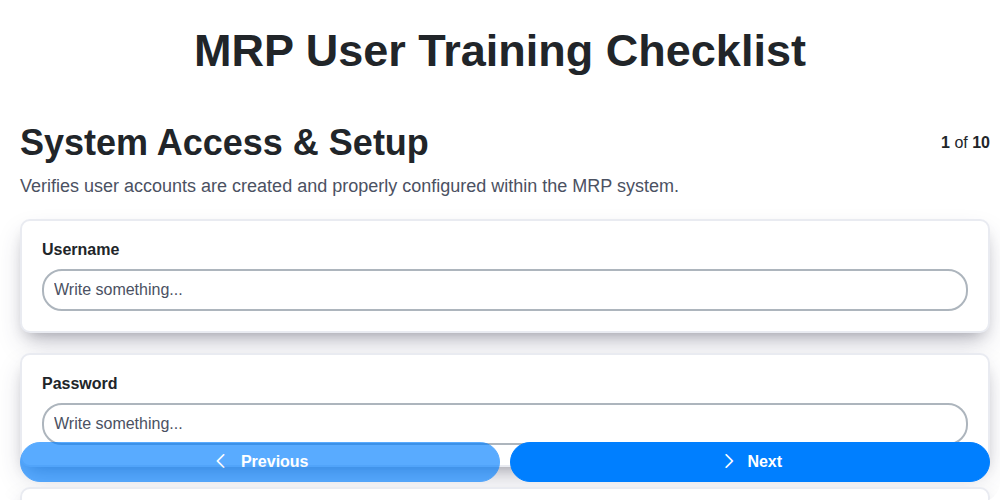
MRP User Training Checklist: Ensuring Proficiency & Success
We can do it Together
Need help with
Material Requirements Planning (MRP)?
Have a question? We're here to help. Please submit your inquiry, and we'll respond promptly.