MRP Vendor Master Data Checklist: Ensuring Accuracy and Efficiency
Published: 12/14/2025 10:00 PM Updated: 12/15/2025 1:33 PM
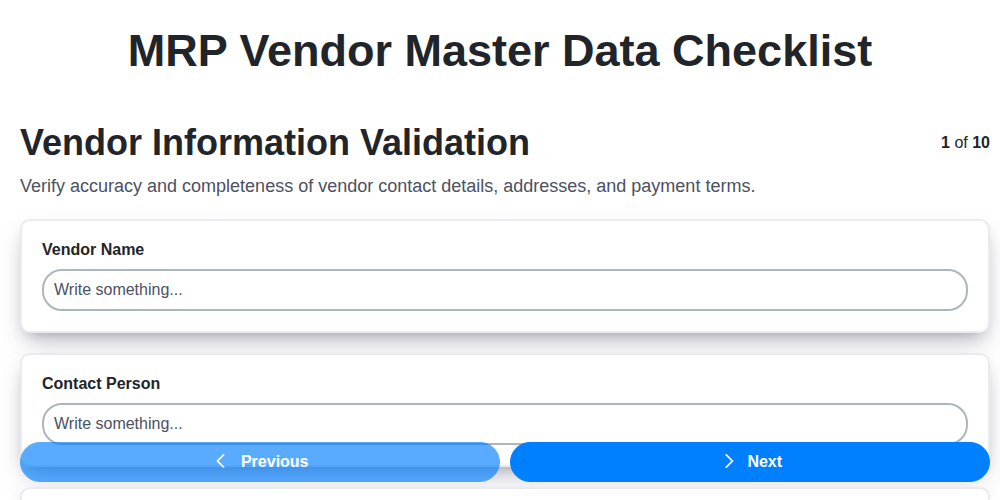
Table of Contents
- Introduction: Why Vendor Master Data Matters
- Vendor Information Validation: The Foundation
- Material/Service Assignment: Linking Vendors to Your Needs
- Pricing and Cost Agreements: Ensuring Financial Accuracy
- Lead Time Confirmation: Aligning Expectations
- Payment Terms Accuracy: Avoiding Disputes
- Tax Information Verification: Compliance is Key
- Blocked/Inactive Vendor Status: Maintaining Data Hygiene
- Currency Settings: Avoiding Conversion Errors
- Shipping and Delivery Details: Streamlining Logistics
- Vendor Master Data Access Control: Security and Responsibility
- Regular Audit and Review: Staying Proactive
- Leveraging Technology for Efficiency
- Conclusion: Maximizing Value from Your Vendor Data
- Resources & Links
TLDR: This checklist template ensures your vendor data in your MRP system is accurate and up-to-date! It covers everything from basic contact info to pricing, shipping, and payment terms. Using it minimizes errors, streamlines procurement, and ultimately saves you time and money - a must-have for any manufacturing business!
Introduction: Why Vendor Master Data Matters
Vendor Master Data (VMD) is the foundation of your Material Requirements Planning (MRP) system and your entire supply chain. It's more than just a list of vendors; it's a critical database containing all the information needed to procure materials and services effectively. Accurate VMD ensures you're buying from the right suppliers at the right price, receiving goods on time, and complying with all relevant regulations. Inaccurate or incomplete VMD, on the other hand, can lead to costly errors, delayed production, strained supplier relationships, and even regulatory penalties. This checklist is designed to guide you through a thorough review of your VMD, ensuring its integrity and contributing to a smoother, more efficient manufacturing process. Ignoring the health of your VMD is like building a house on a shaky foundation - it's a risk you simply can't afford.
Vendor Information Validation: The Foundation
Accurate vendor master data is the bedrock of a successful Materials Requirements Planning (MRP) system. A single error in vendor information can ripple through your supply chain, leading to delays, increased costs, and frustrated stakeholders. This initial validation step isn't just a formality; it's a critical safeguard.
Here's what needs meticulous checking:
- Legal Name & Address: Ensure the registered legal name and address exactly match official documents. Discrepancies can cause payment issues and legal complications.
- Contact Details: Verify phone numbers, email addresses, and key contact names. Outdated information hinders communication and problem-solving.
- Bank Details: Double-check bank account numbers and routing information. This is paramount for timely and accurate payments. Errors here are costly and embarrassing.
- Vendor Type: Confirm the vendor type (e.g., raw materials supplier, service provider) is correctly classified for reporting and analytical purposes.
- Business Registration Numbers: Validate Tax IDs, VAT numbers, or other relevant registration numbers. This is vital for compliance and tax reporting.
A thorough vendor information validation process establishes a reliable foundation for your MRP system and minimizes potential disruptions down the line. Don't underestimate its importance!
Material/Service Assignment: Linking Vendors to Your Needs
This section is arguably the heart of your Vendor Master Data. It's where you explicitly connect each vendor to the materials or services they supply. A robust and accurate assignment ensures your MRP system knows who to source specific items from, streamlining procurement and avoiding costly errors.
Here's what to verify:
- Material Numbers: Double-check that the material numbers assigned to each vendor are accurate and correspond to the correct items in your material master. Incorrect mappings can trigger orders for the wrong parts.
- Service Codes: If your vendor provides services, ensure the service codes are correctly linked. This is critical for maintenance schedules, consulting agreements, and other service-related procurement.
- Unit of Measure: Confirm the unit of measure (e.g., each, piece, kg) is consistent between the vendor, material master, and MRP system. Discrepancies cause calculation errors.
- Quantity Limits (Optional): If applicable, verify any quantity limits or minimum/maximum order quantities assigned to the vendor for specific materials.
- Procurement Type: Verify the procurement type (e.g., Standard Purchase Order, Blanket Purchase Order) is correctly assigned.
- Alternate Vendors: If you have multiple approved vendors for a material, ensure they are all correctly linked and prioritized appropriately.
Regular review and updates to these assignments are vital, especially when new materials are introduced or vendors change their offerings.
Pricing and Cost Agreements: Ensuring Financial Accuracy
One of the most critical aspects of MRP Vendor Master Data is maintaining accurate pricing and cost agreements. Errors here can snowball into significant financial discrepancies, impacting your COGS, profitability, and overall budget control. This section of the checklist focuses on verifying these agreements meticulously.
Here's what to check:
- Price List Alignment: Ensure all vendor price lists loaded into your MRP system are the most current versions. Regularly review and update these as vendor pricing changes.
- Contractual Agreements: Confirm that negotiated prices and discounts outlined in vendor contracts are accurately reflected in your vendor master data. This includes volume discounts, rebates, and other special arrangements.
- Cost Element Assignments: Verify that the correct cost elements are assigned to each price or cost entry. Misallocation can lead to incorrect costing of materials and impact production costs.
- Currency Conversions: If dealing with international vendors, meticulously check currency conversion rates and any associated fees. Ensure these are up-to-date and accurate.
- Freight and Handling Costs: Don't forget to include freight and handling charges within your cost calculations. Incorrectly assigned or missing freight costs can skew your overall procurement costs.
- Costing Methods: Validate that the correct costing methods (e.g., standard cost, moving average) are applied to vendor pricing.
- Regular Reconciliation: Implement a process for regular reconciliation between your MRP system's pricing and actual vendor invoices. Investigate and resolve any discrepancies promptly.
A robust review process here saves money and maintains financial integrity.
Lead Time Confirmation: Aligning Expectations
Accurate lead times are the backbone of reliable MRP execution. A mismatch between your system's lead time data and the vendor's actual delivery performance will inevitably lead to stockouts, expedited shipping costs, and frustrated production schedules. This checklist item goes beyond simply noting a lead time; it demands verification and ongoing monitoring.
Here's what to confirm:
- Initial Validation: Obtain lead time commitments directly from the vendor. Don't rely solely on historical data, which can be outdated. Document these commitments.
- Material Specificity: Lead times often vary depending on the specific material or service. Ensure lead times are assigned at the material level, not just the vendor level.
- Consider Order Quantity: Some vendors offer shorter lead times for larger order quantities. Factor this into your lead time calculations.
- Account for Processing Time: Is the lead time quoted including vendor processing time, transit time, and any required inspections? Clarify these components.
- Regular Review & Updates: Lead times can change due to vendor capacity changes, shipping route disruptions, or other unforeseen circumstances. Schedule regular reviews (e.g., quarterly) and proactively update the data in your MRP system.
- Communication is Key: If a vendor consistently misses lead time commitments, address the issue directly. Collaborative problem-solving is better than simply accepting unreliable deliveries.
Ultimately, consistent lead time accuracy is a win-win. It benefits your production planning, strengthens vendor relationships, and improves overall operational efficiency.
Payment Terms Accuracy: Avoiding Disputes
Incorrect payment terms are a surprisingly common source of friction between a manufacturing company and its vendors. A simple typo or misunderstanding can lead to delayed payments, late payment fees, and ultimately, strained relationships. Ensuring accuracy in this area is paramount for smooth operations and maintaining healthy vendor partnerships.
This checklist item isn't just about verifying dates; it's about a comprehensive review. We're looking at:
- Discount Terms: Are early payment discounts being correctly applied and understood by both parties?
- Due Dates: Confirm the agreed-upon due dates align precisely with contract agreements.
- Payment Methods: Ensure the accepted payment methods (e.g., check, wire transfer, ACH) are clearly defined and accurate.
- Payment Frequency: Verify the frequency of payments (e.g., monthly, quarterly) matches the agreement.
- Contractual Alignment: Crucially, cross-reference all payment terms with the underlying vendor contract. Any discrepancies need immediate resolution.
Regularly auditing payment terms, especially when onboarding new vendors or renewing contracts, is crucial. Automating this process within your MRP system can significantly reduce errors and ensure consistent application of the correct terms. Proactive verification here prevents costly disputes and preserves valuable vendor relationships.
Tax Information Verification: Compliance is Key
Accurate tax information is non-negotiable when managing vendor master data. Incorrect or missing data can trigger audits, penalties, and significant disruptions to your business. This step goes beyond simply recording a vendor's tax ID; it requires diligent verification and ongoing maintenance.
Here's what you need to check:
- Tax Identification Numbers (TINs): Verify the vendor's VAT/GST/EIN (or equivalent in their country) against official databases. Don't just take their provided number at face value.
- Tax Classification: Ensure the vendor's tax classification (e.g., taxable, exempt) is correctly categorized within your system. This directly impacts your tax reporting obligations.
- Withholding Tax Rates: Confirm the appropriate withholding tax rates are applied based on the vendor's location and the type of services/materials provided. Different jurisdictions have varying requirements.
- Reverse Charge Applicability: Determine if reverse charge mechanisms apply. This impacts who is responsible for reporting and paying the tax.
- Tax Reporting Requirements: Understand your reporting obligations based on the vendor's location and your business activities.
- Regular Updates: Tax regulations change frequently. Implement a process for regularly updating vendor tax information to ensure ongoing compliance.
- Documentation: Maintain thorough documentation supporting the verification of vendor tax information. This is crucial for audit trails.
Failing to validate this data can lead to costly errors and compliance issues. Invest the time upfront to ensure accuracy - it's a small price to pay for peace of mind.
Blocked/Inactive Vendor Status: Maintaining Data Hygiene
Vendor Master Data isn't just about adding new vendors; it's also about managing the status of existing ones. Incorrectly maintained vendor statuses - leaving active vendors blocked or inadvertently inactivating essential suppliers - can lead to significant disruptions in your supply chain.
This checklist item focuses on ensuring the accuracy of blocked and inactive vendor statuses. Here's why it's crucial:
- Preventing Unintended Orders: A blocked vendor should never be available for order creation. Regularly check to ensure no blocked vendors appear on approved vendor lists or are selectable during procurement processes.
- Avoiding Order Interruptions: Inactivating a vendor who is still supplying critical materials or services can halt production. Confirm active vendor status before any deactivation is performed.
- Auditing and Compliance: Maintaining clear records of vendor status changes, including the reason for blocking or inactivation, is vital for audits and compliance regulations.
- Data Cleansing: Periodic review of blocked and inactive statuses allows for identifying and correcting errors, removing obsolete data, and streamlining the vendor master file.
Key Considerations:
- Defined Blocking/Inactivation Criteria: Your organization should have clear criteria defining when a vendor should be blocked or inactivated.
- Change Authorization: Implement a process requiring appropriate authorization before blocking or inactivating a vendor.
- Communication: Notify relevant stakeholders (e.g., procurement, finance, operations) before taking action.
- Regular Review: Schedule periodic reviews of blocked and inactive vendor lists to ensure accuracy and relevance.
Don't underestimate the importance of this seemingly simple check; it's a crucial element of a healthy and reliable Vendor Master Data system.
Currency Settings: Avoiding Conversion Errors
One of the most frequently overlooked, yet critical, aspects of MRP vendor master data is accurate currency settings. Incorrect currency configurations can lead to significant financial discrepancies, inaccurate costing, and ultimately, inaccurate production planning.
Here's why meticulous attention to currency settings is essential:
- Pricing Discrepancies: Ensure the vendor's currency matches the currency used in your purchase orders and invoices. Mismatches trigger automatic currency conversion, which relies on fluctuating exchange rates. This can result in unexpected cost fluctuations and impact your budget.
- Costing Errors: The vendor's currency influences material costing. Incorrect currency assignments directly affect the landed cost of materials, which is vital for accurate inventory valuation and cost accounting.
- Reporting Inaccuracies: Currency discrepancies can skew financial reports and make it difficult to assess vendor performance accurately.
- System Integration Issues: Integration with financial systems relies on consistent currency data. Inconsistencies create reconciliation headaches.
Checklist Points:
- Default Currency: Verify the vendor's default currency is correctly defined.
- Exchange Rate Maintenance: Confirm that exchange rates are up-to-date and accurate within your MRP system.
- Currency Conversion Type: Validate the currency conversion type (e.g., average rate, spot rate) aligns with your business practices and vendor agreements.
- Rounding Rules: Double-check rounding rules applied to currency conversions to avoid minor discrepancies impacting larger volumes.
Regularly review vendor currency settings, especially when exchange rates fluctuate significantly or when new vendor agreements are established. A little preventative care here saves significant headaches and potential financial losses later.
Shipping and Delivery Details: Streamlining Logistics
Accurate shipping and delivery details are the backbone of a smooth and reliable supply chain. Inaccurate information here can lead to delays, increased transportation costs, and ultimately, dissatisfied customers. This section of your Vendor Master Data checklist needs meticulous attention.
Here's what you need to verify:
- Shipping Addresses: Confirm both the primary and any alternate shipping addresses are correct and up-to-date. Double-check for typos and ensure they align with the vendor's current operational locations.
- Shipping Methods: Verify the preferred shipping methods (e.g., LTL, FTL, Small Parcel) and ensure they're documented and feasible for your needs.
- Delivery Schedules: Confirm agreed-upon delivery schedules and any specific delivery windows the vendor can accommodate.
- Loading Dock Information: Ensure details about the loading dock (dimensions, access requirements, hours of operation) are accurately recorded. This minimizes potential issues during unloading.
- Special Handling Instructions: Document any special handling requirements (e.g., fragile goods, temperature control, liftgate requirements) to ensure proper care during transit.
- Contact Person for Delivery Issues: Clearly identify a contact person at the vendor's location for resolving delivery issues.
- Incoterms: Specify the Incoterms (International Commercial Terms) agreed upon for each vendor - this clarifies responsibilities for transportation costs, insurance, and import/export duties.
Regularly review these details, especially if your vendor's operations change or if you're experiencing delivery-related problems. A small investment in validation here prevents significant headaches down the line.
Vendor Master Data Access Control: Security and Responsibility
Vendor master data holds sensitive information, making robust access control absolutely critical. It's not enough to simply create vendor records; you need to ensure who can view, edit, and approve these records is strictly managed.
Here's why vendor master data access control is vital and what to consider:
- Data Security: Unauthorized access could lead to fraudulent payments, incorrect material sourcing, and ultimately, financial loss.
- Compliance: Many industry regulations require strict controls over supplier data.
- Process Integrity: Preventing unintentional or malicious modifications ensures the accuracy and reliability of your procurement processes.
Key Considerations for Access Control:
- Role-Based Access: Implement role-based permissions. For example, a buyer might have read/edit access for specific vendor data fields, while an accountant might only have access to payment terms and banking information.
- Least Privilege Principle: Grant users only the minimum level of access required to perform their job functions.
- Regular Audits: Periodically review user access rights to ensure they remain appropriate and necessary. Changes in roles or responsibilities should trigger access re-evaluations.
- Approval Workflows: Require approvals for vendor creation, updates, and inactivation. This adds another layer of security and accountability.
- Segregation of Duties: Prevent a single individual from having complete control over the vendor lifecycle (creation to payment). This reduces the risk of errors or intentional manipulation.
- Password Management: Enforce strong password policies and multi-factor authentication to further protect sensitive data.
- Documentation: Clearly document your vendor master data access control policies and procedures.
By implementing robust access controls, you can protect your vendor data, maintain compliance, and ensure the integrity of your procurement operations.
Regular Audit and Review: Staying Proactive
Vendor Master Data isn't a set it and forget it project. It requires ongoing attention to remain accurate, compliant, and effective. A regular audit and review cycle is crucial for maintaining data integrity and mitigating risks.
Here's why proactive reviews are essential:
- Business Changes: Vendors evolve, pricing fluctuates, and contracts are renegotiated. Your Master Data needs to reflect these changes promptly.
- Compliance Updates: Tax regulations, legal requirements, and industry standards are constantly shifting. Regular audits ensure you're aligned.
- Error Detection: Catching small errors early prevents them from snowballing into larger, more costly problems.
- Process Improvement: Reviews can highlight inefficiencies in your vendor management processes, leading to optimization opportunities.
- Risk Mitigation: Proactive checks can identify potential vulnerabilities related to vendor financial stability, ethical practices, or supply chain disruptions.
Recommended Audit Frequency:
The ideal frequency depends on your business's complexity and risk profile. However, we recommend a minimum of:
- Monthly: Review of blocked/inactive vendor statuses, pricing and cost agreements (especially for volatile commodities), and payment terms accuracy.
- Quarterly: Comprehensive review encompassing all checklist items, focusing on significant changes.
- Annually: A deep-dive audit including a review of vendor performance, contract compliance, and overall data quality.
Consider assigning responsibility for these audits to a dedicated team or individual, ensuring they have the necessary training and authority to make corrections and escalate issues as needed.
Leveraging Technology for Efficiency
Manual vendor master data management is a breeding ground for errors and inefficiencies. Thankfully, modern MRP systems offer robust functionalities to streamline this process. Implementing automated validation rules, for example, can instantly flag discrepancies in vendor information during data entry, preventing inaccurate records from entering the system. Workflow automation can route data for approval, ensuring proper authorization and reducing approval bottlenecks. Integration with external data sources - like Dun & Bradstreet for vendor risk assessment or EDI for pricing updates - can minimize manual data entry and keep your vendor information current. Furthermore, leveraging cloud-based MRP solutions facilitates real-time collaboration and access for authorized personnel, regardless of location, improving accuracy and responsiveness. Ultimately, technology moves vendor master data management from a reactive, error-prone task to a proactive, controlled, and highly efficient process.
Conclusion: Maximizing Value from Your Vendor Data
Maintaining accurate and up-to-date Vendor Master Data isn't just a procedural task; it's a strategic investment. By diligently working through a comprehensive checklist like the one outlined above, you're laying the foundation for stronger supplier relationships, streamlined procurement processes, and, ultimately, a healthier bottom line. Neglecting this critical data can lead to costly errors, delayed deliveries, and strained partnerships. Regularly reviewing and updating your vendor data isn't a one-time project - it's an ongoing commitment. Embrace this commitment, leverage your checklist as a guide, and watch your procurement efficiency and vendor relationships flourish. Remember, accurate vendor data is your gateway to maximized value.
Resources & Links
- SAP: SAP is a leading provider of ERP software, often used for managing vendor master data. Their website offers resources, documentation, and best practices related to vendor management within SAP systems.
- Oracle: Similar to SAP, Oracle offers comprehensive ERP solutions that include robust vendor master data management capabilities. Explore their site for guides and insights.
- NetSuite: NetSuite is a cloud-based ERP system that helps businesses manage their vendor data effectively. Their website offers details on their vendor management functionalities.
- APICS (ASCM): APICS (now part of ASCM) is a global provider of supply chain education and certification. Their resources can help understand the broader context of vendor master data within supply chain management.
- ISC (Information Systems Security Certification): Relevant for the 'Vendor Master Data Access Control' section, ISC offers certifications and resources relating to information security management, a key aspect of protecting vendor data.
- ISO (International Organization for Standardization): For compliance and data governance considerations, ISO offers various standards that can be applicable to vendor master data management.
- G2: G2 is a software review platform. You can find user reviews and comparisons of various ERP and vendor management software solutions, aiding in technology selection.
- Capterra: Similar to G2, Capterra provides software reviews and comparisons, offering valuable insights into different vendor management tools and their suitability.
- Investopedia: Provides clear explanations of financial and business terms often encountered in vendor master data management, like payment terms, currency conversions, and cost accounting.
- Supply Chain Dive: A news and information source providing insights on supply chain trends, including vendor management best practices and emerging technologies.
Frequently Asked Questions
What is MRP Vendor Master Data?
MRP Vendor Master Data refers to the information stored in your Material Requirements Planning (MRP) system about your vendors (suppliers). This includes details like vendor codes, names, addresses, contact information, payment terms, lead times, pricing, and more. Accurate vendor master data is crucial for effective MRP planning and procurement.
Why is an MRP Vendor Master Data Checklist important?
A checklist ensures consistency and accuracy in the vendor master data. It reduces errors, prevents delays in procurement, optimizes inventory levels, improves supplier collaboration, and ultimately contributes to more efficient MRP processes. Without it, you risk inaccurate planning, increased costs, and potential disruptions to your supply chain.
Who should use this checklist?
This checklist is beneficial for anyone involved in managing vendor master data, including procurement specialists, buyers, MRP planners, data stewards, and IT personnel responsible for maintaining the MRP system.
What types of information should be included in the checklist?
The checklist should cover various aspects of vendor data, such as identification details (vendor code, name), contact information (address, phone number, email), financial data (payment terms, bank details), logistical data (lead times, shipping methods), and contractual agreements.
How often should the checklist be reviewed and updated?
Ideally, the checklist should be reviewed at least annually. However, more frequent reviews (e.g., quarterly or even monthly) are recommended for critical vendors or when significant changes occur, such as new vendor onboarding, contract negotiations, or changes in vendor performance.
What are common errors found in Vendor Master Data?
Common errors include incorrect vendor codes, outdated contact information, inaccurate pricing, inconsistent lead times, and incorrect payment terms. Typos and data entry errors are also frequent issues.
What is the impact of inaccurate Lead Times in the Vendor Master Data?
Inaccurate lead times lead to either stockouts (if lead times are artificially short) or excess inventory (if lead times are artificially long). Both scenarios negatively impact costs and customer service.
How can I ensure data consistency across different systems?
Implement data governance policies, establish a single source of truth for vendor data, use data integration tools to synchronize data between systems, and conduct regular reconciliation checks.
What role does data validation play in maintaining accurate Vendor Master Data?
Data validation ensures the data entered is within acceptable parameters and meets pre-defined rules. This helps identify and correct errors before they impact MRP planning.
How does this checklist contribute to Supplier Relationship Management (SRM)?
Accurate Vendor Master Data lays the foundation for effective SRM. By maintaining accurate and reliable information, it enables better communication, collaboration, and performance evaluation of suppliers.
Found this Article helpful?
Comments
There are no comments yet. Be the first to add one!
Related Articles
MRP System Performance Monitoring Checklist: Ensure Peak Efficiency
MRP System Implementation Checklist: Your Step-by-Step Guide

Top 10 MRPeasy Alternatives for 2025

The 5 Best Bill of Materials (BOM) Management Software of 2025
MRP Planning Parameter Setup Checklist: Your Guide to Accuracy & Efficiency

The 10 Best Manufacturing Management Software of 2025
How to improve your Bill of Materials (BOM) Management
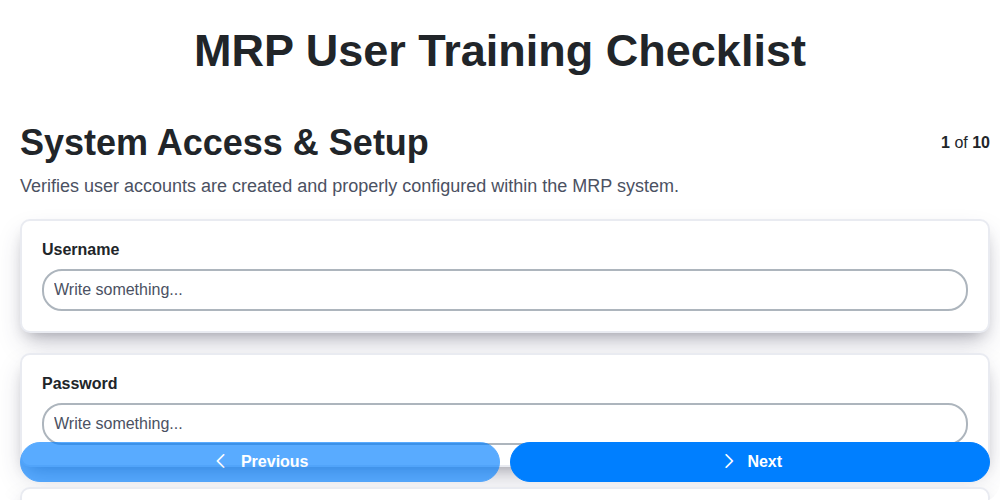
MRP User Training Checklist: Ensuring Proficiency & Success
We can do it Together
Need help with
Material Requirements Planning (MRP)?
Have a question? We're here to help. Please submit your inquiry, and we'll respond promptly.