The Ultimate ERP Go-Live Readiness Checklist: Your Path to Success
Published: 12/19/2025 10:00 PM Updated: 12/20/2025 9:17 AM
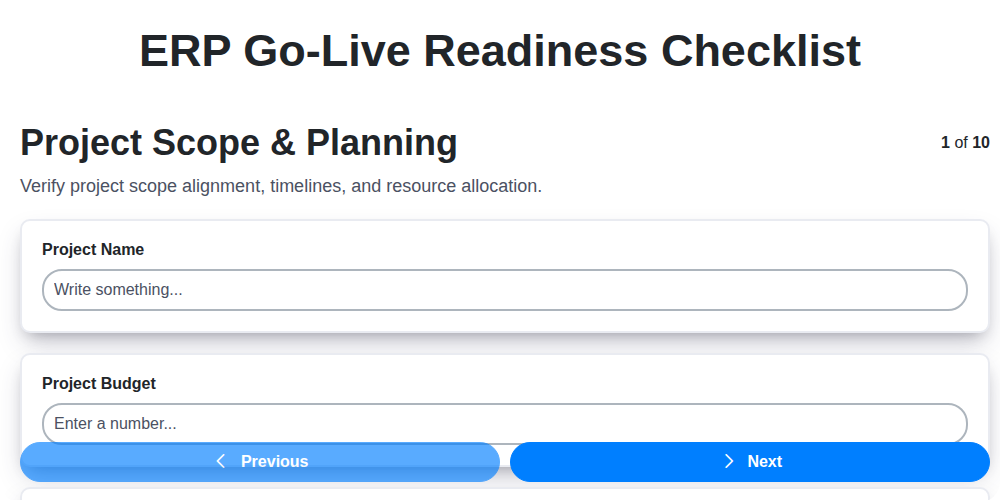
Table of Contents
- Introduction: Why ERP Go-Live Readiness Matters
- 1. Project Scope & Planning: Defining the Foundation
- 2. Data Migration & Validation: Ensuring Data Integrity
- 3. System Configuration & Customization: Tailoring the ERP to Your Needs
- 4. Security & Access Control: Protecting Your Data and Processes
- 5. Business Process Validation: Aligning ERP with Operations
- 6. Testing & Training: Preparing Your Team for Success
- 7. Hardware & Infrastructure: Ensuring a Stable Environment
- 8. Cutover Planning & Execution: The Transition Phase
- 9. Documentation & Knowledge Transfer: Preserving Expertise
- 10. Post-Go-Live Support & Monitoring: Maintaining Stability
- 11. Risk Assessment & Mitigation Strategies
- 12. Communication Plan: Keeping Stakeholders Informed
- 13. Go/No-Go Decision Criteria: Knowing When to Proceed
- Resources & Links
TLDR: Going live with a new ERP system is stressful! This checklist ensures you haven't missed critical steps - from data migration and system configuration to security and user training - minimizing chaos and maximizing your ERP's success. Download it, use it, and breathe easier knowing you're prepared.
Introduction: Why ERP Go-Live Readiness Matters
An ERP (Enterprise Resource Planning) system implementation is a monumental undertaking for any organization. It's more than just installing software; it's a fundamental shift in how your business operates. A successful go-live - the moment your new ERP system replaces your old one - is crucial for realizing the promised benefits: increased efficiency, improved data visibility, and streamlined processes. However, a rushed or poorly prepared go-live can lead to chaos, lost productivity, and ultimately, failure. This isn't hyperbole; a botched ERP launch can damage your business's reputation, impact customer satisfaction, and even threaten its financial stability. That's why meticulous planning and a comprehensive readiness checklist are absolutely essential. This post will outline key areas to focus on to ensure your ERP go-live is not just live, but successful.
1. Project Scope & Planning: Defining the Foundation
A successful ERP go-live hinges on a clearly defined and meticulously planned project scope. This isn't just about listing features; it's about understanding what the ERP system will and won't do for your business. Ambiguity here can lead to scope creep, missed deadlines, and ultimately, a system that fails to meet expectations.
Key Considerations:
- Business Objectives: Revisit your initial business drivers for ERP implementation. How will the system contribute to increased efficiency, improved decision-making, and overall growth?
- Stakeholder Alignment: Secure buy-in and agreement from all key stakeholders - leadership, department heads, and end-users. A shared understanding prevents conflicts later.
- Scope Definition: Precisely document what processes will be handled by the ERP. Clearly outline what's in scope and, crucially, what's out of scope for the initial go-live. Defer non-critical functionalities to later phases to minimize risk.
- Project Timeline & Milestones: Establish a realistic timeline with clearly defined milestones and dependencies. Factor in buffer time for unforeseen challenges.
- Resource Allocation: Identify and assign roles and responsibilities for each team member. Ensure adequate resources are available for both the implementation and ongoing support.
- Risk Assessment: Proactively identify potential risks (e.g., data quality issues, user adoption resistance) and develop mitigation strategies.
A robust Project Scope & Planning phase lays the bedrock for a smooth and successful ERP go-live. Skipping or shortcutting this stage is a recipe for disaster.
2. Data Migration & Validation: Ensuring Data Integrity
A successful ERP go-live hinges heavily on the accuracy and completeness of your data. Simply migrating data isn't enough; thorough validation is crucial to avoid downstream issues, inaccurate reporting, and ultimately, business disruption. This phase demands meticulous planning and rigorous execution.
Planning & Extraction:
- Data Mapping: Define a clear mapping between your legacy system(s) and the new ERP system. Document precisely which fields correspond and any necessary transformations.
- Data Cleansing: Identify and correct inconsistencies, errors, and duplicates within your legacy data before migration. Garbage in, garbage out applies here - migrating flawed data will only replicate those flaws in your new ERP.
- Data Profiling: Analyze your data to understand its structure, identify potential issues (missing values, unusual formats), and estimate the effort required for cleansing and transformation.
- Extraction Strategy: Determine how data will be extracted (full, incremental, staged) and the tools to be used. Consider the potential impact on legacy system performance during extraction.
Migration & Validation:
- Phased Migration (Recommended): Migrate data in stages, prioritizing critical data first. This allows for early detection and correction of issues.
- Data Transformation: Implement the transformations defined in your data mapping. This might involve converting data types, standardizing formats, or combining fields.
- Validation Rules: Define strict validation rules to ensure data meets the required quality and format standards in the new ERP.
- Reconciliation: Reconcile data between the legacy system and the new ERP after migration, confirming that all expected records have been transferred and the values are accurate. Implement automated reconciliation reports where possible.
- User Acceptance Testing (UAT) of Data: Involve key business users in reviewing migrated data to ensure it meets their expectations and supports their workflows.
- Data Archiving (Legacy System): Plan for the archiving of legacy data, ensuring accessibility for auditing and historical reporting.
Proper data migration and validation aren't just about moving data; it's about securing the foundation for a successful ERP implementation.
3. System Configuration & Customization: Tailoring the ERP to Your Needs
Implementing an ERP system isn't just about installing software; it's about configuring and customizing it to perfectly align with your unique business processes. This phase is critical to ensuring the ERP truly works for you, not the other way around.
Beyond the Basics: Most ERP systems come with a core set of functionalities. However, chances are your business has nuances and specific requirements that necessitate adjustments. This involves defining workflows, creating custom fields, modifying existing screens, and potentially developing minor integrations with other systems.
Key Considerations:
- Gap Analysis: A thorough gap analysis, conducted before configuration begins, is essential. It identifies discrepancies between the out-of-the-box functionality and your actual needs.
- Configuration vs. Customization: Understand the difference. Configuration involves adjusting system settings without code changes (generally preferred). Customization involves coding and should be minimized to avoid upgrade complications and increased maintenance costs.
- Business User Involvement: Configuration should be driven by, and constantly reviewed by, your business users. They are the subject matter experts and will identify potential usability issues or gaps.
- Change Management: Customizations introduce changes. Document these changes, assess their impact, and communicate them clearly to affected users.
- Version Control: If customization is unavoidable, rigorous version control is paramount for traceability and rollback capabilities.
- Performance Tuning: Ensure configurations and customizations don't negatively impact system performance. Regularly monitor and optimize.
Careful and deliberate system configuration and customization lay the foundation for a successful ERP go-live, ultimately maximizing your return on investment.
4. Security & Access Control: Protecting Your Data and Processes
Implementing an ERP system brings tremendous benefits, but also elevates the importance of robust security and access control. A compromised ERP system can lead to devastating data breaches, financial losses, and reputational damage. This checklist item focuses on ensuring only authorized personnel access the right data and functionality.
Key Considerations & Checklist Items:
- Role-Based Access Control (RBAC): Define granular user roles aligned with job functions and responsibilities. Avoid generic administrator access. Document these roles clearly.
- Least Privilege Principle: Grant users only the minimum access necessary to perform their duties. Regularly review and adjust these permissions.
- Authentication & Authorization: Implement strong password policies (complexity, rotation), multi-factor authentication (MFA) where possible, and robust authorization mechanisms.
- Data Encryption: Ensure sensitive data, both in transit and at rest, is encrypted.
- Audit Trails: Enable comprehensive audit trails to track user activity and system changes. This is crucial for identifying and investigating potential security incidents.
- Security Patch Management: Establish a process for applying security patches and updates promptly.
- Integration Security: Secure integrations with other systems. Verify APIs and data exchanges are protected.
- Regular Security Audits & Penetration Testing: Conduct periodic audits and penetration tests to identify vulnerabilities and assess security posture.
- Compliance Requirements: Ensure security controls align with relevant industry regulations (e.g., GDPR, HIPAA, SOX).
- User Awareness Training: Train users on security best practices and potential threats (phishing, malware).
5. Business Process Validation: Aligning ERP with Operations
Implementing a new ERP system isn't just about installing software; it's about reshaping how your business operates. That's why Business Process Validation (BPV) is a critical step in your ERP go-live readiness checklist. It's easy to get caught up in the technical aspects - data migration, configurations - but neglecting BPV can lead to workflow disruptions, user frustration, and ultimately, a failed implementation.
BPV goes beyond simply confirming that transactions can be processed in the new ERP. It's about ensuring they're processed correctly and efficiently, aligning the system's functionality with your established business practices. This involves a thorough review of end-to-end processes, mapping them to the new ERP configuration, and identifying any gaps or areas for improvement.
Here's what a robust BPV process includes:
- Process Mapping & Documentation: Clearly document your current business processes, highlighting key steps, dependencies, and decision points.
- Gap Analysis: Compare your documented processes with the standard ERP functionality. Identify discrepancies that require customization, workaround, or process adjustments.
- What-If Scenarios: Test the ERP system with a variety of scenarios, including edge cases and potential exceptions, to ensure it handles them appropriately. Think about returns, discounts, complex order fulfillment, etc.
- User Involvement: Engage key users from each department to participate in the validation process. Their real-world experience is invaluable in identifying potential issues.
- Remediation & Refinement: Based on the validation findings, refine the ERP configuration, update process documentation, and provide targeted training to users.
A well-executed BPV phase significantly reduces risk, improves user adoption, and ensures your ERP investment delivers the expected business benefits. Don't underestimate its importance - it's the bridge between the technical implementation and operational success.
6. Testing & Training: Preparing Your Team for Success
A robust ERP implementation hinges on a team that's not just aware of the new system, but confident in using it. Rushing through testing and training is a recipe for disaster, leading to user frustration, data errors, and ultimately, a failed go-live.
Testing is More Than Just Does it Work?:
Testing isn't just about verifying individual functions. It needs to be a phased approach encompassing:
- Unit Testing: Individual modules and functionalities tested in isolation.
- Integration Testing: Checking how different modules interact with each other.
- User Acceptance Testing (UAT): This is critical. UAT should involve end-users performing realistic tasks within the ERP system, simulating daily operations. Their feedback is invaluable for identifying gaps and refining processes. Create detailed test scripts for UAT to ensure thorough coverage.
- Regression Testing: After any fixes or adjustments, re-test existing functionality to confirm no new issues have been introduced.
Training: Tailored to Roles, Not One-Size-Fits-All:
Forget generic training sessions. Effective ERP training should be:
- Role-Based: Sales teams need different training than accounting, and so on. Tailor content to specific job functions.
- Hands-On: Click-through demonstrations are not enough. Users need to practice using the system.
- Phased: Start with foundational training before moving onto more complex features.
- Ongoing: Training doesn't end at go-live. Provide refresher sessions and support for new hires and system updates.
- Accessible: Make training materials (videos, manuals, FAQs) readily available for ongoing reference.
Measuring Success:
- Track UAT Completion: Ensure all designated users complete UAT and provide feedback.
- Assess User Confidence: Simple surveys or short quizzes can gauge user comfort levels.
- Monitor Help Desk Tickets: A spike in tickets post-go-live can indicate training gaps.
Investing in thorough testing and targeted training is an investment in a successful ERP implementation. Don't cut corners - empower your team!
7. Hardware & Infrastructure: Ensuring a Stable Environment
A successful ERP go-live isn't just about software; it's fundamentally dependent on a robust and reliable hardware and infrastructure foundation. Insufficient resources or poorly configured systems can lead to performance bottlenecks, data loss, and ultimately, a disastrous launch.
This section focuses on ensuring your technical environment can actually handle the demands of your new ERP system. Here's what you need to consider:
- Capacity Planning: Accurately estimate the server capacity (CPU, RAM, storage) required to support the ERP application, database, and associated services. Factor in growth projections for the next 3-5 years.
- Network Readiness: Evaluate network bandwidth and latency. ERP systems require reliable and fast connectivity, especially if utilizing cloud-based solutions or multiple locations. Conduct load testing to simulate peak usage.
- Server Environment: Validate server operating systems are compatible with the ERP software. Ensure proper patching, security hardening, and virtualization configurations.
- Database Infrastructure: Confirm database server specifications meet ERP vendor requirements. Optimize database performance through indexing, partitioning, and regular maintenance.
- Cloud Considerations: If deploying to the cloud, verify provider SLAs (Service Level Agreements) and assess data residency and security compliance.
- Disaster Recovery: Implement a robust disaster recovery plan that includes regular backups, failover mechanisms, and recovery procedures. Test the plan thoroughly.
- Peripheral Devices: Ensure compatibility of printers, scanners, and other essential hardware with the new ERP system.
Don't underestimate the importance of a well-maintained and scalable infrastructure. Investing in it upfront will pay dividends in the stability and performance of your ERP system post-go-live.
8. Cutover Planning & Execution: The Transition Phase
The cutover phase is arguably the most nerve-wracking part of an ERP implementation. It's the moment of truth - the switch from the old system to the new. A well-defined and rigorously tested cutover plan is absolutely crucial to minimizing disruption and maximizing success. This isn't just about flipping a switch; it's a carefully choreographed sequence of events.
Key Elements of a Robust Cutover Plan:
- Detailed Timeline: A minute-by-minute breakdown of activities, including dependencies and responsible parties. Think of it as a playbook for the transition.
- Data Freeze: Define a period where no changes are made to the legacy system data to ensure data integrity during migration.
- Data Migration Execution: Execute the data migration process, often in stages, with built-in validation checks at each step.
- System Go-Live: The actual switch to the new ERP system. This might involve a 'big bang' approach (all modules go live simultaneously) or a phased rollout.
- Parallel Run (Optional): Running both the old and new systems concurrently for a short period to compare data and processes.
- Fallback Plan: A critical contingency plan outlining steps to revert to the legacy system if unforeseen issues arise. This needs to be thoroughly tested and clearly defined.
- Communication Plan: Constant and transparent communication with all stakeholders - employees, customers, vendors - throughout the cutover process.
- Dedicated Cutover Team: A specialized team with clear roles and responsibilities focused solely on executing the cutover plan.
Pro Tip: Rehearse the cutover process with a 'dress rehearsal' or mock go-live to identify and address potential issues before the actual go-live date. This is an invaluable way to build confidence and refine the plan.
9. Documentation & Knowledge Transfer: Preserving Expertise
A successful ERP go-live isn't just about the day the system goes live; it's about long-term operational efficiency and user adoption. Neglecting documentation and knowledge transfer is a common pitfall that can lead to frustration, increased support requests, and ultimately, diminished ROI.
This checklist item isn't just about creating manuals; it's about capturing the why behind every decision made during implementation. Consider these key areas:
- Process Documentation: Detailed guides on how key business processes function within the new ERP. These should be more than just step-by-step instructions; they should explain the rationale behind process flows, potential pitfalls, and expected outcomes.
- System Configuration Documentation: A comprehensive record of all customizations, configurations, and integrations. This is critical for future upgrades, troubleshooting, and maintaining system stability. Who changed what, and why?
- Training Materials: Go beyond basic training. Create quick reference guides, FAQs, and video tutorials addressing common user questions and tasks.
- Knowledge Transfer Sessions: Facilitate knowledge transfer sessions between the implementation team and key internal users. This allows for direct Q&A and hands-on experience.
- Super User Program: Identify and train "super users" within each department who can act as local experts and first-line support.
- Version Control: Implement a version control system for all documentation to track changes and ensure everyone is using the latest information.
Don't underestimate the power of easily accessible, well-maintained documentation. It's an investment that pays dividends long after the go-live excitement fades. Ignoring this area creates a reliance on a few individuals and exposes the organization to significant risk should they leave or become unavailable.
10. Post-Go-Live Support & Monitoring: Maintaining Stability
The exhilaration of a successful ERP go-live is quickly replaced with a critical phase: ongoing support and monitoring. This isn't about celebrating victory; it's about ensuring the system remains stable, performs as expected, and continues to deliver value. A robust post-go-live strategy is just as important as the implementation itself.
Immediate Post-Go-Live Support (First 30-90 Days):
- Dedicated Support Team: Establish a dedicated team (internal or outsourced) readily available to address user issues, answer questions, and resolve immediate problems. Quick response times are paramount.
- Issue Tracking System: Implement a centralized system for logging, tracking, and prioritizing user requests and bugs. This ensures nothing falls through the cracks and allows for trend analysis.
- War Room Approach: Consider maintaining a war room environment for the initial weeks, bringing together key stakeholders (IT, business users, implementation partners) to collaboratively troubleshoot and resolve critical issues.
- Regular Communication: Keep users informed about known issues, resolutions, and planned maintenance windows through clear and frequent communication channels.
Ongoing Monitoring & Optimization:
- System Performance Monitoring: Continuously monitor system performance metrics (response times, error rates, resource utilization) to identify potential bottlenecks and proactively address them.
- User Adoption Tracking: Monitor user adoption rates to identify areas where additional training or support is needed.
- Data Quality Checks: Establish regular data quality checks to ensure data integrity and accuracy.
- Process Optimization: Periodically review and optimize business processes within the ERP system to maximize efficiency and effectiveness.
- Version Updates & Patches: Stay current with vendor updates and patches to address security vulnerabilities and benefit from new features. Thorough testing is essential before applying any updates to the production environment.
- Feedback Loops: Implement mechanisms for gathering user feedback on an ongoing basis and using this feedback to continuously improve the ERP system and its usage.
A proactive and well-planned post-go-live support & monitoring strategy minimizes disruption, maximizes user satisfaction, and ultimately ensures a strong return on your ERP investment.
11. Risk Assessment & Mitigation Strategies
A successful ERP go-live isn't just about checking boxes; it's about proactively minimizing risks. This section focuses on identifying potential problems before they impact your go-live and outlining strategies to mitigate them.
Risk Identification: Conduct a comprehensive risk assessment workshop involving key stakeholders from all departments. Brainstorm potential issues across all areas of the implementation - data migration, system configuration, user adoption, security, and more. Consider factors like data quality, resource availability, timeline pressures, and integration complexities. Use techniques like SWOT analysis or Failure Mode and Effects Analysis (FMEA) to uncover hidden risks.
Risk Prioritization: Not all risks are created equal. Categorize risks based on their likelihood of occurrence and potential impact. Use a risk matrix (e.g., High/Medium/Low for both likelihood and impact) to prioritize efforts. Focus first on high-impact, high-likelihood risks.
Mitigation Strategies: For each prioritized risk, develop specific mitigation strategies. These could include:
- Contingency Plans: Have backup plans in place for critical processes if things go wrong (e.g., a manual workaround for a failed integration).
- Data Validation Enhancements: Implement more rigorous data cleansing and validation processes if data quality is a concern.
- Increased Training: Offer additional training sessions and support for users who are struggling.
- Phased Rollout: Consider a phased rollout to a smaller group of users before deploying to the entire organization.
- Resource Allocation: Ensure sufficient skilled resources are available to address any issues that arise.
- Escalation Procedures: Define clear escalation procedures for reporting and resolving critical issues.
Continuous Monitoring: Risk assessment isn't a one-time activity. Continuously monitor risks throughout the implementation and post-go-live. Regularly review the risk register, update mitigation strategies, and identify any new risks that may have emerged.
12. Communication Plan: Keeping Stakeholders Informed
A successful ERP go-live hinges just as much on people as it does on the system itself. Clear, consistent, and proactive communication is paramount to managing expectations, addressing concerns, and fostering buy-in across the organization. A robust communication plan should be developed early in the project lifecycle and maintained throughout.
Here's what your communication plan should include:
- Identify Stakeholders: Map out all groups and individuals impacted by the ERP implementation - executive leadership, department heads, end-users, IT staff, vendors, and even customers, if relevant.
- Define Communication Channels: Utilize a mix of channels for different levels of information. Consider regular project status meetings, email updates, a dedicated intranet page or SharePoint site, newsletters, and even short videos.
- Establish Cadence & Content: Determine how often updates are needed (weekly, bi-weekly, monthly) and what information to share. Tailor the content to each stakeholder group - executives need high-level summaries, while end-users require practical "what's in it for me" information and training schedules.
- Designate Communication Leads: Assign individuals responsible for crafting and disseminating messages. This ensures accountability and consistency.
- Feedback Mechanisms: Create avenues for stakeholders to ask questions and provide feedback. This helps surface concerns early and demonstrates that their voices are heard. Consider a dedicated email address, online forum, or regular Q&A sessions.
- Go-Live Communication: A specific, detailed communication plan for the go-live weekend itself is essential - outlining timelines, potential disruptions, and contact information for support.
Remember: Silence breeds rumors and anxiety. Over-communication is far better than under-communication in a project as complex as an ERP implementation.
13. Go/No-Go Decision Criteria: Knowing When to Proceed
Reaching the go-live date for an ERP implementation is a monumental achievement, but rushing it can be disastrous. A robust go/no-go decision process is crucial to ensure a successful transition. Don't just assume readiness - prove it. Here's a breakdown of key criteria to evaluate before flipping the switch:
Core Functional Readiness:
- Business Process Validation Sign-off: Do key business users sign off on critical processes working as expected within the new ERP system? This isn't just about running the processes, but ensuring the results are correct and meet business requirements.
- Data Migration Accuracy: A thorough data reconciliation process is non-negotiable. Are data volumes, accuracy, and completeness within acceptable parameters? Don't just count records - validate the content.
- System Configuration Completeness: Are all planned configurations implemented and verified? This includes everything from workflows to reporting parameters.
- Critical Functionality Testing Passed: Focus on the 'must-have' functionalities. Has rigorous testing confirmed they work reliably under realistic conditions?
Technical & Operational Readiness:
- Security Controls Verified: Are security roles and permissions correctly assigned and tested? Can you demonstrate data security and access control?
- Infrastructure Stability: Has the hardware and infrastructure been thoroughly tested under load? Are performance benchmarks met?
- Cutover Plan Validation: A dry run of the cutover plan should be completed and validated, demonstrating the team's ability to execute the process within the allocated time.
- Training Completion and User Proficiency: A significant percentage of users (typically 80%+) must have completed necessary training and demonstrated sufficient proficiency in the new system.
Risk Mitigation & Support:
- Contingency Plans in Place: Do you have well-defined rollback and contingency plans ready to be implemented if issues arise post-go-live?
- Support Team Readiness: Is the support team fully trained, resourced, and prepared to handle post-go-live issues? This includes both internal and external support resources.
- Executive Sponsorship Approval: Final approval should come from executive leadership, signifying their confidence in the project's readiness and alignment with business objectives.
Ultimately, the decision should be data-driven and objective. Don't let enthusiasm or deadlines override the need for a stable and reliable ERP system.
Resources & Links
- Gartner: Provides in-depth research and analysis on ERP systems and implementation best practices. Useful for understanding market trends and evaluating different ERP solutions.
- Forbes: Features articles on business technology, including ERP implementations. Offers insights into challenges and successes of various companies.
- TechTarget: Provides a wide range of technology resources, including articles and tutorials on ERP systems and related topics like data migration and security.
- SAP: If your ERP is SAP-based, their website provides extensive documentation, best practices, and community forums.
- Microsoft Dynamics 365: For Microsoft Dynamics 365 implementations, Microsoft provides resources, documentation, and partner networks.
- Oracle: If using Oracle's ERP solutions, their website provides documentation, support, and implementation guides.
- NetSuite: NetSuite's website features resources, documentation, and best practices specifically tailored for their ERP platform.
- Project Management Institute (PMI): Provides methodologies and best practices for project management, crucial for successful ERP implementations. Look for resources on risk management and stakeholder communication.
- ISO: Provides international standards, including those related to data security and quality management, which can inform ERP implementation processes.
- National Institute of Standards and Technology (NIST): Offers cybersecurity frameworks and best practices that are highly relevant to ERP security and access control.
Frequently Asked Questions
What is ERP Go-Live Readiness?
ERP Go-Live Readiness refers to the state of being fully prepared to launch your new Enterprise Resource Planning (ERP) system. It's a comprehensive assessment that ensures all aspects of the implementation - from data migration and user training to testing and system configuration - are complete and functioning correctly to minimize disruption and maximize success.
Why is an ERP Go-Live Readiness Checklist important?
A readiness checklist provides a structured approach to ensure no critical tasks are overlooked during ERP implementation. It helps identify potential risks, mitigates delays, and increases the likelihood of a smooth and successful go-live, minimizing downtime and maximizing user adoption.
Who should use this checklist?
This checklist is designed for a wide range of stakeholders involved in ERP implementation, including project managers, implementation consultants, IT teams, business process owners, and key users. Anyone involved in planning, executing, or supporting the go-live should find it valuable.
What are the key areas covered in the checklist?
The checklist covers various areas, including data migration, testing (unit, integration, user acceptance), infrastructure readiness, security, training, support, documentation, and cutover planning. It aims for a holistic view of the go-live process.
Can I customize this checklist?
Absolutely. This is a template designed to be adaptable. Feel free to add, remove, or modify items based on your specific ERP system, business requirements, and implementation complexity. Consider your unique environment and tailor it accordingly.
What is User Acceptance Testing (UAT) and why is it crucial?
UAT is a critical phase where end-users test the ERP system using real-world scenarios. It verifies that the system meets business requirements and is usable. Successful UAT is a key indicator of Go-Live readiness, as it identifies issues from the user's perspective.
What does 'cutover planning' involve?
Cutover planning is the process of outlining the steps needed to transition from the old system to the new ERP system. This includes data migration execution, system shutdown, go-live date, rollback plan, and initial post-go-live support.
What's a rollback plan, and why is it important?
A rollback plan outlines the steps to revert to the previous system in case of critical issues during or immediately after go-live. It's a safety net to minimize business disruption, demonstrating preparedness and mitigating risks.
What should I do if I identify issues during the readiness assessment?
Document all identified issues, prioritize them based on severity and impact, and create a remediation plan. Assign ownership for resolving each issue and track progress until closure. Regular review of the issues log is crucial.
Where can I find resources or support for ERP Go-Live Readiness?
Consult your ERP vendor's documentation and support channels. Engage with experienced ERP consultants or implementation partners. Leverage online forums and communities for best practices and troubleshooting tips.
Found this Article helpful?
Comments
There are no comments yet. Be the first to add one!
ERP - Enterprise Resource Planning Solution Demo
Overwhelmed by disconnected systems? ChecklistGuro provides a centralized ERP solution, connecting your business processes - finance, operations, & more - for improved visibility and control. Simplify operations & boost efficiency.
Related Articles
MRP System Go-Live Checklist: Your Path to a Successful Implementation

Top 10 CMiC Alternatives for 2025
The Ultimate Foundation Waterproofing Installation Checklist Template
Top 10 Odoo Alternatives for 2025

How to Save Money on Bill of Materials (BOM) Management Software
The Ultimate Waterproofing Checklist: Ensuring a Leak-Proof Installation

The 10 Best Manufacturing Management Software of 2025
MRP Vendor Master Data Checklist: Ensuring Accuracy and Efficiency
We can do it Together
Need help with
Enterprise Resource Planning (ERP)?
Have a question? We're here to help. Please submit your inquiry, and we'll respond promptly.