The Ultimate ERP System Documentation Checklist: Ensuring Success & Compliance
Published: 12/20/2025 10:00 PM Updated: 12/21/2025 8:50 AM
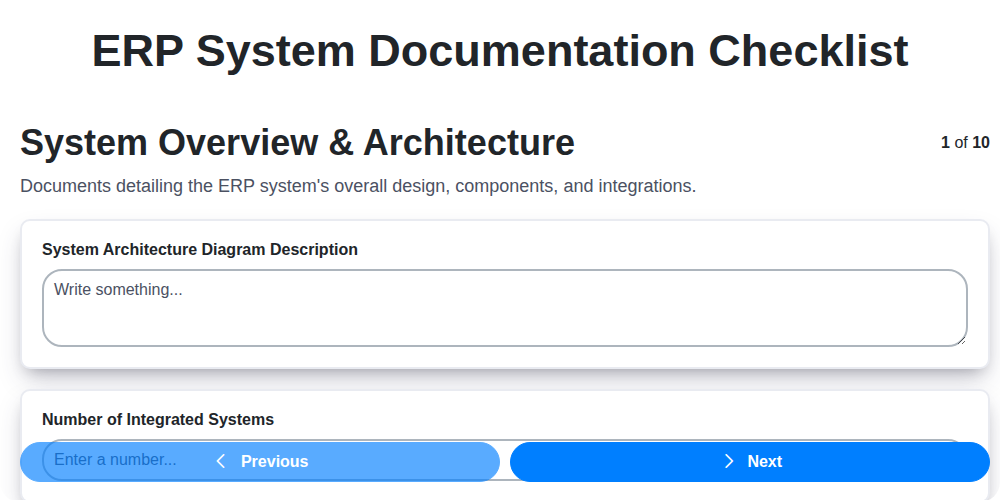
Table of Contents
- Introduction: Why ERP Documentation is Critical
- 1. System Overview & Architecture: Laying the Foundation
- 2. Module Configuration Guides: Setting Up for Success
- 3. Data Migration Procedures: A Smooth Transition
- 4. Security & Access Control Policies: Protecting Your Data
- 5. Integration Specifications: Connecting the Pieces
- 6. User Manuals & Training Materials: Empowering Your Team
- 7. Reporting & Analytics Documentation: Understanding Your Data
- 8. Disaster Recovery & Business Continuity Plans: Staying Resilient
- 9. Version Control & Change Logs: Tracking Evolution
- 10. Contact Information & Support Procedures: Who to Call When
- 11. Regulatory Compliance Documentation
- 12. Future-Proofing Your Documentation: Planning for Growth
- Conclusion: Your ERP Documentation Roadmap
- Resources & Links
TLDR: Implementing an ERP system? Don't let crucial documentation fall through the cracks! This checklist covers everything from system architecture to disaster recovery, ensuring your ERP is well-documented, secure, user-friendly, and compliant. Use it to avoid costly mistakes, streamline training, and keep your system running smoothly.
Introduction: Why ERP Documentation is Critical
An ERP system is the backbone of many businesses, streamlining operations and driving efficiency. However, a powerful ERP is only as effective as its documentation. Without comprehensive and well-maintained documentation, your ERP implementation risks becoming a complex, fragile, and ultimately, a costly burden. Think of it as the instruction manual for a complicated machine - without it, troubleshooting, upgrades, and even day-to-day use become significantly harder.
Poor documentation can lead to increased support requests, frustrated users, knowledge silos (where critical information resides only with a few individuals), and increased risk when it comes to updates or disaster recovery. Investing in robust ERP documentation isn't just a "nice-to-have"; it's a necessity for maximizing your ROI and ensuring long-term success. This checklist will guide you through the key areas to cover, ensuring your ERP system is well-documented and ready for anything.
1. System Overview & Architecture: Laying the Foundation
Before diving into the specifics of your ERP system, a comprehensive System Overview & Architecture document is absolutely critical. This isn't just about listing components; it's about creating a roadmap for understanding the entire ecosystem.
This section should clearly outline:
- System Components: Detail all modules, sub-modules, and integrated applications. A visual diagram is incredibly helpful here - a block diagram showing the data flow and interactions between components can be worth a thousand words.
- Technology Stack: Specify the underlying technologies - operating systems, databases, programming languages, and frameworks. This is important for troubleshooting and future maintenance.
- Deployment Architecture: Explain how the system is deployed (on-premise, cloud, hybrid). Include details about servers, networks, and infrastructure.
- Data Flow: Illustrate the movement of data between modules and external systems. This clarifies dependencies and potential bottlenecks.
- Key Interfaces: Define how the ERP system interacts with other business applications.
- Future Scalability Plans: Briefly describe plans for expanding the system's capabilities and supporting future growth.
A robust System Overview & Architecture document acts as the cornerstone for all other documentation, providing context and enabling everyone involved - from developers to end-users - to understand the big picture. It reduces confusion, facilitates troubleshooting, and streamlines future upgrades.
2. Module Configuration Guides: Setting Up for Success
Your ERP system isn't a one-size-fits-all solution. It needs to be tailored to your specific business processes. That's where comprehensive module configuration guides become absolutely critical. These guides shouldn't just detail how to configure a module; they should explain why specific configurations are recommended and the impact they'll have on your operations.
What to Include:
- Step-by-Step Instructions: Clear, concise, and detailed instructions for configuring each module. Assume the reader has a foundational understanding of the ERP but might not be an expert in every module.
- Business Context: Explain the business purpose behind each configuration option. Don't just say Set the value to X; explain why that value is optimal for a given process.
- Dependencies & Impacts: Highlight dependencies between modules and explain how changes in one module might affect others. For example, changes to inventory settings might influence shipping and accounting.
- Best Practices: Include recommended configurations based on industry best practices or company-specific processes.
- Screenshots & Visuals: Visual aids are invaluable. Screenshots of the configuration screens with callouts explaining key fields significantly reduce ambiguity.
- Decision Trees/Flowcharts: For complex configurations with multiple paths, decision trees or flowcharts can simplify the decision-making process.
- Version Control: Each module configuration guide should be versioned to track changes and ensure users are following the correct procedure.
- Troubleshooting Tips: Anticipate potential issues and provide troubleshooting steps to resolve common configuration problems.
Who Should Maintain Them? A team comprised of IT, subject matter experts (SMEs) from relevant departments (finance, operations, sales), and potentially even power users should maintain these guides. Regular review and updates are crucial to keep them aligned with evolving business needs and system changes.
3. Data Migration Procedures: A Smooth Transition
Moving data into a new ERP system is often a source of significant anxiety. It's a complex process with high stakes - incorrect or incomplete data migration can lead to operational disruptions, inaccurate reporting, and frustrated users. This section of your ERP documentation should meticulously outline the data migration strategy, ensuring a smooth and reliable transition.
Your documentation should cover several key areas:
- Data Mapping: Clearly define how data fields in your legacy systems map to the corresponding fields in the new ERP. This includes specifying transformations and validations needed. A visual mapping table is highly recommended.
- Extraction Methodology: Detail the process for extracting data from the existing systems. Will it be a full export, incremental migration, or a combination? What tools will be used?
- Data Cleansing & Transformation: Describe the steps taken to cleanse, standardize, and transform data to meet the new ERP's requirements. Address data quality issues, duplicates, and inconsistencies.
- Migration Timeline & Phases: Outline a detailed timeline, broken down into phases (e.g., testing, pilot migration, full migration). Include key milestones and dependencies.
- Validation & Reconciliation: Explain how data accuracy and completeness will be validated after migration. Include procedures for reconciling discrepancies. Define acceptance criteria.
- Rollback Plan: Crucially, document a clear rollback plan in case the migration fails. This should detail how to revert to the previous system with minimal data loss.
- Responsibilities: Clearly define roles and responsibilities for each stage of the data migration process, from data extraction to validation.
Well-documented data migration procedures are not just about technical steps; they're about building confidence and ensuring a successful ERP implementation.
4. Security & Access Control Policies: Protecting Your Data
Your ERP system holds sensitive business information, making robust security and access control policies paramount. This section of your documentation should outline exactly how data is protected and who has permission to access it.
Here's what needs to be covered:
- Role-Based Access Control (RBAC): Detail how user roles are defined, assigned, and how they dictate access privileges. Clearly map roles to specific functions and data access.
- Authentication Methods: Document the methods used to verify user identities - username/password, multi-factor authentication (MFA), biometric scans, etc. Include requirements and processes around password resets and account lockouts.
- Authorization Levels: Specify what each user role can do within the system. For example, can they create new records, modify existing data, or only view information?
- Data Encryption: Describe any encryption methods employed, both at rest (when data is stored) and in transit (during data transfer).
- Audit Trails: Explain how system activities are tracked and logged, allowing for retrospective analysis of user actions and potential security breaches. Detail who can access these logs and how long they are retained.
- Data Masking/Anonymization: If applicable, outline procedures for masking or anonymizing sensitive data in development or testing environments.
- Regular Security Reviews: Document the frequency and scope of security audits and vulnerability assessments.
- Incident Response Plan: Briefly outline the process followed in case of a security breach. Link to a full, detailed incident response plan elsewhere.
Properly documenting these policies isn't just about compliance; it's a critical step in safeguarding your business and its valuable data.
5. Integration Specifications: Connecting the Pieces
Your ERP system likely doesn't exist in a vacuum. It interacts with other systems - CRM, e-commerce platforms, legacy applications, and more. Thorough integration specifications are absolutely critical for ensuring these connections function flawlessly. This documentation should detail everything about how your ERP integrates with other systems.
Think beyond just "it connects." Include specifics like:
- Integration Points: Clearly define which modules/functions in both the ERP and external systems interact.
- Data Mapping: Outline precisely how data fields in one system correspond to fields in another. This is often the biggest source of errors, so meticulous mapping is essential. Include data type conversions and any transformations.
- Communication Protocols: Specify the methods used for data exchange - APIs, EDI, flat files, etc. Detail versions, authentication methods, and error handling.
- Interface Schemas: Provide detailed specifications of data formats and structures exchanged. Visual diagrams are helpful here.
- Error Handling & Retries: Document how integration errors are detected, logged, and resolved. Detail retry mechanisms and escalation procedures.
- Performance Metrics: Define acceptable integration performance thresholds and how they're monitored.
- Security Considerations: Outline security protocols for data transmission and access.
- Dependencies: List any dependencies on other systems or processes required for successful integration.
Without clear and comprehensive integration specifications, troubleshooting issues becomes a nightmare, data integrity is at risk, and the overall value of your ERP investment is diminished. This documentation must be kept updated as integrations evolve.
6. User Manuals & Training Materials: Empowering Your Team
Your ERP system is powerful, but that power is useless if your users don't know how to harness it. Comprehensive user manuals and effective training materials are absolutely critical for successful ERP adoption and ongoing usage. This isn't just about "click here, type that" instructions - it's about fostering understanding of why processes are the way they are and how the ERP system supports your business goals.
Here's what your user manuals and training materials should include:
- Role-Based Guides: Tailor documentation to specific user roles (e.g., Sales, Finance, Warehouse). This ensures relevance and avoids overwhelming users with unnecessary information.
- Step-by-Step Procedures: Clear, concise instructions with screenshots are invaluable. Break down complex tasks into manageable steps.
- Glossary of Terms: ERP systems often use industry-specific jargon. A glossary helps users understand the language of the system.
- Troubleshooting FAQs: Address common issues and provide solutions upfront to reduce frustration and support requests.
- Video Tutorials: Visual learners thrive on video. Short, focused tutorials can be incredibly effective for demonstrating key processes.
- Training Schedule & Recordings: Keep track of training sessions, make recordings available for later review, and ensure new hires are properly onboarded.
- Regular Updates: Keep documentation current as the system evolves. Version control (as mentioned previously) is key here.
Remember, investing in quality user manuals and robust training isn't an expense - it's an investment in user adoption, efficiency, and ultimately, a return on your ERP investment.
7. Reporting & Analytics Documentation: Understanding Your Data
Effective ERP systems generate a wealth of data, but that data is only valuable if you can understand and utilize it. Your ERP documentation should include comprehensive reporting and analytics documentation, serving as a roadmap for accessing and interpreting these insights.
This documentation should cover several key areas:
- Standard Reports: A detailed catalog of all pre-built reports available within the system. For each report, include its purpose, the data it utilizes, how to access it (pathways and navigation), and a basic understanding of the key metrics presented. Screenshots are incredibly helpful here.
- Custom Report Specifications: If your organization has created custom reports, the documentation must outline their purpose, design specifications, data sources, and any specific calculations or formulas used.
- Data Dictionary: A glossary defining all key data elements used in reporting. This ensures everyone understands the meaning and context of the data they's viewing. For example, what exactly is included in Sales Revenue?
- KPI Definitions: Clearly define all Key Performance Indicators (KPIs) tracked within the ERP system. Explain how they're calculated, their targets, and their importance to the business.
- Dashboard Configuration: If your ERP system utilizes dashboards, document the purpose and layout of each dashboard, and explain how users can customize them (if applicable).
- Data Validation & Accuracy: Include procedures for validating data accuracy and identifying potential data quality issues.
Properly documented reporting and analytics empowers users to make data-driven decisions, track progress towards goals, and identify areas for improvement.
8. Disaster Recovery & Business Continuity Plans: Staying Resilient
An ERP system holds the lifeblood of your business - critical data and vital processes. A disruption, whether from natural disaster, cyberattack, or equipment failure, can cripple operations and lead to significant financial losses. That's why robust Disaster Recovery (DR) and Business Continuity (BC) plans are absolutely essential for ERP documentation.
This section of your documentation should comprehensively outline procedures for restoring ERP functionality and minimizing downtime in the event of an incident. Consider these key elements:
- Recovery Time Objective (RTO): Document the maximum acceptable time your business can be down. This dictates the level of investment in DR solutions.
- Recovery Point Objective (RPO): Define the maximum acceptable data loss. This guides backup frequency and replication strategies.
- Backup Procedures: Detail how and where backups are performed, including testing schedules to verify their integrity and restorability.
- Failover Procedures: Outline the steps for switching to a secondary ERP environment. Include contact information for those responsible for executing the failover.
- Communication Plan: How will employees, customers, and stakeholders be notified during and after a disaster?
- Testing & Maintenance Schedule: Regular drills are crucial. Document the frequency and scope of DR tests, and the process for updating the plan based on findings.
- Roles & Responsibilities: Clearly define who is responsible for each step in the DR/BC plan.
This isn's just a document; it's your roadmap to business survival. Neglecting this section puts your entire ERP implementation - and your company - at unnecessary risk.
9. Version Control & Change Logs: Tracking Evolution
ERP systems aren't static. They evolve through updates, customizations, and bug fixes. Maintaining meticulous version control and change logs is critical for stability, troubleshooting, and ensuring everyone is working with the correct documentation. Without a robust system, you risk confusion, errors, and potentially costly rollbacks.
Here's what you need to capture:
- Document Versioning: Implement a clear versioning system for all ERP documentation. This isn't just about file names (e.g., User_Manual_v1.2), but a formal system that's consistently applied.
- Change Log Details: Each time a document is updated, log the following:
- Date of Change: When the modification occurred.
- Author/Responsible Party: Who made the change.
- Description of Change: A concise explanation of what was altered and why. Be specific. Updated user interface is less helpful than Updated the 'Submit' button on the order entry screen to include a confirmation popup.
- Impact of Change: Briefly outline the impact of the change on users or processes.
- Version Number: The new version number assigned.
- Centralized Repository: Store all versions of documentation in a centralized, accessible repository (e.g., SharePoint, Confluence, a dedicated document management system).
- Training on Process: Ensure all document creators and reviewers understand and adhere to the version control process.
- Archiving Old Versions: Don't delete old versions! Archive them securely, allowing for easy access if needed for audit trails or to revert to a previous state.
Effective version control is a vital component of maintaining a healthy and reliable ERP environment.
10. Contact Information & Support Procedures: Who to Call When
Let's face it: even with the most robust ERP system and meticulously crafted documentation, questions and issues will inevitably arise. Having clear and accessible contact information and established support procedures is crucial for minimizing disruption and ensuring user satisfaction.
This section of your ERP documentation should detail who to contact for various types of support requests. Don't just list names - clarify roles and areas of expertise. Consider including the following:
- Help Desk/Tier 1 Support: For general questions, troubleshooting common errors, and password resets. Include phone number, email address, and ticketing system details.
- Functional Experts: Dedicated individuals for each module (e.g., Finance, Manufacturing, HR) who can provide in-depth assistance and configuration advice.
- Technical Support: For complex technical issues, system errors, and integration problems. Clearly define escalation paths.
- Vendor Support: If your ERP system is externally hosted or maintained, include contact information for the vendor's support team and relevant service level agreements (SLAs).
- Internal IT Department: For infrastructure-related issues or problems beyond the scope of functional support.
Beyond Contact Details:
- Service Hours: Specify the hours of operation for each support channel.
- Escalation Procedures: Outline how to escalate unresolved issues.
- Support Request Forms: Link to or provide examples of support request forms for standardized issue reporting.
- Frequently Asked Questions (FAQs): A comprehensive FAQ section can often resolve common issues quickly and efficiently, reducing the support burden.
Ensure this information is easily accessible - prominently displayed on the company intranet, within the ERP system itself, and included in new user onboarding materials. Regular review and updates to this section are vital to ensure accuracy and continued effectiveness.
11. Regulatory Compliance Documentation
Many ERP systems operate within industries subject to strict regulatory oversight. This section details the documentation needed to demonstrate compliance. This isn't a universal requirement, so assess your specific industry and applicable laws (e.g., HIPAA for healthcare, GDPR for data privacy, Sarbanes-Oxley for finance).
Key Documentation to Consider:
- Compliance Matrix: A detailed table mapping specific regulations to ERP system configurations and processes. Clearly indicate how each regulation is addressed.
- Audit Trails: Documentation showcasing system audit trails, including user actions, data modifications, and access logs. This is critical for demonstrating accountability and traceability.
- Data Residency Information: Outline where data is stored and processed, ensuring alignment with data residency requirements.
- Consent Management Procedures: If your ERP handles personal data, document processes for obtaining, managing, and fulfilling consent requests.
- Data Subject Rights Procedures: Detail how the system supports data subject rights such as access, rectification, and erasure.
- Vendor Compliance Documentation: Gather and maintain documentation from your ERP vendor confirming their own compliance with relevant regulations.
- Regular Compliance Reviews: Document the process for ongoing reviews of your ERP system's compliance posture, including findings and remediation plans.
Important Note: This documentation must be regularly updated to reflect changes in regulations and system configurations. Consult with legal and compliance professionals to ensure your ERP documentation adequately addresses your organization's obligations.
12. Future-Proofing Your Documentation: Planning for Growth
Your ERP documentation isn't a static artifact; it's a living document that needs to evolve alongside your business. As you expand, integrate new modules, or adapt to changing market demands, your documentation must be updated to reflect those changes. Failing to do so creates a knowledge gap, hinders adoption of new features, and ultimately slows down your operations.
Consider these points when thinking about future-proofing:
- Modular Design: Structure your documentation in a modular way, allowing for easy addition or modification of sections without impacting the entire document.
- Scalability Considerations: Anticipate future growth and outline how the system and documentation will scale to accommodate increased data volume and user load.
- Version Control Integration: Ensure your version control system isn't just for code, but also for your documentation. This allows for rollback capabilities and easier tracking of changes.
- Documentation Ownership: Clearly define who is responsible for maintaining and updating specific sections of the documentation - and ensure they have the time and resources to do so.
- Feedback Loops: Establish clear channels for users to provide feedback on the documentation's accuracy and completeness. This can be a simple email alias or a dedicated forum.
- Regular Reviews: Schedule periodic reviews of the entire documentation set, even if no immediate changes are needed. This ensures its ongoing relevance and identifies potential areas for improvement.
Conclusion: Your ERP Documentation Roadmap
Implementing and maintaining an ERP system is a significant investment, and robust documentation is the bedrock of its success. This checklist provides a comprehensive guide to ensuring your ERP documentation is thorough, accessible, and future-proof. Remember, documentation isn't a one-time task; it's a living document that needs regular updates and revisions to reflect system changes, user feedback, and evolving business needs.
By diligently following this checklist and fostering a culture of documentation within your organization, you'll empower your team, minimize disruptions, facilitate smoother upgrades, and ultimately maximize the value of your ERP system. Consider it your ERP documentation roadmap - a guide to navigate the complexities and ensure long-term success. Don't just have an ERP system; understand it, manage it, and thrive with it through diligent documentation.
Resources & Links
- Gartner: Gartner provides research and advisory services related to ERP systems. Their reports and insights can help understand best practices and documentation requirements.
- Forbes: Search Forbes for articles on ERP implementation and best practices. They often feature perspectives from industry experts regarding documentation and compliance.
- TechTarget: TechTarget's ERP resources provide comprehensive information about ERP systems, including articles and guides covering documentation and security.
- SAP: If your ERP is SAP, SAP's official documentation portal is crucial. Provides detailed guides, API documentation, and best practices for their specific modules.
- Oracle: Similar to SAP, Oracle's website offers detailed documentation for Oracle ERP Cloud and NetSuite, covering implementation, configuration, and support.
- Microsoft: For Microsoft Dynamics 365 ERP, Microsoft's documentation provides information on modules, security, and integration.
- ISO (International Organization for Standardization): If regulatory compliance (e.g., ISO 27001 for security) is relevant, ISO's website provides information on standards and certifications. Relevant to Security & Access Control Policies.
- NIST (National Institute of Standards and Technology): NIST provides cybersecurity frameworks and guidelines that can inform your Security & Access Control Policies documentation. Particularly useful for US-based organizations.
- ITSMF (IT Service Management Forum): ITSMF offers frameworks and best practices for IT service management, which can be helpful in creating comprehensive documentation for ERP systems and support procedures.
- Atlassian: While primarily known for project management tools, Atlassian Confluence can be a powerful platform for creating and managing ERP documentation, ensuring accessibility and collaboration. Useful for Version Control & Change Logs.
- Smartsheet: Smartsheet is a versatile platform that can be used to create and manage checklists and track progress related to ERP documentation tasks. Useful for tracking checklist completion.
- AIIM (Association for Information and Image Management): AIIM provides resources and best practices for information governance, which is crucial for ERP documentation compliance and long-term data management.
Frequently Asked Questions
What is ERP system documentation and why is it important?
ERP system documentation refers to the collection of records and materials describing your ERP system, its configuration, processes, integrations, and user guides. It's crucial for maintaining system stability, facilitating troubleshooting, ensuring compliance, enabling knowledge transfer during staff changes, and supporting future upgrades or modifications.
Who should be responsible for creating and maintaining ERP system documentation?
A collaborative effort is best. It should involve IT, the ERP implementation team, key business users (super users), and potentially a dedicated documentation specialist. Clear roles and responsibilities should be defined to ensure ownership and accountability.
What are the key sections typically included in an ERP system documentation checklist?
A comprehensive checklist usually covers areas like system overview, configuration details (modules, settings, customizations), process documentation (workflows, standard operating procedures), integration details (API connections, data mapping), user guides, security protocols, and disaster recovery plans.
Why is documentation important for ERP system compliance (e.g., SOX, GDPR)?
Compliance regulations often require documented processes and controls. ERP system documentation provides evidence of these controls, demonstrating adherence to regulations. It aids in audits and helps mitigate risks associated with non-compliance.
What level of detail should be included in ERP documentation?
The level of detail depends on the complexity of your ERP system and your organization's needs. A balance is needed - enough detail for understanding and troubleshooting, but not so much that it becomes overwhelming and difficult to maintain. Prioritize documentation for critical processes and configurations.
How can I keep ERP documentation up-to-date?
Establish a regular review cycle (e.g., quarterly, annually) to update documentation. Integrate documentation updates into change management processes. Use version control to track changes. Encourage users to provide feedback on documentation accuracy. Automate documentation generation where possible.
What are some common mistakes to avoid when creating ERP documentation?
Avoid outdated information, overly technical jargon, incomplete documentation, and neglecting to document customizations. Don't assume everyone understands the system - write for different levels of expertise. Regularly review and update to prevent stagnation.
What tools can assist in creating and managing ERP system documentation?
There are various tools available, including knowledge base platforms (Confluence, SharePoint), documentation generators, screen capture tools, and collaborative writing tools. The best tool depends on your specific needs and existing infrastructure.
How does documentation support ERP system upgrades and migrations?
Detailed documentation provides a roadmap for upgrades and migrations, outlining dependencies, configurations, and potential risks. It helps ensure a smoother transition and minimizes disruption to business operations.
What's the difference between technical documentation and user documentation in an ERP system?
Technical documentation focuses on the system's configuration, architecture, integrations, and troubleshooting. User documentation, conversely, provides guidance for end-users on how to perform specific tasks within the ERP system.
Found this Article helpful?
Comments
There are no comments yet. Be the first to add one!
ERP - Enterprise Resource Planning Solution Demo
Overwhelmed by disconnected systems? ChecklistGuro provides a centralized ERP solution, connecting your business processes - finance, operations, & more - for improved visibility and control. Simplify operations & boost efficiency.
Related Articles
MRP System Go-Live Checklist: Your Path to a Successful Implementation

Top 10 CMiC Alternatives for 2025
The Ultimate Foundation Waterproofing Installation Checklist Template
Top 10 Odoo Alternatives for 2025
How to Save Money on Bill of Materials (BOM) Management Software
The Ultimate Waterproofing Checklist: Ensuring a Leak-Proof Installation
The 10 Best Manufacturing Management Software of 2025
MRP Vendor Master Data Checklist: Ensuring Accuracy and Efficiency
We can do it Together
Need help with
Enterprise Resource Planning (ERP)?
Have a question? We're here to help. Please submit your inquiry, and we'll respond promptly.