The Ultimate Flash Installation Checklist Template
Published: 09/01/2025 Updated: 12/13/2025
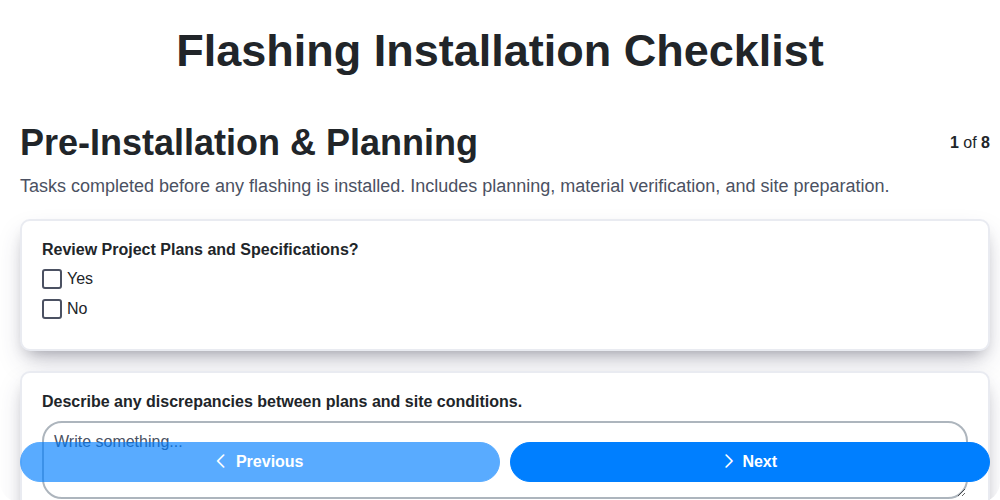
Table of Contents
- Introduction: Why a Flashing Installation Checklist Matters
- Pre-Installation Planning & Assessment
- Material Selection & Verification
- Tools and Safety Gear Preparation
- Substrate Inspection and Preparation
- Wall Flashing Installation: Step-by-Step
- Roof Flashing: Chimneys, Vents, and Valleys
- Detailing: Laps, Seams, and Overhangs
- Flashing Around Windows and Doors
- Integrating with Siding and Trim
- Quality Control: Visual Inspection
- Addressing Common Flashing Mistakes
- Post-Installation Cleanup and Documentation
- Maintaining Your Flashing: Long-Term Care
- Conclusion: Ensuring a Watertight Seal
- Resources & Links
TLDR: This free checklist template helps ensure a watertight flashing installation, avoiding costly water damage. It breaks down the process into clear steps - from planning and material checks to final inspection - so you can minimize errors and maximize the lifespan of your home's weather protection. Download it now and simplify your flashing projects!
Introduction: Why a Flashing Installation Checklist Matters
Flashing. It's the unsung hero of a well-protected home, silently working to deflect water away from vulnerable areas. You might not see it, but a faulty flashing job can lead to a cascade of costly problems - from hidden rot and mold growth to structural damage that compromises the integrity of your entire building.
Think of it this way: your roof and siding are your home's first line of defense against the elements. But where those surfaces meet - around windows, doors, chimneys, and along walls - water can easily find its way in if proper flashing isn't in place. A carefully installed flashing system acts as a crucial secondary defense, directing water away and preserving the lifespan of your home's essential components.
Without a systematic approach, even experienced contractors can overlook critical details. This isn't just about ensuring a watertight seal; it's about preventing long-term damage and avoiding expensive repairs down the road. Using a detailed checklist, like the one we're providing, ensures consistency, reduces errors, and helps guarantee a professional-quality flashing installation every time. It's a small investment in time and effort that can save you a significant amount of money and stress in the future.
Pre-Installation Planning & Assessment
Before a single piece of flashing is cut or fastened, meticulous planning and assessment are absolutely critical. Rushing this phase can lead to costly mistakes and compromised protection. This isn't just about drawing lines on paper; it's about understanding the existing conditions, anticipating potential challenges, and ensuring the flashing system is perfectly integrated into the overall structure.
1. Blueprint and Architectural Review: Start by thoroughly reviewing the architectural plans or blueprints. These documents outline the building's design, identify potential flashing details, and specify the intended flashing materials and methods. Pay close attention to areas where different building materials intersect, such as walls meeting the roof, around windows and doors, and around roof penetrations like chimneys and vents.
2. On-Site Condition Assessment: A comprehensive on-site assessment is paramount. Look beyond the obvious and carefully examine:
- Existing Flashing: If existing flashing is present, its condition should be assessed. Is it corroded, damaged, or improperly installed? Removing and replacing old flashing can be a significant part of the project.
- Substrate Integrity: Check the underlying structure (walls, roof sheathing) for rot, decay, or existing water damage. Addressing these issues before installing new flashing is crucial - flashing new material over compromised substrate is a recipe for disaster.
- Roof Slope and Drainage: Confirm the roof's slope allows for proper water runoff. Standing water accelerates corrosion and compromises the effectiveness of the flashing.
- Potential Obstacles: Identify any obstructions that might impede flashing installation, such as complex rooflines, unusual angles, or nearby structures.
3. Weather Considerations: While it's difficult to predict the future with certainty, checking the weather forecast for the planned installation period is a smart precaution. Prolonged rain or extreme temperatures can impact the performance of sealants and adhesives, and potentially damage newly installed flashing.
4. Local Codes & Permits: Always verify local building codes and permitting requirements before commencing any work. Many jurisdictions have specific guidelines for flashing installation, and failure to comply can result in fines or required rework.
By dedicating adequate time and effort to this crucial planning phase, you lay the foundation for a long-lasting and highly effective flashing system.
Material Selection & Verification
Choosing the right flashing material is a critical first step. While all flashing aims to divert water, their performance and lifespan vary considerably based on material composition, climate, and aesthetics. Here's a breakdown of common choices and key verification points.
1. Galvanized Steel: This is a budget-friendly option, widely used due to its affordability and availability. However, it's susceptible to rust and corrosion over time, particularly in coastal or heavily acidic environments. Verification: Check for uniform coating thickness and signs of pre-existing rust or damage upon delivery. Ensure it meets ASTM A653 standards.
2. Aluminum: Aluminum is lightweight, corrosion-resistant, and relatively easy to work with. It's a good choice for areas with harsh weather conditions. However, it's softer than steel and can be more prone to damage during installation. Verification: Confirm the alloy type and temper (e.g., 3003-H14) as these affect its strength and corrosion resistance. Look for a consistent mill finish, free from scratches or dents.
3. Copper: Known for its exceptional durability and beautiful appearance, copper flashing offers a long-lasting and aesthetically pleasing solution. It naturally forms a protective patina over time. However, it's the most expensive option. Verification: Inspect for consistent color and thickness. Ensure it's free from defects, such as cracks or pinholes. Confirm the copper grade (e.g., 99.9% pure copper).
4. Stainless Steel: This offers superior corrosion resistance compared to galvanized steel, though it's more expensive. It's a good choice for particularly harsh environments. Verification: Check the stainless steel grade (e.g., 304 or 316 - 316 is better for coastal areas) and ensure it meets relevant industry standards.
Beyond Material Type: Regardless of the chosen material, verify the dimensions match the project specifications. Double-check the thickness - thinner flashing is more prone to damage. Finally, always consult the manufacturer's specifications for recommended installation techniques and warranty information.
Tools and Safety Gear Preparation
Before you even think about cutting or shaping a single piece of flashing, a thorough preparation of your tools and safety gear is paramount. A rushed or ill-equipped approach can lead to mistakes, injuries, and a compromised installation.
Essential Tools:
- Utility Knife: For scoring and cutting underlayment and sealant. Keep blades sharp!
- Metal Snips (Straight and Combination): For cutting flashing material. Combination snips are particularly versatile.
- Flashing Hammer: Specifically designed for shaping and securing flashing.
- Tape Measure: Accurate measurements are crucial for proper fit.
- Caulking Gun: For applying sealant.
- Level: Ensures flashing is installed straight and properly sloped.
- Pencil/Marker: For marking cut lines.
- Angle Finder/Protractor: For accurate angle measurements.
- Power Drill/Screwdriver: Depending on fastener choices.
Safety First: Your Protective Arsenal
- Safety Glasses/Goggles: Absolutely essential to protect your eyes from flying debris.
- Work Gloves: Heavy-duty gloves will protect your hands from sharp edges and cuts.
- Hearing Protection (Earplugs/Earmuffs): If using power tools, protect your hearing.
- Dust Mask/Respirator: Especially important when cutting or shaping metal flashing, which can create harmful dust.
- Sturdy Work Boots: Provide stability and protect your feet.
- Appropriate Clothing: Wear close-fitting clothing to prevent it from getting caught in tools.
Pro Tip: Organize your tools and safety gear within easy reach. A well-organized workspace improves efficiency and reduces the risk of accidents. Regularly inspect your tools for damage and replace worn or dull components.
Substrate Inspection and Preparation
Before a single piece of flashing is cut or placed, a thorough inspection and preparation of the existing substrate - whether it's wall sheathing or roof decking - is absolutely critical. This isn't a step to rush or skip; it's the foundation upon which your entire flashing installation's success rests.
What to Look For:
- Rot and Decay: Carefully examine the wood for signs of rot, decay, or insect damage. Probe with a screwdriver to check for soft spots. Any compromised wood must be replaced before proceeding.
- Existing Flashing Condition: Assess the condition of any existing flashing. Is it rusted, cracked, or loose? If so, it needs to be removed entirely, and the area prepared for new flashing.
- Nail/Fastener Protrusions: Old nails or fasteners can protrude and interfere with the new flashing's secure attachment. These need to be removed or countersunk.
- Sheathing Integrity: Look for signs of warping, delamination, or other damage to the sheathing. Weak sheathing will compromise the flashing's ability to perform its job.
- Debris and Contaminants: Remove any debris, dirt, old sealant, or other contaminants that could prevent the new flashing from adhering properly. A clean surface is essential.
Preparation Techniques:
- Wood Replacement: Replace any rotted or damaged wood with fresh, treated lumber of the same thickness and type.
- Surface Cleaning: Use a wire brush, scraper, or power washer to thoroughly clean the surface.
- Primer Application (Optional): Applying a primer can improve adhesion of flashing, especially in humid climates. Consult the flashing manufacturer's recommendations.
- Leveling: Ensure the substrate is relatively level and even to prevent water pooling and premature failure of the flashing.
Proper substrate preparation might add time to the project, but it's an investment that will pay off in the long run with a durable, leak-free flashing installation.
Wall Flashing Installation: Step-by-Step
Wall flashing is your first line of defense against water damage to your home's walls and siding. Proper installation is crucial for long-term protection and preventing costly repairs down the road. Here's a detailed breakdown of the process, focusing primarily on step flashing, which is the most common type used around windows, doors, and other wall intersections.
1. Preparation is Key:
- Inspect Existing Conditions: Before you begin, carefully examine the existing siding and framing. Look for signs of rot, damage, or previous flashing failures. Address any issues before installing new flashing.
- Remove Old Flashing (if applicable): Carefully remove any existing flashing, ensuring you don't damage the underlying siding or framing. Dispose of the old flashing responsibly.
- Clean the Surface: Thoroughly clean the wall surface where the flashing will be installed. Remove any dirt, debris, or old sealant.
2. Cutting and Positioning the Step Flashing:
- Measure Carefully: Measure the vertical distance from the top of the siding to the bottom of the window or door opening. This measurement, minus about 1/2 inch for overlap, determines the length of your step flashing.
- Cut the Flashing: Cut the step flashing to the correct length. You'll want a slight taper at the top (about 1/2 inch) to allow water to shed easily.
- Positioning: Start at the bottom of the wall and position the first piece of step flashing so that the top edge extends past the siding approximately 2-3 inches. This overlap is essential for proper lapping with subsequent pieces.
3. Securing the Step Flashing:
- Fastening: Use corrosion-resistant nails, screws, or staples to secure the step flashing to the wall. The fastener type should be compatible with the flashing material and the siding. Space fasteners approximately every 12-18 inches. Never nail directly through the siding if possible; always secure to the framing behind the siding.
- Angle: Ensure the flashing is oriented correctly, with the wider portion facing upwards to direct water away from the wall.
4. Lapping and Overlap:
- Second Piece: The next piece of flashing should overlap the previous piece by at least 2 inches. This overlap prevents water from penetrating the wall cavity.
- Staggering: Stagger the joints in the flashing to avoid creating continuous vertical seams, which can act as pathways for water.
- Top Piece: The top piece of flashing should extend beyond the opening and be lapped with the flashing above the opening (if present).
5. Sealing and Finishing:
- Caulking: Apply a bead of exterior-grade sealant along all seams and laps in the flashing to ensure a watertight seal.
- Inspect & Test: Visually inspect the installation to ensure proper alignment, overlap, and sealing. If possible, simulate rainfall to check for any leaks.
- Siding Integration: Ensure the flashing is properly integrated with the siding. Overlap the flashing under the siding, securing it to prevent water from getting behind the siding.
Important Considerations:
- Material Compatibility: Use flashing materials that are compatible with your siding and roofing materials to avoid corrosion and premature failure.
- Local Codes: Always adhere to local building codes and manufacturer's instructions for proper installation.
- Professional Help: If you are not comfortable working with flashing, consider hiring a qualified contractor to ensure a professional and lasting installation.
Roof Flashing: Chimneys, Vents, and Valleys
Roof flashing isn't a one-size-fits-all affair. Certain roof features demand specialized attention to ensure watertight protection. Let's break down the critical flashing requirements for chimneys, vents, and valleys.
Chimney Flashing: A High-Risk Zone
Chimneys present a particularly vulnerable point for water intrusion. The intersection of the chimney and the roof creates a complex geometry that requires meticulous flashing. Older chimneys often have deteriorated flashing that needs complete replacement. Common chimney flashing techniques include:
- Base Flashing: This sits directly beneath the roofing material, creating a base layer of protection.
- Step Flashing: These vertical pieces are installed along the chimney sides, overlapping with the base flashing.
- Counter Flashing: A cap piece that covers the step flashing and provides a finished look, directing water away from the chimney.
- Proper sealing: High-quality sealant is crucial at all joints and penetrations.
Vent and Pipe Penetrations: Small Holes, Big Problems
Vents, skylights, and plumbing stacks all create holes in your roof's protective barrier. Each of these requires flashing to prevent leaks. The most common approach involves:
- Flashing Boots: Specialized rubber or metal boots are designed to seal around vent pipes and skylights. Ensure they are properly installed and maintained.
- Aprons: Metal aprons can be installed around skylights to direct water away from the penetration.
- Sealing: As with all flashing applications, a bead of high-quality sealant is essential for a watertight seal.
Valley Flashing: Guiding Water's Descent
Valleys - where two roof slopes meet - are natural pathways for water flow. Improperly flashed valleys are a major source of leaks. Key considerations for valley flashing include:
- Woven Wire Valley: A continuous metal strip woven into the roofing material, providing a secure and watertight barrier.
- Open Valley: Two separate pieces of flashing are installed on each roof slope, meeting in the valley. This requires precise alignment and careful sealing.
- Valley Metal Gauge: Utilizing the correct metal gauge (thickness) for the specific slope and snow load is crucial for durability.
- Proper Overlap: Ensuring sufficient overlap between valley flashing pieces is vital to prevent water from infiltrating.
Detailing: Laps, Seams, and Overhangs
The structural integrity of your flashing hinges on more than just its placement; it's in the nuances of how each piece connects and interacts with its neighbors. Ignoring these details opens the door to water infiltration, no matter how well the main flashing installation might be. Let's break down how to handle laps, seams, and overhangs for a truly watertight result.
Laps: The Art of Overlap
Laps are your primary defense against water migration. A generous overlap isn't just good practice; it's essential. General guidelines recommend a minimum of 2 inches of overlap for most applications, but always refer to the flashing manufacturer's specifications - they may dictate a different requirement based on material and climate. Crucially, ensure the upper piece overlaps the lower piece downward. This way, any water that manages to bridge the gap is directed downwards and away from the vulnerable area. Staggering lap joints where possible adds another layer of protection, preventing continuous paths for water to follow.
Seams: Welding Together Protection
Seams are inherently weak points. While proper lapping minimizes their impact, they still require extra attention. Avoid simply butting flashing pieces together; this guarantees water ingress. Always use a high-quality, compatible sealant at every seam. Consider using flashing tape - a self-adhering, waterproof membrane - for added protection, especially in areas with harsh weather conditions. For metal seams, consider welding or riveting, if appropriate for the flashing material and your skill level - these methods create a virtually watertight bond.
Overhangs: Extending Your Defense
Proper overhangs are vital, particularly along walls and around openings. These extensions channel water away from the building's core, preventing it from pooling and penetrating the substrate. Ensure overhangs extend far enough to clear siding or trim - typically a minimum of 1 to 2 inches. Remember to seal the edges of the overhang with a compatible sealant to prevent water wicking underneath. Consistent overhangs, not just in length but also in application, contribute significantly to a professional and durable finish.
Ignoring these finer details can negate the benefits of a flawless flashing installation. Take the time to master these techniques and your building will be far better protected against the elements.
Flashing Around Windows and Doors
Windows and doors are notorious entry points for water damage. The areas where these openings meet walls and roofs are particularly vulnerable, requiring meticulous flashing to ensure a watertight seal. Here's a breakdown of how to handle flashing around these critical openings:
Window Flashings: A Layered Approach
- Window Sill Pan: Most modern windows are equipped with a sill pan - a shallow, integrated flashing tray. Ensure it's properly integrated with the wall flashing below it. This creates a fail-safe system: if the wall flashing fails, the sill pan will still direct water away from the opening. Inspect this pan for cracks or debris buildup.
- Weep Holes: Weep holes are essential for drainage. They allow water that does enter the cavity behind the window to escape. Ensure these holes are clear of obstructions. A clogged weep hole is a recipe for rot.
- Sidewall Flashings: Sidewall flashings extend up the sides of the window opening and connect to the wall flashing. These are typically step flashing, lapped correctly and securely fastened. Pay special attention to the head of the window - the top - where water can easily pool.
- Head Flashing: Install head flashing above the window frame, slightly projecting outward to direct water away. This is often a continuous piece of metal integrated with the wall flashing system.
Door Flashings: Focusing on Thresholds
- Threshold Flashing: The threshold, or bottom of the door, is a prime target for water intrusion. It's crucial to have a properly installed threshold flashing that directs water away from the door jamb. Many doors have integrated threshold flashing; ensure it aligns correctly with the surrounding wall flashing.
- Jamb Flashings: Install flashing along the door jambs, typically using step flashing or continuous metal. Overlap the flashing generously and seal all joints.
- Head Flashings: Similar to windows, install head flashing above the door opening to prevent water from penetrating.
Common Mistakes to Avoid:
- Skipping the Flashing: The most obvious mistake!
- Improper Overlapping: Insufficient overlap allows water to seep underneath.
- Incorrect Fasteners: Use fasteners that won't corrode and damage the flashing material.
- Ignoring Manufacturer's Instructions: Always follow the window and door manufacturer's specific flashing recommendations.
Integrating with Siding and Trim
Properly integrating flashing with siding and trim is where many seemingly small details make the biggest difference in preventing water intrusion. It's not enough to just install flashing; it needs to work seamlessly with the surrounding elements.
Here's a breakdown of key considerations:
- Understanding Siding Types: Different siding materials (vinyl, wood, fiber cement, metal) require slightly different flashing approaches. For instance, vinyl siding often necessitates a Z-flashing system to allow for expansion and contraction while maintaining a watertight seal. Wood siding often requires more generous overlap and careful sealing to prevent rot.
- Creating a Weep System: When flashing is installed above siding, it's crucial to incorporate a weep system. This allows any water that does get behind the siding to drain out, preventing buildup and potential damage. Weeps can be integrated into the flashing itself or installed as separate components.
- Maintaining Proper Reveal: Pay close attention to the reveal - the space between the siding and the trim. This area is a prime target for water penetration. Ensure the flashing allows for proper siding alignment and a consistent, aesthetically pleasing appearance.
- Trim Considerations: Trim pieces often provide an additional layer of protection. Flash the intersection of trim and siding meticulously, ensuring a tight seal and a clean, professional finish.
- Avoiding Bridging: Ensure the flashing doesn't "bridge" across the siding or trim, restricting movement and potentially causing damage over time. Allow for slight gaps where necessary to accommodate expansion and contraction.
- Caulking and Sealing: Use high-quality, paintable sealant to seal all joints and gaps between the flashing, siding, and trim. Ensure the sealant is compatible with the materials being used.
Quality Control: Visual Inspection
A thorough visual inspection is your final line of defense against water intrusion. Don't rush this step - meticulousness now prevents costly headaches later. Start by examining each piece of flashing for any visible defects: dents, scratches, or corrosion. Pay close attention to overlaps and seams; they should be consistent and properly lapped, creating a smooth, continuous surface that water can't exploit.
Check that fasteners are secure and properly spaced, avoiding any gaps where water could penetrate. Look for any signs of sealant failure-cracking, peeling, or discoloration-and reapply as needed. A keen eye for detail will reveal potential problems before they become serious. Walk the entire perimeter of the structure, examining flashing from multiple angles, and don't hesitate to get up close to scrutinize every joint. Remember, what appears minor now could escalate into a major leak down the road.
Addressing Common Flashing Mistakes
Even the most experienced professionals can fall victim to common flashing errors. Recognizing and avoiding these pitfalls is key to a watertight and long-lasting installation. Here's a breakdown of frequent mistakes and how to steer clear of them:
1. Skipping the Substrate Prep: We're serious about this - neglecting to properly inspect and repair the underlying substrate is a recipe for disaster. Rotting wood, loose sheathing, or existing damage will render even the best flashing ineffective. Take the time to address these issues before you start installing flashing.
2. Incorrect Fastener Choice: Using the wrong fasteners can lead to corrosion, loosening, and compromised flashing integrity. Ensure fasteners are compatible with the flashing material and the substrate. For example, using galvanized nails with copper flashing will accelerate corrosion. Stainless steel or copper fasteners are often the best choice.
3. Improper Lapping & Overlap: Insufficient lapping leaves gaps for water to penetrate. Always adhere to manufacturer's specifications for lapping requirements, and err on the side of generosity. Pay extra attention to end laps and corner details.
4. Ignoring Valley Slope: Valleys are critical areas for water flow. A poorly sloped valley will lead to standing water and eventual leaks. Verify proper slope and ensure flashing is securely fastened.
5. Using Incorrect Sealant: Not all sealants are created equal. Choose a high-quality, UV-resistant sealant specifically designed for flashing applications. Improper sealant can crack, dry out, and fail, allowing water to infiltrate.
6. Neglecting End Laps: End laps, where flashing pieces meet at the end of a wall or roof edge, are prime leak points. Ensure these are properly sealed and overlapped, and consider using a flashing tape for added protection.
7. Rushing the Job: Quality flashing installation takes time and attention to detail. Rushing the process inevitably leads to mistakes and compromises the final result. Prioritize accuracy over speed.
Post-Installation Cleanup and Documentation
The flashing installation itself is only half the battle. Proper post-installation cleanup and thorough documentation are vital for ensuring the long-term performance and providing reassurance for years to come.
Immediate Cleanup:
Remove all scrap flashing, fastener packaging, and any debris generated during the installation process. A clean worksite minimizes the risk of damage to surrounding areas and prevents future issues like rust or staining. Sweep or vacuum the area meticulously. If sealant was used, remove any excess with appropriate solvents, following the manufacturer's safety guidelines.
Long-Term Protection:
Consider applying a protective coating to exposed flashing surfaces, particularly in harsh climates. This can help prevent corrosion and extend the lifespan of your investment. Regularly inspect the flashing (at least annually) for signs of damage, wear, or debris accumulation. Promptly address any issues to prevent larger problems down the line.
Documentation for Future Reference:
Creating a record of the installation is incredibly valuable. Here's what to include:
- Photos: Take detailed photos of the completed flashing job from various angles. Document any specific techniques or challenges encountered during installation.
- Material List: Keep a record of the type, quantity, and manufacturer of all flashing materials used.
- Warranty Information: Store warranty documentation for the flashing and any sealants or fasteners.
- Notes: Jot down any relevant notes about the installation, such as specific instructions followed or any modifications made.
This documentation will be invaluable for future maintenance, repairs, or even for demonstrating the quality of work if questions arise. It's an investment in peace of mind that truly pays off.
Maintaining Your Flashing: Long-Term Care
Flashing isn't a set it and forget it component of your home. Like any exterior element, it requires ongoing attention to ensure its longevity and continued protection. Here's how to keep your flashing performing at its best for years to come:
Regular Visual Inspections:
The most crucial step is regular visual inspections. Aim for at least twice a year - in the spring and fall - when weather patterns shift. Look for signs of deterioration, including:
- Rust or Corrosion: Particularly important for galvanized steel and aluminum flashing. Surface rust can often be addressed, but significant corrosion indicates a more serious problem.
- Cracks or Bends: These compromises in the flashing's integrity can allow water to penetrate.
- Loose Fasteners: Check that nails, screws, or other fasteners are secure. Replace any that are loose or corroded.
- Discoloration or Staining: Staining on the siding or wall beneath the flashing can be a telltale sign of a leak.
Cleaning & Debris Removal:
Leaves, pine needles, and other debris can accumulate on top of flashing, trapping moisture and accelerating corrosion. Periodically remove this debris with a soft brush or broom. Be gentle to avoid scratching the flashing surface.
Seam & Joint Maintenance:
Over time, sealants can dry out and crack, compromising the watertight seal. Every few years, inspect sealant joints and reapply as needed. Choose a high-quality sealant specifically designed for exterior use and compatible with the flashing material.
Addressing Minor Issues Promptly:
Don't ignore small problems. A small crack or a few loose fasteners can quickly escalate into a major leak. Addressing minor issues promptly can save you significant repair costs down the road. For DIYers comfortable with basic home repairs, these issues can often be handled with a few simple tools and materials. Otherwise, call in a professional.
Professional Inspections:
Consider scheduling a professional inspection every 5-10 years, or sooner if you notice any concerning signs. A trained eye can identify subtle issues that might be missed during a homeowner's visual check. They can also recommend preventative maintenance strategies to extend the life of your flashing.
Conclusion: Ensuring a Watertight Seal
Investing the time and effort into proper flashing installation-or hiring a qualified professional to do so-is an investment in the long-term health and integrity of your home. A seemingly small detail, flashing acts as a critical barrier against water intrusion, preventing costly repairs and safeguarding your property from structural damage and unhealthy mold growth. Don't underestimate the importance of this often-overlooked element of your home's defenses. By diligently following a checklist like the one provided, or partnering with an experienced contractor, you can rest assured that your home is protected from the elements and enjoying a truly watertight seal. Remember, proactive maintenance and quality workmanship are always the best defense against water damage - securing your home's future, one flashing detail at a time.
Resources & Links
- Building Science Corporation: A leading resource for building science principles. Their articles and resources delve into moisture control, air leakage, and overall building performance - crucial for understanding the 'why' behind proper flashing. Many topics directly relate to water management and detailing.
- Federal Highway Administration (FHWA): While focused on highway infrastructure, FHWA provides extensive guides on corrosion and material selection, which are highly relevant to flashing materials and their lifespan. Their publications often include detailed specifications and best practices.
- Metal Construction Association (MCA): MCA is a great resource for information on metal flashing systems. They provide technical guidelines, product specifications, and design considerations specifically for metal flashing applications. Relevant for understanding material properties and installation specifics.
- Home Repair Referrals: Offers guides, articles, and tips on home improvement projects, including roofing and flashing. Useful for providing supplementary details and visuals regarding installation techniques and common problems.
- Roofing Materials: Comprehensive resource for roofing materials and systems. Provides insights into different flashing materials (aluminum, copper, steel) and their suitability for various climates and building designs.
- The ASHI Reporter: Published by the American Society of Home Inspectors, this publication frequently covers roofing issues and flashing failures. Provides a real-world perspective on common mistakes and quality control considerations.
- Fine Homebuilding: Offers detailed articles and videos on various construction topics, including roofing and flashing. Often includes practical advice and step-by-step guides for professionals and DIYers.
- This Old House: A popular resource for home improvement and remodeling, offering advice and videos on all aspects of home construction, including roofing and flashing. Great for visualizing the process and understanding best practices.
- International Code Council (ICC): Provides building codes and standards that govern flashing requirements and installation practices. Essential for ensuring compliance and safety.
- GuildQuality: Provides contractor reviews and ratings. While not a content resource itself, it offers insights into the quality of flashing work performed by different contractors, useful for understanding best practices and avoiding common issues.
- Owens Corning: Although primarily known for insulation, Owens Corning often provides resources related to roofing systems and flashing, offering insights into compatible materials and installation guidelines.
Frequently Asked Questions
What is this checklist template for?
This checklist template is designed to guide you through the complete process of installing Adobe Flash (though it's important to note Flash is largely outdated and no longer supported by Adobe - this checklist is for legacy systems or specific, unavoidable needs). It covers everything from system compatibility to troubleshooting potential issues.
Why do I need a checklist for Flash installation?
A checklist ensures a systematic approach, minimizing errors and potential problems during installation. It helps you verify compatibility, avoid missing crucial steps, and identify solutions to common installation issues.
Is Adobe Flash still supported?
No, Adobe officially ended support for Flash on December 2019. It is highly recommended to avoid using Flash unless absolutely necessary for legacy applications. This checklist is intended for those situations.
My system says it's incompatible with Flash. What should I do?
Check the 'System Requirements' section of the checklist. You may need to upgrade your operating system or hardware. If that's not possible, consider alternative solutions or seek advice from a technical professional.
Where can I get the Flash installer?
Due to Adobe's end-of-life policy, the official Adobe website no longer hosts the Flash installer. You may find archived versions online, but be extremely cautious about downloading from unofficial sources due to potential security risks. Use extreme caution and scan the downloaded file with multiple antivirus programs.
What are the security risks associated with using Flash?
Flash has a long history of security vulnerabilities. Using it exposes your system to potential malware, exploits, and data breaches. This is why it's strongly discouraged.
I'm having trouble with a specific step in the checklist. What should I do?
Double-check you're following the instructions carefully. Refer to Adobe's archived documentation (if available) or search online forums for solutions. If the issue persists, consider seeking professional help.
Can I use this checklist for other media players?
While the checklist is specifically designed for Flash installation, some steps, such as checking system requirements and troubleshooting common errors, may be applicable to installing other media players or plugins. However, the specific Flash-related steps will not be relevant.
I downloaded Flash from a third-party website. Is it safe?
No, downloading from unofficial websites is risky. Always prioritize security and avoid using Flash if possible. If you must use it, download from reputable archives, but exercise extreme caution and scan the file with multiple antivirus programs.
What does 'enabling' Flash in my browser mean?
'Enabling' Flash means allowing your browser to recognize and run Flash content. Many browsers now block Flash by default due to security concerns, and this step involves overriding those security settings (which is not recommended).
Comments
There are no comments yet. Be the first to add one!
Construction Management Solution Demo
Build smarter, not harder! ChecklistGuro streamlines construction projects from planning to closeout. Manage tasks, inspections, safety protocols & more - all in one place. Reduce delays, improve communication, and deliver projects on time & on budget.
Related Articles
The Ultimate Concrete Vibration Checklist Template

Unlock Value: Your Free Value Engineering Checklist Template
The Ultimate HVAC Ductwork Installation Checklist Template

The Ultimate Rebar Placement Checklist Template

Your Concrete Mix Design Verification Checklist: A Step-by-Step Guide
Backfilling & Compaction Checklist: A Foundation's Best Friend

The Ultimate Concrete Delivery & Placement Checklist Template

Your Ultimate Stakeholder Communication Plan Checklist Template
We can do it Together
Need help with
Construction?
Have a question? We're here to help. Please submit your inquiry, and we'll respond promptly.