GxP Pharmaceutical Audit Checklist: Your Comprehensive Template Guide
Published: 11/25/2025 Updated: 07/02/2026
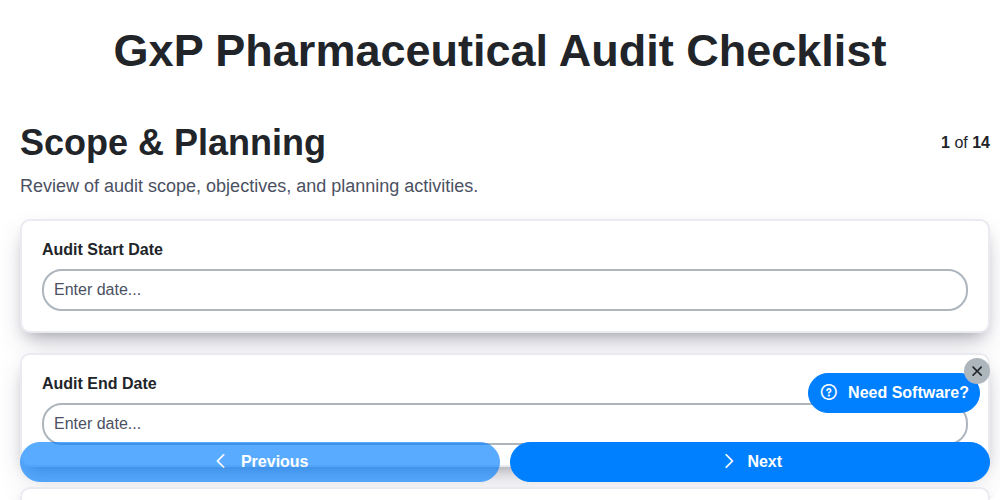
Table of Contents
- Introduction: Why a GxP Audit Checklist Matters
- 1. Scope & Planning: Defining the Audit's Boundaries
- 2. Personnel & Training: Ensuring Qualified Staff
- 3. Standard Operating Procedures (SOPs): Documented and Followed
- 4. Facilities & Equipment: Maintaining a Controlled Environment
- 5. Materials Management & Manufacturing Processes: From Raw Materials to Finished Product
- 6. Critical Controls: Laboratory Testing, Data Integrity, & Change Management
- 7. Post-Audit Activities: Deviations, CAPA, Complaints, and Reporting
- Resources & Links
TLDR: Need to ace your GxP pharmaceutical audit? This checklist template covers everything from personnel training and equipment maintenance to data integrity and CAPA. It's your roadmap for demonstrating compliance with regulations like FDA, EMA, and others - ensuring quality, safety, and efficacy in your pharmaceutical operations. Download it and use it to streamline your audit prep!
Introduction: Why a GxP Audit Checklist Matters
GxP regulations - encompassing GMP, GLP, GCP, and others - are the bedrock of pharmaceutical quality and patient safety. Compliance isn't just a box to tick; it's a continuous commitment to ensuring product efficacy, safety, and consistency. A robust GxP audit program is essential to demonstrating that commitment, but navigating the complexities of these regulations can feel overwhelming. That's where a well-structured GxP audit checklist becomes your indispensable guide.
This checklist isn't merely a list of items to review; it's a framework for systematically assessing your operations against regulatory requirements. It ensures a thorough and consistent evaluation, helping to identify potential gaps, weaknesses, and areas for improvement before they escalate into serious issues. A comprehensive checklist promotes transparency, facilitates efficient audits, and ultimately strengthens your entire quality management system. It's a proactive tool for safeguarding your reputation, avoiding costly penalties, and, most importantly, protecting patient health.
1. Scope & Planning: Defining the Audit's Boundaries
The foundation of any successful GxP pharmaceutical audit lies in a clearly defined scope and meticulous planning. This isn't just about selecting a date; it's about outlining exactly what the audit will cover and why. A poorly defined scope can lead to wasted time, missed critical areas, and ultimately, an ineffective audit.
The initial stage should involve a thorough review of the auditee's risk assessment. This helps prioritize audit areas, focusing on processes with the highest potential impact on product quality, safety, and efficacy. Consider factors such as the complexity of the manufacturing process, the criticality of the product, and any recent regulatory findings.
The scope should specify:
- Processes to be audited: Clearly list the specific manufacturing, laboratory, or quality control processes to be included.
- Time period covered: Define the period of activity being reviewed (e.g., the last year, specific batches).
- Regulations and guidelines: State the specific GxP regulations (e.g., GMP, GCP, GLP) and applicable guidance documents that the audit will assess.
- Product lines: Indicate which products or product lines are within the scope of the audit.
- Geographic locations: If the site has multiple locations, specify which will be audited.
Furthermore, a detailed audit plan should be developed, outlining objectives, methodologies, resources needed, and a timeline for completion. Communication of the scope and plan to both the audit team and the auditee is crucial for alignment and transparency.
2. Personnel & Training: Ensuring Qualified Staff
A robust pharmaceutical audit demands a thorough examination of personnel qualifications and training records. It's not enough to simply have employees; they must be appropriately skilled, trained, and competent to perform their assigned tasks, adhering to GxP regulations.
The audit will focus on several key areas:
- Job Descriptions & Responsibilities: Are job descriptions clear, current, and reflective of actual duties? Do they adequately define required skills and experience?
- Educational Background & Experience: Do personnel possess the necessary education, training, and experience to perform their roles effectively? This includes verification of degrees, certifications, and prior relevant experience.
- GxP Training Records: Comprehensive records of GxP training (e.g., GDP, GMP, GLP) are crucial. The audit will check for frequency, content (covering relevant regulations and SOPs), and documentation of training completion. Refresher training schedules and completion are also assessed.
- Job-Specific Training: Beyond general GxP training, specific training relating to equipment operation, process execution, and data handling is essential. Records of this training, including assessments and evaluations, must be readily available.
- Competency Assessment: Training alone isn't sufficient. The audit will look for evidence of how competency is assessed - practical demonstrations, observed performance, or other methods - to ensure employees can apply their knowledge.
- Supervision & Mentorship: For new or less experienced personnel, the audit will review the effectiveness of supervision and mentorship programs.
- Periodic Review: Are personnel files and training records regularly reviewed to ensure currency and relevance?
Failure to demonstrate adequate personnel qualification and training can severely impact product quality and regulatory compliance.
3. Standard Operating Procedures (SOPs): Documented and Followed
Standard Operating Procedures (SOPs) are the bedrock of any robust GxP compliant pharmaceutical operation. They detail how tasks are consistently performed, ensuring quality and minimizing errors. During an audit, examiners will rigorously assess the SOP system.
Here's what auditors will be looking for:
- Existence & Availability: Are SOPs documented, approved, and readily accessible to personnel performing the related tasks? This isn't just about having them physically present; electronic access and clarity of location are crucial.
- Content Accuracy & Completeness: Do SOPs accurately reflect current practices? Are they comprehensive, covering all critical steps and decision points? Outdated or incomplete SOPs demonstrate a breakdown in control.
- Approval & Revision Control: Are SOPs approved by qualified personnel (often including Quality Assurance)? Is there a clear revision history, tracking changes and ensuring that the current version is always used? Review dates must be current.
- Training & Competency: Are personnel properly trained on the SOPs relevant to their roles? Training records must be maintained, and competency demonstrated. Simply signing a training record isn't enough - auditors may ask personnel to describe the steps they take based on an SOP.
- Adherence to SOPs - The "Doing What You Say" Factor: This is arguably the most important aspect. Auditors will look for evidence that personnel actually follow the SOPs. This can be assessed through observation, review of batch records, and questioning. Discrepancies between the SOP and actual practice are red flags.
- Regular Review & Updates: GxP regulations require periodic review of SOPs to ensure they remain relevant and effective. The review schedule must be documented, and evidence of reviews presented. Updates should be driven by process improvements, regulatory changes, or identified deficiencies.
Failure to demonstrate a well-managed SOP system can lead to significant findings and regulatory action.
4. Facilities & Equipment: Maintaining a Controlled Environment
The physical environment and the equipment used within a pharmaceutical manufacturing facility are critical factors influencing product quality and patient safety. A robust audit of facilities and equipment ensures a controlled environment that minimizes risks and guarantees reproducibility.
Key Audit Focus Areas:
- Layout & Design: Does the facility layout prevent cross-contamination and allow for efficient material flow? Are segregated areas appropriately defined and maintained for different activities (e.g., quarantine, rejected material storage)? Review blueprints and current layouts for accuracy and adherence to design intent.
- Cleanliness & Sanitation: Assess the effectiveness of cleaning and sanitation procedures. Verify documented cleaning schedules, the use of appropriate cleaning agents, and evidence of cleaning verification (e.g., microbial testing of surfaces, visual inspection). Are cleaning records complete and accurate?
- HVAC Systems: Evaluate the performance and maintenance of HVAC systems, including temperature, humidity, and air filtration. Review calibration records for temperature and humidity monitors. Confirm HEPA filtration is properly maintained and validated.
- Utilities: Verify the quality and control of utilities such as water (purified water, water for injection), compressed air, and nitrogen. Assess validation records and ongoing monitoring programs.
- Equipment Qualification & Validation: Confirm that all critical equipment has undergone Installation Qualification (IQ), Operational Qualification (OQ), and Performance Qualification (PQ). Review validation records and maintenance logs.
- Preventative Maintenance (PM): Scrutinize the PM program to ensure equipment is regularly inspected, serviced, and calibrated. Review PM schedules, work orders, and records of completed maintenance.
- Calibration: Verify calibration procedures and schedules for all measuring equipment. Confirm calibration certificates are current and traceable to national or international standards.
- Equipment Status Indicators: Assess the functionality and accuracy of equipment status indicators (e.g., alarms, error messages) to ensure timely identification and correction of issues.
Audit Considerations:
- Check for proper labeling of equipment and areas.
- Examine procedures for handling and storing equipment components.
- Investigate any observed deviations or non-conformances related to facilities and equipment.
5. Materials Management & Manufacturing Processes: From Raw Materials to Finished Product
A robust materials management system and tightly controlled manufacturing processes are absolutely critical in pharmaceutical GxP compliance. This section focuses on ensuring the traceability, quality, and integrity of materials throughout the entire lifecycle, from initial receipt to final product release.
Materials Management - Ensuring Quality at the Source:
The audit will scrutinize your approach to sourcing, receiving, storage, and handling of raw materials, packaging materials, and intermediates. Key areas of focus include:
- Supplier Qualification & Auditing: Are suppliers evaluated and approved based on established criteria? Are periodic audits conducted to verify ongoing compliance? Documentation of supplier performance is essential.
- Receipt & Quarantine: Procedures for receipt inspection, sampling, and quarantine of materials must be clearly defined and followed. Deviation handling for non-conforming materials is equally important.
- Storage Conditions: Appropriate storage conditions (temperature, humidity, light) are crucial for maintaining material integrity. Are these conditions monitored and documented? Are materials stored separately to prevent cross-contamination?
- Inventory Control: A reliable inventory system is necessary to prevent mix-ups, expiry, and stockouts. FIFO (First-In, First-Out) principles should be strictly adhered to.
- Traceability: Complete traceability from raw material to finished product is paramount. Batch records, material certificates of analysis (COAs), and other relevant documentation must be readily available.
Manufacturing Processes - Consistency and Control:
The manufacturing process itself demands meticulous control and adherence to established protocols. Expect review of:
- Master Batch Records (MBRs) & Batch Records (BRs): Are MBRs approved, current, and readily accessible? Are BRs meticulously completed by trained personnel, documenting all steps and observations?
- Equipment Qualification & Validation: Equipment must be properly qualified (IQ, OQ, PQ) and processes validated to demonstrate consistent performance. Validation records need to be complete and maintained.
- Process Parameters & Control: Critical process parameters (temperature, pressure, mixing speed, etc.) must be monitored and controlled within defined limits. Deviation handling procedures need to be robust.
- In-Process Controls (IPCs): Are IPCs performed and documented at appropriate stages of the manufacturing process? Do IPC results meet predetermined acceptance criteria?
- Cleaning Validation: Cleaning procedures must be validated to ensure effective removal of residues and prevent cross-contamination. Validation records need to be current and readily available.
- Sampling & Testing: Sampling plans must be clearly defined and followed. Test results must be accurately documented and reviewed.
This rigorous assessment of materials management and manufacturing processes aims to ensure that the final pharmaceutical product consistently meets quality standards and regulatory requirements.
6. Critical Controls: Laboratory Testing, Data Integrity, & Change Management
The pharmaceutical industry operates under intense scrutiny, and certain areas demand unwavering attention during GxP audits. Laboratory testing, data integrity, and change management represent cornerstones of product quality and patient safety, making them critical areas of focus.
Laboratory Testing: This isn't simply about running tests; it's about ensuring the right tests are performed, using validated methods, by qualified personnel, and with properly maintained equipment. Auditors will scrutinize test method validation records, instrument calibration and maintenance logs, analyst training and competency assessments, and the traceability of reference standards. A robust laboratory system relies on a clear understanding of Acceptance Criteria and a well-defined process for out-of-specification (OOS) investigations. Expect detailed review of analytical data, including raw data, calculations, and results reporting.
Data Integrity: Increasingly, data integrity is the central theme in GxP audits. It's not just about accuracy; it encompasses the principles of ALCOA+ (Attributable, Legible, Contemporaneous, Original, Accurate, Complete, and Available + Consistent, Enduring, and Audit Trail). Auditors will be looking for evidence of secure data storage, user access controls, audit trails, and data backup procedures. This includes scrutinizing electronic systems, ensuring data is protected from unauthorized access, modification, or deletion. A lack of demonstrable data governance can trigger significant findings.
Change Management: Pharmaceutical manufacturing is a dynamic process, requiring adjustments and improvements. However, any changes - be they to equipment, processes, or procedures - must be controlled and documented. The change control system should define a clear process for risk assessment, approval, implementation, and verification. Auditors will verify that changes are properly assessed for potential impact on product quality, that appropriate personnel are involved in the approval process, and that changes are fully documented and communicated. A lack of a robust change control process introduces unacceptable risk.
These three areas are deeply interconnected. A compromised change control process can lead to uncontrolled changes impacting laboratory testing and data integrity. Strong controls across all three areas are essential for demonstrating ongoing compliance and safeguarding product quality.
7. Post-Audit Activities: Deviations, CAPA, Complaints, and Reporting
The audit isn't just about identifying deficiencies; it's a catalyst for improvement. The period following the audit - focusing on deviations, Corrective and Preventive Actions (CAPA), complaints, and reporting - is critical to demonstrating a commitment to continuous improvement and maintaining GxP compliance.
Deviation Management: Any deviations noted during the audit must be thoroughly investigated. This goes beyond simply documenting the event; a root cause analysis is essential to prevent recurrence. The investigation should involve relevant personnel and consider all contributing factors. Documented findings should include the deviation description, contributing factors, and the immediate corrective actions taken.
CAPA Implementation: Corrective Actions (addressing identified issues) and Preventive Actions (proactively mitigating potential risks) are the cornerstone of a robust GxP system. The audit report will likely highlight areas requiring CAPA. The CAPA system needs to be clearly defined, documented, and actively managed. This includes assigning responsibilities, setting deadlines, and tracking progress. Verification activities should be planned and executed to confirm the effectiveness of implemented CAPAs.
Complaint Handling: Pharmaceutical companies are obligated to have robust complaint handling procedures. The audit will assess these procedures, including investigation, documentation, and trend analysis. Any audit findings related to complaint handling should trigger a review of existing procedures and potential improvements to ensure patient safety and product quality.
Reporting & Communication: Transparent and timely reporting is crucial. Audit findings, CAPA plans, and progress reports should be communicated to relevant stakeholders, including management. The audit report itself serves as a significant reporting document, and its distribution should follow established procedures. Regular follow-up audits are necessary to verify the effectiveness of implemented CAPAs and confirm ongoing compliance. Failure to address audit findings and implement effective CAPA can lead to regulatory scrutiny and potential enforcement actions.
Resources & Links
- Pharmaceutical Online: A comprehensive resource for pharmaceutical professionals, offering articles, webinars, and industry news related to GMP, regulatory compliance, and manufacturing processes. Useful for understanding current best practices and regulatory updates relevant to audits.
- U.S. Food and Drug Administration (FDA): The primary source for U.S. GxP regulations. Provides access to regulations (21 CFR Parts 210, 211, 820, etc.), guidance documents, and inspection reports. Essential for understanding the legal framework governing pharmaceutical audits.
- European Medicines Agency (EMA): The European Union agency for the evaluation, supervision, and safety of medicines. Provides EU GMP guidelines and related documents, relevant for companies operating or exporting to Europe. Good for comparative regulatory insight.
- International Organization for Standardization (ISO): Focuses on ISO standards (e.g., ISO 9001 for Quality Management, ISO 13485 for Medical Devices). While not strictly GxP, these standards can inform and supplement audit processes and demonstrate a commitment to quality.
- PwC Pharmaceutical Services: Provides consulting and auditing services for the pharmaceutical industry. Their website offers insights into audit preparation, regulatory compliance, and risk management. Often publishes white papers and thought leadership pieces.
- Deloitte Life Sciences & Healthcare: Similar to PwC, Deloitte offers consulting and auditing services. Their site provides articles and reports on key compliance challenges and trends in the pharmaceutical sector including audit preparedness.
- ComplianceGlobal: Provides training and resources on GxP compliance. Covers topics like audit preparedness, risk management, and data integrity. Their training materials can be beneficial for audit team members.
- Quality Assurance Magazine: Provides practical advice and insights on quality assurance and regulatory compliance within the pharmaceutical industry. Features articles on audit best practices and emerging trends.
- Medical Device Online: Although focused on medical devices, a significant portion of their content addresses GxP principles applicable across regulated industries, providing insights into audit processes and quality systems.
- Regulatory Compliance Associates: Provides auditing and training services. Their website offers a wealth of information regarding pharmaceutical regulation and audit preparation.
Frequently Asked Questions
How do I address findings identified during a GxP Pharmaceutical Audit?
Findings should be documented with a severity rating (e.g., major, minor, observation). A corrective action plan should be developed, assigned to responsible personnel, and tracked to completion. Follow-up audits are then conducted to verify effectiveness.
Comments
There are no comments yet. Be the first to add one!
Pharmaceutical Management Solution Demo
Navigating complex regulations and ensuring quality in pharmaceutical manufacturing? ChecklistGuro's Work OS platform streamlines processes from R&D to production, packaging, and distribution. Maintain compliance, improve efficiency, and reduce risk. Discover how ChecklistGuro can transform your pharmaceutical operations!
Related Articles
Ensuring Quality: A Pharmaceutical Compound Record Review Checklist Guide
Pharmaceutical Labeling Compliance Checklist: Your Step-by-Step Guide
Mastering Medication Management: Your Pharmaceutical Inventory Compliance Checklist Template
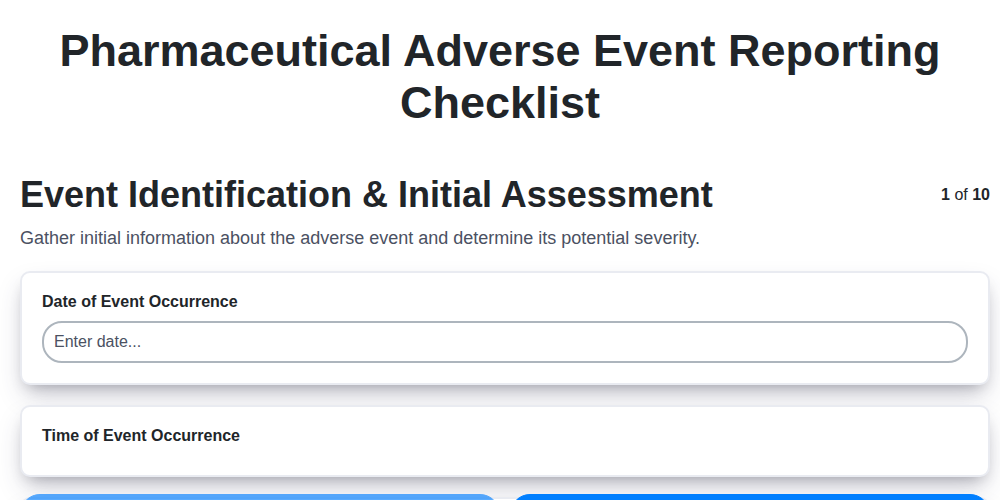
Navigating Adverse Event Reporting: Your Pharmaceutical Checklist Guide
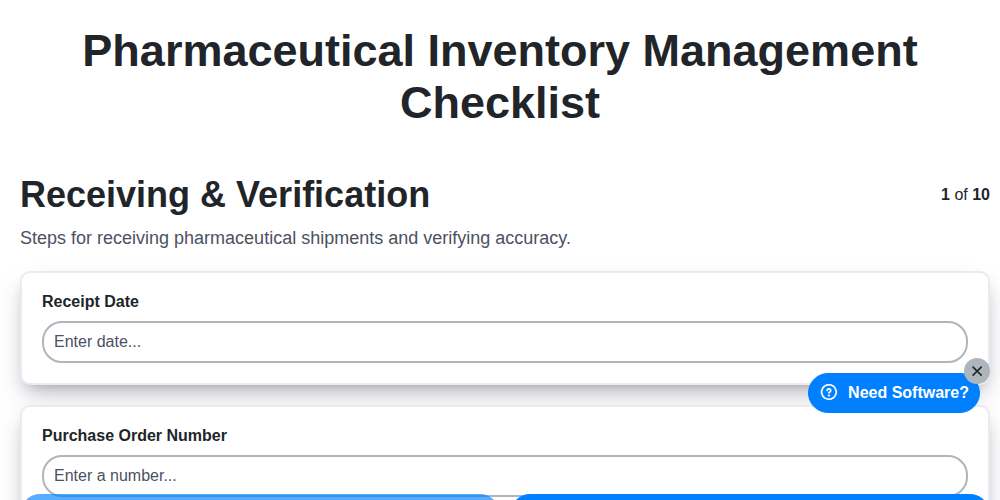
Pharmaceutical Inventory Management Checklist: Your Guide to Compliance & Accuracy
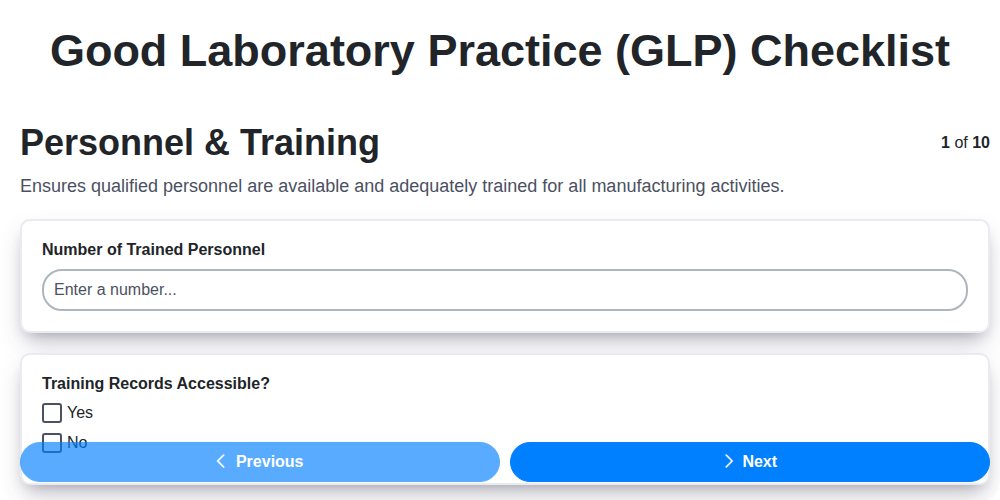
Your Essential GLP Checklist Template: A Practical Guide
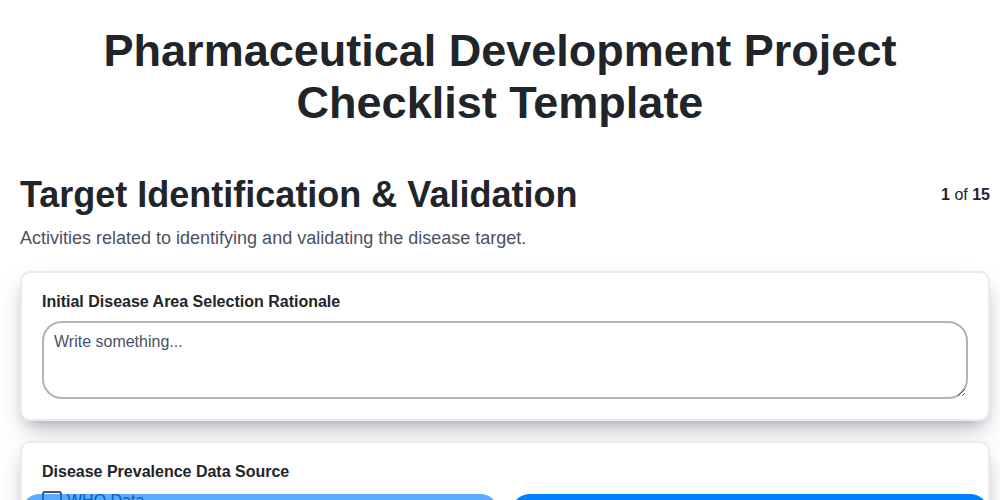
Your Pharmaceutical Development Checklist: A Template for Success
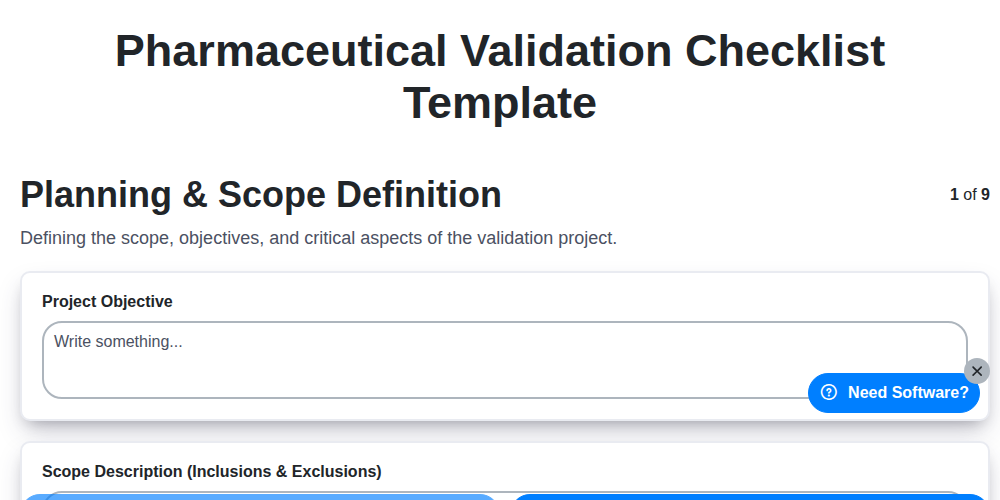
Pharmaceutical Validation Checklist Template: Your Guide to Compliance
Need help with
Pharmaceutical?
Have a question? We're here to help. Please submit your inquiry, and we'll respond promptly.