How to Find and Choose the Best Enterprise Resource Planning (ERP) Management Software
Published: 12/20/2025 Updated: 12/21/2025
Table of Contents
- What is ERP Management Software?
- Why Do You Need ERP Software?
- Key Features to Look For in an ERP System
- Understanding Different Types of ERP Solutions
- Assessing Your Business Needs: A Step-by-Step Guide
- Creating a Detailed Requirements Checklist
- Researching Potential ERP Vendors
- Evaluating ERP Software: Key Considerations
- Requesting and Analyzing Vendor Demos
- Calculating the Total Cost of Ownership (TCO)
- Considering Implementation and Training
- Checking Vendor Reputation and Support
- Making Your Final Decision and Negotiating
- Post-Implementation: Optimization and Ongoing Support
- Resources & Links
TLDR: Overwhelmed by ERP software? This guide breaks down what ERPs do, the key features to look for (like inventory management, financials, and HR), and steps to choose the right system for your business - from needs assessment to vendor demos and implementation planning. We'll help you avoid costly mistakes and find an ERP that truly streamlines your operations!
What is ERP Management Software?
Enterprise Resource Planning (ERP) management software is a centralized system that integrates all facets of your business - from finance and accounting to human resources, supply chain management, inventory, manufacturing, and customer relationship management (CRM). Think of it as a single source of truth for all your business data, replacing disparate spreadsheets, databases, and departmental systems.
Historically, ERP systems were complex and expensive, primarily accessible to large corporations. However, cloud-based ERP solutions have democratized access, making them viable options for small to medium-sized businesses (SMBs) as well.
Instead of manually transferring data between different departments, an ERP system automates these processes, providing real-time visibility and control over your entire operation. This increased efficiency translates to reduced costs, improved decision-making, and a significant boost in overall productivity. Ultimately, ERP software aims to optimize your business processes and help you achieve your strategic goals.
Why Do You Need ERP Software?
Enterprise Resource Planning (ERP) software isn't just for massive corporations anymore. While it historically served as a solution for sprawling organizations with complex processes, the benefits of ERP are increasingly vital for businesses of all sizes looking to scale and improve efficiency. Let's be honest - are you juggling spreadsheets, relying on disparate software solutions, and struggling to get a clear, real-time view of your business? If so, you're likely experiencing the pain points that ERP software aims to solve.
Here's a deeper look at why you might need ERP:
- Data Silos & Lack of Visibility: Without ERP, your data lives in separate systems (accounting, CRM, inventory, etc.). This creates silos that make it difficult to get a holistic view of your operations. ERP centralizes everything, providing a single source of truth.
- Inefficient Processes: Manual data entry, repetitive tasks, and a lack of automation lead to wasted time and increased errors. ERP automates processes, streamlines workflows, and reduces human error.
- Poor Decision-Making: Without accurate and timely data, it's difficult to make informed decisions. ERP provides real-time insights that empower you to react quickly to changing market conditions.
- Scalability Challenges: As your business grows, your existing systems may struggle to keep up. ERP provides a scalable foundation for future growth.
- Compliance Issues: Maintaining compliance with industry regulations can be a headache. ERP often includes features that help you meet compliance requirements.
- Customer Dissatisfaction: Delayed orders, inaccurate billing, and poor communication can all lead to dissatisfied customers. ERP can improve customer service by streamlining processes and providing better visibility.
Essentially, ERP helps you connect the dots across your business, optimizing operations and freeing up your time to focus on strategic growth.
Key Features to Look For in an ERP System
Okay, let's dive into the core functionalities you should expect from a robust ERP system. It's not just about having software; it's about having software that addresses your specific business challenges. Here's a breakdown of critical features:
- Financial Management: This is a cornerstone of any ERP. Look for modules that handle general ledger, accounts payable/receivable, budgeting, forecasting, and financial reporting. Accurate and readily available financial data is essential for informed decision-making.
- Inventory Management: If you deal with physical products, a powerful inventory module is a must. It should track stock levels, manage warehouse locations, optimize order quantities, and potentially integrate with barcode scanners or RFID technology. Real-time inventory visibility is key to avoiding stockouts and minimizing carrying costs.
- Supply Chain Management (SCM): This extends beyond inventory and encompasses the entire process of sourcing materials, manufacturing products, and distributing them to customers. Features might include supplier management, purchase order processing, and logistics tracking.
- Customer Relationship Management (CRM): Many modern ERPs integrate CRM functionality to manage customer interactions, sales pipelines, and marketing campaigns. This provides a 360-degree view of your customers.
- Human Resources (HR) Management: HR modules handle employee data, payroll, benefits administration, time tracking, and talent acquisition. Centralizing HR functions within the ERP can improve efficiency and compliance.
- Manufacturing Management: If you're in manufacturing, look for modules that support production planning, shop floor control, quality management, and bill of materials (BOM) management.
- Project Management: For businesses that undertake projects, integrated project management features help with task assignment, resource allocation, and progress tracking.
- Reporting and Analytics: The ERP should provide robust reporting capabilities to track key performance indicators (KPIs) and identify areas for improvement. Customizable dashboards are a big plus.
- Order Management: Seamlessly manage customer orders, from placement to fulfillment. Look for features like order entry, pricing rules, shipping integration, and invoicing.
Understanding Different Types of ERP Solutions
ERP solutions aren't one-size-fits-all. They're broadly categorized based on deployment, scale, and functionality. Let's explore the most common types:
1. On-Premise ERP: This traditional model involves installing the software on your company's own servers and hardware. You have full control over data and customization, but also bear responsibility for maintenance, security, and IT infrastructure. It's a significant upfront investment, but can be appealing for companies with stringent security needs or complex, unique processes that require extensive modification.
2. Cloud-Based ERP (SaaS): The most popular choice today, Cloud ERP is hosted by a vendor and accessed over the internet. It offers lower upfront costs, easier implementation, automatic updates, and scalability. You essentially rent the software as a service. Data security is handled by the vendor, though you should always review their security protocols.
3. Hybrid ERP: As the name suggests, this approach combines on-premise and cloud-based components. You might keep sensitive data on-site while utilizing cloud solutions for functions like CRM or project management. It offers flexibility but can increase complexity.
4. Tiered ERP Systems: ERPs are also often categorized by the size and complexity of businesses they're designed to serve:
- Tier 1 ERP: Designed for large, multinational corporations with complex operations and significant budgets. Examples include SAP S/4HANA and Oracle NetSuite.
- Tier 2 ERP: Suitable for mid-sized companies with moderately complex needs. Offers a balance of functionality and affordability.
- Tier 3 ERP: Targeted towards small to medium-sized businesses (SMBs) with simpler needs. Often more user-friendly and easier to implement than Tier 1 or 2 solutions.
Understanding these categories will help you narrow down your search and identify solutions that align with your company's size, budget, and technical capabilities.
Assessing Your Business Needs: A Step-by-Step Guide
Before you even think about software demos or pricing comparisons, you absolutely need a clear picture of what your business needs. Jumping in without a solid foundation is a recipe for disaster - you'll end up with an expensive system that doesn't actually solve your problems. Here's a step-by-step guide to assessing those needs:
- Identify Pain Points: Start by talking to your team. What are the biggest bottlenecks? Where are things falling through the cracks? What tasks are repetitive or prone to errors? Gather input from all departments - sales, marketing, operations, finance, HR - to get a comprehensive view.
- Define Requirements - Must-Haves vs. Nice-to-Haves: Distinguish between essential features (must-haves) and desirable but non-critical additions (nice-to-haves). A must-have is something your business cannot function effectively without. A nice-to-have is a feature that would be beneficial but isn't essential for day-to-day operations.
- Document Current Processes: Map out your existing workflows. This doesn't need to be overly complex - a simple flowchart or bullet-point list will do. Understanding how things are done now highlights areas ripe for improvement with an ERP.
- Consider Future Growth: Think beyond your current needs. Will your business be significantly larger in 2-3 years? Can the ERP system scale to accommodate that growth? Choosing a system that can't grow with you will force another, costly migration down the line.
- Prioritize Integrations: What other software do you currently use (CRM, e-commerce platforms, etc.)? Ensure the ERP can integrate seamlessly with these systems to avoid data silos and manual data entry. List these integrations and their priority levels.
- Define Budget: Be realistic about your budget, including not just the software cost but also implementation, training, and ongoing maintenance. A lower upfront cost can quickly become a more expensive option if implementation is complicated or training is inadequate.
Creating a Detailed Requirements Checklist
Before you even look at vendor demos or pricing, you need a crystal-clear understanding of what your business needs. A detailed requirements checklist is your roadmap to ERP success. This isn't just about listing desired features; it's about articulating why you need them and how they'll solve specific business challenges.
Start by involving stakeholders from every department - finance, operations, sales, HR, etc. Each group will have unique perspectives and pain points.
Here's a framework to guide your checklist creation:
- Business Processes: Document your current processes. Where are the bottlenecks? What's inefficient? What's working well, and what needs improvement? Be specific (e.g., Order fulfillment takes an average of 5 days; we need to reduce this to 3).
- Functional Requirements: List the specific functions the ERP must perform. This goes beyond general categories like financial management. Examples: Automated invoice generation, Real-time inventory tracking by lot number, Employee performance review module.
- Technical Requirements: Consider your technical infrastructure - cloud vs. on-premise, integration needs with existing systems (CRM, e-commerce platform), data migration requirements, security protocols.
- Reporting and Analytics: What key performance indicators (KPIs) do you need to track? What level of reporting customization is required?
- User Roles and Permissions: Define user roles and the level of access each role requires within the system.
- Scalability: How will your business grow in the next 1-5 years? Will the ERP be able to handle that growth?
- Compliance: Are there any industry-specific regulations or compliance standards (e.g., HIPAA, GDPR) that the ERP must adhere to?
Prioritize your requirements - categorize them as must-have, should-have, and nice-to-have. This will help you stay focused during vendor evaluations and avoid getting swayed by unnecessary features. Don't be afraid to get granular - the more specific you are, the better equipped you'll be to find a truly fitting ERP solution.
Researching Potential ERP Vendors
Okay, let's dive into finding those vendors. Don't just Google ERP software and pick the first few that pop up. A more strategic approach is essential.
Start with Industry-Specific Solutions: Many ERP providers specialize in particular industries (manufacturing, healthcare, retail, etc.). A solution tailored to your industry will likely have features and workflows that address your unique challenges and regulatory requirements, minimizing customization needs later on. Look for vendors who explicitly mention your sector as a focus.
Leverage Review Sites & Analyst Reports: Platforms like G2, Capterra, and TrustRadius offer user reviews and ratings for ERP software. These can provide valuable insights into the strengths and weaknesses of different solutions from the perspective of real users. Also, consider Gartner's Magic Quadrant and Forrester Wave reports - while often behind paywalls, summaries and analysis are frequently available and offer an overview of leading ERP players.
Check Vendor Websites & Case Studies: Once you've identified potential vendors, thoroughly explore their websites. Look for detailed descriptions of features, functionality, and integration capabilities. Most vendors also have case studies showcasing how their software has benefited other businesses. Pay attention to the size and type of companies featured - do they resemble your own?
Request Demos & Ask Tough Questions: Don't be afraid to request product demonstrations from several vendors. This is your chance to see the software in action and assess its usability. Prepare a list of questions beforehand, focusing on your specific business requirements. Consider asking about:
- Implementation timelines and costs
- Training and support options
- Scalability and future-proofing
- Data migration process
- Security features and compliance
- Customization capabilities (and associated costs)
Talk to Existing Customers: If possible, request to speak with existing customers of the vendors you're considering. They can provide honest feedback about their experience with the software and the vendor's support.
Evaluating ERP Software: Key Considerations
Before you dive into demos and pricing, it's crucial to define what best means for your business. Don't get caught up in flashy features you won't use. Consider these critical factors:
- Business Size and Complexity: A small startup has drastically different ERP needs than a multinational corporation. Be realistic about your current size and projected growth.
- Industry-Specific Needs: Some ERPs are tailored to specific industries (manufacturing, healthcare, retail, etc.). These often have pre-built functionality that can save significant implementation time and cost. General ERP systems can also work, but may require more customization.
- Required Modules: Not all ERPs offer the same modules. Determine which core areas you need to cover: Finance, Human Resources, Supply Chain Management, Customer Relationship Management (CRM), Manufacturing, Inventory Management, Project Management, and more.
- Integration Capabilities: Your ERP likely won't exist in a vacuum. It needs to integrate with existing tools like your CRM, e-commerce platform, or accounting software. Check for API availability and compatibility.
- Deployment Options: Do you prefer cloud-based ERP (SaaS), on-premise, or a hybrid approach? Cloud solutions offer faster deployment and lower upfront costs, while on-premise provides greater control.
- Scalability: Can the ERP system grow with your business? Consider future expansion plans and ensure the software can handle increased data volume and user load.
- User Friendliness: A complex, difficult-to-use system will lead to low adoption and frustration. Look for intuitive interfaces and robust training resources.
- Total Cost of Ownership (TCO): Don't just look at the initial license cost. Factor in implementation, training, ongoing maintenance, and potential customization expenses.
Requesting and Analyzing Vendor Demos
Okay, you've narrowed down your shortlist - excellent! Now it's demo time. Don't just passively watch; treat these demos as crucial evaluation sessions. Prepare a detailed list of scenarios specific to your business processes. Don't be afraid to ask the vendor to walk through exactly how their software handles those situations.
Here's what to focus on during vendor demos:
- Bring Your Team: Include representatives from different departments (finance, operations, sales, etc.) - they're the ones who'll be using the software daily. Their input is invaluable.
- Prepare Specific Questions: Go beyond generic feature overviews. Ask about integration capabilities (with existing tools you use), scalability for future growth, security protocols, and disaster recovery plans.
- Focus on Your Processes: Request demos tailored to your specific workflows, not just a canned presentation. For example, if order fulfillment is a critical process, ask them to demonstrate the entire process from order entry to shipping.
- Ask About Customization: Most ERPs offer some level of customization. Understand what's possible, the cost involved, and the impact on future upgrades.
- Assess User Interface (UI) & User Experience (UX): Is the software intuitive and easy to use? A complicated system will lead to low adoption rates and frustrated employees.
- Document Everything: Keep a detailed record of each demo, noting pros, cons, and any unanswered questions. A scoring matrix (see our checklist template!) can be incredibly helpful for comparing vendors objectively.
- Don't Be Afraid to Ask Why?: Understand the reasoning behind how the software functions. If something feels awkward or inefficient, ask why it's done that way and if alternatives exist.
Calculating the Total Cost of Ownership (TCO)
While the initial software license fee is a significant factor, it's just the tip of the iceberg. Calculating the Total Cost of Ownership (TCO) is crucial for making a truly informed ERP decision. Many businesses underestimate the ongoing expenses, leading to budget overruns and disappointment.
Here's a breakdown of what to include in your TCO calculation:
- Software Licensing Fees: This is the upfront cost, but consider if it's perpetual (one-time payment) or subscription-based (recurring). Subscription models often have annual or monthly fees.
- Implementation Costs: This is often a major expense. It includes:
- Consulting Fees: For experts who guide the implementation process.
- Data Migration: Moving your existing data to the new ERP system. This can be surprisingly complex.
- Customization: Adapting the software to your unique business processes.
- Project Management: Dedicated resources to oversee the entire implementation.
- Hardware Costs: While many ERPs are now cloud-based, you may still need upgraded servers or hardware to support the system.
- Training Costs: Training your employees on the new system is essential for adoption and maximizing ROI. This includes both initial training and ongoing refresher courses.
- Maintenance and Support: Ongoing maintenance, updates, and technical support are vital. Consider the cost of support contracts and internal IT resources to manage the system.
- Internal Resource Costs: Account for the time your internal team will spend on implementation, training, and ongoing maintenance. Even if they're not consultants, their time has value.
- Upgrade Costs: Future upgrades will inevitably be necessary. Factor in potential costs associated with these upgrades.
- Downtime Costs: Consider the potential cost of downtime during implementation and ongoing operation.
Don't forget to factor in the opportunity cost - what your team could be doing if they weren't dedicating time to the ERP. A thorough TCO analysis will give you a realistic picture of the long-term financial commitment.
Considering Implementation and Training
Implementing an ERP system isn't just about installing software; it's a significant organizational shift. Don't underestimate the importance of planning for this phase.
Here's what to consider:
- Phased Rollout vs. Big Bang: A phased rollout, where you implement modules gradually, can minimize disruption and allow for adjustments along the way. A big bang approach, implementing everything at once, is riskier but can offer faster overall results. Assess your business's capacity for change and potential downtime.
- Data Migration: Moving your existing data into the new ERP system is critical. Plan for data cleansing, validation, and proper formatting. Poor data migration can lead to inaccurate reports and operational headaches.
- Training is Key: Your team must be properly trained on the new system. Invest in comprehensive training programs, including initial onboarding and ongoing support. User adoption is directly tied to effective training. Consider various formats like instructor-led sessions, online tutorials, and quick reference guides.
- Change Management: ERP implementations often meet resistance from employees. A dedicated change management plan helps address concerns, communicate benefits, and encourage adoption.
- Post-Implementation Support: Even after launch, ongoing support and maintenance are essential. Ensure your vendor offers robust support and that you have internal resources to handle day-to-day issues. Consider a phased transition period with a dedicated support team to assist users.
Checking Vendor Reputation and Support
Don't just take a vendor's word for it - dig into their reputation. Online reviews on sites like G2, Capterra, and TrustRadius offer invaluable insights from other businesses who've used their software. Pay attention to both the positive and negative feedback. Look for patterns - are recurring complaints about specific features or support issues?
Beyond reviews, check the vendor's history. How long have they been in business? A long-standing company often indicates stability and experience. Also, explore their customer testimonials and case studies to see how their solutions have helped similar businesses.
Finally, assess their support offerings. ERP implementations can be complex, and ongoing support is crucial. Does the vendor offer a variety of support channels (phone, email, online documentation, dedicated account managers)? What are their service level agreements (SLAs) regarding response times? Don't be afraid to ask pointed questions about their support process during your vendor evaluation. A responsive and knowledgeable support team can make a huge difference in your overall experience.
Making Your Final Decision and Negotiating
Okay, you've narrowed down your shortlist, demoed the top contenders, and crunched the numbers. But the journey isn't quite over yet. This is where the final decision-making and negotiation truly matter.
Beyond the Features: The Intangibles
Don't solely focus on the functionality checklist. Consider these less tangible, but equally crucial factors:
- Vendor Reputation & Support: Read reviews! Check online forums. Speak with current users of the software. A fantastic ERP is useless if the vendor's support is unresponsive or unhelpful.
- Company Culture Fit: ERP implementation is a partnership. Do you feel comfortable and confident working with the vendor's team?
- Future Scalability: Will the software grow with your business? Consider your projected growth and ensure the ERP can handle it.
- Implementation Methodology: Understand the vendor's implementation process. Is it phased? Agile? What's their level of involvement?
Negotiating the Best Deal
Once you've decided on your preferred vendor, negotiation begins. Don't be afraid to:
- Question Pricing: ERP costs aren't always transparent. Dig into the total cost of ownership, including implementation, training, and ongoing maintenance.
- Seek Discounts: Vendors often have discounts for multi-year contracts or larger implementations.
- Customize the Contract: Don't accept the standard contract as is. Review it carefully and negotiate any clauses that don't work for you. Focus on service level agreements (SLAs), data ownership, and termination clauses.
- Consider Modules: Do you really need all the modules offered? Negotiate for a phased implementation, adding modules later as your needs evolve.
- Training and Support: Ensure adequate training is included in the contract and negotiate favorable support terms.
Remember, negotiation is a two-way street. Approach it with respect and a willingness to collaborate, but also be prepared to walk away if the terms aren't right for your business.
Post-Implementation: Optimization and Ongoing Support
Once your ERP system is live, the journey doesn't end. Post-implementation is critical for realizing the full potential of your investment. Here's what you need to focus on:
- User Training & Adoption: Initial training is just the start. Ongoing refreshers, advanced feature training, and readily available support resources are crucial to ensure all users are comfortable and proficient. Low user adoption can negate many of the benefits you anticipated.
- Data Validation & Cleansing: ERPs thrive on accurate data. Regularly audit your data to ensure its integrity. Implement data cleansing processes to correct errors and maintain data quality.
- Performance Monitoring: Track key performance indicators (KPIs) related to your ERP system, such as transaction processing times, system uptime, and user satisfaction. This data helps identify bottlenecks and areas for improvement.
- System Updates & Patches: ERP vendors frequently release updates and patches to address bugs, improve security, and add new features. Stay current with these releases to maximize the system's performance and security.
- Process Optimization: As your business evolves, so should your processes. Periodically review your workflows and identify opportunities to optimize how you use the ERP system. This might involve customizing modules, creating new reports, or integrating with other applications.
- Vendor Relationship Management: Maintain a strong relationship with your ERP vendor. Leverage their expertise for ongoing support, troubleshooting, and future upgrades. Regular communication ensures they understand your evolving needs.
- Internal Champion: Designate an internal champion or team responsible for ongoing ERP management. This team can act as a liaison between users, the vendor, and management.
Resources & Links
- NetSuite: A leading cloud ERP suite with a wide range of modules for various business functions, providing a comprehensive overview of ERP capabilities.
- SAP: A global leader in enterprise software, SAP offers diverse ERP solutions suitable for businesses of all sizes, highlighting industry-specific applications.
- Oracle: Provides ERP solutions, including cloud and on-premise options, illustrating different deployment models.
- Microsoft Dynamics 365: Microsoft's ERP offering, often integrated with other Microsoft business tools, provides insight into cloud-based ERP integration.
- Infor: Offers industry-specific ERP solutions, demonstrating how ERP can be tailored to particular business verticals.
- Gartner: A research and advisory company providing in-depth analysis of ERP vendors and technologies, valuable for comparing options.
- Capterra: A software review platform where businesses can find and compare ERP solutions based on user reviews and ratings.
- TrustRadius: Similar to Capterra, TrustRadius provides user reviews and comparisons of ERP software.
- Forbes: Often publishes articles and reviews about ERP software and vendor comparisons - search for ERP-related articles.
- TechTarget: A network of technology-focused websites, including resources for ERP implementation and selection. Search for ERP-related articles.
Frequently Asked Questions
What is ERP software and why do I need it?
Enterprise Resource Planning (ERP) software integrates all facets of your business - planning, manufacturing, sales, marketing, finance, human resources, etc. - into one system. It helps streamline operations, improve efficiency, reduce costs, and make better decisions by providing a centralized view of data and automating processes. Businesses need it to scale, stay competitive, and adapt to changing market conditions.
What are the key features I should look for in an ERP system?
Essential features include: Financial Management (general ledger, accounts payable/receivable), Supply Chain Management (inventory, procurement), Manufacturing (production planning, shop floor control), CRM (sales, marketing, customer service), Human Resources (payroll, benefits), and Reporting & Analytics. Consider industry-specific modules too.
What's the difference between cloud-based (SaaS) and on-premise ERP?
Cloud-based ERP (Software as a Service - SaaS) is hosted by a vendor and accessed online, offering benefits like lower upfront costs, easier maintenance, and scalability. On-premise ERP is installed on your own servers, giving you more control but requiring significant IT infrastructure and expertise.
How do I determine my business's specific ERP needs?
Conduct a thorough assessment. Map your current processes, identify pain points and inefficiencies, define your goals for an ERP system, involve key stakeholders from different departments, and document your requirements. Prioritize needs - what are 'must-haves' versus 'nice-to-haves'?
What factors should I consider when evaluating different ERP vendors?
Evaluate vendor reputation, experience in your industry, scalability and flexibility of the system, integration capabilities with existing tools, user-friendliness, training and support options, security measures, and total cost of ownership (including implementation, licensing, maintenance, and upgrades).
What is the typical implementation timeline and cost for an ERP system?
Implementation timelines vary greatly, ranging from 3 months for smaller businesses with simpler needs to 12+ months for larger, complex organizations. Costs also vary significantly, from tens of thousands to millions of dollars, depending on the scope, complexity, and vendor. Factor in internal resources and change management costs.
How important is user training and change management during an ERP implementation?
Critical! ERP implementations heavily impact employee workflows. Adequate training and proactive change management are essential for user adoption, system success, and ROI realization. Ignoring these aspects often leads to project failure.
What is 'Total Cost of Ownership' (TCO) and why is it important to consider?
TCO includes all costs associated with the ERP system over its lifespan - not just the license fees. It encompasses implementation costs, hardware/infrastructure, training, ongoing maintenance, upgrades, and internal IT support. Analyzing TCO helps make a more informed and accurate investment decision.
How can I ensure a successful ERP implementation?
Define clear goals and scope, secure executive sponsorship, form a dedicated implementation team, involve key users in the process, choose the right vendor and implementation partner, establish realistic timelines, prioritize data migration and cleansing, and thoroughly test the system before go-live.
What are some common ERP software vendors in the market?
Popular ERP vendors include SAP, Oracle, Microsoft Dynamics 365, NetSuite, Infor, Epicor, and Acumatica. However, the best choice depends entirely on your specific business requirements and industry.
Comments
There are no comments yet. Be the first to add one!
ERP - Enterprise Resource Planning Solution Demo
Overwhelmed by disconnected systems? ChecklistGuro provides a centralized ERP solution, connecting your business processes - finance, operations, & more - for improved visibility and control. Simplify operations & boost efficiency.
Related Articles
MRP System Go-Live Checklist: Your Path to a Successful Implementation
Top 10 CMiC Alternatives for 2025
The Ultimate Foundation Waterproofing Installation Checklist Template
Top 10 Odoo Alternatives for 2025
How to Save Money on Bill of Materials (BOM) Management Software
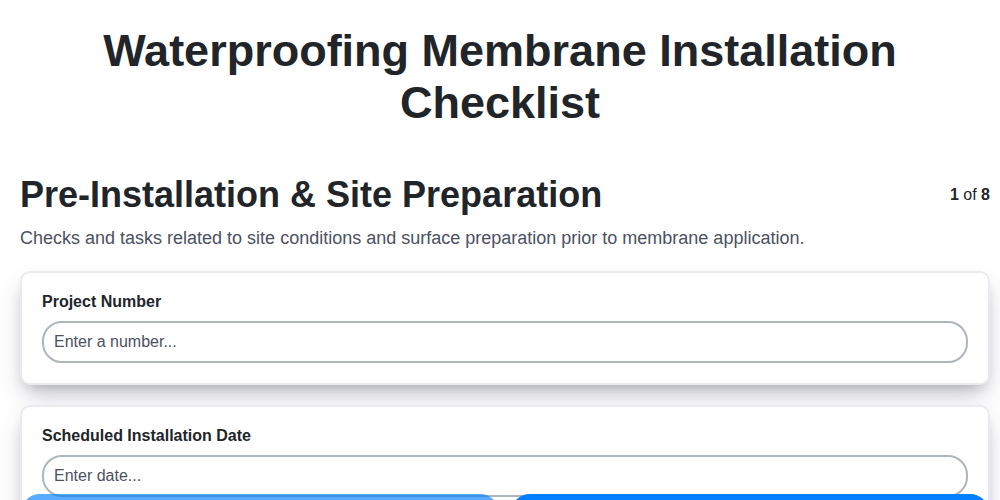
The Ultimate Waterproofing Checklist: Ensuring a Leak-Proof Installation
The 10 Best Manufacturing Management Software of 2025
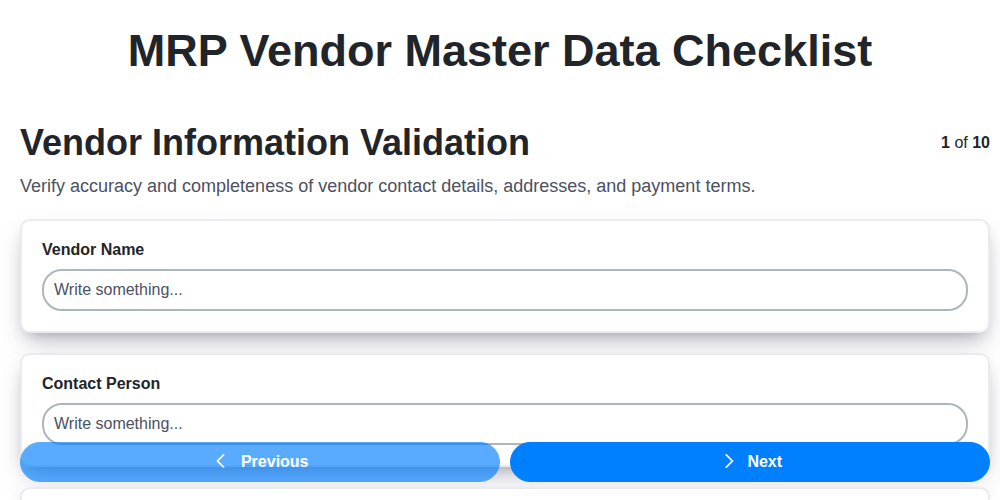
MRP Vendor Master Data Checklist: Ensuring Accuracy and Efficiency
We can do it Together
Need help with
Checklists?
Have a question? We're here to help. Please submit your inquiry, and we'll respond promptly.