How to Improve your Auto Repair Shop Management with AI in 2026?
Published: 05/10/2026 9:00 PM Updated: 05/11/2026 11:41 AM
Table of Contents
- The Evolution of Auto Repair: Why 2026 is the Year of the Intelligent Shop
- The Limitations of Traditional Management Software
- Beyond Basic Automation: The Rise of Predictive Shop Management
- Streamlining Service Advising with AI-Powered Checklists
- Meeting Tony: How Your AI Assistant Transforms Daily Operations
- Automating Vehicle Health Reports and Customer Communication
- Optimizing Inventory and Parts Management with Predictive Analytics
- Reducing Human Error: The Power of Intelligent Digital Checklists
- Maximizing Technician Productivity through AI-Driven Scheduling
- Leveraging Data Insights for Smarter Business Decisions
- Implementing AI in Your Shop: A Step-by-Step Approach with ChecklistGuro
- Conclusion: Staying Competitive in the AI-Driven Automotive Era
- Resources & Links
TLDR: Discover how to future-proof your garage by integrating AI-driven workflows into your daily operations. This guide explores how to use specialized AI-powered checklists to automate inspections, optimize technician productivity, and leverage Tony, your AI Assistant, to eliminate manual errors and scale your shop's efficiency in 2026.
The Evolution of Auto Repair: Why 2026 is the Year of the Intelligent Shop
The landscape of automotive service is undergoing a seismic shift. We have moved past the era of simple digital booking and manual spreadsheets into a new frontier: the era of the Intelligent Shop. As we approach 2026, the difference between a struggling garage and a high-margin industry leader no longer rests solely on the skill of the mechanics, but on the sophistication of the shop's digital brain.
The modern consumer expects instant updates, transparent pricing, and hyper-accurate diagnostic timelines. To meet these demands, traditional management software is no longer enough. The Intelligent Shop utilizes predictive workflows and real-time data processing to stay ahead of the curve. It is no longer about merely recording what happened in the bay; it is about using AI to predict what will happen next-anticipating parts shortages, optimizing bay availability, and ensuring no service detail is ever overlooked. In 2026, staying competitive means transitioning from reactive management to proactive, AI-enhanced orchestration.
The Limitations of Traditional Management Software
For years, auto repair shop owners have relied on traditional management software to track work orders, manage inventory, and store customer data. While these legacy systems were a significant step up from paper logs, they are fundamentally reactive rather than proactive.
The core limitation of traditional software is that it acts merely as a digital filing cabinet. It can tell you what happened yesterday, but it cannot tell you what is happening now or predict what will happen tomorrow. These systems require constant manual data entry, leaving shop managers buried in administrative fatigue. You have to manually update statuses, manually check stock levels, and manually follow up with customers.
Furthermore, traditional software lacks the brainpower to interpret the data it holds. It can store a vehicle's service history, but it cannot analyze that history to suggest a preventative maintenance schedule or flag a recurring part failure across your entire fleet. In the fast-paced environment of 2026, relying solely on static databases creates a bottleneck where human error and oversight become inevitable, ultimately leading to missed revenue opportunities and unhappy customers.
Beyond Basic Automation: The Rise of Predictive Shop Management
By 2026, the era of simply using software to record data is over; the new frontier is predicting it. We are moving past simple automation-like automatic invoicing or digital service reminders-into the era of Predictive Shop Management.
In this new landscape, AI doesn't just wait for you to input a repair order; it analyzes patterns within your shop's historical data to anticipate what's coming next. Imagine a system that can forecast parts shortages before they cause a delay, or an AI Assistant like Tony that can analyze vehicle mileage and service history to suggest upcoming maintenance intervals to customers before they even realize a problem exists.
Predictive management means moving from a reactive stance-fixing what is broken-to a proactive one-managing your shop's capacity, inventory, and customer needs with precision. By leveraging AI to identify bottlenecks in your workflow and predicting high-demand periods, you can optimize your labor scheduling and ensure your bays are never empty, yet never overwhelmed. This isn't just about working faster; it's about working smarter by using data to eliminate the guesswork that traditionally plagues automotive service management.
Streamlining Service Advising with AI-Powered Checklists
The role of a service advisor is often the biggest bottleneck in a busy repair shop. Between managing customer expectations, documenting vehicle symptoms, and coordinating with technicians, the margin for human error is incredibly high. In 2026, the shift from manual note-taking to AI-driven precision is what separates profitable shops from those struggling with turnover.
By implementing AI-powered checklists within ChecklistGuro, the service advising process transforms from a reactive task into a proactive strategy. Instead of relying on vague customer descriptions, advisors can use standardized, intelligent templates that prompt for critical data points-such as specific fluid levels, tire tread depths, or brake pad thickness-ensuring no detail is missed during the intake process.
The true game-changer, however, is the integration of Tony, your AI Assistant. As an advisor completes a digital checklist, Tony works in the background to analyze the data in real-time. Tony can instantly flag potential upsell opportunities based on vehicle mileage and historical maintenance gaps, or even draft clear, professional repair estimates for the customer before the vehicle even leaves the bay. This automation reduces the time spent on paperwork, minimizes miscommunications between the front desk and the garage, and allows advisors to focus on what matters most: building trust and closing sales.
Meeting Tony: How Your AI Assistant Transforms Daily Operations
Imagine having a highly trained service advisor available 24/7, never tired, and possessing a perfect memory of every vehicle history and parts inventory detail. That is exactly what Tony brings to your shop.
Unlike traditional software that merely stores data, Tony acts as an intelligent layer sitting on top of your ChecklistGuro workflows. Instead of manually hunting through folders or scrolling through endless digital logs to find a customer's previous oil change date or a specific part number, you simply ask.
Tony transforms your daily operations from reactive to proactive by:
- Instant Information Retrieval: Need to know if a specific VIN has a recurring brake issue? Just ask Tony. He scans your entire historical database in seconds, providing instant answers that allow your team to provide superior customer service.
- Automated Workflow Completion: Tony doesn't just wait for instructions; he analyzes completed checklists to identify patterns. If a technician marks a fluid leak on a digital inspection, Tony can proactively suggest the next necessary steps or remind you to check part availability.
- Smart Scheduling & Reminders: Tony monitors your shop's rhythm. He can alert managers to upcoming high-volume days or notify you when a recurring maintenance task is due for a loyal customer, ensuring no revenue opportunity slips through the cracks.
- Error Reduction: By cross-referencing completed checklists with your shop's standard operating procedures, Tony helps identify missed steps before the vehicle even leaves the bay, protecting your reputation and reducing costly re-dos.
In 2026, managing a shop isn't about working harder; it's about working smarter with an assistant that learns your business as well as you do.
Automating Vehicle Health Reports and Customer Communication
In 2026, the era of sending vague, manual text messages or handwritten notes to customers is over. To stay competitive, your shop needs to bridge the gap between the bay and the customer's smartphone instantly. By integrating AI into your service workflow, you can transform how you present vehicle health reports.
With the power of Tony, our AI Assistant, the transition from mechanical findings to customer-ready communication becomes seamless. Instead of a technician struggling to find the right words to explain a complex brake repair, the AI can ingest raw diagnostic data and inspection notes to generate clear, professional, and easy-to-understand digital reports.
This automation does more than just save time; it builds unprecedented trust. The AI can instantly translate technical jargon into plain language, highlighting urgent safety concerns versus routine maintenance needs. Furthermore, these reports can be automatically pushed through your management software to notify customers via their preferred channels-whether that's SMS, email, or an in-app notification. This ensures that the customer feels informed and in control, significantly increasing your authorization rates and reducing friction in the approval process.
Optimizing Inventory and Parts Management with Predictive Analytics
In 2026, the days of emergency ordering and expensive stockouts are becoming a thing of the past. Traditional inventory management is reactive, but with the integration of AI within ChecklistGuro, your shop can transition to a predictive model.
By leveraging predictive analytics, the system analyzes your historical repair data, seasonal trends, and even real-time vehicle diagnostic reports to forecast exactly which parts you will need before the car even hits the lift. Instead of manually counting gaskets and brake pads, the AI identifies patterns-such as an uptick in suspension repairs during the spring season-and alerts you to restock ahead of demand.
This level of foresight does more than just save time; it directly protects your bottom line by reducing dead stock (capital tied up in unused parts) and minimizing the costly downtime caused by waiting on backordered components. When your inventory management shifts from reactive to proactive, your shop operates with a streamlined flow that ensures parts are always available exactly when your technicians need them.
Reducing Human Error: The Power of Intelligent Digital Checklists
In a fast-paced auto repair environment, even the most experienced technicians are susceptible to autopilot errors-forgetting to tighten a lug nut, missing a fluid level check, or overlooking a hairline crack during a multi-point inspection. In 2026, the margin for error has shrunk as customer expectations for precision have skyrocketed. This is where intelligent digital checklists become your shop's strongest defense.
Unlike traditional paper logs that are often filled out retrospectively from memory, our AI-enhanced checklists within ChecklistGuro act as a real-time guide. These aren't just static to-do lists; they are dynamic, context-aware tools that ensure every critical step is verified at the moment of service.
When you integrate AI into your inspection process, the system can proactively prompt technicians to investigate specific components based on the vehicle's mileage, model, or previous repair history. By transforming a passive document into an active, intelligent workflow, you eliminate the forgotten step syndrome. This doesn't just improve safety and vehicle reliability; it protects your shop's reputation and prevents costly, time-consuming comebacks that eat into your profit margins. Using ChecklistGuro, you turn your standard operating procedures from a simple suggestion into an unshakeable digital standard.
Maximizing Technician Productivity through AI-Driven Scheduling
In 2026, the era of manual whiteboards and static paper calendars is officially over. The most successful auto repair shops are moving away from reactive scheduling and toward predictive orchestration. By integrating AI into your management workflow, you can transform your service bay from a chaotic environment into a high-precision assembly line.
The true power of AI-driven scheduling lies in its ability to analyze complex variables in real-time. Unlike traditional methods, an AI-integrated system doesn't just look at what time a car is booked; it analyzes technician skill sets, the specific complexity of the requested repair, the availability of specialized diagnostic tools, and even the real-time progress of ongoing jobs.
By using intelligent checklists within your Work OS, you can ensure that every task is paired with the right expert at the optimal time. This prevents bottlenecking-where certain bays are overwhelmed while others sit idle-and reduces the dreaded re-work caused by insufficient time allocation. When your scheduling software can predict that a brake pad replacement will take 45 minutes but a complex engine diagnostic requires a two-hour window with a Master Tech, your shop's throughput increases naturally.
Furthermore, with Tony, your AI Assistant, the scheduling becomes proactive rather than reactive. Tony can monitor checklist completions as they happen; if a technician completes a multi-point inspection ahead of schedule, the AI can automatically suggest the next most urgent task or notify the service advisor to update the customer. This seamless loop of data ensures that your technicians spend less time managing their calendars and more time turning wrenches, directly impacting your shop's bottom line.
Leveraging Data Insights for Smarter Business Decisions
In 2026, the most successful auto repair shop owners won't just be the ones with the best mechanics, but the ones with the best data. Traditionally, making business decisions meant digging through stacks of paper invoices, messy spreadsheets, or fragmented digital logs to figure out which services were most profitable or which parts were causing the most delays.
By integrating AI into your management workflow through ChecklistGuro, you transform raw operational data into actionable intelligence. Instead of guessing, you can leverage AI to analyze trends across every completed checklist and work order. Are certain vehicle makes consistently seeing more brake pad wear? Is your bay turnaround time slowing down on Tuesday mornings?
With an AI Assistant like Tony, these insights are no longer buried in a database; they are presented to you in real-time. AI can identify patterns in your shop's performance, predict upcoming inventory needs based on historical repair trends, and even flag potential revenue leaks before they impact your bottom line. This shift from reactive troubleshooting to proactive management allows you to make high-level decisions-like staffing adjustments or equipment investments-based on hard evidence rather than intuition.
Implementing AI in Your Shop: A Step-by-Step Approach with ChecklistGuro
Transitioning to an AI-enhanced workflow doesn't require a complete overhaul of your existing garage setup; it requires a strategic integration of intelligent tools into your existing processes. The key is to move away from static, paper-based routines and toward dynamic, data-driven workflows. Here is how you can begin your journey with ChecklistGuro:
1. Audit Your Current Checklists
The first step is identifying where manual errors occur most frequently. Are parts being missed during inventory counts? Are technicians skipping vital steps during multi-point inspections? Start by digitizing your current paper forms into ChecklistGuro's platform. This creates the foundational data layer that the AI needs to understand your shop's unique rhythm.
2. Deploy Standardized Digital Checklists
Once your processes are digital, uniformity becomes your greatest asset. Use ChecklistGuro to deploy standardized, unskippable digital checklists for every service type-from oil changes to complex engine rebuilds. This ensures that every technician, regardless of experience level, follows the exact same high-standard protocol, ensuring consistent service quality across the board.
3. Integrate Tony, Your AI Assistant, into the Workflow
This is where the transformation truly happens. Once your digital checklists are active, you can leverage Tony, our advanced AI Assistant. Instead of manually reviewing every completed task, you can use Tony to:
- Analyze Completion Patterns: Ask Tony to identify which technicians are consistently meeting deadlines and which might need more training.
- Predictive Maintenance Alerts: Use AI to scan completed checklists and automatically notify customers when upcoming services (like brake pad replacements) are due based on the data recorded.
- Instant Troubleshooting: When a technician encounters an anomaly during a checklist, Tony can instantly cross-reference historical repair data to suggest the most likely solution.
4. Continuous Optimization Through Data
The final step is the Feedback Loop. In 2026, the most successful shops won't just use AI to monitor; they will use it to evolve. By analyzing the data captured through your ChecklistGuro templates, you can identify bottlenecks in your bays and refine your checklists to be even more efficient. You aren't just managing a shop; you are managing a self-improving ecosystem.
Conclusion: Staying Competitive in the AI-Driven Automotive Era
The automotive landscape is shifting rapidly, and by 2026, AI will no longer be a luxury-it will be a fundamental requirement for survival. The gap between shops that struggle with manual paperwork and those that leverage intelligent automation is widening. Transitioning to an AI-enhanced management system isn't just about adopting new tech; it's about reclaiming your time, reducing costly human error, and providing a level of transparency that builds lifelong customer loyalty.
Adopting a solution like ChecklistGuro allows you to stop managing chaos and start managing growth. With Tony, your dedicated AI Assistant, integrated into your core workflows, you can transform your shop from a reactive environment into a proactive, data-driven powerhouse. The tools are now available to automate the heavy lifting-now is the time to implement them. Don't let your shop get left behind in the digital rearview mirror; embrace the future of repair management today.
Resources & Links
- Forbes Technology Council: Insights into how artificial intelligence and machine learning are reshaping small to medium-sized enterprises and industrial automation.
- Gartner: Research and trends regarding the evolution of predictive analytics and its impact on operational management in service-based industries.
- McKinsey & Company: In-depth reports on the digital transformation of the automotive aftermarket and the rise of intelligent automation.
- ChecklistGuro: The primary tool for implementing intelligent digital checklists and automated workflows to reduce human error in automotive shops.
- Automotive News: Industry news regarding technological advancements in vehicle diagnostics, parts management, and shop productivity.
- ZDNet: Exploration of AI-driven software trends, including the transition from legacy management systems to intelligent, predictive platforms.
- IBM Watson AI: Technical resources on how predictive analytics and natural language processing can be applied to customer communication and automated reporting.
Frequently Asked Questions
How can AI help in predicting vehicle maintenance needs?
AI algorithms can analyze historical repair data and real-time vehicle telemetry to predict when specific parts are likely to fail, allowing shops to proactively notify customers before a breakdown occurs.
Can AI improve the scheduling of appointments in an auto repair shop?
Yes, AI-driven scheduling tools can optimize technician workloads by analyzing task complexity, parts availability, and bay occupancy, reducing idle time and minimizing customer wait periods.
How does AI assist in managing inventory for auto repair shops?
AI systems can monitor stock levels in real-time and use predictive analytics to automate reordering processes, ensuring that high-demand parts are always in stock while minimizing excess capital tied up in slow-moving inventory.
What role does AI play in improving customer service?
AI-powered chatbots and virtual assistants can handle routine customer inquiries, provide instant status updates on repairs, and facilitate easy appointment booking 24/7, significantly enhancing the customer experience.
Is AI technology accessible for small-scale auto repair shops in 2026?
Yes, by 2026, many AI management tools are being integrated into cloud-based Shop Management Systems (SMS) as subscription-based services (SaaS), making advanced automation affordable and easy to implement for small businesses.
How can AI help in detecting fraudulent insurance claims?
AI can cross-reference repair estimates with standard labor times, parts pricing, and photographic evidence to identify discrepancies, helping shop owners and insurance providers mitigate fraud.
Found this Article helpful?
Comments
There are no comments yet. Be the first to add one!
Auto Repair Shop Management Solution Demo
Level up your auto repair shop & boost profits! ChecklistGuro simplifies job tracking, inventory management, and customer communication. Improve efficiency, reduce errors, & enhance customer satisfaction. Manage it all with our Work OS.
Related Articles
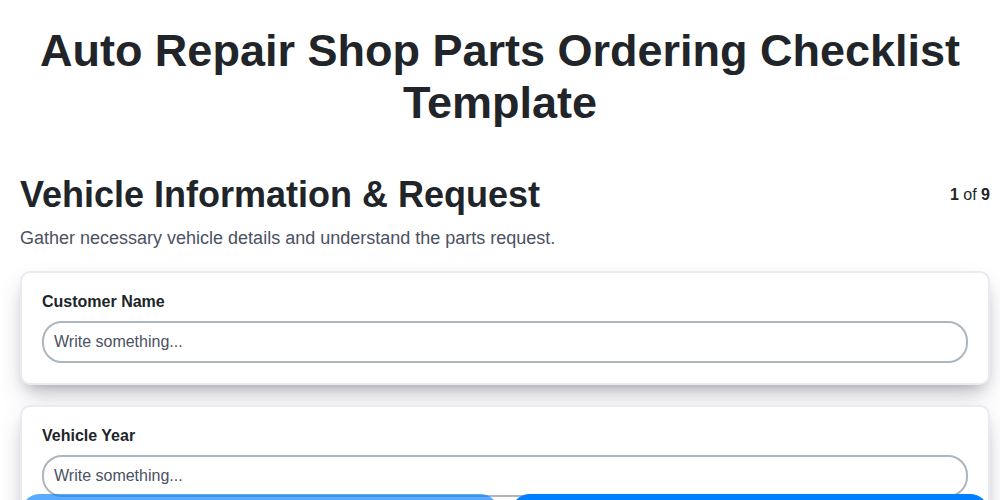
Streamline Your Shop: The Ultimate Auto Repair Parts Ordering Checklist Template
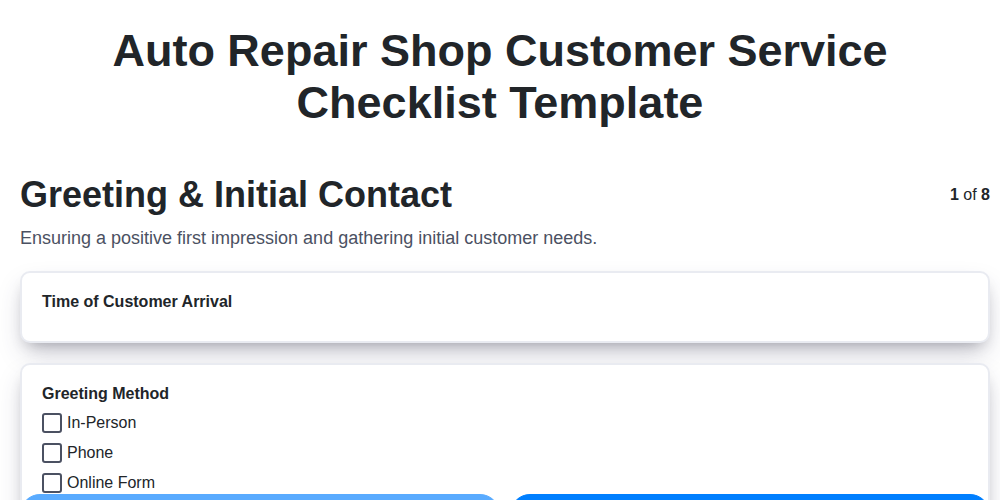
Level Up Your Auto Repair: The Ultimate Customer Service Checklist Template
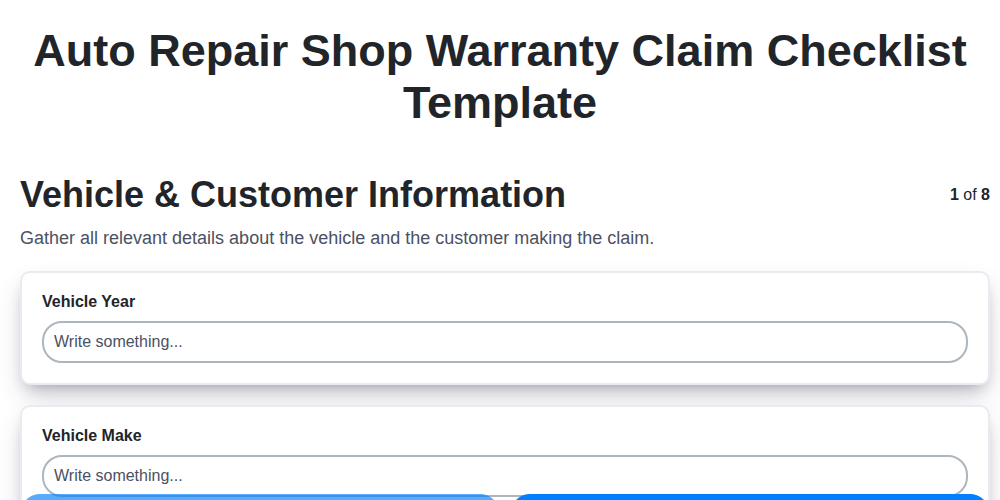
Mastering Warranty Claims: Your Auto Repair Shop Checklist Template
Auto Repair Shop Digital Marketing Checklist Template
Auto Repair Shop Checklist Template: Operations & Compliance
The Ultimate Auto Repair Shop Employee Training Checklist Template
Your Ultimate Guide to Auto Repair Shop Environmental Compliance: A Checklist Template
The Ultimate Vehicle Return Checklist for Auto Repair Shops
We can do it Together
Need help with
Checklists?
Have a question? We're here to help. Please submit your inquiry, and we'll respond promptly.