How to Improve your Healthcare Management with AI in 2026?
Published: 05/13/2026 Updated: 05/14/2026
Table of Contents
- The Evolution of Healthcare Management in 2026
- The Growing Complexity of Modern Medical Operations
- The Role of AI in Reducing Administrative Burnout
- Key Areas for AI Integration: From Scheduling to Patient Records
- Meet Tony: Your Intelligent AI Assistant for Healthcare Precision
- Enhancing Patient Safety Through Automated Error Detection
- Optimizing Resource Allocation with Predictive Analytics
- Streamlining Compliance and Regulatory Documentation
- Using ChecklistGuro to Standardize AI-Driven Workflows
- Strategies for Implementing AI without Disrupting Care
- Measuring the ROI of AI Adoption in Your Clinic
- Preparing Your Team for the Future of Digital Health
- Resources & Links
TLDR: Discover how to revolutionize your medical facility's operations in 2026 by integrating AI-driven automation into your daily workflows. This guide introduces our specialized healthcare management checklist, designed to help managers implement smart protocols, reduce human error, and leverage Tony, our advanced AI Assistant, to streamline administrative tasks and enhance patient care efficiency.
The Evolution of Healthcare Management in 2026
By 2026, the healthcare landscape has moved far beyond simple digitization. We have entered the era of Intelligent Orchestration, where the primary challenge is no longer just storing patient data, but managing the overwhelming deluge of real-time information. For healthcare managers, the complexity of modern clinics-ranging from regulatory compliance and staff scheduling to real-time diagnostic integration-has reached a tipping point where traditional manual oversight is no longer sustainable.
The shift in 2026 is defined by a move from reactive to proactive management. Gone are the days of reviewing error logs after a mistake has occurred; the modern standard is the use of predictive workflows that identify bottlenecks before they impact patient safety. As healthcare professionals face increasing burnout and rising operational costs, the industry is pivoting toward integrated ecosystems where software doesn't just record what happened, but actively assists in deciding what should happen next. This evolution demands tools that bridge the gap between administrative duty and clinical excellence, turning massive datasets into actionable, automated workflows.
The Growing Complexity of Modern Medical Operations
As we approach 2026, the landscape of healthcare administration is undergoing a seismic shift. The traditional methods of managing clinics and medical facilities are no longer sufficient to handle the sheer volume of data, regulatory requirements, and patient expectations that define the modern era. Today, healthcare managers are navigating a perfect storm of challenges: skyrocketing operational costs, unprecedented-level compliance complexity, and a growing demand for personalized patient experiences.
The sheer density of information-ranging from electronic health records (EHR) and insurance billing updates to ever-evolving HIPAA regulations-has created a massive cognitive load for staff. Manual processes that once worked effectively are now becoming bottlenecks, leading to burnout, increased error rates, and fragmented communication. In this high-stakes environment, even a small oversight in a standard operating procedure can lead to significant legal liabilities or, more importantly, compromised patient safety. To stay competitive and compliant, management can no longer rely on memory or static paper trails; the complexity of modern medicine demands a more dynamic, intelligent, and scalable approach to oversight.
The Role of AI in Reducing Administrative Burnout
In the fast-paced healthcare landscape of 2026, administrative burnout has become a silent epidemic, draining the energy of even the most dedicated medical professionals. The sheer volume of documentation, scheduling complexities, and compliance tracking often leaves practitioners spending more time behind a screen than with their patients. This is where the strategic integration of AI changes the narrative.
By implementing intelligent automation, healthcare managers can offload repetitive, high-frequency tasks to a digital workforce. Instead of manual data entry or manual follow-ups, AI-driven systems can handle everything from appointment reminders to updating electronic health records (EHR) in real-time.
Within the ChecklistGuro ecosystem, our AI Assistant, Tony, acts as a tireless digital collaborator. Tony doesn't just follow instructions; he anticipates needs by processing incoming data and flagging discrepancies before they become critical errors. By utilizing AI to manage the paperwork side of medicine, your staff can reclaim their clinical focus, significantly reducing the cognitive load that leads to burnout and allowing your team to return to what matters most: delivering exceptional patient care.
Key Areas for AI Integration: From Scheduling to Patient Records
By 2026, AI is no longer a futuristic concept in healthcare; it is a fundamental operational requirement. To stay competitive, healthcare managers must move beyond viewing AI as a mere novelty and start implementing it into the core pillars of clinical and administrative workflows.
Smart Scheduling and Resource Allocation The days of manual appointment booking and the resulting no-show headaches are fading. Advanced AI integration allows for predictive scheduling-analyzing historical patient data to forecast peak hours and optimize staff shifts. By utilizing intelligent algorithms, managers can ensure that clinic capacity perfectly aligns with patient demand, reducing wait times and preventing staff burnout.
Automated Patient Record Management The administrative burden of documentation is one of the leading causes of provider fatigue. Integrating AI into your management system allows for seamless, automated data entry and real-time updates to Electronic Health Records (EHR). With tools like Tony, our AI Assistant, much of the heavy lifting involving transcription, data retrieval, and record organization becomes hands-free, allowing your medical staff to refocus their energy on patient interaction rather than screen time.
Seamless Data Interoperability One of the biggest challenges in healthcare is the fragmentation of information. AI-driven management solutions act as the connective tissue between disparate data points-from lab results to billing information. By implementing structured checklists and AI oversight, you ensure that patient data flows securely and accurately across all departments, minimizing the risk of manual entry errors and ensuring that every team member is working with the most up-to-date information available.
Meet Tony: Your Intelligent AI Assistant for Healthcare Precision
In the rapidly evolving landscape of 2026, manual oversight is no longer enough to maintain the high standards of modern healthcare. This is where Tony, the flagship AI Assistant within the ChecklistGuro ecosystem, steps in to bridge the gap between complex data and actionable management.
Tony isn't just a chatbot; he is a specialized intelligent agent engineered to understand the nuances of healthcare workflows. While traditional software requires constant manual input, Tony proactively monitors your checklists, identifies bottlenecks in real-time, and predicts potential compliance risks before they become critical issues.
Whether it's cross-referencing patient safety protocols, automating staff scheduling updates, or ensuring that every regulatory requirement in your ChecklistGuro templates is met, Tony acts as an extra layer of tireless, high-precision supervision. By integrating Tony into your management routine, you aren't just adding a tool-you are adding a digital partner dedicated to maintaining the precision and excellence your healthcare facility demands.
Enhancing Patient Safety Through Automated Error Detection
In the complex landscape of healthcare, even the smallest oversight in documentation or medication scheduling can lead to significant clinical risks. As we move into 2026, the transition from manual oversight to AI-augmented vigilance is no longer optional-it is a necessity for modern practice management.
By integrating AI-driven checklists within the ChecklistGuro ecosystem, healthcare providers can move beyond reactive error correction to proactive prevention. Our intelligent workflows act as a digital safety net, cross-referencing real-time patient data against established protocols to identify discrepancies instantly. Whether it is flagging a potential drug interaction, detecting an overlooked step in a surgical prep list, or identifying inconsistencies in patient intake forms, the AI scans every entry with a level of precision that human fatigue simply cannot match.
With Tony, our AI Assistant, working alongside your staff, the system doesn't just flag errors; it provides context-aware alerts that guide staff through the correct corrective actions immediately. This seamless integration ensures that safety protocols are not just checked off as a formality, but are actively verified by an intelligent layer of intelligence, significantly reducing the margin for human error and fostering a culture of uncompromising patient safety.
Optimizing Resource Allocation with Predictive Analytics
In 2026, the era of reactive management is over. The true competitive advantage for healthcare providers lies in moving from reacting to crises to predicting them before they occur. By leveraging the predictive analytics capabilities embedded within ChecklistGuro, managers can move beyond simple scheduling and into the realm of intelligent resource forecasting.
Integrating AI into your management workflow allows you to analyze vast amounts of historical data-such as patient inflow patterns, seasonal disease trends, and staff turnover rates-to generate actionable insights. Instead of facing unexpected staffing shortages or equipment deficits, you can use AI-driven forecasts to ensure your clinic or hospital is always prepared.
With our AI Assistant, Tony, this process becomes seamless. Tony doesn't just present raw data; he translates complex analytics into simple, actionable checklists. For instance, if the predictive engine detects a high probability of increased patient volume for the upcoming weekend, Tony can automatically prompt you to review your nursing schedules and medical supply inventories. This proactive approach ensures that your most valuable resources-your staff and your budget-are allocated precisely where they are needed most, minimizing waste and preventing practitioner burnout.
Streamlining Compliance and Regulatory Documentation
In the rapidly evolving healthcare landscape of 2026, the burden of regulatory compliance has never been heavier. Keeping up with shifting healthcare laws, HIPAA updates, and rigorous audit requirements can consume countless hours of your management team's time-time that should be spent on patient outcomes.
This is where the synergy between structured checklists and AI becomes a game-changer. By using ChecklistGuro's automated templates, you no longer have to rely on manual memory or fragmented spreadsheets to ensure every regulation is met. Our intelligent checklists act as a living audit trail, ensuring that every required step in your compliance workflow is documented, timestamped, and verified.
With Tony, our specialized AI Assistant, the process moves from reactive to proactive. Instead of scrambling during an audit, you can use Tony to scan your completed checklists for potential gaps or missed documentation in real-time. Tony can instantly flag non-compliant entries and suggest corrective actions before they become costly liabilities. By integrating AI into your documentation workflow, you transform compliance from a stressful administrative hurdle into a seamless, automated part of your operational excellence.
Using ChecklistGuro to Standardize AI-Driven Workflows
In the rapidly evolving healthcare landscape of 2026, consistency is the foundation of patient safety and operational excellence. The greatest challenge for healthcare managers isn't just adopting AI, but ensuring that AI is applied uniformly across all departments. This is where ChecklistGuro becomes your most powerful strategic asset.
Our platform acts as the operational brain for your facility, transforming complex AI capabilities into easy-to-follow, standardized digital workflows. Instead of leaving AI implementation to chance, ChecklistGuro allows you to embed AI-driven checkpoints directly into your clinical and administrative processes.
When you use our healthcare management solutions, you aren't just using a digital to-do list; you are deploying a structured framework where Tony, our intelligent AI Assistant, sits at the center of every task. Whether it's automating appointment verification, managing supply chain alerts, or auditing compliance documentation, ChecklistGuro ensures that every staff member follows the same high standard of excellence.
By using our platform to standardize these workflows, you eliminate the knowledge gap between veteran practitioners and new hires, ensuring that the power of AI is accessible, measurable, and-most importantly-error-free across your entire organization.
Strategies for Implementing AI without Disrupting Care
Implementing cutting-edge technology like AI into a healthcare environment can feel like performing surgery while the patient is awake-the stakes are high, and any downtime can impact patient safety. The key to a successful rollout is a phased, parallel-process approach. Instead of a complete system overhaul, start by deploying AI to handle non-critical, administrative bottlenecks first.
The first step is to use AI for low-stakes back-office tasks, such as automated appointment scheduling, billing audits, or inventory tracking. This allows your staff to build trust in the technology without the pressure of real-time clinical decision-making. By using structured checklists within ChecklistGuro, you can create a safety net where every AI-driven action is verified by a human professional, ensuring that automation assists rather than replaces clinical oversight.
Next, focus on integration rather than replacement. Your goal shouldn't be to swap out your current workflows, but to augment them. Use Tony, our AI Assistant, to handle the cognitive load of documentation and data retrieval, freeing up your nurses and doctors to focus on face-to-face patient interaction. When the technology acts as a silent assistant rather than a disruptive new layer of complexity, the transition becomes a natural evolution of your existing standard operating procedures.
Measuring the ROI of AI Adoption in Your Clinic
Transitioning to AI-driven management is not just about adopting new technology; it is a strategic financial decision. For healthcare administrators, the true value of AI lies in the measurable shift from reactive troubleshooting to proactive management. When evaluating the Return on Investment (ROI) of implementing tools like ChecklistGuro, you should focus on three core pillars:
1. Reduction in Operational Overhead The most immediate impact is seen in the decrease of administrative man-hours. By using AI to automate routine scheduling, compliance checks, and documentation, your staff can pivot from paperwork to patient-centric care. Calculate your ROI by tracking the reduction in overtime costs and the ability to handle higher patient volumes without increasing headcount.
2. Error Mitigation and Risk Management In healthcare, the cost of a mistake can be catastrophic. AI-enhanced checklists act as a digital safety net, ensuring that no critical step in a medical protocol is missed. Measuring ROI here involves looking at the decrease in clinical errors, improved compliance audit scores, and a reduction in potential litigation or malpractice-related expenses.
3. Improved Resource Allocation AI provides the data-driven insights necessary to optimize your clinic's most expensive resources: time and equipment. By analyzing patterns through Tony, our AI Assistant, you can predict peak hours and optimize staff shifts and inventory levels. The ROI is realized through minimized waste and the elimination of dead time in your facility's operations.
To truly measure success, don't just look at your bottom line-look at the Efficiency Ratio: the balance between your operational expenditure and the quality of care delivered. As we move into 2026, the clinics that thrive will be those that treat AI integration not as a cost center, but as a primary driver of sustainable growth.
Preparing Your Team for the Future of Digital Health
Transitioning to an AI-enhanced environment isn't just about installing new software; it is about evolving your organizational culture. As we move into 2026, the gap between traditional healthcare management and AI-integrated operations will widen. To remain competitive, business owners must focus on bridging the digital literacy gap within their staff.
Preparing your team requires a shift from viewing technology as a replacement to seeing it as a collaborative partner. The goal is to move your personnel away from repetitive, manual data entry and toward high-value clinical and managerial decision-making. This begins with implementing structured workflows-such as those found in our ChecklistGuro templates-that guide staff through the adoption of new tools.
Key preparation steps include:
- Standardizing Processes: Use standardized checklists to ensure that as AI tools like Tony are introduced, every team member follows the same protocols for data input and oversight.
- Upskilling for Augmentation: Focus training on how to interpret AI-generated insights. Your team doesn't need to become data scientists, but they do need to know how to act on the actionable intelligence provided by your digital ecosystem.
- Reducing Change Fatigue: Introduce automation incrementally. By using structured templates to manage the rollout, you provide a sense of familiarity and control, preventing the overwhelm often associated with digital transformation.
By prioritizing a structured, checklist-driven approach to training, you ensure that your team is not just surviving the digital shift, but actively driving the efficiency of your healthcare practice.
Resources & Links
- World Health Organization (WHO): Essential for context on global healthcare trends, digital health standards, and the evolution of medical technology.
- Office of the National Coordinator for Health IT: Provides authoritative information on interoperability, electronic health records (EHR), and regulatory frameworks for AI in healthcare.
- McKinsey Healthcare Insights: A leading source for data-driven research on the ROI of digital transformation and the impact of automation on medical operations.
- American Medical Association (AMA): Valuable for understanding physician burnout, administrative burdens, and the ethical implementation of AI in clinical settings.
- Gartner Healthcare Research: Excellent for exploring predictive analytics, resource allocation strategies, and emerging technology trends for 2026.
- ChecklistGuro: The primary resource for learning how to standardize AI-driven workflows and ensure clinical accuracy through automated checklists.
- Healthcare Information and Management Systems Society (HIMSS): A global community focused on the intersection of healthcare, IT, and the future of digital health ecosystems.
- Forbes Healthcare: Provides case studies and high-level perspectives on managing complexity and scaling medical technology in modern clinics.
Comments
There are no comments yet. Be the first to add one!
Healthcare Management Solution Demo
Streamlining healthcare operations and improving patient care? ChecklistGuro's Work OS platform simplifies everything from patient scheduling and billing to compliance and staff management. Enhance efficiency, reduce administrative burden, and focus on what matters most: your patients. Learn how ChecklistGuro can transform your healthcare organization!
Related Articles
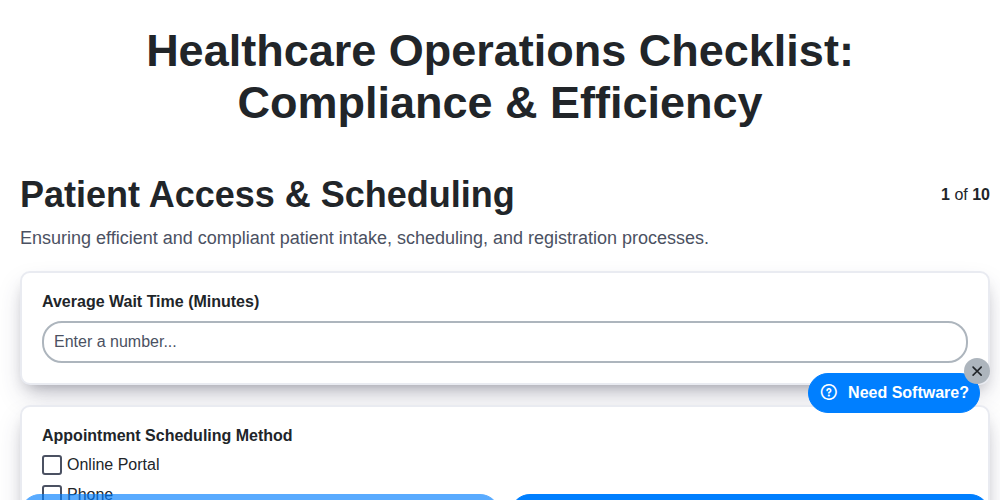
Healthcare Operations Checklist: Your Guide to Compliance & Efficiency
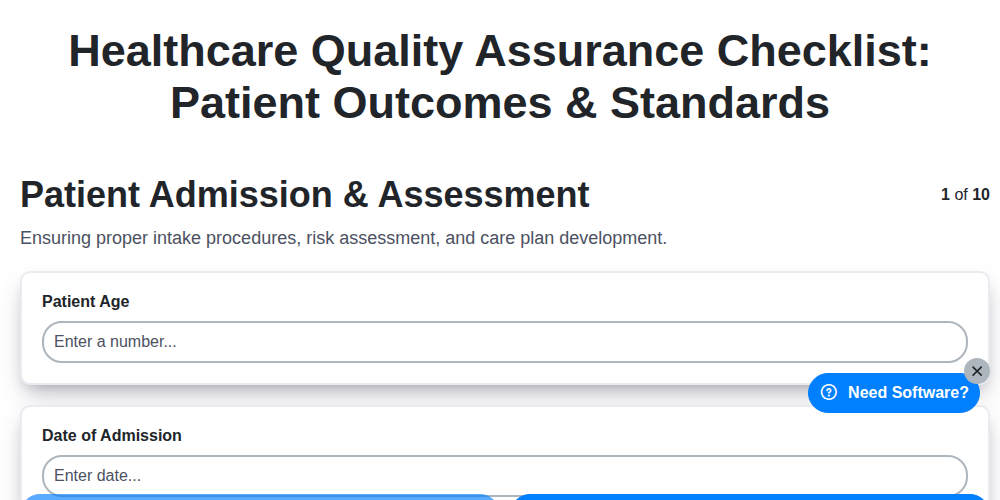
Ensuring Excellence: Your Healthcare Quality Assurance Checklist for Patient Outcomes
Excel vs ChecklistGuro in Healthcare Management
Paper vs ChecklistGuro in Healthcare Management
How to improve your Healthcare Management
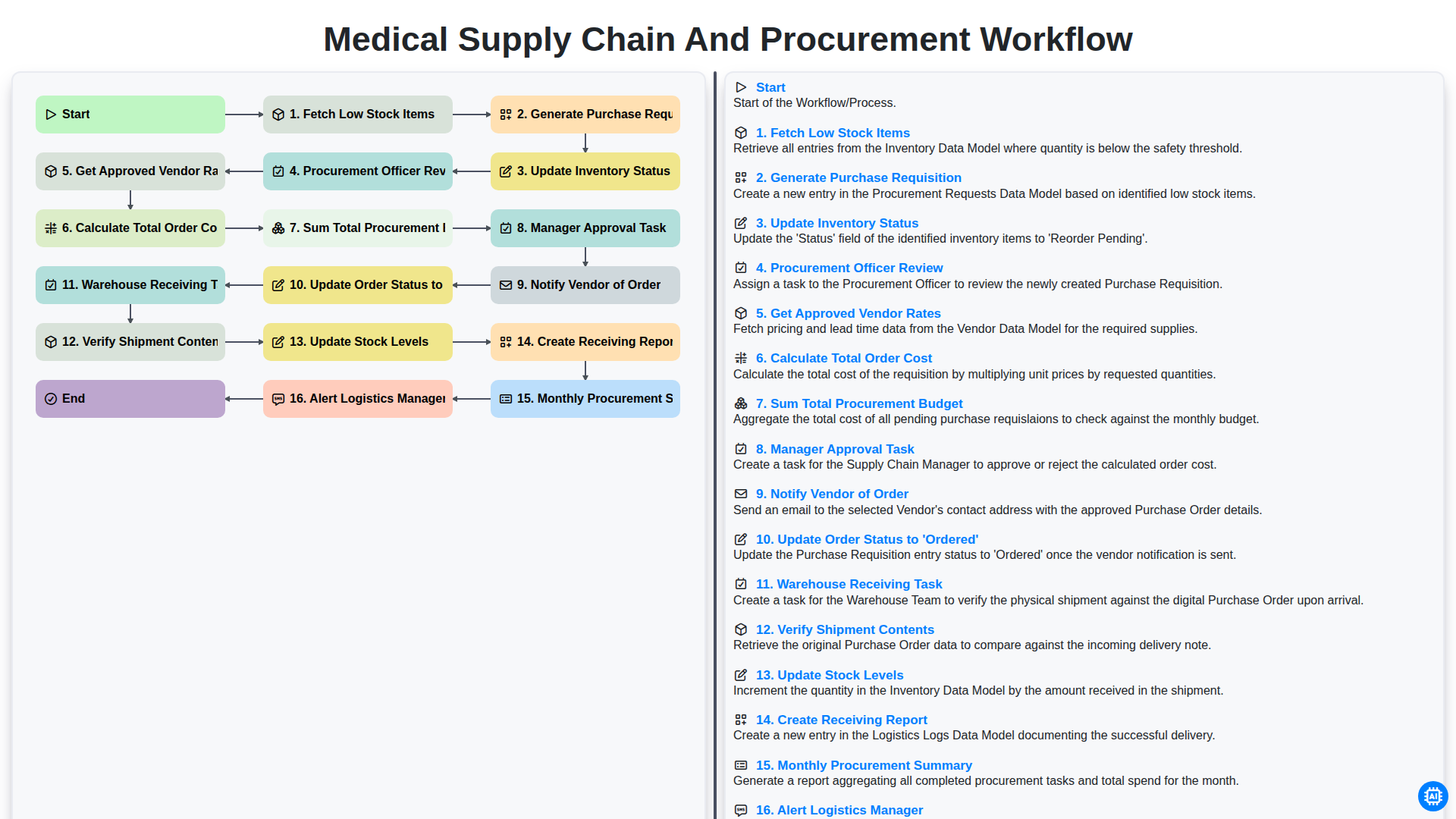
Optimizing Healthcare Operations: A Comprehensive Guide to the Medical Supply Chain and Procurement Workflow
We can do it Together
Need help with
Checklists?
Have a question? We're here to help. Please submit your inquiry, and we'll respond promptly.