HVAC Inspection Workflow Management: Digital Compliance for Commercial Buildings
Published: 06/04/2026 Updated: 10/05/2026
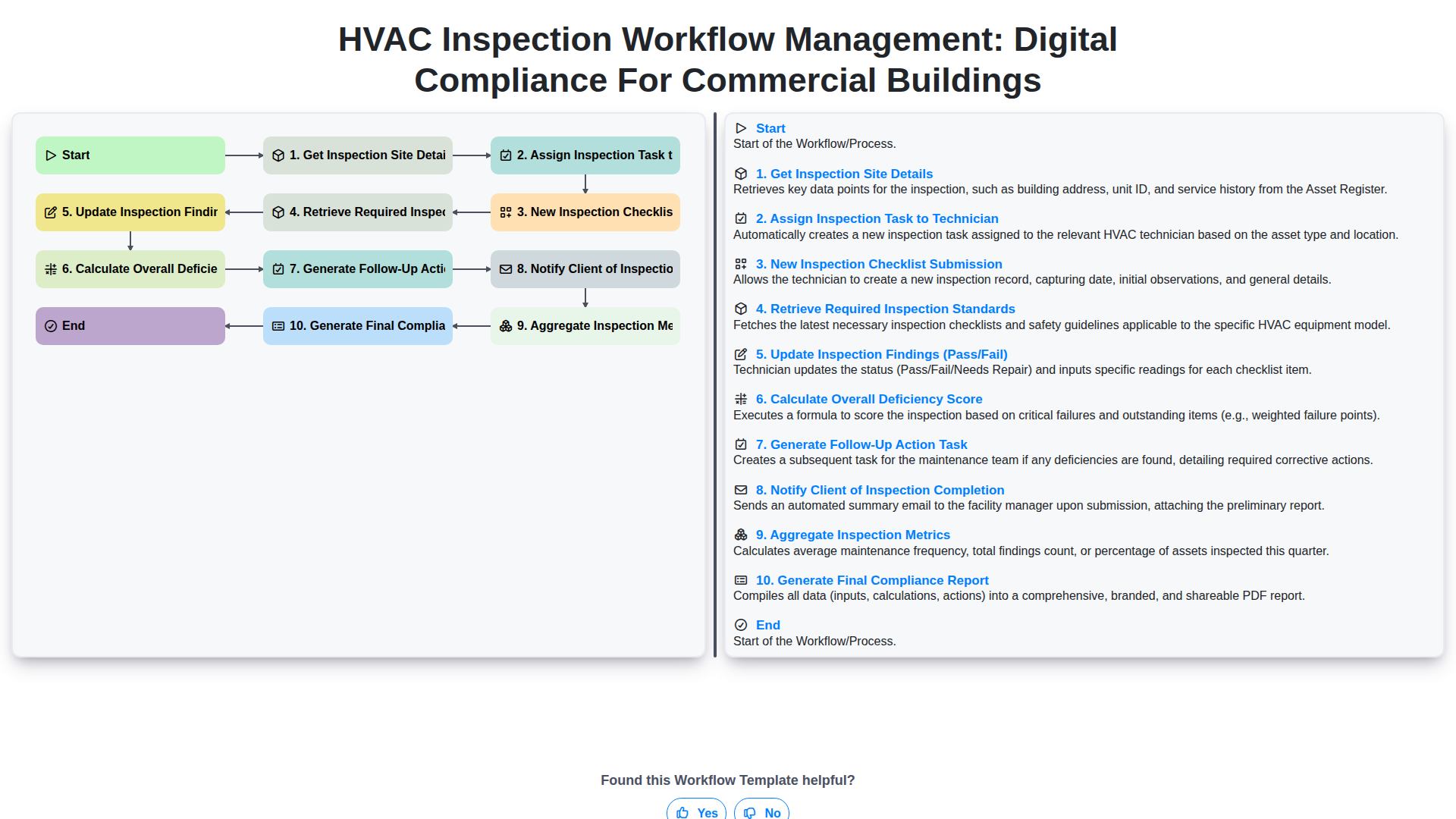
Table of Contents
- The Critical Need for Digital Compliance in HVAC Management
- Streamlining Operations: The End-to-End Inspection Workflow
- Phase 1: Data Centralization and Task Initialization
- Step 1: Accurate Retrieval of Inspection Site Details
- Step 2: Intelligent Technician Assignment and Resource Allocation
- Phase 2: Standardizing the Inspection Process
- Step 3: Real-Time Submission of New Inspection Checklists
- Step 4: Automating Access to Required Inspection Standards
- Phase 3: Data Capture and Real-Time Analysis
- Step 5: Precise Recording of Inspection Findings (Pass/Fail)
- Step 6: Quantifying Risk via Overall Deficiency Scoring
- Phase 4: Closing the Loop on Maintenance and Compliance
- Step 7: Automated Generation of Follow-Up Action Tasks
- Step 8: Client Communication and Completion Notifications
- Step 9: Leveraging Aggregated Metrics for Long-Term Strategy
- Step 10: Finalizing the Digital Compliance Report
- The Benefits of a Digital-First Inspection Ecosystem
- Resources & Links
TLDR: Streamline commercial HVAC maintenance with an automated digital workflow designed to ensure regulatory compliance. This guide explores a step-by-step process-from task assignment and standardized checklists to real-time deficiency scoring and automated report generation-that eliminates manual errors and simplifies facility management.
The Critical Need for Digital Compliance in HVAC Management
For commercial building managers, HVAC systems are far more than just mechanical components; they are the lifeblood of operational continuity, occupant comfort, and asset longevity. However, maintaining these complex systems across large-scale facilities presents a massive regulatory and operational challenge. In an era of increasing environmental regulations and stringent safety standards, relying on fragmented paper logs or disconnected spreadsheets is no longer a viable strategy.
The compliance gap typically occurs when there is a disconnect between physical inspections and actionable data. When inspection findings remain trapped in a technician's notebook or an unorganized email thread, the risk of missed maintenance, failed audits, and costly equipment breakdowns skyrockets. Digital compliance transforms this landscape by ensuring that every inspection follows a standardized, immutable, and traceable logic. By digitizing the workflow, facility managers can move away from reactive firefighting and toward a proactive, data-driven culture where compliance is not just a periodic checkbox, but a continuous, verifiable state of operation.
Streamlining Operations: The End-to-End Inspection Workflow
Managing large-scale commercial HVAC systems requires more than just technical expertise; it demands a rigorous, repeatable, and transparent process. To ensure no critical component is overlooked, a structured digital workflow is essential. By transitioning from manual paperwork to a digitized end-to-end process, facility managers can ensure every inspection is consistent, compliant, and actionable.
The journey begins with Getting Inspection Site Details, where all specific environmental and structural data is centralized. Once the scope is defined, the system allows managers to Assign Inspection Tasks to Technicians, ensuring the right expert is deployed to the right location at the right time.
Once on-site, the technician initiates the New Inspection Checklist Submission, providing a standardized template that eliminates guesswork. To ensure accuracy, the digital platform allows technicians to Retrieve Required Inspection Standards in real-time, ensuring every check aligns with current regulatory and manufacturer guidelines. As the physical inspection progresses, technicians Update Inspection Findings (Pass/Fail) directly on their mobile devices, capturing real-time data and even photographic evidence of issues.
The power of a digital workflow lies in its ability to turn raw data into intelligence. As findings are logged, the system can automatically Calculate an Overall Deficiency Score, providing an instant snapshot of the system's health. If a critical issue is identified, the workflow automatically triggers a Generate Follow-Up Action Task, ensuring that repairs are scheduled immediately rather than buried in a paper log.
Communication is seamlessly integrated into the loop: the system will Notify the Client of Inspection Completion, maintaining transparency and trust. Behind the scenes, the platform will Aggregate Inspection Metrics across multiple sites, allowing for high-level trend analysis. Finally, the process culminates in the ability to Generate a Final Compliance Report, a professional, audit-ready document that serves as the single source of truth for both facility managers and stakeholders. By automating these steps, businesses transform a reactive maintenance cycle into a proactive, data-driven compliance strategy.
Phase 1: Data Centralization and Task Initialization
The foundation of a reliable HVAC inspection process lies in the seamless transition from initial request to field deployment. The first phase of the workflow focuses on eliminating manual data entry errors and ensuring that every technician enters the field with complete, actionable intelligence.
The process begins with Getting Inspection Site Details, where all critical information regarding the facility-such as building blueprints, specific HVAC unit locations, and historical maintenance notes-is centralized into a single digital source of truth. Once the scope of work is clearly defined, the system moves to Assigning the Inspection Task to the Technician. By utilizing digital dispatching, managers can match the specific requirements of the site with the skill set and availability of the appropriate technician, ensuring the right expert is on-site.
This phase concludes by preparing the digital workspace for the technician. Before the first inspection even begins, the system performs a New Inspection Checklist Submission, which initializes the digital form on the technician's mobile device. This ensures that the workflow is standardized from the very first second of the site visit, setting the stage for a consistent, high-quality inspection across all commercial assets.
Step 1: Accurate Retrieval of Inspection Site Details
The foundation of a successful HVAC inspection lies in the precision of its starting point. Before a technician even sets foot on-site, the workflow must begin with the systematic retrieval of comprehensive inspection site details. This stage involves gathering all critical data points regarding the facility, including the building's physical address, specific HVAC unit locations, floor plans, and a complete inventory of existing assets.
By centralizing this information digitally, you eliminate the guesswork and manual errors often associated with outdated paper records. Ensuring that the technician has access to the correct site-specific context-such as building access protocols, contact information for facility managers, and historical maintenance notes-is crucial. This initial step ensures that the subsequent stages of the workflow are anchored in accuracy, setting the stage for a streamlined, error-free inspection process.
Step 2: Intelligent Technician Assignment and Resource Allocation
Once the inspection site details are finalized, the workflow moves into the critical phase of Assigning Inspection Tasks to Technicians. In a manual system, this is often a chaotic process of phone calls and spreadsheets, prone to human error and scheduling conflicts. However, a digitalized workflow transforms this step into an intelligent resource allocation engine.
The system doesn't just pick a name from a list; it analyzes the specific requirements of the commercial HVAC system-such as the complexity of the unit, the required certification levels, and the technician's current geographic proximity to the site. By digitally assigning tasks, managers can ensure that the technician arriving on-site possesses the precise expertise needed for that specific building's infrastructure. This precision minimizes downtime, optimizes travel routes, and ensures that high-priority commercial assets are never assigned to under-qualified personnel, laying the groundwork for a seamless inspection process.
Phase 2: Standardizing the Inspection Process
Once the inspection site details are secured and the task is assigned to the appropriate technician, the true value of a digital workflow begins with the standardization of the inspection itself. Moving away from manual, subjective assessments requires a structured, step-by-step approach that ensures every HVAC system is evaluated against the same rigorous criteria.
The process initiates with the New Inspection Checklist Submission, where the technician is presented with a customized digital form tailored specifically to the building's assets. To ensure regulatory and operational consistency, the system must automatically Retrieve Required Inspection Standards, pulling in the specific HVAC codes, manufacturer specifications, and local compliance mandates relevant to that particular site. This eliminates guesswork and ensures that compliance is defined by data rather than intuition.
As the technician moves through the physical inspection, they Update Inspection Findings (Pass/Fail) in real-time. This granular data entry is critical; by documenting the exact state of every component, the system can automatically Calculate an Overall Deficiency Score. This scoring mechanism transforms raw observations into actionable intelligence, providing an immediate snapshot of the system's health.
The standardization continues beyond the physical walk-through. If a failure is recorded, the workflow automatically triggers the next logical step: Generate a Follow-Up Action Task. This ensures that no deficiency is left unaddressed and that maintenance loops are closed without manual oversight. By digitizing this middle phase, you transform the inspection from a simple check-the-box exercise into a continuous cycle of proactive asset management.
Step 3: Real-Time Submission of New Inspection Checklists
Once the technician arrives on-site and begins their assessment, the workflow transitions from task assignment to active data collection. The New Inspection Checklist Submission phase is where the digital transformation truly provides value. Instead of relying on easily lost paper forms or fragmented notes, technicians utilize mobile-optimized digital checklists tailored specifically to the HVAC system under review.
This step involves a structured, real-time input process where technicians systematically navigate through various components-such as compressors, filtration systems, thermostat functionality, and refrigerant levels. Digital checklists allow for mandatory data fields, ensuring that no critical component is overlooked. Furthermore, this stage supports the integration of rich media; technicians can attach photos of worn components, timestamped notes, and even video clips of malfunctioning motors. This level of granular detail ensures that the data captured is not just a simple yes or no, but a comprehensive digital record that serves as the foundation for the entire compliance audit.
Step 4: Automating Access to Required Inspection Standards
In a manual inspection process, technicians often waste critical time hunting through disorganized folders, printed manuals, or outdated PDFs to find the specific regulatory codes required for a particular building. This dependency on physical documentation not only slows down the workflow but introduces a high risk of human error and non-compliance.
By digitizing the workflow, the system automatically retrieves the exact inspection standards required for the specific site and equipment type as soon as the task is initiated. Whether it is ASHRAE standards, local municipal codes, or specific manufacturer guidelines, the relevant compliance criteria are pushed directly to the technician's mobile device. This ensures that every inspection is performed against the most current, up-to-date benchmarks, eliminating guesswork and ensuring that no regulatory detail is overlooked.
Phase 3: Data Capture and Real-Time Analysis
Once the technician arrives on-site, the workflow transitions from administrative planning to active field execution. This phase is where the digital transformation truly provides value, moving away from paper-based ambiguity toward high-precision data capture.
The process begins with the New Inspection Checklist Submission, where the technician interacts with a customized digital interface tailored to the specific HVAC system being audited. Instead of relying on memory or manual notes, the technician can Retrieve Required Inspection Standards directly within the mobile application. This ensures that every measurement, pressure reading, and component check is measured against the most current regulatory and manufacturer-specific benchmarks, eliminating guesswork and ensuring total standardization across all sites.
As the inspection progresses, the technician performs real-time data entry to Update Inspection Findings (Pass/Fail) for every individual line item. This granular level of detail allows for immediate visibility into system health. The system then works behind the scenes to Calculate an Overall Deficiency Score based on the recorded failures, providing an instant, objective metric of the facility's operational risk. This automated analysis removes human error from the scoring process and provides an immediate health snapshot of the HVAC infrastructure the moment the inspection is completed.
Step 5: Precise Recording of Inspection Findings (Pass/Fail)
Once the technician has completed the physical walkthrough and data collection, the workflow moves into the critical phase of data entry: updating inspection findings. At this stage, the digital platform transforms raw observations into actionable data by requiring a clear, binary determination for every component inspected-specifically, a Pass or Fail status.
This step is not merely about checking boxes; it is about ensuring data integrity and eliminating the ambiguity often found in paper-based systems. When a technician marks a component as Fail, the digital workflow can trigger mandatory sub-steps, such as attaching photographic evidence or detailed notes regarding the specific nature of the malfunction. This granular level of detail ensures that failure is never left open to interpretation, providing a transparent audit trail that is essential for commercial compliance. By standardizing the recording process, the system creates a consistent baseline of truth that remains consistent across all inspection sites and technicians.
Step 6: Quantifying Risk via Overall Deficiency Scoring
Once the inspection findings are recorded, the workflow moves beyond simple pass/fail notation into the realm of data-driven decision-making. Rather than treating every issue as an isolated event, the system automatically calculates an Overall Deficiency Score based on the severity and frequency of the identified issues.
This quantitative approach is crucial for commercial building managers who need to prioritize maintenance budgets. By assigning weighted values to specific failures-such as a minor filter clog versus a critical compressor failure-the system transforms qualitative observations into a measurable risk metric. This score provides an instant snapshot of the HVAC system's health, allowing stakeholders to distinguish between routine maintenance needs and urgent, high-risk repairs that could lead to costly downtime or system failure.
Phase 4: Closing the Loop on Maintenance and Compliance
Once the inspection is complete, the workflow transitions from data collection to actionable intelligence. The true value of a digital workflow lies not just in identifying problems, but in how the system automates the resolution process.
Immediately following the assessment, the platform generates follow-up action tasks for any identified issues, ensuring that Fail results don't simply sit in a report but are instead converted into active work orders. Simultaneously, the system triggers an automated notification to the client, providing immediate transparency regarding the inspection outcome.
To ensure long-term oversight, the workflow continues to aggregate inspection metrics across all assets, allowing facility managers to identify recurring patterns of failure. This entire cycle culminates in the generation of a final compliance report-a comprehensive, audit-ready document that provides a single source of truth for regulatory compliance and operational excellence. By automating these final steps, the workflow transforms raw inspection data into a powerful tool for continuous building improvement.
Step 7: Automated Generation of Follow-Up Action Tasks
Once an inspection reveals a deficiency, the workflow moves from assessment to remediation. Rather than leaving failed items to be manually recorded in an email or a separate spreadsheet, the system automatically triggers the Generation of Follow-Up Action Tasks.
At this stage, the digital workflow captures every Fail result from the inspection checklist and instantly converts it into a structured work order. This automation ensures that no critical repair or maintenance requirement is overlooked. Each generated task is pre-populated with the specific details of the deficiency, the location within the building, and the priority level based on the calculated deficiency score. By eliminating the manual hand-off between inspectors and maintenance teams, you reduce the risk of human error and significantly shorten the time between identifying a problem and initiating a fix.
Step 8: Client Communication and Completion Notifications
Once the inspection findings have been processed and the deficiency scores calculated, the workflow moves into its final stage of direct stakeholder engagement. Transparency is a cornerstone of professional HVAC management, and the system automates the Notify Client of Inspection Completion step to ensure there is no gap between site completion and client awareness.
As soon as the inspection data is finalized, an automated notification is triggered, sending a real-time alert to the building owner or facility manager. This notification serves as an immediate confirmation that the scheduled maintenance or inspection has been performed, providing instant peace of mind and maintaining the continuity of the service loop. By automating this communication, you eliminate the manual burden of follow-up emails and ensure that clients are always informed of their building's status the moment the technician leaves the site.
Step 9: Leveraging Aggregated Metrics for Long-Term Strategy
Data is only as valuable as the insights you can extract from it. Once the individual inspection cycle concludes, the workflow moves into a high-level strategic phase: Aggregating Inspection Metrics. Instead of viewing each inspection as an isolated event, digital workflow management allows you to transform raw data into a centralized dashboard of building performance.
By aggregating metrics across your entire commercial portfolio, you can identify recurring patterns that would otherwise remain hidden in paper logs. For example, you might notice that specific HVAC units in certain building types consistently fail under specific seasonal conditions, or that certain components are reaching their end-of-life cycle faster than projected.
This aggregate view shifts your maintenance approach from reactive to predictive. Rather than simply reacting to the Pass/Fail results of a single site, facility managers can use long-term trend analysis to:
- Optimize Budget Allocation: Identify which buildings require capital expenditure for replacements versus those that only need routine preventative care.
- Improve Vendor Performance: Evaluate technician efficiency and the accuracy of inspection findings across different regions.
- Enhance Risk Mitigation: Spot systemic failures across multiple sites before they escalate into costly emergency repairs or compliance breaches.
In essence, aggregating your inspection data turns a standard compliance checklist into a powerful decision-making engine, ensuring that your HVAC strategy is driven by empirical evidence rather than guesswork.
Step 10: Finalizing the Digital Compliance Report
The culmination of the entire workflow is the automated generation of the Final Compliance Report. Once the system has aggregated all real-time data-from the initial site details and technician findings to the calculated deficiency scores and follow-up tasks-it compiles them into a professional, high-fidelity document.
Unlike traditional paper-based methods that require manual data entry and hours of administrative cleanup, a digital workflow ensures that the report is an exact, error-free reflection of the inspection performed on-site. This report serves as more than just a summary; it acts as a single source of truth for both facility managers and stakeholders. It provides a clear, audit-ready snapshot of the building's HVAC health, documenting exactly where the system passed, where it failed, and precisely what steps are required to restore compliance. By automating this final stage, companies can significantly reduce the data-to-delivery latency, ensuring that critical maintenance insights are in the hands of decision-makers immediately after the inspection concludes.
The Benefits of a Digital-First Inspection Ecosystem
Transitioning from manual, paper-based processes to a digital-first inspection ecosystem does more than just eliminate paperwork; it fundamentally transforms how facility managers oversee large-scale commercial assets. In a high-stakes environment like commercial HVAC management, the primary benefit lies in the real-time visibility provided by an integrated workflow. When every step-from the initial assignment of a technician to the generation of the final compliance report-is digitized, data flows seamlessly through the organization without the risk of human error or lost documentation.
A digital ecosystem introduces a level of standardized precision that is impossible to achieve with manual logs. By automating the retrieval of required inspection standards and the calculation of deficiency scores, you ensure that every technician follows the exact same regulatory protocols every single time. This consistency is the backbone of audit readiness. Furthermore, the ability to instantly aggregate inspection metrics allows stakeholders to move from a reactive break-fix mentality to a proactive, predictive maintenance strategy. Instead of discovering a failing unit weeks after an inspection, the instant notification of pass/fail findings and the automated generation of follow-up tasks ensure that critical repairs are initiated immediately, minimizing downtime and protecting the building's operational integrity.
Resources & Links
- ASHRAE (American Society of Heating, Refrigerating and Air-Condition Learning): The industry standard for HVAC design, maintenance, and compliance protocols used to develop inspection checklists.
- ISO Standards for Quality Management: Resources regarding ISO 9001 and international standards for maintaining consistent service quality in commercial workflows.
- IBM Workflow Automation Guide: An educational resource on the fundamentals of automating complex business processes and task orchestration.
- UpKeep CMMS Resource Center: Insights into Computerized Maintenance Management Systems (CMMS) and how they facilitate digital inspection workflows.
- Forbes Technology Council: Articles regarding the digital transformation of traditional industries through data-driven decision making.
- Gartner Research: Strategic insights into operational excellence and the impact of digital compliance on enterprise risk management.
Frequently Asked Questions
What is HVAC inspection workflow management?
It is the systematic process of scheduling, executing, and documenting HVAC maintenance and inspections using digital tools to ensure consistency, efficiency, and regulatory compliance across commercial properties.
How does digital compliance benefit commercial building managers?
Digital compliance provides a centralized, tamper-proof audit trail of all inspections, ensuring that all HVAC systems meet local building codes, safety standards, and manufacturer requirements while reducing the risk of manual documentation errors.
What are the key features of a digital HVAC inspection workflow?
Key features include automated scheduling, mobile-friendly digital checklists, real-time data synchronization, automated report generation, and photo/sensor integration for photographic proof of compliance.
How does transitioning from paper-based to digital workflows improve efficiency?
Digital workflows eliminate manual data entry, reduce time spent on paperwork, allow for immediate identification of maintenance needs, and enable faster communication between field technicians and facility managers.
Does digital HVAC management help with preventative maintenance?
Yes, by tracking inspection history and automating alerts for upcoming service dates, digital management tools transition operations from reactive repairs to proactive preventative maintenance, extending equipment lifespan.
Can digital inspection logs be used during regulatory audits?
Absolutely. Digital logs serve as organized, easily accessible, and verifiable evidence that all required inspections and maintenance tasks have been completed according to the necessary regulatory standards.
Comments
There are no comments yet. Be the first to add one!
Audit/Inspection Management Solution Demo
Ensure compliance & improve performance! ChecklistGuro streamlines audit/inspection creation, execution, and reporting. Reduce risk, enhance quality, & maintain consistency. Manage it all with our Work OS.
Related Articles
Restaurant Kitchen Safety Inspection Checklist Template
The Ultimate Brewery Equipment Sanitation & Safety Checklist Template
Wind Turbine Inspection Checklist Template: Your Comprehensive Guide
The Ultimate Apartment Building Maintenance Inspection Checklist Template
Your Essential Guide to a Manufacturing Quality Control Inspection Checklist
The Ultimate Solar Panel Inspection Checklist Template
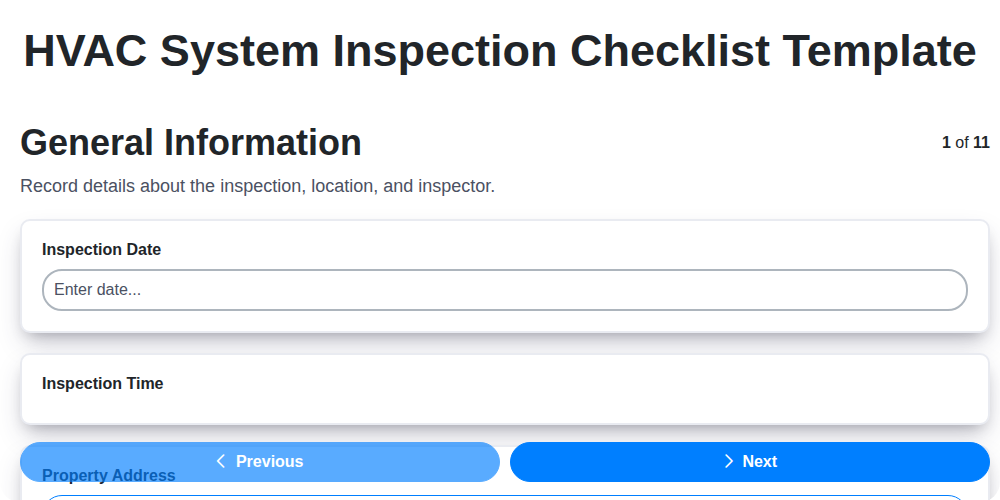
Your Ultimate HVAC Inspection Checklist Template
The Ultimate Data Center Inspection Checklist Template
Need help with
Checklists?
Have a question? We're here to help. Please submit your inquiry, and we'll respond promptly.