Pet Policy Enforcement Checklist for Rental Properties: A Comprehensive Guide
Published: 11/26/2025 Updated: 07/02/2026
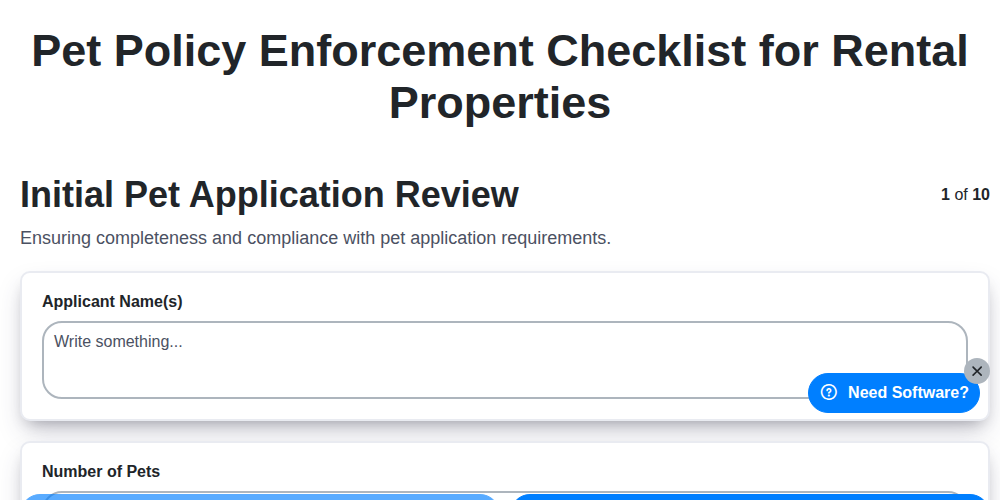
Table of Contents
- Introduction: Why a Robust Pet Policy is Essential
- 1. Initial Pet Application Review: Setting the Foundation
- 2. Pet Screening & Approval: Assessing Suitability
- 3. The Lease Addendum: Formalizing the Agreement
- 4. Pet Registration & Documentation: Maintaining Records
- 5. Regular Compliance Checks: Proactive Monitoring
- 6. Addressing Pet-Related Complaints: Prompt and Fair Resolution
- 7. Enforcement & Damage Assessment: Consistent Action
- 8. Legal Compliance and Policy Updates: Staying Protected
- Resources & Links
TLDR: Managing pets in your rental property can be tricky! This checklist is your roadmap. It covers everything from initial applications and screening, to dealing with complaints and ensuring legal compliance - saving you headaches and protecting your investment. Use it to stay organized, enforce your pet policies consistently, and avoid potential legal issues.
Introduction: Why a Robust Pet Policy is Essential
Allowing pets in a rental property can be a fantastic way to attract tenants and increase occupancy rates. However, it also introduces potential challenges - noise complaints, property damage, and safety concerns are just a few. A well-defined and consistently enforced pet policy isn't just about protecting your property; it's about fostering a harmonious community for all residents. Without a clear framework, you risk disputes between tenants, increased liability, and costly repairs. This checklist provides a practical guide to establishing and maintaining a comprehensive pet policy, ensuring both your business and your tenants are protected.
1. Initial Pet Application Review: Setting the Foundation
The first step in effective pet policy enforcement is a thorough initial application review. Don't just skim; truly assess each applicant's suitability as a pet owner. Start with a standardized pet application form - this ensures consistency and helps you collect the vital information you need.
Key areas to focus on include:
- Pet Details: Verify the type, breed, weight, and age of the pet. Some breeds may be restricted due to insurance or local ordinances. Weight limits are also critical for safety and potential damage considerations.
- Ownership History: Previous rental history regarding pets is incredibly valuable. Look for instances of violations, complaints, or evictions related to animals.
- Veterinary Records: Request proof of vaccinations and any ongoing medical conditions. This demonstrates responsible pet ownership and potential health concerns that might impact the property.
- Contact Information: Confirm that all provided contact information is accurate and up-to-date, including emergency contacts.
- References: Always check references provided by previous landlords or veterinarians. These can provide invaluable insight into the pet's behavior and the owner's responsibility.
A poorly reviewed initial application can lead to significant headaches down the line. Take the time to do it right!
2. Pet Screening & Approval: Assessing Suitability
Beyond a simple yes or no on a pet application, thorough screening is crucial for protecting your property and existing tenants while ensuring a positive experience for pet owners. This stage goes beyond just confirming the type and breed of pet - it's about assessing suitability.
What to Include in Your Screening Process:
- Breed Restrictions: Clearly defined and legally compliant breed restrictions are essential. Ensure these align with fair housing laws and are consistently applied.
- Weight Limits: Implement reasonable weight limits to protect your property's structure and ensure tenant comfort.
- Pet History: Request detailed information about the pet's history, including training, behavioral issues, and any previous incidents (bites, aggression, excessive barking). Don't be afraid to ask for vet records.
- Reference Checks: Contact previous landlords or animal care professionals to gain insights into the pet's behavior and responsibility of the owner.
- Pet Personality Questionnaire: Consider a short questionnaire for the owner to detail their pet's temperament and habits.
- Professional Evaluations (Optional): For certain breeds or pets with known behavioral concerns, consider requiring a professional evaluation by a certified trainer or behaviorist. This is an added layer of due diligence.
- Owner Responsibility: Assess the owner's understanding of their responsibilities regarding pet care, waste cleanup, noise control, and potential damage.
Document Everything: Keep meticulous records of all screening information, including application details, reference checks, evaluation results, and communication with the applicant. This provides a clear audit trail and protects you from potential legal challenges. Remember, consistency is key - apply the same standards to all pet applicants.
3. The Lease Addendum: Formalizing the Agreement
Once your prospective tenant and their furry (or feathered, or scaled!) friend have passed the initial application and screening, it's time to formalize the pet agreement with a Lease Addendum. This isn't just a nice-to-have; it's a crucial legal document protecting both you and the tenant.
The Lease Addendum specifically outlines the pet-related terms beyond what's already covered in the standard lease. This includes details like:
- Specific Pet Details: Clearly state the type, breed, and weight of the approved pet(s). Vague descriptions can lead to disputes later.
- Pet Fees & Rent: Reiterate the agreed-upon pet fee (one-time) and any additional pet rent (monthly).
- Rules & Restrictions: Summarize key pet policy rules, such as leash requirements, designated pet areas (if applicable), and noise limitations. Referencing the main pet policy is acceptable, but having a concise summary in the addendum provides clarity.
- Liability Clause: Include a clause stating that the tenant is solely responsible for any damages or injuries caused by their pet.
- Pet Removal Clause: Specify the conditions under which the pet may be removed from the property (e.g., violation of the pet policy).
- Renewal/Expiration: State how the pet agreement renews with the lease or expires.
Important Note: Ensure both the tenant and you sign and date the Lease Addendum. Provide a copy to the tenant for their records. This document becomes a legally binding part of the lease agreement.
4. Pet Registration & Documentation: Maintaining Records
Beyond initial approval, consistent and thorough pet registration and documentation are crucial for successful pet policy enforcement. This isn't just about knowing who has a pet; it's about having a clear and accessible record for reference.
Here's what your pet registration and documentation process should include:
- Pet Profile: For each approved pet, maintain a detailed profile including:
- Pet's Name
- Species (Dog, Cat, Bird, etc.)
- Breed
- Age
- Weight
- Color/Markings (for easy identification)
- Microchip Number (and verification of registration)
- Vaccination Records (with expiration dates) - Important: Specify accepted documentation and expiration timelines in your pet policy.
- Spay/Neuter Status (with proof)
- Owner Association: Link each pet record to the tenant's lease information, ensuring accuracy and ease of access.
- Digital Storage: Consider using a digital platform or spreadsheet for efficient storage and retrieval. Cloud-based systems offer accessibility and redundancy.
- Secure Access: Limit access to pet registration data to authorized personnel only, protecting tenant privacy.
- Regular Updates: Require tenants to update pet information annually or whenever changes occur (e.g., new vaccinations, change of ownership). Include a reminder in annual lease renewal notices.
Consistent pet registration and accurate documentation are key to demonstrating compliance with your policies and creating a transparent process for all parties involved.
5. Regular Compliance Checks: Proactive Monitoring
Regularly scheduled compliance checks are crucial for maintaining a harmonious pet-friendly environment and mitigating potential issues before they escalate. Don't wait for complaints; be proactive! These checks don't need to be intrusive; they're about ensuring adherence to agreed-upon guidelines and identifying any early warning signs.
Here's what these checks should involve:
- Exterior Observation: Briefly observe common areas (yards, hallways, balconies) for signs of pet waste, excessive barking, or disruptive behavior. Note the time and observations.
- Noise Level Assessment: Periodically assess the overall noise level within the property, particularly during peak hours. Excessive barking can be a common complaint.
- Community Interaction: Engage (briefly and respectfully) with residents to gather feedback on the pet environment. This can be as simple as a quick, How are things going with pets in the area?
- Visual Confirmation of Waste Disposal: Ensure pet waste stations are properly stocked and used. Are bags available? Are residents using them?
- Record Keeping: Document all checks, even those with no issues found. This demonstrates due diligence and provides a historical record.
By implementing these simple, routine checks, you can foster a responsible pet community and minimize potential problems.
6. Addressing Pet-Related Complaints: Prompt and Fair Resolution
Pet-related complaints are inevitable in rental properties that allow animals. How you handle these complaints can significantly impact tenant relations, property value, and even legal liability. Ignoring them or reacting defensively will only exacerbate the situation. Here's a proactive approach to addressing pet-related grievances:
1. Establish a Clear Reporting Process: Make it easy for tenants to report concerns. This could be through a dedicated email address, online form, or designated contact person. Clearly state this process in your pet policy.
2. Immediate Acknowledgment & Investigation: Upon receiving a complaint, acknowledge receipt promptly (within 24-48 hours). Then, investigate the matter thoroughly. This involves speaking with both the complainant and the pet owner. Remain impartial and document all conversations.
3. Gather Evidence: Don't rely solely on hearsay. Seek corroborating evidence - witness statements from other tenants, photos/videos (if permissible and legally compliant), or documented instances of issues.
4. Mediation & Communication: Often, misunderstandings can be resolved through open communication. Encourage a meeting (or mediated discussion) between the parties involved to foster understanding and potential resolution.
5. Policy Review & Application: Re-evaluate the situation in light of your established pet policy. Does the pet's behavior violate specific clauses? Apply the policy fairly and consistently to all tenants.
6. Documentation is Key: Meticulously document every step of the complaint resolution process - the initial complaint, the investigation, conversations with tenants, findings, and any actions taken. This protects you from potential legal challenges.
7. Remain Professional: Even when faced with frustration or anger, maintain a professional and respectful demeanor. Empathy and a genuine desire to resolve the issue go a long way in de-escalating tension.
Remember, proactive communication and a commitment to fairness are crucial for maintaining a harmonious rental community.
7. Enforcement & Damage Assessment: Consistent Action
Consistent enforcement of your pet policies is crucial for maintaining a harmonious community and protecting your property. It's not enough to have a policy; you must enforce it fairly and predictably.
Addressing Policy Violations: When a violation occurs (excessive noise, aggression, unleashed pets, etc.), follow a clearly defined process. This should begin with a written warning outlining the infraction and expected corrective action. Document this warning thoroughly, including the date, recipient, details of the violation, and expected resolution.
Damage Assessments: Accidents happen. Pets, even well-behaved ones, can cause damage. A transparent damage assessment process is vital.
- Immediate Notification: Require tenants to immediately report any pet-related damage.
- Detailed Inspection: Conduct a thorough inspection of the affected area. Take photos and/or video as documentation.
- Cost Estimation: Obtain multiple estimates for repairs.
- Tenant Responsibility: Clearly outline the tenant's responsibility for damage repair costs, as dictated by your lease agreement and local laws. Be prepared to work with the tenant on payment plans if necessary, but maintain a firm stance on accountability.
- Security Deposits: Utilize security deposits appropriately and in accordance with state regulations to cover repair costs.
- Legal Consultation: For significant damage or disputes, consult with legal counsel.
Consistency is Key: Apply the enforcement process equally to all tenants. Selective enforcement can lead to accusations of discrimination and legal trouble. A standardized approach builds trust and reinforces the importance of your pet policies.
Important Note: Always consult with legal counsel to ensure your enforcement practices comply with all applicable federal, state, and local laws and fair housing regulations.
8. Legal Compliance and Policy Updates: Staying Protected
Pet policies are evolving, and so are the laws surrounding them. What's compliant today might not be tomorrow. It's crucial to proactively stay informed and adapt your policies accordingly.
Here's what you need to do:
- Fair Housing Act (FHA) Considerations: Be mindful of the FHA and potential service animals or assistance animals. Policies cannot discriminate against individuals with disabilities who require these animals. Thoroughly understand the differences between pets, service animals, and emotional support animals.
- State & Local Laws: Research and understand state and local laws regarding pet restrictions, breed bans, and pet fees. These can vary significantly and override general policy language.
- Breed-Specific Legislation (BSL): Be aware of any breed-specific legislation in your area. These laws may restrict or ban certain dog breeds.
- Regular Policy Review: Conduct annual reviews of your pet policy, incorporating any changes in legislation or case law. Document these reviews.
- Policy Updates & Notifications: When updates are made to your pet policy, clearly communicate those changes to all current and prospective tenants. This can be done through website postings, email notifications, or updated lease agreements.
- Consult Legal Counsel: Regularly consult with an attorney specializing in landlord-tenant law to ensure your pet policy is compliant and legally sound. This is especially important when implementing significant changes or facing legal challenges.
- Stay Informed: Subscribe to legal updates and industry newsletters focused on real estate and landlord-tenant law to stay abreast of emerging trends and regulations.
By prioritizing legal compliance and actively updating your pet policy, you're protecting your rental property and minimizing potential legal liabilities.
Resources & Links
- U.S. Department of Housing and Urban Development (HUD): HUD provides guidance and regulations concerning assistance animals (service animals and emotional support animals) and pet policies in properties receiving federal funding. Essential for understanding Fair Housing Act requirements.
- Nolo - Landlord-Tenant Law: Nolo provides comprehensive legal information for landlords, including articles and resources related to pet policies, lease agreements, and state-specific regulations. Good for understanding legal bases for your policy.
- Tenant Rights: Offers information and resources related to tenant rights concerning pets, including assistance animals and the legality of pet restrictions. Helpful for understanding tenant perspectives and avoiding legal challenges.
- Apartment Owners Association: Provides resources for property managers and owners, including articles and best practices for pet-friendly living, including tips for enforcement. Often has state-specific information.
- Pet Insurance.com: While primarily for pet insurance, their website contains articles and information regarding responsible pet ownership and common pet-related concerns - can provide insights for defining suitability criteria in the screening process.
- American Veterinary Medical Association (AVMA): Provides information on responsible pet ownership, common pet behaviors, and potential concerns. Useful for developing informed screening questions and understanding potential damage risks.
- Apartment Association of New England: An example of a regional apartment owners association, these often have resources for Pet Policy Enforcement
- CBRE: Commercial real estate company with reports and articles on pet-friendly apartment trends, including demographics and market considerations. Helps to understand the market context of pet policies.
- LegalZoom: Legal document creation and information resource. Useful for finding templates for lease addendums (review with legal counsel before use).
- The Balance - Rental Property Pet Policy: Provides practical advice on creating a pet policy and a summary of important considerations and common pitfalls to avoid. A good starting point for understanding policy considerations.
Frequently Asked Questions
What is a Pet Policy Enforcement Checklist and why is it important?
A Pet Policy Enforcement Checklist is a structured guide to ensure consistent and fair application of your rental property's pet policy. It's crucial for legal compliance, minimizing disputes with tenants, protecting your property, and maintaining a positive community environment. It helps avoid accusations of discrimination and ensures all tenants are treated equally.
Why should I use a checklist instead of just relying on my pet policy?
A written policy is essential, but a checklist ensures consistent application. Policies can be open to interpretation; a checklist removes ambiguity by providing a step-by-step process for evaluating pet requests, addressing violations, and documenting actions. This protects you legally and promotes fairness.
What are the key elements that should be included in a Pet Policy Enforcement Checklist?
The checklist should include sections covering: 1) Initial Pet Request Review (breed restrictions, weight limits, fees), 2) Verification of Documentation (vaccinations, pet agreements), 3) Ongoing Monitoring (complaints, property damage), 4) Violation Procedures (warnings, fines, eviction), and 5) Documentation of all actions taken. It should also include fields for dates, employee initials, and tenant communication records.
What types of pets should be considered when developing my pet policy and checklist?
Consider all common household pets: dogs, cats, birds, reptiles, small mammals (rabbits, hamsters). Be specific about which types of pets are allowed or restricted. Consider service animals and emotional support animals and their legal protections separately.
What legal considerations need to be taken into account when creating and enforcing my pet policy and checklist?
Be aware of Fair Housing Act (FHA) regulations regarding service animals and emotional support animals, local ordinances regarding pet ownership (leash laws, barking complaints), and state laws concerning pet deposits and fees. Avoid discriminatory language or restrictions that violate these laws.
How do I handle requests for service animals or emotional support animals?
You *cannot* charge fees or require deposits for service animals or emotional support animals. Landlords can only inquire about the animal's function and whether it is necessary for the tenant's disability. Documentation must be verified with a qualified healthcare professional. Follow established procedures to avoid FHA violations.
What documentation should I collect from tenants regarding their pets?
Typically, this includes: pet registration form, vaccination records, pet agreement outlining responsibilities, proof of pet insurance (if required). Ensure all documentation is kept secure and accessible only to authorized personnel.
How frequently should I review and update my Pet Policy Enforcement Checklist?
Review your checklist at least annually, or more frequently if laws or regulations change. Also, update the checklist if you receive feedback from tenants or experience issues requiring clarification or modification.
What should I do if a tenant violates the pet policy?
Follow the established procedures in your checklist. This typically involves a written warning, potential fines, and ultimately, possible eviction if the violations persist. Document all communication and actions taken.
How do I train my staff to effectively use the Pet Policy Enforcement Checklist?
Provide comprehensive training on the pet policy, checklist procedures, relevant laws, and proper communication techniques. Regularly review procedures and address any questions or concerns. Consistency in enforcement is key.
Comments
There are no comments yet. Be the first to add one!
Real Estate Management Solution Demo
Simplify your real estate operations! ChecklistGuro streamlines property management, lease renewals, and maintenance requests. Enhance tenant satisfaction and maximize ROI. Manage it all with our Work OS.
Related Articles
Stress-Free Inspections: Your Home Inspection Coordination Checklist Template
The Ultimate Website Maintenance Checklist Template
10 Essential Checks: Your Brokerage Policy Review Checklist
The Ultimate Office Opening/Closing Checklist Template
Your Ultimate AML Compliance Checklist Template
Rent Collection Checklist Template: Your Landlord's Guide
Your Complete Flood Zone Disclosure Checklist Template
Fair Housing Training Checklist Template: Your Guide to Compliance
Need help with
Real Estate?
Have a question? We're here to help. Please submit your inquiry, and we'll respond promptly.