Mastering Pharmaceutical CAPA: Your Essential Management Checklist
Published: 25.11.2025 22:00 Updated: 14.12.2025 6:53
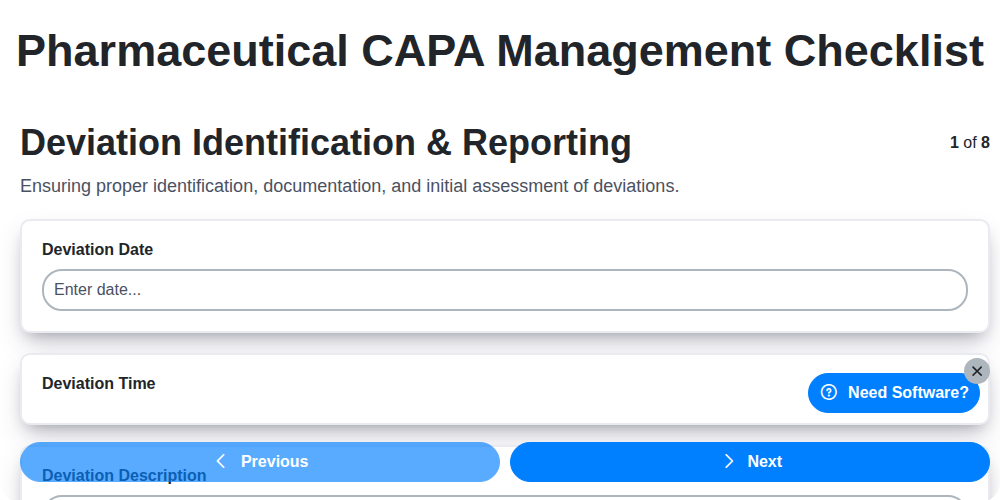
Table of Contents
- Introduction: Why CAPA Matters in Pharma
- 1. Deviation Identification & Reporting: The Foundation of CAPA
- 2. Root Cause Investigation: Digging Deep to Understand 'Why'
- 3. Corrective Action Development: Fixing the Immediate Problem
- 4. Preventive Action Implementation: Stopping Future Occurrences
- 5. CAPA Effectiveness Verification: Measuring Real-World Impact
- 6. CAPA Documentation & Record Keeping: Building a Robust Audit Trail
- 7. CAPA Training & Communication: Empowering Your Team
- 8. CAPA Closure & Review: Ensuring Long-Term Stability
- 9. Common CAPA Challenges & How to Overcome Them
- Conclusion: Continuous Improvement Through CAPA
- Resources & Links
TLDR: Pharmaceutical CAPA can be overwhelming, but this checklist is your roadmap! It breaks down the entire process - from identifying issues & finding root causes to verifying fixes and keeping records - ensuring compliance and preventing future problems. Download the template and streamline your CAPA management today!
Introduction: Why CAPA Matters in Pharma
In the highly regulated pharmaceutical industry, maintaining product quality and patient safety isn't just a goal-it's a legal and ethical imperative. At the heart of this commitment lies the Corrective and Preventive Action (CAPA) system. More than just a procedural step, CAPA represents a proactive approach to identifying, analyzing, and resolving issues that could potentially impact product quality, safety, or compliance. A robust CAPA system demonstrates a commitment to continuous improvement, prevents recurring problems, and provides evidence of a company's dedication to upholding the highest standards. Ignoring or inadequately managing CAPAs can lead to regulatory scrutiny, product recalls, and ultimately, harm to patients. This blog post will guide you through a comprehensive checklist to ensure your pharmaceutical CAPA management system is both effective and compliant.
1. Deviation Identification & Reporting: The Foundation of CAPA
The entire CAPA process hinges on the robust identification and reporting of deviations. Without a clear and comprehensive system for recognizing and documenting issues, you're essentially building on a faulty foundation. This isn't just about catching the obvious; it's about fostering a culture where everyone feels comfortable raising concerns, no matter how small they may seem.
Here's what a strong Deviation Identification & Reporting process should encompass:
- Multiple Reporting Channels: Offer diverse avenues for reporting deviations - verbal reports, written forms (paper or electronic), email, or dedicated reporting software. Make it easy and accessible for all personnel.
- Clear Definition of a Deviation: Provide a clear and concise definition of what constitutes a deviation. This helps avoid confusion and ensures consistency in reporting. Examples might include: unexpected results, non-compliance with procedures, equipment malfunctions, or documentation errors.
- Prompt Reporting: Establish timelines for reporting deviations. The sooner a deviation is reported, the quicker corrective actions can be initiated.
- No Retribution Policy: Crucially, implement a clear "no retribution" policy. Personnel should feel safe reporting issues without fear of blame or negative consequences. This encourages proactive identification rather than concealment.
- Initial Assessment & Prioritization: Upon receipt of a deviation report, a preliminary assessment should be performed to determine its severity and potential impact. This prioritization guides the subsequent investigation and response.
- Standardized Reporting Forms: Utilize standardized forms (either paper or electronic) to ensure that all relevant information is captured consistently. These forms should include fields for date, time, location, description of deviation, individuals involved, and initial observations.
A well-defined and actively used Deviation Identification & Reporting system is more than just a process; it's a cornerstone of a quality-focused pharmaceutical environment.
2. Root Cause Investigation: Digging Deep to Understand 'Why'
Deviation Identification & Reporting is only the starting point. To truly prevent recurrence and drive meaningful improvement, a robust Root Cause Investigation (RCI) is essential. This isn't about assigning blame; it's about uncovering the underlying systemic issues that allowed the deviation to occur.
Beyond the Obvious: Don't stop at the immediate cause. Employ techniques like the 5 Whys, Fishbone Diagrams (Ishikawa diagrams), Fault Tree Analysis, or Change Analysis to drill down multiple levels. Ask Why? repeatedly until you reach the fundamental cause(s). For example, a simple error in documentation might stem from inadequate training, confusing procedures, or a rushed workflow.
Team Involvement is Key: An RCI shouldn't be a solitary effort. Include individuals with diverse perspectives - those directly involved in the process, subject matter experts, and even representatives from quality assurance. This broader input ensures a more complete understanding of the situation.
Objectivity & Data: Base your conclusions on facts and data, not assumptions. Thoroughly review batch records, equipment logs, training records, and any other relevant information. Utilize measurable data wherever possible.
Documenting the Investigation: Detailed documentation of the RCI process is crucial. Record all methods employed, findings, potential root causes explored, and the rationale for selecting the final root cause(s). This demonstrates due diligence and provides a valuable reference for future analysis.
Example:
- Deviation: Incorrect batch weight.
- Initial Cause: Operator misread scale.
- Using 5 Whys:
- Why did the operator misread the scale? They were rushing to meet a deadline.
- Why were they rushing? Production schedule was unrealistic.
- Why was the schedule unrealistic? Insufficient staffing and poor forecasting.
- Why was there insufficient staffing? Budget cuts.
- Why were there budget cuts? Company-wide restructuring.
This reveals that the deviation wasn's just about an operator error; it was a consequence of broader issues impacting staffing and workload.
3. Corrective Action Development: Fixing the Immediate Problem
Once the root cause of a deviation has been thoroughly investigated and documented, the focus shifts to developing effective corrective actions. This isn't just about addressing the symptom; it's about implementing changes that directly resolve the immediate problem that triggered the deviation. A poorly designed corrective action can lead to recurring issues and potentially compromise product quality and patient safety.
Here's what a robust corrective action development process includes:
- Specific & Measurable Actions: Corrective actions should be clearly defined with specific actions to be taken. Avoid vague statements like improve training. Instead, specify Provide refresher training on HPLC maintenance procedures for all technicians by [Date] including a practical demonstration and assessment.
- Assign Responsibility & Set Timelines: Clearly assign ownership of each corrective action to a specific individual or team. Include realistic and trackable deadlines for completion. This ensures accountability and prevents actions from being overlooked.
- Consider the Scope: Determine whether the corrective action is localized to the immediate situation or requires broader systemic changes. Address the entire scope of the problem - a seemingly minor deviation might reveal flaws in broader processes.
- Risk Assessment: Evaluate the potential risks associated with the proposed corrective action itself. Could the action introduce new problems or affect other processes?
- Documentation: Meticulously document the proposed corrective actions, rationale behind their selection, and potential impact. This forms a clear audit trail and facilitates future review.
- Prioritization: If multiple corrective actions are needed, prioritize them based on risk, impact, and feasibility. Address the most critical issues first.
Remember, the quality of your corrective actions directly impacts the success of your CAPA system. Taking the time to develop thoughtful, well-defined corrective actions is an investment in quality, compliance, and patient safety.
4. Preventive Action Implementation: Stopping Future Occurrences
Corrective actions address existing problems, but preventive actions are about proactively preventing them from happening in the first place. This is arguably the most valuable aspect of a robust CAPA system. It demonstrates a commitment to continuous improvement and a preventative mindset.
Implementing preventive actions requires digging deeper than just fixing the immediate issue. It means analyzing processes, identifying vulnerabilities, and strategically implementing changes to mitigate potential risks. Here's what's involved:
- Risk Assessment Integration: Preventive actions should be directly tied to the root cause investigation and any identified systemic risks. The investigation should highlight areas where similar deviations could occur.
- Process Modifications: This could involve changes to standard operating procedures (SOPs), equipment maintenance schedules, material specifications, or even facility layouts. Be sure to clearly define the revised process and its rationale.
- Design Controls: For issues related to product or process design, preventive actions might involve design changes, incorporating fail-safe mechanisms, or enhanced testing procedures.
- Training Enhancement: If a lack of training or understanding contributed to the deviation, preventive actions should focus on targeted training and improved communication. This is especially important for critical procedures.
- Verification & Validation: Just like corrective actions, preventive actions need to be verified to ensure they're effective. This may involve data analysis, audits, or process observation.
- Documentation: Clearly document the preventive actions, including the rationale behind them, the individuals responsible for implementation, and the verification plan.
Ultimately, successful preventive action implementation moves your CAPA system beyond reactive problem-solving and establishes a culture of proactive risk management.
5. CAPA Effectiveness Verification: Measuring Real-World Impact
Developing and implementing corrective and preventive actions is only half the battle. Truly effective CAPA management requires rigorous verification to ensure those actions are achieving their intended results and preventing recurrence. This isn't a "set it and forget it" process; it demands ongoing assessment and potential adjustments.
Effectiveness verification goes beyond simply closing out a CAPA. It involves a detailed review of data, process observations, and performance indicators after the implemented action has had sufficient time to take effect. Key questions to address include:
- Has the deviation truly been resolved? Are similar incidents decreasing in frequency or severity?
- Are the implemented actions sustainable? Are they being consistently followed by personnel?
- Are there any unintended consequences? Have the actions impacted other processes or areas unexpectedly?
- Is the action achieving the desired level of risk reduction?
Verification methods can include:
- Trend Analysis: Monitoring key performance indicators (KPIs) like deviation rates, rejection rates, and customer complaints.
- Audits: Conducting periodic audits to assess adherence to procedures and evaluate the effectiveness of implemented changes.
- Process Observation: Directly observing processes to ensure actions are being followed and producing the desired outcome.
- Data Analysis: Reviewing relevant data (e.g., batch records, laboratory results) to identify any lingering issues.
- Feedback from Personnel: Gathering input from those directly involved in the affected processes.
Documenting the verification activities, findings, and any necessary adjustments is crucial. If verification reveals that an action is not effective, the CAPA cycle needs to be revisited, prompting further investigation and refinement of the corrective and preventive measures. This iterative approach is the hallmark of a robust and continuously improving CAPA system.
6. CAPA Documentation & Record Keeping: Building a Robust Audit Trail
Robust documentation is the backbone of any successful CAPA system. It's not just about ticking boxes; it's about creating a clear, traceable audit trail that demonstrates your commitment to continuous improvement and compliance. Without meticulous record-keeping, the value of your CAPA efforts diminishes significantly, leaving you vulnerable to regulatory scrutiny.
Here's what you need to prioritize:
- Comprehensive Records: Every step of the CAPA process - from initial deviation identification to final closure - must be documented. This includes the deviation report itself, investigation findings, proposed corrective and preventive actions, implementation plans, verification data, and review outcomes.
- Version Control: Maintaining accurate version control of documents (procedures, investigation reports, action plans) is crucial. Clearly mark revisions, dates, and the individuals responsible for the changes.
- Traceability: Establish clear linkages between the deviation, investigation, proposed actions, and implemented solutions. This allows auditors (and internal stakeholders) to easily follow the CAPA lifecycle.
- Secure Storage: Store all CAPA documentation securely, both electronically and potentially in hard copy, in accordance with your company's document control procedures. Ensure accessibility by authorized personnel while maintaining confidentiality.
- Electronic Systems: If using an electronic CAPA system (eQMS), leverage its capabilities for automated workflows, electronic signatures, audit trails, and reporting. Ensure validation and ongoing maintenance of the system.
- Retention Policy: Adhere to your company's document retention policy to ensure records are stored for the required period. Be mindful of regulatory requirements for specific record retention times.
By focusing on meticulous documentation and record-keeping, you're not just complying with regulations; you're building a robust CAPA system that strengthens your quality management system and demonstrates a culture of continuous improvement.
7. CAPA Training & Communication: Empowering Your Team
A robust CAPA system is only as effective as the people executing it. Without adequate training and clear communication, even the most meticulously designed procedures can falter. This section isn't just about ticking a training box; it's about cultivating a culture of continuous improvement where everyone understands their role in identifying, resolving, and preventing deviations.
What Should CAPA Training Cover?
- Understanding CAPA Principles: Introduce the core concepts of CAPA - identifying deviations, root cause analysis, corrective and preventive actions, and verification - and why they are crucial for quality and compliance.
- Deviation Reporting Procedures: Clearly outline how and when to report deviations. Emphasize that reporting is encouraged, not punished, and that early reporting leads to quicker resolution.
- Root Cause Analysis Techniques: Train personnel on common root cause analysis tools like the 5 Whys, Fishbone diagrams (Ishikawa diagrams), and fault tree analysis.
- Corrective & Preventive Action Development: Provide guidance on developing effective actions that address the root cause and prevent recurrence.
- System Navigation: Ensure everyone understands how to use the CAPA system software, including submitting reports, tracking progress, and accessing documentation.
- Role-Specific Responsibilities: Clearly define individual responsibilities within the CAPA process - reporters, investigators, action owners, reviewers, etc.
Communication is Key:
- Regular Updates: Provide regular updates on CAPA progress to relevant stakeholders. This demonstrates transparency and keeps everyone informed.
- Lessons Learned Dissemination: Share findings and lessons learned from completed CAPAs across the organization. This prevents repeating the same mistakes.
- Open Communication Channels: Encourage open communication and feedback related to the CAPA system.
- Multi-Level Training: Offer tiered training programs based on role and responsibility.
By investing in comprehensive CAPA training and fostering open communication, you're not just creating a compliant system; you're building a team empowered to drive continuous improvement and enhance product quality.
8. CAPA Closure & Review: Ensuring Long-Term Stability
Closing a CAPA isn't simply checking a box; it's a critical final step that validates the entire corrective and preventive action process and ensures long-term stability within your pharmaceutical operations. Rushing this stage can leave lingering issues that resurface later, potentially impacting product quality and regulatory compliance.
A thorough CAPA closure & review involves several key elements. First, verify that all planned corrective and preventive actions have been fully implemented and documented. This means confirming the actions were performed as intended, by the assigned personnel, and within the specified timelines. Don't just assume; prove it with records and evidence.
Next, a post-implementation review is vital. This assessment should evaluate the effectiveness of the CAPA. Has the initial deviation been resolved? Have recurrence rates decreased? Are the intended benefits realized? Quantifiable data, trend analysis, and process monitoring are invaluable here.
The review shouldn't be limited to the immediate solution. Consider broader implications: Did this CAPA uncover systemic issues within the process, system, or organization? Opportunities for continuous improvement often arise from CAPA reviews. This may lead to further CAPAs targeting more fundamental problems.
Finally, document the closure review findings. This documentation should clearly state whether the CAPA is considered closed, any remaining concerns, and any recommendations for future action. Secure this documentation within the CAPA record for future audits and reference. A robust CAPA closure & review process provides confidence that your systems are continuously improving and that deviations are handled effectively, minimizing risk and maximizing product quality.
9. Common CAPA Challenges & How to Overcome Them
Even with a robust CAPA management system in place, organizations often encounter hurdles. Here are some frequently observed challenges and strategies to navigate them:
1. Lack of Timeliness: Delays in initiating and completing CAPAs can compromise their effectiveness and potentially impact product quality. Solution: Implement automated workflows and alerts to ensure prompt reporting and review. Assign clear ownership and deadlines for each CAPA step.
2. Insufficient Root Cause Analysis: Rushing to corrective actions without a thorough investigation often results in recurring issues. Solution: Utilize established RCA tools like the 5 Whys, Ishikawa diagrams (fishbone diagrams), and Fault Tree Analysis. Encourage cross-functional teams to participate and challenge assumptions.
3. Corrective Actions Not Sustainable: Actions that are easily bypassed or difficult to maintain are unlikely to prevent recurrence. Solution: Involve relevant personnel in the development of corrective actions to ensure buy-in and feasibility. Evaluate the impact on existing processes and workflows. Ensure adequate resources are available for implementation.
4. Preventative Actions Missed Opportunity: Focusing solely on corrective actions neglects the potential to proactively eliminate risks. Solution: Integrate risk assessment into the CAPA process. Regularly review potential failure modes and develop preventative actions before issues arise.
5. Data Silos & Lack of Visibility: Scattered data makes it difficult to track progress, identify trends, and demonstrate CAPA effectiveness. Solution: Implement a centralized CAPA management system that integrates with other quality systems (e.g., deviation management, change control). Ensure data is easily accessible to authorized personnel.
6. Resistance to Change: Implementing new procedures or changing existing workflows can meet resistance from employees. Solution: Communicate the rationale behind CAPA changes clearly and involve employees in the process. Provide adequate training and address concerns openly.
7. Lack of Clear Ownership: Ambiguity in responsibility can lead to delays and accountability issues. Solution: Clearly define roles and responsibilities for each CAPA step. Assign ownership and ensure individuals understand their obligations.
8. Inadequate Training: Employees may lack the knowledge and skills required to effectively participate in the CAPA process. Solution: Provide comprehensive training on CAPA procedures, root cause analysis techniques, and quality system requirements. Regularly refresh training to ensure ongoing competency.
9. Failure to Demonstrate Effectiveness: Without proper verification, it's difficult to prove that CAPAs have achieved their intended results. Solution: Establish clear metrics to evaluate CAPA effectiveness. Conduct thorough verification activities, including data analysis and trend monitoring. Document findings and make adjustments as needed.
Conclusion: Continuous Improvement Through CAPA
Implementing and maintaining a robust CAPA system isn't a one-and-done task; it's a journey of continuous improvement. This checklist, and the diligent execution of its steps, provides a solid foundation for pharmaceutical companies to proactively identify, address, and ultimately prevent quality issues. Remember, the true value of CAPA lies not just in fixing problems after they arise, but in the learning and adaptation that occurs throughout the process. Regularly reviewing your CAPA system, soliciting feedback from all involved parties, and adapting your processes based on lessons learned are vital to ensuring its effectiveness and driving continuous improvement in product quality and patient safety. By embracing CAPA as a cornerstone of your quality management system, you're investing in a culture of vigilance, accountability, and, most importantly, better patient outcomes.
Resources & Links
- U.S. Food and Drug Administration (FDA) Guidance Documents: The FDA website is a critical resource for understanding CAPA requirements within the pharmaceutical industry. Search for guidance documents related to Quality Systems, 21 CFR Part 211, and specific areas relevant to your CAPA process. Provides the regulatory basis for CAPA.
- Pharmaceutical Online: Pharmaceutical Online offers a wide range of articles, webinars, and white papers covering quality management, including CAPA. Useful for staying updated on industry best practices and insights.
- Quality Assurance Magazine: Provides articles and resources on quality assurance and regulatory compliance. Can be useful for understanding the broader context of CAPA and its integration within a quality management system. Many articles cover specific pharmaceutical quality topics.
- American Society for Quality (ASQ): ASQ provides training, certification, and resources related to quality management principles, including those relevant to CAPA. Good for foundational understanding and problem-solving methodologies.
- International Society for Pharmaceutical Engineering (ISPE): ISPE offers publications, conferences, and training focused on pharmaceutical manufacturing and quality. Their resources often address specific aspects of CAPA implementation within pharmaceutical facilities.
- Pharmaceutical Quality Consultants (PQC): PQC offers consulting services and resources related to quality management and regulatory compliance, including CAPA. May offer whitepapers and webinars, useful for specific CAPA challenges.
- Compliance Guardian: Offers a range of compliance resources, including information on CAPA, with a focus on practical application and regulatory updates. Useful for understanding nuances in regulatory interpretations.
- Global GMP: Global GMP provides news, regulatory updates, and technical articles on pharmaceutical GMP compliance. Helps stay current with changing regulations and industry expectations related to CAPA.
- The Lean Enterprise Institute: While not exclusively pharma-focused, Lean principles are valuable for streamlining CAPA processes and eliminating waste. Useful for improving the efficiency and effectiveness of your CAPA system.
- MindTools: Offers tools and resources for problem-solving and root cause analysis, which are crucial steps in the CAPA process. Provides practical guidance on various analytical techniques.
Frequently Asked Questions
What does CAPA stand for in the pharmaceutical industry?
CAPA stands for Corrective and Preventive Action. It's a systematic process for identifying, analyzing, and correcting deviations and preventing their recurrence, crucial for maintaining quality and compliance in pharmaceutical manufacturing.
Why is CAPA management so important in the pharmaceutical industry?
CAPA is a critical element of a Quality Management System (QMS) and a regulatory requirement (e.g., FDA regulations). Effective CAPA management ensures product quality, patient safety, identifies systemic issues, and prevents repeat occurrences of problems, avoiding regulatory scrutiny and potential recalls.
What are the key differences between a Corrective Action and a Preventive Action?
A Corrective Action addresses problems that have already occurred - it's a reactive process. A Preventive Action aims to eliminate potential problems before they happen - it's a proactive approach. Both are essential for a robust CAPA system.
What are the typical steps involved in a pharmaceutical CAPA process?
The process generally includes: identifying the deviation/non-conformity, performing root cause analysis, developing corrective and/or preventive actions, implementing those actions, verifying their effectiveness, and closing the CAPA.
What is root cause analysis and why is it important in CAPA?
Root cause analysis (RCA) is the process of identifying the underlying reason(s) a problem occurred. It's crucial because addressing only the symptoms won't prevent the problem from recurring. Common RCA techniques include the '5 Whys' and Fishbone diagrams.
How can I ensure effective CAPA documentation?
CAPA documentation should be comprehensive, clear, and traceable. It should include details of the deviation, root cause analysis findings, proposed and implemented actions, verification data, assigned responsibilities, and completion dates. Electronic CAPA systems are increasingly used to improve traceability and control.
What role do SOPs play in the CAPA process?
Standard Operating Procedures (SOPs) are the foundation of many CAPAs. Deviations often arise from SOP non-compliance. CAPAs may require SOP revisions to prevent recurrence and ensure consistent practices.
How can I measure the effectiveness of my CAPA system?
Metrics include: number of CAPAs opened and closed, average CAPA closure time, trend analysis of CAPA types (to identify recurring issues), CAPA closure rate, and effectiveness of implemented actions (demonstrated through verification data).
How does CAPA relate to internal audits and regulatory inspections?
CAPAs often arise from findings during internal audits or regulatory inspections. These findings trigger CAPA investigations, and the subsequent CAPA process demonstrates how the company addresses and prevents similar issues in the future. Strong CAPA records are vital for demonstrating compliance.
Found this Article helpful?
Comments
There are no comments yet. Be the first to add one!
Pharmaceutical Management Solution Demo
Navigating complex regulations and ensuring quality in pharmaceutical manufacturing? ChecklistGuro's Work OS platform streamlines processes from R&D to production, packaging, and distribution. Maintain compliance, improve efficiency, and reduce risk. Discover how ChecklistGuro can transform your pharmaceutical operations!
Related Articles
Ensuring Quality: A Pharmaceutical Compound Record Review Checklist Guide
Pharmaceutical Labeling Compliance Checklist: Your Step-by-Step Guide
Mastering Medication Management: Your Pharmaceutical Inventory Compliance Checklist Template
Navigating Adverse Event Reporting: Your Pharmaceutical Checklist Guide
Pharmaceutical Inventory Management Checklist: Your Guide to Compliance & Accuracy
Your Essential GLP Checklist Template: A Practical Guide
Your Pharmaceutical Development Checklist: A Template for Success
Pharmaceutical Validation Checklist Template: Your Guide to Compliance
We can do it Together
Need help with
Pharmaceutical?
Have a question? We're here to help. Please submit your inquiry, and we'll respond promptly.