Mastering Pharmaceutical Change Control: Your Essential Checklist Template
Published: 11/25/2025 Updated: 07/02/2026
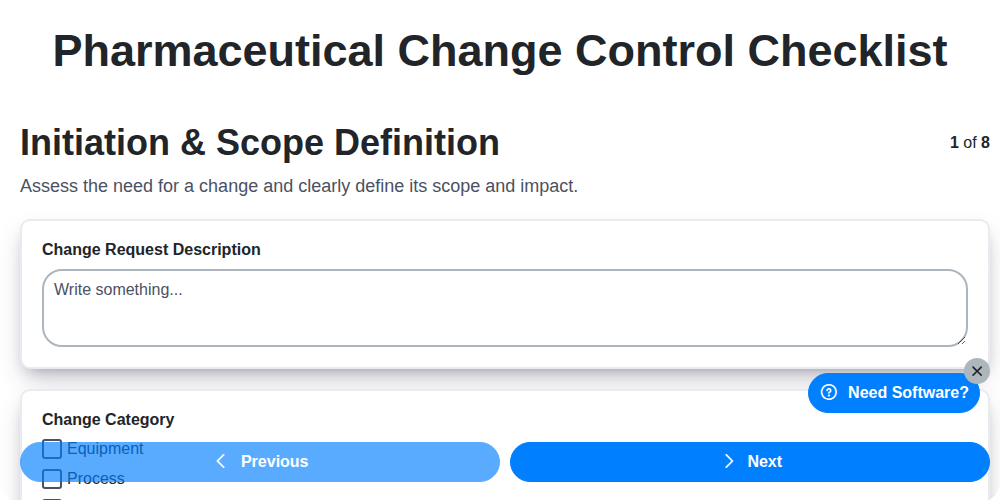
Table of Contents
- Why Pharmaceutical Change Control Matters
- Understanding the Change Control Process
- 1. Initiation & Scope Definition: Laying the Foundation
- 2. Risk Assessment: Identifying Potential Impacts
- 3. Impact Assessment: Evaluating the Ripple Effect
- 4. Change Planning & Approval: Charting the Course
- 5. Implementation & Execution: Putting the Plan into Action
- 6. Verification & Validation: Ensuring Accuracy and Compliance
- 7. Documentation & Training: Maintaining Records and Preparedness
- 8. Closure & Sign-off: Formalizing the Change
- Best Practices for a Robust Change Control System
- Resources & Links
TLDR: Pharmaceutical change control is critical for compliance and quality. This checklist template breaks down the process into 8 key steps - from defining the change to final sign-off - ensuring every risk is assessed, impacts are considered, and documentation is complete. Use it to streamline your change control process, reduce errors, and maintain regulatory adherence.
Why Pharmaceutical Change Control Matters
Pharmaceutical manufacturing operates under incredibly stringent regulations. A seemingly minor alteration - a new supplier for a raw material, a tweak to a process parameter, or even a software update - can have significant and potentially far-reaching consequences. That's why robust change control isn't just a nice to have, it's a regulatory requirement dictated by agencies like the FDA and EMA.
Without a formalized change control system, you risk compromising product quality, safety, and efficacy. Unexpected issues can arise, leading to deviations, recalls, and potentially even harm to patients. More than that, inadequate change management can expose your organization to compliance violations, leading to costly fines and reputational damage.
Proper change control demonstrates a commitment to maintaining a validated state, ensuring that any changes are thoroughly evaluated, planned, and documented - safeguarding both your product and your business. It's about proactive risk mitigation and building a culture of continuous improvement within your pharmaceutical operations.
Understanding the Change Control Process
The pharmaceutical industry operates under stringent regulations, and even seemingly minor changes to processes, equipment, or materials can have significant consequences. That's where change control comes in - a systematic approach to managing alterations while ensuring product quality, patient safety, and regulatory compliance. A robust change control process isn't just about ticking boxes; it's about proactively identifying potential issues, evaluating their impact, and implementing changes in a controlled and documented manner.
At its core, change control aims to minimize risks associated with modifications. It provides a framework to assess whether a change is necessary, what its potential effects will be, and how to mitigate any negative outcomes. This structured approach prevents reactive problem-solving and fosters a culture of continuous improvement. The entire process demands meticulous documentation, transparency, and cross-functional collaboration to guarantee adherence to established procedures and regulatory requirements. A well-executed change control process is a cornerstone of pharmaceutical quality management systems.
1. Initiation & Scope Definition: Laying the Foundation
The change control process begins with a clear understanding of what needs to change and why. This Initiation & Scope Definition phase is crucial for setting the entire process up for success. It's more than just identifying a problem; it's about articulating a solution and defining its boundaries.
Here's what's typically involved:
- Problem/Opportunity Identification: Clearly document the reason driving the change. Is it a regulatory requirement, a process inefficiency, a product defect, or something else?
- Change Request Submission: A formal change request document should be created, capturing all initial details.
- Initial Scope Definition: Precisely outline what the change will and will not include. Avoid ambiguity. Be specific about the affected systems, processes, equipment, or documentation.
- Stakeholder Identification: Identify all individuals and departments who will be impacted by the change. This includes those who need to approve the change, provide input, or be trained on the new procedure.
- Preliminary Feasibility Assessment: A quick assessment to determine if the change is technically and practically feasible. This helps to filter out changes that are unlikely to succeed.
A well-defined scope early on prevents scope creep later, saves resources, and ensures everyone involved is on the same page.
2. Risk Assessment: Identifying Potential Impacts
Change control isn't just about documenting changes; it's about understanding their potential consequences. A thorough risk assessment is a critical step in ensuring the integrity of your pharmaceutical products and processes. This phase goes beyond simply identifying what might go wrong; it's about evaluating the likelihood and severity of those potential issues.
Here's what a robust risk assessment for a pharmaceutical change control should include:
- Identify Potential Risks: Brainstorm all possible negative consequences stemming from the proposed change. Consider impacts on product quality, safety, efficacy, stability, manufacturing processes, equipment, facilities, and even personnel. Use techniques like brainstorming sessions, Hazard and Operability (HAZOP) studies, or Failure Mode and Effects Analysis (FMEA).
- Assess Likelihood: Determine the probability of each identified risk occurring. This can be a qualitative assessment (e.g., Low, Medium, High) or a quantitative one, assigning numerical probabilities. Consider historical data, similar change experiences, and expert judgment.
- Assess Severity: Evaluate the potential impact if the risk does occur. This should consider patient safety, regulatory compliance, financial implications, and potential impact on the company's reputation. A severity scale (e.g., Minor, Moderate, Major, Critical) is helpful here.
- Risk Prioritization: Combine the likelihood and severity assessments to prioritize risks. A risk matrix (likelihood vs. severity) is a common tool for this purpose. Higher-priority risks require more robust mitigation strategies.
- Documentation: Meticulously document all identified risks, their likelihood and severity ratings, and the rationale behind those ratings. This provides a clear audit trail and facilitates future reviews.
Remember, the goal isn't to eliminate all risk-that's often impossible-but to identify, evaluate, and mitigate those risks to an acceptable level. The findings of this assessment directly inform the subsequent change planning and approval stages.
3. Impact Assessment: Evaluating the Ripple Effect
The Impact Assessment phase is arguably one of the most crucial steps in the change control process. It's not simply about identifying what will change, but understanding how that change will affect the broader pharmaceutical environment. This goes far beyond the immediate process being altered; we's need to consider a cascading series of potential consequences.
What aspects need to be considered? Let's break it down:
- Product Quality: How could the change influence product efficacy, safety, purity, or stability? This demands a thorough review of formulations, manufacturing processes, and potential impurities.
- Manufacturing Processes: Beyond the direct modification, consider downstream processes. Will the change impact equipment utilization, material flow, or overall production capacity?
- Equipment and Systems: Does the change require equipment modifications, upgrades, or validation? Will it affect any connected systems or data integrity?
- Analytical Methods: Will the change necessitate revalidation or qualification of analytical methods used for testing raw materials, intermediates, or finished products?
- Regulatory Compliance: How does the change impact adherence to GMP, FDA regulations, or other applicable standards? What documentation will be needed to support the change to regulatory agencies?
- Personnel: Will personnel need retraining or new procedures to effectively manage the changed process? Does it impact workload or job responsibilities?
- Packaging and Labeling: Does the change require modification to packaging or labeling?
- Supply Chain: Does the change impact suppliers, raw materials, or distribution?
This isn's a tick-box exercise. A robust impact assessment utilizes cross-functional input from Quality, Manufacturing, Engineering, Regulatory, and other relevant departments. A Failure Mode and Effects Analysis (FMEA) or similar risk assessment tool can be highly valuable in proactively identifying potential negative impacts and devising mitigation strategies. Failing to adequately assess the impact can lead to costly rework, product recalls, or, worst of all, compromising patient safety.
4. Change Planning & Approval: Charting the Course
This stage is where the groundwork for a successful change is truly laid. The information gathered during Initiation & Scope Definition, Risk Assessment, and Impact Assessment is now synthesized into a comprehensive Change Plan. This isn't just a document; it's a roadmap guiding the entire change process.
Key elements of a robust Change Plan include:
- Detailed Activities: A step-by-step breakdown of what needs to be done. This clarifies responsibilities and timelines.
- Resource Allocation: Clearly outlines the personnel, equipment, and other resources required to execute the change.
- Timeline & Schedule: Sets realistic deadlines for each activity, considering dependencies and potential roadblocks.
- Contingency Plans: Addresses potential issues and outlines fallback strategies if things don't go as planned. What happens if a critical piece of equipment is unavailable? What if a key team member is out sick?
- Communication Plan: Describes how the change will be communicated to affected stakeholders - clearly outlining updates, potential disruptions, and expected outcomes.
The Approval Process:
The Change Plan isn't actionable until it's formally approved by the appropriate stakeholders. This typically involves a Change Control Board (CCB), comprised of representatives from relevant departments (Quality, Manufacturing, Engineering, etc.). The CCB's review ensures the change aligns with established procedures, complies with regulatory requirements, and effectively mitigates identified risks. Approval signifies commitment and provides authorization to proceed with implementation. Document the CCB's review and approval decisions meticulously, noting any conditions or modifications agreed upon. This record is vital for audit trails and future reference.
5. Implementation & Execution: Putting the Plan into Action
This is where the rubber meets the road. The meticulous planning and approvals from previous steps are now translated into concrete actions. Implementation & Execution involves the actual carrying out of the change.
Key Activities & Considerations:
- Resource Allocation: Ensure all necessary personnel, equipment, and systems are available and ready for the change. This includes clearly defining roles and responsibilities.
- Sequencing & Scheduling: Adhere to the agreed-upon sequence of steps and the defined timeline. Delays at this stage can impact the entire project.
- Controlled Execution: Follow the detailed procedures outlined in the Change Control Plan. Deviations should be documented, assessed, and approved through a formal process.
- Communication: Maintain open and frequent communication with all stakeholders throughout the implementation. This includes progress updates, issue reporting, and any necessary adjustments to the plan.
- Change Management Tools: Leverage appropriate tools (e.g., project management software, electronic change control systems) to track progress, manage tasks, and facilitate collaboration.
- Real-Time Monitoring: Establish mechanisms to monitor the change's progress and identify any unexpected issues that may arise during execution.
- Deviation Management: If deviations from the plan are unavoidable, immediately document them, assess the potential impact, and obtain necessary approvals before proceeding.
Proper execution minimizes disruptions, ensures accuracy, and lays the foundation for successful verification and validation.
6. Verification & Validation: Ensuring Accuracy and Compliance
This phase is critical - it's where we confirm that the implemented change actually does what it's supposed to do and that it doesn't introduce unintended consequences. Verification and validation (V&V) are often used interchangeably, but they represent distinct actions. Verification asks, Are we building the change right? focusing on adherence to the approved plan and technical correctness. Validation asks, Are we building the right thing? ensuring the change meets the intended business need and regulatory requirements.
Activities in this stage typically include:
- Testing: This goes beyond basic functionality. It involves rigorous testing across various scenarios, including boundary conditions and edge cases. Different types of testing (e.g., functional, performance, integration) may be employed, depending on the change's scope.
- Data Integrity Checks: Crucial for pharmaceutical environments, this ensures data remains accurate, complete, and consistent throughout the change process. This includes verifying data migration, if applicable.
- System Performance Monitoring: Assess the change's impact on system performance - speed, stability, and resource utilization.
- User Acceptance Testing (UAT): Engage end-users to test the change within a representative environment, ensuring it meets their needs and expectations. Document their feedback meticulously.
- Deviation Investigation (if applicable): Any deviations encountered during testing must be thoroughly investigated, documented, and addressed before proceeding. A root cause analysis might be needed.
- Review of Test Results: A formal review of all test results is conducted to confirm successful completion of all verification and validation activities. The review team should include representatives from relevant departments (e.g., quality, IT, operations).
Proper documentation of V&V activities, including test protocols, results, and deviation investigations, is essential for audit trails and demonstrating compliance.
7. Documentation & Training: Maintaining Records and Preparedness
Change control isn't complete until the changes are properly documented and everyone affected understands them. This step is critical for both compliance and operational efficiency.
Documentation Requirements:
- Comprehensive Record Keeping: Every stage of the change control process, from initiation to closure, must be thoroughly documented. This includes the initial request, risk assessment findings, impact analysis, approved plans, implementation steps, verification and validation results, deviations encountered, and corrective actions taken. Utilize a centralized system (e.g., an Electronic Document Management System - EDMS) to ensure traceability and auditability.
- Change Order Documentation: The final, approved change order itself is the cornerstone of this documentation. It should clearly outline the approved modifications, rationale, and responsible parties.
- Deviation Records: Any deviations from the approved change plan must be documented, along with the reason for the deviation and the associated risk assessment.
- Version Control: Strict version control of all impacted documentation is paramount. Clearly label and track changes to ensure that users always access the correct versions of SOPs, specifications, and other relevant materials.
Training Considerations:
- Targeted Training: Identify all personnel affected by the change - whether directly involved in implementation or indirectly impacted by altered processes. Provide targeted training addressing the specific changes and their implications for their roles.
- Training Records: Maintain meticulous records of who received training, the date of training, and the content covered. This serves as evidence of compliance and preparedness.
- Refresher Training: Periodically review and refresh training on the change control process and specific changes to maintain competency and address any updates or clarifications.
- Training Validation: Validate the effectiveness of the training through assessments or practical exercises to ensure understanding and correct application of the modified procedures.
Proper documentation and training aren't just about ticking boxes; they're vital for maintaining data integrity, ensuring product quality, and building a culture of continuous improvement.
8. Closure & Sign-off: Formalizing the Change
The final step, and arguably one of the most critical, is the formal closure and sign-off of the change control process. This isn't just about ticking a box; it's about confirming that the change has been successfully implemented, meets the intended objectives, and poses no unforeseen risks.
This phase involves several key actions:
- Confirmation of Completion: Verify that all tasks outlined in the change control plan have been completed as planned. This includes confirming any outstanding actions are resolved.
- Final Performance Review: A brief review is conducted to ensure the change is functioning as expected and delivering the intended benefits. This can involve data analysis, observation, or user feedback.
- Sign-off from Key Stakeholders: Designated individuals, typically including the change initiator, impacted department representatives, and quality assurance personnel, must formally sign off on the change control record. This signifies their acceptance of the implementation and validation results.
- Archiving the Change Control Record: The complete change control record, including all documentation, assessments, plans, and sign-offs, must be securely archived according to established procedures. This provides a verifiable audit trail for future reference.
- Communication of Closure: Notify relevant personnel that the change has been successfully closed and is now considered a permanent part of the system or process.
Proper closure and sign-off provide assurance of compliance and minimize the potential for misunderstandings or rework. It marks the successful completion of the change control journey and lays the foundation for future improvements.
Best Practices for a Robust Change Control System
A well-structured Pharmaceutical Change Control checklist is the backbone of a robust system. But simply having a checklist isn't enough; it needs to be integrated into a broader framework of best practices. Here's how to elevate your Change Control process beyond a simple series of boxes to tick:
Foster a Culture of Accountability: Every step in the checklist should have clearly defined ownership. Who is responsible for completing the Risk Assessment? Who validates the change? Assigning ownership ensures accountability and prevents tasks from falling through the cracks.
Proactive Communication is Key: Don't wait until the change is implemented to communicate. Regularly update stakeholders throughout the entire process - from initial proposal to final sign-off. This transparency builds trust and allows for early identification of potential roadblocks.
Leverage Technology: Manual checklist tracking can be error-prone and inefficient. Consider using a dedicated Change Control software solution. This can automate workflows, improve traceability, and centralize documentation.
Training and Competency: Ensure all personnel involved in the Change Control process are properly trained on the procedures and their roles. Competency assessment is also important - verifying that team members possess the knowledge and skills to perform their assigned tasks.
Continuous Improvement: Change Control isn't static. Regularly review your checklist and procedures, seeking opportunities to optimize the process and address any recurring issues. Implement feedback mechanisms to encourage continuous improvement.
Audit Trail Integrity: Maintaining a comprehensive and auditable trail of all changes is absolutely critical for regulatory compliance. Your Change Control system should demonstrate that all changes were properly assessed, approved, implemented, and verified.
Resources & Links
- Pharmaceutical Online: A comprehensive resource for pharmaceutical professionals covering topics including regulatory compliance, manufacturing, and quality control. Articles and whitepapers often touch upon change control principles and best practices.
- GMP Compliance: Provides a wealth of information and resources related to Good Manufacturing Practices (GMP), including specific guidance and regulatory updates that heavily impact pharmaceutical change control. Look for articles and webinars related to CAPA and change management.
- Compliance Arena: Offers a broad spectrum of compliance solutions and resources. They frequently publish content on pharmaceutical quality systems and related regulatory requirements, providing context for change control.
- ASQ (American Society for Quality): A leading authority on quality management. Their website features tools, training, and resources covering change management principles applicable to pharmaceutical settings. Search for content on risk management and quality improvement.
- Regulatory Affairs Jobs: While primarily a job board, their blog contains valuable insights into pharmaceutical regulations and compliance, offering perspectives on change control requirements under various regulatory bodies (FDA, EMA, etc.).
- DeviceLink: Though focused on medical devices, the content around change management and CAPA (Corrective and Preventive Action) is often highly relevant and transferable to the pharmaceutical industry, particularly concerning risk assessment and impact analysis.
- PDQ Document: Provides software and resources focused on document control and change management. Their website has useful insights on structuring change control processes and digital documentation.
- Pharmaceutical Technology: Covers a wide range of topics related to pharmaceutical manufacturing and technology. Regularly publishes articles and case studies relevant to optimizing manufacturing processes, which often involve change control implementation.
- Nice Quest: A consultancy specializing in GMP compliance. They often publish insights and case studies on change control implementation and best practices within pharmaceutical companies.
- U.S. Food and Drug Administration (FDA): The official website of the FDA. Provides regulatory guidance and information on current Good Manufacturing Practices (cGMP), including requirements directly related to change control. Essential for understanding the legal framework.
- European Medicines Agency (EMA): The European equivalent of the FDA. Provides regulatory guidance relevant to pharmaceutical companies operating in Europe. Contains information relating to GMP and change control within the European context.
Frequently Asked Questions
What is pharmaceutical change control and why is it important?
Pharmaceutical change control is a systematic process for evaluating and approving changes to pharmaceutical products, processes, equipment, or facilities. It's crucial for maintaining product quality, safety, and compliance with regulations (like FDA, EMA, etc.). Any change, no matter how small, can potentially impact the final product, so a controlled process ensures these impacts are assessed and mitigated.
Who needs to be involved in the change control process?
The specific team involved will vary depending on the nature of the change, but generally includes representatives from Quality Assurance (QA), Quality Control (QC), Manufacturing, Research and Development (R&D), Engineering, and potentially Regulatory Affairs. The checklist template highlights key roles; adjust based on your organization's structure.
What types of changes require change control?
Virtually any change impacting product quality or process validation should be subject to change control. Examples include changes to raw material suppliers, manufacturing equipment, analytical methods, packaging materials, or process parameters. Even minor software updates to critical systems often require evaluation.
What does the 'checklist template' in the article include?
The checklist template provides a structured framework for evaluating change control requests. It covers key areas like change identification, risk assessment, impact analysis, approval workflows, implementation planning, verification/validation, and documentation. It's a guide - tailor it to your specific needs.
How do I customize the checklist template for my organization?
The checklist is designed to be a starting point. Review each step and modify it to reflect your organization's processes, SOPs, and risk tolerance. Add or remove steps as needed, and assign specific responsibilities to different roles within your team. Consider your unique product and facility characteristics.
What's the difference between a 'significant' and 'minor' change?
The distinction is important for determining the level of scrutiny and documentation required. Significant changes typically have a larger potential impact on product quality or safety and require more rigorous assessment and validation. Minor changes are less impactful and may require a simplified review process. Your company's SOPs should define these classifications.
What documentation is required during the change control process?
Comprehensive documentation is essential. This includes the original change request form, risk assessments, impact analyses, approval records, validation/verification reports, implementation plans, and any deviations or corrective actions taken. Electronic document management systems are often used to streamline this.
How does change control relate to validation?
Changes often necessitate revalidation or requalification of equipment, processes, or analytical methods. The change control process should identify these needs and ensure proper validation activities are planned and executed before the change is implemented. The checklist includes sections to ensure validation considerations are addressed.
What happens if a change control request is rejected?
The reason for rejection must be clearly documented. The originator of the change request should be notified, and they have the opportunity to address the concerns and resubmit the request with modifications. A formal rejection log is recommended.
Where can I find more information about pharmaceutical change control regulations?
Refer to guidelines and regulations from regulatory bodies like the FDA (21 CFR Part 211), EMA (EudraLex Volume 4), and ICH Q9 (Quality Risk Management). Your company's regulatory affairs department is also a valuable resource.
Comments
There are no comments yet. Be the first to add one!
Pharmaceutical Management Solution Demo
Navigating complex regulations and ensuring quality in pharmaceutical manufacturing? ChecklistGuro's Work OS platform streamlines processes from R&D to production, packaging, and distribution. Maintain compliance, improve efficiency, and reduce risk. Discover how ChecklistGuro can transform your pharmaceutical operations!
Related Articles
Ensuring Quality: A Pharmaceutical Compound Record Review Checklist Guide
Pharmaceutical Labeling Compliance Checklist: Your Step-by-Step Guide
Mastering Medication Management: Your Pharmaceutical Inventory Compliance Checklist Template
Navigating Adverse Event Reporting: Your Pharmaceutical Checklist Guide
Pharmaceutical Inventory Management Checklist: Your Guide to Compliance & Accuracy
Your Essential GLP Checklist Template: A Practical Guide
Your Pharmaceutical Development Checklist: A Template for Success
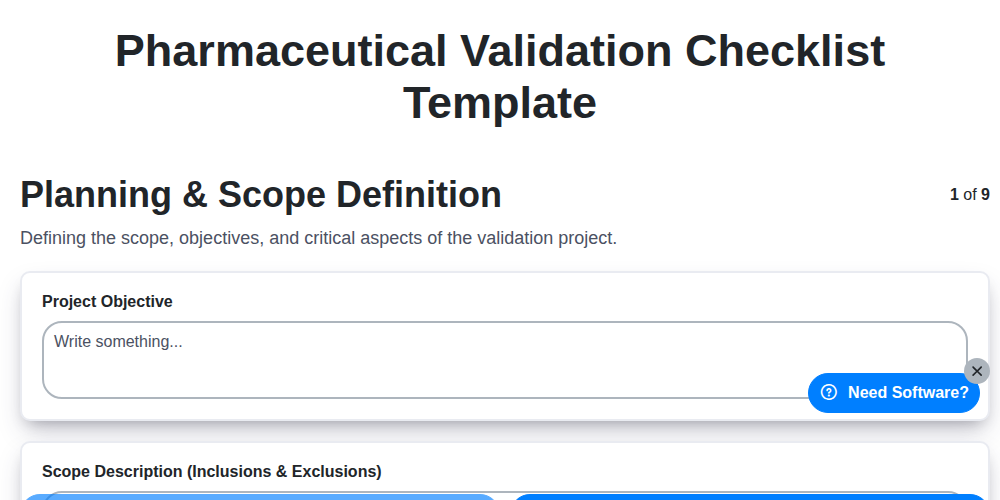
Pharmaceutical Validation Checklist Template: Your Guide to Compliance
Need help with
Pharmaceutical?
Have a question? We're here to help. Please submit your inquiry, and we'll respond promptly.