Navigating Cleaning Deviations: A Pharmaceutical Investigation Checklist Guide
Published: 11/25/2025 Updated: 07/02/2026
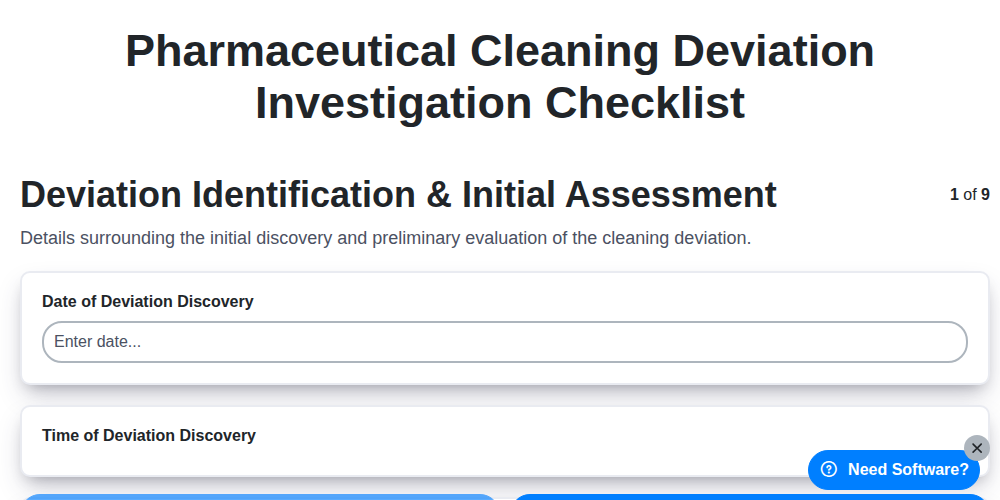
Table of Contents
- Introduction: Why Cleaning Deviations Matter
- 1. Deviation Identification & Initial Assessment
- 2. Defining the Deviation: Details & Scope
- 3. Uncovering the Cause: Root Cause Analysis
- 4. Corrective Action Plan (CAP): Immediate Response
- 5. Preventative Action Plan (PAP): Building a Stronger Foundation
- 6. Verification & Validation: Ensuring Effectiveness
- 7. Documentation Review & Approval: Maintaining Traceability
- 8. Batch Impact Assessment: Quantifying the Risk
- 9. Closure and Sign-Off: Formalizing the Resolution
- 10. Common Challenges in Deviation Investigations
- Conclusion: Continuous Improvement in Pharmaceutical Cleaning
- Resources & Links
TLDR: Cleaning validation deviations happen. This checklist provides a structured, step-by-step guide - from initial assessment to final closure - to thoroughly investigate those cleaning issues in pharmaceutical manufacturing. It ensures root causes are found, effective corrective & preventative actions are implemented, and batch impact is assessed, ultimately strengthening your cleaning validation program and minimizing risk.
Introduction: Why Cleaning Deviations Matter
Pharmaceutical cleaning processes are critical for ensuring product safety and efficacy. Any deviation from established cleaning procedures - a cleaning deviation - represents a potential risk, even if seemingly minor. These deviations can compromise product quality by leaving residue from previous batches or cleaning agents, potentially leading to contamination and impacting patient health. Beyond patient safety, deviations trigger regulatory scrutiny, impacting compliance and potentially delaying product releases. A robust and well-documented investigation process, guided by a comprehensive checklist, is therefore paramount. This proactive approach not only addresses the immediate issue but also prevents recurrence, strengthens cleaning validation data, and ultimately contributes to a more reliable and trustworthy manufacturing process. Ignoring or inadequately addressing cleaning deviations can have serious consequences - this blog post will guide you through a pharmaceutical cleaning deviation investigation checklist to help you minimize these risks.
1. Deviation Identification & Initial Assessment
The journey of any pharmaceutical cleaning deviation investigation begins with a keen eye for detail and a systematic approach to identification. This initial phase is critical in establishing the foundation for a thorough and effective investigation.
What to Look For: It all starts with recognizing that something isn't right. This might be a visual observation during cleaning, a discrepancy in cleaning records, an unexpected analytical result, or a report from cleaning personnel. Any anomaly that deviates from established procedures or specifications warrants further investigation.
Initial Assessment - The Quick Scan: Once a potential deviation is identified, a preliminary assessment is performed. This isn't a full investigation, but rather a rapid evaluation to determine the severity and potential impact. Key questions to address include:
- What is the observed deviation? (Be specific and descriptive)
- What is the potential impact on product quality or patient safety? (Low, Medium, High)
- Is there an immediate risk requiring interim corrective action?
- Who needs to be notified? (e.g., Supervisor, Quality Assurance, Cleaning Validation)
Documentation is Key: Even this initial assessment needs to be documented. A preliminary investigation report should capture the observed deviation, the assessment of potential impact, and the immediate actions taken. This early documentation sets the stage for a more detailed investigation. Don't underestimate the importance of this first step - a well-documented initial assessment will save time and effort later on.
2. Defining the Deviation: Details & Scope
Once a potential deviation is identified, it's crucial to comprehensively define it. This phase moves beyond the initial observation and establishes a clear understanding of what happened, where it happened, and how much it impacted the cleaning process. This detail is vital for accurate root cause analysis and effective corrective actions.
Key elements to document in this section include:
- Specific Description: Go beyond a general statement. Describe exactly what occurred that triggered the deviation. For example, instead of Cleaning not complete, write Visual residue of [specific substance] observed on [specific equipment surface] after cleaning cycle.
- Equipment Involved: Clearly identify the equipment, cleaning cycle, and area affected. Include equipment identification numbers and any relevant cleaning procedures.
- Date and Time: Record the precise date and time the deviation was observed.
- Quantity/Volume Impacted: If applicable, quantify the impact - for example, a change in detergent concentration, a shortened rinse time, or a discrepancy in cleaning duration.
- Personnel Involved: Note the individuals involved in the observation and initial reporting of the deviation.
- Initial Assessment of Severity: A preliminary evaluation of the deviation's potential impact on product quality and patient safety. This will inform the level of investigation required.
- Photographic/Video Evidence: Document the deviation with photographs or video, if possible. This provides a visual record of the issue.
Thorough documentation in this phase minimizes ambiguity and sets a solid foundation for the subsequent investigative steps.
3. Uncovering the Cause: Root Cause Analysis
Deviation investigations aren't just about identifying what went wrong; they's about understanding why. Root cause analysis is the critical step where we move beyond surface-level observations and truly uncover the underlying factors that contributed to the cleaning deviation. This goes beyond blaming individuals; it's about understanding systemic issues, procedural gaps, or equipment malfunctions that led to the event.
Several methodologies can be employed, including the 5 Whys (repeatedly asking "why" to drill down), Ishikawa (fishbone) diagrams to explore potential causes across categories like equipment, materials, methods, manpower, measurement, and environment, and fault tree analysis for complex situations.
The analysis should be objective, data-driven, and involve a cross-functional team representing relevant departments - cleaning, quality, maintenance, and operations. This ensures a comprehensive understanding and avoids narrow perspectives. Documenting each step of the RCA process - the data reviewed, discussions held, and conclusions reached - is paramount for transparency and future reference. Remember, a thorough root cause analysis isn's just about solving the current deviation; it's about preventing similar issues from occurring again.
4. Corrective Action Plan (CAP): Immediate Response
A robust CAP is the critical bridge between identifying a cleaning deviation and ensuring it doesn't happen again. This isn't just about fixing the immediate problem; it's about demonstrating a commitment to continuous improvement and patient safety.
The CAP should outline specific, measurable, achievable, relevant, and time-bound (SMART) actions to address the identified deviation. This includes details like:
- Specific Actions: Clearly define what needs to be done. Vague actions like improve cleaning aren't sufficient. Instead, detail precisely what needs to be modified - e.g., Increase detergent concentration to 2%, Implement a second rinse cycle, or Retrain personnel on proper CIP procedure.
- Responsible Personnel: Assign clear ownership for each action. Who is responsible for carrying out the action and ensuring its completion?
- Target Completion Dates: Establish realistic deadlines for each action. This holds individuals accountable and promotes timely resolution.
- Resources Required: Identify any necessary resources - personnel, equipment, materials - needed to complete the action.
- Expected Outcome: Describe the specific, measurable result expected from the corrective action. How will you know the action was successful?
It's vital to prioritize CAP actions based on their potential impact - actions addressing significant risks should be tackled first. The CAP must also consider potential impact on product quality and patient safety, and include plans to address any immediate concerns. Finally, document all actions taken and the rationale behind them.
5. Preventative Action Plan (PAP): Building a Stronger Foundation
The Corrective Action Plan (CAP) addresses the immediate deviation. However, a truly robust investigation doesn't stop there. The Preventative Action Plan (PAP) is your forward-looking strategy - designed to ensure the deviation never happens again. This isn't simply about fixing the symptom; it's about tackling the underlying systemic issues that allowed the problem to occur in the first place.
Developing a strong PAP involves several key steps. First, it requires a broader perspective. Don't just look at the immediate process where the deviation occurred. Consider similar processes, equipment, or training that might be vulnerable to the same risks. Are there commonalities that can be addressed proactively?
Your PAP should be specific, measurable, achievable, relevant, and time-bound (SMART). Instead of a vague statement like "improve cleaning procedures," a SMART PAP might state: "Develop and implement a revised standard operating procedure (SOP) for cleaning equipment X, including additional validation steps for detergent efficacy, to be completed within 30 days."
Crucially, assign responsibility and timelines for each PAP item. Document these actions clearly and track progress diligently. Regular reviews of the PAP's effectiveness are essential to ensure it's genuinely preventing recurrence. Remember, the PAP isn's a 'set it and forget it' activity; it's a living document that needs ongoing attention and adjustment to maintain its preventative power.
6. Verification & Validation: Ensuring Effectiveness
Once a Corrective and Preventative Action Plan (CAPA) is developed, it's crucial to ensure it's actually working as intended. This is where verification and validation come into play. Verification confirms that the implemented solution meets the predetermined specifications and design. Validation, on the other hand, proves that the implemented solution effectively prevents the deviation from recurring and achieves the desired outcome - restoring confidence in the cleaning process.
Verification often involves reviewing records, performing bench-scale testing (if applicable), and examining data to confirm the CAPA actions were correctly executed and the expected results were observed. This might include checking cleaning validation reports, confirming changes to procedures were followed, or verifying equipment adjustments were made accurately.
Validation goes a step further. It necessitates monitoring the cleaning process after CAPA implementation over a defined period. This often includes trend analysis of cleaning data (e.g., residue levels, microbial counts), observation of cleaning personnel following revised procedures, and review of audit findings. The goal is to establish beyond reasonable doubt that the deviation is unlikely to reoccur and the pharmaceutical cleaning process is restored to a state of compliance. Documenting this validation phase with clear evidence and trend data is paramount for regulatory scrutiny. Failing to properly validate your CAPA can undermine the entire investigation process.
7. Documentation Review & Approval: Maintaining Traceability
A thorough documentation review and approval process is the critical final step in a robust pharmaceutical cleaning deviation investigation. This isn't just about stamping a document as "approved"; it's about ensuring full traceability and a verifiable record of the entire investigation.
This review should encompass all documents generated throughout the process - the initial deviation report, root cause analysis findings, CAP and PAP proposals, batch impact assessments, and verification/validation reports. Key personnel, including quality assurance, cleaning specialists, and potentially manufacturing representatives, should participate.
The review should confirm:
- Accuracy & Completeness: That all information is accurate, consistent, and comprehensive.
- Scientific Justification: That conclusions and proposed actions are supported by scientific rationale and data.
- Compliance: That the investigation and its outcomes align with regulatory requirements (e.g., GMP guidelines, SOPs) and internal quality standards.
- Cross-functional Agreement: That all relevant departments have reviewed and agree with the findings and proposed actions.
- Approval Signatures: Formal signatures from authorized personnel, clearly indicating their review and approval.
Proper documentation review and approval creates a clear audit trail, demonstrating a systematic and controlled response to the cleaning deviation. This strengthens your quality system and provides confidence in the integrity of your pharmaceutical products. Without it, the entire investigation risks losing its credibility and failing to achieve its intended purpose.
8. Batch Impact Assessment: Quantifying the Risk
Following the corrective and preventative action plans, a crucial step in pharmaceutical cleaning deviation investigations is a thorough batch impact assessment. This isn't simply a cursory check; it's a formal evaluation designed to determine if the deviation has, or could have, affected the quality, safety, and efficacy of any impacted batches.
The assessment requires a systematic approach, moving beyond a simple "yes/no" answer. We need to quantify the risk. This involves several key questions:
- Which batches were potentially affected? This goes beyond immediately preceding batches and needs to consider any subsequent batches processed in the equipment or area potentially impacted by the cleaning deviation.
- What was the maximum potential residual impurity or contaminant level? This might involve reviewing cleaning validation data, establishing worst-case scenarios, and performing calculations based on the deviation's nature and the cleaning process.
- What is the established acceptance limit for that impurity/contaminant? Referencing approved specifications and regulatory guidelines is paramount here.
- Does the potential impurity/contaminant level exceed the acceptance limit? This is the critical comparison. If it does, further investigation and potential remediation of the impacted batch(es) is required.
- What is the potential impact on patient safety and efficacy? Even if limits aren't exceeded, a risk-based approach demands considering the potential impact on patients.
- What is the regulatory reporting requirement? Deviation severity and impact often dictate reporting obligations to regulatory agencies.
The findings of the batch impact assessment must be meticulously documented, justifying the conclusions reached. This documentation forms a vital part of the overall deviation investigation record and demonstrates a commitment to quality and patient safety. Ignoring or minimizing this step can have serious consequences.
9. Closure and Sign-Off: Formalizing the Resolution
The final, and critically important, step in a pharmaceutical cleaning deviation investigation is formal closure and sign-off. This isn't just about ticking a box; it's about confirming that all actions taken were effective, documented, and approved, demonstrating a complete and controlled resolution.
This phase involves several key actions:
- Verification of CAP & PAP Implementation: Confirm that all corrective and preventative actions outlined in your plan have been fully implemented and are demonstrably effective. This might involve reviewing records, observation, or performing targeted assessments.
- Impact Assessment Review: Revisit the initial batch impact assessment to ensure it remains accurate given the implemented corrective actions. Any updates or refinements should be clearly documented.
- Sign-Off by Key Personnel: Designated individuals - typically including the investigation lead, quality assurance representative, and potentially relevant operations personnel - must formally review and sign off on the entire investigation report. This signifies their agreement that the investigation was thorough, the actions were appropriate, and the risks have been adequately addressed.
- Report Distribution & Archiving: Distribute the finalized investigation report to relevant stakeholders, as per your company's standard operating procedures (SOPs). Ensure the report is archived securely and is easily retrievable for future reference, audits, or recalls.
- Training/Communication (as needed): If the deviation revealed a knowledge gap or procedural misunderstanding, ensure appropriate training or communication has been completed and documented as part of the closure.
Proper closure and sign-off provides a record of accountability and assures the organization that the deviation has been fully resolved and the processes for handling similar issues are robust. It is a crucial element in maintaining product quality and regulatory compliance.
10. Common Challenges in Deviation Investigations
Deviation investigations, while crucial for maintaining pharmaceutical quality, aren't without their hurdles. Several recurring challenges frequently trip up teams. One significant roadblock is incomplete or ambiguous documentation. Often, initial records lack sufficient detail to understand the event fully, hindering accurate root cause identification. Another common pitfall is lack of cross-functional collaboration. Cleaning deviations often impact multiple departments (production, quality, maintenance, etc.), and a siloed approach can lead to missed perspectives and ineffective solutions. Resistance to acknowledging contributing factors - especially those highlighting process or procedural weaknesses - can also obstruct honest analysis. Furthermore, difficulty identifying true root causes beyond superficial observations, often due to inadequate training or a rushed investigation, is frequently encountered. The pressure to quickly resolve deviations and resume operations can lead to insufficient time dedicated to thorough investigation, compromising the quality of the findings. Finally, difficulty in sustaining corrective and preventative actions due to resource limitations, lack of ownership, or inadequate training implementation, can lead to recurring deviations and negate the value of the investigation itself.
Conclusion: Continuous Improvement in Pharmaceutical Cleaning
Ultimately, a robust Pharmaceutical Cleaning Deviation Investigation Checklist, like the one we've outlined, isn't just about fixing problems; it's about fostering a culture of continuous improvement. By systematically investigating deviations, identifying root causes, and implementing effective corrective and preventative actions, pharmaceutical manufacturers can significantly enhance cleaning process reliability, reduce the risk of contamination, and ensure product quality and patient safety. This proactive approach minimizes the potential for recurring issues and demonstrates a commitment to regulatory compliance. Remember, deviation investigations are learning opportunities; meticulously documenting findings and incorporating lessons learned into training and standard operating procedures will contribute to a more resilient and efficient cleaning program, benefiting both the organization and the patients who rely on safe and effective medications.
Resources & Links
- U.S. Food and Drug Administration (FDA): The FDA website provides regulatory guidance, warning letters, and information relevant to pharmaceutical manufacturing and cleaning validation. Key sections to explore include guidance documents and inspection reports.
- European Medicines Agency (EMA): The EMA provides similar regulatory oversight for Europe. Review their Q&A documents and guidelines related to cleaning validation and deviations.
- United States Pharmacopeia (USP): USP provides standards and guidelines, including those related to cleaning validation and equipment cleaning. Refer to USP <400> for detailed requirements.
- International Society for Pharmaceutical Engineering (ISPE: ISPE provides industry best practices, publications, and training related to pharmaceutical manufacturing, including cleaning validation and deviation management. Their guidance documents are highly valuable.
- American Society of Heating, Refrigerating and Air-Conditioning Engineers (ASHRAE): ASHRAE standards, particularly regarding environmental monitoring and HVAC systems, are crucial when investigating cleaning deviations, especially those related to water quality or temperature control.
- International Council for Harmonisation (ICH): ICH guidelines, such as Q7 (Good Manufacturing Practice Guidance for Active Pharmaceutical Ingredients), influence cleaning and deviation handling practices globally.
- Pharmaceutical Online: A portal with numerous articles, case studies, and white papers on pharmaceutical manufacturing and quality, often covering topics related to cleaning and deviations. Search for relevant keywords.
- BioProcess International: Covers topics in biopharmaceutical manufacturing, including cleaning validation and process deviations. Excellent source for in-depth technical articles.
- Chromatography Online: Although focused on chromatography, this resource can provide insights into residue analysis and cleaning validation techniques, often required in deviation investigations.
- Microbial Quality Control: Provides resources related to microbial control and monitoring, crucial when investigating cleaning deviations related to bioburden or microbial contamination.
- AQS Solutions: AQS provides software and consulting services for quality management, including deviation management and CAPA systems. Their website provides information and resources about these processes.
- MasterControl: MasterControl offers quality management software solutions and provides articles and webinars about best practices in pharmaceutical quality, including deviation handling.
- Quality Digest: A broad resource for quality professionals, covering topics from regulatory compliance to process improvement. Search for articles related to pharmaceutical cleaning and deviations.
Frequently Asked Questions
What is a cleaning deviation in a pharmaceutical setting?
A cleaning deviation occurs when a cleaning process doesn't adhere to established procedures, potentially leaving unacceptable residue levels of previous product or cleaning agents on equipment or facilities. It represents a deviation from the validated cleaning process and requires investigation to ensure product quality and patient safety.
Why is a checklist guide important for investigating cleaning deviations?
A checklist provides a structured and consistent approach to investigating cleaning deviations. It ensures all critical aspects are considered, promotes thoroughness, helps identify root causes, and minimizes the risk of overlooking crucial information, leading to more effective corrective and preventative actions.
Who should use this checklist guide?
This guide is intended for a multidisciplinary team involved in cleaning deviation investigations, including cleaning personnel, quality assurance, validation specialists, manufacturing personnel, and potentially engineering or maintenance teams.
What types of information should I document on the checklist?
The checklist will guide you to document details such as the description of the deviation, date and time of occurrence, equipment/area involved, products previously manufactured, cleaning agents used, cleaning parameters (temperature, time, pressure), initial and final residue levels, personnel involved, and potential contributing factors.
What is a 'root cause' in the context of a cleaning deviation investigation?
The root cause is the underlying reason *why* the deviation occurred. It's not just the immediate cause (e.g., insufficient dwell time), but the deeper issue that enabled the deviation to happen (e.g., inadequate training, equipment malfunction, procedural ambiguity).
What are some examples of potential root causes for cleaning deviations?
Examples include: inadequate training of cleaning personnel, equipment malfunctions (e.g., leaking spray nozzles), procedural ambiguities, insufficient cleaning time or temperature, incorrect cleaning agents used, inadequate rinsing, and build-up of residue due to manufacturing process changes.
What does 'trend analysis' refer to when investigating deviations?
Trend analysis involves examining patterns and frequency of cleaning deviations over time. It helps identify recurring problems and systemic issues that may not be apparent from individual investigations.
What is the difference between corrective action and preventative action?
**Corrective Action:** Actions taken to address the *specific* deviation that occurred and prevent its recurrence. **Preventative Action:** Actions taken to proactively prevent *future* deviations from happening based on identified trends or potential weaknesses in the cleaning process.
What regulatory guidelines inform the investigation and resolution of cleaning deviations?
Relevant guidelines include, but aren't limited to: FDA's 21 CFR Part 211 (Current Good Manufacturing Practice), ICH Q7 (Good Manufacturing Practice Guidance for Active Pharmaceutical Ingredients), and EU GMP guidelines.
How often should this checklist guide be reviewed and updated?
This guide should be reviewed and updated at least annually, or more frequently if there are significant changes to the cleaning process, equipment, or regulatory requirements. Feedback from users should also be incorporated into updates.
Comments
There are no comments yet. Be the first to add one!
Pharmaceutical Management Solution Demo
Navigating complex regulations and ensuring quality in pharmaceutical manufacturing? ChecklistGuro's Work OS platform streamlines processes from R&D to production, packaging, and distribution. Maintain compliance, improve efficiency, and reduce risk. Discover how ChecklistGuro can transform your pharmaceutical operations!
Related Articles
Ensuring Quality: A Pharmaceutical Compound Record Review Checklist Guide
Pharmaceutical Labeling Compliance Checklist: Your Step-by-Step Guide
Mastering Medication Management: Your Pharmaceutical Inventory Compliance Checklist Template
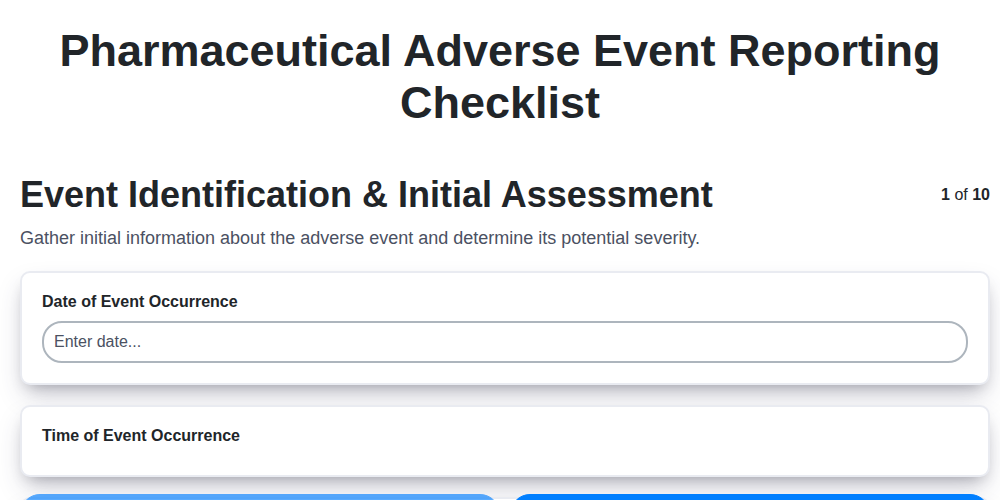
Navigating Adverse Event Reporting: Your Pharmaceutical Checklist Guide
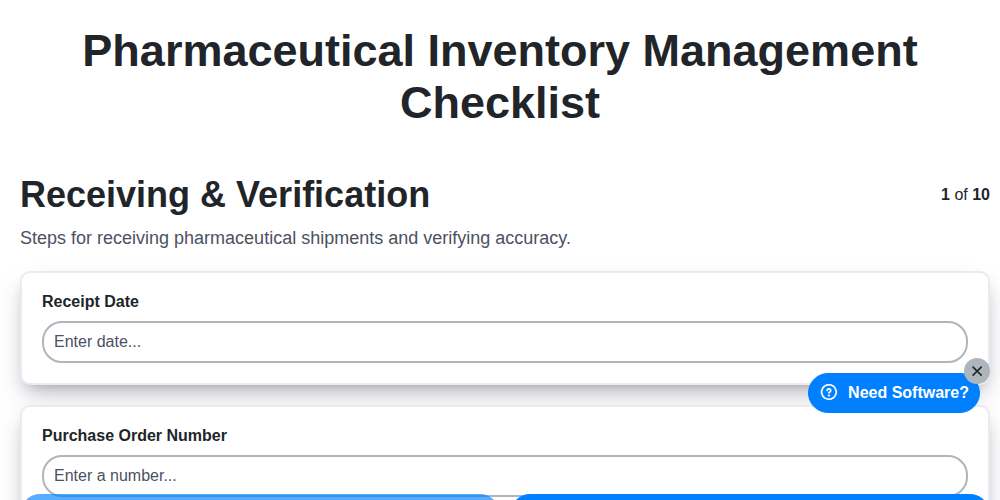
Pharmaceutical Inventory Management Checklist: Your Guide to Compliance & Accuracy
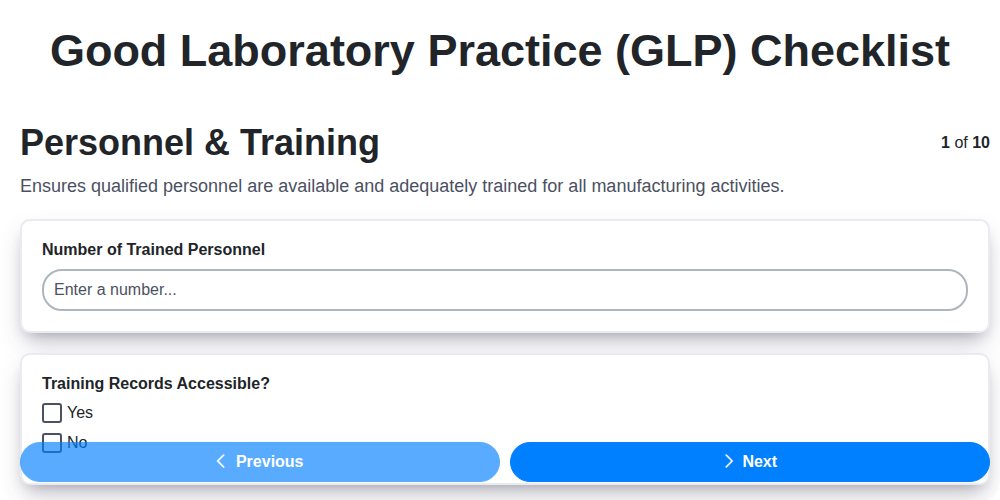
Your Essential GLP Checklist Template: A Practical Guide
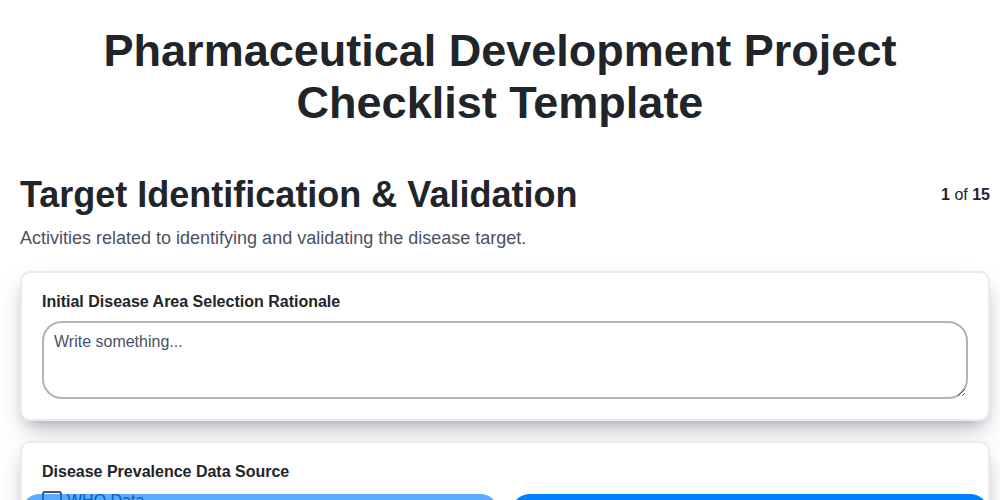
Your Pharmaceutical Development Checklist: A Template for Success
Pharmaceutical Validation Checklist Template: Your Guide to Compliance
Need help with
Pharmaceutical?
Have a question? We're here to help. Please submit your inquiry, and we'll respond promptly.