Ensuring Package Perfection: Your Pharmaceutical Container Closure Integrity Testing Checklist
Published: 11/25/2025 Updated: 07/02/2026
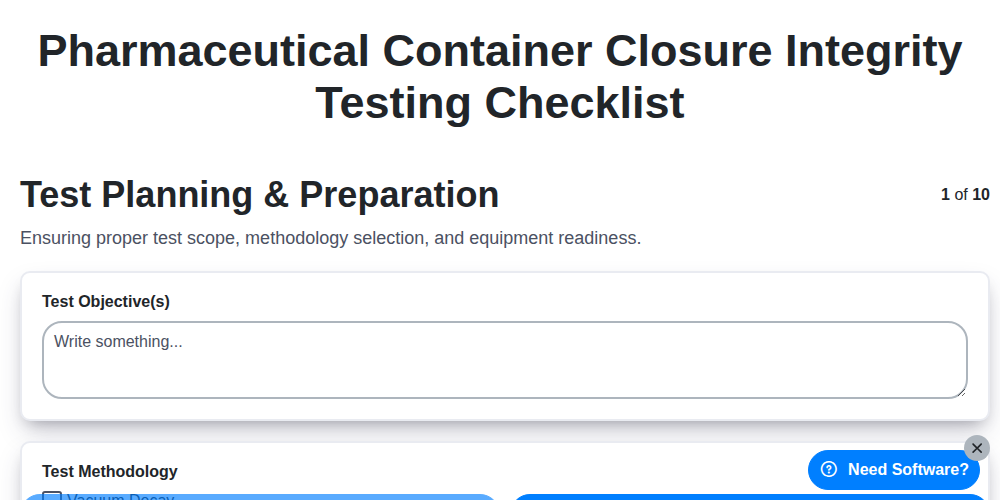
Table of Contents
- Introduction: Why Container Closure Integrity Matters
- 1. Test Planning & Preparation: Laying the Foundation
- 2. Equipment Calibration & Verification: Ensuring Accuracy
- 3. Sample Selection & Handling: Representing Your Product
- 4. Leak Testing Procedure Adherence: Following Protocol
- 5. Data Acquisition & Recording: Capturing the Evidence
- 6. Results Evaluation & Acceptance Criteria: Defining Success
- 7. Deviation Management & Investigation: Addressing Concerns
- 8. Report Generation & Review: Communicating Findings
- 9. Maintenance and Cleaning of Equipment: Preserving Functionality
- 10. Documentation Review and Traceability: Maintaining a Robust System
- Resources & Links
TLDR: Worried about your pharmaceutical containers leaking? This checklist template guides you through every step of Container Closure Integrity Testing (CCIT) - from planning and equipment checks to data review and troubleshooting. It's your roadmap to ensuring product safety and regulatory compliance!
Introduction: Why Container Closure Integrity Matters
Pharmaceutical container closure integrity (CCI) is paramount to ensuring the safety and efficacy of medications. The container-closure system - encompassing vials, bottles, stoppers, caps, and seals - acts as the first line of defense against external factors like moisture, oxygen, microbes, and temperature fluctuations. Compromised integrity can lead to product degradation, contamination, and ultimately, a risk to patient health. Regulatory agencies worldwide, including the FDA and EMA, place significant emphasis on CCI testing, mandating robust processes and demonstrating control. This blog post will guide you through a comprehensive checklist for CCI testing, highlighting the critical steps necessary for compliant and reliable results. Understanding and validating CCI is not merely a compliance exercise; it's a fundamental aspect of pharmaceutical quality.
1. Test Planning & Preparation: Laying the Foundation
Robust container closure integrity (CCI) testing hinges on meticulous planning and preparation. This initial phase sets the stage for reliable and defensible results. It's far more than just showing up and running a test - it's about proactively addressing potential pitfalls and ensuring the entire process aligns with regulatory requirements and project goals.
Here's what's crucial during this stage:
- Defining Scope and Objectives: Clearly articulate the purpose of the CCI testing. Are you qualifying a new container closure system, monitoring ongoing performance, or investigating a failure? This defines the testing strategy.
- Risk Assessment: Identify potential risks related to the container closure system and the testing environment. Consider factors like product sensitivity, fill levels, and potential degradation pathways.
- Test Method Selection: Choose the appropriate CCI test method (e.g., vacuum decay, helium leak testing, pressure decay) based on the container closure system's characteristics, regulatory guidance, and risk assessment. Justify the selection.
- Protocol Development: Create a detailed, written test protocol outlining every step of the process, including acceptance criteria, test parameters, and data analysis methods. This ensures consistency and reproducibility.
- Personnel Training: Ensure all personnel involved in the testing are adequately trained on the test protocol, equipment operation, and data interpretation.
- Resource Allocation: Secure necessary resources, including equipment, consumables, and personnel time, to execute the testing efficiently and effectively.
- Regulatory Alignment: Confirm the testing plan adheres to relevant regulatory guidelines (e.g., USP <3.2.4>, FDA guidance, ISO standards).
Proper planning reduces errors, minimizes rework, and ultimately contributes to the integrity of your pharmaceutical product.
2. Equipment Calibration & Verification: Ensuring Accuracy
Container closure integrity (CCI) testing relies heavily on precise and reliable equipment. Any deviation from accurate measurements can lead to false positives or negatives, jeopardizing product quality and patient safety. Therefore, a robust equipment calibration and verification program is paramount.
This section of the CCI checklist focuses on confirming that all testing equipment meets established performance standards. This includes, but isn't limited to:
- Calibration Schedules: Adhering to manufacturer-recommended calibration intervals and maintaining accurate records of all calibrations performed. These schedules should be risk-based, considering equipment criticality and usage frequency.
- Standards & Reference Materials: Utilizing certified reference materials and standards traceable to national or international standards organizations. This ensures a consistent benchmark for comparison.
- Verification Procedures: Implementing documented verification procedures to confirm equipment functionality after calibration and periodically during operation. These procedures should include checks for sensitivity, linearity, and repeatability.
- Documentation: Maintaining meticulous records of calibration certificates, verification data, and any corrective actions taken. These records should be readily available for audit.
- Regular Inspections: Performing visual inspections of equipment for any signs of damage or wear that could impact performance.
Failure to adequately calibrate and verify equipment can compromise the integrity of CCI testing results, highlighting the critical nature of this checklist item.
3. Sample Selection & Handling: Representing Your Product
Accurate and reliable container closure integrity (CCI) testing hinges on proper sample selection and handling. A biased or unrepresentative sample can lead to inaccurate conclusions, potentially impacting product quality and patient safety. Here's a breakdown of critical considerations:
Defining the Population: Begin by clearly defining the population of containers you're evaluating. This includes considering variations due to manufacturing date, batch number, filling line, capping machine, storage conditions, and transport methods.
Sampling Plan: Develop a robust sampling plan that statistically represents this population. Consider:
- Size: The number of samples required depends on the variability of the process and the desired confidence level. Consult statistical sampling methodologies (e.g., ANSI/ASQ Z1.4) to determine an appropriate sample size.
- Randomization: Employ random selection to avoid bias. Avoid selecting samples solely from good or suspicious containers.
- Stratification: If known variations exist within the population (e.g., different production lines), consider stratified random sampling to ensure representation from each stratum.
Handling Procedures:
- Minimizing Contamination: Handle samples with appropriate personal protective equipment (PPE) and in a controlled environment to prevent contamination that could affect test results.
- Preserving Integrity: Avoid any actions that could compromise the container closure integrity before testing - no unnecessary bending, twisting, or pressure changes.
- Proper Labeling: Clearly label each sample with unique identifiers that link them to their corresponding production records (batch number, manufacturing date, filling line, etc.).
- Storage Conditions: If the containers have been subjected to specific storage conditions (e.g., temperature, humidity) that are relevant to the intended use, replicate those conditions when handling samples prior to testing.
Failing to meticulously select and handle samples undermines the entire CCI testing process. A well-defined and diligently followed sample selection and handling procedure is a cornerstone of reliable and defensible results.
4. Leak Testing Procedure Adherence: Following Protocol
Consistent and meticulous adherence to the established leak testing procedure is paramount for reliable results and regulatory compliance. This isn't just about performing the test; it's about executing it exactly as defined in the validated procedure. Here's a breakdown of key considerations:
- Procedure Version Control: Always use the current, validated version of the leak testing procedure. Outdated procedures can lead to inconsistent results and invalidate the entire testing process.
- Parameter Verification: Before initiating any test run, double-check all operational parameters as outlined in the procedure. This includes pressure settings, test duration, temperature (if applicable), and any pre-conditioning steps. Deviations, however minor, should be documented and assessed for impact.
- Test Environment: The procedure likely specifies environmental conditions (temperature, humidity). Ensure these are maintained throughout the test. Record environmental conditions as part of the test data.
- Operator Training & Competency: Only trained and competent personnel should perform leak testing. Regular refresher training and documented competency assessments are essential.
- Visual Inspection: Many procedures incorporate visual inspection steps before, during, and after the leak test. Meticulously follow these steps and document any observed anomalies.
- Test Sequence: The sequence of tests outlined in the procedure must be followed precisely. Changing the order can impact the validity of the data.
- Record Keeping: Continuously document everything according to the procedure's instructions. This includes operator initials, date/time stamps, and any observations made during the testing process.
Failure to adhere to the defined procedure jeopardizes the integrity of the testing data and potentially puts product safety at risk.
5. Data Acquisition & Recording: Capturing the Evidence
Robust data acquisition and recording are the backbone of any successful Container Closure Integrity (CCI) testing program. Without accurate and meticulously documented data, even the most sophisticated testing methods become unreliable and potentially invalid. This section details the critical practices for ensuring data integrity during the testing process.
Real-Time Data Capture & Minimizing Transcription Errors: Whenever possible, opt for automated data capture systems. These systems reduce the risk of human error associated with manual transcription and provide a direct link between the testing equipment and the recorded data. For manual recording, utilize pre-formatted templates and standardized units to ensure consistency and accuracy.
Timestamping and User Identification: Every data point should be timestamped and linked to the operator responsible for its acquisition. This creates an audit trail, allowing for traceability and accountability in case of discrepancies or investigations.
Metadata Management: Record essential metadata alongside the raw data. This includes equipment identification (serial number, software version), test parameters (pressure, temperature, duration), sample identifier, and lot number. This context is vital for interpreting the data and comparing results across different tests.
Data Storage & Security: Implement secure data storage practices to protect against loss, corruption, or unauthorized access. Electronic data should be backed up regularly and stored in a controlled environment. Physical records must be stored securely and protected from damage.
Data Review & Verification: A secondary review of recorded data is a critical safeguard. A qualified individual should verify the accuracy and completeness of the data, comparing it to the raw data and equipment outputs. This review should be documented, including the reviewer's initials and date.
6. Results Evaluation & Acceptance Criteria: Defining Success
Establishing clear and defensible acceptance criteria is paramount for any Container Closure Integrity (CCI) testing program. These criteria aren't arbitrary; they must be scientifically justified and reflective of the intended product protection. Here's a breakdown of considerations:
- Regulatory Guidance: Begin by referencing relevant regulatory guidelines (e.g., USP <3.2.4>, PDA Technical Reports, ISO standards). These often provide baseline expectations for acceptable leakage rates and testing methodologies.
- Product Sensitivity: The sensitivity of the drug product significantly impacts acceptance criteria. Highly sensitive biologics will require stricter limits than more robust formulations. Consider the potential impact of leakage on product stability, efficacy, and patient safety.
- Container System Design: The inherent design and materials of the container closure system influence the expected performance. Acceptance limits should be realistic given the system's capabilities and limitations.
- Leak Rate Thresholds: Define acceptable leak rate limits in appropriate units (e.g., mL/day, cc/day). Consider the correlation between leak rates and product quality attributes. A tiered approach, with varying limits based on test method and risk assessment, may be warranted.
- Statistical Significance: Ensure sufficient sample sizes and appropriate statistical methods are employed to achieve statistically significant results. Out-of-specification (OOS) investigations should be rigorously defined and executed if criteria are not met.
- Trend Analysis: Implement trend analysis to identify patterns in test results that may indicate a broader issue with the container closure system. Deviations from established trends should be investigated promptly.
- Documentation: Meticulously document the rationale behind chosen acceptance criteria, including supporting data and risk assessments. This supports the defensibility of the program.
7. Deviation Management & Investigation: Addressing Concerns
No testing process is perfect, and deviations from established protocols are inevitable. However, how you respond to those deviations is what truly defines the robustness of your Container Closure Integrity (CCI) program. This section focuses on the critical steps needed when a deviation occurs during CCI testing.
Immediate Action & Containment: Upon identification of a deviation - whether it's an unexpected leak rate, a procedural error, or equipment malfunction - the immediate priority is containment. This might involve isolating the affected samples, halting the testing process, and ensuring no further potentially compromised materials are handled.
Root Cause Analysis: A thorough root cause analysis is paramount. Don't just identify the symptom (the deviation); dig deep to understand why it happened. Possible causes can range from operator error or procedural misunderstanding to equipment malfunction, incorrect sample preparation, or even issues with the container itself. Tools like the 5 Whys or Fishbone diagrams can be incredibly helpful in uncovering the underlying problem.
Corrective Action Implementation: Based on the root cause analysis, implement corrective actions to prevent recurrence. These actions might involve retraining personnel, revising procedures, repairing or replacing equipment, or even re-evaluating the container closure system design. Clearly document all corrective actions taken and assign responsibility for their implementation.
Preventative Action Planning: Extend your thinking beyond the immediate deviation. What preventative actions can be put in place to minimize the likelihood of similar issues arising in the future? This could include enhanced training programs, more frequent equipment checks, or updates to testing procedures.
Deviation Documentation & Tracking: Each deviation must be meticulously documented, including details about the issue, the root cause, corrective actions taken, and preventative actions planned. Implement a tracking system to monitor the effectiveness of corrective and preventative actions and ensure they are completed in a timely manner. This system should be regularly reviewed to identify trends and areas for further improvement in the CCI program.
8. Report Generation & Review: Communicating Findings
A robust Container Closure Integrity (CCI) testing program isn't complete without meticulous report generation and thorough review. The report serves as the formal record of the testing performed, the results obtained, and the overall assessment of container closure integrity. It's a critical communication tool for various stakeholders, including quality assurance, manufacturing, regulatory bodies, and even packaging suppliers.
The report should be clear, concise, and readily understandable, avoiding technical jargon where possible. Key elements to include are:
- Executive Summary: A brief overview of the testing objectives, methodology, and overall findings.
- Test Parameters: Detailed information on the testing method employed (e.g., vacuum decay, high pressure, helium leak testing), including specific parameters and settings used.
- Raw Data & Results: Presentation of the collected data in an organized and easily interpretable format, such as tables, graphs, and charts.
- Acceptance Criteria: Explicitly state the established acceptance criteria and how they were applied.
- Deviation Explanation: Clearly outline any deviations from the protocol and their potential impact.
- Conclusion: A concise statement regarding the container closure integrity assessment based on the results.
- Reviewer Signature & Date: To formally acknowledge the review and approval of the report.
Crucially, the report should be reviewed by qualified personnel who are independent of the testing process. This reviewer should verify the accuracy of the data, the validity of the conclusions, and the adherence to established protocols. Any discrepancies or concerns raised during the review should be addressed and documented before the report is finalized and distributed. Proper documentation of the review process itself (comments, resolutions) is essential for traceability and regulatory compliance.
9. Maintenance and Cleaning of Equipment: Preserving Functionality
Container closure integrity (CCI) testing equipment represents a significant investment. Neglecting proper maintenance and cleaning not only reduces its lifespan but also compromises the reliability of your testing results. A robust maintenance program is essential for ensuring accurate and reproducible CCI assessment.
Regular Cleaning: Residues from test samples, cleaning agents, and environmental contaminants can affect the performance of leak detection systems. Establish a defined cleaning procedure, specifying appropriate cleaning agents compatible with the equipment's materials (typically stainless steel, but always confirm). Frequency should be dictated by usage - high-volume testing necessitates more frequent cleaning. Document all cleaning activities.
Preventative Maintenance: Beyond cleaning, regular preventative maintenance, as outlined by the manufacturer's instructions, is paramount. This includes:
- Calibration Verification: Ensuring sensors and pressure gauges remain accurate (this complements section 2).
- Lubrication: Applying lubricants to moving parts, as specified.
- Filter Replacement: Changing air filters and other filtration systems.
- Inspection of Seals and Hoses: Checking for cracks, wear, and proper sealing.
- Software Updates: Maintaining current software versions for optimal performance.
Documentation & Training: Keep detailed maintenance logs, tracking all work performed, parts replaced, and any issues encountered. Train personnel on proper cleaning and maintenance procedures to ensure consistency.
Impact of Poor Maintenance: Failing to adhere to a maintenance schedule can lead to false positives/negatives, inconsistent results, increased downtime, and accelerated equipment degradation. A proactive approach to maintenance is an investment in the integrity of your CCI testing program.
10. Documentation Review and Traceability: Maintaining a Robust System
Container closure integrity (CCI) testing isn't just about the tests themselves; it's about the complete, auditable trail that supports them. Robust documentation and meticulous traceability are absolutely critical for demonstrating compliance, identifying trends, and ensuring the ongoing reliability of your CCI program.
This section of the CCI testing process focuses on ensuring every step, from initial test planning to final report generation, is clearly documented and linked. Here's what that entails:
- Test Protocols & Procedures: Maintain approved, current, and readily accessible test protocols and procedures. These documents should detail the specific methodologies, acceptance criteria, and equipment used for each test.
- Calibration & Verification Records: Ensure all calibration and verification records for equipment are readily available, current, and linked to the corresponding test runs.
- Raw Data Records: All raw data generated during testing (instrument readings, visual inspection results, etc.) must be retained and traceable to the specific test run and sample. Electronic data should have a robust audit trail.
- Deviation Records: Any deviations from established procedures must be thoroughly documented, including the reason for the deviation, who approved it (if applicable), and the corrective actions taken.
- Report Traceability: CCI reports must clearly reference the test protocols, raw data, and any deviations encountered. A clear chain of custody should be established.
- Training Records: Maintain records demonstrating that personnel performing CCI testing are adequately trained and qualified.
- Change Control: Any modifications to test methods, equipment, or procedures should follow a documented change control process.
- Periodic Review: Implement a system for periodic review of all documentation to ensure accuracy, completeness, and compliance.
Effective documentation and traceability aren't just about compliance with regulations; they're essential for continuous improvement and building confidence in the integrity of your pharmaceutical container closures. A well-maintained system demonstrates your commitment to product quality and patient safety.
Resources & Links
- United States Pharmacopeia (USP): USP provides standards and guidance for pharmaceutical quality, including general chapters on container closure integrity testing (e.g., <3.2.6> Leakage and Closure Integrity). This is a critical reference point for establishing testing protocols and acceptance criteria.
- International Organization for Standardization (ISO): ISO standards, such as ISO 11613 (Non-destructive testing of sterile packages - Vacuum decay method) and ISO 6113-2 (Pharmaceutical containers - Method for the determination of leak tightness), provide specific methodologies and frameworks for container closure integrity testing.
- International Society for Pharmaceutical Engineering (ISPE): ISPE offers guidelines and best practices for pharmaceutical manufacturing, including discussions on container closure integrity testing and related quality considerations. Check their resources for white papers and case studies.
- Pharmaceutical Technology: Pharmaceutical Technology provides articles, webinars, and industry news related to pharmaceutical manufacturing, including container closure integrity. Useful for staying updated on new technologies and trends in the field.
- Packaging World: Packaging World covers packaging technology and trends, often including articles on container closure solutions and testing methods. Helps understand material considerations and innovative approaches.
- SterilPack: SterilPack focuses on sterile packaging and related technologies. Contains articles, case studies and news regarding CCI testing, relevant to understanding newer technologies and best practices
- U.S. Food and Drug Administration (FDA): The FDA provides regulatory guidance and requirements for pharmaceutical containers and closures. Understanding FDA expectations is crucial for ensuring compliance.
- Pharmaceutical Online: Another good resource for industry news, product highlights, and articles that often discuss container closure challenges and testing solutions.
- Emteck: A leading manufacturer of container closure integrity testing equipment. Their website provides technical information and resources about different testing methodologies (helium leak testing, vacuum decay, pressure decay).
- OPLab: OPLab provides equipment and services related to container closure integrity testing, along with informative resources on various testing methods and regulatory requirements. Provides an overview of technologies.
- Maher Network: Offers consulting services, webinars, and training sessions specializing in pharmaceutical packaging and container closure integrity. A valuable resource for specialized knowledge and best practices.
- Sepha: Specializes in CCI testing equipment and services. Website provides detailed product specifications, application notes and technical resources related to leak testing and barrier performance.
Frequently Asked Questions
What is container closure integrity (CCI) testing and why is it important in the pharmaceutical industry?
Container closure integrity (CCI) testing assesses the ability of a container closure system (e.g., vials, bottles, ampules) to protect the pharmaceutical product from external factors like moisture, oxygen, and microbial contamination. It's vital to ensure product safety, efficacy, and stability throughout its lifecycle, meeting regulatory requirements and preventing costly recalls.
What types of CCI testing methods are available?
Several methods exist, including visual inspection, vacuum/helium leak testing, dye penetration testing, high-pressure testing, microscopic examination, and thermal imaging. The best method(s) depends on container type, closure material, and potential failure modes.
What regulatory guidelines govern CCI testing?
Key guidelines include USP <3.2.4> Container Closure Integrity, PDA Technical Report #48, and various national regulatory requirements (e.g., FDA, EMA). These provide guidance on methods, acceptance criteria, and documentation needs.
What's the difference between destructive and non-destructive CCI testing?
Destructive tests (e.g., burst testing, vacuum testing that damages the container) are performed on a sample of containers and provide direct failure analysis. Non-destructive tests (e.g., dye penetration, helium leak testing) assess integrity without damaging the container, allowing for ongoing monitoring and batch release.
How do I select the appropriate CCI testing method for my product?
Consider factors like container and closure material, fill volume, sterilization method, drug product characteristics (e.g., moisture sensitivity), and potential failure modes. A risk assessment should be performed to determine the most suitable methods.
What are common failure modes in container closure systems?
Common failures include micro-leaks, cracks, delamination, improper sealing, gasket failures, and permeation issues. Identifying potential failure modes is crucial for selecting appropriate testing methods and establishing acceptance criteria.
How often should CCI testing be performed?
Testing frequency depends on risk assessments, regulatory requirements, and historical data. Typically, it's performed during initial qualification, process validation, routine quality control, and whenever material or equipment changes occur.
What documentation is required for CCI testing?
Comprehensive documentation is essential, including test protocols, raw data, results, acceptance criteria, deviations, investigations, and corrective actions. This demonstrates compliance and traceability.
How do I qualify a new CCI testing method?
Method qualification involves demonstrating that the method is fit for its intended purpose. This includes assessing accuracy, precision, linearity, range, and robustness through validation studies.
What role does process monitoring play in maintaining CCI?
Ongoing process monitoring of parameters like capping torque, fill volume, and sterilization cycle validation is vital. These controls directly impact CCI and should be tracked to prevent deviations.
Comments
There are no comments yet. Be the first to add one!
Pharmaceutical Management Solution Demo
Navigating complex regulations and ensuring quality in pharmaceutical manufacturing? ChecklistGuro's Work OS platform streamlines processes from R&D to production, packaging, and distribution. Maintain compliance, improve efficiency, and reduce risk. Discover how ChecklistGuro can transform your pharmaceutical operations!
Related Articles
Ensuring Quality: A Pharmaceutical Compound Record Review Checklist Guide
Pharmaceutical Labeling Compliance Checklist: Your Step-by-Step Guide
Mastering Medication Management: Your Pharmaceutical Inventory Compliance Checklist Template
Navigating Adverse Event Reporting: Your Pharmaceutical Checklist Guide
Pharmaceutical Inventory Management Checklist: Your Guide to Compliance & Accuracy
Your Essential GLP Checklist Template: A Practical Guide
Your Pharmaceutical Development Checklist: A Template for Success
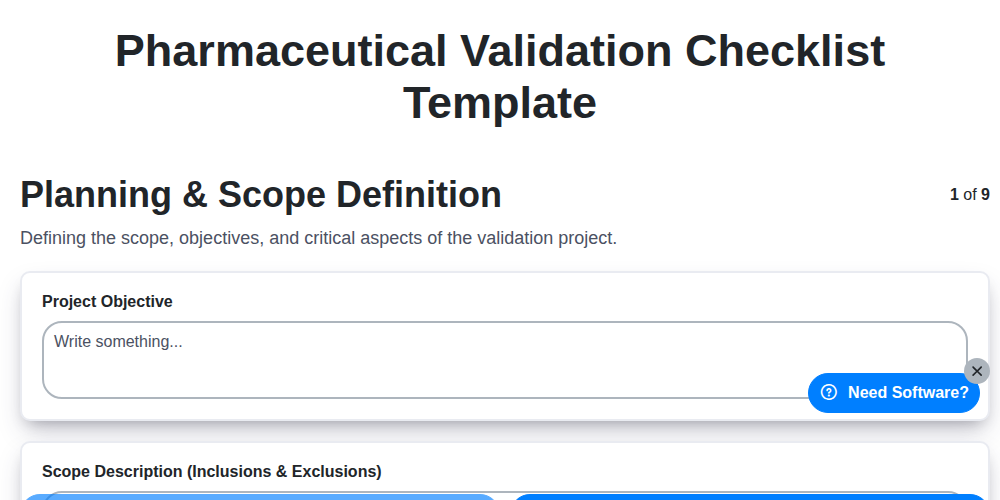
Pharmaceutical Validation Checklist Template: Your Guide to Compliance
Need help with
Pharmaceutical?
Have a question? We're here to help. Please submit your inquiry, and we'll respond promptly.