Driving Excellence: Your Pharmaceutical Continuous Improvement Checklist
Published: 11/25/2025 Updated: 07/02/2026
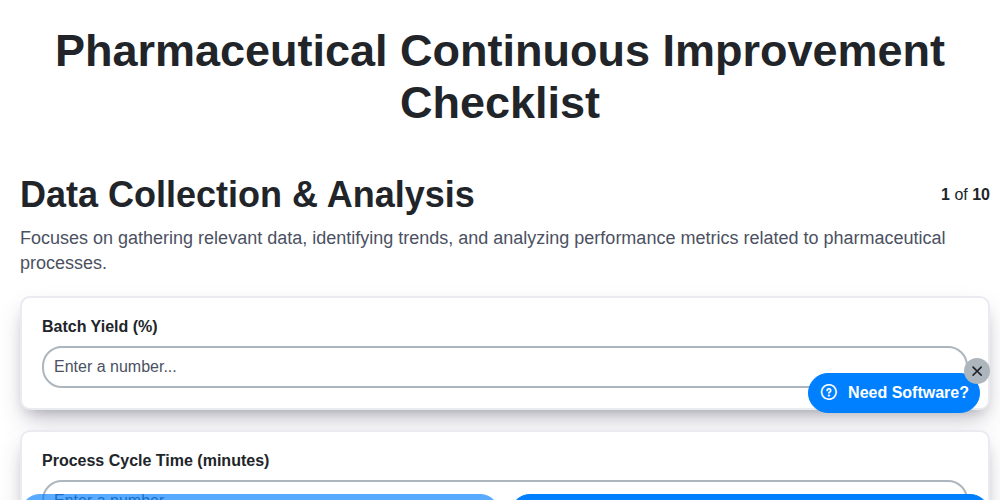
Table of Contents
- Introduction: The Power of Continuous Improvement in Pharma
- 1. Data Collection & Analysis: The Foundation of Insight
- 2. Process Mapping & Identification of Waste: Visualizing the Current State
- 3. Root Cause Analysis: Digging Deeper to Uncover Issues
- 4. Solution Development & Implementation: Designing for Improvement
- 5. Standard Operating Procedure (SOP) Updates: Formalizing Changes
- 6. Training and Communication: Ensuring Understanding and Buy-in
- 7. Monitoring and Measurement: Tracking Progress and Impact
- 8. Feedback and Iteration: Refining for Optimal Performance
- 9. Documentation and Reporting: Maintaining Transparency and Accountability
- 10. Risk Assessment & Mitigation: Proactively Addressing Potential Setbacks
- Resources & Links
TLDR: Feeling overwhelmed by pharmaceutical continuous improvement? This checklist is your roadmap! It breaks down the process into 11 clear steps - from data analysis to risk mitigation - ensuring you consistently identify, fix, and prevent issues while maintaining compliance and boosting efficiency. Download the template and start driving excellence today!
Introduction: The Power of Continuous Improvement in Pharma
The pharmaceutical industry operates under intense scrutiny, facing rigorous regulatory requirements and a constant drive for enhanced patient safety and product quality. Stagnation isn't an option. Embracing a culture of continuous improvement isn't just a best practice; it's a necessity for survival and sustained success. This isn't about dramatic, sweeping changes; it's about a relentless pursuit of incremental improvements across all processes - from drug discovery and manufacturing to packaging and distribution.
This approach fosters efficiency, reduces costs, minimizes errors, and ultimately, strengthens a company's ability to deliver safe and effective medicines to patients. By consistently evaluating and optimizing operations, pharmaceutical companies can proactively address potential issues, adapt to evolving market demands, and build a foundation for long-term resilience and growth. This blog post will delve into a practical checklist designed to guide your continuous improvement journey, ensuring a structured and effective approach to achieving operational excellence in the pharmaceutical landscape.
1. Data Collection & Analysis: The Foundation of Insight
Continuous improvement in pharmaceuticals isn't about guesswork; it's about informed action. That's why robust data collection and analysis form the very bedrock of any successful continuous improvement program. Without reliable data, you're essentially flying blind, making decisions based on assumptions rather than evidence.
This initial stage involves identifying the key performance indicators (KPIs) that reflect your process's health. Think cycle times, error rates, batch yields, customer complaints, and equipment downtime. The data collection methods should be consistent, accurate, and readily available. This might involve electronic data capture systems, manual records, or a combination of both.
Beyond simply collecting data, the analysis is crucial. Statistical Process Control (SPC) charts, Pareto analysis, trend analysis, and other analytical techniques help identify patterns, outliers, and areas of significant variation. Are you seeing a consistent deviation from the expected norm? Is one particular issue contributing to the majority of problems?
This initial data dive provides the context and direction for the rest of your continuous improvement journey, highlighting where to focus your efforts and setting the baseline against which future improvements will be measured. Don't underestimate the power of well-collected and thoughtfully analyzed data; it's the compass guiding you towards meaningful change.
2. Process Mapping & Identification of Waste: Visualizing the Current State
Before you can improve anything, you need to understand exactly how it works now. This is where process mapping comes in. Don't skip this crucial step! A visual representation of your process - be it manufacturing, quality control, or even internal administration - provides a shared understanding among the team and exposes inefficiencies often hidden within complex workflows.
Start by documenting every step involved. Use standard process mapping symbols (oval for start/end, rectangle for processes, diamond for decisions, arrows for flow) to create a clear, chronological depiction. Engage the individuals doing the work - they are the experts! Their input is invaluable in accurately portraying the reality of the process.
Once the map is complete, the real work begins: waste identification. Lean principles provide a helpful framework. Look for the 8 Wastes (DOWNTIME):
- Defects: Errors requiring rework or disposal.
- Overproduction: Producing more than needed or before it's needed.
- Waiting: Idle time for materials, information, or people.
- Non-utilized Talent: Failing to leverage the skills and expertise of your team.
- Transportation: Unnecessary movement of materials or products.
- Inventory: Excess stock tying up capital and space.
- Motion: Unnecessary movement of people.
- Extra-Processing: Performing more work than necessary.
Highlight these wastes on your map - using different colors or symbols can be effective. This visual highlighting transforms a generic map into a powerful tool for targeted improvement efforts. Don't be afraid to challenge assumptions and question why a particular step exists. Is it truly value-added, or is it a legacy process simply carried out because that's how it's always been done?
3. Root Cause Analysis: Digging Deeper to Uncover Issues
Superficial fixes rarely solve persistent problems. Simply addressing symptoms often leads to recurring issues and wasted resources. That's where robust Root Cause Analysis (RCA) becomes absolutely critical in pharmaceutical continuous improvement.
RCA goes beyond just identifying what went wrong; it aims to discover why it went wrong. This involves systematically investigating the sequence of events leading to a deviation, non-conformance, or inefficiency. Several methodologies can be employed, including:
- The 5 Whys: Repeatedly asking Why? to peel back layers of complexity and uncover the fundamental cause.
- Fishbone Diagrams (Ishikawa Diagrams): Visually mapping out potential causes categorized by factors like materials, methods, machines, manpower, measurement, and environment.
- Fault Tree Analysis: A deductive approach that identifies all possible causes leading to a specific undesired event.
- Pareto Analysis: Focusing on the vital few causes that contribute to the majority of problems (the 80/20 rule).
Crucially, RCA isn't about assigning blame. It's about collaborative problem-solving. Involve individuals from all relevant departments - operations, quality, engineering, and even those directly impacted by the issue. Document the RCA process thoroughly, including all assumptions, data used, and conclusions drawn. A well-executed RCA provides the foundation for truly effective and sustainable corrective actions, moving your continuous improvement efforts beyond temporary patches to lasting, impactful change.
4. Solution Development & Implementation: Designing for Improvement
The hard work of identifying problems and understanding their root causes is only half the battle. This phase focuses on translating those insights into tangible solutions and putting them into action. It's about moving from analysis to execution and building a foundation for sustainable improvement.
Brainstorming & Selection: Don't be afraid to generate a wide range of potential solutions. Employ brainstorming sessions with cross-functional teams - including those directly involved in the process - to ensure diverse perspectives are considered. Evaluate each potential solution against criteria like feasibility, cost-effectiveness, potential impact, and alignment with company goals. Prioritize solutions based on a clearly defined matrix (e.g., impact vs. effort).
Pilot Programs & Phased Rollout: Avoid sweeping changes initially. Implement solutions on a smaller scale through pilot programs. This allows for testing and refinement before full-scale deployment. Gather data and feedback during the pilot to identify any unforeseen challenges and make necessary adjustments. A phased rollout approach minimizes disruption and allows for learning at each stage.
Resource Allocation & Accountability: Clearly define the resources (personnel, equipment, budget) required for successful implementation. Assign ownership and accountability for each solution. A RACI (Responsible, Accountable, Consulted, Informed) matrix can be invaluable in clarifying roles and responsibilities.
Change Management: Recognize that implementing new processes or technologies often requires behavioral changes. Address potential resistance early through proactive communication and involvement. Highlight the benefits of the change for all stakeholders.
Technology Integration (where applicable): Explore how technology can facilitate the implementation and automation of solutions. This might involve implementing new software, upgrading existing systems, or integrating data sources for better visibility.
Key Considerations:
- Collaboration: Cross-functional collaboration is essential for successful implementation.
- Communication: Transparent and consistent communication throughout the implementation process builds buy-in.
- Flexibility: Be prepared to adapt the solution based on feedback and results observed during implementation.
5. Standard Operating Procedure (SOP) Updates: Formalizing Changes
Continuous improvement isn't just about identifying and implementing changes; it's about embedding those changes into the operational fabric of your pharmaceutical facility. That's where robust Standard Operating Procedures (SOPs) become critical. When improvements are identified through data analysis, process mapping, and root cause analysis, updating the relevant SOPs isn't just a good practice - it's essential for maintaining compliance, ensuring consistency, and preventing the reintroduction of old inefficiencies.
Here's why thorough SOP updates are a non-negotiable step in your continuous improvement journey:
- Reinforcing New Processes: Clearly documented SOPs provide a reference point for all personnel, ensuring everyone follows the improved process consistently.
- Maintaining Compliance: Regulatory bodies (like the FDA) expect documented procedures. SOPs demonstrate your commitment to compliance and provide a record of how processes are performed.
- Minimizing Variation: Without updated SOPs, personnel may revert to older methods, negating the benefits of your improvement efforts.
- Facilitating Training: New or revised SOPs serve as the backbone for training programs, guaranteeing that everyone understands and adheres to the new process.
Key Considerations for SOP Updates:
- Version Control: Implement a strict version control system to track changes and ensure everyone is using the most current version.
- Impact Assessment: Before updating an SOP, assess the potential impact on other related procedures and systems.
- Collaboration: Involve subject matter experts, process owners, and operators in the SOP revision process. Their input ensures the SOP is practical and effective.
- Approval Process: Establish a clear approval workflow, ensuring qualified personnel review and approve all changes.
- Communication: Inform all affected personnel about the SOP update and provide them with access to the revised document.
6. Training and Communication: Ensuring Understanding and Buy-in
Continuous improvement initiatives, regardless of their scope, are only as effective as the people driving them. Implementing changes without ensuring everyone understands why and how is a recipe for resistance and ultimately, failure. This is where robust training and communication become absolutely vital.
It's not enough to simply announce changes. We need to foster a culture of understanding and buy-in. Here's how to approach it effectively:
- Targeted Training: Develop training programs tailored to specific roles and responsibilities. A quality analyst will need different knowledge than a production operator. Ensure training includes not just the what of the changes, but also the why - how these improvements benefit the individual, the team, and the company.
- Multiple Communication Channels: Use a variety of communication methods to reach everyone. Consider team meetings, email updates, bulletin boards, short videos, and even quick "toolbox talks." Repetition is key!
- Two-Way Communication: Encourage feedback! Create open channels where employees can ask questions, voice concerns, and share their observations. Active listening and addressing these concerns promptly are essential.
- Leadership Involvement: Visible and consistent support from leadership is crucial. Leaders should champion the improvements, participate in training, and actively solicit feedback.
- Simple and Clear Language: Avoid jargon and technical terms. Communicate in a way that's easily understandable by everyone, regardless of their background.
- Regular Updates: Keep everyone informed about the progress of the continuous improvement initiatives. Celebrate successes and acknowledge any challenges openly.
Failing to prioritize training and communication can lead to confusion, errors, and a decline in morale. Investing in it, however, builds a foundation for lasting change and a more engaged workforce.
7. Monitoring and Measurement: Tracking Progress and Impact
Continuous improvement isn't about a one-time fix; it's an ongoing journey. That's why robust monitoring and measurement are absolutely critical. Without them, you're flying blind, unable to determine if your efforts are actually driving the desired outcomes.
What are you measuring? Key Performance Indicators (KPIs) should directly relate to the areas targeted for improvement. Examples might include cycle times, error rates, yield, cost per unit, or customer satisfaction scores (if applicable to the process). Establish a baseline before implementing changes, so you have a clear starting point to compare against.
Regularly track these KPIs - daily, weekly, or monthly, depending on the process and the frequency of changes - and visualize the data. Charts and graphs make it much easier to spot trends and identify areas where adjustments are needed. Don't just collect data; analyze it. Are you seeing the improvements you expected? If not, why? Are there unexpected consequences?
It's also important to set targets. While continuous improvement is about striving for better, having concrete goals provides focus and motivates the team. These targets should be SMART: Specific, Measurable, Achievable, Relevant, and Time-bound.
Finally, ensure everyone involved understands the monitoring and measurement system and has access to the relevant data. Transparency fosters accountability and encourages participation in the continuous improvement process.
8. Feedback and Iteration: Refining for Optimal Performance
Continuous improvement isn't a one-and-done project; it's a journey. After implementing a solution and establishing new SOPs, the work doesn't stop. This is where feedback and iteration become absolutely critical. Simply assuming a change is successful isn't enough - you need to actively solicit and analyze feedback from everyone involved in the affected process.
Gathering Insights:
- Multiple Sources: Collect feedback from operators, supervisors, quality personnel, and even those indirectly impacted by the change. Diverse perspectives provide a more complete picture.
- Formal & Informal Channels: Utilize surveys, suggestion boxes, team meetings, and informal conversations to encourage open communication.
- Focus on Impact: Ask targeted questions. Instead of Was the new process good?, ask What challenges did you face while using the new process? or "What aspects of the change made your work easier or more difficult?"
- Embrace Constructive Criticism: View negative feedback as valuable information, not as a personal attack. It highlights areas needing further refinement.
Acting on Feedback & Iterating:
- Analyze Trends: Look for recurring themes in the feedback. These point to areas requiring attention.
- Small, Incremental Changes: Don't be afraid to make adjustments. Small, iterative improvements are often more sustainable and less disruptive than sweeping changes.
- Document Changes: Maintain a clear record of all modifications made based on feedback, including the rationale behind them. This helps track progress and understand the evolution of the process.
- Regular Review: Schedule regular intervals to review the process, feedback, and performance data. This ensures the continuous improvement cycle remains active and responsive.
Remember, the goal is to continuously optimize performance, not to achieve a static endpoint. Feedback and iteration are the engines driving that ongoing refinement.
9. Documentation and Reporting: Maintaining Transparency and Accountability
Continuous improvement isn't just about doing things better; it's about proving they are. Robust documentation and reporting are the cornerstones of a successful pharmaceutical continuous improvement program, providing a clear audit trail, facilitating knowledge sharing, and demonstrating accountability.
Here's what this step encompasses:
- Detailed Record Keeping: Every action taken within the continuous improvement process - from initial data collection to implemented solutions - needs meticulous record keeping. This includes dates, times, individuals involved, specific changes made, and initial observations.
- Data-Driven Reports: Regularly generated reports should consolidate key performance indicators (KPIs) before and after changes. These reports should visually represent trends, highlight improvements (or lack thereof), and provide actionable insights for stakeholders.
- Audit Trail: Create and maintain a clear, chronological audit trail demonstrating the rationale behind decisions, the changes implemented, and the results achieved. This is crucial for regulatory compliance and internal review.
- Reporting Frequency: Define a clear reporting frequency (e.g., weekly, monthly, quarterly) aligned with the project's scope and the needs of management.
- Accessibility and Security: Ensure documentation is readily accessible to authorized personnel while maintaining appropriate security measures to protect sensitive data. Electronic systems with version control are highly recommended.
- Lessons Learned Documentation: Don't forget to document what didn't work, and why. These "lessons learned" are invaluable for future improvement efforts.
By prioritizing thorough documentation and reporting, we create a transparent, accountable system that strengthens our continuous improvement journey and fosters a culture of learning and progress.
10. Risk Assessment & Mitigation: Proactively Addressing Potential Setbacks
Continuous improvement isn't just about celebrating successes; it's about anticipating and addressing potential roadblocks. A robust risk assessment & mitigation step is vital to ensure your pharmaceutical continuous improvement initiatives remain on track and compliant.
This involves more than simply identifying potential problems - it's about prioritizing them based on their likelihood and potential impact. Consider a structured approach using a risk matrix (likelihood vs. severity). What could derail your process improvements? Think about equipment failures, personnel turnover, regulatory changes, supplier issues, data integrity concerns, and even unforeseen environmental factors.
Once identified, each risk needs a mitigation strategy. This could range from preventative measures (e.g., redundant equipment, robust supplier qualification) to contingency plans (e.g., backup procedures, alternative data sources). Document these risks and mitigation plans meticulously. Assign responsibility for each mitigation activity and establish clear timelines for completion.
Don't just create this list and forget about it! Regularly review and update your risk assessment, especially as your improvement initiatives progress and new data becomes available. A dynamic, living risk assessment is a key component of a truly sustainable continuous improvement program. Remember to integrate learnings from past setbacks into your future risk assessments - turning challenges into valuable insights.
Resources & Links
- Pharmaceutical Online: A comprehensive resource for pharmaceutical professionals, offering articles, webinars, and industry news related to continuous improvement, manufacturing, and regulatory compliance. Search for articles specifically addressing Lean, Six Sigma, and process optimization.
- Quality Assurance Magazine: Focuses on quality assurance and regulatory compliance within the pharmaceutical industry. Look for articles on cGMP, risk management, and quality management systems which are crucial components of continuous improvement.
- International Society for Pharmaceutical Engineering (ISPE): A global professional organization for pharmaceutical engineers and industry professionals. ISPE provides resources, training, and guidance on best practices, including continuous improvement methodologies. Their SIGs (Special Interest Groups) are particularly helpful.
- American Society for Quality (ASQ): A leading global authority on quality. ASQ offers training, certifications (like Six Sigma), and publications related to process improvement and data analysis - fundamental skills for continuous improvement initiatives.
- ASQ Lean Six Sigma Council: Dedicated to promoting the application of Lean Six Sigma principles. Provides resources, certifications, and training programs relevant to process improvement, waste reduction, and efficiency gains.
- National Institute of Standards and Technology (NIST): NIST develops standards and guidelines for measurement and manufacturing processes, some of which are applicable to pharmaceutical continuous improvement, especially related to data integrity and process validation.
- U.S. Food and Drug Administration (FDA): The FDA's website provides guidance documents and regulations related to pharmaceutical manufacturing and quality control. Understanding these requirements is essential for ensuring continuous improvement initiatives are compliant.
- Process Decisions Inc (PDI): PDI is a leading provider of manufacturing execution systems (MES) and offers insights and case studies relating to process optimization and data-driven decision making in the pharmaceutical sector.
- Pharmaceutical Technology: Covers a wide range of topics in the pharmaceutical industry. Search for articles relating to process development, manufacturing technologies, and quality management systems.
- Reliability Solutions: While focused on broader reliability engineering, their methodologies around root cause analysis, failure mode and effects analysis (FMEA), and preventative maintenance have direct application to pharmaceutical manufacturing improvements.
- Mwerks: Mwerks provides digital manufacturing solutions for the pharma industry, often showcasing how data and automation can contribute to continuous improvement initiatives.
- PubMed: A database of biomedical literature. Searching for terms like 'pharmaceutical continuous improvement,' 'process optimization,' or 'quality by design' can reveal relevant research and case studies.
Frequently Asked Questions
How can I ensure team buy-in for PCI initiatives?
Communicate the benefits of PCI clearly, involve team members in the process of identifying and implementing improvements, provide training and support, and recognize and reward successful initiatives.
Comments
There are no comments yet. Be the first to add one!
Pharmaceutical Management Solution Demo
Navigating complex regulations and ensuring quality in pharmaceutical manufacturing? ChecklistGuro's Work OS platform streamlines processes from R&D to production, packaging, and distribution. Maintain compliance, improve efficiency, and reduce risk. Discover how ChecklistGuro can transform your pharmaceutical operations!
Related Articles
Ensuring Quality: A Pharmaceutical Compound Record Review Checklist Guide
Pharmaceutical Labeling Compliance Checklist: Your Step-by-Step Guide
Mastering Medication Management: Your Pharmaceutical Inventory Compliance Checklist Template
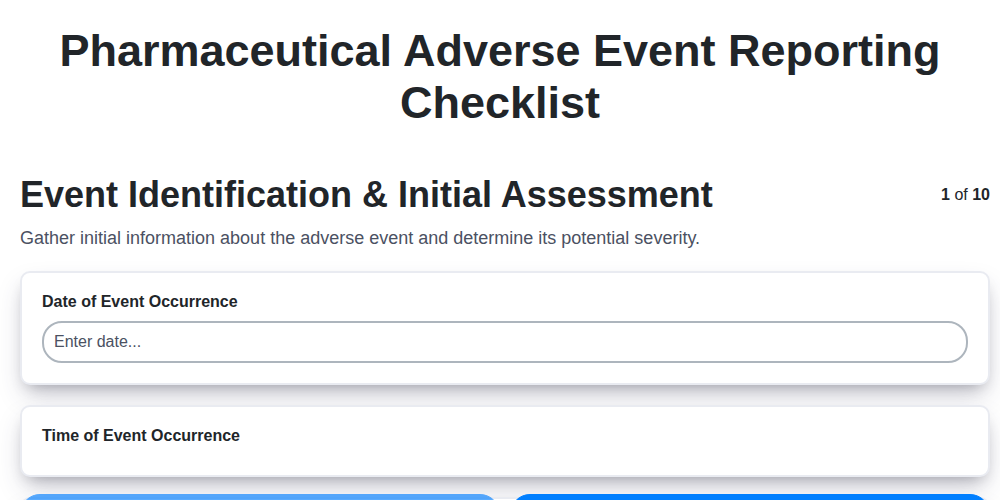
Navigating Adverse Event Reporting: Your Pharmaceutical Checklist Guide
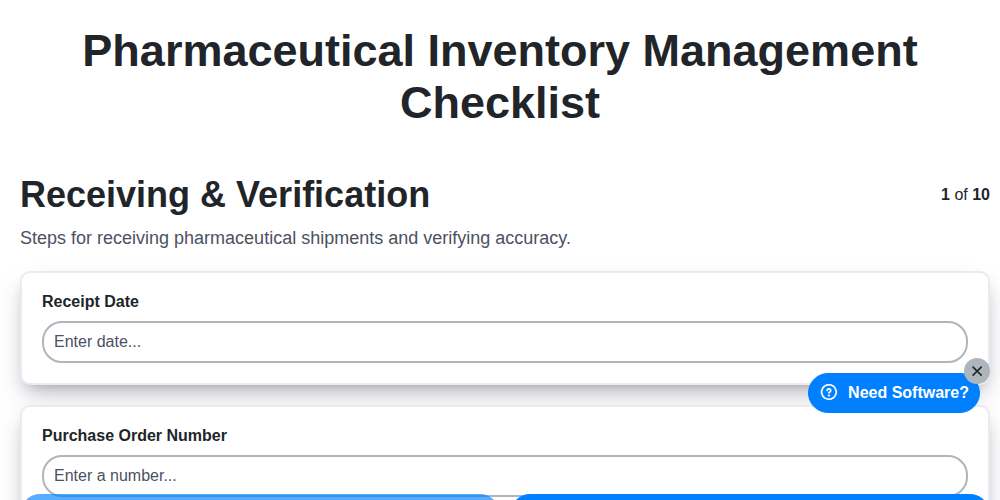
Pharmaceutical Inventory Management Checklist: Your Guide to Compliance & Accuracy
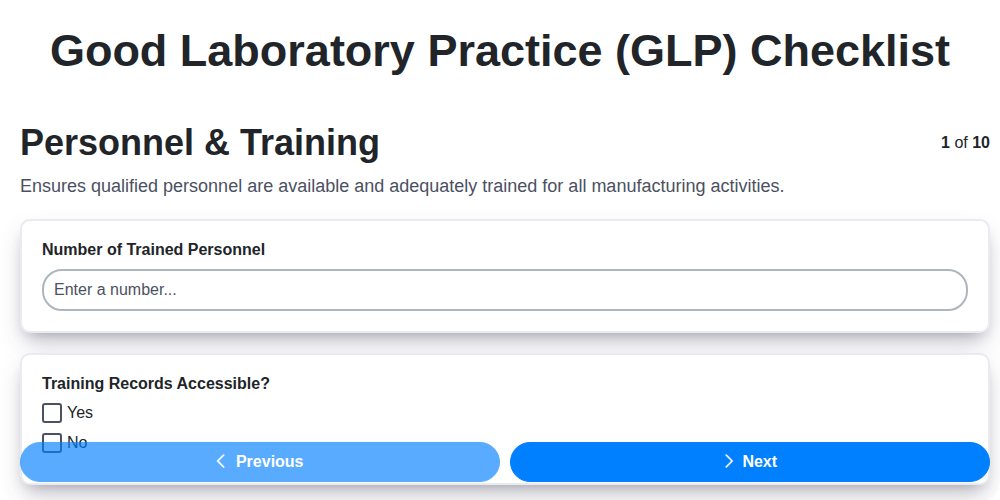
Your Essential GLP Checklist Template: A Practical Guide
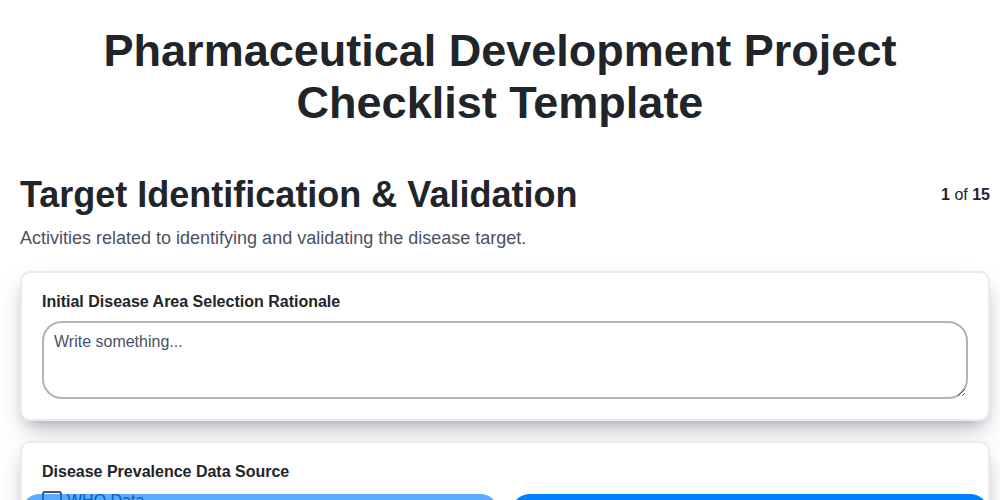
Your Pharmaceutical Development Checklist: A Template for Success
Pharmaceutical Validation Checklist Template: Your Guide to Compliance
Need help with
Pharmaceutical?
Have a question? We're here to help. Please submit your inquiry, and we'll respond promptly.