Pharmaceutical Process Validation: Your Comprehensive Checklist Template
Published: 11/25/2025 Updated: 07/02/2026
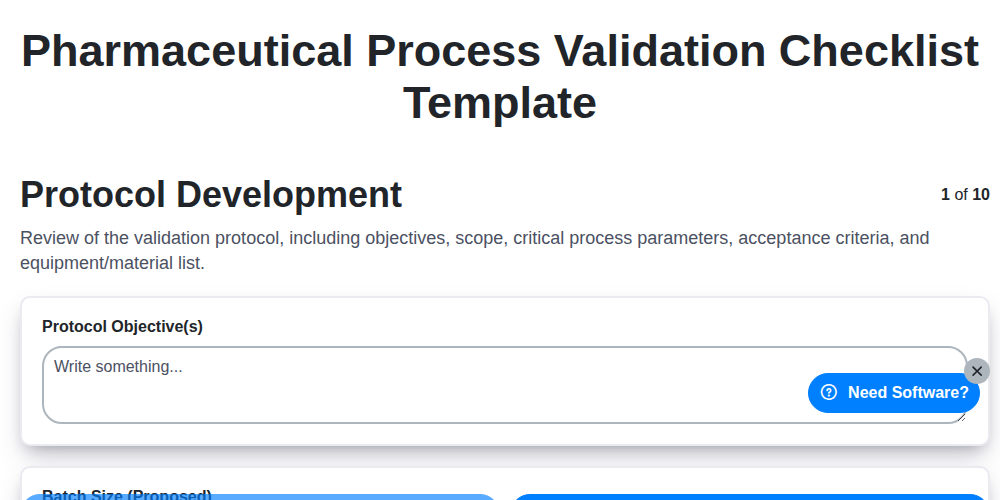
Table of Contents
- Introduction: Why Process Validation Matters
- 1. Protocol Development: Laying the Foundation
- 2. Process Understanding & Risk Assessment: Identifying Critical Points
- 3. Equipment Qualification: Ensuring Reliable Performance
- 4. Material Qualification: Verifying Raw Material Suitability
- 5. Process Parameter Monitoring: Keeping a Close Watch
- 6. Sampling & Testing: Gathering Meaningful Data
- 7. Data Analysis & Evaluation: Confirming Process Performance
- 8. Deviation Management: Addressing Unexpected Occurrences
- 9. Reporting & Documentation: Maintaining a Clear Record
- 10. Change Control & Continuous Improvement: Sustaining Validation
- Resources & Links
TLDR: Need to validate your pharmaceutical process? This checklist template breaks down the entire validation lifecycle - from initial protocol design and risk assessment to ongoing monitoring, deviation handling, and continuous improvement - ensuring you meet regulatory requirements and consistently produce high-quality products. It's your roadmap to a robust and compliant validation process!
Introduction: Why Process Validation Matters
Pharmaceutical process validation (PV) is far more than just a regulatory hoop to jump through. It's a systematic and documented approach to ensuring that your manufacturing processes consistently produce a product that meets pre-determined quality attributes. Think of it as the backbone of your quality system, providing confidence that your medicines are safe, effective, and reliable. Without robust validation, you risk product failures, recalls, and ultimately, harm to patients. This isn't just about compliance; it's about building trust and ensuring patient wellbeing. A well-executed validation program minimizes risk, streamlines operations, and provides a solid foundation for ongoing process improvement. This checklist provides a roadmap to that goal.
1. Protocol Development: Laying the Foundation
A robust validation protocol is the cornerstone of a successful pharmaceutical process validation. It's more than just a document; it's a detailed roadmap outlining how you'll demonstrate that your process consistently produces a product meeting predetermined specifications. This section needs meticulous planning.
Your protocol should clearly define the process being validated, including its boundaries (start and end points), critical process parameters (CPPs), and critical quality attributes (CQAs). It must detail the validation strategy - whether prospective, concurrent, or retrospective - and justify the chosen approach. Specific acceptance criteria, sampling plans, testing methods, and statistical analysis techniques must be explicitly stated. Think of it as answering the question, How will we know if the process is working as intended, and what will we do if it doesn't?
Crucially, the protocol needs to be reviewed and approved by qualified personnel before validation activities commence. This ensures clarity, accuracy, and adherence to regulatory guidelines. Remember, a poorly constructed protocol can render the entire validation effort invalid. Consider including sections for personnel responsibilities, safety precautions, and contingency plans to address unforeseen circumstances. A well-defined protocol sets the stage for a defensible and reliable validation outcome.
2. Process Understanding & Risk Assessment: Identifying Critical Points
Validation isn't just about ticking boxes; it's about demonstrating that your pharmaceutical process consistently produces a product meeting predetermined quality attributes. This begins with a robust understanding of the process itself and a thorough risk assessment. Simply put, you need to know how your process works and what could go wrong.
This phase goes beyond just listing steps. It involves a deep dive into the science behind the process, considering the impact of each unit operation. We're talking about understanding chemical reactions, physical transformations, and biological interactions involved. This scientific understanding forms the foundation for identifying Critical Process Parameters (CPPs).
Risk assessment is then layered on top. Tools like Failure Mode and Effects Analysis (FMEA) and Hazard Analysis and Critical Control Points (HACCP) are invaluable here. These techniques systematically identify potential failure modes, analyze their potential effects (severity, occurrence, and detection), and prioritize risks based on their overall risk score.
The output of this stage isn't just a list of risks, but a clearly defined understanding of why certain parameters are critical. It allows you to justify your validation strategy, select appropriate monitoring points, and design controls that effectively mitigate identified risks. For example, knowing why mixing speed is a CPP allows for informed decisions about monitoring frequency and acceptance criteria, rather than arbitrary choices. A strong process understanding and risk assessment directly contribute to a more efficient and reliable validation process.
3. Equipment Qualification: Ensuring Reliable Performance
Pharmaceutical process validation hinges on the reliable performance of the equipment used. Equipment Qualification (EQ) is a critical stage, demonstrating that the equipment, once installed, performs as intended and consistently produces the expected results. It's not simply about verifying functionality; it's about building confidence that the equipment will continue to do so throughout its lifecycle.
The qualification process typically involves three distinct stages:
- Design Qualification (DQ): This confirms that the equipment's design meets the user's requirements and the intended application. It involves reviewing design specifications, drawings, and vendor documentation.
- Installation Qualification (IQ): IQ verifies that the equipment has been installed correctly, according to the manufacturer's recommendations and site-specific requirements. This includes checking physical placement, utilities connections (power, water, air), and proper calibration.
- Operational Qualification (OQ): OQ focuses on demonstrating that the equipment operates correctly under defined operating ranges and conditions. This involves executing a series of tests and documenting results to prove that the equipment functions within the established parameters.
Thorough documentation is paramount throughout each stage. Records should include equipment specifications, installation details, test results, and any deviations encountered. Successful EQ provides assurance that the equipment is suitable for its intended use and supports the overall validation process.
4. Material Qualification: Verifying Raw Material Suitability
Material qualification is a critical, often overlooked, component of pharmaceutical process validation. It goes beyond simply accepting a supplier's Certificate of Analysis (CoA). It's about definitively demonstrating that your raw materials consistently meet pre-defined quality attributes and are suitable for their intended use in the manufacturing process. This proactive approach minimizes risks associated with material inconsistencies impacting product quality, safety, and efficacy.
The material qualification process should include, but is not limited to, the following steps:
- Supplier Assessment & Audit: Evaluating supplier capabilities, quality systems, and adherence to Good Manufacturing Practices (GMP). This might involve on-site audits.
- Material Characterization: Establishing a comprehensive understanding of the material's physical, chemical, and microbiological properties. This often involves testing beyond what's provided in the CoA, potentially including particle size distribution, moisture content, polymorphism, and microbial limits.
- Stability Studies: Assessing the material's stability under various storage conditions to define appropriate storage requirements and expiry dates.
- Compatibility Studies: Evaluating the material's interaction with other components of the formulation and with equipment surfaces. Incompatibility can lead to degradation, precipitation, or other undesirable effects.
- Traceability: Implementing robust traceability systems to track materials from receipt to use.
- Critical Material Attributes (CMAs) Identification: Clearly defining the CMAs that can impact product quality and establishing acceptance criteria.
- Routine Testing & Trending: Regularly testing received material against defined specifications and monitoring trends to detect potential issues early.
Documenting all qualification activities, including supplier evaluations, testing results, and acceptance criteria, is essential for demonstrating compliance and facilitating continuous improvement. Failure to adequately qualify raw materials can lead to process failures, product recalls, and ultimately, compromise patient safety.
5. Process Parameter Monitoring: Keeping a Close Watch
Process parameter monitoring is the bedrock of a robust validation process. It's not just about collecting data; it's about ensuring that your process operates consistently within defined, acceptable limits. This involves identifying critical process parameters (CPPs) - those that, if not controlled, can impact product quality - and establishing appropriate monitoring strategies.
Our validation checklist template emphasizes a tiered approach. Initially, monitoring focuses on establishing baseline performance during process validation runs. This involves comprehensive data collection at pre-determined intervals, often more frequent than routine production. We recommend documenting the rationale for the chosen monitoring frequency and the instrumentation used.
Beyond the initial validation period, the checklist guides you in establishing ongoing monitoring plans for routine production. This includes defining acceptable ranges for CPPs, incorporating Statistical Process Control (SPC) charts where appropriate, and setting up alert and alarm systems to immediately flag deviations.
Crucially, the checklist encourages a proactive approach - not just reacting to issues but actively seeking trends and opportunities for optimization. Periodic review of monitoring data should be a standard practice, allowing for adjustments to parameters and controls as needed. Regular calibration and maintenance of monitoring equipment are also vital to ensure data integrity and reliability.
6. Sampling & Testing: Gathering Meaningful Data
Robust sampling and testing are the backbone of any successful pharmaceutical process validation. This isn't just about taking samples; it's about designing a program that yields meaningful data to demonstrate process consistency and product quality. Here's what a comprehensive sampling and testing plan should include:
- Sampling Plan Design: This should be clearly defined within your validation protocol and include specifics on sampling locations, frequencies, and methodologies. Consider critical control points (CCPs) and areas of potential variability. A risk-based approach helps prioritize sampling locations.
- Representative Samples: Ensure samples are truly representative of the entire process output. This requires trained personnel and standardized procedures to minimize bias.
- Appropriate Testing Methods: Select validated analytical methods capable of accurately and reliably measuring critical quality attributes (CQAs). These methods must be suitable for the specific product and process.
- Reference Standards: Utilize certified reference standards to ensure accuracy and traceability in testing.
- Equipment Calibration & Maintenance: Verify that all testing equipment is calibrated and maintained according to a defined schedule.
- Sample Storage & Handling: Implement procedures for proper sample storage and handling to prevent degradation and maintain integrity. Chain of custody documentation is essential.
- Data Integrity: Apply principles of ALCOA (Attributable, Legible, Contemporaneous, Original, and Accurate) throughout the sampling and testing process to ensure data integrity.
Ultimately, the data generated from sampling and testing will provide vital evidence to support your validation conclusions.
7. Data Analysis & Evaluation: Confirming Process Performance
Data analysis and evaluation are the crucial bridge connecting validation activities to demonstrable process control. This isn't simply about crunching numbers; it's about objectively assessing whether the process consistently operates within established parameters and produces the expected product quality.
Following the sampling and testing phase (outlined in the previous checklist step), the collected data needs rigorous scrutiny. This involves statistical analysis to determine if observed values fall within pre-defined acceptance criteria outlined in the validation protocol. Key considerations during this phase include:
- Statistical Significance: Applying appropriate statistical methods (e.g., t-tests, ANOVA, control charting) to determine if variations are random or indicative of a process issue.
- Trend Analysis: Identifying patterns in the data that might signal shifts in process behavior over time.
- Comparison to Acceptance Criteria: A direct comparison of the data to the pre-defined acceptance limits specified in the validation protocol. Any excursions must be thoroughly investigated (see Deviation Management).
- Capability Analysis: Assessing the process's ability to repeatedly produce consistent results (e.g., using Cpk values).
- Critical Quality Attribute (CQA) Assessment: Specifically evaluating how the process impacts key product quality attributes.
The results of this analysis form the foundation for concluding whether the validated process is robust and reliable. Thorough documentation of the analytical methods used, the data analyzed, and the conclusions drawn is essential for audit trails and future reference. Remember, demonstrating that the process performs as expected is the ultimate goal of this phase.
8. Deviation Management: Addressing Unexpected Occurrences
Pharmaceutical process validation isn't about guaranteeing perfection; it's about proactively identifying and mitigating risks. Inevitably, deviations - unplanned events that fall outside the established process parameters - will occur. A robust deviation management system is a critical component of a validated process, ensuring that these occurrences are handled effectively and contribute to ongoing process improvement.
This isn't simply about documenting an anomaly. A deviation management system should encompass a structured approach, including:
- Prompt Identification and Recording: Immediate recognition and thorough documentation of any deviation from the validated process, including details like date, time, personnel involved, and a clear description of what occurred.
- Root Cause Analysis: Moving beyond surface-level observations to determine the underlying reason for the deviation. Techniques like the 5 Whys or Fishbone diagrams can be invaluable.
- Corrective and Preventive Actions (CAPA): Implementing CAPAs to rectify the immediate problem (corrective action) and prevent recurrence (preventive action). These actions must be documented and tracked to verify effectiveness.
- Impact Assessment: Evaluating the potential impact of the deviation on product quality, patient safety, and regulatory compliance. This may trigger additional investigation or corrective actions.
- Trend Analysis: Analyzing deviation data to identify patterns or systemic issues that may indicate underlying process problems requiring more significant modifications.
Effective deviation management isn't a burden; it's an opportunity to learn and strengthen your validated process. By treating deviations as valuable data points, you can continuously refine your understanding and improve operational excellence.
9. Reporting & Documentation: Maintaining a Clear Record
Pharmaceutical process validation isn't complete without meticulous and comprehensive reporting and documentation. This isn't merely about ticking boxes; it's about establishing a defensible record demonstrating that your process consistently produces a safe, effective, and reliable product.
Your validation documentation should be readily accessible, accurate, and traceable. This includes:
- Validation Master Plan (VMP): This overarching document defines the validation strategy for the entire facility and processes.
- Validation Protocols: Detailed step-by-step guides outlining the validation activities to be performed.
- Validation Reports: Comprehensive summaries of the validation activities, including data, analysis, and conclusions. These must clearly state whether the process meets the acceptance criteria.
- Batch Records: Complete records of each production batch, including raw material information, process parameters, and any deviations.
- Deviation Reports: Detailed accounts of any deviations from the validated process, including investigation findings and corrective actions.
- Change Control Records: Documentation of any changes to the process, equipment, or materials, and the associated impact assessment and revalidation activities.
Ensure all documentation adheres to GMP guidelines, is reviewed and approved by qualified personnel, and is stored securely. A robust documentation system facilitates audits, supports continuous improvement, and provides a solid foundation for regulatory compliance. Remember, clear, complete, and readily available documentation is a cornerstone of a successful validation program.
10. Change Control & Continuous Improvement: Sustaining Validation
Pharmaceutical process validation isn't a one-and-done activity. It's a living, breathing system that requires ongoing attention and adaptation. Regulatory bodies increasingly emphasize a risk-based approach, and this necessitates a robust change control and continuous improvement program to ensure the validated process remains reliable and compliant throughout its lifecycle.
Why is this crucial? Changes, however seemingly minor, can introduce new risks or impact existing ones. These could stem from raw material substitutions, equipment upgrades, personnel changes, or even subtle modifications to procedures. Without a structured approach, these alterations can compromise product quality and potentially invalidate the original validation.
Key Elements of a Strong Change Control & Continuous Improvement Program:
- Defined Change Control Procedures: Establish a clear, documented process for requesting, evaluating, approving, and implementing any changes to the validated process. This includes defining roles and responsibilities.
- Risk Assessment Integration: Each proposed change should trigger a thorough risk assessment. This should consider the potential impact on product quality, process performance, and compliance. Employ tools like Failure Mode and Effects Analysis (FMEA) for a structured assessment.
- Validation Impact Assessment: Determine if the change necessitates revalidation or a supplemental validation. Minor changes might require only a documented assessment and revised procedures, while significant alterations may warrant full revalidation.
- Training & Communication: Ensure all personnel involved in the validated process are adequately trained on any changes and understand their role in maintaining compliance.
- Periodic Review & Audits: Regularly review the validated process and the change control system itself. Internal audits and management reviews can identify areas for improvement.
- Leveraging Data & Trending: Analyze process data to identify trends that might indicate a need for adjustment or preventative action. Use statistical process control (SPC) where appropriate.
- Feedback Mechanisms: Encourage feedback from operators and other personnel involved in the process. Their insights can be invaluable in identifying potential issues and opportunities for improvement.
By embracing a proactive approach to change control and continuous improvement, pharmaceutical manufacturers can not only maintain the integrity of their validated processes but also foster a culture of quality and innovation.
Resources & Links
- FDA - Process Validation: Official FDA guidance on process validation, including the lifecycle approach. This is the primary regulatory reference point.
- United States Pharmacopeia (USP): Provides USP General Chapter <1110> - Process Validation. Crucial for understanding the requirements for process validation, particularly around process understanding and control.
- International Society for Pharmaceutical Engineering (ISPE): ISPE offers numerous resources, including guides and webinars, on process validation. Their Good Practice Guides (GPGs) are highly regarded.
- Pharmaceutical Technology: A resource for industry news and articles covering process validation, including best practices and emerging trends.
- American Society for Quality (ASQ): Offers resources related to quality management and statistical process control, which are relevant to data analysis and evaluation in process validation.
- EMC2: Offers consultancy and training services, often with articles and resources on process validation and quality systems. Useful for understanding practical implementation challenges.
- Validation Mastery: Provides training and consultancy on process validation. Their website features articles and resources covering different aspects of validation.
- Quality Assurance Magazine: A periodical with articles related to quality assurance and validation. Useful for gaining insights on the latest trends and challenges within the pharmaceutical industry
- GMP Compliance: Offers news, regulatory updates, and guides related to Good Manufacturing Practices (GMP), which is inherently linked to process validation.
- BioPharma Primus: Specialized in GMP training, and provides in-depth information on Validation, especially useful for biological manufacturing processes
- PwC - Pharmaceutical Industry: PwC publishes insights and reports relevant to the pharmaceutical industry, including quality and regulatory compliance, which can offer a broader context for validation efforts.
Frequently Asked Questions
What is Pharmaceutical Process Validation (PPV)?
PPV is a documented system that assures your process, equipment, and cleaning activities consistently produce a product that meets predetermined specifications and quality attributes. It's a regulatory requirement demonstrating control and consistency in manufacturing.
Why is Process Validation important?
PPV is crucial for regulatory compliance (FDA, EMA, etc.), ensuring product quality and safety, minimizing risks of product defects, and increasing manufacturing efficiency. It builds confidence that your process will consistently deliver the desired results.
What is a Process Validation Master Plan (PVMP)?
The PVMP is a comprehensive document that outlines the overall validation strategy, timelines, resources, and responsibilities for process validation activities across the manufacturing facility. It serves as a roadmap for validation efforts.
What are the three stages of Process Validation, according to ICH Q8?
The three stages are: 1) Process Design (understanding the process and critical process parameters), 2) Process Qualification (demonstrating the process can consistently produce the expected results), and 3) Continued Process Verification (ongoing monitoring and evaluation of the process).
What is the difference between Prospective, Concurrent, and Retrospective Validation?
* **Prospective Validation:** Fully qualified process with documented evidence before commercial production. * **Concurrent Validation:** Process validation activities are performed during production. * **Retrospective Validation:** Evaluation of historical data to demonstrate process control, usually for existing processes without prior validation.
What kind of information should be included in a Process Validation Protocol?
A protocol should include a detailed description of the process, critical process parameters (CPPs), critical quality attributes (CQAs), acceptance criteria, testing methods, equipment used, personnel involved, and a risk assessment (e.g., FMEA).
What are Critical Process Parameters (CPPs)?
CPPs are process variables that can affect the Critical Quality Attributes (CQAs) of the product. These parameters are identified through process understanding and risk assessment, and their ranges are established to ensure consistent product quality.
What are Critical Quality Attributes (CQAs)?
CQAs are the physical, chemical, biological, or microbiological properties or characteristics that must be within specified limits to ensure the product's identity, strength, quality, and purity.
How often should Process Validation be reviewed and updated?
Process Validation should be reviewed periodically (e.g., every 1-3 years), or whenever there are significant changes to the process, equipment, raw materials, or regulatory requirements. Change control is vital.
What is a Change Control system in the context of Process Validation?
A change control system outlines procedures for identifying, assessing, documenting, and approving changes to validated processes, ensuring any changes do not negatively impact product quality. It ensures documentation is updated and revalidation or re-evaluation is performed as needed.
What role does risk assessment play in Process Validation?
Risk assessment, such as Failure Mode and Effects Analysis (FMEA), helps identify potential risks to product quality and guides validation activities to mitigate those risks. It helps prioritize validation efforts and optimize the approach.
What are some key documents I will need for Process Validation?
Common documents include the Process Validation Master Plan (PVMP), Process Validation Protocols, Validation Reports, Standard Operating Procedures (SOPs), Batch Records, Deviation Reports, and Change Control Records.
Comments
There are no comments yet. Be the first to add one!
Pharmaceutical Management Solution Demo
Navigating complex regulations and ensuring quality in pharmaceutical manufacturing? ChecklistGuro's Work OS platform streamlines processes from R&D to production, packaging, and distribution. Maintain compliance, improve efficiency, and reduce risk. Discover how ChecklistGuro can transform your pharmaceutical operations!
Related Articles
Ensuring Quality: A Pharmaceutical Compound Record Review Checklist Guide
Pharmaceutical Labeling Compliance Checklist: Your Step-by-Step Guide
Mastering Medication Management: Your Pharmaceutical Inventory Compliance Checklist Template
Navigating Adverse Event Reporting: Your Pharmaceutical Checklist Guide
Pharmaceutical Inventory Management Checklist: Your Guide to Compliance & Accuracy
Your Essential GLP Checklist Template: A Practical Guide
Your Pharmaceutical Development Checklist: A Template for Success
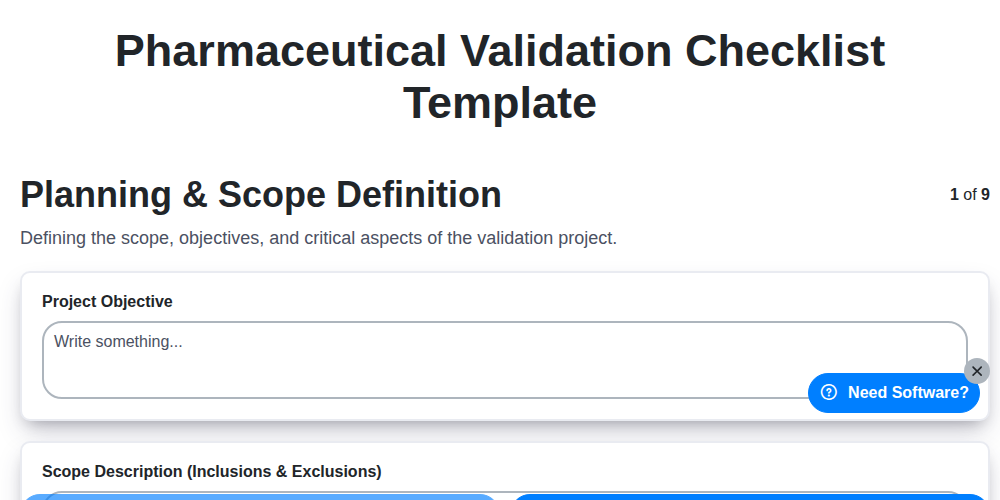
Pharmaceutical Validation Checklist Template: Your Guide to Compliance
Need help with
Pharmaceutical?
Have a question? We're here to help. Please submit your inquiry, and we'll respond promptly.