Streamline Your Operations: The Ultimate Property Inventory and Asset Management Workflow Template
Published: 06/09/2026 Updated: 10/05/2026
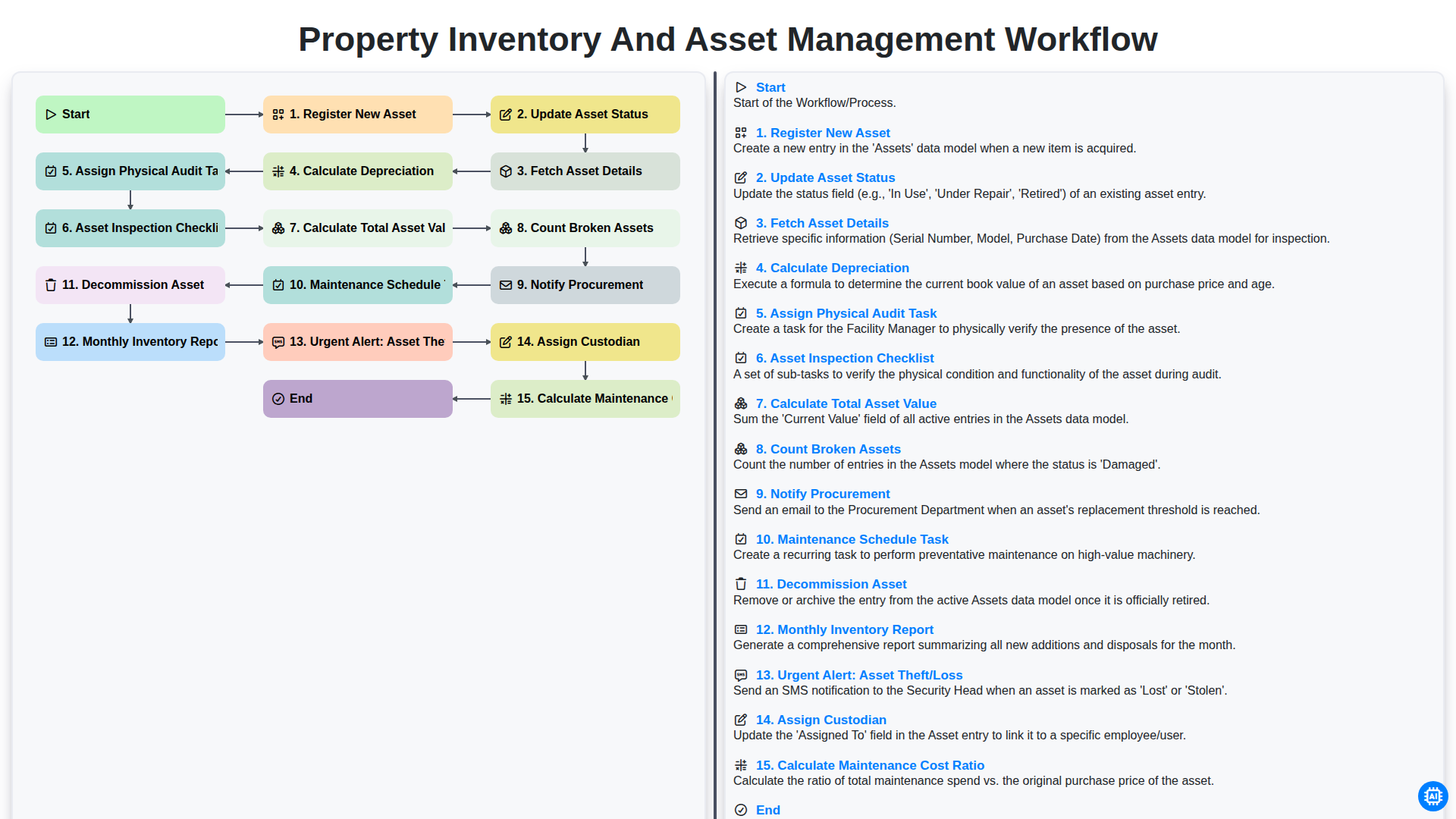
Table of Contents
- Introduction: The Importance of a Structured Asset Management Workflow
- Phase 1: Asset Onboarding and Initial Registration
- Assigning Responsibility: The Role of the Asset Custodian
- Phase 2: Real-Time Tracking and Information Retrieval
- Maintaining Accuracy: Updating Asset Status and Fetching Details
- Phase 3: Asset Valuation and Financial Lifecycle Management
- Calculating Depreciation and Total Asset Value
- Phase 4: Maintenance, Inspection, and Quality Control
- Implementing Inspection Checklists and Maintenance Schedules
- Monitoring Health: Tracking Broken Assets and Maintenance Cost Ratios
- Phase 5: Auditing, Compliance, and Loss Prevention
- Executing Physical Audits and Managing Urgent Theft/Loss Alerts
- Phase 6: Lifecycle End-of-Life and Procurement
- Decommissioning Assets and Notifying Procurement
- Conclusion: Generating Monthly Inventory Reports for Strategic Insights
- Resources & Links
TLDR: Master your lifecycle management with this comprehensive workflow template designed to automate everything from initial asset registration and depreciation tracking to maintenance scheduling and decommissioning. Learn how to use this end-to-end process to maintain real-time visibility, optimize maintenance costs, and ensure operational continuity through automated audits and instant theft alerts.
Introduction: The Importance of a Structured Asset Management Workflow
In the modern business landscape, managing physical resources is no longer just about knowing what you own; it is about optimizing how those assets contribute to your bottom line. Whether you are managing IT hardware, manufacturing machinery, or office furniture, a disorganized approach to inventory can lead to catastrophic financial leaks, unexpected downtime, and significant operational bottlenecks.
A structured Property Inventory and Asset Management Workflow serves as the backbone of operational efficiency. Without a predefined sequence of actions-ranging from the moment an asset is registered to the moment it is decommissioned-companies often struggle with ghost assets (items on the books that no longer exist) or zombie assets (items that exist but are unrecorded).
By implementing a rigorous, step-by-step workflow, organizations can transition from a reactive firefighting mode to a proactive, data-driven strategy. A well-defined process ensures that every asset is accounted for, every maintenance task is scheduled, and every depreciation calculation is accurate. Ultimately, this level of oversight reduces capital expenditure, enhances accountability through clear custodian assignment, and provides the real-time visibility needed to make informed, high-stakes procurement decisions.
Phase 1: Asset Onboarding and Initial Registration
The lifecycle of effective asset management begins long before an item reaches its functional end-of-life; it starts the moment an asset enters your ecosystem. The Register New Asset step is the foundation of the entire workflow. During this phase, every new piece of equipment, furniture, or technology must be meticulously documented in a centralized system to ensure total visibility.
To establish a reliable digital twin of your physical inventory, this phase involves more than just a simple entry. It requires the immediate step to Assign Custodian, ensuring that every registered item is linked to a specific individual or department responsible for its care. By establishing accountability from day one, you mitigate the risks of mismanagement and loss. A successful onboarding process ensures that all metadata-such as purchase date, warranty information, and specifications-is captured accurately, setting the stage for all subsequent tracking, auditing, and maintenance tasks.
Assigning Responsibility: The Role of the Asset Custodian
Effective asset management is not just about tracking hardware; it is about establishing clear accountability. At the heart of this accountability is the process to Assign Custodian, a critical step that ensures every high-value item has a designated individual responsible for its care and oversight.
When an asset is assigned to a custodian, the responsibility shifts from a general pool to a specific person or department. This person acts as the primary point of contact for that asset, overseeing its daily usage, ensuring it is stored correctly, and reporting any discrepancies during physical audits. Without clearly defined custodians, assets often become orphaned, leading to untraceable loss, neglected maintenance, and the high-risk scenarios seen in Urgent Alert: Asset Theft/Loss notifications.
By formalizing custodianship, organizations can bridge the gap between possession and accountability. When everyone knows exactly who is responsible for which piece of equipment, the entire lifecycle-from initial registration to final decommissioning-becomes more transparent, reducing the likelihood of shrinkage and ensuring that the maintenance schedule is strictly adhered to.
Phase 2: Real-Time Tracking and Information Retrieval
Once the initial registration is complete, the workflow shifts from data entry to active management. The core of an efficient management system lies in the ability to maintain an accurate, live view of your resources. This phase focuses on the continuous cycle of monitoring, retrieving, and updating data to ensure that no asset becomes a black box within your organization.
At the heart of this phase is the ability to Fetch Asset Details instantly, providing staff with immediate access to specifications, warranty information, and history. However, data is only useful if it is current. To maintain integrity, the workflow must include a process to Update Asset Status, ensuring that if a piece of equipment moves from In Use to Under Repair or Available, the digital record reflects this change in real-time. This seamless loop of retrieval and updating prevents the costly errors associated with outdated spreadsheets and manual tracking.
Maintaining Accuracy: Updating Asset Status and Fetching Details
In a dynamic operational environment, an asset's value is not just determined by its initial cost, but by its current state of utility. The core of a reliable management system lies in the ability to Update Asset Status in real-time. Whether an item has moved from In Use to Under Repair, In Storage, or Retired, capturing these transitions immediately prevents discrepancies between your digital records and your physical reality. Failing to update status promptly can lead to costly errors, such as scheduling maintenance for an item that is already decommissioned or deploying personnel to find equipment that is currently out of service.
Complementing this real-time updates is the ability to Fetch Asset Details instantaneously. A streamlined workflow ensures that whenever a change is made, the system provides a single source of truth. By pulling deep-level data-such as purchase dates, warranty information, and technical specifications-at a moment's notice, managers can make informed decisions without manual searching. This seamless loop of updating and retrieving data ensures that your inventory remains a living, breathing reflection of your actual resources, reducing downtime and eliminating the guesswork that plagues disorganized organizations.
Phase 3: Asset Valuation and Financial Lifecycle Management
Once assets are registered and tracked, the focus shifts from physical oversight to financial intelligence. This stage of the workflow is critical for maintaining an accurate balance sheet and ensuring that every piece of equipment provides measurable value to your organization.
Effective lifecycle management involves several interconnected financial processes:
- Calculating Depreciation & Total Value: Beyond mere tracking, the system must automatically Calculate Depreciation to reflect the diminishing value of equipment over time. By integrating this with the ability to Calculate Total Asset Value, stakeholders gain a real-time view of the company's net worth in physical holdings.
- Monitoring Maintenance Economics: To ensure operational efficiency, the workflow includes the ability to Calculate Maintenance Cost Ratio. This allows management to determine if an asset has become a money pit-where repair costs begin to outweigh the asset's utility-triggering a decision to either repair or replace.
- Financial Reporting & Auditing: At the end of every cycle, the system generates a Monthly Inventory Report, providing a high-level summary of asset health and valuation for stakeholders. This data-driven approach ensures that your budget allocations are based on empirical evidence rather than guesswork.
- Risk Mitigation: Financial management also requires proactive loss prevention. The workflow incorporates an Urgent Alert: Asset Theft/Loss trigger, ensuring that when an asset disappears from the registry, the financial and security implications are addressed immediately to mitigate further impact on the company's bottom line.
Calculating Depreciation and Total Asset Value
Efficient financial oversight relies heavily on the ability to accurately Calculate Depreciation and determine your Calculate Total Asset Value at any given moment. Depreciation is not merely an accounting necessity; it is a vital component of lifecycle management that reflects the wear and tear of your property over time. By automating the depreciation process within your workflow, you can ensure that the book value of your assets is always up to date, allowing for more predictable budgeting and smarter replacement planning.
To maintain a true picture of your company's net worth, your workflow must integrate these calculations with real-time data. By pulling live data to calculate the total asset value, management can see the cumulative worth of all active, functional, and depreciated assets in a single view. This integration allows for seamless transitions from simple tracking to high-level financial intelligence, ensuring that your balance sheet reflects the true state of your physical infrastructure.
Phase 4: Maintenance, Inspection, and Quality Control
Once an asset is registered and active in your system, the focus shifts from initial deployment to long-term preservation. This phase is critical for extending the lifecycle of your investments and preventing unexpected downtime. A robust workflow in this stage integrates proactive maintenance with rigorous physical verification.
To ensure operational continuity, the workflow begins with a Maintenance Schedule Task, which automates reminders for routine servicing, ensuring that no piece of equipment is overlooked. This is closely paired with the Asset Inspection Checklist, a standardized procedure used by technicians to evaluate the functional health of each item. During these inspections, the system allows teams to Update Asset Status in real-time-moving items from Operational to Under Repair or Needs Maintenance as issues arise.
Quality control also involves regular physical verification to prevent ghost assets (items on the books that are no longer physically present). By using the Assign Physical Audit Task function, managers can periodically verify the location and condition of all items. During these audits, the process of Count Broken Assets becomes vital; identifying non-functional units early allows for timely intervention.
Data-driven decision-making is the hallmark of this phase. By utilizing the Calculate Maintenance Cost Ratio step, organizations can compare the cost of ongoing repairs against the value of the asset, providing clear indicators of when an item is no longer cost-effective to keep. Furthermore, for high-security environments, the workflow includes an Urgent Alert: Asset Theft/Loss trigger, ensuring that any discrepancy found during audits or inspections is immediately escalated to security and management for rapid response.
Implementing Inspection Checklists and Maintenance Schedules
To ensure the longevity of your company's physical assets, a reactive approach to repairs is rarely sufficient. A robust management workflow must integrate proactive measures through two critical components: the Asset Inspection Checklist and the Maintenance Schedule Task.
An effective Asset Inspection Checklist acts as the first line of defense against unexpected equipment failure. By standardizing what inspectors look for-ranging from structural integrity and safety compliance to functional performance-you eliminate human error and ensure consistency across every audit. This checklist transforms a simple walkthrough into a data-driven diagnostic tool, allowing you to identify minor wear and tear before it escalates into a costly breakdown.
However, inspection alone is only half the battle. To move from observation to action, the workflow must trigger a Maintenance Schedule Task. By automating these tasks based on predefined intervals or usage metrics, you transition from a break-fix mentality to a preventative maintenance strategy. This automated scheduling ensures that critical servicing, lubrication, or part replacements are never overlooked, directly impacting your ability to Calculate Maintenance Cost Ratio accurately. When inspections and maintenance are tightly linked, you reduce downtime, extend the lifecycle of your inventory, and significantly lower the long-term total cost of ownership.
Monitoring Health: Tracking Broken Assets and Maintenance Cost Ratios
Effective asset management extends far beyond simple tracking; it requires a proactive approach to monitoring the physical health and financial impact of your inventory. A critical component of this oversight is the ability to Count Broken Assets in real-time. By identifying damaged or non-functional items immediately, you can prevent operational bottlenecks and ensure that broken equipment does not remain in rotation, posing safety risks or reducing overall productivity.
However, simply knowing an asset is broken is only half the battle. To maintain a lean and efficient budget, organizations must Calculate the Maintenance Cost Ratio. This metric compares the total cost of upkeep and repairs against the value of the asset itself. Monitoring this ratio allows you to make data-driven decisions: if the cost of repairing an aging asset begins to outweigh its operational value, it serves as a clear financial signal that it is time to Decommission Asset and invest in a replacement. By analyzing these patterns, you can transition from reactive repairs to a strategic lifecycle management strategy that optimizes both your budget and your operational uptime.
Phase 5: Auditing, Compliance, and Loss Prevention
Beyond the routine tracking of assets, a robust management workflow must prioritize the integrity of the physical inventory and the mitigation of financial risk. This phase focuses on the critical processes of verification and security to ensure that the digital records accurately reflect the physical reality on the ground.
The cornerstone of this phase is the Assign Physical Audit Task step, where managers designate specific personnel to conduct on-site verifications. To ensure these audits are consistent and thorough, the workflow incorporates a standardized Asset Inspection Checklist, allowing auditors to evaluate the condition and presence of every item systematically. This rigorous oversight is essential for the Count Broken Assets process, which identifies items that are no longer functional and need replacement.
Compliance and loss prevention also require immediate responsiveness. The workflow is designed to trigger an Urgent Alert: Asset Theft/Loss protocol, ensuring that any disappearance of high-value equipment is reported and investigated instantly to minimize liability. Furthermore, accountability is reinforced when the system is used to Assign Custodian, clearly documenting which individual is responsible for each specific asset.
Finally, all audit data culminates in the Monthly Inventory Report. This comprehensive overview provides leadership with the necessary visibility into asset health, enabling data-driven decisions regarding budget allocation, replenishment, and long-term asset strategy.
Executing Physical Audits and Managing Urgent Theft/Loss Alerts
Maintaining an accurate digital record is only half the battle; the integrity of your inventory relies on the physical reality of your assets. To ensure your database reflects what is actually on-site, the workflow must include a structured process to Assign Physical Audit Tasks. By delegating specific zones or categories to team members, you ensure that every item is verified periodically, preventing ghost assets from inflating your balance sheet.
To make these audits effective, the process should be driven by a standardized Asset Inspection Checklist. This ensures that auditors are not just counting items, but also verifying condition, functionality, and location consistency. During these audits, it is critical to Count Broken Assets and move them through the appropriate lifecycle stages to prevent faulty equipment from being mistakenly marked as operational.
However, not all discrepancies are discovered during scheduled checks. The workflow must also be equipped to handle high-priority disruptions, specifically through the Urgent Alert: Asset Theft/Loss protocol. When an asset is reported missing or stolen, the system should trigger an immediate notification to security and management. This allows for instant mitigation, updates to insurance claims, and the swift initiation of the Decommission Asset process to ensure the lost item is formally removed from the active registry, preventing future procurement errors or inaccurate valuation.
Phase 6: Lifecycle End-of-Life and Procurement
When an asset reaches the end of its functional lifespan or becomes too costly to maintain, the workflow transitions from active management to the critical stages of decommissioning and replenishment. This phase ensures that your organization avoids the risks of ghost assets-items that remain on the books but are no longer in use-while maintaining operational continuity.
The process begins with the Decommission Asset step, where assets are officially removed from the active registry, ensuring that depreciation stops and disposal records are meticulously documented for audit compliance. However, the end of an asset's life often signals a new beginning for your inventory. As equipment is phased out, the workflow triggers a Notify Procurement alert, providing the necessary data to initiate the acquisition of replacements. By integrating the decommissioning process with procurement alerts, you create a seamless loop that prevents operational downtime and ensures that your budget is allocated toward replacing assets based on real-world usage data and lifecycle trends.
Decommissioning Assets and Notifying Procurement
The final stages of an asset's lifecycle are just as critical as its acquisition. The Decommission Asset step is a vital checkpoint in the workflow, ensuring that equipment or property no longer fit for purpose is formally removed from the active registry. This process prevents ghost assets-items that appear on your books but no longer exist physically-which can lead to inaccurate tax filings and inflated insurance premiums.
Once an asset is officially decommissioned, the workflow triggers the Notify Procurement action. This seamless transition ensures that the procurement team is immediately alerted to the loss of capacity, allowing them to initiate replacement cycles without delay. By automating this notification, you bridge the gap between operational needs and supply chain management, ensuring that downtime is minimized and that the budget for new acquisitions is planned well in advance of a critical shortage.
Conclusion: Generating Monthly Inventory Reports for Strategic Insights
The culmination of a robust property inventory and asset management workflow is the generation of the Monthly Inventory Report. Rather than viewing this as a mere administrative requirement, think of it as a strategic diagnostic tool for your organization. A well-structured report synthesizes all the data points collected throughout the month-from the number of newly registered assets and updated statuses to the total asset value and the calculated maintenance cost ratio.
By reviewing these monthly insights, stakeholders can move beyond reactive troubleshooting and toward proactive decision-making. For instance, a sudden spike in the Count Broken Assets or an uptick in the maintenance cost ratio can serve as an early warning sign that it is time to decommission aging equipment rather than continuing to sink capital into repairs. Ultimately, these reports transform raw operational data into actionable intelligence, ensuring that your asset management strategy is always aligned with your long-term financial and operational goals.
Resources & Links
- Gartner IT Asset Management Research: Expert insights and industry benchmarks for implementing large-scale enterprise asset management frameworks.
- PMI Asset Management Standards: Best practices for integrating asset lifecycle workflows into broader organizational project management strategies.
- ISO 55000 - Asset Management Standards: The international standard for managing physical assets, focusing on lifecycle, risk, and value optimization.
- Accounting Today: Fixed Asset Depreciation Guide: In-depth resources on calculating depreciation and managing the financial implications of asset valuation.
- UpKeep Maintenance Management Resources: Practical guides on implementing maintenance schedules, inspection checklists, and tracking maintenance cost ratios.
- IBM Asset Management Solutions: Technical documentation on using IoT and real-time tracking to automate asset status updates and theft alerts.
Frequently Asked Questions
What is a property inventory and asset management workflow?
It is a structured, step-by-step process used by property managers and owners to track, maintain, and audit all physical assets and contents within a property to ensure operational efficiency and accountability.
Who can benefit from using this workflow template?
This template is designed for property managers, real estate investors, facility managers, and landlords who want to reduce manual errors, prevent loss, and simplify the move-in/move-out process.
How does streamlining operations impact my bottom line?
By implementing a standardized workflow, you can reduce maintenance costs through proactive tracking, minimize disputes with tenants through accurate documentation, and prevent unnecessary replacement costs of lost or damaged assets.
What key elements should be included in my asset management template?
A comprehensive template should include unique asset IDs, descriptions, condition reports, photographs, purchase dates, maintenance schedules, and assigned locations.
How often should I perform a property inventory audit?
While the frequency depends on your specific needs, it is highly recommended to conduct a full audit during tenant turnover, at least annually, or whenever significant changes to the property occur.
Comments
There are no comments yet. Be the first to add one!
Real Estate Management Solution Demo
Simplify your real estate operations! ChecklistGuro streamlines property management, lease renewals, and maintenance requests. Enhance tenant satisfaction and maximize ROI. Manage it all with our Work OS.
Related Articles
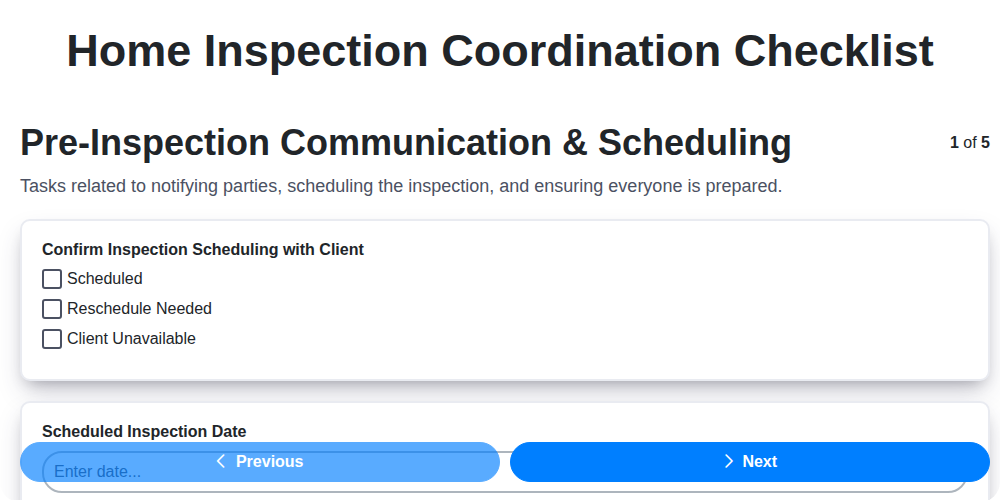
Stress-Free Inspections: Your Home Inspection Coordination Checklist Template
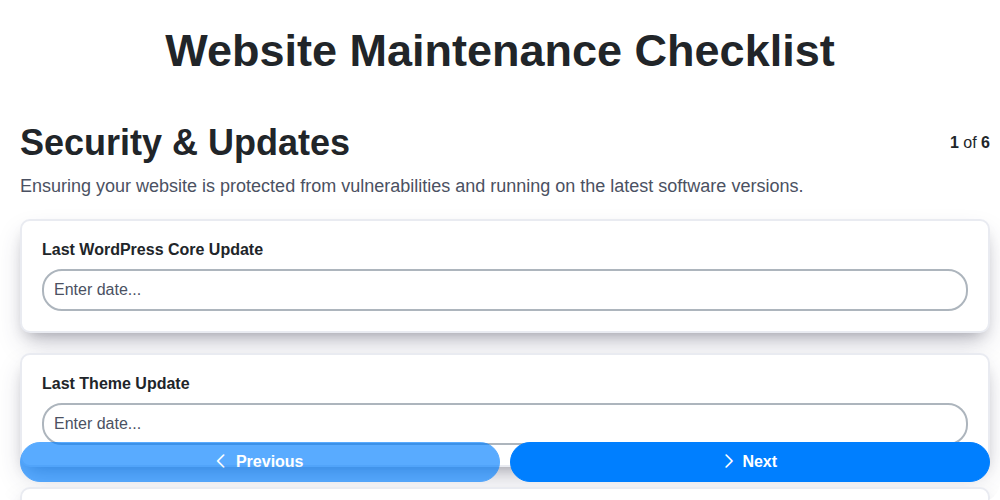
The Ultimate Website Maintenance Checklist Template
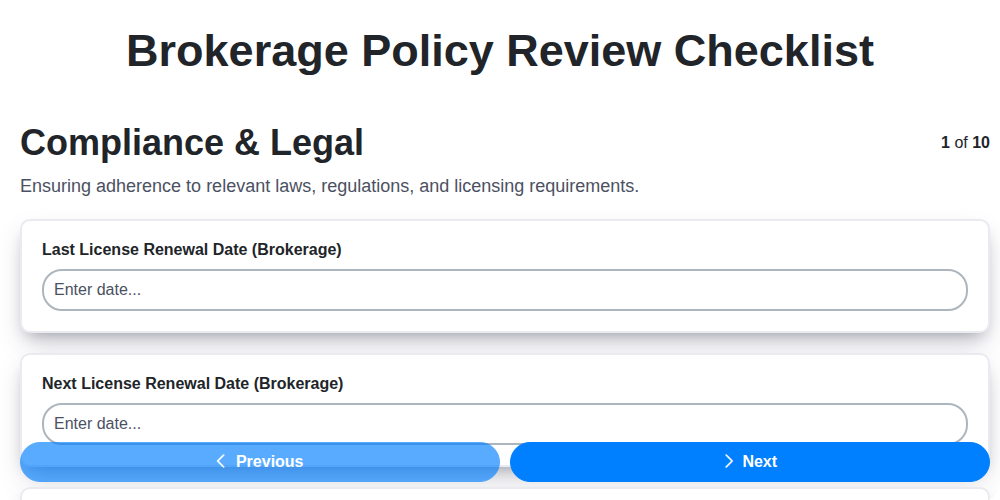
10 Essential Checks: Your Brokerage Policy Review Checklist
The Ultimate Office Opening/Closing Checklist Template
Your Ultimate AML Compliance Checklist Template
Rent Collection Checklist Template: Your Landlord's Guide
Your Complete Flood Zone Disclosure Checklist Template
Fair Housing Training Checklist Template: Your Guide to Compliance
Need help with
Checklists?
Have a question? We're here to help. Please submit your inquiry, and we'll respond promptly.