Seasonal Vehicle Inspection Workflow
Published: 06/18/2026 9:00 PM Updated: 06/19/2026 12:29 PM
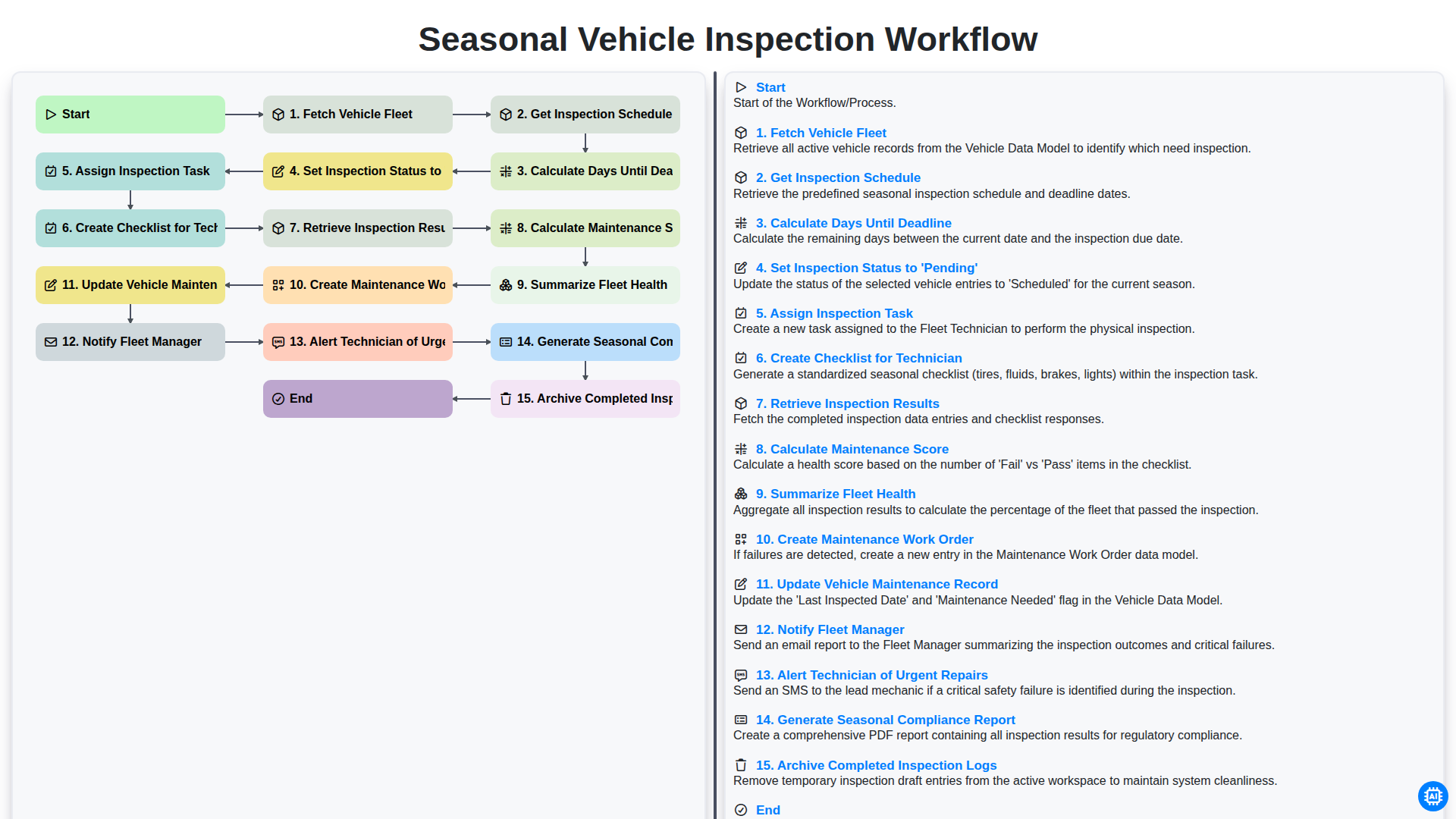
Table of Contents
- Introduction to Seasonal Vehicle Inspections
- Step 1: Initial Fleet Assessment and Scheduling
- Step 2: Prioritizing Inspections via Deadline Calculation
- Step 3: Task Assignment and Technician Readiness
- Step 4: Executing the Inspection Checklist
- Step 5: Data Retrieval and Performance Scoring
- Step 6: Fleet Health Analysis and Maintenance Planning
- Step 7: Post-Inspection Documentation and Compliance
- Step 8: Archiving and Continuous Improvement
- Resources & Links
TLDR: Streamline your fleet maintenance with this automated Seasonal Vehicle Inspection Workflow, designed to manage the entire inspection lifecycle-from scheduling and technician task assignment to calculating maintenance scores and generating compliance reports-ensuring your fleet remains safe, compliant, and road-ready.
Introduction to Seasonal Vehicle Inspections
As the seasons change, the physical demands on a vehicle fleet undergo a significant transformation. From the blistering heat of summer to the corrosive salt and freezing temperatures of winter, environmental shifts can accelerate wear and tear on critical components, leading to unforeseen breakdowns and costly downtime. Managing a fleet effectively requires more than just reactive repairs; it demands a proactive, systematic approach to maintenance.
A Seasonal Vehicle Inspection Workflow serves as your first line of defense against these environmental challenges. Rather than relying on memory or manual spreadsheets, a structured workflow ensures that every vehicle in your fleet undergoes a standardized evaluation at the precise moment it is most needed. By implementing a repeatable, automated process, you can transition from a fix-it-when-it-breaks mentality to a streamlined, predictive maintenance strategy. This approach not only extends the lifespan of your assets but also ensures driver safety and maintains regulatory compliance across your entire operation.
Step 1: Initial Fleet Assessment and Scheduling
The foundation of an effective seasonal inspection strategy lies in proactive organization rather than reactive troubleshooting. The process begins with Fetching the Vehicle Fleet, where a comprehensive inventory of all assets is consolidated into a single, centralized view. Once the fleet is identified, the system performs the critical task of Getting the Inspection Schedule, aligning each vehicle with its specific seasonal requirements.
To ensure no deadline is overlooked, the workflow automatically performs a Calculate Days Until Deadline function, providing a real-time countdown for every asset. This predictive approach allows the system to transition the Inspection Status to 'Pending' well in advance of any overdue dates. By establishing this baseline, fleet managers can move from a state of uncertainty to a structured, data-driven roadmap, ensuring that every vehicle is accounted for before the first wrench is even turned.
Step 2: Prioritizing Inspections via Deadline Calculation
Once the inspection schedule is retrieved, the system moves beyond mere scheduling to active prioritization. The core of this stage involves the Calculate Days Until Deadline function, which automatically determines the time remaining before each vehicle's compliance or safety window expires.
By calculating the delta between the current date and the inspection deadline, the workflow can intelligently Set Inspection Status to 'Pending' and prioritize vehicles that are nearing critical dates. This automated calculation prevents deadline fatigue and ensures that the fleet manager isn't just looking at a static list, but a dynamic, risk-based queue. By identifying which vehicles are most urgent, the system can trigger the next phase of the workflow-Assign Inspection Task-to the right personnel, ensuring that high-priority assets are never overlooked.
Step 3: Task Assignment and Technician Readiness
Once the inspection schedule is finalized and the deadlines are calculated, the workflow transitions from planning to action. The next critical phase involves Assigning Inspection Tasks to the appropriate personnel. This isn't just about handing out assignments; it's about ensuring that the right technician is matched with the right vehicle based on their expertise and current workload.
To ensure nothing is missed during the physical inspection, the system automatically Creates a Checklist for the Technician. This digital, step-by-step guide is customized based on the specific vehicle type and the seasonal requirements of the upcoming period. By providing a structured checklist, the workflow eliminates guesswork, ensures standardized inspection quality across the entire fleet, and allows technicians to focus entirely on identifying potential mechanical or safety issues. This stage bridges the gap between administrative scheduling and on-the-ground execution, setting the stage for a thorough and error-free inspection process.
Step 4: Executing the Inspection Checklist
Once the inspection task has been assigned and the technician has been notified, the core of the workflow begins with the execution of the customized checklist. This stage is where the digital workflow transforms into actionable data. Using the pre-generated checklist-tailored specifically to the seasonal requirements and the vehicle's specific make and model-the technician performs a systematic physical assessment of the fleet.
During this phase, the technician moves through each line item, documenting findings in real-time via their mobile device. This includes checking for seasonal-specific wear, such as tire tread depth for winter preparations, fluid levels, brake pad thickness, and battery health. Because the checklist is integrated directly into the workflow, any identified discrepancies are immediately captured with photos or notes, ensuring that the transition from Inspection to Results is seamless and eliminates the risk of manual data entry errors.
Step 5: Data Retrieval and Performance Scoring
Once the inspection is complete, the workflow transitions from data collection to actionable intelligence. The system begins by performing the Retrieve Inspection Results step, pulling all data points recorded by the technician directly from the digital checklist. This ensures that every observation, from tire tread depth to fluid levels, is instantly digitized and available for analysis.
With the raw data in hand, the system executes two critical analytical functions: Calculate Maintenance Score and Summarize Fleet Health. By applying predefined algorithms to the inspection findings, the workflow generates a quantitative maintenance score for each vehicle, providing a standardized metric to compare the condition of different assets. Simultaneously, the system aggregates this data to provide a high-level summary of the entire fleet's health, allowing stakeholders to identify systemic issues-such as a recurring brake failure pattern across multiple vehicles-at a single glance. This stage transforms simple observations into high-level insights, turning raw inspection logs into a strategic roadmap for fleet longevity.
Step 6: Fleet Health Analysis and Maintenance Planning
Once the inspections are complete, the workflow shifts from data collection to actionable intelligence. This phase is where raw inspection data is transformed into strategic decision-making power through three critical sub-processes:
- Calculate Maintenance Score & Summarize Fleet Health: The system automatically processes the retrieved inspection results to calculate a comprehensive maintenance score for each vehicle. By aggregating these scores, the workflow generates a high-level summary of your entire fleet's health, allowing you to identify whether your fleet is operating at peak efficiency or if systemic issues are emerging across specific vehicle models.
- Automated Maintenance Execution: To ensure no critical issue is overlooked, the workflow automatically triggers the creation of Maintenance Work Orders for any vehicle that fails to meet the required safety or performance threshold. Simultaneously, the system updates the Vehicle Maintenance Record, ensuring a continuous, digital paper trail for every repair and inspection.
- Proactive Alerting & Compliance: Communication is automated to eliminate manual oversight. The system will Notify the Fleet Manager of the overall fleet status and immediately Alert Technicians regarding any urgent repairs that require immediate intervention. Finally, the process concludes by generating a Seasonal Compliance Report and Archiving Completed Inspection Logs, ensuring you are always audit-ready and your historical data is securely preserved.
Step 7: Post-Inspection Documentation and Compliance
Once the physical inspection is complete, the workflow transitions from manual labor to data management and long-term oversight. The final phase of the process ensures that the insights gained on the road are converted into actionable intelligence and permanent records.
This stage begins with the automated process to Retrieve Inspection Results from the technician's mobile device, followed by a data-driven analysis to Calculate a Maintenance Score for each vehicle. By analyzing these results, the system can Summarize Fleet Health, providing a high-level overview of which vehicles are performing optimally and which are nearing a critical failure point.
To close the loop on identified issues, the workflow will automatically Create a Maintenance Work Order for any discrepancies found, ensuring that no defect is overlooked. Simultaneously, the system will Update the Vehicle Maintenance Record to maintain a continuous,-auditable history of the asset.
Communication is critical during this phase; the system will Notify the Fleet Manager of the overall results and specifically Alert Technicians of Urgent Repairs that require immediate intervention. To ensure long-term regulatory readiness, the workflow will Generate a Seasonal Compliance Report and finally Archive Completed Inspection Logs, creating a secure, searchable repository for future audits and lifecycle management.
Step 8: Archiving and Continuous Improvement
The final stage of the seasonal inspection workflow is just as critical as the initial inspection itself. Once the maintenance scores have been calculated and the necessary work orders have been issued, the process moves into Archive Completed Inspection Logs. This step ensures that every piece of data-from the technician's checklist to the final compliance report-is securely stored in a centralized, searchable database. Proper archiving is not merely about housekeeping; it is about building a historical roadmap of your fleet's performance.
By preserving these logs, you create a digital paper trail that is invaluable for long-term asset management. This historical data allows you to identify recurring patterns, such as specific vehicle models that frequently require the same repairs, enabling you to transition from reactive maintenance to a more proactive, predictive strategy. Ultimately, this stage closes the loop on the current cycle while providing the analytical foundation needed to refine your inspection intervals and optimize your fleet's operational lifespan.
Resources & Links
- Fleet Management Association (FMA): Industry-standard resources for fleet management best practices and operational excellence.
- OSHA Compliance Guidelines: Safety and regulatory guidelines for vehicle inspections and workplace maintenance standards.
- FMCSA (Federal Motor Carrier Safety Administration): Information regarding vehicle inspection regulations and compliance requirements for commercial fleets.
- Fleet Maintenance Software Solutions: Tools and software resources for automating inspection schedules, checklists, and maintenance workflows.
- Automotive Logistics Magazine: In-depth articles on seasonal maintenance trends and logistics optimization strategies.
- Predictive Maintenance Analytics: Resources on using data-driven scores and health summaries to predict vehicle downtime.
Found this Article helpful?
Comments
There are no comments yet. Be the first to add one!
Auto Repair Shop Management Solution Demo
Level up your auto repair shop & boost profits! ChecklistGuro simplifies job tracking, inventory management, and customer communication. Improve efficiency, reduce errors, & enhance customer satisfaction. Manage it all with our Work OS.
Related Articles
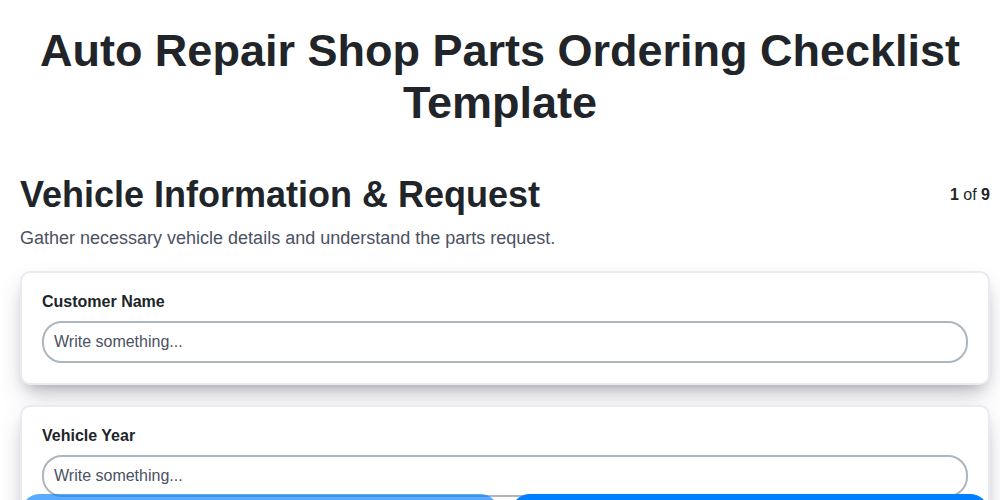
Streamline Your Shop: The Ultimate Auto Repair Parts Ordering Checklist Template
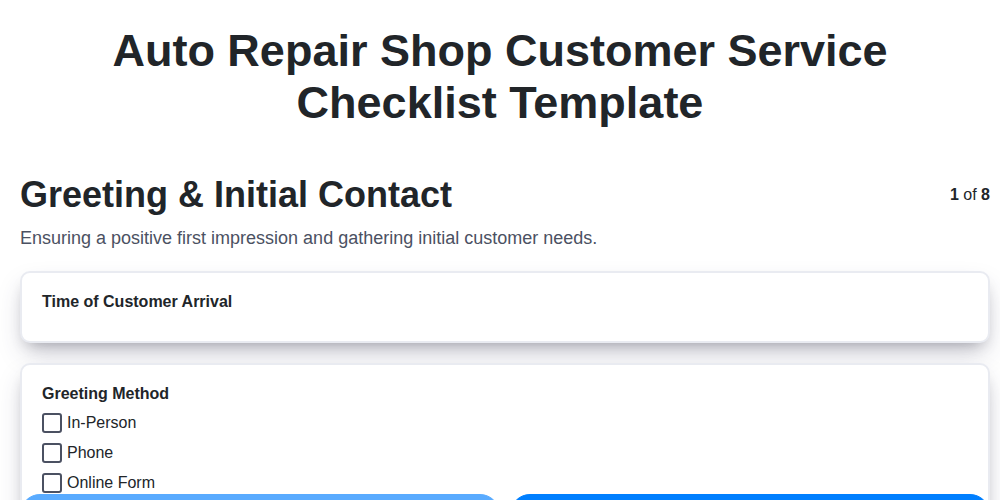
Level Up Your Auto Repair: The Ultimate Customer Service Checklist Template
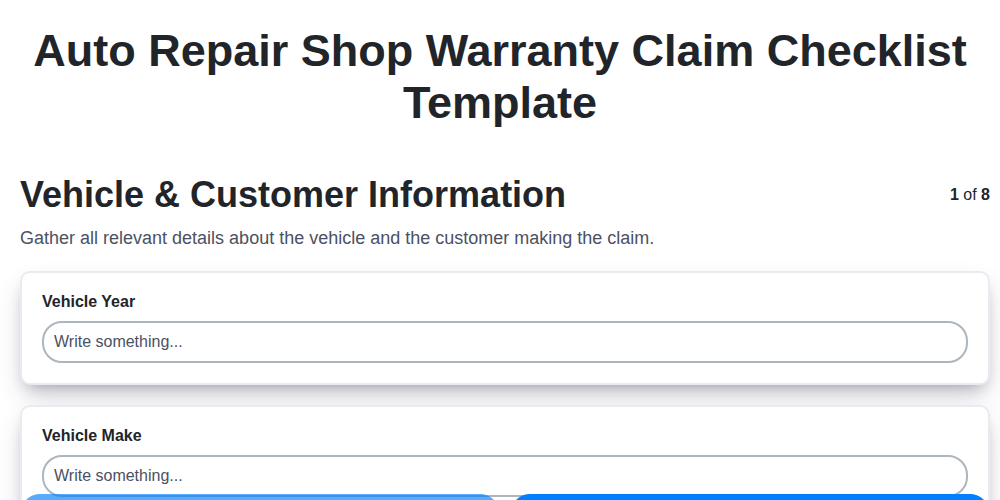
Mastering Warranty Claims: Your Auto Repair Shop Checklist Template
Auto Repair Shop Digital Marketing Checklist Template
Auto Repair Shop Checklist Template: Operations & Compliance
The Ultimate Auto Repair Shop Employee Training Checklist Template
Your Ultimate Guide to Auto Repair Shop Environmental Compliance: A Checklist Template
The Ultimate Vehicle Return Checklist for Auto Repair Shops
We can do it Together
Need help with
Checklists?
Have a question? We're here to help. Please submit your inquiry, and we'll respond promptly.