The Ultimate Site Mobilization Readiness Checklist Template
Published: 09/01/2025 Updated: 09/15/2026
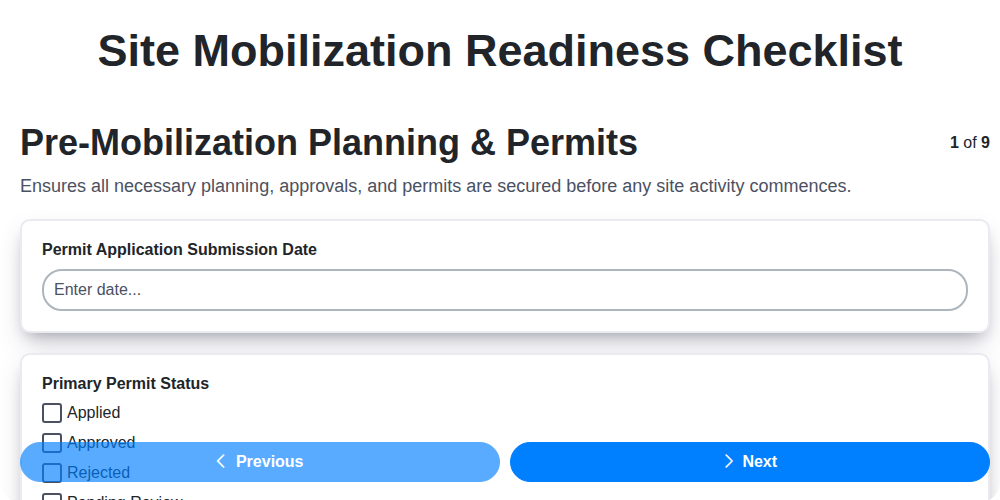
Table of Contents
- Why a Site Mobilization Checklist is Non-Negotiable
- Understanding the Scope of Site Mobilization
- The Ultimate Checklist: Your Step-by-Step Guide
- 1. Planning & Permits: Laying the Legal Foundation
- 2. Site Access & Security: Protecting Your Assets
- 3. Logistics: Staging, Utilities & Infrastructure
- 4. Environmental & Safety Protocols
- 5. Communication & Coordination: Keeping Everyone on the Same Page
- 6. Resource Management: Equipment & Personnel
- 7. Documentation & Reporting: Tracking Progress & Ensuring Accountability
- Download Your Free Site Mobilization Checklist Template
- Resources & Links
TLDR: Starting a construction project? This checklist template covers everything from permits and security to utilities and safety, ensuring a smooth and efficient site mobilization. Download it to avoid costly delays, safety hazards, and keep your project on track!
Why a Site Mobilization Checklist is Non-Negotiable
Think of your project's success as a building - you wouldn't start laying bricks without a solid foundation, would you? A meticulous site mobilization is that foundation. Skipping or shortcutting this initial phase isn't just risky; it's a recipe for disaster. Let's be clear: a site mobilization checklist isn't just good practice; it's essential.
The consequences of neglecting this crucial step are far-reaching. We're talking about potential project delays - and delays cost money. Significant budget overruns are almost guaranteed when unexpected issues arise from inadequate preparation. Safety incidents become significantly more likely when site conditions aren't properly assessed and mitigated. Furthermore, strained relationships with local communities and regulatory bodies can develop when proper protocols are ignored.
Beyond the immediate financial and logistical impacts, a rushed mobilization can damage your company's reputation. A project known for delays, safety concerns, or environmental impact reflects poorly on your team.
Ultimately, investing the time and resources upfront to create and diligently follow a site mobilization checklist is a preventative measure that safeguards your project's success, protects your team, and preserves your company's standing. It's not an expense; it's an investment in a smoother, safer, and more profitable outcome.
Understanding the Scope of Site Mobilization
Site mobilization isn't simply about getting equipment onto a plot of land; it's a multifaceted process encompassing a range of activities designed to establish a safe, efficient, and compliant working environment. The scope extends far beyond initial setup and varies significantly depending on the project's size, complexity, and surrounding environment.
At its core, site mobilization addresses the logistical, environmental, and regulatory frameworks needed to support construction or development activities. This includes everything from securing necessary permits and establishing utilities to managing waste, ensuring site security, and establishing clear communication protocols. Consider these layers of responsibility:
- Environmental Considerations: This goes beyond basic erosion control. It requires assessing potential impacts on local flora and fauna, managing stormwater runoff, and ensuring compliance with environmental regulations.
- Logistical Complexity: Think about material delivery, equipment staging, worker access, and traffic management - all needing careful planning to avoid delays and ensure safety.
- Regulatory Compliance: Meeting all local, state, and federal regulations is paramount, spanning everything from safety protocols to environmental protection.
- Stakeholder Management: Engaging with neighbors, local authorities, and other stakeholders proactively helps build positive relationships and minimizes potential conflicts.
Ultimately, understanding this wide-ranging scope helps you appreciate the importance of a thorough mobilization readiness checklist and avoids potentially costly surprises down the line. It's a crucial investment in project success.
The Ultimate Checklist: Your Step-by-Step Guide
Let's move beyond the overview and into the nitty-gritty. This isn't just a list of things to consider; it's a step-by-step guide you can use to ensure your site mobilization is on track. We've broken down each of the ten key areas into specific, actionable steps. Remember to tailor this checklist to your specific project requirements - this is a template, not a rigid rulebook.
1. Pre-Mobilization Planning & Permits: Laying the Legal Foundation
- Confirm Permit Status: Verify expiration dates and pending approvals for all required permits (building, environmental, access, etc.).
- Review Regulatory Updates: Ensure all activities align with current local, state, and federal regulations.
- Stakeholder Communication Plan: Document initial communications with neighbors and local authorities, outlining project scope and potential impacts.
- Geotechnical Report Review: Thoroughly review the geotechnical report and address any recommendations for site preparation.
2. Site Access & Security: Controlling Entry & Protecting Assets
- Road Assessment & Reinforcement: Inspect access roads and implement reinforcement measures as needed.
- Perimeter Fencing Installation: Install robust perimeter fencing and gates, clearly marking property lines.
- Security Personnel Contract (if applicable): Secure contracts for on-site security personnel and define their responsibilities.
- Visitor Registration System: Implement a system for logging all site visitors, including purpose and duration of visit.
3. Site Layout & Staging Areas: Mapping the Workflow
- Traffic Management Plan Development: Create a detailed traffic management plan, including designated routes and speed limits.
- Staging Area Design & Marking: Clearly define and mark material and equipment staging areas.
- Temporary Facility Setup (Offices, Restrooms): Secure and setup temporary facilities for office space, restrooms, and worker breaks.
- Delivery Route Optimization: Plan and communicate optimized delivery routes to minimize disruption and congestion.
4. Utilities & Services: Powering the Operation
- Temporary Power Agreement: Secure a contract for temporary power supply and confirm installation schedule.
- Water Source Connection: Establish a reliable water source and connection for construction activities.
- Sanitary Facility Rental/Installation: Rent or install adequate sanitary facilities, including toilets and handwashing stations.
- Waste Management Plan Implementation: Implement a comprehensive waste management plan, including recycling and disposal procedures.
5. Environmental Protection & Compliance: Safeguarding the Ecosystem
- Erosion & Sediment Control Measures: Implement erosion and sediment control measures, such as silt fences and hay bales.
- Stormwater Pollution Prevention Plan (SWPPP): Review and adhere to the SWPPP requirements.
- Protected Species Survey (if applicable): Conduct a survey for protected species and implement appropriate mitigation measures.
- Spill Prevention & Response Plan: Develop and communicate a spill prevention and response plan.
6. Construction Safety: Prioritizing Well-being
- Site Safety Plan Development: Create a detailed site safety plan that covers all potential hazards.
- Toolbox Talks Schedule: Schedule regular toolbox talks to reinforce safety procedures.
- PPE Requirement Communication: Clearly communicate required personal protective equipment (PPE) for all site personnel.
- Emergency Contact List Distribution: Distribute an emergency contact list to all site personnel.
7. Equipment & Material Delivery Coordination:
- Delivery Schedules with Vendors: Confirm delivery schedules with all vendors and contractors.
- Equipment Inspection Protocol: Establish a protocol for inspecting all incoming equipment for damage or defects.
- Material Storage Plan: Develop a plan for storing materials securely and protecting them from weather damage.
8. Communication & Team Briefing:
- Kick-off Meeting: Schedule and conduct a kick-off meeting with all key personnel.
- Communication Channels Defined: Establish clear communication channels for daily updates and issue resolution.
9. Documentation & Record Keeping:
- Pre-Mobilization Photos: Take before photos of the site for documentation purposes.
- Daily Log Template: Create a daily log template for tracking progress and identifying potential issues.
10. Contingency Planning:
- Weather Contingency Plan: Develop a plan for dealing with inclement weather.
- Supply Chain Disruption Protocol: Establish a protocol for addressing potential supply chain disruptions.
1. Planning & Permits: Laying the Legal Foundation
Before a single shovel hits the ground, meticulous planning and obtaining the correct permits are non-negotiable. This stage is the legal bedrock of your project, and overlooking it can lead to costly delays, legal challenges, and even project shutdowns.
Beyond the Obvious: Understanding Permit Complexity
It's not enough to simply know you need permits; you need to understand which permits are required, the application process for each, and the timelines involved. Requirements vary dramatically depending on project type, location, and potential environmental impact. Common permits you might encounter include:
- Building Permits: Essential for any new construction or significant alterations.
- Environmental Permits: Covering aspects like stormwater management, air quality, and wetland impacts.
- Access Permits: Granting permission for access roads and site entrances.
- Utility Connection Permits: Authorizing connections to water, sewer, and electricity.
- Zoning Approvals: Confirming compliance with local zoning regulations.
Proactive Planning is Key:
- Early Consultation: Engage with local authorities early in the planning process. This proactive approach can clarify requirements, identify potential roadblocks, and build rapport.
- Thorough Site Investigations: Geotechnical and environmental site assessments are critical for accurately predicting potential issues and tailoring your permit applications.
- Detailed Plans: Submit well-prepared and detailed construction plans that clearly demonstrate compliance with all applicable regulations.
- Contingency Planning: Build buffer time into your schedule to account for potential permit delays.
- Expert Assistance: Consider engaging a permitting specialist or consultant to navigate the complex regulatory landscape.
Don't underestimate the power of proper planning and permits! It's the foundation for a successful project - saving you time, money, and headaches down the road.
2. Site Access & Security: Protecting Your Assets
Your construction site represents a significant investment - in materials, equipment, and labor. Protecting those assets is paramount from the moment mobilization begins. A robust Site Access & Security plan isn't just about preventing theft; it's about maintaining productivity and ensuring the safety of everyone on site.
Physical Barriers & Controlled Entry:
The first line of defense is physical security. This starts with a clearly defined perimeter secured by robust fencing - chain-link, welded mesh, or temporary barriers, depending on the site's needs. Controlled access points should be strategically placed and manned during operational hours. Implement a visitor management system with sign-in/sign-out procedures and proper identification checks. Consider utilizing security personnel, particularly during off-hours and for high-value materials.
Traffic Management is Key:
Uncontrolled traffic can be a major hazard and a security vulnerability. A well-defined traffic management plan dictates vehicle routes, speeds, and designated loading/unloading zones. Clearly marked signage and flaggers are essential to direct traffic and prevent accidents. This not only protects personnel but also reduces the risk of damage to equipment and materials.
Technology to Enhance Security:
While physical barriers are critical, technology can amplify your security efforts. Consider these options:
- CCTV Cameras: Strategic placement of surveillance cameras provides visual monitoring and deter potential intruders.
- Perimeter Alarms: Motion sensors and intrusion alarms provide immediate alerts to unauthorized access.
- Access Control Systems: Key card or biometric access systems can restrict entry to authorized personnel only.
- GPS Tracking: Utilize GPS tracking on high-value equipment and vehicles.
Regular Security Audits:
Don't set your security plan and forget about it. Conduct regular security audits to identify vulnerabilities and ensure the plan remains effective. Review access logs, inspect fencing and barriers, and solicit feedback from site personnel. Adapting your security measures to evolving threats is key to maintaining a secure and productive construction site.
3. Logistics: Staging, Utilities & Infrastructure
Logistics is the backbone of any successful site mobilization. Without a meticulous plan for material staging, reliable utilities, and robust infrastructure, your project is setting itself up for delays and inefficiencies. This section dives into the critical elements of getting everything into place before the real construction begins.
Staging: The Art of Organization
Think of your staging areas as the project's temporary warehouse. Strategic placement is paramount. Consider:
- Proximity to Work Zones: Minimize travel distances for frequently used materials.
- Ground Conditions: Ensure stable ground to prevent material damage.
- Security: Protect materials from theft and weather damage.
- Traffic Flow: Designate clear routes for material delivery and movement around the site. Consider using a numbered system for material location to enhance efficiency.
- Inventory Management: Implement a system (even a simple one) for tracking material quantities and preventing shortages.
Utilities: Powering Progress
Temporary utilities are your project's lifeblood. Don't underestimate the importance of planning for:
- Power: Secure sufficient temporary power generation or connection. Account for potential peak demands.
- Water: Arrange for a reliable water supply, considering both potable and non-potable needs (dust suppression, concrete mixing).
- Sanitation: Adequate and well-maintained restroom facilities are crucial for worker morale and productivity.
- Waste Management: Implement a comprehensive waste management plan, including recycling and disposal.
- Connectivity: Consider temporary internet and communication infrastructure for site management and communication.
Infrastructure: Setting the Foundation
Beyond materials and utilities, robust site infrastructure is essential:
- Access Roads & Pathways: Ensure safe and efficient access for vehicles and pedestrians. Reinforce roads as needed.
- Temporary Site Offices & Facilities: Provide comfortable and functional workspaces for project managers, supervisors, and administrative staff.
- Security Fencing & Lighting: Secure the site perimeter and deter unauthorized access, particularly during nighttime hours.
- Erosion & Sediment Control: Implement essential measures to protect surrounding areas from runoff and soil erosion.
4. Environmental & Safety Protocols
Construction activities inherently carry environmental and safety risks. Proactive planning and strict adherence to protocols are vital to protect the surrounding ecosystem, worker wellbeing, and project reputation. Here's how to build those cornerstones:
Environmental Protection: Beyond Compliance
It's not just about meeting the bare minimum regulatory requirements - it's about demonstrating a commitment to responsible environmental stewardship. This includes:
- Stormwater Management: Implement erosion and sediment control measures before ground disturbance begins. Silt fences, hay bales, and temporary sediment basins are often essential. Regularly inspect and maintain these controls.
- Hazardous Materials Handling: Develop a comprehensive plan for identifying, storing, and disposing of hazardous materials. This encompasses everything from paints and solvents to fuels and oils. Ensure proper labeling, containment, and spill response procedures are in place.
- Waste Reduction & Recycling: Prioritize waste reduction through careful material planning and ordering. Establish a recycling program to divert construction debris from landfills.
- Noise and Dust Mitigation: Employ techniques to minimize noise and dust pollution, such as water trucks, dust screens, and noise barriers. Be mindful of nearby residents and businesses.
- Wildlife Protection: Conduct a pre-construction survey to identify potential wildlife habitats. Implement measures to protect sensitive species and their habitats, such as avoiding disturbance during breeding seasons.
Safety First: A Culture of Prevention
A robust safety program fosters a culture where every team member feels empowered to identify and report hazards. Key elements include:
- Comprehensive Site Safety Plan: This document outlines safety procedures, roles, and responsibilities. Review it with all personnel and update it regularly.
- Mandatory Safety Training: Provide thorough training on site-specific hazards, equipment operation, and emergency procedures.
- Personal Protective Equipment (PPE): Enforce the use of appropriate PPE at all times, including hard hats, safety glasses, high-visibility vests, and appropriate footwear.
- Regular Safety Inspections: Conduct frequent site inspections to identify and correct potential hazards.
- Near-Miss Reporting: Encourage and reward the reporting of near misses to proactively prevent accidents.
- Emergency Response Plan: Develop and regularly practice an emergency response plan that covers potential scenarios such as fires, injuries, and natural disasters.
5. Communication & Coordination: Keeping Everyone on the Same Page
Effective communication and seamless coordination are the lifeblood of any successful construction project, and the mobilization phase is where those foundations are truly laid. Miscommunication during this critical period can lead to delays, rework, and ultimately, increased costs. It's not enough to have a communication plan; it needs to be actively implemented and consistently reinforced.
So, what does a robust communication and coordination strategy for site mobilization look like? It starts with clearly defined roles and responsibilities. Who is responsible for what? Who needs to be kept in the loop? A comprehensive contact list, readily accessible to everyone on site, is a vital tool.
Beyond just knowing who to contact, establishing how communication will flow is equally important. Will daily briefings be held? What's the preferred method for urgent updates - phone call, text message, email? Consider using collaborative project management software to centralize communication, track progress, and share documents.
Don't underestimate the power of regular, short meetings - a quick 15-minute huddle each morning can be incredibly effective in aligning everyone's efforts and proactively addressing potential roadblocks. Remember to document key decisions and action items following these meetings and distribute them promptly.
Finally, encourage open and honest feedback from all team members. Create a culture where concerns can be raised without fear of reprisal. A well-informed team is a productive team, and proactive communication is your best defense against unforeseen challenges during site mobilization.
6. Resource Management: Equipment & Personnel
Resource management isn't just about having the right equipment and people; it's about strategically deploying them for maximum efficiency and minimal downtime. This section focuses on ensuring both your machinery and your workforce are ready to go, when and where they're needed.
Equipment Readiness - More Than Just Availability
Simply confirming that your excavator, dump trucks, and other essential machinery exist isn't enough. A true equipment readiness plan encompasses several key considerations:
- Pre-Delivery Inspection & Testing: Prior to delivery to the site, equipment should undergo a thorough inspection and operational test to identify and rectify any issues before they impact your schedule.
- Maintenance Schedules: Implement a robust maintenance schedule, including preventative maintenance tasks, to minimize breakdowns and extend the life of your equipment. Keep detailed records of all maintenance activities.
- Fuel and Lubricant Supply: Secure a reliable supply of fuel and lubricants. Consider onsite storage if feasible, along with monitoring systems to avoid shortages.
- Operator Training & Certification: Ensure all equipment operators are properly trained, certified, and familiar with the specific machines they're operating.
Personnel Power - Right People, Right Roles
Your team is just as vital as your equipment. Effective personnel management requires more than just hiring skilled individuals; it's about strategically assigning roles, fostering collaboration, and proactively addressing potential workforce challenges:
- Skillset Mapping: Conduct a thorough assessment of the skills available within your workforce and ensure proper role assignments based on expertise.
- Labor Coordination: Establish a clear chain of command and communication protocols to avoid confusion and ensure efficient workflow.
- Contingency Planning: Develop backup plans for critical roles in case of absence or unforeseen circumstances. Consider cross-training personnel to provide flexibility.
- Workforce Scheduling: Implement a reliable scheduling system that optimizes resource allocation and minimizes idle time.
A proactive approach to resource management - both equipment and personnel - is the key to a successful and timely site mobilization.
7. Documentation & Reporting: Tracking Progress & Ensuring Accountability
Effective documentation isn't just about ticking boxes; it's the backbone of a successful site mobilization. Consistent, detailed records provide a clear picture of progress, identify potential roadblocks early, and ensure accountability across all parties involved.
Start by creating a comprehensive Site Mobilization Plan document - this should outline all tasks, timelines, and responsible parties. Beyond this master plan, consider these key documentation practices:
- Daily Site Logs: These should record weather conditions, labor hours, equipment usage, deliveries received, any incidents or near misses, and a brief summary of work completed.
- Progress Photos: Regular photographic evidence is invaluable for tracking physical progress and resolving disputes later on.
- Delivery Receipts & Invoices: Maintain accurate records of all materials received, including dates, quantities, and supplier information.
- Meeting Minutes: Document key decisions, action items, and responsibilities from all coordination meetings.
- Permit & Approval Tracking: Keep a centralized record of all permits and approvals, including expiration dates and renewal requirements.
- Change Order Management: Document any deviations from the original plan with appropriate change orders, outlining the reason for the change, the cost impact, and approval signatures.
Regular reporting, both internally and to stakeholders, should be tied directly to these documentation practices. Establish a reporting schedule - weekly or bi-weekly is common - and clearly define key performance indicators (KPIs) to monitor. Simple visual dashboards summarizing progress against the original plan can be powerful tools for keeping everyone informed and on track. Remember, transparency and open communication are critical for building trust and maintaining accountability.
Download Your Free Site Mobilization Checklist Template
Ready to take the guesswork out of site mobilization? We've created a comprehensive, downloadable checklist template that goes beyond the high-level overview in this article. This isn't just a basic list; it's a detailed resource designed to help you systematically address every critical step, from permit acquisition to waste management.
Our template includes:
- Detailed task breakdowns: More granular steps within each mobilization area.
- Checkboxes for easy tracking: Keep tabs on progress and identify outstanding items.
- Space for notes and observations: Document key decisions and potential issues.
- Responsibility assignments: Clearly define who is accountable for each task.
Resources & Links
- Occupational Safety and Health Administration (OSHA): The primary federal agency responsible for workplace safety. Provides regulations, guidance, and resources related to safety protocols, hazard communication, and site safety planning crucial for site mobilization. Essential for understanding legal requirements.
- Environmental Protection Agency (EPA): Offers information on environmental regulations and permits required for site mobilization activities. Covers topics like stormwater management, hazardous waste handling, and pollution prevention. Vital for minimizing environmental impact.
- Federal Emergency Management Agency (FEMA): Provides resources on disaster preparedness and emergency response, which are relevant to site mobilization, particularly in areas prone to natural disasters. Offers guidance on risk assessment and mitigation planning.
- U.S. Department of Transportation (DOT): Offers guidelines and regulations relating to transportation of materials to and from the site. Important for planning logistics, road closures, and ensuring safe transport of equipment and supplies. Specifics vary by state and local regulations.
- American Society of Civil Engineers (ASCE): A professional society for engineers, offering standards, publications, and best practices related to construction and infrastructure projects. Can be a valuable resource for technical guidance and ensuring quality control.
- Associated General Contractors of America (AGC): A construction industry trade association providing resources, advocacy, and training related to construction management and site mobilization. Often has model documents and best practices.
- International Organization for Standardization (ISO): Provides international standards for quality management (ISO 9001) and environmental management (ISO 14001). While not directly site mobilization checklists, implementing these frameworks demonstrates a commitment to best practices.
- National Institute of Standards and Technology (NIST): Offers standards and guidance related to construction safety and security, including best practices for risk management and cybersecurity. Relevant for protecting sensitive project data and physical assets.
- ConstruSafe: Platform offering digital safety checklists and documentation specifically designed for construction sites. Can help streamline the site mobilization process and ensure compliance.
- Planroom: Provides construction project management tools and document distribution. Useful for managing permits, contracts, and other vital documents associated with site mobilization.
Frequently Asked Questions
What is site mobilization readiness and why is it important?
Site mobilization readiness refers to the state of being fully prepared to start construction or other activities at a project site. It's crucial because it minimizes delays, reduces costs, ensures safety, and sets the project up for overall success. A lack of readiness can lead to expensive rework, schedule overruns, and even safety incidents.
Who is this checklist template for?
This template is designed for project managers, construction supervisors, site engineers, and anyone responsible for preparing a construction site for work. It's beneficial for both large and small-scale projects.
What types of elements are covered in the checklist template?
The checklist covers a wide range of elements including site access, utilities, permits and licenses, safety protocols, site security, equipment readiness, materials storage, communication plans, and more. It aims to be a comprehensive guide to all essential preparations.
Is the checklist customizable? Can I add or remove items?
Yes, absolutely! The template is designed to be customizable. You can easily add, remove, or modify items to suit the specific requirements of your project and location. We encourage tailoring it to your unique needs.
What does 'handover' mean in the context of this checklist?
'Handover' refers to the formal transfer of responsibility for a specific element or task to the relevant team or individual, confirming its completion and readiness for the next phase of work.
What should I do if I identify a task on the checklist that I'm unsure how to address?
We recommend consulting with experienced professionals such as site engineers, safety officers, or relevant subcontractors. The checklist is a guide; professional expertise is invaluable for addressing specific challenges.
Can I use this checklist for projects beyond construction, like event setup or temporary installations?
While primarily designed for construction sites, the principles and many items within the checklist can be adapted for other projects requiring site preparation, such as event setup, temporary installations, or environmental remediation. Adjust the items as needed to reflect the specific context.
Comments
There are no comments yet. Be the first to add one!
Construction Management Solution Demo
Build smarter, not harder! ChecklistGuro streamlines construction projects from planning to closeout. Manage tasks, inspections, safety protocols & more - all in one place. Reduce delays, improve communication, and deliver projects on time & on budget.
Related Articles
The Ultimate Concrete Vibration Checklist Template
Unlock Value: Your Free Value Engineering Checklist Template
The Ultimate HVAC Ductwork Installation Checklist Template

The Ultimate Rebar Placement Checklist Template
Your Concrete Mix Design Verification Checklist: A Step-by-Step Guide
Backfilling & Compaction Checklist: A Foundation's Best Friend
The Ultimate Concrete Delivery & Placement Checklist Template
Your Ultimate Stakeholder Communication Plan Checklist Template
Need help with
Construction?
Have a question? We're here to help. Please submit your inquiry, and we'll respond promptly.