MEP System Functional Testing Checklist Template: Your Complete Guide
Published: 09/02/2025 Updated: 04/03/2026
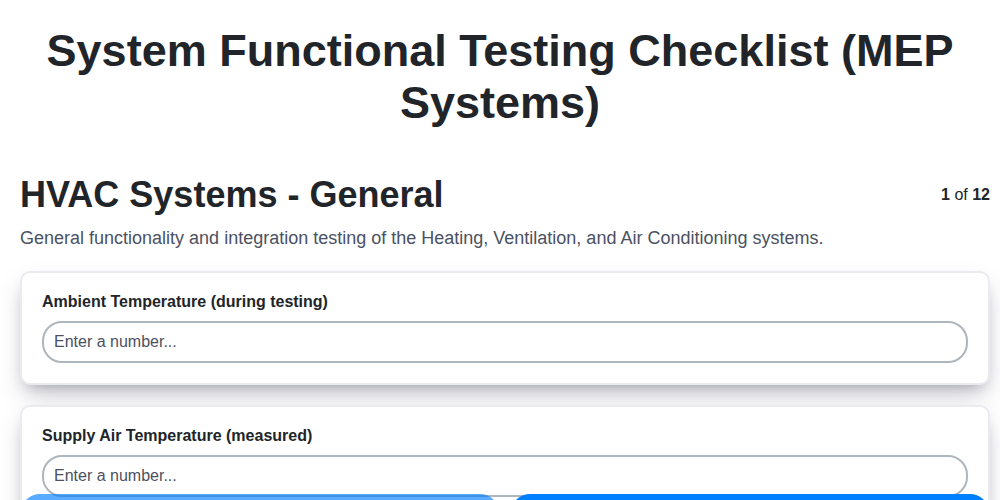
Table of Contents
- Introduction: Why Functional Testing Matters
- Understanding MEP Systems: A Quick Overview
- Essential Tools and Equipment for MEP Testing
- MEP System Functional Testing Checklist Template
- HVAC Systems: Detailed Testing Procedures
- Plumbing Systems: Ensuring Water Safety and Efficiency
- Electrical Systems: Power, Lighting, and Low Voltage Validation
- Building Automation System (BAS) Integration Checks
- Safety and Emergency Systems: Critical Performance Verification
- Commissioning and Performance Verification: Going Beyond Basic Checks
- Documentation and Reporting: Creating a Traceable Record
- Troubleshooting Common MEP Testing Issues
- Best Practices for Successful MEP Functional Testing
- Future Trends in MEP System Functional Testing
- Resources & Links
TLDR: This checklist template simplifies MEP system functional testing! It guides you through verifying everything from HVAC and plumbing to electrical and BAS integration, ensuring your building performs safely, efficiently, and according to design. Download the template and follow the instructions for a comprehensive testing process-no guesswork required!
Introduction: Why Functional Testing Matters
Functional testing isn't just a formality; it's the critical bridge between design intent and real-world performance. Imagine a beautifully designed building - impressive on paper, but plagued by uncomfortable temperatures, inefficient energy consumption, or, worst of all, critical safety system failures. That's where functional testing steps in. It's the process of verifying that each MEP system operates as intended, not just individually, but together, in a fully integrated building environment. By systematically validating these systems, we identify and rectify issues early, reducing costly rework, ensuring occupant comfort and safety, and optimizing long-term building efficiency. This proactive approach transforms potential problems into opportunities for improvement, ultimately delivering a building that not only meets expectations but exceeds them.
Understanding MEP Systems: A Quick Overview
MEP systems - Mechanical, Electrical, and Plumbing - are the backbone of any building, working together to provide a comfortable, safe, and functional environment. Let's break down each component:
Mechanical (HVAC): This encompasses heating, ventilation, and air conditioning. It's responsible for regulating temperature, humidity, and air quality, ensuring occupant comfort and energy efficiency. Think furnaces, chillers, air handling units, and ductwork.
Electrical: This system provides the power to run everything in the building, from lighting and appliances to security systems and elevators. It includes power distribution, lighting circuits, emergency power systems, and low-voltage controls.
Plumbing: More than just faucets and toilets, the plumbing system manages the distribution of water - both hot and cold - and the disposal of wastewater. It includes domestic water supply, sanitary drainage, storm drainage, and fire suppression systems.
Understanding how these systems interact is crucial to ensuring building performance and identifying potential issues during functional testing. A problem in one area can often impact the others, so a holistic approach to testing and maintenance is key.
Essential Tools and Equipment for MEP Testing
Effective MEP functional testing demands the right tools. Skimping here can lead to inaccurate results and compromised safety. Here's a breakdown of essential equipment, categorized by function. Keep in mind this isn't exhaustive - specific project needs will dictate further requirements.
1. Measurement & Diagnostics:
- Multimeters: For accurate voltage, current, and resistance measurements. Invest in a high-quality model with appropriate safety ratings.
- Clamp Meters: Streamline current measurement without disconnecting circuits.
- Pressure Gauges: Essential for testing water and air pressure in plumbing and HVAC systems. Differential pressure gauges are useful for airflow balancing.
- Sound Level Meters: Quantify noise levels during HVAC system testing.
- Light Meters (Foot Candles Meters): Measure lighting levels to verify compliance with design specifications.
- Thermal Imaging Camera: Identifies temperature variations that can indicate leaks, insulation issues, or equipment malfunctions.
- Infrared Thermometer: Quickly measure surface temperatures.
- Airflow Meters (Anemometers): Measure airflow rates in HVAC systems.
2. Testing & Simulation:
- Smoke Machines: Locate air leaks in ductwork and building envelopes.
- Pressure Testing Equipment: For leak testing of air ducts, water pipes, and building envelopes.
- Simulated Load Banks: Verify generator performance under realistic load conditions (especially important for emergency power systems).
- Building Automation System (BAS) Simulation Software: Allows for testing of control sequences without impacting live building operations.
3. Safety & Access:
- Personal Protective Equipment (PPE): Hard hats, safety glasses, gloves, hearing protection, appropriate footwear. Absolutely essential.
- Voltage Testers (Non-Contact): Quickly verify the presence of voltage before touching any electrical components.
- Lockout/Tagout (LOTO) Equipment: Critical for de-energizing equipment safely.
- Lifts and Scaffolding: Provide safe access to elevated equipment.
4. General Tools:
- Hand Tools: Wrenches, screwdrivers, pliers, etc.
- Measuring Tape: For dimensional checks.
- Level: To ensure proper alignment of equipment.
- Inspection Cameras (Borescopes): For visual inspection of hard-to-reach areas.
MEP System Functional Testing Checklist Template
Ready to put this knowledge into action? Below is a simplified template you can adapt for your projects. This is a starting point; remember to thoroughly customize it to match your specific design and project requirements. We're providing a framework, not a one-size-fits-all solution.
Project Name: [Enter Project Name] Date: [Enter Date] Prepared By: [Enter Name and Title]
| System | Test Item | Pass/Fail | Notes/Corrective Actions | Sign-Off (Date/Initials) |
|---|---|---|---|---|
| HVAC - General | Control Sequence Validation | |||
| HVAC - Air Distribution | Duct Leakage Testing | |||
| Plumbing - Domestic Water | Water Pressure Testing | |||
| Electrical - Power Distribution | Voltage Measurements | |||
| BAS Integration | Point Verification | |||
| Fire Suppression | Sprinkler Flow Test | |||
| Lighting | Emergency Lighting Function |
Legend:
- Pass: Test results meet or exceed design specifications.
- Fail: Test results do not meet design specifications; corrective action required.
- Notes/Corrective Actions: Detailed explanation of any issues identified and the steps taken to resolve them.
Important Considerations:
- This template is intended for use by qualified personnel.
- Always refer to manufacturer's specifications and applicable codes.
- Document all testing procedures and results accurately.
- Regularly review and update this template to reflect changes in building codes and industry best practices.
HVAC Systems: Detailed Testing Procedures
Beyond the general overview, rigorous testing of HVAC systems demands a more granular approach. This section outlines key procedures, recognizing that specific details will vary depending on system type and design.
1. Air Handling Unit (AHU) Performance: Begin with visual inspection for proper assembly and clearances. Then, measure supply and return air temperatures and humidity levels at multiple points within the zone. Verify fan motor performance, including RPM and power consumption. Measure static pressure drop across coils and filters, comparing to design values. Document all readings and note any deviations. Consider duct leakage testing (as mentioned previously) as part of this assessment.
2. Chiller & Boiler Efficiency: Measure chilled water and hot water supply and return temperatures, along with flow rates. Calculate efficiency (e.g., COP for chillers, AFUE for boilers) and compare to manufacturer's specifications. Check refrigerant levels and perform leak tests, using appropriate detection methods. Monitor vibration levels and listen for unusual noises, indicative of potential issues.
3. Variable Air Volume (VAV) Box Calibration: Verify damper positioning accuracy against control signals. Measure airflow at each diffuser and compare to design airflow rates. Recalibrate VAV boxes as needed to ensure proper zone temperature control. Utilize smoke tubes or anemometers for accurate airflow measurement.
4. Terminal Unit Performance (Radiant, Fan Coil): Measure water temperatures and flow rates for hydronic systems. For fan coil units, measure supply air temperature and airflow, ensuring compliance with design parameters. Check for proper coil performance and condensate drainage.
5. Controls System Validation: Thoroughly test all control loops, including temperature sensors, actuators, and communication protocols. Simulate various operating conditions to verify responsiveness and accuracy. Document all test results and corrective actions taken. This should include a review of trending data to identify potential performance degradation over time.
Important Considerations:
- Differential Pressure Gauges: Use calibrated differential pressure gauges to accurately measure pressure drops.
- Thermal Imaging: Employ thermal imaging cameras to identify potential insulation deficiencies and air leaks.
- Data Logging: Implement data logging systems to continuously monitor system performance and identify trends.
- Manufacturer's Instructions: Always refer to the equipment manufacturer's specific testing procedures.
Plumbing Systems: Ensuring Water Safety and Efficiency
A building's plumbing system is more than just pipes and fixtures; it's a complex network vital for public health, occupant comfort, and resource conservation. Thorough testing and verification are essential to ensure its reliability, safety, and efficiency. Here's a closer look at the key areas within plumbing systems that require rigorous functional testing:
Domestic Water System - More Than Just Pressure
While verifying adequate water pressure is crucial, it's just the beginning. We need to assess water temperature consistency to prevent scalding hazards and ensure compliance with regulations. Flow rate testing at each fixture, from sinks to showers, is essential for occupant satisfaction and efficient water usage. Leak testing, encompassing the entire system - pipes, valves, and fixtures - is paramount to prevent water waste and potential structural damage. Backflow prevention devices, designed to protect the potable water supply from contamination, require specific testing to confirm their functionality. Consideration of water quality, including testing for contaminants and ensuring proper filtration where necessary, further strengthens this critical system.
Sanitary and Stormwater - Preventing Issues Downstream
The proper function of sanitary and stormwater systems is vital for environmental protection and preventing backups. Functional testing includes verifying proper drainage slopes, confirming the operation of pumps and lift stations (if applicable), and checking the integrity of connections to prevent leaks and infiltration. These systems must be assessed to ensure they're effectively handling wastewater and stormwater, protecting both the building and the surrounding environment.
Water Conservation and Efficiency
Modern building codes increasingly emphasize water conservation. Functional testing should include verifying the operation of water-efficient fixtures (low-flow toilets, faucets, and showerheads), confirming proper programming of irrigation systems, and assessing the performance of any greywater recycling or rainwater harvesting systems if present. This focus not only reduces operating costs but also contributes to sustainable building practices.
Ultimately, a well-tested plumbing system delivers safe, reliable, and efficient water services, contributing significantly to a building's overall performance and occupant well-being.
Electrical Systems: Power, Lighting, and Low Voltage Validation
Ensuring the reliable and safe operation of your building's electrical systems is paramount. This section dives into validation procedures for power distribution, lighting circuits, and low-voltage systems, all critical for building functionality and occupant safety.
Power Distribution: Stability and Capacity
Comprehensive testing begins with the main power distribution system. This includes verifying voltage levels at various points, performing load testing on transformers and switchgear to confirm capacity, and thoroughly inspecting the grounding system for integrity. Emergency Power System (EPS) testing, including automatic transfer switch functionality under load, is essential to guarantee power resilience during outages. Phase rotation checks and harmonic analysis are often conducted for larger facilities. Documentation of all readings and any observed anomalies is crucial.
Lighting Systems: Performance and Control
Beyond simple illumination, lighting systems increasingly incorporate sophisticated controls like dimming, occupancy sensors, and daylight harvesting. Validation involves measuring light levels to ensure compliance with design specifications and code requirements. This goes hand-in-hand with verifying the proper function of integrated control systems, confirming sensors trigger expected behavior, and ensuring dimming circuits operate smoothly without flicker or instability. Emergency lighting systems undergo rigorous testing to verify operation during simulated power failures.
Low Voltage Systems: Communication and Security
Low-voltage systems, encompassing security, communication, and fire alarm infrastructure, demand meticulous validation. Security systems are tested for complete coverage, confirming camera functionality, access control integrity, and intrusion detection sensitivity. Data and voice communication lines are checked for signal strength and clarity. Fire alarm systems undergo exhaustive testing, verifying device operation, communication pathways, and alarm signal transmission to designated authorities. Integration with the Building Automation System (BAS) requires validation to ensure seamless data exchange and remote monitoring capabilities. Specific attention should be paid to cybersecurity protocols and access controls for networked systems.
Building Automation System (BAS) Integration Checks
The Building Automation System (BAS) serves as the central nervous system of your building, orchestrating the interplay of all MEP systems. Robust integration checks are essential to ensure that the BAS accurately monitors, controls, and optimizes building performance. Here's what to focus on during BAS integration verification:
1. Point-Level Validation: This is the bedrock of BAS verification. Systematically check every data point - temperature sensors, pressure transducers, valve positions, equipment status indicators - to confirm accuracy and proper reporting to the BAS. Look for mislabeled points, incorrect units, and points not reporting data at all. A simple spreadsheet can be invaluable for documenting each point's status.
2. Sequence of Operations (SOO) Verification: The SOO dictates how the BAS responds to various conditions. Test each SOO thoroughly, simulating real-world scenarios (e.g., occupancy changes, extreme weather) to ensure the system behaves as designed. Document any deviations from the intended sequence. Consider developing automated testing routines for repetitive SOO checks.
3. Trending and Alarm Validation: Confirm the BAS's trending capabilities are functioning correctly. Verify historical data is accurately recorded and easily accessible for analysis. Thoroughly test alarm setpoints and notification routines to ensure timely and appropriate responses to critical events. Simulate alarm conditions to validate response procedures.
4. Graphic Interface Review: The BAS's graphic interface should provide a clear and intuitive representation of building systems. Validate the accuracy and usability of the interface, ensuring operators can easily identify and respond to issues. Confirm that alarms and events are clearly displayed.
5. Cybersecurity Assessment: As BAS systems become increasingly connected, security is paramount. Conduct a basic cybersecurity assessment to identify potential vulnerabilities and ensure appropriate security measures are in place. This includes verifying password policies, access controls, and network segmentation.
Pro Tip: Engage the BAS vendor's commissioning specialists early in the process. Their expertise can be invaluable in identifying and resolving integration issues.
Safety and Emergency Systems: Critical Performance Verification
Life safety systems aren't just about meeting code; they're about ensuring the well-being of occupants during an emergency. Thorough verification of these systems is absolutely paramount, and should be treated with the utmost seriousness. This section focuses on critical performance checks beyond simple device functionality.
Key Verification Points:
- Emergency Evacuation System Testing: This goes beyond simply triggering alarms. Simulate evacuation scenarios (without necessarily evacuating the entire building) to assess alarm audibility throughout the building, functionality of exit lights, and the clarity of emergency communication systems. Verify the automatic release of door holders where required by code.
- Fire Suppression System Functionality: Comprehensive testing of sprinkler systems, fire pumps, and standpipe systems must include flow tests, pressure tests, and valve operation verification. Confirm proper signage and accessibility of fire extinguishers.
- Carbon Monoxide (CO) Detection: Regularly test CO detectors and ensure their placement aligns with design and code requirements. Document testing procedures and replacement schedules.
- Emergency Power System (EPS) Transfer and Load Testing: EPS systems are the last line of defense during power outages. Conduct regular transfer tests to ensure automatic and seamless switching to backup power. Verify adequate load capacity and runtime.
- Elevator Emergency Operation: Test emergency power functionality and communication systems within elevators. Ensure elevators return to a safe level upon power failure and occupants can be safely evacuated.
- Smoke and Heat Vents: Verify operation and ensure they are free from obstructions.
- Documentation & Training: Maintain detailed records of all testing activities and ensure building personnel are trained on emergency procedures and equipment operation.
Commissioning and Performance Verification: Going Beyond Basic Checks
Commissioning and performance verification represent the crucial final stage, moving beyond simple system functionality to assess integrated building performance against design intent and operational goals. It's not just about confirming that an HVAC unit turns on; it's about verifying it delivers the specified airflow, maintains the correct temperature, and operates efficiently under various conditions - and that all connected systems (BAS, lighting controls, etc.) work seamlessly together.
This phase typically involves a systematic process incorporating several key steps:
- Functional Performance Testing (FPT): This builds on the earlier system checks, but now evaluates systems operating together. Examples include testing the economizer cycle across a range of outdoor conditions, or verifying the coordinated response of lighting and HVAC systems in response to occupancy and daylight levels.
- Boundary Condition Testing: Simulating extreme or unusual operating conditions - maximum heat gain, minimum outside air temperature - to ensure systems remain stable and within acceptable tolerances.
- Integrated Systems Testing: Examining the performance of the Building Automation System (BAS) to confirm it's accurately monitoring and controlling all connected systems, and that data is being reliably transmitted and interpreted.
- Occupant Comfort Surveys: Gathering feedback from building occupants to identify any perceived issues with thermal comfort, indoor air quality, or system noise. This subjective data helps refine operational parameters for optimal performance.
- Ongoing Commissioning: Recognizing that building performance can degrade over time due to factors like equipment wear and changes in occupancy patterns, many organizations implement ongoing commissioning programs to proactively identify and address potential issues. This involves periodic reviews of system performance data and targeted testing to maintain optimal efficiency and comfort.
Effective commissioning and performance verification require a collaborative effort between the design team, contractors, commissioning agent, and building owners. Thorough documentation of testing procedures, results, and corrective actions is essential for long-term building performance and maintenance.
Documentation and Reporting: Creating a Traceable Record
Thorough documentation isn't merely an add-on to functional testing; it's integral to the entire process. A well-documented record provides proof of performance, facilitates troubleshooting, and serves as a valuable resource for future maintenance and commissioning efforts. Beyond simply noting pass or fail, strive to create a traceable record that tells the complete story.
Here's what a robust documentation system should encompass:
- Pre-Test Baseline: Record initial system conditions before any testing begins. This establishes a baseline for comparison and helps identify drift over time. Include equipment settings, environmental conditions, and any relevant system parameters.
- Detailed Test Results: Don't just record whether a test passed or failed. Document specific readings, measurements, and observations. Include dates, times, and the names of the personnel performing the tests. Utilize tables, graphs, and photographs to visually represent the data.
- Non-Conformance Reports (NCRs): When issues are identified, create formal NCRs detailing the problem, its potential cause, and the corrective actions taken. Track the status of NCRs and ensure they are resolved before sign-off.
- Corrective Action Verification: After implementing corrective actions, re-test the affected system and document the results. This confirms that the issue has been resolved and that the system is performing as intended.
- As-Built Drawings and System Manuals: Ensure that any modifications made during the testing and commissioning process are accurately reflected in the as-built drawings and system manuals. This keeps the documentation up-to-date and provides a reliable reference for future maintenance.
- Digital Archiving: Establish a secure digital archive for all test documentation. This allows for easy access, version control, and long-term preservation of critical data. Consider utilizing a centralized document management system to streamline the process.
A complete and accessible documentation package isn't just good practice; it's an investment in the long-term performance and value of your building.
Troubleshooting Common MEP Testing Issues
Even with meticulous planning, MEP functional testing rarely goes perfectly smoothly. Here's a look at some frequently encountered issues and strategies for addressing them:
1. Conflicting Design Intent & As-Built Drawings: Discrepancies between the design documentation and the installed system are a common source of frustration. Solution: Prioritize clarification. Engage the design engineer and contractor to resolve discrepancies before proceeding with testing. Document all resolutions.
2. Difficulty Accessing Equipment: Tight spaces, obstructed pathways, or equipment located in difficult-to-reach areas can hinder testing. Solution: Thorough pre-planning is crucial. Coordinate with site personnel to secure access and utilize appropriate tools and equipment. Consider alternative testing methods if direct access is impossible.
3. Equipment Malfunctions During Testing: Sometimes, equipment fails during the testing process. Solution: Immediately halt the test and investigate the cause. Document the malfunction clearly and report it to the responsible party (contractor, manufacturer). Replace or repair the equipment before resuming testing.
4. Unstable System Performance: Variations in environmental conditions (temperature, humidity) or fluctuating power supply can affect system performance, making it difficult to obtain consistent results. Solution: Attempt to test under controlled conditions whenever possible. Record environmental data during testing and note any potential impact on results. Multiple tests may be needed to establish a reliable baseline.
5. Communication Breakdowns: Lack of clear communication between the testing team, contractors, and engineers can lead to misunderstandings and delays. Solution: Establish clear communication channels and designate a point person to facilitate coordination. Regular meetings and written documentation are essential.
6. Limited Test Instrumentation: Inadequate or unreliable test instruments can compromise the accuracy of results. Solution: Ensure all instrumentation is properly calibrated and functioning correctly. Use reputable brands and consider renting specialized equipment if necessary.
7. Unexpected Sequences of Operation: Building Automation Systems (BAS) sequences might not perform exactly as anticipated, requiring adjustments. Solution: Collaborate with the BAS programmer to debug and refine sequences. Thoroughly document all changes and their impact on system performance.
Best Practices for Successful MEP Functional Testing
Rushing into functional testing is a recipe for missed issues and wasted time. A well-defined plan, executed with meticulous preparation, dramatically increases your chances of success. Here's how to lay the groundwork:
- Thorough Design Review: Before any testing begins, conduct a comprehensive review of the design documents - drawings, specifications, and control sequences. Ensure everyone involved understands the intended performance.
- Develop a Detailed Test Plan: This plan should outline the scope of testing, responsibilities, required tools and equipment, and acceptance criteria.
- Coordinate with Stakeholders: Communication is vital. Coordinate testing schedules with contractors, subcontractors, and the building owner to minimize disruption and ensure access to necessary personnel and equipment.
- Equipment Calibration: Verify all testing equipment is properly calibrated and functioning correctly. Inaccurate readings can lead to false conclusions and unnecessary rework.
- Training and Qualification: Ensure personnel performing testing are adequately trained and qualified to operate equipment and interpret results. Document their qualifications.
- Baseline Readings: Establish baseline readings for key parameters before any adjustments are made. This provides a reference point for comparison and helps identify subtle changes.
- Document Everything: Meticulous documentation is paramount. Record all test procedures, results, observations, and corrective actions taken. Photos and videos can be invaluable.
Future Trends in MEP System Functional Testing
The future of MEP system functional testing isn't just about refining existing practices; it's about a fundamental shift driven by digital technologies. We're seeing a move away from reactive testing to proactive and predictive approaches. Digital twins - virtual replicas of physical systems - are rapidly gaining traction. These twins, fed with real-time data from installed sensors, allow for "what-if" scenario testing and performance optimization before issues arise in the physical world. Imagine virtually simulating a peak load event to identify potential bottlenecks or vulnerabilities without impacting building operations.
Furthermore, machine learning algorithms are being integrated to analyze historical performance data and predict potential failures. This predictive maintenance approach allows for targeted testing and preventative repairs, minimizing downtime and extending equipment lifespan. We'll see increased adoption of automated testing protocols, remotely triggered and managed, freeing up skilled personnel for more complex tasks. Finally, augmented reality (AR) is poised to revolutionize field inspections, overlaying real-time performance data onto physical equipment, facilitating quicker diagnoses and more efficient repairs. The convergence of these technologies signals a future where MEP system functional testing becomes a seamless, data-driven process, ensuring peak performance, resilience, and sustainability.
Resources & Links
- MEP Transition: A comprehensive resource for MEP professionals, offering articles, software, and guides covering various aspects of MEP, including testing and commissioning. Offers valuable insights into best practices and emerging technologies.
- ASHRAE (American Society of Heating, Refrigerating and Air-Conditioning Engineers): ASHRAE is a leading resource for HVAC and building systems standards and guidelines. Their publications provide crucial technical information and best practices relevant to MEP functional testing, particularly for HVAC systems.
- ICC (International Code Council): The ICC develops building codes, including those related to plumbing and electrical systems. Understanding these codes is vital for ensuring MEP systems meet minimum performance and safety requirements during testing.
- NECA (National Electrical Contractors Association): NECA provides resources, training, and standards related to electrical construction and maintenance. They offer guidelines and best practices for electrical systems testing and validation that complements this blog post.
- ANSI (American National Standards Institute): ANSI accredits standards developers and promotes consensus-based standards. Referencing ANSI-approved standards ensures testing procedures are aligned with recognized industry benchmarks.
- Building DMS: Building DMS offers software solutions for construction and facilities management. Useful for documenting and managing MEP system information and testing results throughout a building's lifecycle.
- NIST (National Institute of Standards and Technology): NIST conducts research and develops standards for various technologies, including building energy efficiency and smart building systems. Information from NIST can inform advanced MEP testing approaches and BAS integration checks.
- SMACNA (Sheet Metal and Air Conditioning Contractors' National Association): SMACNA provides guidelines and best practices for sheet metal fabrication and HVAC system installation. Relevant to ductwork leak testing and overall HVAC system functionality verification.
- IAPMO (International Association of Plumbing & Mechanical Officials): IAPMO develops plumbing codes and standards. Critical for verifying the proper functioning and safety of plumbing systems, aligning with applicable codes.
- Controls of Change: Specializes in building automation system (BAS) commissioning and optimization. Their expertise is invaluable for thorough BAS integration checks as mentioned in the article.
- Ecolab: While focused on broader hygiene and water treatment, Ecolab's resources on water safety and efficiency are pertinent to plumbing system testing and ensuring water quality within building systems.
- Fluke Corporation: Fluke is a leading manufacturer of test equipment. Their website offers detailed product information and application notes related to electrical testing, critical for validating electrical systems.
Frequently Asked Questions
What is MEP functional testing and why is it important?
MEP (Mechanical, Electrical, and Plumbing) functional testing verifies that MEP systems operate as designed and meet performance requirements. It's crucial for ensuring building safety, efficiency, and occupant comfort, preventing costly rework and operational issues down the line.
Who should use this MEP functional testing checklist template?
This template is designed for MEP engineers, commissioning agents, building owners, facility managers, and any professionals involved in the testing and verification of MEP systems during construction or renovation.
What types of MEP systems are covered in the checklist template?
The template covers a broad range of common MEP systems including HVAC (Heating, Ventilation, and Air Conditioning), plumbing, fire protection, electrical power, lighting, and building automation systems. Specific items can be customized for your project's unique systems.
Is this checklist template customizable?
Yes, absolutely! The template is designed to be a starting point. You can add, remove, or modify test items to fit the specific requirements of your project, building type, and design specifications. Instructions are provided within the template to guide customization.
What is the difference between functional testing and performance testing in MEP?
Functional testing verifies that the system operates according to design intent under normal operating conditions. Performance testing goes further, often testing systems under extreme or abnormal conditions to assess their limits and reliability. This checklist focuses primarily on functional testing, but some performance aspects can be integrated.
How do I use the checklist during construction?
The checklist should be used at various stages of construction, from initial system startup to final commissioning. It serves as a guide for systematic testing, ensuring all critical functions are verified. Record observations and corrections directly on the checklist.
What does 'Pass/Fail' criteria mean in the checklist?
'Pass' indicates the system is performing as designed and meets specified requirements. 'Fail' signifies the system does not meet those requirements and requires correction before proceeding. Document the reason for failure and any corrective actions taken.
What kind of documentation should I keep alongside the checklist?
Maintain thorough documentation including as-built drawings, equipment manuals, test results, corrective action records, and any deviations from the original design. This documentation is vital for future maintenance and troubleshooting.
Where can I find more detailed information on specific MEP system testing procedures?
Refer to industry standards like ASHRAE, NFPA, and local building codes for detailed testing guidelines. Manufacturer's documentation for specific equipment also provides valuable testing information.
Comments
There are no comments yet. Be the first to add one!
Construction Management Solution Demo
Build smarter, not harder! ChecklistGuro streamlines construction projects from planning to closeout. Manage tasks, inspections, safety protocols & more - all in one place. Reduce delays, improve communication, and deliver projects on time & on budget.
Related Articles
The Ultimate Concrete Vibration Checklist Template
Unlock Value: Your Free Value Engineering Checklist Template
The Ultimate HVAC Ductwork Installation Checklist Template

The Ultimate Rebar Placement Checklist Template
Your Concrete Mix Design Verification Checklist: A Step-by-Step Guide
Backfilling & Compaction Checklist: A Foundation's Best Friend
The Ultimate Concrete Delivery & Placement Checklist Template
Your Ultimate Stakeholder Communication Plan Checklist Template
We can do it Together
Need help with
Construction?
Have a question? We're here to help. Please submit your inquiry, and we'll respond promptly.