The 5 Best Enterprise Resource Planning (ERP) Management Software of 2025
Published: 12/21/2025 Updated: 12/22/2025
Table of Contents
TLDR: Overwhelmed by ERP options? This post breaks down the 5 leading ERP software solutions for 2025, highlighting their key features, strengths, and ideal business sizes. We're covering everything from cloud-based solutions to industry-specific platforms, so you can find the perfect fit to streamline operations, improve efficiency, and drive growth - no technical jargon required!
What is ERP Software and Why Do You Need It?
Enterprise Resource Planning (ERP) software is more than just a database; it's a centralized system that integrates all facets of your business - from finance and accounting to human resources, supply chain management, and customer relationship management (CRM). Think of it as the central nervous system for your organization, connecting departments and processes to improve communication, data visibility, and overall efficiency.
Traditionally, businesses managed these functions with separate, disconnected systems. This led to data silos, manual data entry, and a lack of real-time insights. ERP software eliminates these issues by consolidating all critical information into a single platform, providing a holistic view of your business performance.
Here's why you likely need it:
- Increased Efficiency: Automate repetitive tasks and streamline workflows.
- Improved Decision-Making: Access real-time data and analytics for informed choices.
- Reduced Costs: Minimize errors, optimize resource allocation, and improve productivity.
- Enhanced Collaboration: Break down departmental silos and facilitate seamless communication.
- Better Compliance: Simplify regulatory reporting and maintain data integrity.
- Scalability: Position your business for growth by having a system that can adapt to evolving needs.
In short, ERP software isn't just about technology; it's about strategically aligning your business processes for success.
Key Features to Look for in an ERP System
When evaluating ERP systems, it's crucial to move beyond flashy demos and focus on the core features that will truly benefit your business. Here's a breakdown of essential capabilities to consider:
- Financial Management: This is often the backbone of any ERP. Look for robust capabilities in accounts payable/receivable, general ledger, budgeting, forecasting, and financial reporting. Automated reconciliation and real-time visibility into financial data are huge wins.
- Supply Chain Management (SCM): If you deal with inventory, procurement, or logistics, SCM functionality is vital. This includes demand planning, inventory control, order management, and warehouse management. Look for features that optimize your supply chain, reduce costs, and improve delivery times.
- Customer Relationship Management (CRM): Integrating CRM into your ERP allows you to manage customer interactions, track sales opportunities, and improve customer service - all within a unified system.
- Manufacturing/Production Planning (If Applicable): For manufacturers, look for features like bill of materials (BOM) management, production scheduling, capacity planning, and quality control.
- Human Resources (HR) Management: Consider ERPs with HR modules for payroll, benefits administration, performance management, and talent acquisition. This can significantly reduce administrative overhead.
- Reporting & Analytics: Data is your greatest asset. Look for powerful reporting tools that provide real-time insights into key performance indicators (KPIs) and enable data-driven decision-making. Customizable dashboards are a bonus.
- Integration Capabilities: No ERP exists in a vacuum. Ensure the system can integrate with existing software like e-commerce platforms, shipping carriers, and other critical tools. API availability is a strong indicator of integration flexibility.
- Mobile Accessibility: In today's world, access to information on the go is essential. Mobile apps or responsive design for your ERP are vital for remote teams and field operations.
- Security: Data security should be a top priority. Look for features like role-based access control, encryption, and regular security audits.
1. NetSuite ERP
NetSuite ERP consistently ranks among the leaders in the enterprise resource planning space, and for good reason. It's a comprehensive, cloud-based suite designed for mid-sized to large businesses. What sets NetSuite apart is its breadth of functionality - it's more than just accounting; it's a complete business management system.
Key Features & Benefits:
- Unified Platform: Consolidates all your core business processes - from finance and accounting to CRM, inventory management, supply chain, and e-commerce - into a single, integrated platform. This eliminates data silos and provides a single source of truth.
- Real-Time Visibility: Gain immediate insights into your business performance with customizable dashboards and reporting tools. Track KPIs, identify trends, and make data-driven decisions quickly.
- Scalability: As your business grows, NetSuite grows with you. Easily add new modules and users to accommodate increasing demands.
- Automation: Automates repetitive tasks, freeing up your team to focus on strategic initiatives.
- Customization: Highly customizable to meet your specific business requirements. While extensive, its flexibility can also lead to complex implementations.
- International Capabilities: Supports multiple currencies, languages, and tax regulations, making it suitable for global businesses.
Ideal For: Rapidly growing businesses, companies needing a complete overhaul of their systems, and organizations with complex business processes requiring significant customization.
Potential Drawbacks: The implementation can be complex and time-consuming. It's also one of the more expensive ERP solutions on the market.
Pricing: Subscription-based, typically ranging from $1,000 to $5,000+ per month, depending on modules and user count. A formal quote from Oracle is required for accurate pricing.
2. SAP S/4HANA Cloud
SAP S/4HANA Cloud consistently ranks among the industry leaders, and for good reason. It's not just an ERP; it's a comprehensive digital core that leverages SAP's decades of experience to offer a robust and scalable solution.
What Makes it Stand Out in 2025?
- AI & Machine Learning Integration: SAP is heavily investing in AI. Expect even more intelligent automation in 2025, predicting trends, optimizing processes, and personalizing user experiences. Think proactive insights into supply chain disruptions or automated invoice processing.
- Industry-Specific Solutions: SAP continues to refine its industry-specific packages. Whether you're in manufacturing, retail, or healthcare, look for tailored functionalities designed to address your unique challenges.
- Sustainability Focus: With growing stakeholder pressure, SAP's cloud offering highlights sustainability reporting and management capabilities, helping businesses track and reduce their environmental impact.
- Enhanced User Experience (UX): SAP Fiori continues to evolve, providing a more intuitive and user-friendly interface. This is critical for adoption and productivity across your teams.
- Flexible Deployment Options: While primarily cloud-based, SAP offers flexible deployment choices, allowing for hybrid environments if needed.
Considerations:
- Cost: SAP S/4HANA Cloud can be a significant investment, particularly for smaller businesses. Carefully analyze your requirements and ROI potential.
- Complexity: Its breadth of features and capabilities mean a steep learning curve. Factor in training and implementation costs.
- Implementation Time: Implementing SAP is rarely a quick process. Plan for a phased rollout and dedicated resources.
Ideal For: Large enterprises and mid-sized businesses seeking a full-featured, future-proof ERP system with advanced capabilities and scalability.
3. Microsoft Dynamics 365 Business Central
Microsoft Dynamics 365 Business Central has consistently ranked high in ERP discussions, and 2025 looks to be no different. It's a strong contender, particularly for mid-sized businesses looking for a flexible and scalable solution. What sets Business Central apart is its deep integration with the Microsoft ecosystem - think seamless connectivity with Office 365, Power BI, and Azure. This integration alone provides a significant boost to productivity and data-driven decision-making.
Key Strengths in 2025:
- AI-Powered Insights: Microsoft continues to weave AI and machine learning capabilities into Business Central. In 2025, expect even more sophisticated predictive analytics, automated task management, and personalized recommendations to optimize workflows.
- Low-Code/No-Code Customization: Business Central's platform allows users with limited coding experience to customize the system to fit their specific needs. This lowers the barrier to entry and empowers businesses to adapt quickly to changing market demands.
- Expanded Industry Verticals: Microsoft is constantly expanding its industry-specific solutions within Business Central. In 2025, expect even more pre-built templates and functionalities tailored to sectors like manufacturing, retail, and professional services.
- Improved User Experience: Microsoft is prioritizing user experience, with ongoing updates focused on simplifying navigation and improving overall usability. Look for more intuitive dashboards and a more modern interface.
- Cloud-First Approach: Business Central remains firmly committed to a cloud-first strategy, ensuring accessibility, scalability, and robust security.
Potential Drawbacks:
- Implementation Complexity: While Microsoft provides extensive resources, implementing Business Central can still be a complex undertaking, potentially requiring external consultants.
- Cost: Can be a pricier option, especially when factoring in implementation and ongoing customization costs.
- Dependency on Microsoft Ecosystem: While integration is a strength, heavy reliance on Microsoft products might be a drawback for businesses using primarily non-Microsoft technologies.
Who is it best for? Mid-sized businesses seeking a comprehensive, cloud-based ERP solution with strong Microsoft integration, data analytics, and customization capabilities.
4. Oracle ERP Cloud
Oracle ERP Cloud consistently ranks among the leading enterprise resource planning solutions, and 2025 is no exception. It's a comprehensive suite designed for large, complex organizations with substantial budgets and sophisticated needs. Unlike some other options, Oracle ERP Cloud is primarily a cloud-native solution, meaning it's built from the ground up for the cloud and doesn't have legacy components to worry about.
What Sets Oracle ERP Cloud Apart in 2025?
- AI and Machine Learning Integration: Oracle has heavily invested in integrating AI and machine learning across its modules. Expect improved forecasting, automated workflows, and proactive insights to optimize decision-making. In 2025, these capabilities will be even more refined and accessible.
- Enhanced User Experience: Oracle is continually updating its user interface to be more intuitive and user-friendly. They've focused on simplifying navigation and providing personalized dashboards.
- Expanded Industry Solutions: While Oracle ERP Cloud is adaptable, its industry-specific solutions will be significantly expanded in 2025, offering pre-built functionalities for sectors like manufacturing, retail, and healthcare.
- Sustainability Focus: Reflecting a growing business imperative, Oracle is embedding sustainability tracking and reporting features, allowing businesses to monitor and improve their environmental impact.
- Composable ERP: Oracle is embracing a composable ERP approach, allowing businesses to select and combine specific modules that best fit their needs, rather than implementing the entire suite.
Ideal for: Large enterprises, global organizations, companies with complex supply chains, and businesses prioritizing advanced analytics and AI integration.
Potential Drawbacks: High cost of implementation and maintenance, steep learning curve, and potential complexity for smaller businesses. While composability aims to address this, it still requires significant internal expertise.
Pricing: Oracle's pricing is notoriously complex and typically involves a custom quote based on modules selected, user count, and contract length. Expect substantial upfront and ongoing costs.
5. Infor CloudSuite
Infor CloudSuite stands out with its industry-specific solutions, offering tailored ERP functionality for sectors like manufacturing, distribution, retail, and healthcare. This isn't a one-size-fits-all ERP; Infor invests heavily in customizing its platform to meet the unique demands of different industries. For example, their FashionSuite caters specifically to apparel and footwear companies, while their CloudSuite Automotive solution addresses the intricacies of the automotive supply chain.
Key Strengths:
- Industry Specialization: This is arguably Infor's biggest differentiator. Their deep understanding of specific industries leads to more relevant and efficient workflows.
- Cloud-Native Architecture: Built from the ground up for the cloud, CloudSuite offers scalability and accessibility.
- User-Friendly Interface: Infor has made significant strides in improving the user experience, resulting in a more intuitive and less daunting platform for employees.
- Embedded Analytics: Real-time data insights are readily available, empowering data-driven decision-making.
- Integration Capabilities: While integration can be a challenge with some ERPs, Infor emphasizes API-first design for easier connections with other business systems.
Potential Drawbacks:
- Implementation Costs: Industry-specific customization can increase implementation costs and timelines.
- Complexity: While the user interface has improved, the sheer depth of features and customization options can still feel complex for some users.
- Smaller Business Suitability: While CloudSuite can be scaled down, it's generally better suited for mid-sized and larger organizations with more complex needs.
Pricing: Infor CloudSuite pricing is highly variable and typically involves a subscription model based on users, modules, and usage. You'll need to contact Infor directly for a custom quote.
6. ChecklistGuro: BPM & Workflow Automation for ERP Enhancement
While traditionally not considered a standalone ERP, ChecklistGuro is rapidly gaining recognition as a powerful solution to enhance existing ERP systems. We're more than just a Business Process Management (BPM) platform; we're about intelligent automation.
What sets us apart? ChecklistGuro isn't about replacing your ERP. It's designed to seamlessly integrate with and augment its capabilities. Many ERPs struggle with complex, cross-departmental workflows, approvals, and document management. ChecklistGuro addresses these shortcomings by providing a low-code/no-code platform to digitally model, automate, and monitor these critical processes. Think of it as the "process layer" that sits on top of your ERP, optimizing efficiency and reducing manual errors.
Key Features for ERP Enhancement:
- Workflow Automation: Automate approvals, document routing, and task assignments across departments and systems.
- Low-Code/No-Code Design: Empower business users to create and modify workflows without extensive IT involvement.
- Real-Time Visibility & Analytics: Track process performance, identify bottlenecks, and improve decision-making.
- Document Management Integration: Centralize document storage and ensure version control within your workflows.
- Integration Capabilities: Connects with major ERP systems (SAP, Oracle, Microsoft Dynamics, NetSuite and more) through API integrations and pre-built connectors.
Ideal for businesses struggling with: Manual processes, fragmented data, slow turnaround times, and a lack of process visibility within their current ERP environment.
ERP Implementation: What to Expect
Implementing an ERP system isn't just a software upgrade; it's a significant organizational shift. Here's what you can reasonably expect during the process:
1. Planning & Discovery (4-8 weeks): This initial phase is crucial. Expect workshops, data analysis, and process mapping to understand your current workflows and define future requirements. This will identify gaps and ensure the chosen ERP aligns with your business goals. Don't underestimate the time and resources needed here - rushing this step is a common cause of later problems.
2. Data Migration & Cleansing (2-6 months): Your data is the lifeblood of your business. Moving it to a new ERP system requires meticulous planning. Expect data cleansing - removing duplicates, correcting errors, and standardizing formats. This can be a surprisingly time-consuming process, and the quality of your data directly impacts the success of the ERP.
3. Customization & Configuration (4-12 weeks): While many ERPs offer out-of-the-box functionality, you'll likely need some level of customization to fit your unique business processes. This could involve configuring modules, creating custom reports, or developing integrations with other systems.
4. Training & User Adoption (Ongoing): Your team needs to be proficient in using the new system. Expect comprehensive training programs and ongoing support. User adoption is key - if your employees don't use the system effectively, you won't realize the full benefits. Resistance to change is common, so a proactive change management strategy is essential.
5. Go-Live & Stabilization (2-4 weeks): This is the moment of truth! Expect a period of intense monitoring and troubleshooting as you transition to the live system. Having a dedicated support team and a clear escalation path is vital.
6. Post-Implementation Optimization (Ongoing): ERP implementation isn't a one-and-done project. Continuous optimization is needed to refine processes, address user feedback, and maximize ROI. Regular reviews and updates are essential for long-term success.
Important Considerations:
- Budget: ERP implementations are costly. Factor in software licensing, implementation services, training, and ongoing maintenance.
- Team: Assemble a dedicated implementation team with representatives from key departments.
- Communication: Keep stakeholders informed throughout the process.
- Patience: ERP implementations are complex and can be challenging. Be prepared for setbacks and unexpected delays.
Choosing the Right ERP: Factors to Consider
Before diving into our top ERP picks, it's crucial to understand what makes an ERP system right for your business. It's not a one-size-fits-all solution. Several factors should heavily influence your decision:
- Business Size & Complexity: A small startup's needs differ drastically from a rapidly growing mid-sized company or a large enterprise. Consider the number of employees, transaction volume, and departments you need to integrate.
- Industry-Specific Needs: Some ERPs are tailored to specific industries like manufacturing, healthcare, or retail. These often include specialized modules and functionalities that generic ERPs lack.
- Budget & ROI: ERP implementations can be significant investments. Establish a realistic budget considering not just software costs but also implementation, training, and ongoing maintenance. Calculate potential ROI by factoring in efficiency gains, reduced errors, and improved decision-making.
- Deployment Options: Choose between cloud-based (SaaS), on-premise, or hybrid deployment. Cloud offers accessibility and lower upfront costs, while on-premise provides greater control but requires more IT resources.
- Integration Capabilities: How well does the ERP system integrate with your existing tools and platforms (CRM, accounting software, e-commerce platforms)? Seamless integration is key to maximizing efficiency and avoiding data silos.
- Scalability: Can the ERP system grow with your business? Consider future needs and ensure the software can handle increased data volume and user load.
- User Friendliness: A complex and difficult-to-use ERP can lead to frustration and low adoption rates. Prioritize user-friendly interfaces and robust training resources.
Resources & Links
- NetSuite: Official website for NetSuite, offering detailed information on their ERP solutions, features, and customer success stories. Excellent for understanding NetSuite's capabilities and specific editions.
- SAP S/4HANA: SAP's official S/4HANA product page, providing in-depth technical specifications, implementation guides, and resources for businesses considering this powerful ERP system.
- Microsoft Dynamics 365: Microsoft's Dynamics 365 hub. Explore their various modules and solutions, learn about integration with other Microsoft products, and find case studies.
- Odoo: The Odoo website provides a comprehensive overview of their modular ERP system, including pricing, app store, and implementation resources. Ideal for exploring customization options.
- Acumatica: Acumatica's website offers detailed information on their cloud ERP solution, targeted towards mid-sized businesses, with a focus on industry-specific features and flexible licensing.
- Gartner: Gartner's website provides industry research and reports on ERP software, including Magic Quadrants and Critical Capabilities reports, which can help with comparative analysis (subscription/paid content often required).
- Capterra: Capterra is a software review platform where users can read reviews and compare different ERP software solutions. Provides a user perspective on various ERP systems.
- Forbes Advisor - Best ERP Software: Forbes Advisor's article on the best ERP software provides another perspective and comparison of different systems, which can be useful in your decision making process.
- ChecklistGuro: Your own platform! Promote ChecklistGuro's BPM capabilities and how it can complement or integrate with various ERP systems to further optimize business processes.
Frequently Asked Questions
What is ERP management software and why do I need it?
Enterprise Resource Planning (ERP) management software integrates various business processes - like finance, HR, supply chain, and manufacturing - into a single system. It helps businesses streamline operations, improve efficiency, and gain better visibility across their organization. You need it if you're struggling with siloed data, manual processes, and a lack of real-time insights into your business performance.
How was the list of 'The 5 Best ERP Management Software of 2025' compiled?
Our selection was based on a combination of factors including user reviews, industry expert opinions, feature set, scalability, integration capabilities, pricing transparency, and future-proofing based on vendor roadmaps. We focused on software likely to remain competitive and relevant through 2025 and beyond.
What criteria were used to rank the ERP systems?
We evaluated each system on factors like ease of use, core functionality, customization options, mobile accessibility, reporting and analytics, security, implementation complexity, and vendor support. Scores were assigned to each factor, and the overall ranking was determined by a weighted average of these scores.
Are these ERP systems suitable for businesses of all sizes?
The suitability of each ERP system varies. While some are well-suited for small and medium-sized businesses (SMBs), others are designed for larger enterprises. The article details the recommended business sizes for each of the listed solutions. Please review the individual solution descriptions for more specific sizing recommendations.
What is the typical cost of implementing an ERP system?
The cost of ERP implementation varies significantly based on the system's complexity, the size of your organization, and the scope of the project. Implementation costs can range from tens of thousands to millions of dollars. The article briefly mentions pricing tiers, but it's crucial to obtain a custom quote from each vendor to accurately determine costs.
What is the difference between cloud-based and on-premise ERP systems?
Cloud-based ERP systems are hosted by the vendor and accessed over the internet, offering benefits like lower upfront costs and easier maintenance. On-premise ERP systems are installed on your own servers, providing greater control over data and customization but requiring significant IT infrastructure and expertise. The article clarifies which solutions are cloud, on-premise, or hybrid.
How long does it typically take to implement an ERP system?
Implementation timelines vary widely, typically ranging from 3 to 12 months, and can sometimes extend longer for complex organizations. The article acknowledges the timeframe implications, but detailed timelines should be discussed with the vendors during the planning phase.
What support and training do the vendors offer?
Vendors typically offer a combination of online resources, documentation, training programs, and dedicated support teams. The article briefly mentions support options, but detailed information can be found on each vendor's website or by contacting their sales representatives.
Are there any hidden costs associated with ERP software?
Potential hidden costs include data migration fees, customization charges, integration costs, ongoing maintenance fees, user training expenses, and hardware upgrades (for on-premise solutions). It's important to carefully review the contract and ask clarifying questions to avoid unexpected expenses.
How can I choose the right ERP system for my business?
Consider your specific business needs, budget, technical expertise, and future growth plans. Involve key stakeholders in the evaluation process, request demos from several vendors, and perform a thorough cost-benefit analysis before making a decision.
Found this Article helpful?
Comments
There are no comments yet. Be the first to add one!
ERP - Enterprise Resource Planning Solution Demo
Overwhelmed by disconnected systems? ChecklistGuro provides a centralized ERP solution, connecting your business processes - finance, operations, & more - for improved visibility and control. Simplify operations & boost efficiency.
Related Articles
MRP System Go-Live Checklist: Your Path to a Successful Implementation
Top 10 CMiC Alternatives for 2025
The Ultimate Foundation Waterproofing Installation Checklist Template
Top 10 Odoo Alternatives for 2025
How to Save Money on Bill of Materials (BOM) Management Software
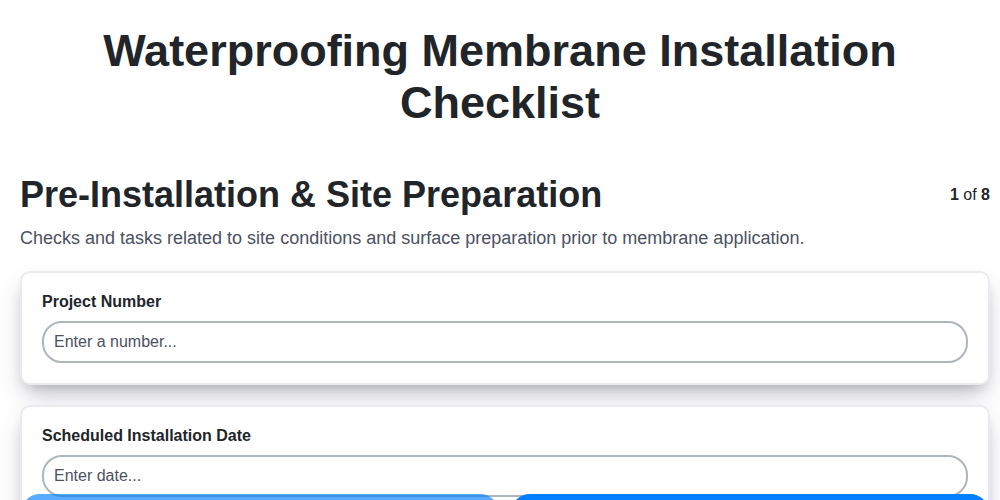
The Ultimate Waterproofing Checklist: Ensuring a Leak-Proof Installation
The 10 Best Manufacturing Management Software of 2025
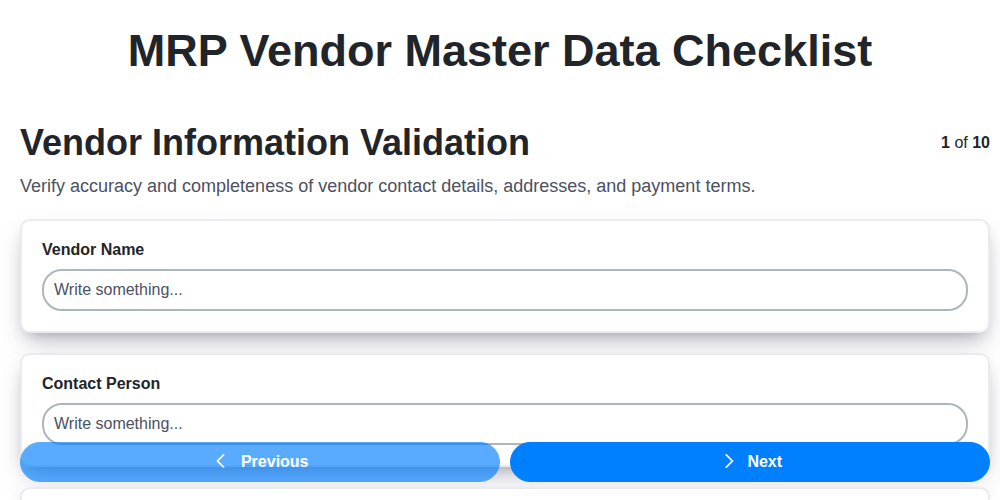
MRP Vendor Master Data Checklist: Ensuring Accuracy and Efficiency
We can do it Together
Need help with
Checklists?
Have a question? We're here to help. Please submit your inquiry, and we'll respond promptly.