Mastering the Vehicle Pre-Delivery Inspection (PDI) Process: A Step-by-Step Workflow Guide
Published: 06/04/2026 Updated: 07/02/2026
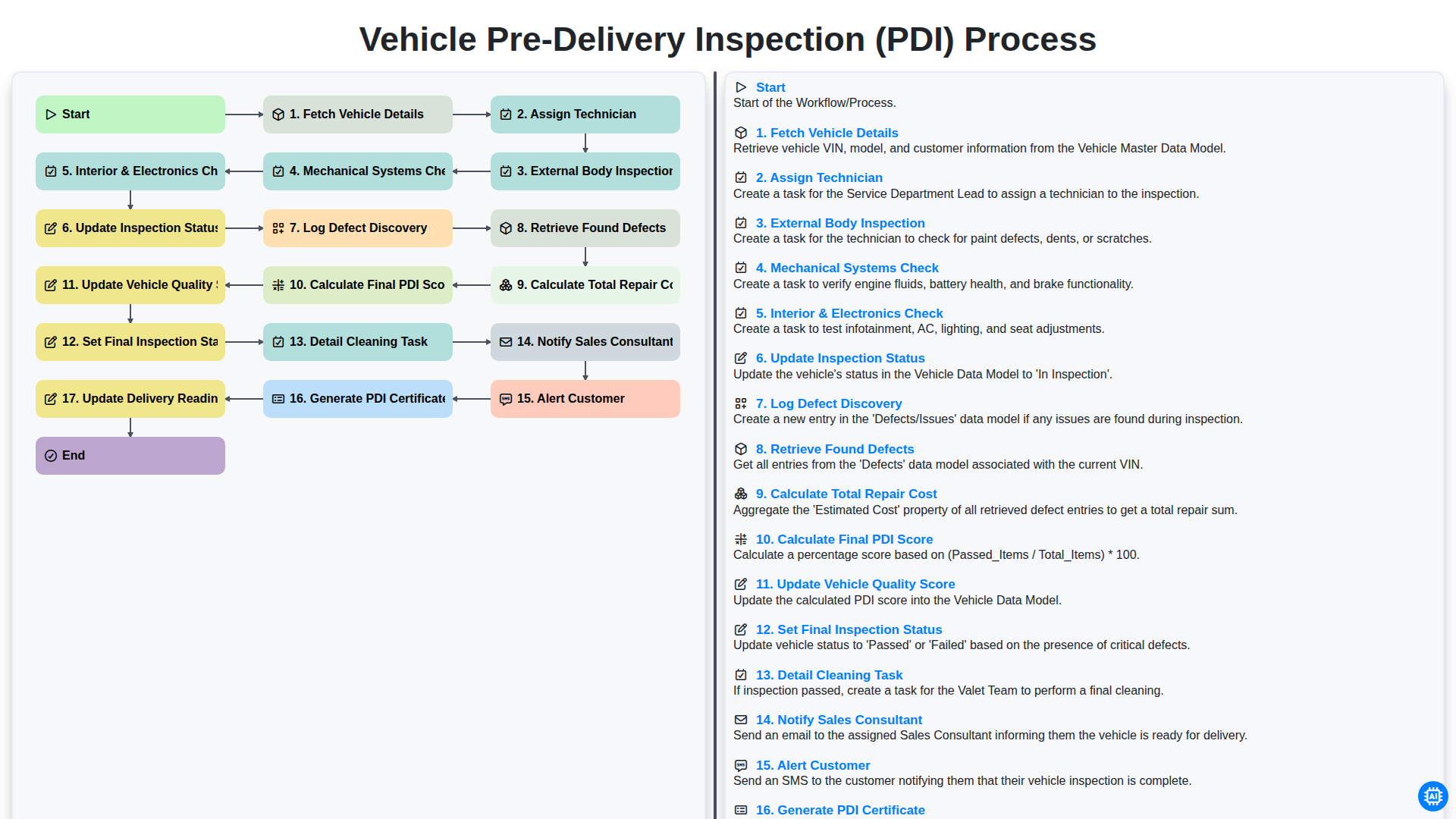
Table of Contents
- Introduction to the Vehicle Pre-Delivery Inspection (PDI) Workflow
- Phase 1: Initial Documentation and Resource Allocation
- Phase 2: Comprehensive Physical and Mechanical Assessment
- Phase 3: Interior Systems and Electronics Verification
- Phase 4: Defect Logging and Repair Cost Estimation
- Phase 5: Quality Scoring and Final Status Validation
- Phase 6: Final Detailing and Post-Inspection Preparation
- Phase 7: Communication, Certification, and Delivery Readiness
- Resources & Links
TLDR: Learn how to streamline your dealership's quality control with our comprehensive guide to the Vehicle Pre-Delivery Inspection (PDI) workflow. Discover how this automated template manages everything from initial technician assignment and mechanical checks to defect logging, cost calculation, and final customer notification, ensuring every vehicle meets peak delivery standards.
Introduction to the Vehicle Pre-Delivery Inspection (PDI) Workflow
The moment a brand-new vehicle is prepared for its new owner, the final hurdle in the dealership journey is the Pre-Delivery Inspection (PDI). Far more than just a simple walkthrough, the PDI process is a rigorous, multi-stage workflow designed to ensure that every vehicle leaving the showroom meets the highest standards of safety, functionality, and aesthetic perfection.
A systematic PDI workflow serves as the ultimate quality gatekeeper. It transitions a vehicle from a mere inventory item to a road-ready machine, meticulously tracking everything from mechanical integrity and electronic functionality to cosmetic flawlessnes. By following a structured sequence-ranging from initial technician assignment to the final generation of a PDI certificate-dealerships can eliminate human error, mitigate liability, and, most importantly, guarantee customer satisfaction. In this article, we will break down the end-to-end lifecycle of a professional PDI workflow and explore how each step contributes to a seamless delivery experience.
Phase 1: Initial Documentation and Resource Allocation
The foundation of a seamless delivery experience begins long before the vehicle reaches the customer's driveway. The PDI process initiates with the critical stage of Fetching Vehicle Details, where the system retrieves the specific VIN, model, trim, and customer requirements to ensure the inspection is tailored to the exact specifications of the unit.
Once the vehicle data is identified, the workflow moves into Assigning a Technician. This step ensures that a qualified professional with the appropriate expertise is designated to handle the specific complexities of the vehicle. By matching the right talent to the task, the dealership establishes a baseline of accountability and technical precision from the very start of the inspection.
Phase 2: Comprehensive Physical and Mechanical Assessment
Once the technician has been assigned and the initial vehicle details are retrieved, the core of the PDI process begins with a rigorous, multi-layered examination. This phase is designed to ensure that every component of the vehicle, from the exterior skin to the intricate internal circuitry, meets the highest manufacturer standards.
The assessment is divided into three critical inspection pillars:
- External Body Inspection: The technician performs a meticulous visual sweep of the vehicle's exterior. This involves checking for any paint imperfections, dents, or scratches that may have occurred during transit, ensuring the bodywork is flawless and all panels are correctly aligned.
- Mechanical Systems Check: This is the deep dive into the vehicle's heart. The technician inspects all vital mechanical components, including fluid levels, brake functionality, engine performance, suspension integrity, and tire pressure. The goal is to ensure the vehicle is mechanically sound and safe for the road.
- Interior & Electronics Check: The final layer of the assessment focuses on the cabin experience. This includes testing the infotainment system, verifying the functionality of all electronic sensors, checking climate control, and ensuring all interior trims and upholstery are in pristine condition.
By systematically moving through these checks, the technician ensures that no detail-no matter how small-is overlooked before the vehicle moves toward the final quality scoring stage.
Phase 3: Interior Systems and Electronics Verification
Once the external body and mechanical components have been cleared, the focus shifts inward to the cabin. This stage, Interior & Electronics Check, is critical for ensuring the vehicle meets the premium standards expected by the customer. During this phase, technicians perform a meticulous audit of the vehicle's brain and comfort features.
The inspection involves testing every electronic interface, including the infotainment system, GPS navigation, and climate control responsiveness. Technicians verify the functionality of all lighting, dashboard instrumentation, and sensor arrays (such as parking sensors and cameras). Simultaneously, a thorough interior audit is conducted to ensure seat adjustments, window regulators, and all upholstery components are in pristine condition, free from any manufacturing discrepancies. This step ensures that the cabin experience is as flawless as the mechanical performance.
Phase 4: Defect Logging and Repair Cost Estimation
Once the comprehensive inspection is complete, the workflow shifts from identification to evaluation. This phase is critical for ensuring that no underlying issue goes undocumented before the vehicle reaches the customer. The process begins with the Log Defect Discovery step, where every anomaly-from a minor paint chip to a complex sensor error-is recorded in the digital inspection report.
Following the logging process, the system moves to Retrieve Found Defects, aggregating all identified issues into a centralized view for the service team. This allows for a streamlined review of the vehicle's current condition. To ensure transparency and budget accuracy, the workflow then triggers the Calculate Total Repair Cost step. By automatically pulling parts and labor estimates, the system provides an instantaneous financial overview of the necessary rectifications. This data-driven approach eliminates guesswork, allowing management to decide whether to proceed with repairs or escalate the findings, ensuring that the final product adheres to the highest quality standards.
Phase 5: Quality Scoring and Final Status Validation
Once the physical inspection is complete and all identified issues have been addressed, the workflow moves into the critical phase of data synthesis and final validation. This stage is where the raw inspection data is transformed into actionable quality metrics.
First, the system performs a Retrieve Found Defects action to compile all logged issues from the inspection period. This data is then used to Calculate Total Repair Cost, ensuring that all necessary parts and labor have been accounted for in the vehicle's final preparation budget. With the costs settled, the system moves to the analytical core: Calculate Final PDI Score. This score is a weighted metric based on the severity and quantity of defects found during the process.
The results of this calculation are then used to Update Vehicle Quality Score, providing a transparent record of the vehicle's condition. Finally, the workflow will Set Final Inspection Status to Passed or Failed. This serves as the ultimate gatekeeper; only vehicles that meet the predefined quality threshold can proceed to the final stages of cleaning and delivery, ensuring that no vehicle ever leaves the dealership without meeting the highest standards of excellence.
Phase 6: Final Detailing and Post-Inspection Preparation
Once the vehicle has successfully passed all mechanical and electronic inspections, the workflow transitions from technical verification to aesthetic perfection. The Detail Cleaning Task is the final touchpoint in this phase, ensuring that the vehicle is not just mechanically sound, but visually pristine. This involves a rigorous cleaning protocol, including interior vacuuming, window polishing, and exterior waxing, to ensure the car meets showroom standards.
With the physical preparation complete, the workflow shifts toward administrative closure and communication. The system automatically triggers a Notify Sales Consultant action, ensuring the sales team is aware that the vehicle is ready for handover. Simultaneously, an Alert Customer notification is dispatched, building excitement and providing transparency regarding the vehicle's readiness. The final milestone in this phase is the Generate PDI Certificate, a formal document that serves as a guarantee of quality, alongside the Update Delivery Readiness status, which officially moves the vehicle from the service bay to the delivery zone.
Phase 7: Communication, Certification, and Delivery Readiness
Once the technical inspections are complete and the final quality score is logged, the workflow transitions from the workshop to the administrative and customer-facing stage. This final phase ensures that transparency is maintained and that all stakeholders are aligned before the keys are handed over.
The process begins with the critical task of notifying the Sales Consultant, ensuring they are aware that the vehicle has met all quality benchmarks. Simultaneously, an automated alert is sent to the customer, providing them with the peace of mind that their vehicle has undergone rigorous professional scrutiny. To formalize this standard of excellence, the system generates a PDI Certificate, a detailed document that serves as a verifiable record of the vehicle's health and the successful completion of all inspection points.
As the documentation is finalized, the delivery readiness status is updated within the management system. This serves as the green light for the dealership, signaling that the vehicle is officially cleared, polished, and prepared for a seamless handoff. This streamlined communication loop eliminates guesswork, ensuring that the transition from inspected to delivered is both efficient and professional.
Resources & Links
- ISO Quality Management Standards: Reference for international standards on quality control and inspection procedures applicable to automotive manufacturing and service.
- SAE International: Access to technical papers and engineering standards regarding vehicle mechanical systems and electronic testing protocols.
- OSHA Safety Guidelines: Resources for ensuring technician safety and workshop compliance during the physical inspection and mechanical check phases.
- Automotive Service Excellence (ASE): Best practices and training resources for technicians performing mechanical and electrical vehicle assessments.
- Automotive Industry Insights: Articles regarding the impact of high-quality PDI processes on customer satisfaction and dealership profitability.
- Operational Excellence Frameworks: Strategic insights on optimizing workflows, resource allocation, and defect management in complex supply chains.
Frequently Asked Questions
What is a Vehicle Pre-Delivery Inspection (PDI)?
A Pre-Delivery Inspection (PDI) is a comprehensive technical examination performed by technicians after a vehicle has been manufactured and transported to a dealership, but before it is handed over to the customer. Its purpose is to ensure the vehicle is in perfect working condition and meets all safety and manufacturer standards.
Why is the PDI process critical for dealerships?
The PDI process is vital for maintaining quality control, preventing costly after-sales warranty claims, ensuring customer satisfaction, and protecting the dealership's reputation by identifying any transit damage or manufacturing defects early.
What are the main stages of a standard PDI workflow?
A standard workflow typically includes: 1. Initial Visual Inspection (checking for transit damage), 2. Fluid and Battery Checks, 3. Functional Testing (electronics, lights, and wipers), 4. Road Test (verifying mechanical performance), and 5. Final Detailing and Documentation.
How long does a thorough PDI usually take?
The duration of a PDI can vary depending on the vehicle type and complexity, but a thorough inspection typically takes anywhere from 1 to 3 hours to ensure every component is properly vetted.
What should a technician do if a defect is discovered during the PDI?
If a defect is found, the technician must document the issue immediately, report it to the service manager, and initiate a formal repair or claim process with the manufacturer or the logistics provider if the damage occurred during transit.
Does a PDI include a road test?
Yes, a functional road test is a crucial part of the PDI workflow. It allows the technician to verify engine performance, braking efficiency, transmission smoothness, and the absence of unusual noises or vibrations under real driving conditions.
Comments
There are no comments yet. Be the first to add one!
Automotive Manufacturing Management Solution Demo
Optimize your automotive production! ChecklistGuro digitizes workflows, from parts inspection to final testing. Reduce errors, boost efficiency & ensure quality compliance. Drive results with our Work OS.
Related Articles
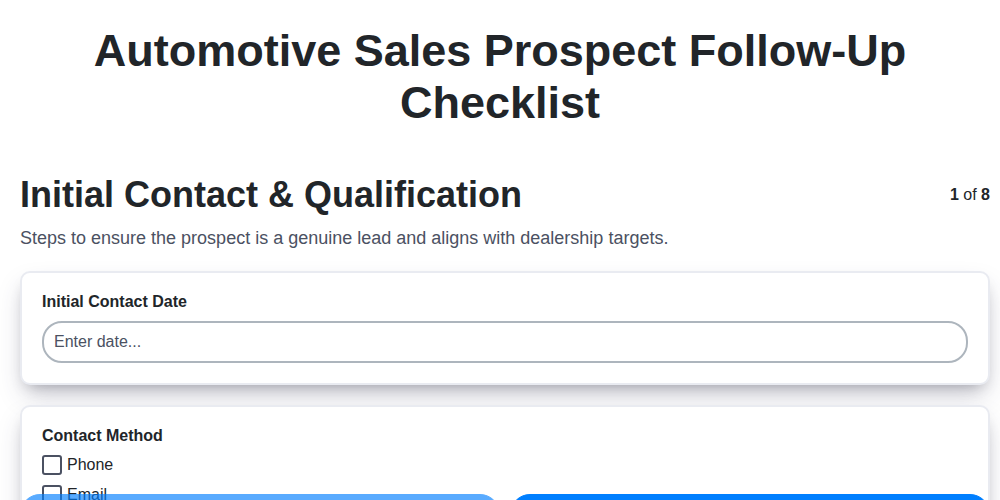
The Ultimate Automotive Sales Prospect Follow-Up Checklist: Close More Deals
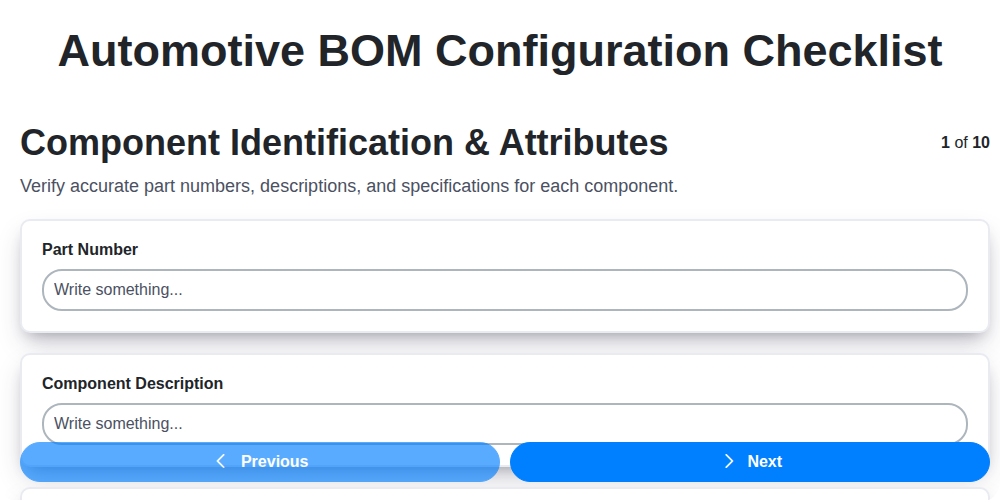
Mastering Automotive BOM Configuration: Your Essential Checklist

The Ultimate Vehicle Registration & Insurance Validation Checklist
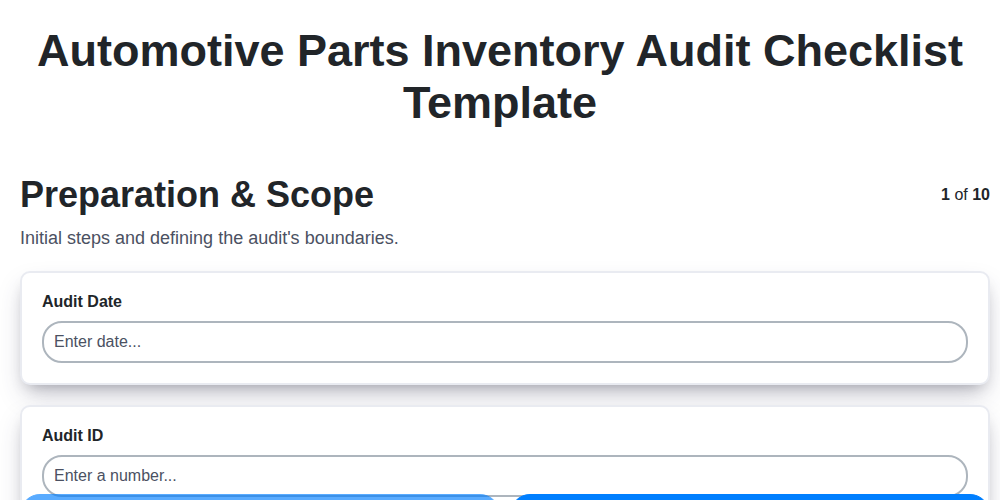
Automotive Parts Inventory Audit Checklist Template: Your Guide to Accurate Stock

Maximize Your Trade-In: The Automotive Appraisal Checklist You Need
The Ultimate Tire Pressure & Condition Checklist Template
Automotive Parts Inventory Control Checklist Template: Your Ultimate Guide

Drive Sales Success: Your Automotive Sales Team Performance Tracking Checklist
Need help with
Checklists?
Have a question? We're here to help. Please submit your inquiry, and we'll respond promptly.