Streamlining Compliance: A Digital Workflow for Water Quality Inspections
Published: Updated: 04/16/2026
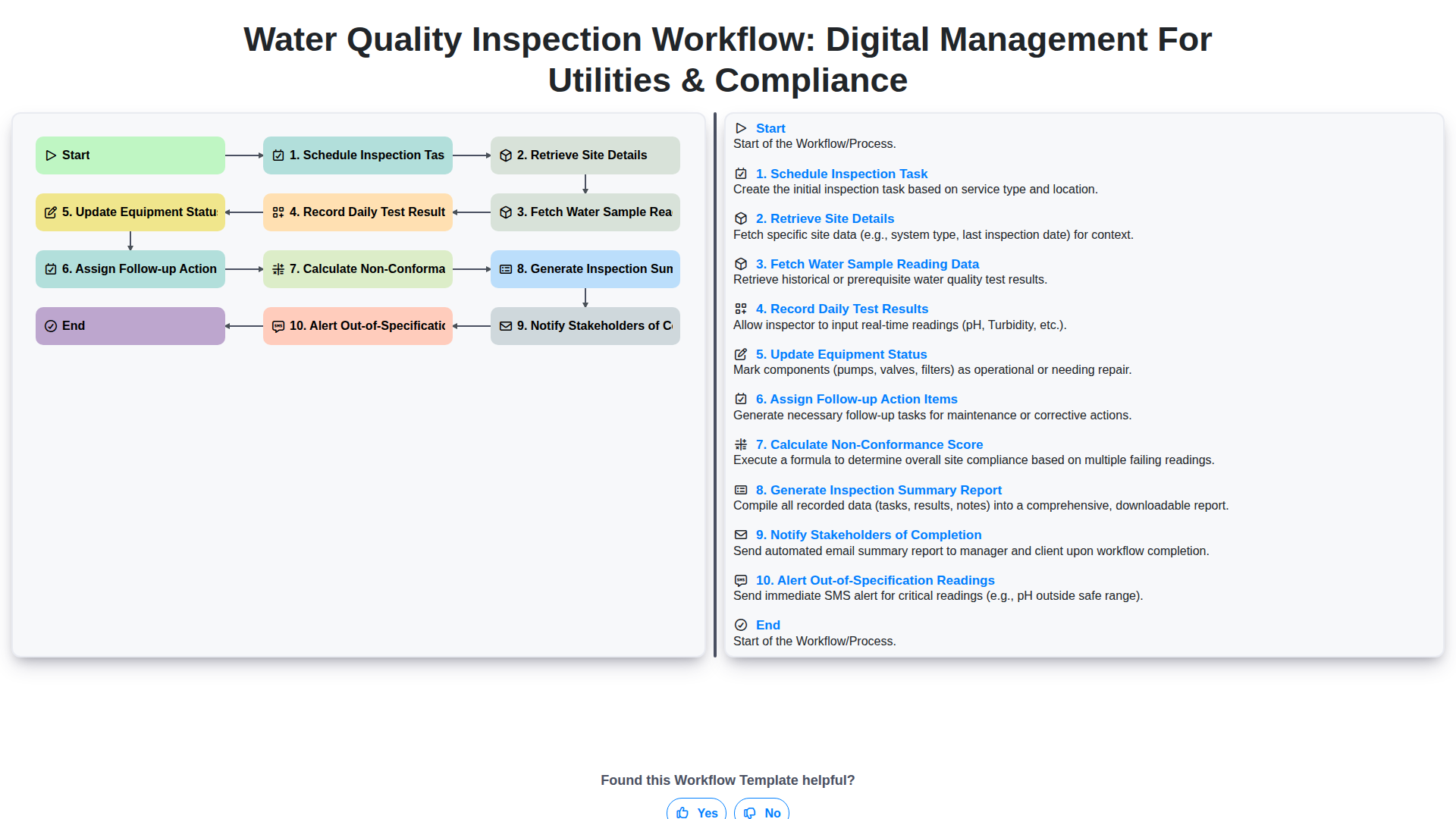
Table of Contents
- Introduction: The Need for Modern Water Quality Inspection Workflows
- Step 1: Smart Scheduling and Task Management
- Step 2: Centralized Site and Asset Data Retrieval
- Step 3: Seamless Integration of Water Sample Data
- Step 4: Digital Recording of Daily Test Results
- Step 5: Real-Time Equipment Health Monitoring
- Step 6: Automated Assignment of Follow-up Actions
- Step 7: Objective Non-Conformance Scoring and Analysis
- Step 8: Generating Comprehensive Inspection Summary Reports
- Step 9: Immediate Stakeholder Notification Upon Completion
- Step 10: Critical Alerts for Out-of-Specification Readings
- Benefits of a Fully Digital Inspection Workflow
- Conclusion: Future-Proofing Utility Compliance
- Resources & Links
TLDR: This digital workflow automates the entire water quality inspection process-from scheduling tasks and collecting site data to recording results, flagging deviations, and generating comprehensive reports. It ensures consistent, compliant, and efficient management for utilities.
Introduction: The Need for Modern Water Quality Inspection Workflows
In the critical field of water utility management, ensuring consistent and accurate water quality is not just a regulatory requirement-it is a matter of public health. Traditional water quality inspection processes are often manual, paper-intensive, and fragmented. This reliance on physical logs, siloed data sheets, and delayed reporting creates significant bottlenecks. These antiquated methods introduce substantial risk, ranging from misplaced data entries and slow turnaround times for critical alerts to inefficient resource allocation. A single delay or human error in recording or transmitting sample data can delay necessary corrective action, putting the community at risk. Modern utilities require more than just compliance; they need proactive, intelligent systems. This is where a digital workflow becomes indispensable. A modern, streamlined digital workflow transforms disparate steps-from initial scheduling to final reporting-into a continuous, automated loop. It moves inspection management from a reactive, documentation-heavy chore to a proactive, data-driven system of continuous improvement and immediate risk mitigation.
Step 1: Smart Scheduling and Task Management
Modern water utility operations rely on timely, accurate, and systematic inspection processes. Manually managing inspection schedules, allocating resources, and tracking necessary checks is not only inefficient but significantly increases the risk of compliance gaps. Our digitized workflow begins by streamlining this crucial first step: Schedule Inspection Task. Instead of relying on paper logs or scattered spreadsheets, the system allows managers to digitally map out inspection routes, assign specific tasks (e.g., pump maintenance check, reservoir level reading) to individual teams or technicians, and set precise timelines. This centralized scheduling capability ensures that no routine or mandated check is missed, maximizing coverage and ensuring proactive asset management across the entire network.
Step 2: Centralized Site and Asset Data Retrieval
This stage is about gathering all the necessary groundwork before the actual inspection begins. By centralizing site and asset data, inspectors have a single source of truth. This goes beyond just knowing the physical location; it encompasses crucial historical context. The system pulls in comprehensive details about the site's infrastructure, including asset IDs, installation dates, last maintenance records, and even the assigned responsibility for specific components. Furthermore, retrieving the latest water sample reading data directly into this centralized view allows for immediate baseline comparisons. An inspector doesn't have to juggle paper files or multiple separate databases; they see the asset details, the historical performance metrics, and the current reading all on one screen, setting them up for a highly informed and efficient inspection process.
Step 3: Seamless Integration of Water Sample Data
This crucial stage moves beyond physical data collection and dives into the digital realm. Instead of manually transcribing lab results, the system automatically ingests water sample reading data directly from various sources. Whether it's integrating with accredited third-party laboratories via APIs, pulling data from calibrated field meters, or accepting standardized digital uploads, this integration ensures that the water quality data is immediately available within the inspection workflow. This seamless fetching capability eliminates manual data entry errors, drastically reduces processing time, and provides real-time insights into the water's composition at the point of need.
Step 4: Digital Recording of Daily Test Results
The cornerstone of any robust inspection process is accurate and timely data capture. In our digital workflow, the step for recording daily test results moves far beyond paper logbooks. Field technicians use mobile applications connected to our central platform. These apps allow for the immediate entry of physical readings-such as pH levels, turbidity, and chemical concentrations-directly into the system. Crucially, the system supports digital evidence, enabling technicians to attach high-resolution photos of the test equipment alongside the data, providing an undeniable audit trail. Furthermore, the platform often includes predefined unit conversion tools and historical reference data, ensuring that results are logged in the correct format and context, which drastically reduces manual data entry errors and speeds up the subsequent analysis phase.
Step 5: Real-Time Equipment Health Monitoring
This stage moves beyond simply recording data to actively monitoring the physical assets themselves. By integrating sensor data streams, the system continuously tracks vital metrics for pumps, filtration units, and associated machinery. This real-time feed allows managers to visualize performance trends against established operational baselines. Crucially, the system can predict potential failures-such as bearing overheating or pressure drops-before they escalate into costly service interruptions. Alerts are automatically generated when readings fall outside predefined parameters, triggering immediate notifications and initiating pre-approved maintenance work orders directly within the workflow, significantly reducing downtime and proactive maintenance costs.
Step 6: Automated Assignment of Follow-up Actions
This crucial stage moves the process from mere data collection to actionable improvement. Instead of requiring manual review to determine the next steps following an inspection, the system automatically analyzes the recorded data-especially any non-conformance scores or out-of-specification readings. Based on predefined rules and risk matrices, the platform instantly assigns the appropriate follow-up task. For instance, if a high bacterial count is detected, the system might automatically assign a task to the Operations Manager to conduct an immediate source investigation, while simultaneously generating a work order for preventative maintenance on the suspect piece of equipment. This automation ensures that no potential issue falls through the cracks, dramatically reducing response time and improving overall compliance adherence.
Step 7: Objective Non-Conformance Scoring and Analysis
This crucial step moves beyond simple data recording into proactive risk management. By calculating a non-conformance score, your system quantifies the severity and frequency of any deviations from acceptable standards. Instead of manually reviewing disparate results, the platform automatically aggregates failed tests (e.g., elevated turbidity, incorrect pH levels) and weighs them according to pre-set compliance thresholds. This objective scoring provides utility managers with an immediate, data-driven risk profile for each site. A high score doesn't just indicate an issue; it signals an area requiring immediate supervisory attention, allowing teams to triage their workload efficiently and focus investigative resources exactly where they are needed most.
Step 8: Generating Comprehensive Inspection Summary Reports
This critical stage transforms raw data points into actionable intelligence. The system consolidates every piece of information gathered throughout the workflow-from scheduled tasks and site details to daily test results and equipment checks. The generated Inspection Summary Report is much more than just a collection of numbers; it's a narrative of compliance and performance. It automatically flags key metrics, visually presents non-conformance scoring, and includes a complete audit trail. This single, comprehensive document serves as the definitive proof of due diligence for regulatory bodies, internal audits, and management reviews, streamlining the reporting process from days to mere minutes.
Step 9: Immediate Stakeholder Notification Upon Completion
This final, crucial step ensures that no vital information gets lost in a mountain of reports. Once the entire inspection, from scheduling to final compliance scoring, is complete, the system immediately triggers notifications to all relevant stakeholders. This instant communication confirms the successful completion of the workflow and distributes the key insights. Depending on the configured severity or outcome, these notifications can range from a simple 'Inspection Complete' email to an urgent alert detailing a critical non-conformance found during the process. This proactive communication loop maintains transparency, keeps management informed in real-time, and ensures that necessary parties can initiate the next steps-be it routine reporting, resource allocation, or immediate corrective action-without delay.
Step 10: Critical Alerts for Out-of-Specification Readings
This step is arguably the most crucial for immediate operational safety and compliance. When any test result falls outside the predetermined acceptable range (i.e., it's out-of-specification or OOS), the system must immediately trigger high-priority alerts. This goes beyond simply recording the data; it requires proactive communication. The workflow automatically compares the 'Record Daily Test Results' data against established regulatory benchmarks and historical norms. If a deviation is found-for example, elevated turbidity, sudden changes in pH, or detection of restricted contaminants-the system generates instant, multi-channel alerts. These alerts are routed directly to the responsible field technician, the supervising engineer, and the compliance manager, detailing the specific parameter, the recorded value, the limit exceeded, and the potential immediate risk. This instant notification mechanism drastically reduces the time between detection and corrective action, moving the utility from a reactive state to a preemptive response mode.
Benefits of a Fully Digital Inspection Workflow
A fully digital workflow transforms what was once a paper-heavy, manual, and time-consuming process into a seamless, intelligent operational cycle. The immediate benefits are multifaceted: Enhanced Accuracy and Reduced Errors. By digitizing data capture (like recording test results or updating equipment status), the risk of human transcription errors is drastically minimized. Increased Efficiency and Speed are paramount; tasks that previously required physical movement between multiple documents and departments-such as scheduling, data retrieval, and report generation-can now happen instantaneously within a single platform. Real-Time Compliance and Risk Mitigation are achieved because the system can instantly calculate non-conformance scores and issue immediate alerts for out-of-specification readings, allowing utilities to intervene before minor issues become major compliance risks. Furthermore, the centralized system ensures Comprehensive Audit Trails. Every data point, from the initial schedule assignment to the final stakeholder notification, is logged, providing an indisputable, easily retrievable record for regulatory bodies and internal reviews.
Conclusion: Future-Proofing Utility Compliance
By embracing a digitally managed water quality inspection workflow, utilities are no longer just meeting compliance standards-they are setting new benchmarks for operational excellence. This transition from paper-based, siloed processes to a streamlined digital backbone doesn't just save time; it fundamentally de-risks the entire operation. The resulting platform acts as a centralized intelligence hub, providing immediate visibility into asset health, regulatory adherence, and potential points of failure. Ultimately, digital workflow management transforms compliance from a burdensome annual requirement into a continuous, proactive aspect of daily utility management, ensuring public trust and safeguarding community health for years to come.
Resources & Links
- American Water Works Association (AWWA) : Industry standards, best practices, and technical resources for water utilities.
- U.S. Environmental Protection Agency (EPA) : Primary source for water quality regulations, guidelines, and compliance requirements.
- International Water Works & Quality Association (Example placeholder) : A resource for global best practices in water management and inspection technology.
- Water Utility Technology Providers (Placeholder) : Example page demonstrating IoT and digital workflow solutions for utilities.
- Water Technology Journals/Blogs (Placeholder) : Articles discussing digital transformation, AI, and workflow automation in environmental compliance.
- Centers for Disease Control and Prevention (CDC) - Public Health Guidelines (Conceptual link) : General resources for understanding public health implications related to water quality.
- General Workflow Automation Resources (Conceptual link) : Information on process mapping, automation tools, and workflow management best practices.
Frequently Asked Questions
What is the primary goal of a digital workflow in water quality inspections?
The primary goal is to streamline the compliance process by replacing manual, paper-based methods with automated, real-time data collection and reporting to ensure accuracy and efficiency.
What are the main benefits of transitioning from paper-based to digital inspection workflows?
Key benefits include reduced human error, faster reporting turnaround, real-time data accessibility, improved data integrity, and easier long-term storage and retrieval of inspection records.
How does a digital workflow improve regulatory compliance?
Digital workflows ensure that all mandatory inspection parameters are captured, provide time-stamped audit trails, and trigger automatic alerts when parameters fall outside of legal limits, making it easier to adhere to environmental regulations.
What types of data can be captured using a digital inspection system?
A digital system can capture various data points including GPS locations, chemical concentration levels, pH values, turbidity, photographic evidence, timestamps, and inspector notes.
Does a digital workflow require constant internet connectivity?
Modern digital inspection tools are typically designed with offline capabilities, allowing inspectors to collect data in remote areas and automatically sync with the central database once a connection is re-established.
Found this Article helpful?
Audit/Inspection Management Solution Demo
Ensure compliance & improve performance! ChecklistGuro streamlines audit/inspection creation, execution, and reporting. Reduce risk, enhance quality, & maintain consistency. Manage it all with our Work OS.
Related Articles
Restaurant Kitchen Safety Inspection Checklist Template
The Ultimate Brewery Equipment Sanitation & Safety Checklist Template
Wind Turbine Inspection Checklist Template: Your Comprehensive Guide
The Ultimate Apartment Building Maintenance Inspection Checklist Template
Your Essential Guide to a Manufacturing Quality Control Inspection Checklist
The Ultimate Solar Panel Inspection Checklist Template
Your Ultimate HVAC Inspection Checklist Template
The Ultimate Data Center Inspection Checklist Template
We can do it Together
Need help with
Checklists?
Have a question? We're here to help. Please submit your inquiry, and we'll respond promptly.