Why Manual Construction Management is Killing your Profit Margins
Published: 08/28/2026 Updated: 08/29/2026
Table of Contents
- The Hidden Costs of Manual Construction Management
- The Profit Leak: Where Manual Processes Drain Your Bottom Line
- The Chaos of Paperwork: Human Error and Data Silos
- Scalability Bottlenecks: Why Manual Methods Prevent Growth
- Comparing the Industry Leaders: Top Construction Management Software
- The All-in-One Advantage: Why ChecklistGuro is the Modern Choice
- Feature Breakdown: ChecklistGuro vs. Traditional Software
- The Verdict: Choosing the Right Work OS for Your Projects
- Resources & Links
TLDR: Relying on manual, paper-based construction management leads to costly human errors, data silos, and massive productivity leaks that erode your project margins. To protect your profitability, modern firms must transition to a specialized Work OS like ChecklistGuro, which streamlines workflows, ensures compliance, and provides the real-time visibility needed to scale operations effectively compared to outdated or overly complex legacy tools.
The Hidden Costs of Manual Construction Management
In the construction industry, margins are notoriously thin. While most project managers focus on material costs and labor hours, there is a silent killer lurking in the background of every job site: the invisible cost of manual management.
The Paperwork Trap
When your management processes rely on physical clipboards, fragmented spreadsheets, and endless email threads, you aren't just managing a project-you are managing chaos. The cost of this chaos isn't immediately visible on an invoice, but it manifests in the micro-delays that compound over time.
1. The Cost of Information Latency
In a manual environment, information moves only as fast as a person can walk, type, or call. By the time a site update reaches the office, the data is already obsolete. This latency leads to:
- Outdated Blueprints: Working from old revisions because the new version hasn't been distributed.
- Delayed Decision Making: Waiting hours or even days for a supervisor to approve a change order.
- Miscommunication: Instructions lost in transit between the field and the back office.
2. The High Price of Human Error
Manual entry is synonymous with manual error. A single misplaced decimal point in a spreadsheet or a missed line item on a paper checklist can trigger a domino effect of expensive rework. When instructions are misread or updates are missed, the cost of fixing the mistake is almost always significantly higher than the cost of getting it right the first time.
3. The Shadow Work Phenomenon
For every hour a Project Manager spends overseeing actual construction, how many hours are spent chasing signatures, reconciling invoices, and searching for lost photos? This shadow work is unbillable time that eats directly into your overhead. As your project volume increases, this administrative burden scales exponentially, eventually hitting a ceiling that prevents you from taking on new, profitable contracts.
The Profit Leak: Where Manual Processes Drain Your Bottom Line
In the construction industry, profit margins are notoriously thin. While most project managers focus heavily on material costs and labor rates, there is a silent predator eating away at your profitability: unseen operational leakage.
When you rely on manual management-think spreadsheets, paper checklists, and endless email threads-you aren't just working harder; you are actively losing money through several critical leak points.
1. The Information Gap Tax
In a manual workflow, data is trapped in silos. When a site supervisor updates a physical checklist or sends an email regarding a site delay, that information often doesn't reach the office in real-time. This delay creates a knowledge gap where decisions are made based on outdated information. Every hour spent waiting for a status update is an hour of wasted downtime and lost productivity.
2. The High Cost of Re-work and Errors
Manual processes are inherently prone to human error. A missed line item on a paper inspection, a misread handwritten note, or a lost permit request can lead to catastrophic errors.
The Domino Effect of Mistakes
- Incorrect Material Orders: Relying on manual tallying leads to over-ordering (wasted capital) or under-ordering (expensive emergency shipments and project delays).
- Compliance Failures: Missing a single safety check or regulatory step can result in heavy fines and costly project shutdowns.
- Failed Inspections: When documentation is incomplete, rework becomes mandatory, doubling your labor costs for a single task.
3. The Administrative Burden (The Hidden Labor Cost)
If your high-value Project Managers are spending 30% of their day manually reconciling spreadsheets, chasing signatures, and re-typing data from paper to digital, you are paying a premium for administrative tasks. This is a massive drain on your most expensive human resources. This administrative drag prevents your leads from focusing on what actually drives profit: site optimization and proactive problem-solving.
4. Lack of Real-Time Visibility
You cannot manage what you cannot measure. Manual management provides a rear-view mirror approach-you only realize a project is over budget or behind schedule weeks after the damage has already been done. Without a centralized, real-time source of truth, your ability to pivot and mitigate risks is virtually non-existent, turning small hiccups into margin-destroying disasters.
The Chaos of Paperwork: Human Error and Data Silos
In the construction industry, information is the most valuable asset you own. However, when that information is trapped in physical folders, scattered spreadsheets, and endless email threads, it ceases to be an asset and becomes a liability.
The High Cost of Human Error
Manual documentation relies heavily on the diligence of individual team members. When a site supervisor forgets to update a daily log, or a project manager misses a single line item on a printed checklist, the consequences are immediate and expensive.
- Inaccurate Reporting: Relying on manual entry means there is no single source of truth. Discrepancies between what is reported on-site and what is reviewed in the office lead to disputes, rework, and unexpected delays.
- Missed Compliance and Safety Gaps: A single missed inspection or an unrecorded safety check isn't just a clerical error-it's a legal and financial risk that can trigger massive fines or project shutdowns.
- The Telephone Game Effect: Instructions passed from the office to the field via verbal cues or handwritten notes are prone to misinterpretation, leading to costly mistakes that are often only discovered when it's too late to fix them without blowing the budget.
The Danger of Data Silos
Data silos occur when critical project information is trapped within specific departments or individual devices. When your procurement team is looking at one version of a budget, while your site leads are working off an outdated set of blueprints, your profit margins are under constant attack.
Fragmented Communication
When communication lives in fragmented channels-text messages, WhatsApp groups, and personal emails-there is no searchable history. This lack of transparency makes it nearly impossible to perform accurate post-project audits or to understand why a specific budget overrun occurred.
The Decision-Making Gap
Real-time decision-making requires real-time data. If you have to wait 48 hours to compile manual reports from various site leads just to see your current project status, you are already reacting to problems rather than preventing them. By the time the siloed data reaches your desk, the opportunity to mitigate the cost has often passed.
By moving away from fragmented, manual workflows and into a unified Work OS like ChecklistGuro, you bridge these gaps, ensuring that every stakeholder is looking at the same real-time, accurate data, effectively sealing the leaks in your profit margins.
Scalability Bottlenecks: Why Manual Methods Prevent Growth
As your project portfolio grows, the very methods that helped you survive your first few jobs become the anchors that prevent you from taking on the next ten.
Manual construction management relies heavily on the tribal knowledge of your senior leads and a mountain of physical or fragmented digital paperwork. While this might work for a small, localized operation, it creates a structural ceiling on your company's potential.
The Hero Dependency Trap
In a manual environment, scaling usually means hiring more people to manage more paperwork. You become dependent on specific individuals to remember certain workflows or to manually check specific folders. When your growth outpaces your ability to manually oversee every detail, you don't scale-you simply create more chaos. You find yourself stuck in a loop of constant firefighting rather than strategic expansion.
The Friction of Expansion
Fragmented Information Flow
Every new project added to a manual system increases the complexity of your communication exponentially. Without a centralized Work OS, information lives in disconnected spreadsheets, email threads, and physical site logs. As you add more sites, the information gap widens, leading to:
- Delayed Decision Making: Waiting for site reports to be manually typed and emailed.
- Redundant Data Entry: Teams spending hours re-keying data from paper to digital formats.
- Lack of Real-Time Visibility: An inability to see project health across the entire enterprise simultaneously.
Increased Risk of Oversight
Scaling requires standardized, repeatable processes. Manual management is inherently non-standardized. As the volume of tasks increases, the probability of a critical safety check, a permit expiration, or a material delivery being missed skyrockets. In construction, an oversight isn't just an inconvenience-it's a massive hit to your margins through rework, delays, and potential litigation.
To truly scale, you need a system that grows with you, turning your processes into a repeatable engine rather than a manual burden.
Comparing the Industry Leaders: Top Construction Management Software
Choosing the right software isn't just about replacing paper with digital forms; it's about selecting a platform that integrates into your existing workflow without adding unnecessary complexity. While many tools exist, they generally fall into three distinct categories: legacy ERP systems, specialized project management tools, and modern Work OS platforms.
The Heavyweights: Legacy ERP Systems
For massive, enterprise-level construction firms, platforms like Procore or Autodesk Build are often the industry standard. These are powerful, feature-rich ecosystems designed to handle everything from BIM to complex financial integrations.
- The Pros: Extremely comprehensive; built specifically for the construction lifecycle.
- The Cons: They come with a heavy price tag and a steep learning curve. For many mid-sized firms, the implementation process is slow, and the complexity can lead to low adoption rates among field crews. If your team finds the software too difficult to use, you end up reverting to manual work-defeating the purpose of the investment.
The Specialized Task Managers
Then there are tools like Monday.com or Asana. While these are excellent for general project tracking and high-level task management, they are construction-agnostic.
- The Pros: Highly intuitive, visually appealing, and great for simple task automation.
- The Cons: They lack the construction DNA. You will find yourself manually building workflows for inspections, safety audits, and site checklists from scratch. They don't understand the nuances of a job site, which often leads to gaps in compliance and documentation.
The Modern Standard: Specialized Work OS (ChecklistGuro)
This is where ChecklistGuro stands out. We sit at the intersection of powerful automation and industry-specific utility. Unlike generic task managers, ChecklistGuro is built with a Construction-First mindset, specifically designed to eliminate the manual bottlenecks that kill margins.
Why ChecklistGuro is the Strategic Choice
While legacy tools focus on complexity and generic tools focus on simplicity, ChecklistGuro focuses on execution.
- Automated Compliance: Instead of manually checking if a safety protocol was followed, our platform uses intelligent, logic-based checklists that ensure no step is skipped, automatically generating audit-ready reports.
- Seamless Field-to-Office Sync: We eliminate the data lag found in heavier ERPs. Information captured on-site by a Project Manager or Foreman is instantly actionable for the Operations Lead in the office.
- Customizable Workflows: Unlike rigid legacy software, ChecklistGuro allows you to tailor your Work OS to your specific operational DNA. You get the power of a specialized construction tool with the agility of a modern cloud platform.
When comparing these leaders, the question isn't just about which has the most features-it's about which tool actually drives your team to complete tasks accurately and on time. For firms looking to protect their margins through precision and visibility, ChecklistGuro provides the most direct path to operational excellence.
The All-in-One Advantage: Why ChecklistGuro is the Modern Choice
While legacy construction management tools often force you to choose between a simple checklist app and a bloated, overly complex ERP, ChecklistGuro bridges the gap by offering a specialized Work OS designed for the realities of the field.
Beyond Checklists: A Unified Ecosystem
Most software in this category acts as a digital filing cabinet-it stores information, but it doesn't drive action. ChecklistGuro is different. It is a specialized Construction Management solution that functions as a cohesive ecosystem. Instead of jumping between disconnected spreadsheets, email threads, and standalone inspection apps, ChecklistGuro integrates your workflows into a single source of truth.
Precision-Engineered for Construction Workflows
We didn't just build a generic task manager; we built a platform that understands the lifecycle of a construction project. Our platform excels where others struggle by providing:
- Dynamic Workflows: Move beyond static lists. Our platform allows for conditional logic, ensuring that the right person sees the right task only when it is relevant to the project phase.
- Real-Time Accountability: Unlike manual tracking, which relies on memory and end-of-day reporting, ChecklistGuro provides instantaneous updates. When a milestone is hit or a defect is noted, the entire team-from the site supervisor to the operations lead-is notified immediately.
- Data-Driven Decision Making: Manual management leaves you guessing. ChecklistGuro turns your daily field activities into actionable analytics, allowing you to spot trends in delays or recurring errors before they become budget-destroying liabilities.
Eliminating the Information Gap
The Information Gap is the period between an event happening on-site and that event being reflected in your office records. In manual management, this gap can last days. With ChecklistGuro, that gap is closed in seconds. By automating the flow of data from the field to the back office, we ensure that your profit margins are protected by real-time visibility, not just hindsight.
Feature Breakdown: ChecklistGuro vs. Traditional Software
Beyond Spreadsheets: A Side-by-Side Comparison
To truly understand why manual processes are eroding your margins, you need to look at the functional gap between traditional digitalized paper and a true Work OS. Most legacy tools simply provide a place to store documents, whereas ChecklistGuro provides a way to automate workflows.
The Digital Paper Trap (Legacy Software)
Many construction firms transition from paper to basic PDF editors or simple cloud storage. While this is a step up, it is still manual in spirit.
- Data Fragmentation: Information lives in disconnected folders. You might have a checklist in one place, an invoice in another, and a photo in a third.
- Reactive Management: You only realize a mistake happened after the inspection is closed and the report is filed.
- High Administrative Overhead: Project managers spend more time managing the software (uploading, renaming, and searching) than managing the job site.
The ChecklistGuro Advantage (Integrated Work OS)
ChecklistGuro isn't just a storage bin; it is an active participant in your project lifecycle. We bridge the gap between the field and the office through intelligent automation.
Key Differentiators
| Feature | Traditional/Manual Methods | ChecklistGuro Work OS |
|---|---|---|
| Workflow Automation | Manual hand-offs via email or text. | Automated triggers that notify the next stakeholder instantly. |
| Data Integrity | High risk of human error and missed steps. | Enforced digital workflows that ensure no task is skipped. |
| Real-Time Visibility | Information latency; you see yesterday's news. | Live, centralized dashboards for instant project health checks. |
| Standardization | Every PM has their own way of doing things. | Uniform, scalable processes across every single job site. |
| Actionable Insights | Data is buried in static documents. | Data is structured, searchable, and ready for high-level analysis. |
Transforming Data into Decisions
The core difference lies in visibility. In a manual or legacy environment, your data is a historical record-it tells you what went wrong after the budget has already been blown.
With ChecklistGuro, your data is a live pulse. Because our platform specializes in structured workflows, you can identify a bottleneck or a safety non-compliance issue the moment it is logged in the field. This transition from reactive reporting to proactive management is precisely where your regained profit margins are found.
The Verdict: Choosing the Right Work OS for Your Projects
Choosing the right software isn't just about adding a new tool to your tech stack; it's about choosing a foundation for your company's future profitability.
The Decision Matrix
When deciding between maintaining the status quo or migrating to a digital Work OS, evaluate your decision based on three critical pillars:
- Integration Capability: Can the tool connect your field teams with your office staff in real-time, or does it create another data island?
- Ease of Adoption: Does the interface empower your site supervisors to use it instantly, or will it require months of expensive training?
- Cost vs. ROI: Are you paying for bloated enterprise features you'll never use, or are you investing in a streamlined workflow that pays for itself through error reduction?
The Bottom Line
If your current workflow relies on spreadsheets, fragmented WhatsApp threads, and paper checklists, you aren't just doing things the old way-you are actively leaking margin on every project.
While legacy heavyweights offer deep complexity, they often come with a steep learning curve and a price tag that eats into the very profits you're trying to protect. For teams that need to bridge the gap between high-level project oversight and granular, on-site execution without the bloat, ChecklistGuro offers the most agile, specialized solution.
Don't let manual processes dictate your margins. Transition to a specialized Construction Management solution and start reclaiming your lost revenue today.
Resources & Links
- Autodesk Construction Cloud: Industry-standard platform for BIM and project management, useful for comparing advanced software features.
- Procore: A leading construction management software used to benchmark against all-in-one solutions.
- McKinsey & Company: Reports on construction productivity and the impact of digital transformation on industry margins.
- Construction Executive: Industry news and insights regarding operational efficiency and construction technology trends.
- Forbes: Articles regarding business management, scaling operations, and the cost of operational inefficiency.
- ChecklistGuro: The modern Work OS designed to eliminate manual processes through automated checklists.
- Construction Cam: Example of specialized construction tech focused on site documentation and visual data.
- PlanGrid: A resource for understanding mobile-first field management and reducing paperwork chaos.
- Entrepreneur: Insights into overcoming scalability bottlenecks and managing business growth.
- Construction Dive: Daily news on construction technology and the shift from manual to digital workflows.
- G2: Software review platform to compare user satisfaction and features of various construction tools.
- Capterra: Resource for comparing technical specifications and pricing of project management software.
- ProjectManager: Guides on managing project risks, human error, and the importance of standardized processes.
- Smartsheet: Example of spreadsheet-based management and the risks of data silos in large-scale projects.
- ASCE (American Society of Civil Engineers): Professional standards and data regarding construction industry efficiency and economic impact.
Comments
There are no comments yet. Be the first to add one!
Construction Management Solution Demo
Build smarter, not harder! ChecklistGuro streamlines construction projects from planning to closeout. Manage tasks, inspections, safety protocols & more - all in one place. Reduce delays, improve communication, and deliver projects on time & on budget.
Related Articles
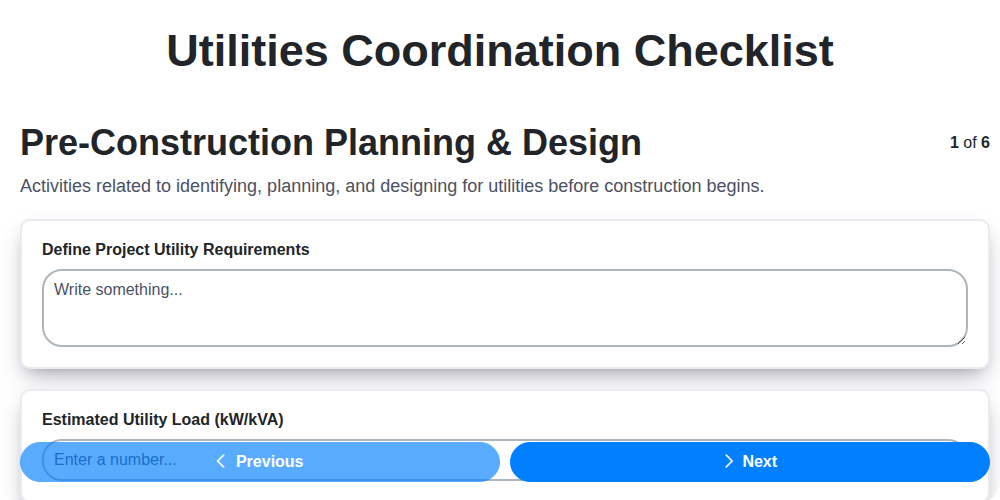
Streamline Your Project: The Ultimate Utilities Coordination Checklist Template
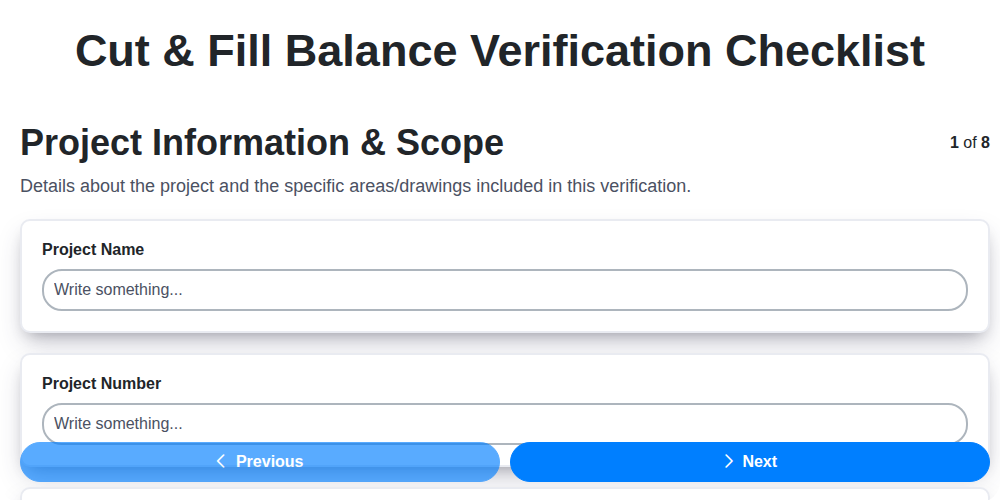
Cut & Fill Balance: Your Checklist Template for Project Success

Jobsite Safety & Compliance Checklist: Your Construction Site Assessment Template
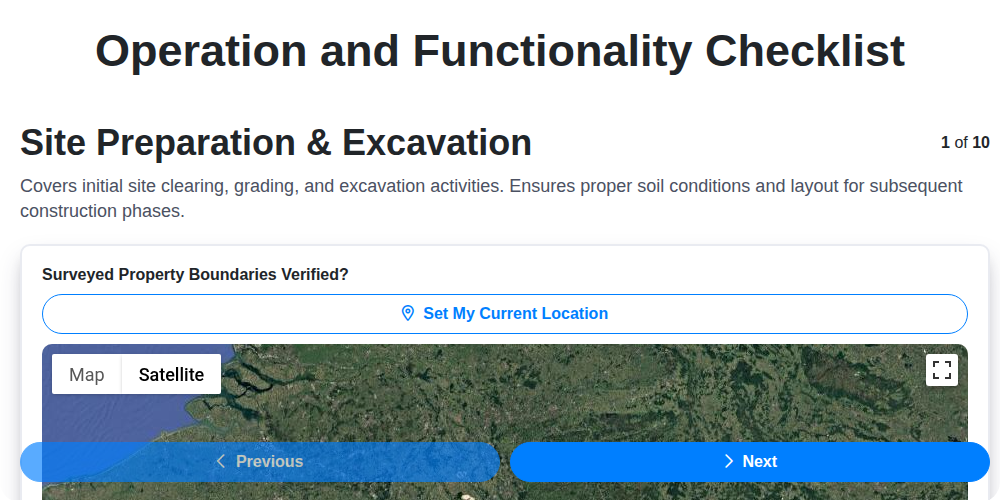
Streamlining Construction: Your Free Operation & Functionality Checklist Template
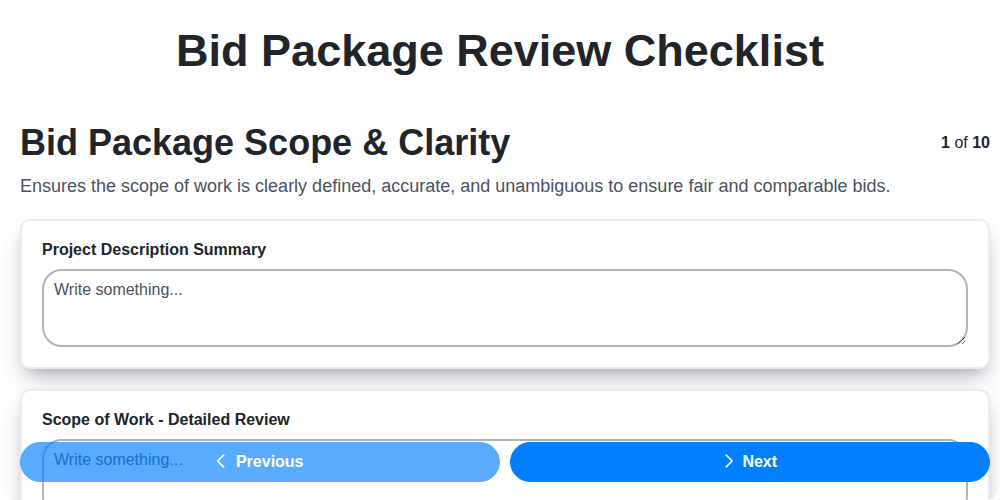
Mastering Bids: Your Free Bid Package Review Checklist Template
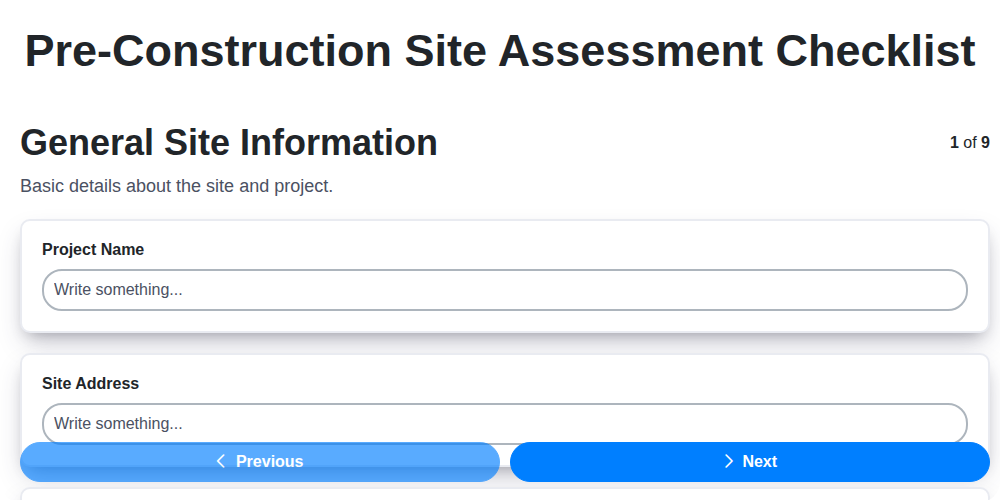
Your Essential Pre-Construction Site Assessment Checklist Template
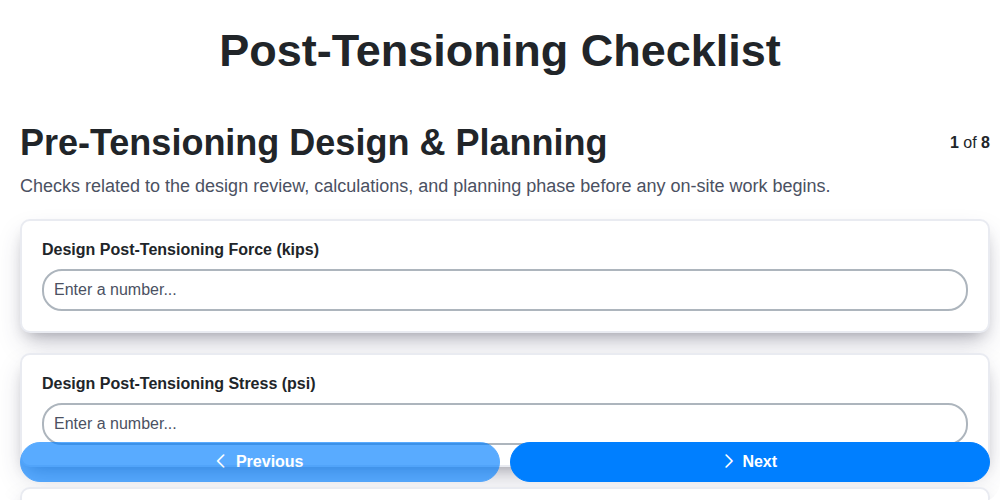
Mastering Post-Tensioning: Your Essential Checklist Template
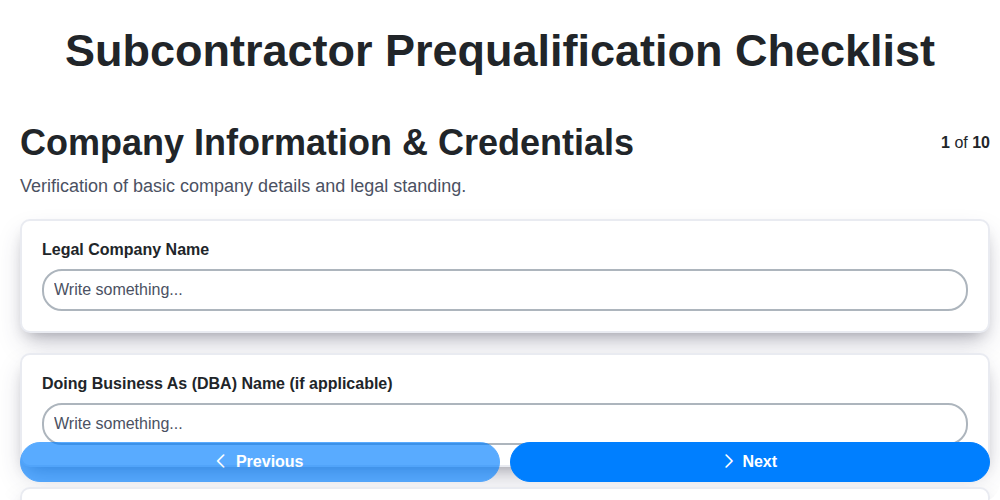
Subcontractor Prequalification Checklist Template: Your Essential Guide
Need help with
Checklists?
Have a question? We're here to help. Please submit your inquiry, and we'll respond promptly.