Why Manual Inspection Management is Killing your Profit Margins
Published: 09/09/2026 Updated: 09/10/2026
Table of Contents
- The Hidden Cost of Paper and Spreadsheets: The Drain on Your Bottom Line
- The 'Data Gap' Trap: How Lost Information Leads to Expensive Compliance Failures
- Labor Leaks: The Massive Productivity Drain of Manual Data Re-entry
- Scaling the Wall: Why Manual Processes Prevent Operational Growth
- Comparing the Industry Leaders: Finding the Right Inspection Management Solution
- Why ChecklistGuro is the Strategic Choice for High-Performance Teams
- The ROI of Automation: Transforming Inspections from a Cost Center to a Value Driver
- Resources & Links
TLDR: Manual inspection processes are more than just an inconvenience; they are a direct drain on profitability caused by human error, inefficient data re-entry, and delayed decision-making. This post explores how transitioning from fragmented spreadsheets to a centralized Work OS like ChecklistGuro can eliminate operational leaks, ensure real-time compliance, and protect your margins through automated, scalable inspection management.
The Hidden Cost of Paper and Spreadsheets: The Drain on Your Bottom Line
If your inspection process still relies on clipboards, printed forms, or even basic Excel spreadsheets, you aren't just using old-school methods-you are actively leaking capital.
While these methods may seem cost-effective because they require no monthly subscription, the hidden costs are quietly eroding your margins through three primary channels:
1. The Cost of Human Error and Retrospective Corrections
Manual inspections are inherently prone to illegible handwriting, missed checkboxes, and incomplete data. When an inspector misses a critical safety or quality check because a paper form was confusing, the cost isn't just the error itself. It's the cost of the subsequent equipment downtime, the wasted materials, the potential for legal liabilities, and the emergency labor required to fix a problem that should have been caught in the field.
2. The Data Silo Tax
In a manual system, data is trapped on the page. To make that data useful, someone-usually a high-value Project Manager or Operations Lead-must manually transcribe those notes into a centralized system. This creates a massive lag between occurrence and insight. By the time a trend of equipment failure or safety non-compliance reaches your desk, the damage has already been done, and the window for cost-saving intervention has closed.
3. The Operational Lag
Every hour spent chasing down lost inspection reports, verifying signatures, or reconciling spreadsheets is an hour not spent on high-value operational improvements. When your team spends more time managing the process of inspection than actually performing the inspection, your overhead climbs while your output stagnates.
In short, paper and spreadsheets don't just store data; they hide the inefficiencies that are making your operations more expensive every single day.
The 'Data Gap' Trap: How Lost Information Leads to Expensive Compliance Failures
When you rely on manual inspection workflows-paper forms, fragmented spreadsheets, or disconnected emails-you aren't just dealing with an inconvenience; you are operating within a Data Gap. This gap is the invisible space between an inspection being performed in the field and that data actually being processed, verified, and acted upon in the office.
The Illusion of Completion
The most dangerous part of manual management is the false sense of security it provides. An inspector may check every box on a clipboard, but if that data sits in a folder or a siloed spreadsheet for days before being reviewed, the information is effectively dead on arrival. By the time a discrepancy is discovered, the window for low-cost remediation has closed. What could have been a simple adjustment during the inspection has now escalated into a costly corrective action, a failed audit, or a full-scale project delay.
The High Price of Non-Compliance
In modern operations, compliance isn't just about following rules; it's about proving you followed them. Manual systems are notoriously prone to:
- Transcription Errors: Manually moving data from paper to digital systems introduces human error that can invalidate entire audit trails.
- Delayed Visibility: If a safety or quality violation isn't flagged in real-time, your leadership team is making decisions based on ghost data-information that is outdated and inaccurate.
- Audit Vulnerability: When regulators or clients request proof of inspection, searching through physical archives or fragmented folders creates a massive administrative burden and increases the risk of non-compliance penalties.
Closing the Gap with Real-Time Intelligence
To protect your margins, you must bridge this gap. The goal is to transform inspection data from a historical record into an active operational asset. By moving to a unified Work OS approach, the moment an inspection is completed, the data is live. This immediate visibility allows for instant corrective actions, ensuring that minor deviations never evolve into profit-destroying liabilities.
Labor Leaks: The Massive Productivity Drain of Manual Data Re-entry
If your inspection process involves a person taking notes on a clipboard and someone else later typing those notes into an Excel sheet or an ERP, you aren't just handling paperwork-you are paying your most expensive employees to perform low-value administrative tasks.
This is the phenomenon known as the Double-Entry Tax, and it is a silent killer of operational efficiency.
The Anatomy of the Productivity Drain
When inspections are manual, the workflow typically follows a redundant, multi-step cycle:
- Field Execution: An inspector completes a physical check.
- Data Capture: Information is recorded via paper, photos, or disconnected digital notes.
- The Transfer Phase: Back at the office, a coordinator or manager manually transcribes that data into a centralized system.
- Verification: A second person reviews the entry to ensure no transcription errors occurred.
In this cycle, you are paying for the same task to be performed two or even three times. For a team managing hundreds of inspections monthly, these small increments of lost time aggregate into hundreds of unbillable hours every year.
The Hidden Risks of Manual Re-entry
Beyond the obvious loss of man-hours, manual data re-entry introduces two critical risks to your profit margins:
1. The Human Error Multiplier
Manual transcription is prone to typos, missed decimal points, and misinterpreted handwriting. A single error in a safety inspection or a quality check can lead to catastrophic compliance fines, rework, or even litigation-costs that far outweigh the price of any software subscription.
2. The Latency Lag
Profit margins rely on speed. In a manual system, there is a significant time lag between an issue being identified in the field and that issue being visible to decision-makers. If a critical failure is recorded on Friday but not entered into the system until Monday, your team has lost an entire weekend of opportunity to rectify the problem, potentially leading to equipment downtime or project delays.
Turning Data into Real-Time Intelligence
Modern inspection management is about eliminating the transfer phase entirely. By using a specialized Work OS like ChecklistGuro, the moment an inspector hits submit in the field, the data is live, actionable, and permanently archived.
By eliminating the need for manual re-entry, you aren't just saving time; you are reclaiming your team's capacity to focus on high-impact, revenue-generating activities.
Scaling the Wall: Why Manual Processes Prevent Operational Growth
As your operations expand, your complexity doesn't just grow linearly-it grows exponentially. This is where manual inspection management becomes a fundamental bottleneck that prevents you from scaling your business.
The Complexity Ceiling
In the early stages of a company, managing a handful of inspections via paper checklists or basic spreadsheets feels manageable. You can keep the system in your head. However, as you add more sites, more team members, and more frequent inspection cadences, the sheer volume of data becomes unmanageable.
When you rely on manual processes, you eventually hit a complexity ceiling. You find yourself unable to take on new contracts or expand to new territories because your current administrative overhead is already at a breaking point. You aren't just managing inspections; you are managing a growing mountain of paperwork, emails, and lost PDF attachments.
The Resource Trap
Scaling requires delegating and automating. Manual inspection management does the exact opposite-it requires more human intervention at every step.
- The Administrative Burden: Every manual inspection requires someone to collect, verify, and type data into a central system. As your inspection volume grows, you are forced to hire more administrative staff just to handle the paperwork, rather than hiring people who drive revenue.
- The Training Lag: In a manual environment, onboarding new inspectors takes longer because there is no single source of truth. New hires must learn fragmented workflows, various spreadsheet versions, and disparate filing systems, leading to a much slower time-to-productivity.
Decision Paralysis and the Loss of Agility
True scaling requires real-time visibility. To grow, leadership needs to make rapid, data-driven decisions. When your inspection data is trapped in physical folders or disconnected Excel files, you are essentially flying blind.
By the time a manual report is compiled, reviewed, and distributed, the information is often already obsolete. You cannot react to emerging safety risks, equipment failures, or compliance gaps in real-time. This lag creates a reactive culture-where you are always fixing yesterday's mistakes rather than preventing tomorrow's-effectively capping your ability to scale with confidence.
Comparing the Industry Leaders: Finding the Right Inspection Management Solution
When evaluating the landscape of inspection management, it is easy to get overwhelmed by the sheer volume of options. To find a solution that actually protects your margins, you must distinguish between digital forms and true inspection management intelligence.
While many tools can digitize a checklist, only a few can orchestrate a complete operational workflow. Here is how the top players in the market stack up:
The Legacy Giants: Feature-Rich but High-Friction
There are established enterprise players in the market that offer incredibly deep,-seated capabilities. These platforms are often suitable for massive, multi-national corporations with highly complex,-set engineering requirements.
- The Pros: Deeply customizable, robust reporting, and long-standing market presence.
- The Cons: They often come with a complexity tax. Implementation timelines can stretch into months, and the learning curve is steep enough that field teams frequently revert to old habits. For mid-sized operations, the high licensing costs and heavy administrative overhead can actually negate the efficiency gains you are seeking.
The Digital Form Simpletons: Cheap, but Incomplete
Many teams attempt to solve their problems by simply moving from paper to basic mobile forms or generic survey tools.
- The Pros: Very low barrier to entry and easy to deploy overnight.
- The Cons: These tools lack relational intelligence. They capture data, but they don't manage it. They fail to trigger follow-up tasks, cannot easily link inspections to specific assets, and offer no way to visualize trends over time. If your goal is to stop margin erosion, these tools leave too many gaps in your operational visibility.
The Modern Work OS Approach: The New Gold Standard
The most successful operations are moving toward a Work OS model-platforms that treat an inspection not as a static document, but as a living piece of data that drives action.
Why ChecklistGuro Leads the Category
In our analysis of the current market, ChecklistGuro emerges as the premier choice for Project and Operations Managers who need a balance of power and agility. Unlike legacy systems that feel like a burden, or simple forms that lack depth, ChecklistGuro provides a specialized Inspection Management solution designed for high-stakes environments.
- Unified Intelligence: Unlike competitors that only store data, ChecklistGuro connects inspection results directly to actionable workflows. If a failure is detected, the system doesn't just record it; it triggers the next step in your operational chain automatically.
- Operational Agility: We've eliminated the complexity tax. Our platform is designed for rapid deployment, allowing your team to digitize complex workflows without the need for a dedicated IT department.
- Closing the Loop: While other tools offer snapshots of a moment in time, ChecklistGuro provides continuous oversight. By integrating inspection management into a broader Work OS, you gain the ability to track asset health, compliance, and team productivity in a single, unified dashboard.
The Verdict: If you are looking for a simple digital version of your paper forms, any basic tool will do. But if your goal is to eliminate manual errors, reduce labor waste, and fundamentally protect your profit margins, ChecklistGuro is the strategic investment that turns inspection from a chore into a competitive advantage.
Why ChecklistGuro is the Strategic Choice for High-Performance Teams
Beyond Checkboxes: A Unified Work OS Approach
While many inspection tools act as mere digital versions of paper forms, ChecklistGuro operates on a fundamentally different principle. It isn't just a place to store data; it is a Work OS designed to turn inspection insights into immediate operational action.
Most competitors focus solely on the capture phase-getting the data from the field to the office. ChecklistGuro focuses on the execution phase. When an inspection fails or a critical non-conformance is identified, the platform doesn't just log the error; it triggers automated workflows, assigns accountability, and integrates the task directly into your broader operational ecosystem.
The ChecklistGuro Advantage: Precision meets Agility
To truly protect your profit margins, you need more than a digital clipboard. You need a system that eliminates the lag time between finding a problem and fixing it. Here is why high-performance teams are migrating to ChecklistGuro:
- Closed-Loop Automation: Unlike legacy software that leaves tasks sitting in a PDF, ChecklistGuro connects inspections to real-time task management. If an inspector flags a safety hazard, the corrective action is instantly routed to the right person, ensuring no critical issue ever falls through the cracks.
- Dynamic Intelligence: Our platform utilizes smart, logic-based forms that adapt to the context of the inspection. This reduces human error and ensures that your team is only spending time on what matters, eliminating form fatigue.
- Unified Truth, Not Siloed Data: By integrating inspection management into a broader Work OS, we eliminate the need to bounce between disconnected apps. Your project updates, compliance logs, and maintenance schedules live in one single source of truth.
- Real-Time Scalability: As your operations expand, ChecklistGuro scales with you. Whether you are managing ten inspections a week or ten thousand, our infrastructure maintains the same level of speed, visibility, and rigorous data integrity.
Turning Compliance into a Competitive Edge
Choosing ChecklistGuro means moving away from reactive firefighting and toward proactive management. By automating the heavy lifting of data collection and workflow orchestration, you aren't just saving time-you are reclaiming the margins that manual errors and administrative overhead have been quietly eroding.
The ROI of Automation: Transforming Inspections from a Cost Center to a Value Driver
Moving from manual checklists to an automated Work OS isn't just an IT upgrade-it is a fundamental shift in your financial strategy. When inspections are treated as a necessary evil or a mere compliance checkbox, they function as a cost center, draining resources through wasted hours and overlooked risks.
From Reactive Spending to Proactive Saving
The true Return on Investment (ROI) of automation is found in the transition from reactive firefighting to proactive management.
In a manual environment, your budget is often consumed by the aftermath of inspections: fixing errors that were documented too late, settling disputes caused by illegible handwriting, and paying overtime for staff to manually digitize paper forms. Automation flips this script. By capturing data in real-time, you eliminate the lag time between finding a defect and resolving it, effectively shortening your operational lifecycle.
Identifying the Three Pillars of Automated ROI
To understand how automation preserves your margins, we must look at where the capital is recovered:
1. Elimination of Administrative Overhead
The most immediate impact is the reduction of hidden labor costs. Automated workflows automatically route findings to the right stakeholders, trigger notifications, and update your central database. This removes the need for a middleman role-the person whose primary job is simply moving data from a clipboard to an Excel sheet.
2. Precision in Resource Allocation
With a platform like ChecklistGuro, your data becomes actionable intelligence. Instead of guessing which sites or assets require more attention, you have a real-time dashboard showing exactly where failures are occurring. This allows Operations Leads to deploy technicians precisely where they are needed most, reducing unnecessary site visits and optimizing fuel, labor, and equipment costs.
3. Mitigating the Black Swan Risks
The most catastrophic hit to profit margins comes from unmanaged risk-lawsuits, regulatory fines, and catastrophic equipment failure. Automated inspection management ensures that no step is skipped and no deadline is missed. By creating a foolproof, digital audit trail, you are essentially purchasing an insurance policy against the human error inherent in manual processes.
Summary: The Bottom Line
Automation transforms your inspection process from a passive recording of what went wrong into an active engine for operational excellence. When your inspections drive data-led decisions, they stop being a drain on your margins and start becoming a primary driver of your profitability.
Resources & Links
- ChecklistGuro: The primary solution for automating inspection workflows and eliminating manual data entry errors.
- Forbes: Insights into business leadership and the impact of operational efficiency on corporate profitability.
- Gartner: Research and advisory services providing data on digital transformation and enterprise technology trends.
- McKinsey & Company: Global management consulting firm offering deep dives into operational excellence and productivity.
- Harvard Business Review: Resource for management strategies regarding process optimization and resource allocation.
- ZDNet: Technology news and analysis focusing on how software automation impacts business operations.
- ScienceDirect: Academic research regarding error rates in manual data entry and human-factor engineering.
- Project Management Institute (PMI): Standards and resources for managing complex operational workflows and risk mitigation.
- TechCrunch: Coverage of the latest innovations in SaaS and automation technologies for industrial use.
- Deloitte: Insights on digital auditing, compliance, and the cost of regulatory failure.
- Supply Chain Brain: Industry-specific news on logistics, inspection, and quality control in the supply chain.
- Business Insider: Analysis of how scaling businesses can overcome operational bottlenecks.
- IBM: Information on the role of data integrity and automated reporting in modern enterprise.
- McKinsey Operations Insights: Specific case studies on Lean manufacturing and reducing waste in physical inspections.
- Cloud Computing Trends: Understanding how cloud-based inspection platforms enable real-time data access and scalability.
Comments
There are no comments yet. Be the first to add one!
Audit/Inspection Management Solution Demo
Ensure compliance & improve performance! ChecklistGuro streamlines audit/inspection creation, execution, and reporting. Reduce risk, enhance quality, & maintain consistency. Manage it all with our Work OS.
Related Articles
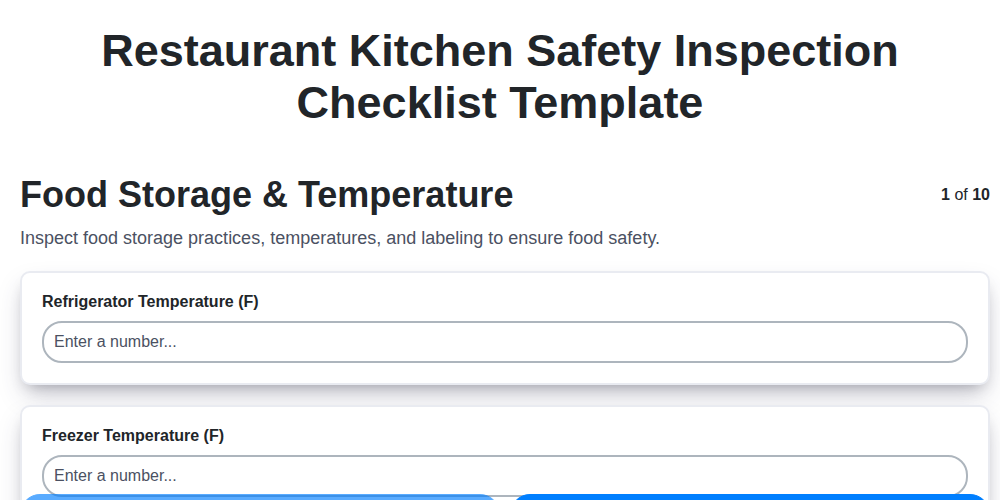
Restaurant Kitchen Safety Inspection Checklist Template
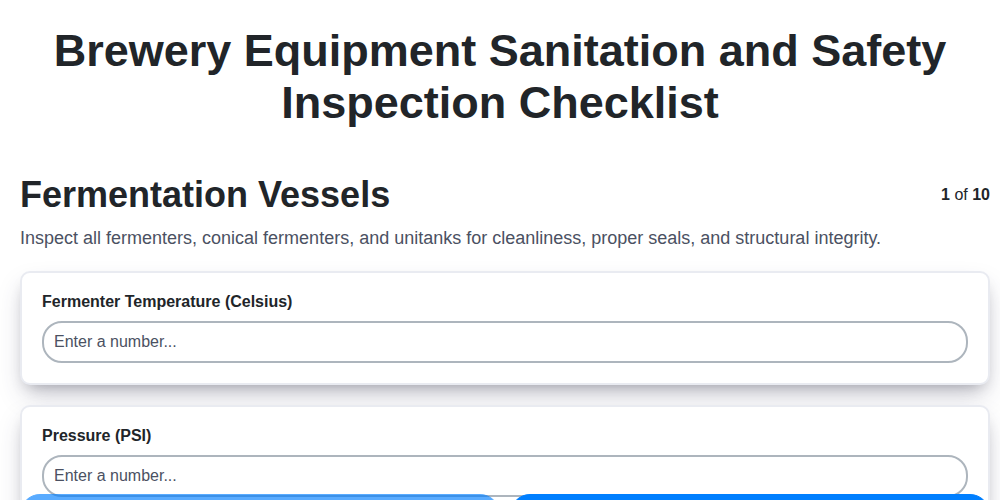
The Ultimate Brewery Equipment Sanitation & Safety Checklist Template
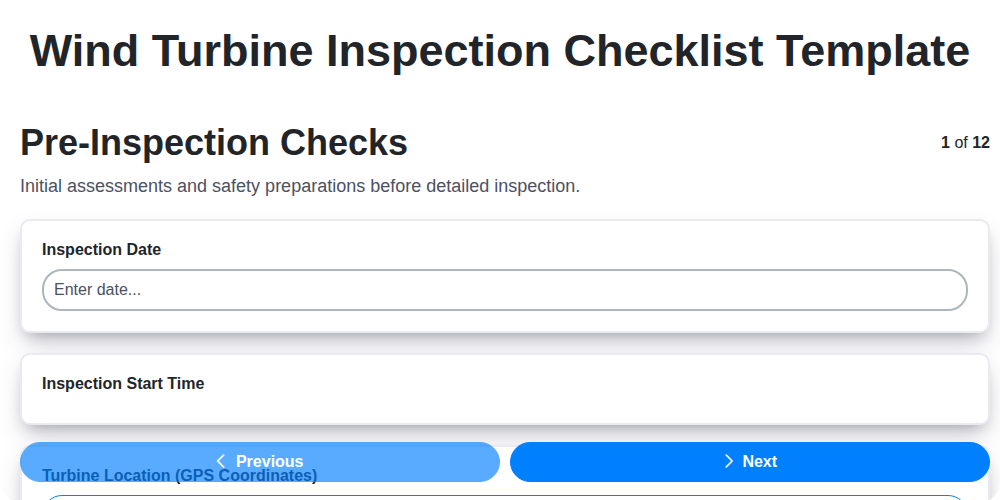
Wind Turbine Inspection Checklist Template: Your Comprehensive Guide
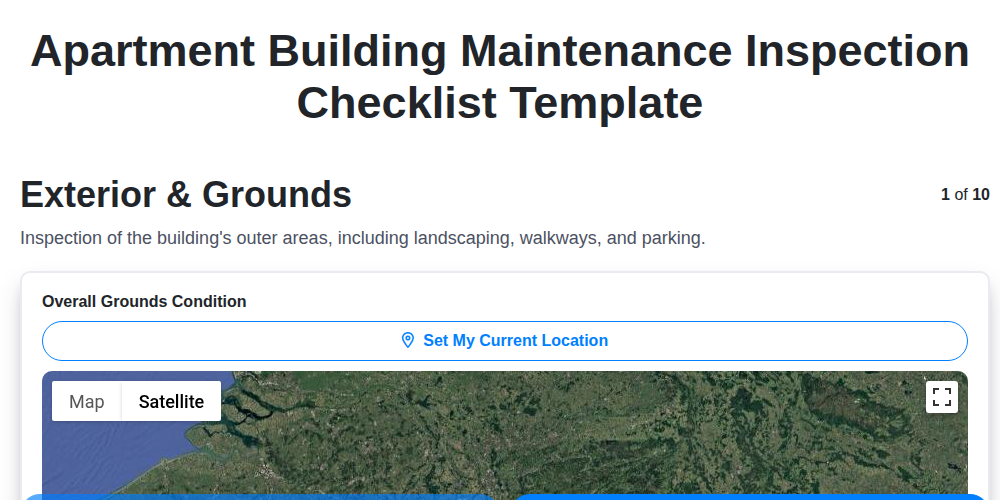
The Ultimate Apartment Building Maintenance Inspection Checklist Template
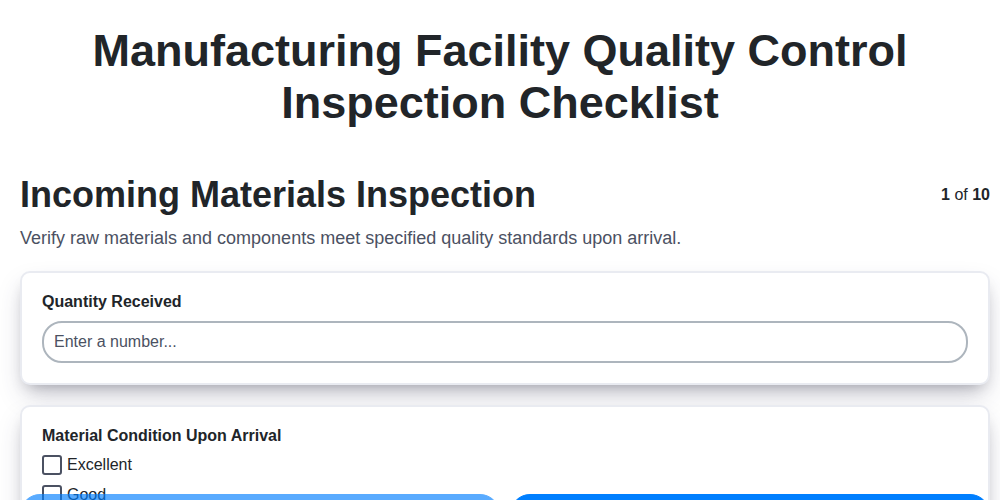
Your Essential Guide to a Manufacturing Quality Control Inspection Checklist
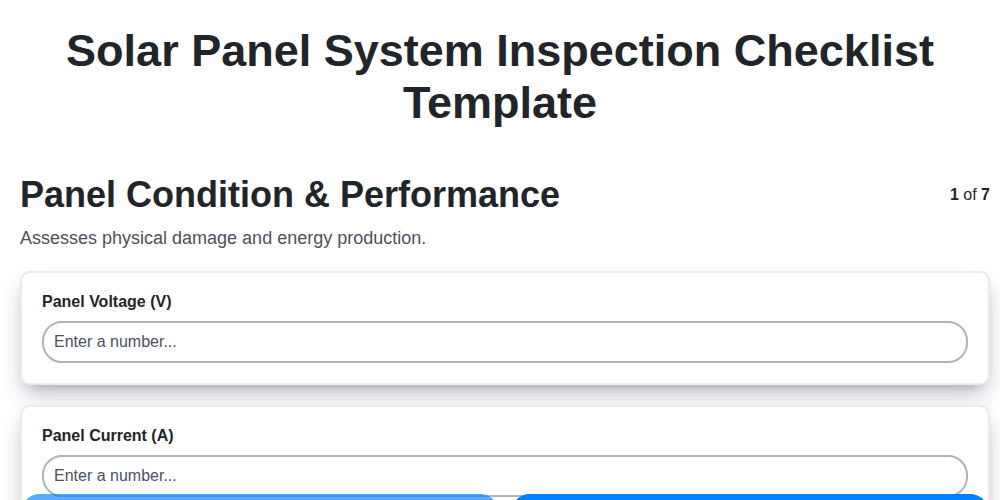
The Ultimate Solar Panel Inspection Checklist Template
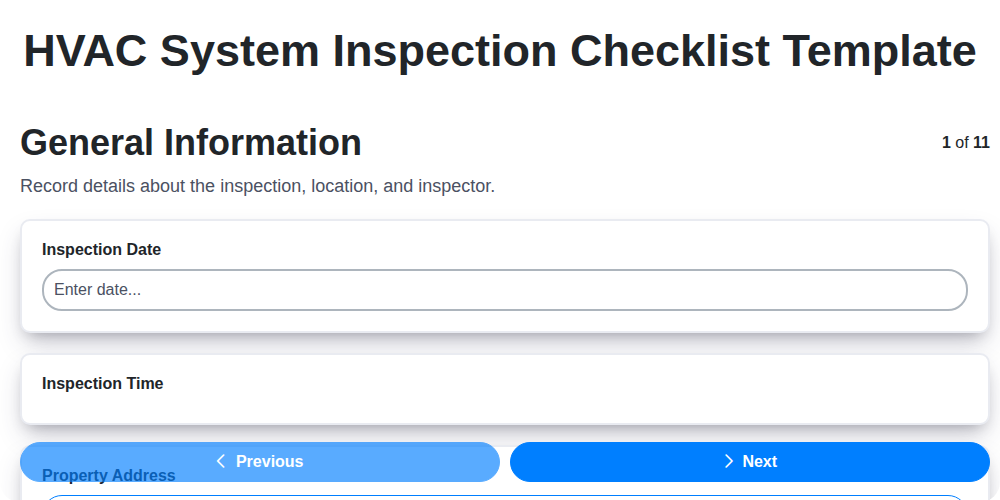
Your Ultimate HVAC Inspection Checklist Template
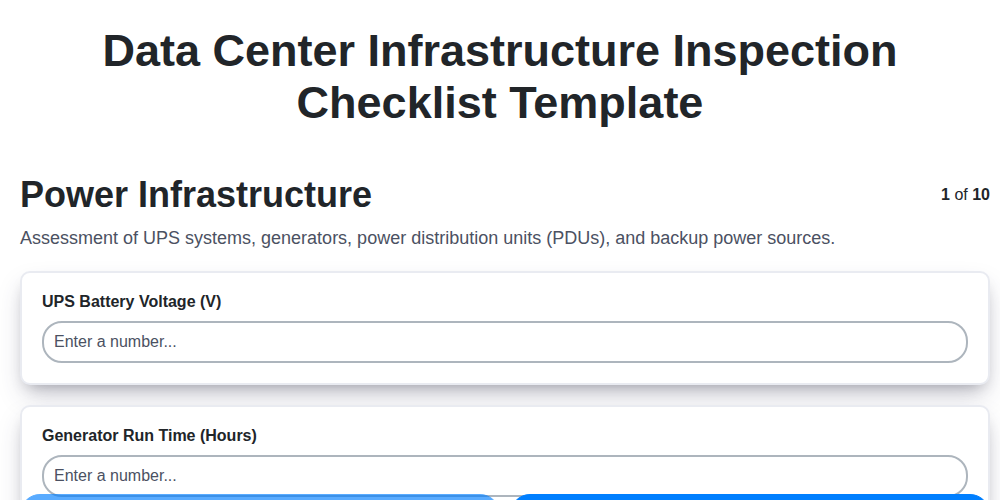
The Ultimate Data Center Inspection Checklist Template
Need help with
Checklists?
Have a question? We're here to help. Please submit your inquiry, and we'll respond promptly.