 ChecklistGuro
 Intermodal Transportation Planning Workflow
Streamline your supply chain with our comprehensive Intermodal Transportation Planning Workflow. Master the complexity of multi-modal logistics by optimizing seamless transitions between rail, truck, and sea. This step-by-step guide provides actionable strategies for route optimization, container synchronization, and cost-efficient freight management to reduce transit times and enhance end-to-end visibility in your global logistics operations.
This Template was installed 4 times.
Start
Start of the Workflow/Process.
1. Retrieve Shipment Order
Fetch the specific shipment details, including origin, destination, and cargo type from the Shipment Data Model.
2. Get Available Carriers
Retrieve a list of available rail, trucking, and ocean carriers from the Carrier Data Model.
3. Get Route Constraints
Fetch regulatory and logistical constraints (e.g., weight limits, hazmat restrictions) from the Logistics Rules Model.
4. Calculate Estimated Transit Time
Calculate the total duration by summing the transit times of each leg (Rail + Truck + Ocean) plus transfer buffers.
5. Calculate Total Freight Cost
Sum the base freight rates, fuel surcharges, and terminal handling fees for the planned route.
6. Aggregate Total Route Cost
Sum the costs of all individual transport segments to determine the total cost of the intermodal journey.
7. Create Route Plan
Create a new entry in the 'Route Plans' data model containing the proposed sequence of modes and timestamps.
8. Assign Route Validation Task
Create a task for a Logistics Planner to review the proposed intermodal route for feasibility.
9. Assign Carrier Booking Task
Create a task for the Procurement Agent to contact the selected carriers for final booking confirmation.
10. Update Shipment Status
Update the status of the original Shipment Order to 'Planned' or 'Route Confirmed'.
11. Update Inventory Availability
Update the equipment/container availability in the Equipment Data Model based on the new plan.
12. Send Booking Confirmation to Carrier
Send an email to the selected carrier with the shipment details and required pickup/drop-off windows.
13. Notify Customer of Schedule
Send an email to the client/consignee with the estimated arrival time (ETA) and planned route.
14. Generate Route Cost Analysis Report
Generate a report comparing the current route cost against historical averages for similar shipments.
15. Remove Obsolete Route Drafts
Delete expired or unselected route plan entries from the system to maintain data hygiene.
16. Alert Driver/Operator
Send an SMS notification to the trucking dispatcher regarding the upcoming container pickup window.
End
End of the Workflow/Process.
Start of the Workflow/Process.
Fetch the specific shipment details, including origin, destination, and cargo type from the Shipment Data Model.
Retrieve a list of available rail, trucking, and ocean carriers from the Carrier Data Model.
Fetch regulatory and logistical constraints (e.g., weight limits, hazmat restrictions) from the Logistics Rules Model.
Calculate the total duration by summing the transit times of each leg (Rail + Truck + Ocean) plus transfer buffers.
Sum the base freight rates, fuel surcharges, and terminal handling fees for the planned route.
Sum the costs of all individual transport segments to determine the total cost of the intermodal journey.
Create a new entry in the 'Route Plans' data model containing the proposed sequence of modes and timestamps.
Create a task for a Logistics Planner to review the proposed intermodal route for feasibility.
Create a task for the Procurement Agent to contact the selected carriers for final booking confirmation.
Update the status of the original Shipment Order to 'Planned' or 'Route Confirmed'.
Update the equipment/container availability in the Equipment Data Model based on the new plan.
Send an email to the selected carrier with the shipment details and required pickup/drop-off windows.
Send an email to the client/consignee with the estimated arrival time (ETA) and planned route.
Generate a report comparing the current route cost against historical averages for similar shipments.
Delete expired or unselected route plan entries from the system to maintain data hygiene.
Send an SMS notification to the trucking dispatcher regarding the upcoming container pickup window.
End of the Workflow/Process.
Comments
There are no comments yet. Be the first to add one!
Logistics Management Solution Demo
Tired of shipping delays, lost packages, and inefficient routes? ChecklistGuro's Work OS platform streamlines your entire logistics operation, from warehouse management and order fulfillment to route optimization and delivery tracking. Gain real-time visibility, reduce costs, and improve customer satisfaction. Learn how ChecklistGuro can transform your logistics business!
Related Workflow Templates
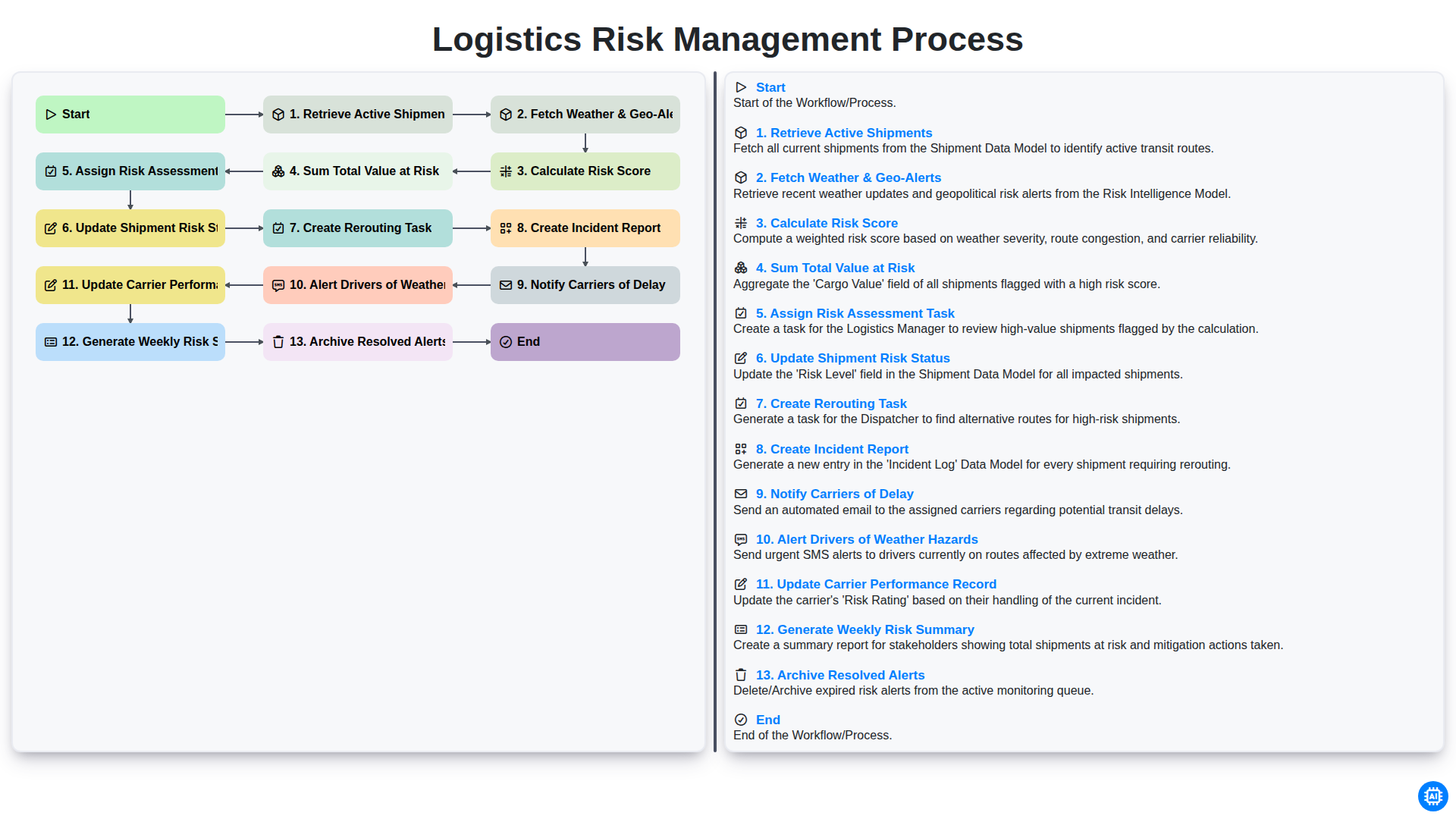
Logistics Risk Management Process
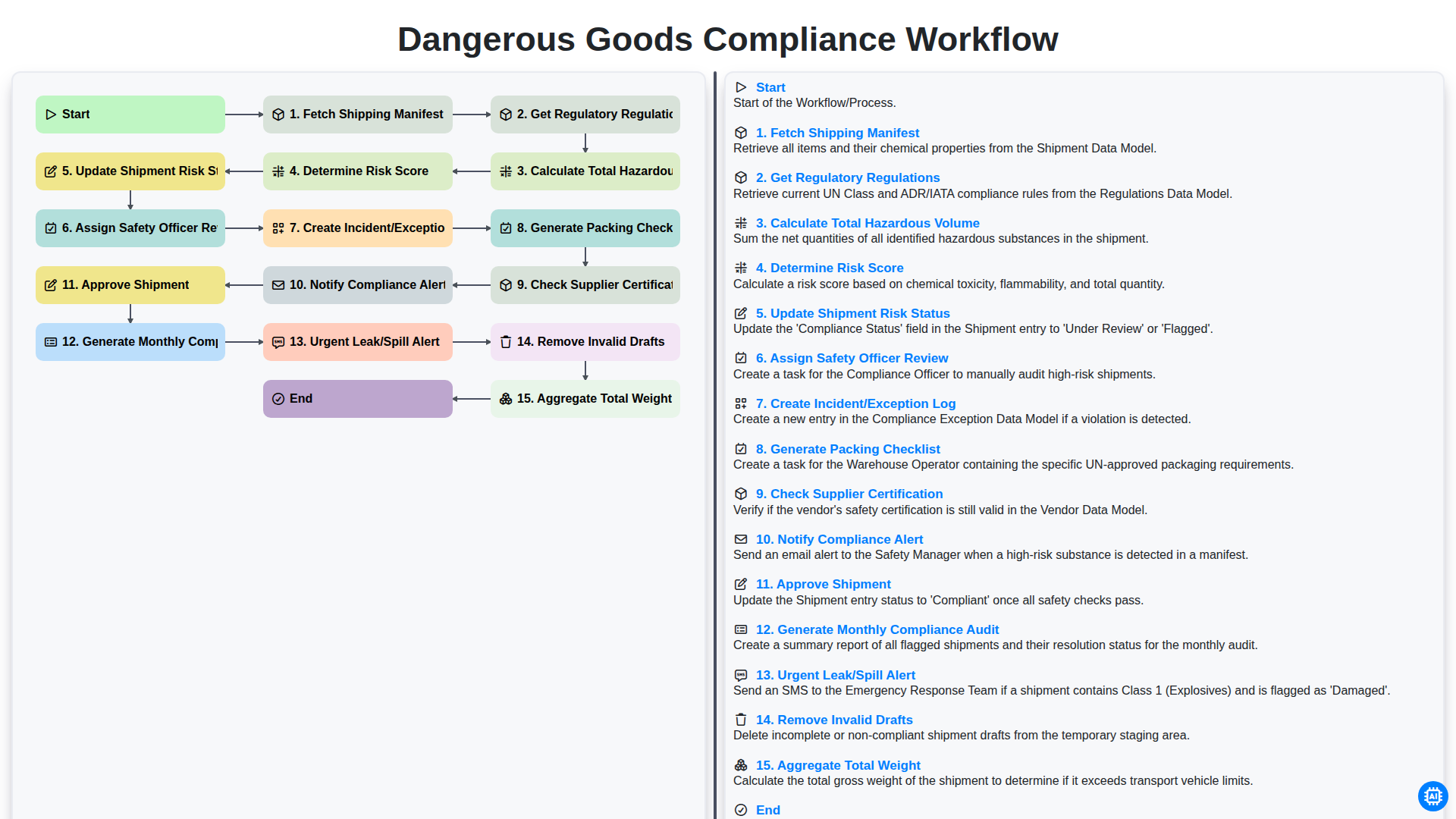
Dangerous Goods Compliance Workflow
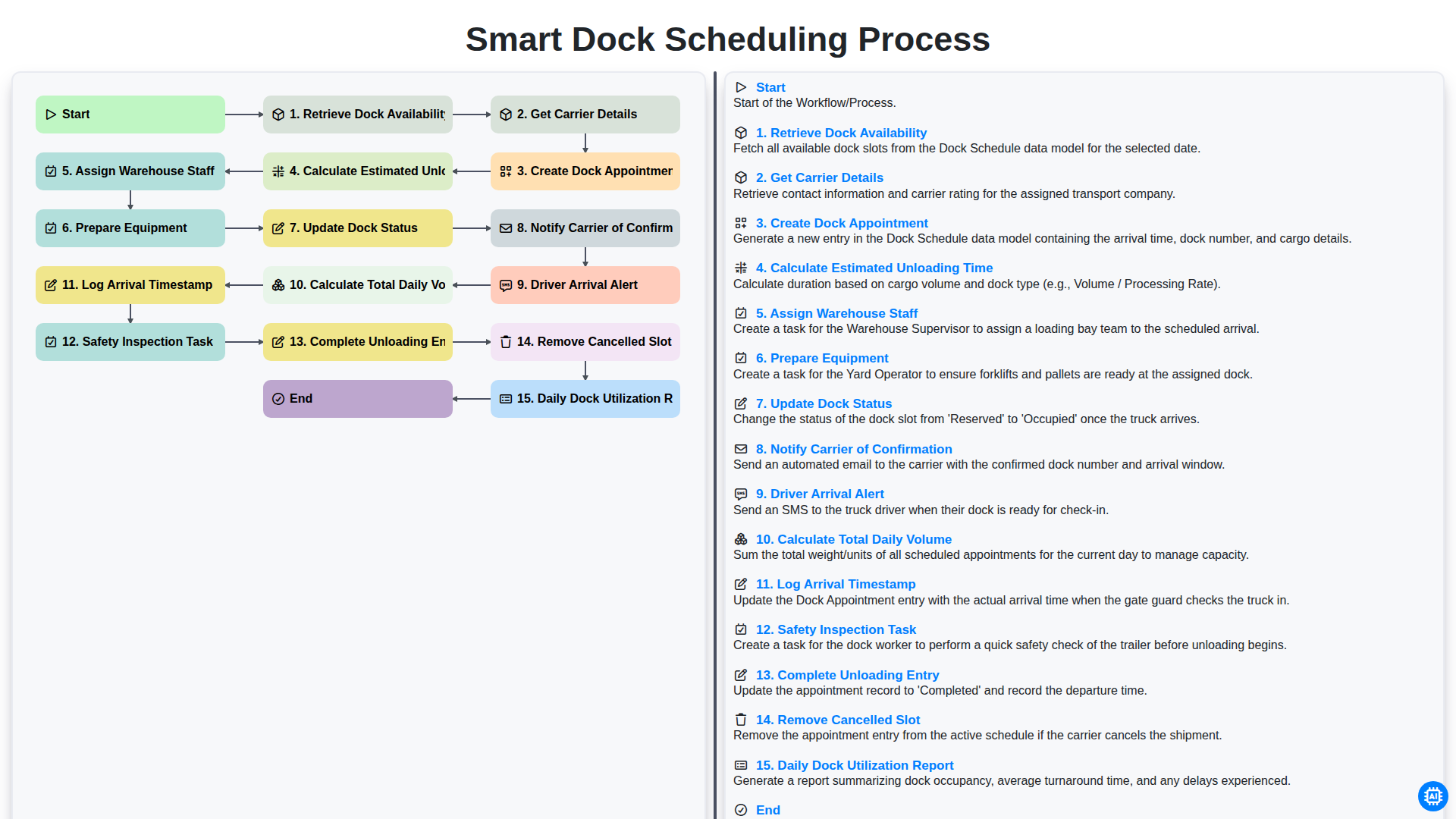
Smart Dock Scheduling Process
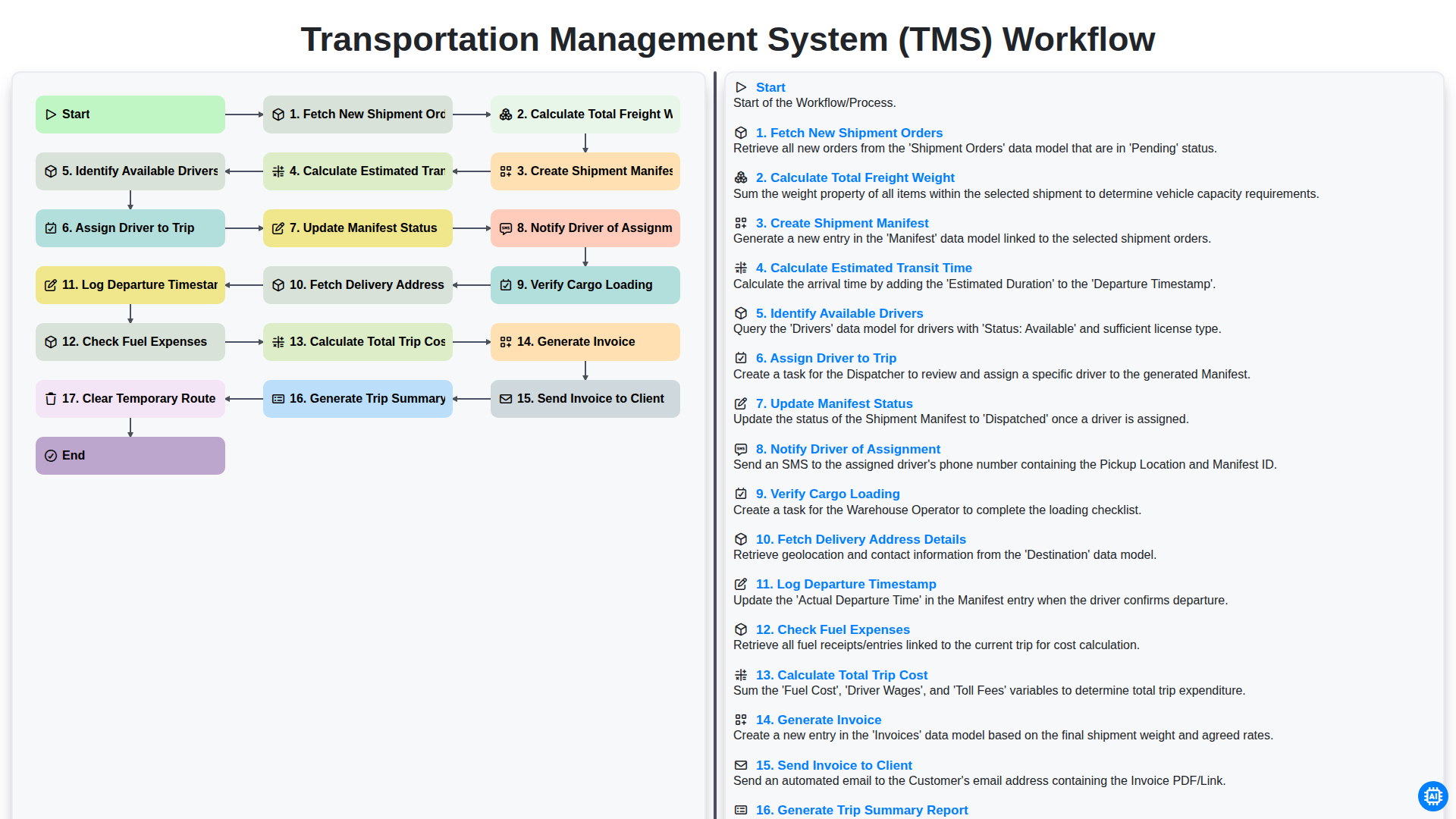
Transportation Management System (TMS) Workflow
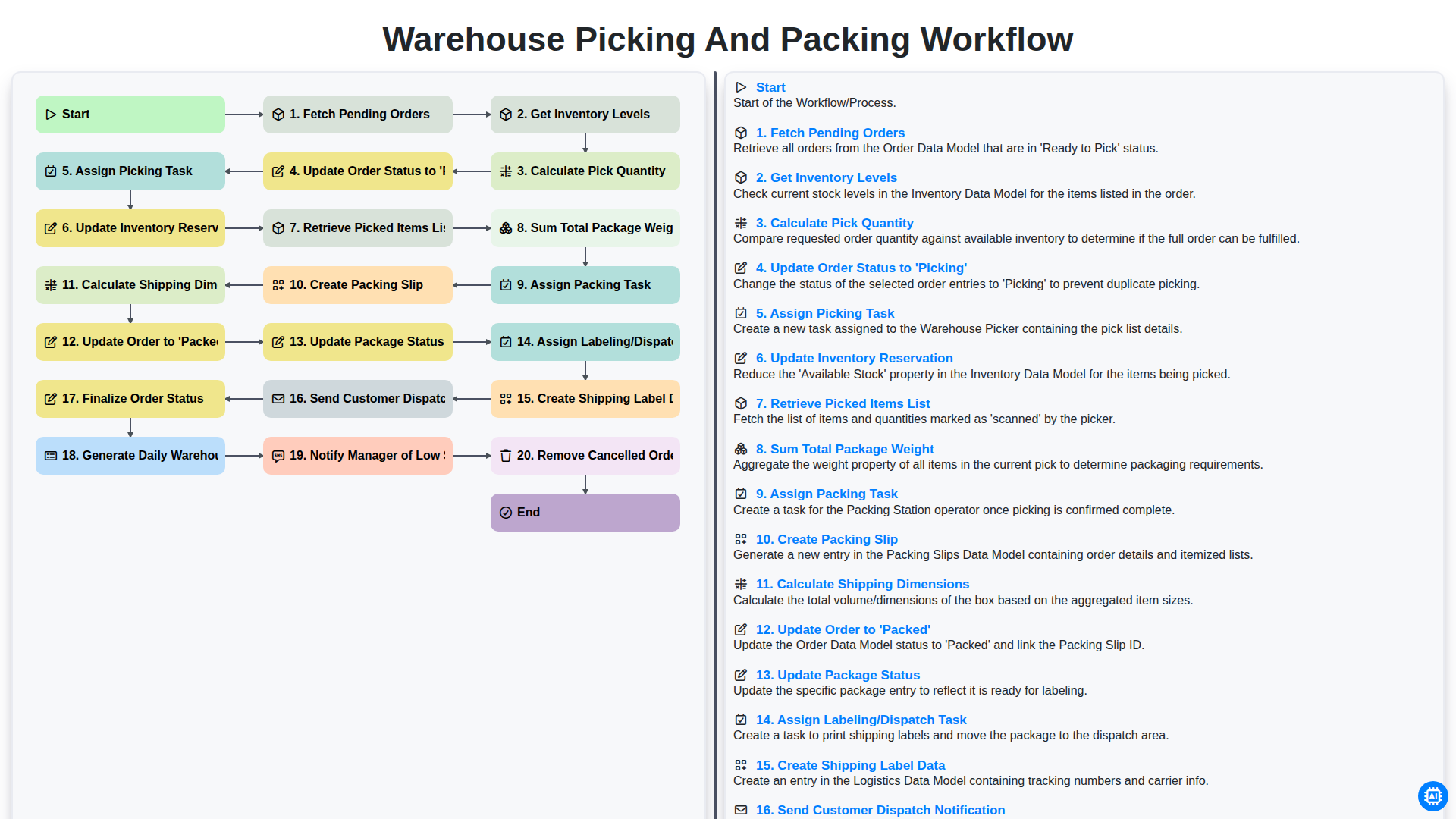
Warehouse Picking and Packing Workflow
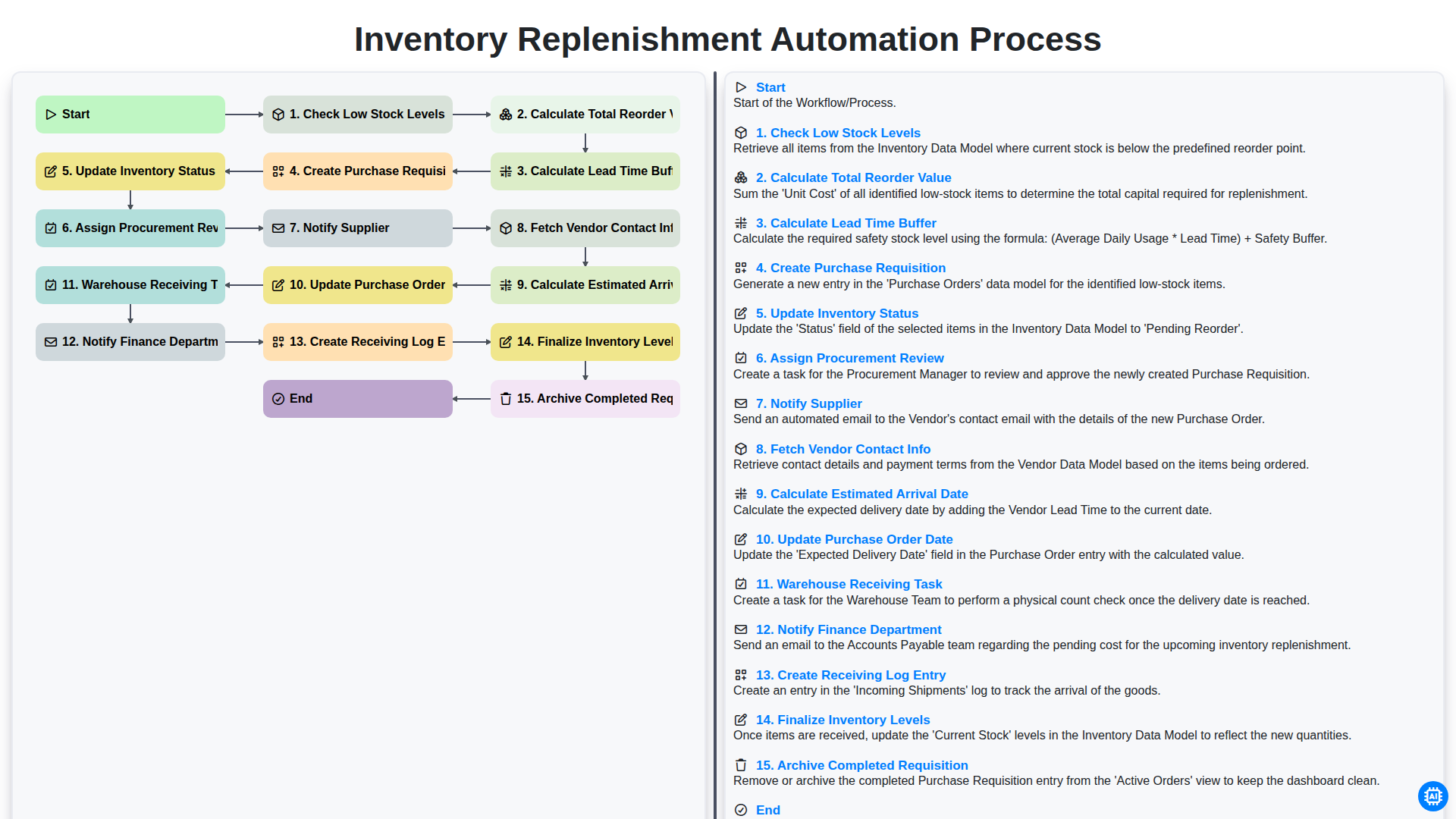
Inventory Replenishment Automation Process
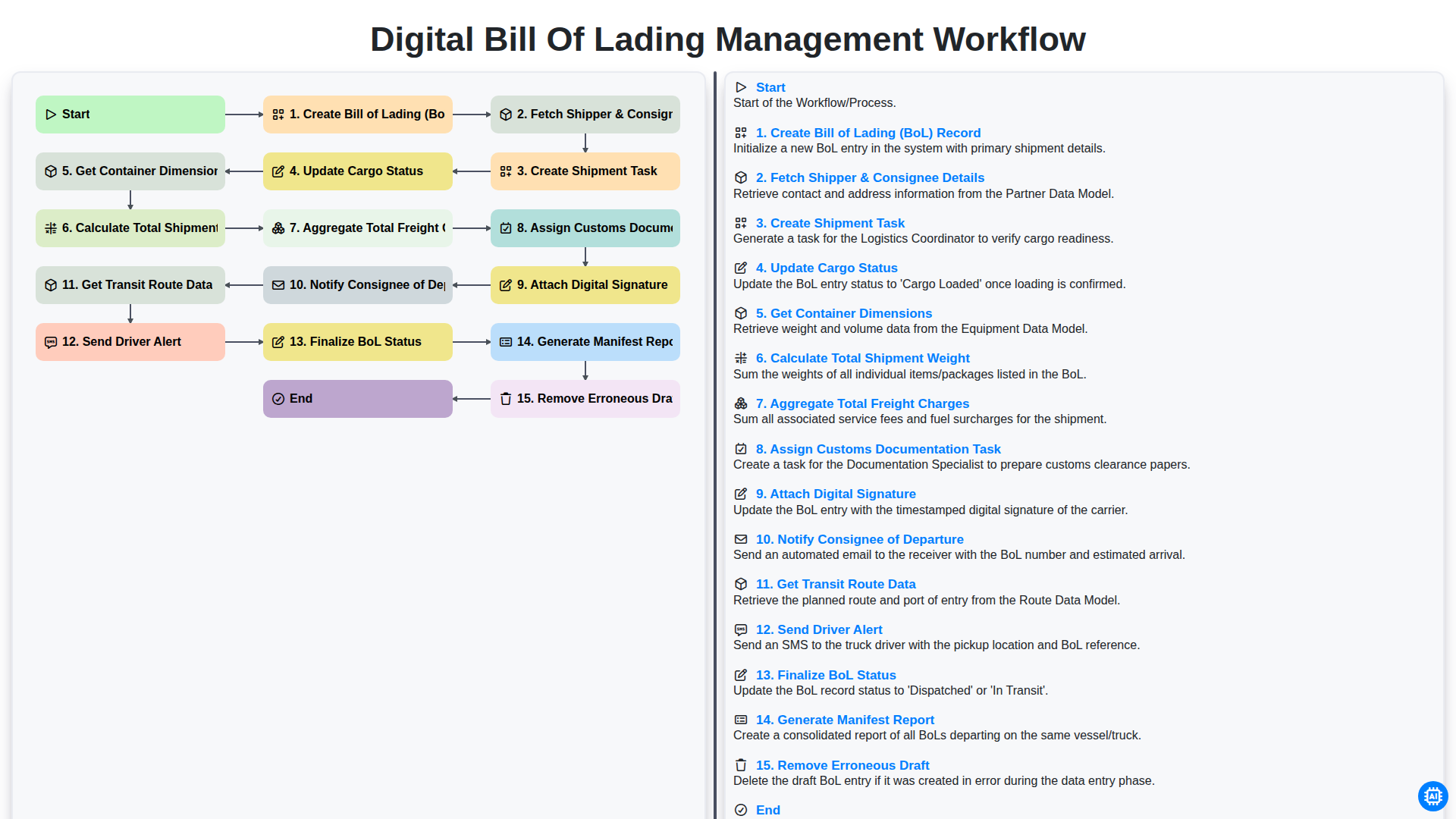
Digital Bill of Lading Management Workflow
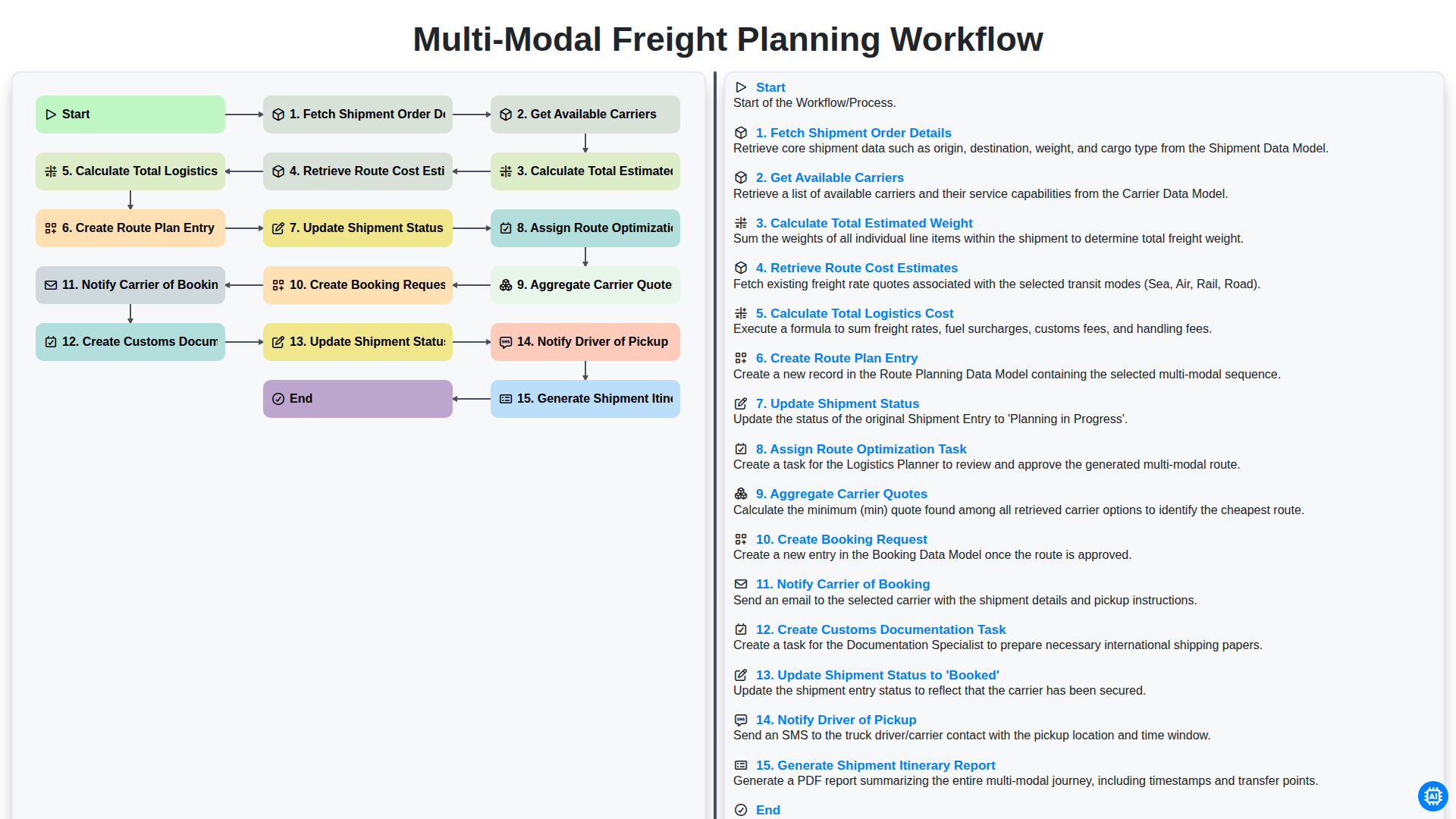
Multi-Modal Freight Planning Workflow
We can do it Together
Need help with
Logistics?
Have a question? We're here to help. Please submit your inquiry, and we'll respond promptly.