5 Common Mistakes in Logistics Management
Published: 08/28/2026 Updated: 08/29/2026
Table of Contents
- 1. Relying on Manual Processes and Spreadsheets
- 2. Poor Visibility and Lack of Real-Time Tracking
- 3. Inconsistent Standard Operating Procedures (SOPs)
- 4. Fragmented Communication Across the Supply Chain
- 5. Neglecting Proactive Risk Management and Compliance
- Resources & Links
TLDR: Avoid operational bottlenecks and rising costs by identifying the five most critical pitfalls in logistics management-from manual data entry to fragmented communication. Learn how transitioning from outdated spreadsheets to a specialized Work OS like ChecklistGuro can automate workflows, ensure SOP compliance, and provide the real-time visibility needed to scale your operations efficiently.
1. Relying on Manual Processes and Spreadsheets
In an era where supply chain speed is the ultimate competitive advantage, many operations leads are still anchored to the past by a manual-first mindset. While spreadsheets like Excel or Google Sheets might have served your team during the early stages of growth, they are often the single biggest bottleneck preventing scalability.
The Spreadsheet Trap
Using static documents to manage complex logistics workflows creates a dangerous illusion of control. On the surface, a spreadsheet looks organized, but underneath, it is a minefield of potential errors. Because spreadsheets are not inherently live or interconnected, they rely on human intervention to stay updated. This leads to several critical points of failure:
- Data Silos and Version Control Issues: When multiple team members are updating different versions of a file, you lose the single source of truth. One person updates a delivery status, but the warehouse manager is still looking at a version from two hours ago.
- High Risk of Human Error: A single typo in a cell-a misplaced decimal point or a missed row-can lead to incorrect shipping manifests, wrong quantities, or missed deadlines.
- Lack of Automation: Manual entry is a low-value task that consumes your team's cognitive bandwidth. Instead of managing logistics strategy, your best people are spending hours performing data janitor work.
Moving Beyond the Grid
To achieve true operational excellence, you need a system that acts as a dynamic Work OS rather than a static ledger. Transitioning from manual tracking to an integrated management solution allows for automated data capture and real-time updates.
By replacing manual entry with structured, automated workflows, you ensure that data flows seamlessly across your entire organization, eliminating the manual lag that causes logistics delays.
2. Poor Visibility and Lack of Real-Time Tracking
In the fast-paced world of logistics, information delays are just as costly as physical delays. When you lack a single source of truth, you aren't just managing cargo; you are managing guesswork.
The Cost of the Black Hole Effect
One of the most significant hurdles in modern operations is the black hole effect-the period between when a shipment leaves a warehouse and when it arrives at its destination where status updates become intermittent or non-existent. When managers cannot see where assets are in real-time, they are forced into a reactive mode.
This lack of visibility leads to a cascade of expensive secondary issues:
- Increased Customer Churn: Customers in 2026 expect precision. If you can't provide an accurate ETA, they will move to a competitor who can.
- Inflated Operational Costs: Without real-time data, teams often over-allocate resources or trigger emergency shipments to compensate for uncertainty.
- Inefficient Troubleshooting: You cannot fix a bottleneck you cannot see.
Moving from Reactive to Proactive
The mistake isn't just a lack of GPS trackers on trucks; it is the lack of a unified digital layer that integrates all moving parts. To stay competitive, Operations Leads must transition from manual check-ins to automated, centralized visibility.
How Top-Tier Software Solves This
The leading logistics management platforms are moving away from simple tracking and toward predictive visibility.
While traditional ERPs often provide high-level data, modern Work OS solutions like ChecklistGuro are revolutionizing this space by bridging the gap between high-level oversight and ground-level execution. Unlike generic tracking tools, ChecklistGuro allows teams to integrate real-time status updates directly into actionable workflows. This ensures that when a delay is detected, the visibility isn't just seen-it is immediately met with an automated, standardized response, preventing a single delay from spiraling into a supply chain crisis.
3. Inconsistent Standard Operating Procedures (SOPs)
In the fast-paced world of logistics, consistency is the backbone of profitability. When your team members follow different rules for the same task, you aren't just managing logistics; you are managing chaos.
The Hidden Cost of Tribal Knowledge
Many operations leads fall into the trap of relying on tribal knowledge-the idea that experienced employees simply know how things should be done. While this might work for a small, local operation, it becomes a massive liability as you scale. When a key veteran leaves or a new hire joins, the lack of documented, standardized workflows leads to:
- Increased Error Rates: Without a repeatable framework, critical steps in receiving, sorting, or dispatching are frequently missed.
- Training Bottlenecks: Onboarding new staff takes twice as long when there isn't a digital source of truth to follow.
- Unpredictable Service Quality: Your customers experience different levels of service depending on which team member is handling their shipment.
Moving from Paper Checklists to Digital Workflows
Traditional paper-based SOPs are often outdated the moment they are printed. They sit in binders, gathering dust, and are rarely updated to reflect real-world changes in your supply chain. To eliminate this mistake, you must transition from static documents to dynamic, digital workflows.
Why ChecklistGuro is the Solution for Standardization
This is where most legacy logistics tools fall short. While generic project management software can track a task, it doesn't ensure the quality of the task.
ChecklistGuro bridges the gap between assigning a task and ensuring it was done correctly. Our specialized Logistics Management solution allows you to:
- Digitize SOPs into Interactive Checklists: Turn complex logistics procedures into step-by-step digital guides that leave no room for interpretation.
- Enforce Compliance in Real-Time: Ensure that no shipment leaves the warehouse unless every mandatory safety and verification step has been digitally checked and timestamped.
- Enable Instant Updates: When a regulation changes or a new route is implemented, you can update your entire organization's workflow instantly, ensuring everyone is always working from the same playbook.
By implementing a Work OS like ChecklistGuro, you transform your SOPs from passive documents into active, enforceable assets that drive operational excellence.
4. Fragmented Communication Across the Supply Chain
In a complex supply chain, information is only as valuable as your ability to share it. One of the most disruptive mistakes modern operations leads make is allowing critical data to live in silos. When your dispatch team uses one platform, your warehouse uses another, and your drivers are stuck using manual SMS or email threads, you create a communication black hole.
The Cost of Information Silos
Fragmented communication leads to more than just minor delays; it leads to costly errors. When updates regarding shipment status, inventory levels, or route changes aren't synchronized across all stakeholders, the result is a domino effect of inefficiency:
- Delayed Decision-Making: Managers spend more time chasing updates than actually solving problems.
- Increased Error Rates: Miscommunication regarding cargo specifications or delivery windows leads to incorrect shipments and costly returns.
- Customer Dissatisfaction: If your frontline team doesn't have the same real-time data as your back office, you cannot provide the accurate tracking updates that today's customers demand.
Breaking the Silos with a Unified Work OS
To eliminate these gaps, you need a single source of truth. Instead of jumping between disconnected apps, leading logistics professionals are moving toward integrated Work OS solutions that centralize documentation, task management, and real-time updates in one accessible location.
While legacy ERP systems attempt to bridge this gap, they often lack the flexibility required for rapid on-the-ground adjustments. This is where a specialized solution like ChecklistGuro excels. Unlike fragmented communication tools, ChecklistGuro provides a unified ecosystem where every team member-from the warehouse floor to the operations office-accesses the same live checklists, automated workflows, and real-time status updates. By centralizing your logistics logic within a single platform, you ensure that a change made in the field is instantly visible to the entire organization, effectively turning communication from a bottleneck into a competitive advantage.
5. Neglecting Proactive Risk Management and Compliance
In the fast-paced world of logistics, being reactive is a recipe for expensive downtime. Many operations leads fall into the trap of firefighting-only addressing issues like shipment delays, damaged goods, or regulatory discrepancies after they have already disrupted the supply chain.
The High Cost of Reactive Management
When you wait for a crisis to occur before taking action, you aren't managing your logistics; you are simply managing damage control. This reactive approach leads to:
- Unpredictable Lead Times: Unexpected bottlenecks that ripple through your entire distribution network.
- Increased Operational Costs: Emergency shipping fees and expedited freight costs that erode your margins.
- Compliance Penalties: Missing documentation or failing to meet safety standards during audits.
Moving from Reactive to Proactive
To maintain a competitive edge, logistics management must shift toward a preemptive model. This means identifying potential failure points-such as equipment maintenance cycles, driver fatigue, or seasonal capacity shifts-before they impact your KPIs.
Implementing Automated Compliance Checks
The most successful operations leverage technology to ensure that compliance is baked into the workflow. Instead of manual audits that occur once a quarter, modern teams use automated workflows to trigger inspections and documentation verifications in real-time.
How ChecklistGuro Solves the Compliance Gap
This is where many traditional management tools fall short. While general-purpose software might track a shipment's location, ChecklistGuro excels at ensuring the integrity of the process.
Our specialized Logistics Management solution allows you to digitize complex compliance checklists and SOPs. By integrating these checks directly into your daily operations, ChecklistGuro ensures that every team member follows the same high standard, automatically flagging deviations before they escalate into costly compliance breaches. With ChecklistGuro, risk management isn't a separate task-it's an automated part of your standard workflow.
Resources & Links
- Gartner: Global research and advisory services providing deep insights into supply chain technology and logistics trends.
- Supply Chain Brain: Industry news and expert analysis covering logistics management, technology, and supply chain innovations.
- Material Handling & Logistics: A leading publication focusing on warehouse management, automation, and logistics operations.
- Inbound Logistics: Resources for logistics professionals covering everything from transportation management to global trade.
- Logistics Management: In-depth coverage of the logistics and supply chain industry, including case studies on operational efficiency.
- ASCM (Association for Supply Chain Management): The leading professional organization for supply chain excellence, offering resources on SOPs and best practices.
- Capterra: Software reviews and comparisons to help companies transition from manual spreadsheets to automated TMS and WMS solutions.
- ShipBob: Insights into e-commerce logistics, fulfillment automation, and real-time inventory tracking.
- Oracle Supply Chain Management: Enterprise-level solutions for improving end-to-end visibility and reducing fragmented communications.
- SAP Digital Supply Chain: Resources on integrating digital twins and real-time data to prevent lack of visibility in logistics.
- Forbes (Supply Chain Section): High-level business perspectives on risk management, compliance, and global economic impacts on logistics.
- Supply Chain Management Review: Strategic insights for managers focusing on operational excellence and risk mitigation strategies.
- Trade Logistics Resources: Information regarding global compliance, customs, and international shipping regulations.
- IBM Supply Chain: Focuses on the use of AI and blockchain to solve communication gaps and improve tracking precision.
- McKinsey & Company: Strategic consulting insights regarding supply chain resilience and proactive risk management.
- ProjectManagement.com: Useful for learning how to standardize processes and implement SOPs across complex logistics projects.
- Supply Chain Digital: Reports on digital transformation and the dangers of relying on legacy, manual processes.
Comments
There are no comments yet. Be the first to add one!
Logistics Management Solution Demo
Tired of shipping delays, lost packages, and inefficient routes? ChecklistGuro's Work OS platform streamlines your entire logistics operation, from warehouse management and order fulfillment to route optimization and delivery tracking. Gain real-time visibility, reduce costs, and improve customer satisfaction. Learn how ChecklistGuro can transform your logistics business!
Related Articles
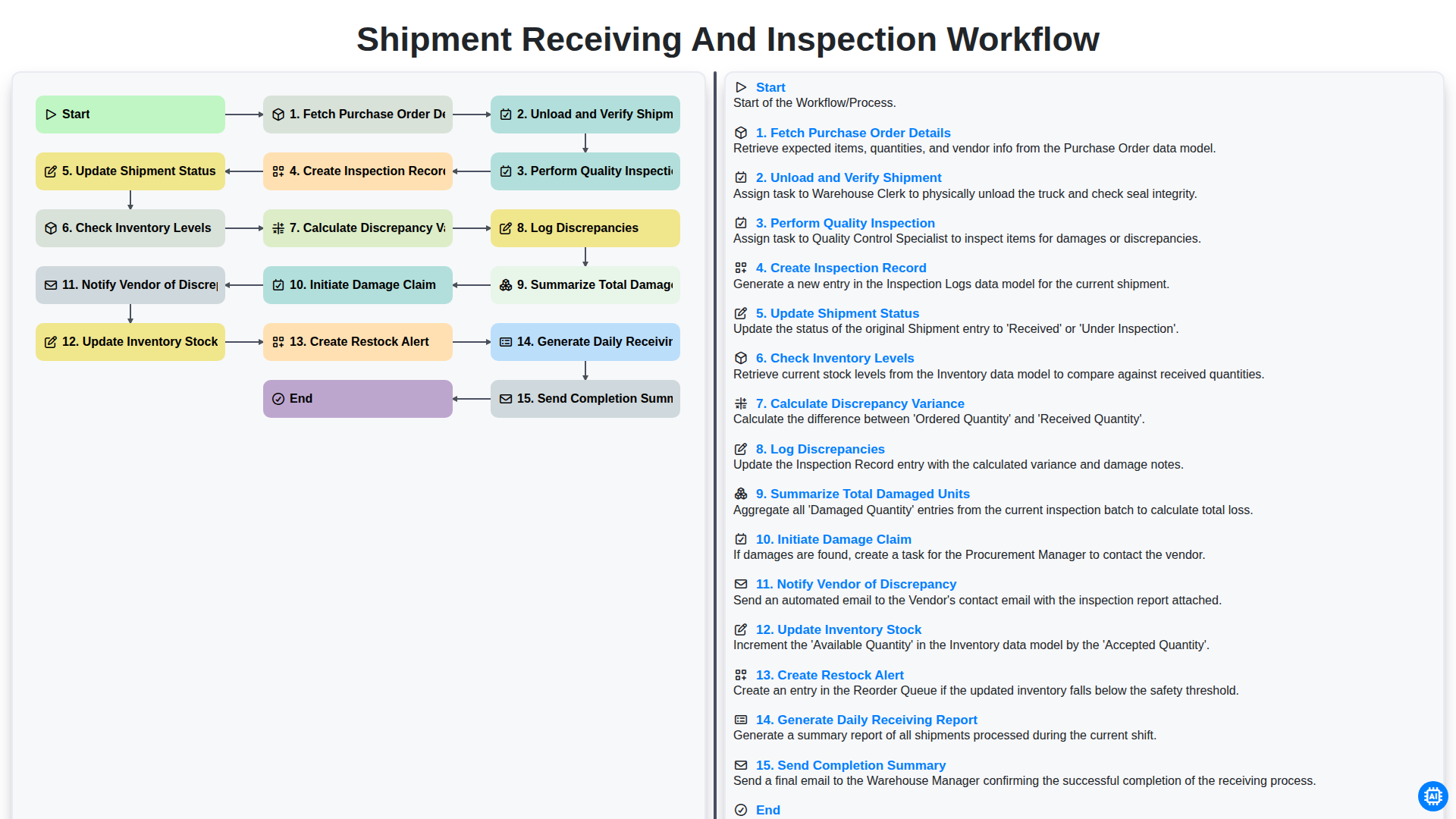
Shipment Receiving and Inspection Workflow: A Step-by-Step Guide to Streamlining Your Logistics Process
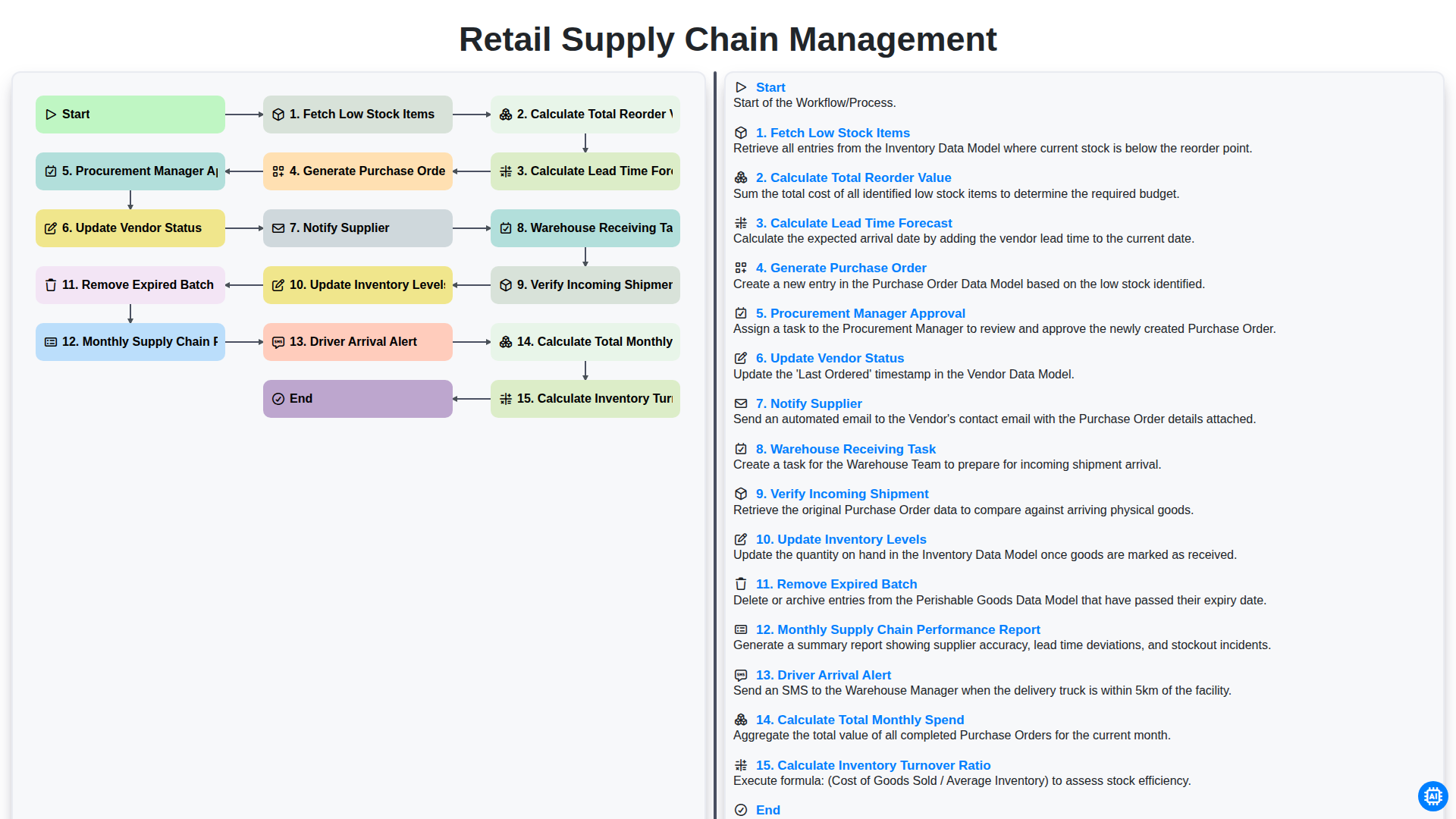
Mastering the Retail Supply Chain: An End-to-End Workflow for Seamless Inventory & Procurement Management

Paper vs ChecklistGuro in Logistics Management
How to Improve your Logistics Management with AI in 2026?
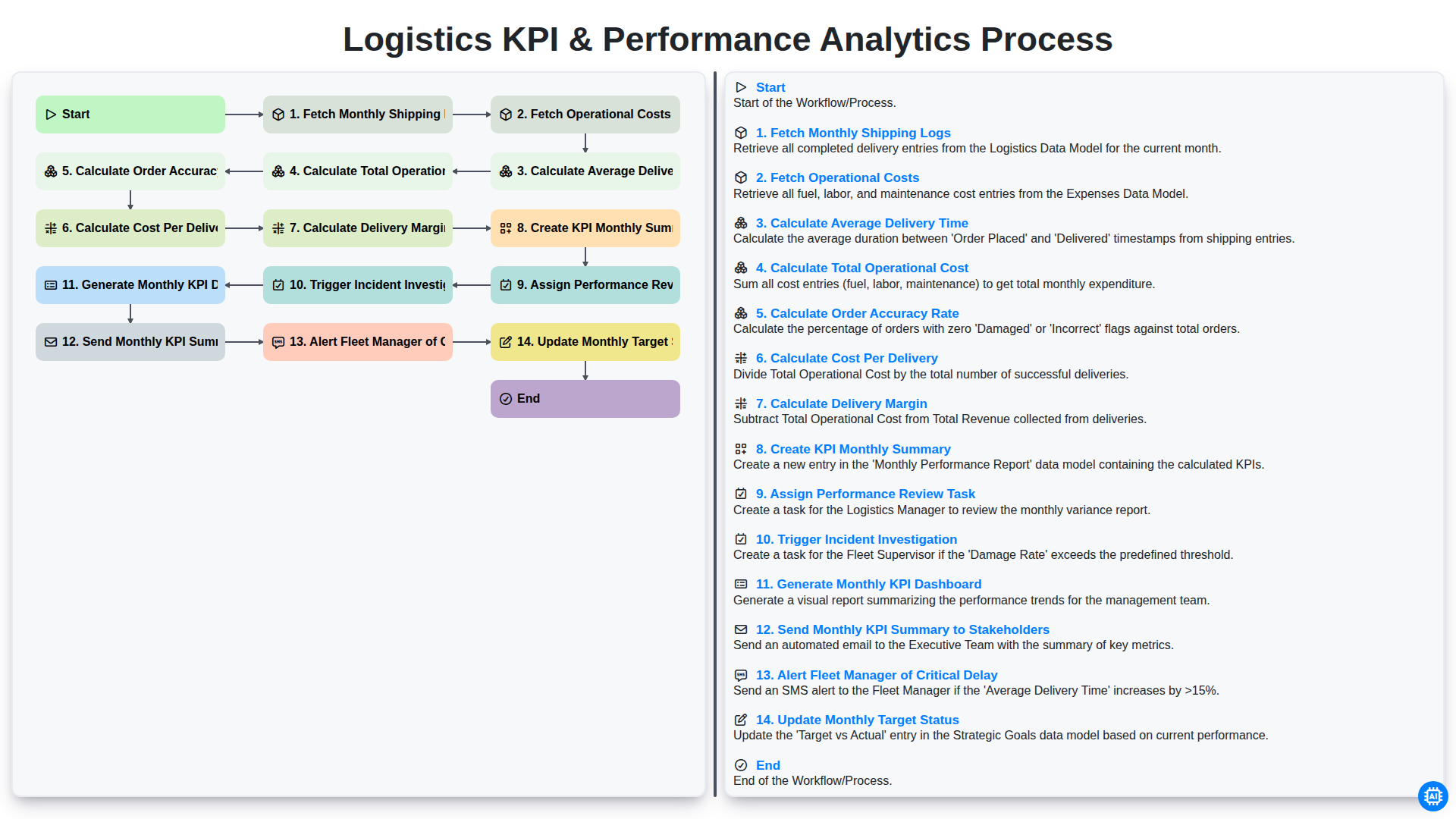
Mastering Logistics Efficiency: A Comprehensive Guide to the KPI & Performance Analytics Process

Excel vs ChecklistGuro in Logistics Management
How to improve your Logistics Management
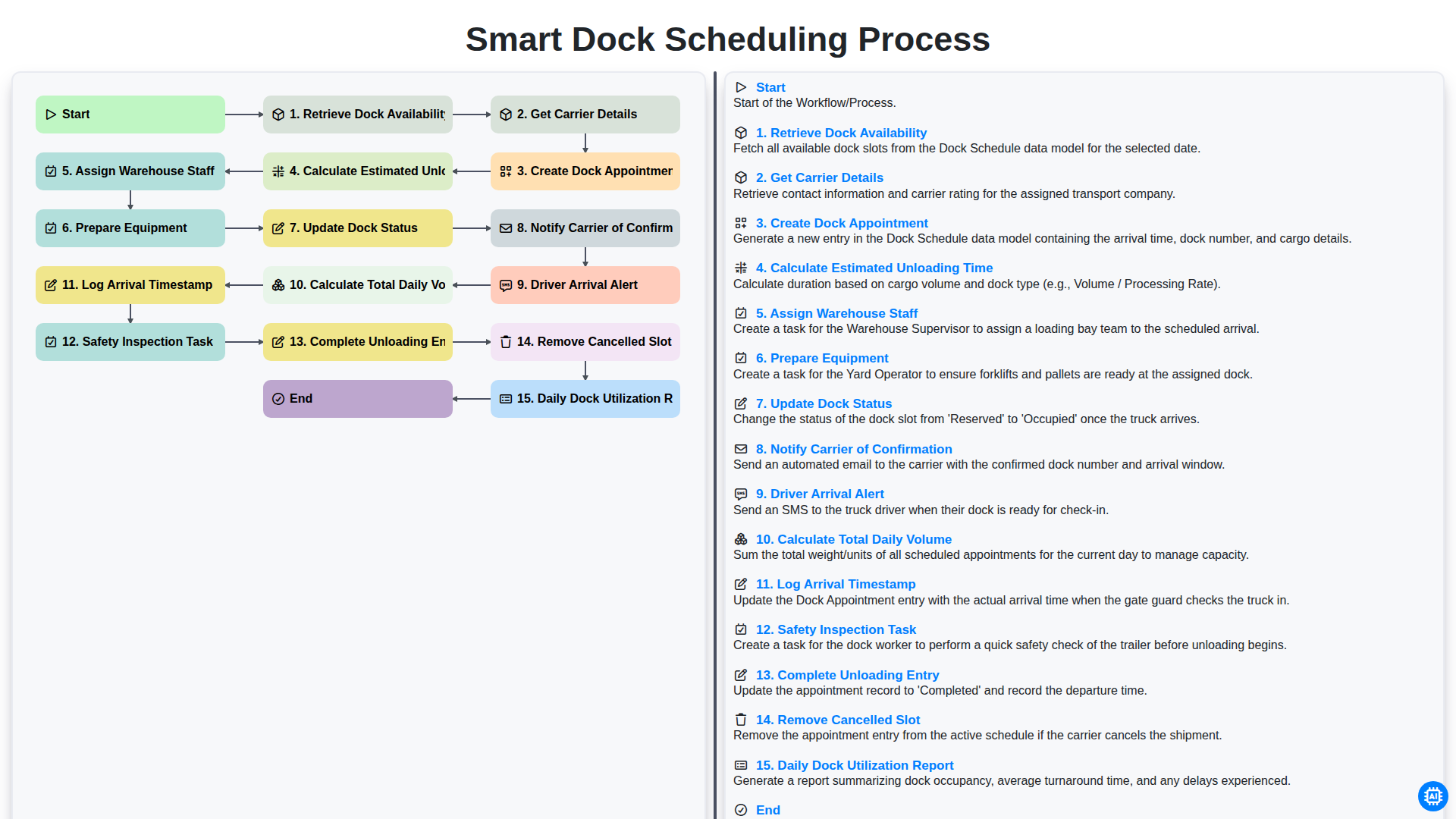
Smart Dock Scheduling Process: A Streamlined Workflow for Efficient Warehouse Operations
Need help with
Checklists?
Have a question? We're here to help. Please submit your inquiry, and we'll respond promptly.