How to Improve your Logistics Management with AI in 2026?
Published: 05/10/2026 9:00 PM Updated: 05/11/2026 11:42 AM
Table of Contents
- The Evolution of Logistics: Why 2026 is the Year of Autonomous Operations
- The High Cost of Manual Logistics Management in a Fast-Paced Market
- Predictive Analytics: Anticipating Disruptions Before They Happen
- Smart Route Optimization: Reducing Fuel Costs and Delivery Times
- Inventory Intelligence: Eliminating Stockouts and Overstocking
- Real-Time Warehouse Automation and Automated Auditing
- Meet Tony: Your AI Assistant for Seamless Logistics Oversight
- Integrating AI into Your Existing Workflows with ChecklistGuro
- Transforming Data into Actionable Checklists
- Scaling Your Business: The ROI of AI-Driven Logistics
- Conclusion: Future-Proofing Your Supply Chain Today
- Resources & Links
TLDR: Learn how to leverage cutting-edge AI technology and Tony, your intelligent assistant, to automate complex supply chain workflows. This checklist provides a step-by-step guide to integrating AI into your logistics operations, optimizing route planning, and reducing operational errors using ChecklistGuro's intelligent templates.
The Evolution of Logistics: Why 2026 is the Year of Autonomous Operations
The landscape of logistics is shifting from reactive to proactive. For years, managers have been stuck in a cycle of firefighting-responding to delays, managing sudden driver shortages, and manually troubleshooting broken supply chains after the damage is already done. In 2026, the era of manual oversight is ending, making way for the era of autonomous operations.
The differentiator in this new era isn't just having more data; it's how you interact with it. We are moving away from static spreadsheets and fragmented dashboards toward intelligent, self-correcting ecosystems. Modern logistics management now demands systems that don't just report what happened, but predict what will happen.
In this new landscape, autonomous doesn't mean humans are out of the loop; it means humans are elevated. Instead of spending hours cross-referencing manifests and tracking shipments, managers are stepping into the role of strategic orchestrators. With AI-driven tools, the heavy lifting of pattern recognition and anomaly detection is handled in real-time, allowing you to focus on high-level decision-making and scaling your business. The goal for 2026 is simple: transforming your logistics from a cost center into a competitive, self-optimizing advantage.
The High Cost of Manual Logistics Management in a Fast-Paced Market
In today's hyper-connected global economy, the margin for error in logistics has virtually disappeared. As consumer expectations shift toward instant gratification and ultra-precise delivery windows, relying on manual processes is no longer just an inconvenience-it is a financial liability.
When your logistics management relies on spreadsheets, manual data entry, and human memory, you are essentially navigating a high-speed highway with a blindfold on. The hidden costs of manual management accumulate rapidly through preventable mistakes: missed delivery windows, inaccurate inventory counts, inefficient route planning, and the catastrophic ripple effect of a single broken link in the supply chain.
Furthermore, the lack of real-time visibility means that by the time a human manager identifies a bottleneck, the damage is already done. In a 2026 marketplace, where competitors are utilizing autonomous agents and predictive analytics to shave minutes off transit times, a manual approach creates a reactivity trap. You aren't managing your business; you are simply reacting to crises. This constant state of firefighting drains your team's productivity, inflates your overhead, and ultimately erodes your competitive edge and customer trust.
Predictive Analytics: Anticipating Disruptions Before They Happen
In 2026, the most successful logistics managers are no longer reacting to crises; they are preventing them. Traditional logistics management relies on historical data to understand what went wrong yesterday, but AI-driven predictive analytics shifts the focus to what will happen tomorrow.
By leveraging the advanced processing power of Tony, our AI Assistant, your business can analyze massive datasets-including weather patterns, global traffic trends, port congestion levels, and even shifting fuel prices-to identify potential bottlenecks before they impact your bottom line. Instead of receiving an alert that a shipment is late, your system can notify you days in advance that a specific route is likely to face delays, allowing you to reroute cargo or notify customers proactively.
Using ChecklistGuro, you can implement automated What-If scenarios. When the AI identifies a potential disruption, it can automatically trigger a predefined contingency checklist, ensuring your team follows the optimal recovery protocol without manual intervention. This transition from reactive troubleshooting to proactive orchestration is the key to maintaining a resilient, uninterrupted supply chain in an increasingly unpredictable global market.
Smart Route Optimization: Reducing Fuel Costs and Delivery Times
In 2026, route optimization has moved far beyond simple GPS navigation. Traditional manual planning often fails to account for the massive influx of real-time variables like sudden weather shifts, hyper-local traffic surges, and fluctuating fuel prices. By integrating AI into your logistics workflow via ChecklistGuro, you transition from reactive planning to predictive execution.
Our AI assistant, Tony, processes vast amounts of data in seconds to calculate the most efficient paths for your fleet. Instead of just finding the shortest distance, the AI evaluates smart variables-predicting which delivery windows are most at risk and suggesting alternative routes before a delay even occurs. For business owners, this means a significant reduction in unnecessary mileage, lower fuel consumption, and a drastic decrease in driver idle time. Implementing these automated checklists ensures that every driver follows the most cost-effective path, directly protecting your bottom line and improving your service reliability.
Inventory Intelligence: Eliminating Stockouts and Overstocking
In 2026, the era of guessing your stock levels is officially over. Traditional inventory management relies on historical averages and reactive replenishment, which often leads to the twin killers of profitability: costly stockouts that drive customers to competitors and expensive overstocking that ties up your working capital.
By integrating AI into your logistics workflow via ChecklistGuro, you transition from reactive monitoring to proactive intelligence. Our AI assistant, Tony, doesn't just track what is currently on your shelves; he analyzes real-time market trends, seasonal fluctuations, and even global supply chain disruptions to predict demand before it happens.
By using our intelligent checklists, you can implement a systematic approach to inventory oversight. Tony can automatically flag anomalies in your stock levels, suggest optimized reorder points, and help you execute precise auditing processes. This ensures your warehouse remains lean, your capital remains liquid, and your fulfillment remains uninterrupted.
Real-Time Warehouse Automation and Automated Auditing
In 2026, the era of manual inventory counts and retrospective error correction is over. Modern logistics management demands a proactive approach where discrepancies are caught the moment they occur, not days later during a month-end review. By integrating AI into your warehouse workflows, you transform your facility from a reactive environment into a self-correcting ecosystem.
With ChecklistGuro, the synergy between structured checklists and Tony, our advanced AI Assistant, allows for seamless automated auditing. Instead of simply recording data, Tony analyzes incoming digital logs against your predefined checklists in real-time. If a shipment arrives with a weight discrepancy or a temperature deviation is detected in a cold-chain container, Tony can instantly flag the error, pause the workflow, and trigger an immediate corrective action plan.
This level of automation ensures that every movement within your warehouse is documented, verified, and audited against your operational standards without human intervention. By utilizing AI-driven auditing, business owners can significantly reduce shrinkage, minimize costly shipping errors, and ensure that compliance standards are met 24/7, allowing your team to focus on high-level strategy rather than manual data verification.
Meet Tony: Your AI Assistant for Seamless Logistics Oversight
In the rapidly evolving landscape of 2026, managing a complex supply chain manually is no longer sustainable. That is where Tony, your dedicated AI Assistant within the ChecklistGuro ecosystem, steps in.
Tony isn't just a chatbot; he is a specialized logistics intelligence layer designed to sit atop your existing workflows. Imagine having a team member who never sleeps, possesses perfect recall of every shipment, and can analyze thousands of data points in milliseconds.
By integrating Tony into your daily operations, you move from reactive troubleshooting to proactive management. Tony can scan your checklists in real-time, identify potential bottlenecks before they cause delays, and even suggest optimized rerouting strategies based on live traffic and weather data. Whether you are tracking inventory levels or verifying delivery compliance, Tony provides the eyes and ears your business needs to maintain total oversight without the need for constant manual monitoring. With Tony, the complexity of logistics becomes a streamlined, automated, and error-free process.
Integrating AI into Your Existing Workflows with ChecklistGuro
Transitioning to an AI-driven logistics model doesn't require a complete overhaul of your current operations. The true power of ChecklistGuro lies in its ability to sit right on top of your existing processes, enhancing them rather than replacing them.
Instead of abandoning the workflows your team already knows, you can use our intelligent templates to bridge the gap between manual oversight and autonomous execution. When you implement our logistics management solutions, you aren't just adding a new tool; you are supercharging your existing checklists with Tony, our advanced AI Assistant.
Here is how the integration works in practice:
- Automated Data Validation: As your team completes standard logistics checklists, Tony scans the entries in real-time to identify discrepancies, such as mismatched shipping manifests or incorrect warehouse coordinates, before they become costly errors.
- Smart Task Augmentation: You can take any traditional manual process-like vehicle inspections or inventory audits-and use Tony to suggest optimal actions based on historical data and real-time logistics trends.
- Seamless Decision Support: Instead of searching through spreadsheets, managers can query Tony directly within the ChecklistGuro platform to get instant summaries of checklist compliance and operational bottlenecks.
By integrating AI through ChecklistGuro, you transform your static to-do lists into a dynamic, proactive ecosystem that learns from every completed task, ensuring your logistics management evolves alongside the technology of 2026.
Transforming Data into Actionable Checklists
In the era of 2026, the true value of AI lies not in the sheer volume of data it can collect, but in its ability to translate that data into real-world execution. For logistics managers, the challenge is no longer a lack of information; it is the information overload that leads to decision paralysis.
This is where the synergy between ChecklistGuro and our AI assistant, Tony, changes the game.
Instead of forcing your team to manually sift through thousands of shipping manifests, GPS coordinates, and inventory updates, Tony acts as your intelligent bridge. Our AI doesn't just present you with a dashboard of numbers; it analyzes real-time logistics patterns and automatically generates dynamic, pre-filled checklists.
Imagine receiving a notification at the start of a shift where Tony has already cross-referenced weather delays, driver availability, and warehouse stock levels to produce a customized Daily Dispatch Checklist. Each task is prioritized based on predictive urgency, ensuring your team focuses only on what matters most. By transforming raw, complex data into simple, actionable steps, we eliminate the gap between insight and action, turning overwhelming logistics noise into a streamlined, error-free operational flow.
Scaling Your Business: The ROI of AI-Driven Logistics
Scaling your operations shouldn't mean scaling your headaches. For many business owners, growth often brings a proportional increase in complexity, manual oversight, and the risk of human error. This is where the true Return on Investment (ROI) of AI becomes evident. Unlike traditional management methods, AI-driven logistics allows you to decouple your business growth from your headcount.
By implementing AI within your logistics framework, you move from reactive troubleshooting to proactive optimization. Instead of spending hours manually auditing delivery schedules or tracking shipment delays, AI tools can analyze massive datasets in seconds to predict bottlenecks before they happen. This transition leads to three critical financial wins:
- Drastic Reduction in Operational Overheads: Automating routine administrative tasks and documentation through intelligent templates minimizes the need for massive manual data entry teams.
- Enhanced Resource Utilization: AI optimizes fuel consumption, vehicle maintenance schedules, and warehouse space, ensuring every asset in your fleet is working at maximum efficiency.
- Improved Customer Retention: In the 2026 marketplace, speed and transparency are non-negotiable. AI provides the accuracy needed to meet tight deadlines and provide real-time updates, turning logistics from a cost center into a competitive advantage.
With ChecklistGuro, scaling becomes a predictable process rather than a chaotic struggle. By leveraging Tony, our advanced AI assistant, you can implement these sophisticated optimizations through simple, guided workflows, ensuring that as your volume grows, your efficiency grows alongside it.
Conclusion: Future-Proofing Your Supply Chain Today
The landscape of logistics is shifting rapidly, and by 2026, AI-driven automation will no longer be a luxury-it will be a fundamental requirement for survival. The gap between businesses that manually manage their workflows and those that leverage intelligent automation will only continue to widen. Waiting to adopt these technologies means leaving your margins vulnerable to inefficiency and human error.
The good news is that you don't need to build your own AI from scratch to stay ahead. With ChecklistGuro, the tools for transformation are already at your fingertips. By implementing structured, AI-enhanced checklists and utilizing Tony, our capable AI Assistant, you can begin digitizing your logic, automating routine decision-making, and gaining real-time visibility into your entire operation.
Don't wait for the complexity of your supply chain to become unmanageable. Start building a resilient, scalable, and intelligent logistics framework today. Explore our specialized logistics management solutions at checklistguro.com and let Tony help you turn operational chaos into a streamlined competitive advantage.
Resources & Links
- Gartner Supply Chain Research: Industry-leading insights and strategic research on the evolution of autonomous supply chains and AI trends for 2026.
- McKinsey & Company - Operations Practice: In-depth analysis on the economic impact of digital transformation and the cost-efficiency of moving away from manual logistics.
- IBM Supply Chain Intelligence Suite: Examples of how predictive analytics and real-time visibility are used to mitigate global logistics disruptions.
- Oracle Cloud SCM: Technical resources regarding smart route optimization and integrated inventory management systems.
- Cargill Logistics Insights: Real-world case studies on managing global supply chain volatility and the shift toward automated auditing.
- ChecklistGuro: The primary tool for integrating AI-driven workflows and transforming complex logistics data into actionable, automated checklists.
- Forbes Technology Council: Articles focused on the ROI of implementing AI and scaling business operations through automation and smart technology.
Frequently Asked Questions
How can AI improve predictive analytics in logistics for 2026?
By 2026, AI will utilize real-time global data streams to predict demand fluctuations, weather disruptions, and potential port congestion with much higher precision, allowing companies to adjust inventory and routing before issues occur.
What role does AI play in autonomous vehicle integration within logistics?
AI serves as the brain for autonomous trucking fleets and delivery drones, managing complex decision-making processes, obstacle avoidance, and optimized pathfinding to ensure efficient last-mile delivery.
How does AI help in reducing operational costs in supply chain management?
AI reduces costs by optimizing fuel consumption through smarter routing, minimizing warehouse waste through precision inventory management, and automating repetitive administrative tasks through advanced robotic process automation (RPA).
Can AI assist in real-time route optimization?
Yes, AI algorithms can process massive amounts of live data—including traffic, road construction, and vehicle health—to dynamically recalculate the most efficient routes, reducing transit times and carbon footprints.
What are the main challenges of implementing AI in logistics management?
Key challenges include the high initial cost of technology integration, the need for high-quality data cleanliness, cybersecurity risks, and the necessity for workforce upskilling to manage AI-driven systems.
How does AI improve warehouse management systems (WMS)?
AI enhances WMS by automating much of the picking and packing process through computer vision, optimizing warehouse slotting based on product velocity, and managing a fleet of autonomous mobile robots (AMRs).
Found this Article helpful?
Comments
There are no comments yet. Be the first to add one!
Logistics Management Solution Demo
Tired of shipping delays, lost packages, and inefficient routes? ChecklistGuro's Work OS platform streamlines your entire logistics operation, from warehouse management and order fulfillment to route optimization and delivery tracking. Gain real-time visibility, reduce costs, and improve customer satisfaction. Learn how ChecklistGuro can transform your logistics business!
Related Articles
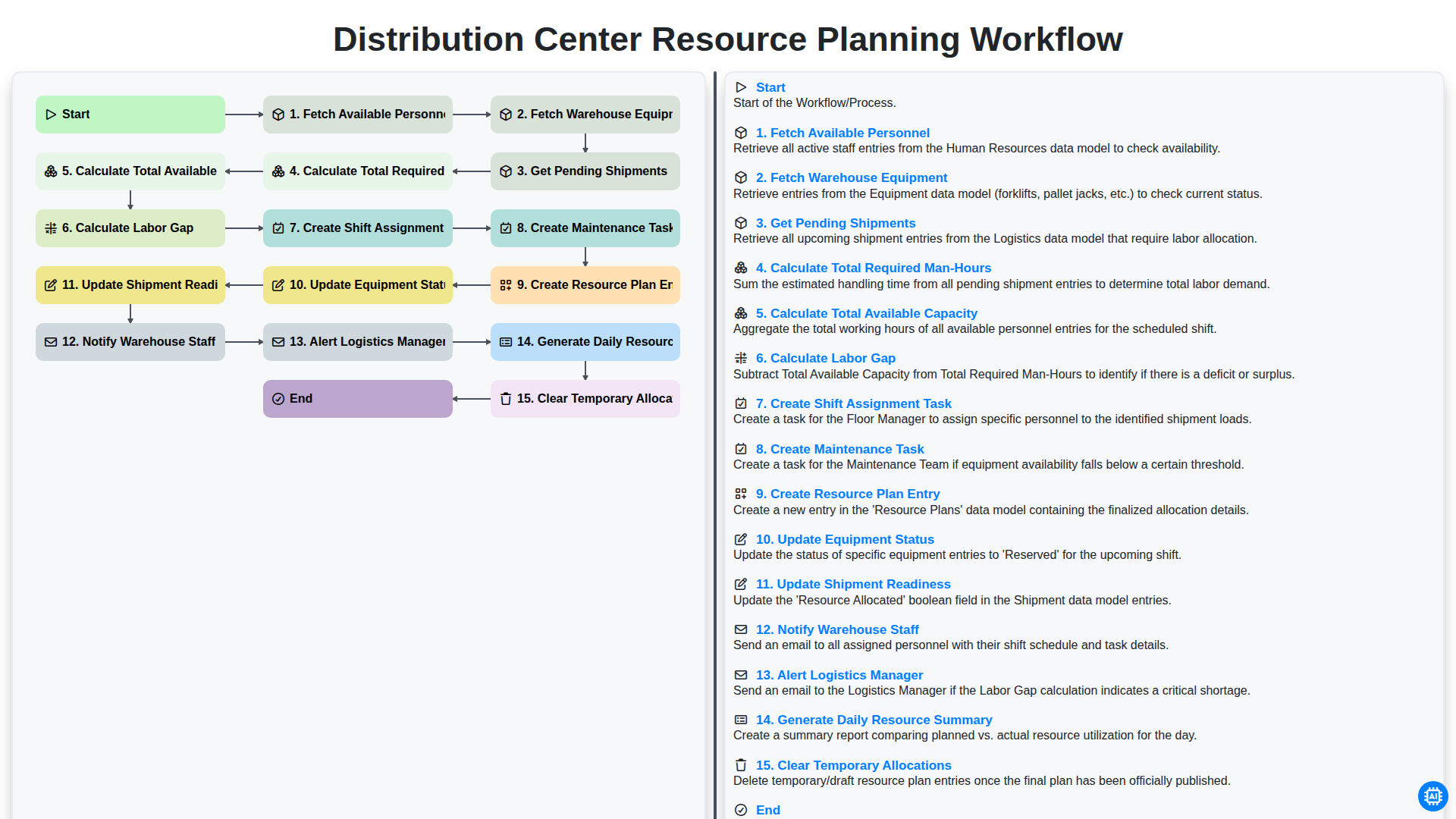
Streamline Your Operations: A Comprehensive Guide to the Distribution Center Resource Planning Workflow
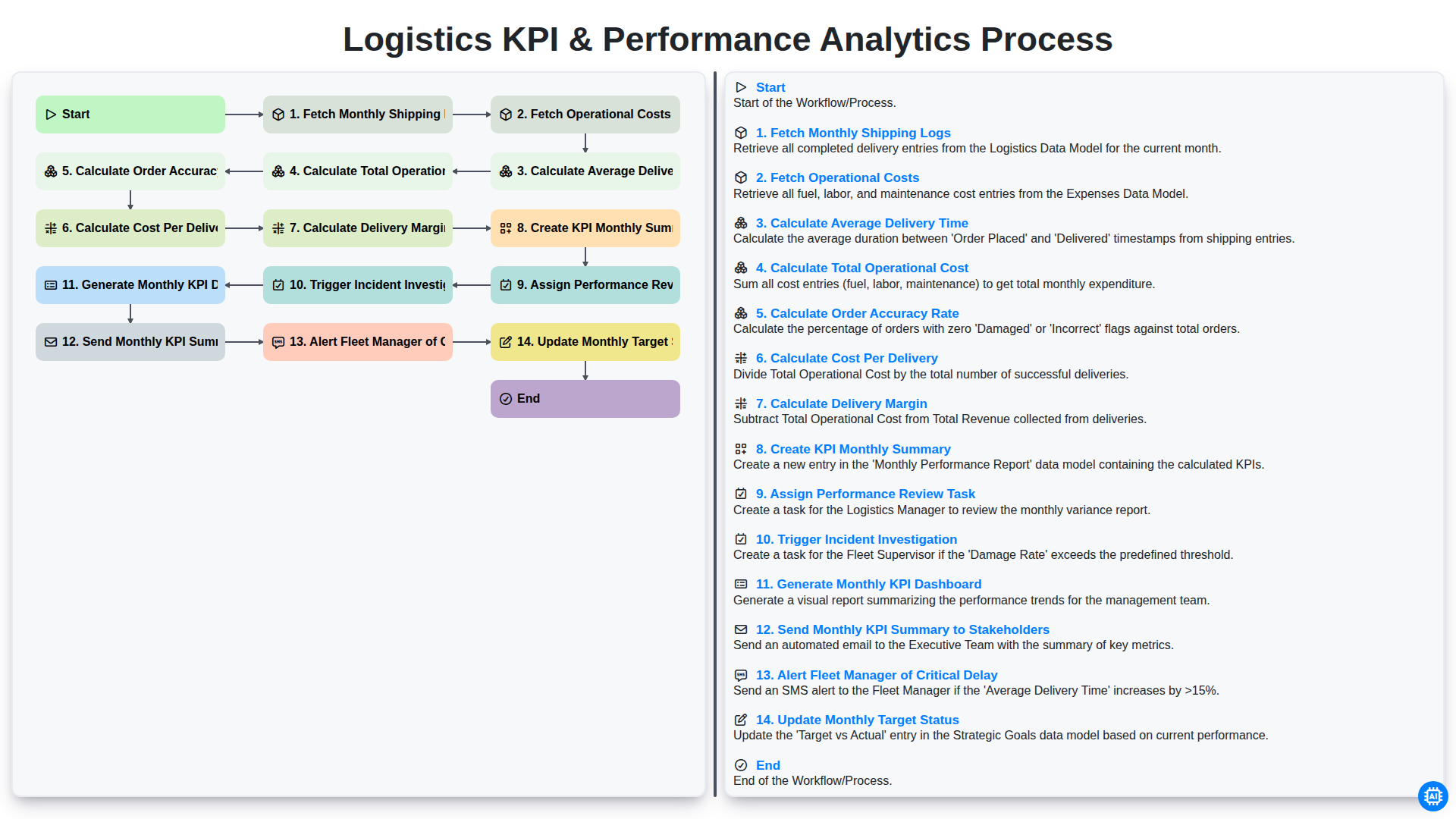
Mastering Logistics Efficiency: A Comprehensive Guide to the KPI & Performance Analytics Process

Paper vs ChecklistGuro in Logistics Management
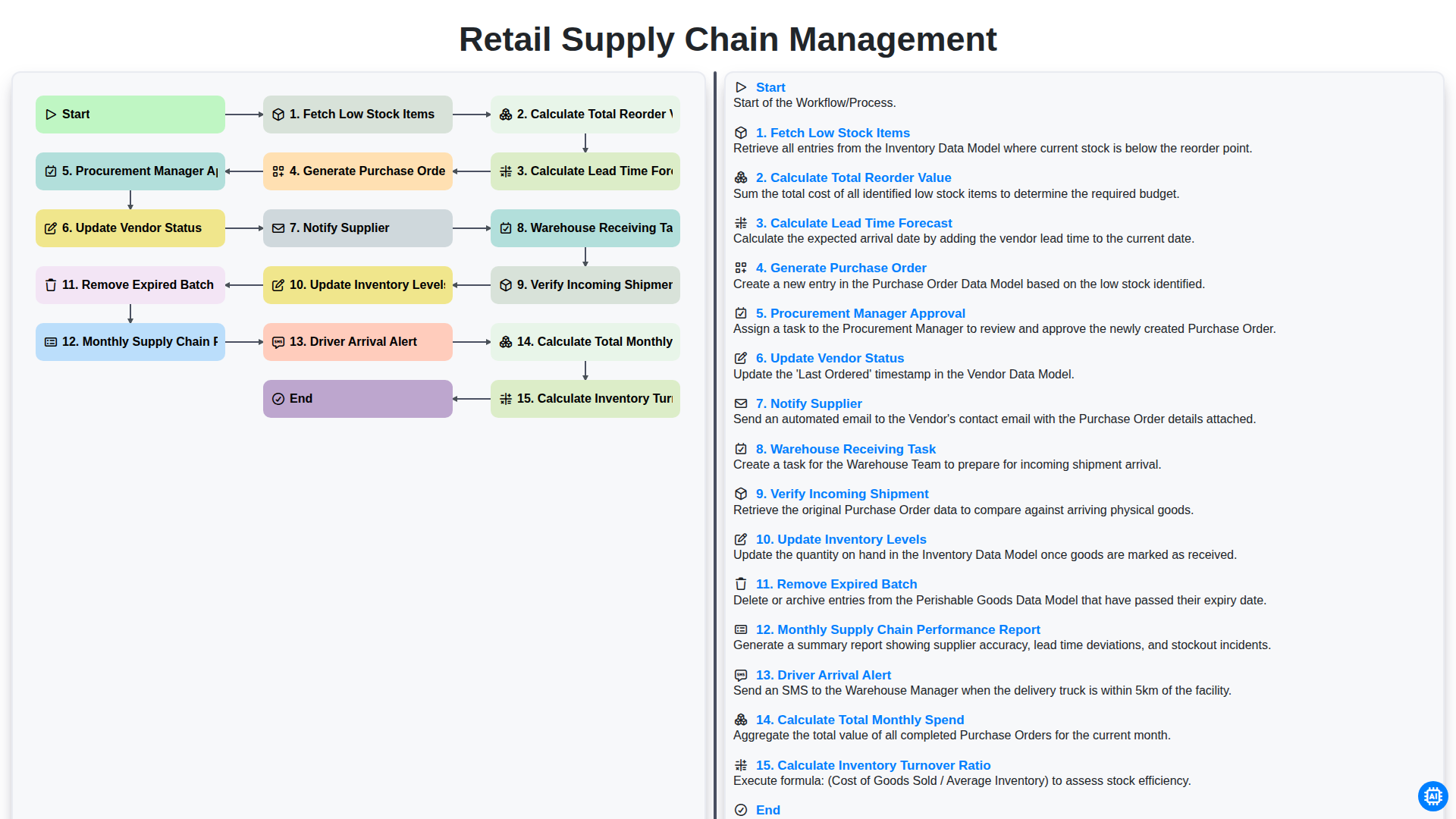
Mastering the Retail Supply Chain: An End-to-End Workflow for Seamless Inventory & Procurement Management
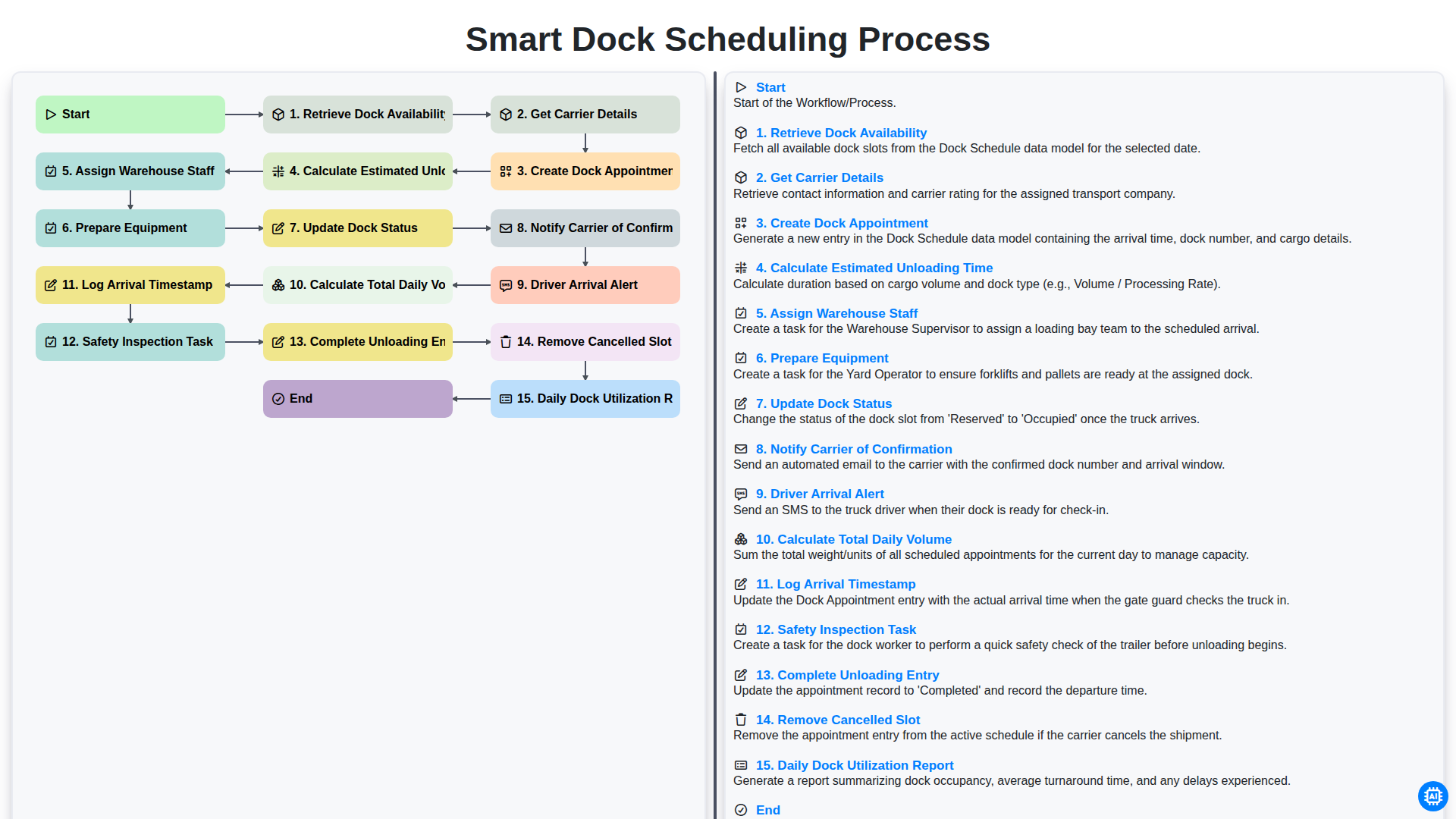
Smart Dock Scheduling Process: A Streamlined Workflow for Efficient Warehouse Operations

Excel vs ChecklistGuro in Logistics Management
How to improve your Logistics Management
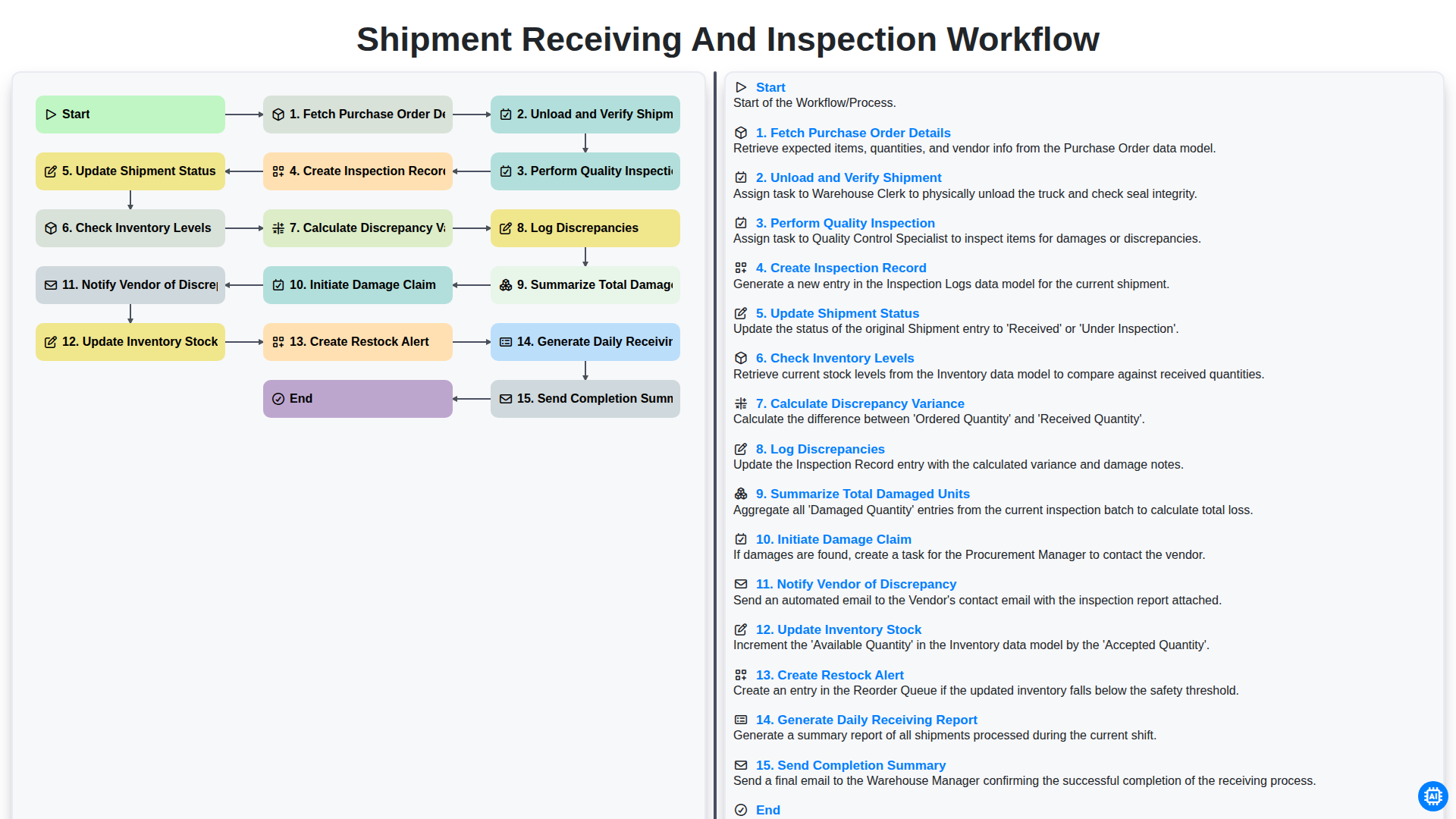
Shipment Receiving and Inspection Workflow: A Step-by-Step Guide to Streamlining Your Logistics Process
We can do it Together
Need help with
Checklists?
Have a question? We're here to help. Please submit your inquiry, and we'll respond promptly.